Flying the CLSA Fairey Gannet in Second Life

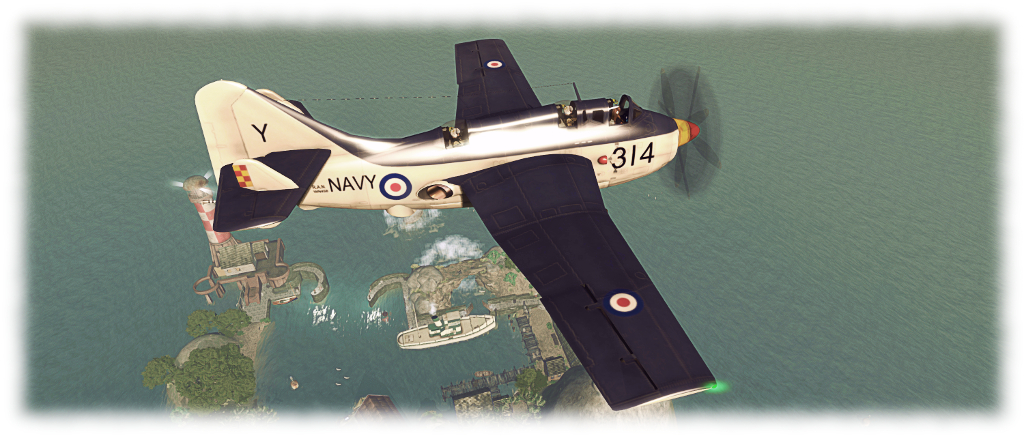
The CLSA Fairey Gannet over Blake Sea Half Hitch

I’m not that into military aviation outside of airshows, and in SL, all my flying is restricted to civilian light aircraft with the exception of a Supermarine Spitfire, which was a thank you gift from its creator, Eric Gregan, and a civilian version of the PBY6A Catalina. So I’m a little surprised to be writing about a veteran military ‘plane, the Fairey Gannet.

I confess to having known next to nothing about the Gannet prior to obtaining this particular model – but wikipedia was once again my friend, helping me fill-in the blanks about this post-World War Two Royal Navy aircraft. I came across the model in question after learning through Whirly Fizzle that CLS Aviation, owned by CaithLynnSayes were being sold at L$10 per aircraft on an unsupported basis. At the time, I picked up a couple (see here for more). A subsequent chat about the CLSA range with friend Jodi Serenity led me to an impulse buy of CLSA’s Fairey Gannet – it’s not as if L$10 is going to break anyone’s bank!

The CLSA Fairey Gannet on rezzing

The first thing that struck me is that it is a comparatively big aeroplane (by the standards of the aircraft I generally fly, at least!). It is also something a very faithful reproduction by Helijah Bailey (sold under a licence agreement by CLSA) with a lot packed into it – more, it would seem, then the instruction manual explains. The complete package comprises the aircraft, a minimal but acceptable flight HUD for those who like them, a pilot’s headset and two manuals. By default, the aircraft rezzes with wings folded – these can be deployed when sat in the pilot’s cockpit by typing w(ing) or wings in chat. They unfold quite satisfactorily, and the twin turboprop engines can be started at the same time via the Engine button on the HUD if you use it, or by typing s(tart) or engine in chat – note chat commands are not case-sensitive.

Starting the engines will also do a couple of other things – activate the Gannet’s strobe and nav lights, and cause the other two crew members pop-up in their respective cockpits (the plane is a single avatar seater).  With the exhausts under the rearmost cockpit spewing fumes and heat, the ‘plane is ready to fly. This is achieved by releasing the parking brake (p) and then using the conventional controls: PAGE UP / PAGE DOWN for the throttle (5% increments or nX – where X is a number between 1 and 100, for quickly setting), UP / DOWN for nose pitch, LEFT / RIGHT for banking.

The CLSA Fairey Gannet: the two observers appear when the engines are started

In flight, the Gannet handles well – I’d rate it the best of the CLSA aircraft I’ve flown to date.  Being a beast, it does require constant pressure on the controls with banking or it’ll simply try to rapidly straighten out, but this adds a level of realism in flying. Airspeeds are given in metres per second, and when landing, you’ll need around 8-15 m/s to both avoid stalling on approach or coming in too fast and having to force it onto the ground.

As noted the ‘plane comes with plenty of features: the aforementioned folding / unfolding wings; a deplyable radar dome for anti-submarine warfare (ASW), the Gannet’s primary role in this variant and an extensible arrestor hook for deck landings (would that there were a Royal Navy carrier steaming around Blake Sea!). There are no fewer than 10 default camera positions and 11 preset paint schemes (5 Royal Navy Air Squadrons, one Royal Australian Navy Air Squadron (albeit it with UK roundels), one Indonesian Navy Aviation Squadron, 3 Marineflieger (German Navy) options, and one simply labelled “FAA” (Fleet Air Arm). There is also a custom option. There’s also a fuel system, a sliding pilot’s cockpit canopy, and a park / unpark mode (only use the latter with the wings folded, as it includes the stays to hold the wings in that position).
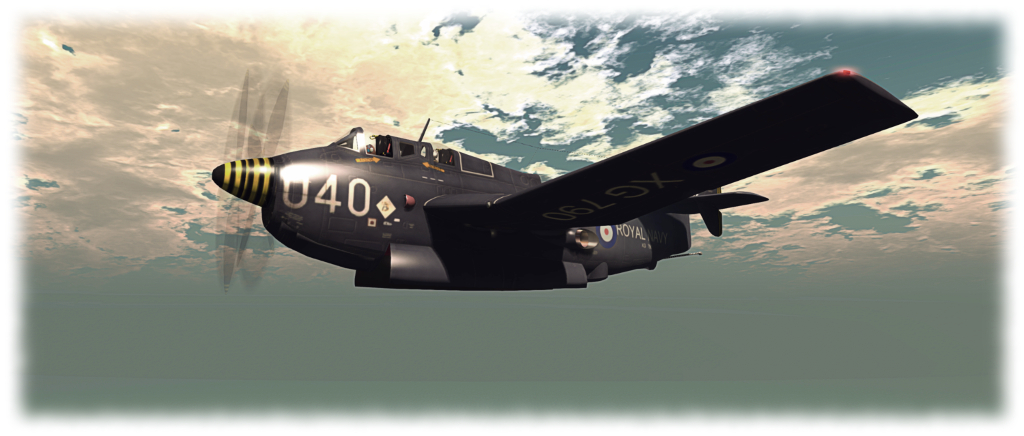
The CLSA Fairey Gannet: weapons bay doors open – flying in a region with rezzing rights will drop a torpedo

The Gannet is also fully VICE enabled for combat operations – although this is missing from the flight manual. I’m not into combat flying and so blindly fiddled around until some things worked. Enabling VICE via the menu prims the weapons bay, and typing b in flight will open the bay doors and drop a torpedo (providing you have rezzing rights in the region you’re flying through). There is a cycle delay limiting the frequency at which torpedoes can be released. There are also weapons hard points under the wings with depth charges (I assume) and missiles attached. These are alpha’d by default, and appear to be unscripted. I’ve no idea if they can be accessed by this particular variant of the Gannet, or if they an hold-over from another design, and confess I didn’t spend too much time trying to figure them out.

Overall, I found this a nice aircraft to fly – and one that is certainly nippy at high throttle settings, which offers some fun in flying. While it is not something I’d use with any frequency – only curiosity and the price caused my to buy it, as noted -, for those who like their military aircraft, it potentially offers a pretty good value for money, particularly given the preset finishes.


Additional Links

CLS Aviation on the Marketplace

Happy New Year for 2018

Wishing you all the best for 2018 in whatever you do, and once again, thank you for all your support and encouragement through 2017.

2017 in review part 2

The Mill; Inara Pey, December 2017, on FlickrThe Mill, December 2017 – blog post

The end of the year is once more approaching, which is often a time of reflection as we look back over the old before pausing to await the arrival of the new. It’s become something of a tradition in these pages for me to look back over the articles and coverage of the year’s events I’ve managed to write-up, and offer a chance to revisit the ups and downs and the good and the bad the last twelve months have brought us.

To keep things digestible, I’ve broken this year’s review into two parts. This one covers July through December. January through June can be found here, and a look at SL’s technical developments through the years is available here.

July

Second Life

The month opened with Jayjay Zifanwe contacting me to give me the (then) exclusive news that UWA’s regions would be remaining in Second Life for a further two years, albeit it on a reduced scale, rather than closing as anticipated. A celebratory Art of the Artists machinina challenge followed the announcement. The lab launched their “Bento equipped” starter avatars, and issued updates to the Terms of Service, while some purchase notifications were also updated. Nicky Perian announced he would be retiring from Kokua development in October 2017 to enjoy a well-earned rest, in the hope that someone else would take up the reins.

Sansar

The end of July saw the Creator Beta launch, with the platform opening to anyone wishing to join. The run-up through the month was marking with an increase in Preview invitations, plus profile videos featuring Ria, Blueberry and London-based Unit 9, all of which I reviewed and added some thoughts around vis Sansar’s reach and marketing. With the Public Beta openI did a quick getting started guide.

VR and AR

CastAR sadly closed and AltspaceVR gave notice they would be closing. On a brighter note, it was revealed how Google had been re-inventing Glass over the last two years.

Space and Astronomy

July 2017 marked 20 years of continuously studying Mars from both the surface of the planet and from orbit, and also marked the anniversary of the first lunar landing. Remarkable images of Betelgeuse were revealed, and further traction was gained for NASA’s Deep Space Gateway while Elon Musk walked back some expectations around the first flight of the SpaceX Falcon Heavy rocket.

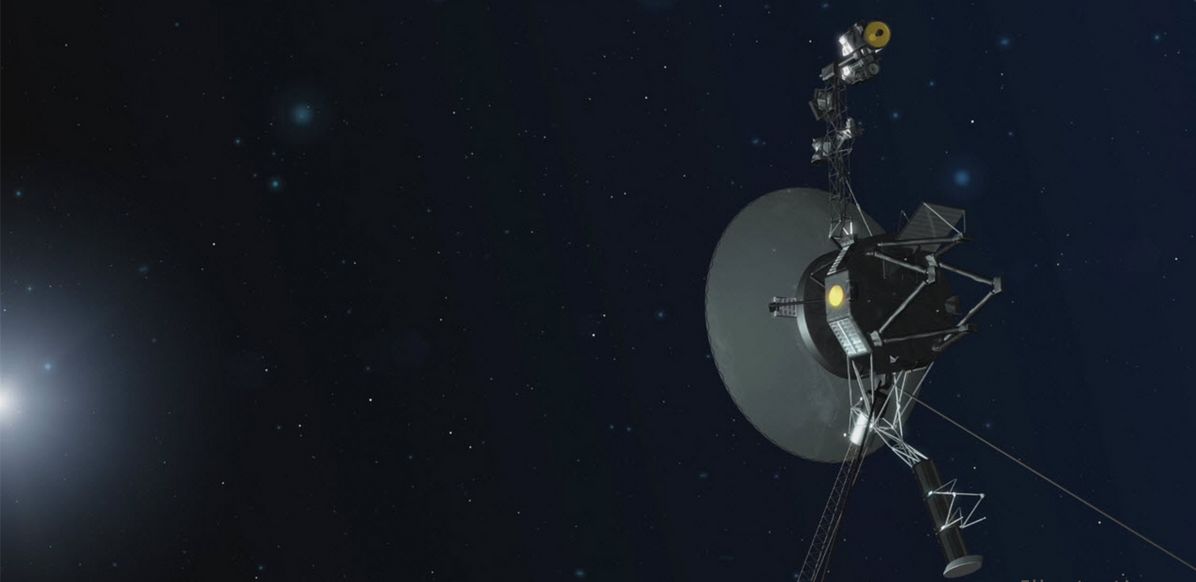
Voyager mission: 40 years on. Credit: NASA/JPL

Personal

Wouldn’t you just know it – I revised the island home again!

Travel and Arts

July Travels July Art Reviews
Stony Hill Vineyard Artful Expressions: Cecilia Mode, Lawrence Pryce, Rosy Hanry Jarom
Gale Storm Retreat Wintergeist: Pieces of a Whole
Collins Land Solo Arte: Terrygold’s Reflected on Black
Ash Falls Karma Avedon: One Tree Hill
Welcome to Somewhere Commonwealth Village: Inara Pey
Follow Your Bliss Commune Utopia: Cybele Moon
Solo Arte: Boudicca Amat and Inara Pey
MetaLES: Harbor Galaxy
Serena Arts: aldiladeisogni – Picture of Oh
Bailywick Gallery: August 2017

August

Second Life

It’s a quiet month for me, reporting-wise, the focus being on my weekly series of SL user group meeting reports, although Bay City does announce the 2017 Hot City Nights event, which takes place towards the end of the month.

Sansar

With the Public Beta open, I offer some initial hints’n’tips and suggestions of places to visit, following by a more detailed look at the Runtime Desktop Mode. I also look at what the media is saying, and offer my own thoughts on the opening.  Three visits to Sansar experiences launch my Exploring Sansar series, while also taking a look at some of the Creator Challenge winners before starting my series of reports on Sansar Product Meetings.  Keeping with the spirit of competitions, the Lab co-sponsors an avatar design competition, and Bjorn and Widely Linden discuss the new platform (with audio), while there’s a further official Creator Profile video.

Secrets of the World Whale; Inara Pey, August 2017, on Flickr Sansar: Secrets of the World Whaleblog post

VR and AR

AltspaceVR announces a reprieve from closure may be in the wind, and there’s a look at VR and AR in the wake of Sansar’s public Creator Beta while High Fidelity reveals currency and IP protection plans.

Space and Astronomy

There’s another anniversary to be celebrated – this one marking 40 years of the Voyager mission. Curiosity celebrates five years of Mars surface operations, and exoplanets once more step into the spotlight, while the 2017 total solar eclipse is tracked across America.

Travel and Arts

August SL Travels August SL Art Reviews August Sansar
Banana Bay Battle of the Little Liars Seven Wonders
Wimberly (2) Cica Ghost: Future LOOT Interactive
Yasminia Dathúil: Welcome to My Brain Secrets of the World Whale
Cocoon Split Screen: Creator Challenge winners
Fine Art Gallery and Jungle No Life Without Art
Yamagata Club LA and Gallery: Burke Bode and Twain Orfan
Les Reves Perdus  Anibrm Jung – Art by Nature
Long Journey Kultivate’s Black and White
De*cid*u*ous Nitroglobus: Marie (mariajo60)
Cica Ghost: Fairy Tale

Continue reading “2017 in review part 2”

2017 in review – part 1

It's A New Dawn, Lemon Beach; Inara Pey, January 2017, on FlickrIt’s A New Dawn, Lemon Beach – our first 2017 Exploring Second Life destination

The end of the year is once more approaching, which is often a time of reflection as we look back over the old before pausing to await the arrival of the new. It’s become something of a tradition in these pages for me to look back over the articles and coverage of the year’s events I’ve managed to write-up, and offer a chance to revisit the ups and downs and the good and the bad the last twelve months have brought us.

To keep things digestible, I’ve broken this year’s review into two parts. This one covers January through June, and July to December will be along later in the week, and I have a review Second Life’s technical enhancements through 2017 available here.

January

Second Life

The year started with a look at Tyche Shepherd’s 2016 end-of-year grid survey summary. This was followed by a behind-the-scenes look at the Bento project, with an article linked to a piece written for Kultivate Magazine. The Horizons project land sale reached its mid-point, and I offered a summary of sales to date. The Second Life Place Pages beta launched,  while there was the usual weekly SL Project Updates from assorted meetings and Spoonful of Sugar announced their 2017 fund-raiser for Médecins Sans Frontières (MSF), also known as Doctors Without Borders. January also saw me note the fact that the Lab would, through 2017, be requiring people to verify their e-mail addresses if they wanted to keep receiving SL-related e-mails and things like off-line IMs being forwards to their e-mail.

Sansar

Sansar opened the year with a Creator Profile video featuring Loz Hyde, on which I offered some thoughts, in general and concerning monetisation. The latter also came in for a little thought when I considered Ben Lang’s piece on Sansar for Road to VR.

Space and Astronomy

I kicked-off my Space Sunday reports with a look at the key events for 2017. January then became a period of remembrance and recalling great missions – including the Huygens Lander, marking the passing of Gene Cernan, the last Apollo astronaut to walk on the Moon, and marking both NASA’s Day of Remembrance and Opportunity’s 13th anniversary.

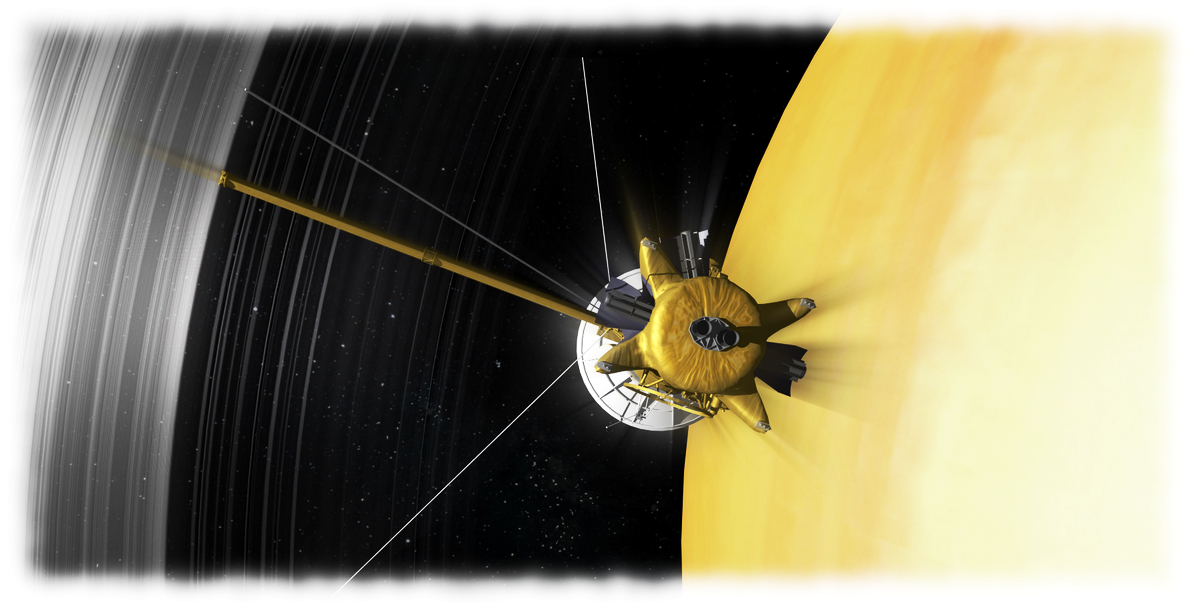
Artist's concept of Cassini's final orbits between the innermost rings and Saturn's cloud tops (see below). Credit: NASA
2017 would mark NASA / ESAs Cassini Mission’s Grand Finale, repeatedly diving between the innermost rings and Saturn’s cloud tops before finally burning up in the planet’s upper atmosphere in September. Credit: NASA

Personal

I started on the first of my fiddling around with the island home sessions for 2017.

Travel and Arts

January Travels January Art Reviews
A New Dawn The art of Grazietta Blauvelt in Second Life
Flotsam and Blake Deeps Lucid Dreams with Miles Cantelou in Second Life
Nagare no Shimajima Gallery 23 in Second Life
The Sagan Planetarium Dathúil: visions of desire
ragVR: imagination and expression The Forest Beyond- Ceakay Ballyhoo
Hell’s Heaven No Frontiers – Gem Preiz
An Uncertain Destiny DiXmiX: Mistero Hifeng and William Weaver
Once Upon a Fairy Tale Cica Ghost: Burning
Devin DaphneArts: Celebrating Poe
Whimberly MetaLES; Illogism
Sol Farm Elo (Elorac Paule): Ray of Light
Elin Egoyan: Lide is a Journey
The Edge Gallery: February 2017
Venus Adored: Light Reflections

February

Second Life

Linden Lab spoke out against Donald Trump’s Executive Orders on US immigration. A new maintenance viewer with inventory management improvements surfaced. One Billion Rising put out a late call for volunteers, with the event taking place mid-month; the organisers of the 2017 Virtual Worlds Best Practice in Education also put out a call for volunteers. The Founder of the East River Community, Indigo Mertel, put out a plea for help to secure the community’s future. Michael Linden of LDPW fame, departed the Lab.

Hobbiton, Dragon Island; Inara Pey, February 2017, on FlickrHobbiton – a visit for February 2017

The second round of Skill Gaming applications, launched in January (but which I previewed in December 2016), closed after a run of a month. The Lab offered their traditional Valentine’s Day celebration, and I gave a final round-up of the Horizons land auctions. There was the announcement of a new Community Platform for Second Life, which took a little longer than planned to get up-and-running, and MadPea held an International Food Fair to raise money for Feed A Smile / Live and Learn Kenya. The final UWA art show – Transformations launched with a call for entries, and also among the event announcement / calls came the first for SL14B – which was directed towards infrastructure builders.

February also saw ALS Awareness Week take place, and an appeal went out on behalf of Ceredwin’s Cauldron creator Elicio Ember, who faced a severe family set-back, and the RFL Home and Garden Expo was announced.

Space and Astronomy

The focus for the month was very much on the discovery of seven Earth-sized planets orbiting a red dwarf star 39 light years away, which I covered in two posts here and here.

Personal

February saw Holly Kai Park overhauled  – notably around Caitinara Bar, which reopened in time for a celebration of the Oscars. The Park’s Pavilion also played host to an event in support for Feed A Smile. In addition, Caitlyn and I also returns to the greens and golfing.

Travel and Arts

February Travels February Art Reviews
Natural Falls Hills (Hillany Scofield): The Recreation
Anduril Artful Expressions: Blip and Nekonuko
NonStop DiXmiX: Angie Manners
Hobbiton Cica Ghost: Frogs
Lost World MetaLES: The Haul
Shot of Tequila Astral Dreams: Mistero Hifeng
Shareta Osumai Tea Garden Solo Arte: CioTToLiNa Zue
History of the Telephone The Gardens by the Bay
AERO Golf Club The Photo Game
Molly Mirassou: Studio M
Nightroglobus: Monique Beebe
InterstellART: Fossil Fractals
Methias Kira: The Architect’s Playground
Venus Adored: Light Reflections

March

Second Life

The VWBPE social calendar was announced together with the Above the Book series, new for 2017. The event itself kicked-off at the end of at the month. I was honoured to be able to announce Filling the Cauldron in aid of Elicio Ember and his family, and the 2017 RFL kick-off weekend took place. The Lab revamped the Second Life Home Page and the 2017 Fantasy Faire regions were announced, and blogger applications opened. The new SL community platform launched, and with the help of Tommy and Corky Linden, I looked at raising abuse reports. The 2017 Sci-Fi convention beamed-in to SL, while SL’s monthly process credit limits were revised. With changes being made to SL’s asset fetching, I took time to look back over the HTTP project and SL’s use of CDNs.

2017 SL Science Fiction Convention -“Water”

Space and Astronomy

March saw Elon Musk announce his lunar ambitions, I looked at options for exploring the icy worlds of the solar system, and the question of when is a planet not a planet – and how many might be in the solar system before catching up with Mars news.

VR / AR

I offered a quick catch-up on highlights from the worlds of VR and AR.

Personal

I became enamoured of the composite designs by Morgan Sim Designs, some of which found their way onto the island home (and can still be found there). I also revamped the Holly Kai Park website.

Travel and Arts

March Travels March Art Reviews
Long Journey Cica Ghost: Under the Sea
Calas Skate-on-rama Artful Expressions: Maxie and Cyoko
NorderNey Dathúil: Private Sphere
Spring Spirit Whitechapel Victorian London
Field of Dreams / L’Intangible Split Screen: Bleeding Books
The Heart of the Sea DaphneArts: The Journey
Storybrooke Gardens MetaLES: Wild Lost Line
PeTOu Art Is… Rhythm
Orcadi Island The Photo Game 2
 Mystical Fae Forest Journey of Life
Second Life 2009-2017
The Way I Feel
Methias Kira: The Architect’s Playground

Continue reading “2017 in review – part 1”

Merry Christmas!

Merry Christmas to all, and sincere thanks for reading / following my random thoughts and reporting on SL, Sansar, VR / AR and all the rest!

CLSA: flying in Second Life at L$10 a plane

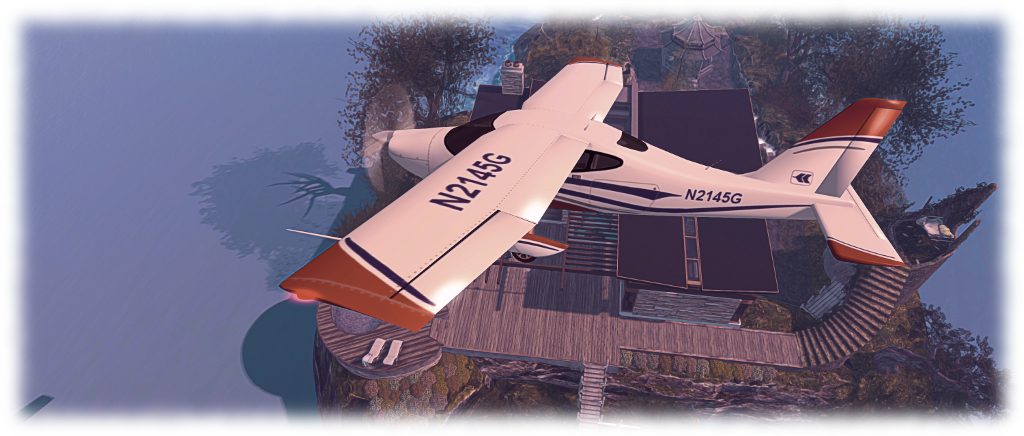
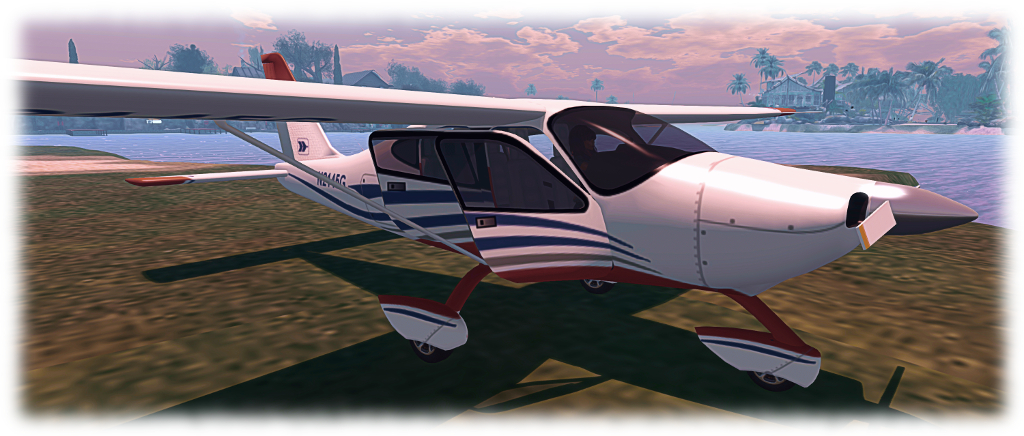
Flying over the home island in the CLS Aviation P2010

Whirly Fizzle pointed me in the direction of CLS Aviation on the Marketplace after owner CaithLynnSayes introduced an across-the-board price drop for all aircraft in this modest collection to just L$10 per vehicle – the catch being that the aircraft are now sold completely unsupported. As such, they make a bargain basement opportunity for those curious about SL flying to kick-start their exposure.

There are only nine aircraft in the CLSA range, and these form a mix of vintage and light aircraft. The models are built by Helijah Bailey and scripted by Reconx86, the scripts being based on those originally developed by Cubey Terra.

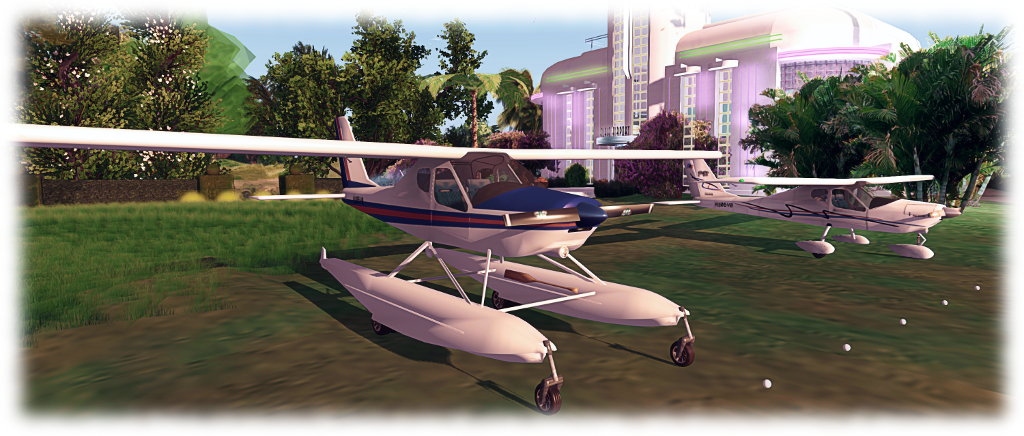
Both the P2010 (shown) and the P92 have acceptable default paint options (in theory changeable via the menu), and support custom finishes. Each features touch-to-open doors

I have previously flown the Firestorm limited edition of the CLSA Ryan Navion and found it acceptable, if not exceptional. For this test, I grabbed the “Tec-N” (aka Tecnam of Italy) P92 and the P2010 on the basis I haven’t got any high-wing monoplanes in my collection. Each aircraft is supplied with at least one variant of the plane itself (the P92 has a version with fixed wheel undercarriage, suffixed “T”, and a version with floats, suffixed “W”), a detailed manual, a quick start guide, a basic HUD, and a set of set of basic texture templates for creating custom paint finishes.

The flight system is the same for both aircraft, offering the usual control options: PAGE UP and PAGE DOWN for the throttle, UP / DOWN; arrow keys for pitching the nose down / up; the LEFT / RIGHT keys for banking (or WASD, if you use them). Other control surfaces (flaps, air brakes) are accessed via text. The HUD for each is fairly basic, and includes a button option for accessing the menu system (also accessible via chat command when sitting in the aircraft).

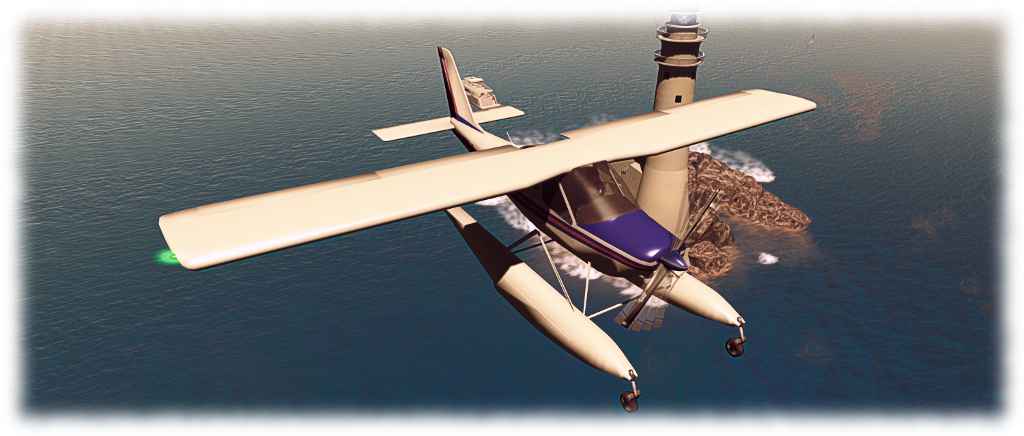
The P92-W(ater) version flying past a familiar (to this blog!) landmark

As with all CLSA aircraft, both models reflect their physical namesakes with reasonable accuracy. Each comes with a number of menu-accessible paint finishes, and slots within the menu for adding custom paint finishes (instructions for use in the user manual) – or that’s the theory. Both aircraft are also Shergood Aviation N-Number Registration compatible, meaning that when first rezzed, it will have a unique N (United States) registration number, which is also registered at the Shergood Aviation Aircraft Database.

Handling-wise I found the P92 and P2010 acceptable, although the P92 suffered the same issue I had with the CLSA Ryan Navion: banking tends to be flat, with the first part feeling like the aircraft is slewing into a turn. The P2010 felt a lot more responsive by comparison, rolling rather tightly in turns, but having the feel of a small, well-powered aircraft, and was definitely a lot more fun to fly. Airspeed is measured in metres per second, and it’s advisable to read the manual to get things like rotation and stall speeds fixed in your head.

The P92 float and wheeled variants, showing off two of the supplied pain finishes

I did have some issues with each plane – the aforementioned lack of initial banking when turning the P92, for example, together with a visual niggle that the main struts supporting the floats don’t actually meet the fuselage. There’s also no means to retract the wheels on the floats, giving the ‘plane an odd look when landing on water with wheels extended before and under the floats. As with the Ryan Navion, both the P92 and the P2010 will happily land on Linden water, taxi on it and take-off again, even when sans floats – which is a trifle odd, and possibly part of their Cubey Terra scripted heritage – as I noted in my review of the Ryan Navion, there is a degree of similarity in the handling of the Navion / P92 and Cubey’s Stingray in particular. However, these are relatively minor niggles.

A more annoying issue lies with the P2010. For me, this repeatedly gave a scripted texture call error when first sitting in the aircraft and on making region crossings, becoming quite the distraction at times. The menu option to access the paint controls was also non-functional, even after a full reset of scripts. However, I don’t believe the latter prevents the manual application of textures, if handled with care.

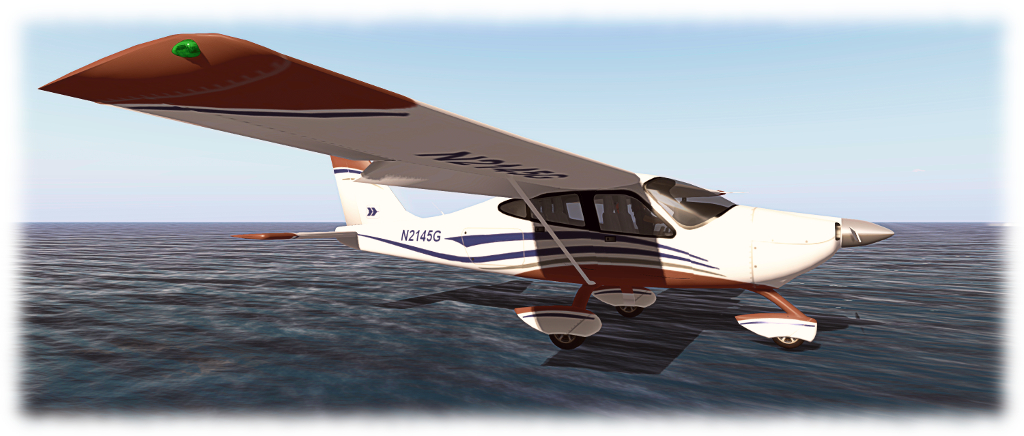
All CLSA aircraft seem to share the common trait of being able to operate on Linden water, regardless of whether they have floats! This is the P2010 “parked” on Blake Sea following a successful landing

If I’m totally honest, a CLSA ‘plane is unlikely to become a favourite with me; I’m simply too attached to my DSA aircraft (although the camera management on CLSA planes during regions crossings is admittedly far better than DSA). However, even allowing for the issues and niggles mentioned above, at L$10 per ‘plane, they really cannot be sneezed at for those wishing to join the world of SL aviation flying a fairly reasonable aircraft with a decent flight control system, and are a far better introduction to SL flying than many of the low-cost / freebie alternatives to be found on the MP.

Additional Links

CLS Aviation on the Marketplace