On Wednesday, November 4th, Linden Lab launched a new look to its corporate website.
The new design has much in common with other tech-related (and some purely blog) sites, offers a fresh, clean and scrollable home page which introduces the company’s products: Project Sansar (at the rate that name is being used and gaining familiarity, it’s liable to become the de facto name for the new platform!), Second Life and Blockworld, each with buttons specific to them – the Second Life section, for example will launch secondlife.com. At the bottom of the page is a link to the Lab’s careers page.
An image from the top of the redesigned Linden Lab corporate home page possibly showing a scene from “Project Sansar”
The home page offers one of two different images at any given time (you might be able to swap between them by clicking). One of these appears to be taken from within “Project Sansar”, showing as it does a model of the Golden Gate Bridge, which the Lab has indicated to be one of the major initial scenes built within that platform.
The main pages for the site include a simple, clean menu at the top right, and all have had a similar facelift to the home page, and some nice refinements. The About page, for example, has a much more refined approach to presenting the management team which helps keep the page clean and tidy, although the fact that the images are clickable isn’t entirely clear when hovering the mouse over them.
The corporate home page introduction to Second Life includes a button to take interested parties directly to secondlife.com, while the Blocksworld intro has a link to the Apple Apps store, both offering a no-nonsense link to the products
All told, a simple, clean and fast redesign of the website which, to me at least, is a lot more contemporary than previous looks, and which somewhat matches the approach taken with the Second Life landing pages.
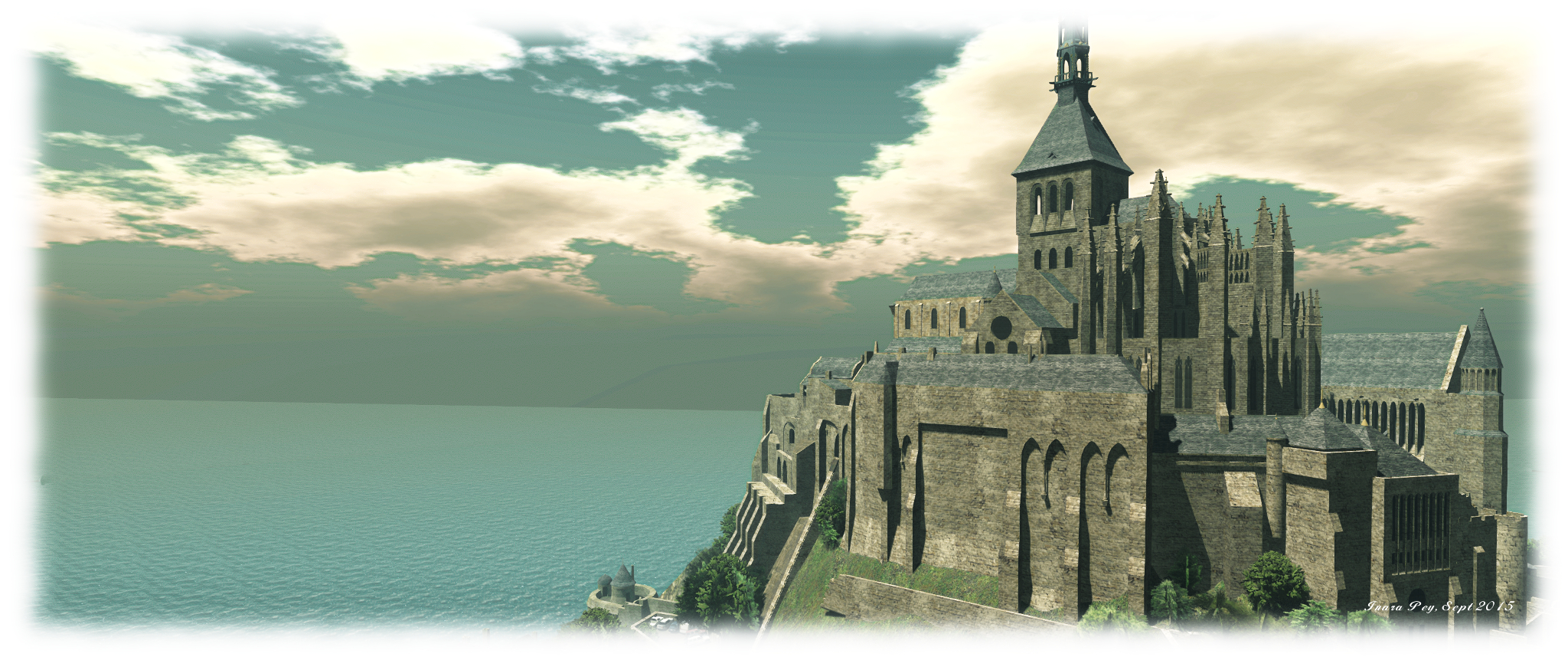
Update: November 21st:and Mont Saint Michel is once again back on the grid, same SLurl.
Update: October 10th, 2016: almost a year after it had first been indicated the region was closing, Mont St Michel has now gone from Second Life. Tyche Shepherd noted its depature during her August end-of-month survey of the grid.
Reader Petr Hastings-Vanbeeck contacted me on Monday, November 2nd concerning Mont Saint Michel in Second Life, and passed me some – for the time being, at least – good news.
In September, and following Ciaran Laval’s lead, I reported the region would apparently be closing at the start of October, the news of the closure having been given by Moeka Kohime via her Flickr stream.
“I just discovered that Mont Saint Michel is still open,” Petr informed me. “I am standing at the cathedral on the hill.”
And indeed, a quick hop across to the region reveals that it is indeed all intact, complete with Moeka’s *Edwelweiss* next to the landing point. So what has happened? Has Moeka decided to keep the region operating following the outpouring of support which followed the closure announcement, or is this just a temporary reprieve?
Answering these questions isn’t easy; Moeka doesn’t reply to IMs, and her Flickr stream hasn’t been updated since the announcement was posted. However, questions have been left in the comments in the hope she will reply.
In the meantime, if you’re keen for a further (or first) visit to this marvellous reproduction of the famous French historical landmark, now might be a good idea, just in case it may still be scheduled to vanish.
My thanks to Petr for contacting me about the region’s continuance.
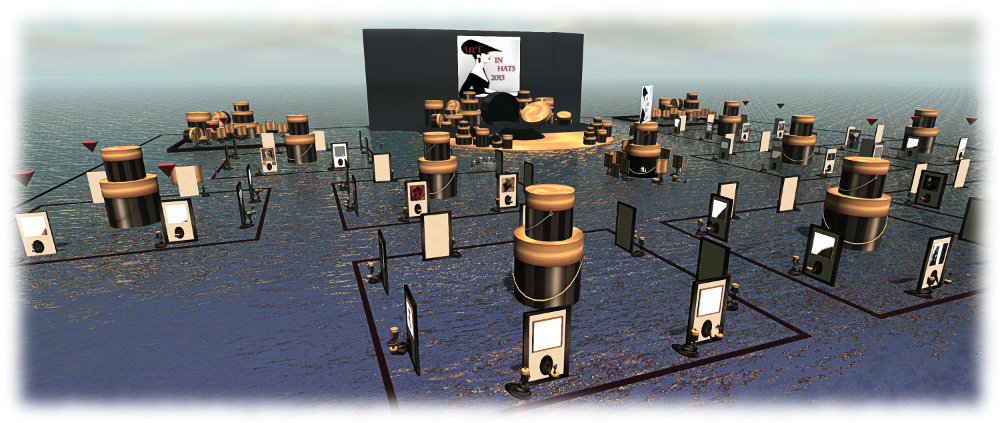
Running from November 4th through until the 14th included, the events sees Emma Portilo, taking over from Quan Lavender with the latter’s blessing, take the reins, ably supported by Chloe Seljan and Johannes1977 Resident, who will be coordinating entertainment throughout the event, and Jessii2009 Warrhol managing the PR. The event itself will take place in stylish region designed by Kimmera Madison.
Over 70 designers are taking place in this year’s activities, and all of the hats will be available for purchase by visitors, with 100% of proceeds from sales going to the ADA, as will money raised through a special Charity Auction which will close the event on Saturday, November 14th.
Art in Hats will open to the public on Wednesday, November 4th at 06:00 SLT, and there will be featured DJ sessions every day through to Friday November 6th.
The Grand Opening for the event will take place on Saturday November 7th, at 12:00 noon SLT, and will be followed at 16:00 SLT by the Grand Opening Fashion Show and then at 20:00 SLT by the Art In Hats 2015 Event Gala.
Highlights for Sunday, November 8th include Josie Anderton singing live at 14:00 SLT, followed by the Bring it On! Styling Contest at 15:00 SLT, in which the public is invited to show off the hats they have created on the Art in Hats stage, with random gifts will be given during the show. Sunday’s activities will round-out with the Style it Party: dance and wear your own hat to the music of DJ John, with the best in style prize awarded by popular vote during the event.
Music events will then continue through until Saturday, November 14th, and the close of Art in Hats. This will feature a final fashion show at 16:00 SLT, with the Public Hat Contest winners announced and prizes for the top two designs awarded at 18:00 SLT, followed by the Charity Auction in support of The American Diabetes Association featuring unique hats donated by creators. The event will then draw to a close with the Final Chance Shopping Party at 22:00 SLT, offering attendees a final opportunity to buy the hats they like, raise more money for ADA, and dance.
For a full line-up of activities and entertainment, be sure to check-out the Art in Hats 2015 schedule.
About Arts in Hats and Team Diabetes of Second Life
Founded in 2013 by Quan Lavender, the initial event offered a means for SL couture designers and artists to present images of hats as statement of art, each with a story to tell. In 2014, over 100 hats and their paired images displayed by designers and photographers, with Art in Hats supporting the work of Feed A Smile.
Some 387 million people globally live with diabetes, and the World Health Organisation estimates that diabetes could be the 7th leading cause of death by 2030.
Founded by Jessi2009 Warrhol and Johannes1977 Resident, Team Diabetes is the official and authorised team of the American Diabetes Association in Second Life. Functioning as an advisory board, Team Diabetes of Second Life comprises members Jessii2009 Warrhol, Johannes1977 Resident, Emma Portilo, Veruca Tammas, Sandie Loxingly, Rob Fenwitch and Earth Nirvana, with Saiyge Lotus serving as special advisor to the board.
Team Diabetes of Second Life’s mission is to raise awareness of diabetes, promote greater understanding of the issues those suffering from diabetes face, and to raise funds to further research into cures for diabetes.
SLurl Details
Art in Hats, Crestwood Acres (Rated: Moderate) – note this SLurl will not be generally available until Art in Hats opens on Wednesday, November 4th
Starting on Monday November 2nd, and running through to the end of the month is a new exhibition at Dathúil Gallery, operated by Max Butoh and curated by Lυcy (LucyDiam0nd).
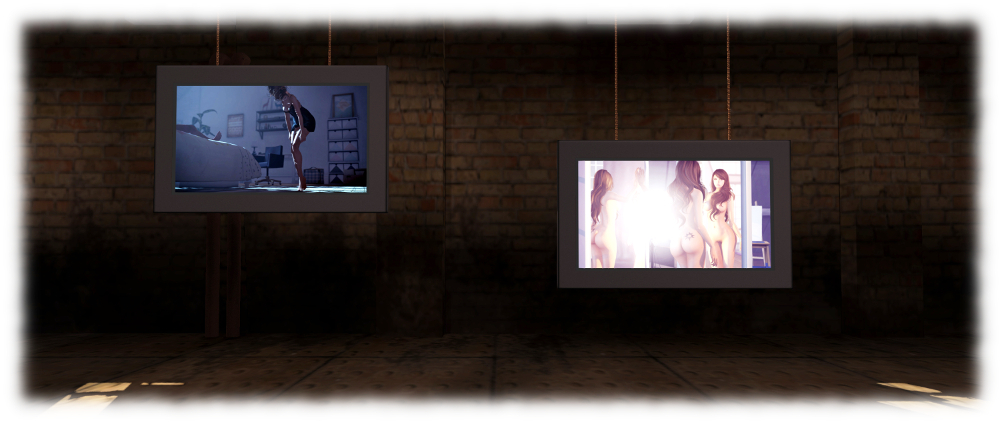
Moments features a series of images by Shurely Shan, who describes herself as a “Second Life erotic photographer and model, and all-around expert in messing around with stuff.” given this, it should come as no surprise to visitors to Dathúil will find Moments has more than a little bit of an erotic / NSFW touch.
“Over the past two years I have tried to explore intimacy, desire, emotion and passion through photography in Second Life,” Surely states. “Moments is a collection of some of my favourite shots. I hope you enjoy it.”
The result is a selection of images capturing intimate moments, which vary in style from an intimacy with just a hint of eroticism through to those which are both deeply intimate and very sexual in pose and content.
There is also a voyeuristic element to some of the images which gives them an additional twist. The naked woman caught sleeping, for example, is this a picture taken by a lover, capturing that intimate moment of sleep, to be shared with the sleeper when she awakes? Or is it a picture taken entirely in secret, and set to remain outside of the sleeper’s knowledge, thus shifting it into the realm of voyeurism?
And that is the power of each of the images on display; while it may be easy to feel somewhat titillated or offended by the subject matter, the fact is that each of these pictures tells a story, regardless of how much overt sexuality they each display; they are moments caught in time. Moments which can be seen to be deeply personal and involving to those caught within them, and also to the picture taker, whoever we imagine that might be.
This is the first exhibition to take place in the remodelled Dathúil Gallery, which now sports a tall brick build whilst still retaining the look and feel of a converted distillery. It’s a design that works well, offering a catwalk like upper floor which runs around the four walls of the building, and reached by wooden steps. With its slender brick pillars, overhanging first floor and the opportunity to divide the floorspace into distinct areas, there would appear to be a lot of flexibility in how the spaces within the gallery might be used in future exhibitions.
But right now there is Moments, a display of intensely intimate and beautifully framed scenes, something lovers of adult-themed art should definitely not miss.
This summary is published every Monday, and is a list of SL viewer / client releases (official and TPV) made during the previous week. When reading it, please note:
It is based on my Current Viewer Releases Page, a list of all Second Life viewers and clients that are in popular use (and of which I am aware), and which are recognised as adhering to the TPV Policy. This page includes comprehensive links to download pages, blog notes, release notes, etc., as well as links to any / all reviews of specific viewers / clients made within this blog
By its nature, this summary presented here will always be in arrears, please refer to the Current Viewer Release Page for more up-to-date information.
Official LL Viewers
Current Release version: 3.8.6.305981, October 26 – formerly the Notifications RC viewer download page, release notes
Restrained Love Viewer updated to version 2.9.15 on October 27th – core update: parity with the Lab’s 3.8.5 code base; RLV updates and fixes – release notes
UKanDo updated to version 3.8.6.28161 on October 27th – core updates: parity with the Lab’s 3.8.5 code base and RLV 2.9.14 – release notes
In September I reported on images captured by the New Horizons space probe of the night side of Pluto, backlit by the distant Sun. In a follow-up to those images, the New Horizons team has released stunning high-resolution images captured by the probe shortly after passing the point of closest approach to Pluto on July 14th, 2015.
The images were captured from a distance of just 18,000 km (11,000 miles) from Pluto using the Multi-spectral Visible Imaging Camera (MVIC), part of New Horizon’s Ralph suite of instruments, which were pieced together to form a magnificent view of Pluto with a resolution of some 700 metres per pixel.
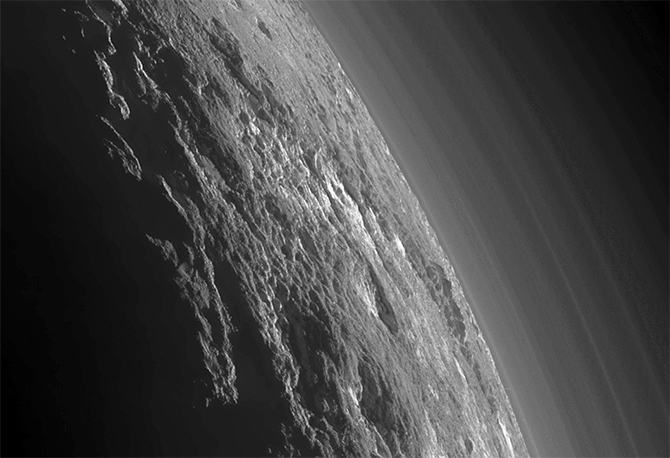
The mosaic of images shows the rich complexity of both Pluto’s surface features and its atmosphere, the enhanced images clearly bringing the bands of haze in the latter into sharp relief.
An enhanced image of Pluto’s night side, composed of images captured by the MVIC instrument on New Horizons on July 14th, 2015. As Pluto is “tipped over” on its axis by 120 degrees, the planet’s north pole is to the right and south pole to the left (image: NASA/JPL / JHUAPL / SwRI)
The clearest detail of Pluto’s surface can be seen to the right, which because the planet’s axis is tilted by 120-degrees, is the north polar region. The sheer ruggedness of the terrain can be seen here, some of the pitted hills almost looking like clouds above a distant landscape. However, the left side, and the south pole isn’t entirely without interest: caught by the glow of sunlight refracted by Pluto’s tenuous atmosphere, the rugged nature of the little world’s chaotic surface can also be seen.
Subject to enhancement, a portion of the images capturing the northern regions of Pluto reveal even more detail, particularly within the complex layering of Pluto’s atmosphere, where the enhancements reveal it to be made up of around a dozen layers, far more than had been thought during New Horizon’s final approach to Pluto in late June. These layers are made up of tholins, soot-like organic compounds created as a result of ultraviolet radiation from the sun interacting with the upper layers of Pluto’s atmosphere. These particles, undergoing some chemical changes as they drift back down through the various layers, eventually precipitate down onto Pluto’s surface, staining it red.
An enhanced image of Pluto north polar region revealing an incredibly complex surface of hills and valleys, ice features and high mountains, while above can be seen an enhanced view of the complex atmospheric banding (image: NASA/JPL / JHUAPL / SwRI)
Cassini’s Enceladus Encounter
Cassini, NASA’s deep space probe exploring Saturn and his retinue of moons as a part of the Cassini-Huygens mission, is approaching the end of its 20-year mission. Launched in 1997, and following a 7-years transit to Saturn, Cassini has been studying the system in great detail, and delivered a tiny European lander vehicle, Huygens, to the surface of Titan, the largest moon in the solar system, and one with its own rich atmosphere, and standing bodies of liquid on its surface.
With fuel reserves set to expire in late 2017, Cassini will be ordered to fly into Saturn’s own dense atmosphere before it does so, where it will burn-up. In the meantime, however, the vehicle continues to return a marvellous wealth of data about the Saturn system, including several studies of another of the giant planet’s remarkable moons, Enceladus.
Enceladus revealed: captured on October 28th, this image reveals the icy beauty of the moon as Cassini closes for its penultimate, and closest, approach (image: NASA/JPL / Space Science Institute)
Like Jupiter’s moon Europa, Enceladus is a domain of ice, under which likely sits an ocean of liquid water. Shortly after arriving in orbit around Saturn, Cassini made the first of numerous flybys of the little Moon, which is just 500 km (310 mi) across, and detected the presence of a very thin atmosphere primarily made up of water vapour. In particular, the craft observed geysers erupting from the south pole, spewing water vapour, ice particles and other material into space, some of which likely contributes to Saturn’s “E” ring.
At the end of October 2015, Cassini made its penultimate flyby of Enceladus, passing over the Moon at an altitude of just 48 km (30 mi) and at a speed of some 30,000 kph (19,000 mph), diving through another of the geyser plumes in the process to measure the composition of gas and ice particles launched from the underground ocean.
A stunning images taken by Cassini following the October flyby reveals a crescent Enceladus floating above Saturn’s magnificent rings (image: NASA/JPL / Space Science Institute)
In particular, the Cassini science team will be analysing the data returned by Cassini following the flyby to see if the sensors found any evidence of molecular hydrogen in the plumes. Doing so would help verify suspected hydrothermal activity is taking place on the floor of Enceladus’ ice-shrouded ocean which could give rise to hot environments rich in mineral and chemical deposits suitable for the development of microbial life, just as deep-ocean thermal vents here on Earth provide life-sustaining environments.
Cassini will make one more return to Enceladus on December 19th, but will pass further from the little Moon as its orbit gradually swings it around Saturn for a further and final set of encounters with giant Titan, before finally moving inwards to pass between Saturn and its rings for the first time to study Saturn’s atmosphere in detail as the mission draws to a close in 2017.
Dawn Descends Over Ceres
On October 23rd, the NASA / ESA joint mission to explore two of the solar system’s three “protoplanets” located in the asteroid belt between the orbits of Mars and Jupiter, commenced manoeuvres to lower itself to is final orbit around Ceres.
The Dawn spacecraft, which arrived at Ceres in March 2015, after a 2.5 year transit flight from Vesta, its first destination, fired its ion engine to start reducing its orbit from 1,450 kilometres (915 miles) to just 380 km (235 mi), a manoeuvre which should see the vehicle spiral gently downwards to arrive in its new orbit in mid-December. At that time, Dawn will commence a final mapping and data-gathering mission, providing images with a resolution of 35 metres (120 ft) per pixel.
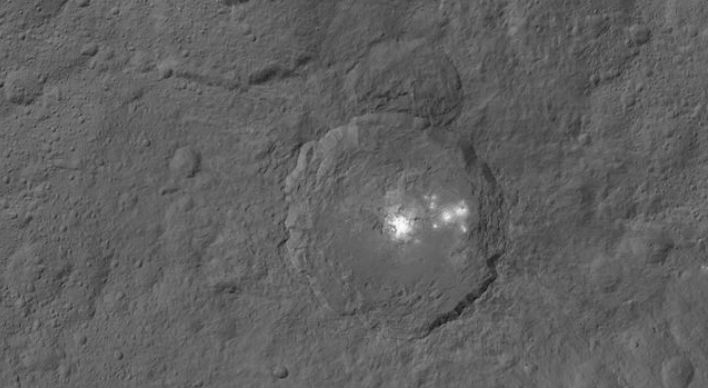
Occator crater and its bright spots images from directly overhead and a distance of 1,450 km (915 miles) by the Dawn space vehicle (image: NASA / JPL / DLR)
It is hoped that this final science orbit will offer definitive data on precisely what is giving rise to a series of odd bright spots within the crater Occator on Ceres, and which appear to be related to what seems to be a small and very localised trace atmosphere within the crater. Current thinking is the bright markings are salt or ice water deposits which are being out-gassed from Ceres’ interior.
Britain’s Spaceplane Gets £80 million Investment
SABRE is the name of a radical “air-breathing” hybrid engine which has been in development by a small British company called Reaction Engines Limited (REL) since the late 1990s. The aim is to reduce the amount of on-board oxidiser required in the rocket combustion process by allowing the engine to draw on the air around it during the initial ascent through the denser part of the Earth’s atmosphere, much like a regular jet engine uses the air around it. Only when the air becomes too thin to support combustion does the rocket engine switch over to its on-board supplies of liquid oxygen to burn with its liquid hydrogen fuel.
Ultimately, REL hope to use the SABRE engine in a single stage to orbit (SSTO) vehicle called Skylon, a fully reusable space launch vehicle, capable of operating from and to a conventional runway just like an aeroplane, and carrying up to tonnes into low Earth orbit. However, the SABRE engine potentially has a wide range of applications, including a purely “air-breathing” variant (called Scimitar) which could be used to power aircraft within Earth’s atmosphere at speeds close to five times that of sound.
REL propose using the SABRE engine in their Skylon spaceplane capable of lifting up to 15 tonnes (cargo or 24 passengers) into orbit. however, the engine has many potential uses, hence the interest from BASE Systems and the UK government (image: REL)
On Monday, November 2nd, REL announced that BAE Systems Ltd is to invest some £20.6 million (US $31.8 million) in REL in return for a 20% stake in the company, while the UK government has awarded a further £60 million (US $92.8 million). Together with recent funding from the EU, REL has now raised some £95 million (US $146.6 million) to further develop SABRE.
Skulls in the Sky
Halloween 2015 brought with it a creepy-looking visitor which looked down on Earth as many across the world took to marking All Hallows Eve on Saturday, October 31st.
The visitor in question was asteroid 2015 TB145, a lump of rock around 600 metres (1,968 feet) across. Tumbling through space, it passed by the Earth at a distance of roughly 480,000 km (300,000 miles) – slightly further from us than the orbit of the Moon, at a speed of some 126,000 kph (78,293 mph).
Such Earth-passing asteroids are not rare, although this one was only identified on October 10th, 2015. It well be the last close passage to Earth by a very large asteroid until 2027, and its size offered scientists a unique opportunity to image it using radar.
Asteroid 2015 TB145 in an eerily skull-like image captured by the Arecibo Observatory on Friday, October 30th, 2015.
On Friday, October 30th, the The Arecibo Observatory in Puerto Rico used radar mapping to capture an image of the asteroid in which it looks like a gigantic skull. It was all an optical illusion of course, the combined result of the radio reflections from the asteroid giving rise to the grey shaded image and the effect of pareidolia, in which the human brain perceives shapes and patterns that aren’t really there; as the asteroid tumbled through space, the similarities to a human skull were quickly lost as the radar reflections changed.
Nevertheless, it was fittingly spooky for Halloween!
Discover Gale Crater
I’ve written extensively about NASA’s Curiosity rover and its explorations within Gale Crater on Mars since its arrival there in August 2012. Now NASA and the Los Angeles Times have combined to provide a virtual reality exploration of Gale Crater, which examines some of the principal features to be found there, traces the rover’s route from crater floor and up the flank of “Mount Sharp” and which allows visitors to fly over the crater or take a guided tour using simple keyboard controls.
 On Wednesday, November 4th, Linden Lab launched a new look to its corporate website.










 Inara Pey: Living in a Modemworld