SL projects update 10/2: group ban preview

Server Deployments: week 10 – recap

As always, please refer to the server deployment thread in the forums for the latest updates / changes.

  • On Tuesday March 4th, the Main channel was updated with the infrastructure update deployed the RC channels  in week 9.
    • On Wednesday March 5th, Magnum remained on the same server version as week 9, comprising the infrastructure update and enabled support for AIS v3.  BlueSteel and LeTigre were updated with a new server maintenance project which contains the following bug fixes:
      • Fixed a bug in which the server release notes link in “About Second Life” would sometimes fail to appear
      • Fixed a bug in which certain objects had incorrect status when crossing between regions
      • Fixed a crash mode

A question in the forum thread on the nature of the fix for “bug in which certain objects had incorrect status when crossing between regions” was responded to by Maestro Linden, who explained the fix was limited to what appears to be a single-case issue.

SL Viewer

The Sunshine project viewer moved to RC status on March 5th, with the release of version 3.7.3.287158 (download and release notes), and a new Voice viewer with Vivox updates entered the release channels as an RC viewer, version 3.7.3.287288 (download and release notes), both of which I previewed here.

The Maintenance RC viewer updated on March 6th to version 3.7.3.287491 (download and release notes). This view includes a range of LL-driven MAINT fixes, including crash fixes, updates to address CHUI-related issues, bug fixes and some localisation work – please refer to the release notes for details.

Group Bans

The Group Ban viewer is approaching a point where it will be appearing in a project viewer form, and it was put through its paces in a group test on Aditi (where some regions have the server-side support), during the Sever Beta meeting on Thursday March 6th.

I’ll be providing a complete overview of how this ability, which allows group own and those within the group assigned the group ban power, to eject and ban people – such as spammers – from a group. The capability is specifically aimed at groups with open enrolment, and those banned are unable to re-join it until such time as their ban has been lifted – although there is a maximum limit of 500 on the group ban list. Go beyond this, and attempts at further banning will fail until such time as one or more names are removed from the list.

I’ll be reviewing the capability in full once the viewer reaches a project viewer status, but in the meantime I’m including a couple of screen caps showing the some of the addition to the group floater which allow group bans to be managed but those empowered to do so.

Goup bans: the option to ban people from a group is available from the Members tab (l), and allws individual or multiple bans to be applied. Those banned are listed in Banned Agents tab (r), which include a button to unban names and a button to pre-actively add names to the ban list using the people picker
Group bans test viewer: the option to ban people from a group is available from the Members tab (l), and allows individual or multiple bans to be applied. Those banned are listed in Banned Agents tab (r), which include a button to unban names and a button to pre-actively add names to the ban list using the people picker

There’s still some work to be done on the viewer (there are some missing notifications, for example, and some issues were found in the when banning people, which need to be addressed). Also, the server-side code has yet to be deployed to the Main grid. So it may still be a little while before we see the group ban functionality progressing more towards more widespread use.

Other Items

Inventory Loss Issue

There are reports of some users experiencing inventory loss. It is said that around three JIRA reports have been filed on the matter, which started occurring on Magnum regions after the AIS v3 was enabled. However, whether or not the losses are linked to the code or not is unclear. The issues are being described as corrupt inventories, with all contents gone, and LL’s own inventory repair tools have failed to rectify matters. The situation is currently under investigation by the Lab, and it appears that the issue may be related to the use of “obscure” viewers.

@SLOfficialtweet branded “not official” by Linden Lab

A new Twitter account appeared on Friday March 7th. “SecondLife Official” (@SLOfficialtweet) billed itself as the “new Second Life official twitter page”. This took a number of people by surprise, given there is a legitimate Second Life Official Twitter account (@SecondLife).

The appearance of the account prompted a question on its legitimacy from Strawberry Singh (among others), which in turn prompted an immediate and unequivocal response from Linden Lab:

false accountPeter Grey, the Lab’s Director of Global Communications further underlined the unofficial nature of the account in an e-mail to me, stating:

That account is NOT official, nor from Linden Lab. It was first brought to our attention this morning, and we’ve been replying to queries on Twitter about it to confirm it’s not legit.

The account doesn’t appear to be a phishing attempt – the link included in the account header seems to refer to the official secondlife.com website. However, as it stands, it is likely that this account could be blocked / removed by Twitter as it would appear to be a pretty clear attempt at brand impersonation and trademark misuse.

Parody accounts, unaffiliated accounts, etc., are not new on Twitter. However, many of these do carry an indication that they are not in any way official. Twitter also have an account verification process for those accounts that might be subject to impersonation in order to further help prevent issues of misrepresentation. Given the extent to which the Lab uses Twitter, having their own official account verified might help discourage this particular prank from being repeated in future.

SL Go: of pricing and models and some thoughts from OnLive

SL go logoImportant note: The SL Go service is to be shut down on April 30th, 2015. For more information, please read this report.

Update: On April 3rd, 2014, OnLive announced a revised pricing structure for SL Go.

While only launched on Wednesday March 5th, OnLive’s new SL Go offering for accessing Second Life from Android devices, low-end computers and TVs (additional hardware required) has already received a lot of kick-back due to its initial pricing model.

As it stands, OnLive, in something of a departure from their normal pricing models, are initially presenting the service on a pay-as-you-go offering starting at $3.00 for an hour in SL (with an initial 20-minute free trial period for new sign-ups), through $8.00 for up to three hours access, to $25.00 for up to ten hours. This is being seen as prohibitively expensive for using Second Life.

But is that really the case? Ultimately, the answer to this is both yes and no.

SL Go by OnLive: streaming Second Life to your tablet - but the pricing model is upsetting to many
SL Go by OnLive: streaming Second Life to your tablet – but the pricing model is upsetting to many

On the one hand, SL Go is being presented as an adjunct – not a replacement – to people’s “normal” means of accessing Second Life; something to be used to get in-world when access via home computer and local viewer isn’t an option. This was very much underlined by Nate Barsetti,  the Senior Manager of Customer Relations at OnLive, and Don Laabs, Linden Lab’s Senior Director of Product with overall responsibility for Second Life, emphasised when both appeared on a Designing Worlds special presentation shown a few hours after the launch of the service.

In such instances, a pay-as-you-go option is actually valid, as it potentially offers a better means of managing costs than something like a subscription payment system, such as OnLive’s new $14.99-a-month CloudLift subscription service, which was also launched on March 5th alongside their new OnLive Go service (of which SL Go is actually a part)..

For example, someone who find they need to access SL for, say, 4 hours a month when they are away from their home PC and viewer would have to pay a maximum of $31.00 a quarter in order to do so. But if SL Go were pitched at the same price as CloudLift, then their cost for the same 3-month period would be $44.97.

Of course, how far the pay-as-you-go payment plan remains attractive is on something of a sliding scale, and a tipping-point can easily be reached. There’s also the fact that were SL to be “rolled into” something like CloudLift, then it becomes more attractive on a subscription service as users gain access to it and other titles provided by CloudLift should they wish to make use of them. But that doesn’t negate the fact that there are genuine use-cases where pay-as-you go is potentially far more cost-effective, and therefore attractive, than a flat subscription rate.

On the other hand, however, SL Go has been presented as a means of accessing the full richness of SL on computers otherwise incapable of doing so. This suggests that SL Go could be used as a more general means of using SL than those on such low-end machines can currently enjoy – and as such, it is where the pay-as-you-go option falls flat on its face, and an alternative means of paying for the service to be used in this way is required, such as a subscription model. And OnLive aren’t actually blind to this fact.

Continue reading “SL Go: of pricing and models and some thoughts from OnLive”

SL JIRA officially open – with limits

In keeping with an earlier promise, On Thursday, March 6th, Linden Lab re-opened the JIRA to public scrutiny.

Broadly speaking, this means that:

  • All users will be able to see all BUG issues, all the time
  • All users will be able to comment prior to a report being triaged; post tiraging, reports will open to comment only by the original reporter, LL staff and those from the community (TPV developers and others selected by Linden Lab for having demonstrated skills in this area)
  • The “New Feature Request” is back.

There is a blog post announcing the change, and which indicates there is a limitation:

While we want to make issues visible for the reasons described in our last post, we’re not going to extend this to old issues, because at the time they were created, users knew that those reports would have limited visibility and they may have included sensitive and/or private information. We don’t want to take information that someone thought would be private and suddenly make that visible to everyone, so the new visibility settings will apply only to new issues.

As of Thursday March 6th, the SL JIRA is again open to public viewing - however, only BUG reports filed on or after than date will be viewable to all ...
As of Thursday March 6th, the SL JIRA is again open to public viewing – however, only BUG reports filed on or after than date will be viewable to all …

Even with this limitation, this is a positive step forward in allowing users to again be more pro-active in providing assistance in identifying issues, duplicates, etc., and enabling a better degree of investigation to be carried out when a problem is encountered.

... older BUG reports will only be viewable to those with the requisite permissions
… but older BUG reports will only be viewable to those with the requisite permissions

Note that in order to browse / view BUG issues, you must be logged-in to the JIRA system (STORM, VWR and SVC issues remain browsable without being logged-in). Also, bear in mind MAINT issues will remain unviewable, as was the case before the JIRA was closed.

A Little Village walk

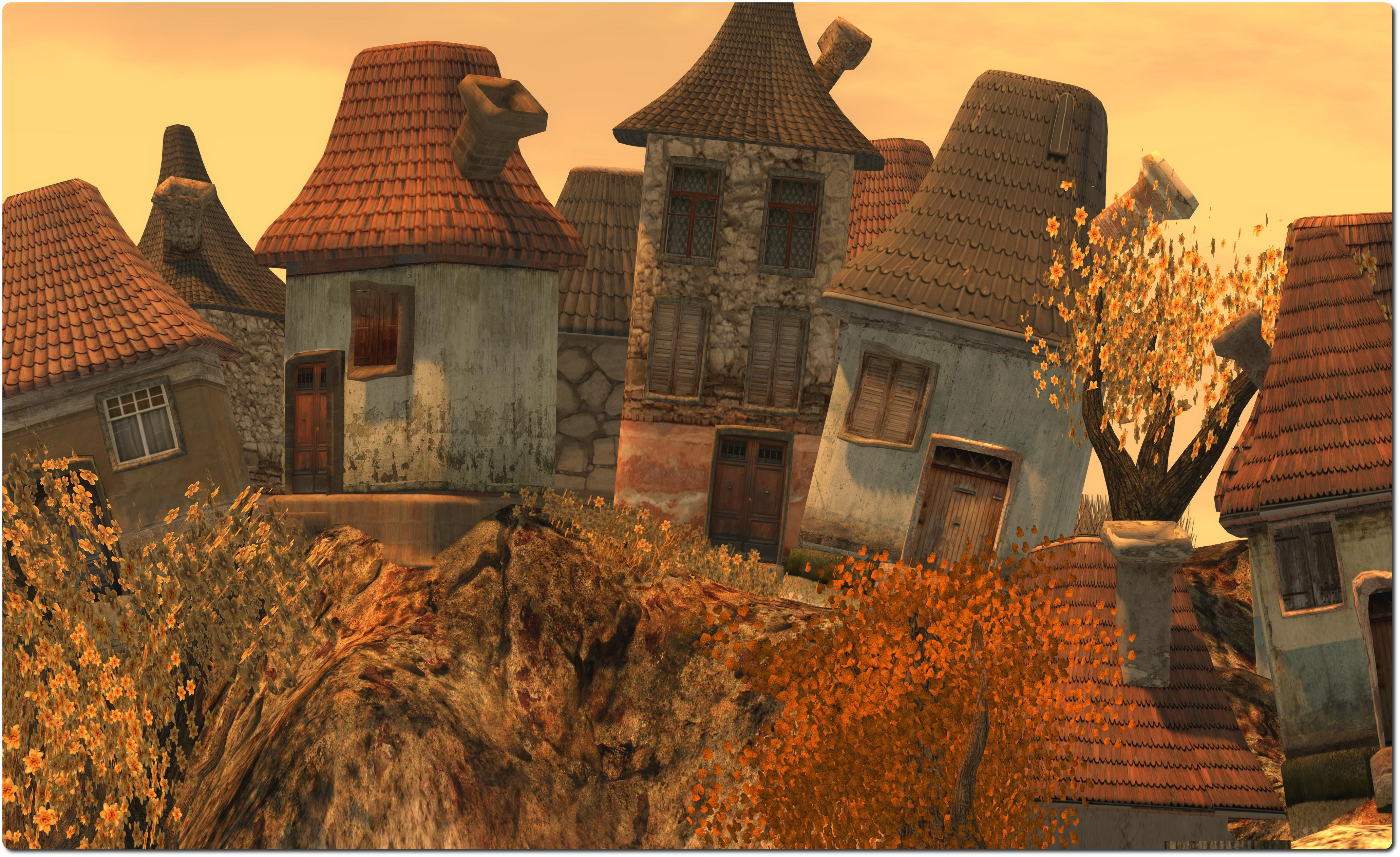
Little Village, March 2014Little Village, March 2014 – click any image for full size

Cica Ghost officially opened her latest installation at  12:00 noon SLT on Thursday March 6th. This blog post was supposed to be a preview; then that thing call real life occurred…

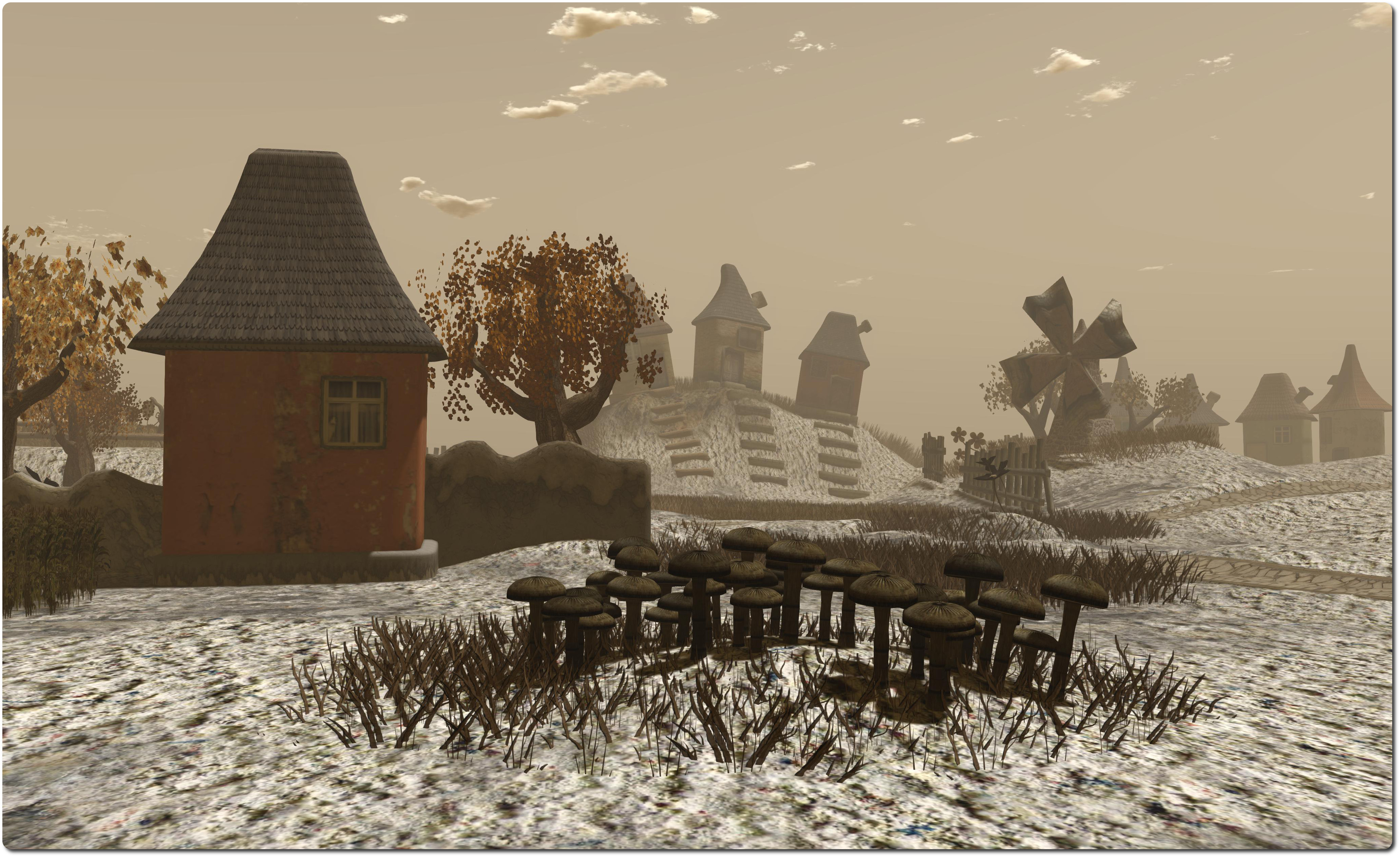
Anyway, anyone who enjoys Cica’s creations is going to love Little Village. “Delight” barely covers one’s reaction on seeing this marvellous collection of whimsical houses with wobbly chimneys, huddled together in little groups or standing alone, some on level ground, others precariously straddling little hills.

Little Village, March 2014Little Village, March 2014

These are houses with character, their shapes seemingly lifted from a children’s cartoon and made real, each with its own unique character and colour (some could perhaps do with a lick of paint!), all of them vying for your attention; indeed, when camming over some of the little groups, it isn’t too hard to imagine them jostling one another for position, trying to catch your eye.

Between and around them are trees and plants, little footpaths running here and there – and nowhere in particular – while rickety fences dot the landscape. There’s a simple, glorious charm to the entire setting, one which belies the care and detail put into the work. Can you spot the cats in the windows, or find places to sit and watch the world go by?

Little Village, March 2014Little Village, March 2014

I understand from talking to Ziki Questi that Erythro Asimov provided the region so that Cica could build her Little Village, so we him a vote of thanks for doing so, just as Cica deserves a word or two of thanks as well for once more sharing her whimsy with us.

But don’t just take my word for it, go see for yourself; you’re sure to find yourself smiling.

Little Village, March 2014Little Village, March 2014

Related Links

Sunshine viewer updates reach RC status, new Vivox RC

On Wednesday March 5th, two new release candidate viewers appeared in the viewer release channel, bringing the total number of RC viewers back up to five, with more still sitting in the queue and yet to be seen, together with some project viewers as well.

Sunshine Release Candidate

The Sunshine RC (version 3.7.3.287158 – download and release notes) contains the latest updates related to Server-side Appearance (Project Sunshine, hence the viewer’s name), which comprise two key elements.

The initial AIS v3 updates are aimed at further improving the reliability of SSA baking, including issues where
Part of the Sunshine viewer updates is aimed at improving the reliability and performance of the  baking process & resolving issues, including those where an avatar’s appearance may appear to be stuck

The first of these is a code-clean-up / polish which includes the removal of a lot of the old avatar baking code from the viewer, as this is no longer required for Second Life, and the removal of a number of redundant viewer requests related to avatar baking operations. In addition, the code has performance and stability improvements and bug fixes, all designed to further improve avatar baking, such as dealing with conditions where an avatar’s appearance may appear to be stuck.

The second part of the update – which is related to SSA – is the support for the Advanced Inventory System version 3 (AIS v3). This is a set of changes which are being made both to the viewer and to the simulator software. Currently, the simulator code is only available on the Magnum RC, and will be progressing to the other RCs and the Main channel in due course. However, the viewer code is compatible with both the “new” simulator AIS v3 code and the current AIS v2 code, so this release candidate can be used freely across the grid.

The functions initially being deployed with AIS v3 (server and viewer) are mostly related to improving the reliability of outfit changes, which should also improve performance and see a drop in failure rates once the AIS v3 simulator code is fully enabled across the grid, and the necessary viewer code merged into all viewers.

Longer-term, AIS v3 has broader goals, as Don Linden explained at a TPV Developer meeting back in October 2013 (see the section titled Advanced Inventory Service (AIS v3)). These are (in part) aimed at giving more control to the viewer about what it wants to do with the inventory without necessarily having to go through the simulator when working with one’s own inventory or the Library inventory; the viewer will communicate directly with the inventory service. However, certain capabilities will remain unchanged; avatar-to-avatar inventory transactions will still be handled via the simulator, and it will still not be possible to copy personal items to the library folders, for example.

TPVs will be integrating this code so that their users will benefit from the SSA improvements, although the release of TPV updates with the code may take a little longer where there is s need to avoid the removal of the “old” avatar baking code to maintain support for OpenSim users.

 Voice Viewer Release Candidate

vivoxAs many who routinely use voice will be aware, there have been issues with voice for some considerable time, some of which were exacerbated recently with the release of the Vivox API  4.5, updates used in recent versions of the SLvoice.exe plugin which did not play well with earlier versions of SLvoice.

Whirly Fizzle and Ed Merryman produced a couple of videos demonstrating the issues, one of which is included below.

As I recently reported, Vivox reached out to Linden Lab to help resolve many of these issues, and a starting-point for this work was seen as getting all viewers updated to the latest version of the Vivox API (4.6.x). This release candidate viewer (version 3.7.3.287288 – download and release notes) includes the updated API in the SLvoice plugin, and is aimed at improving voice reliability and performance as well as hoping dealing with some of the significant issues users on Mac Mavericks have been experiencing.

To encourage TPVs to integrate the Vivox updates into their own offerings, the autobuild packages for generating the new voice modules for the viewer have been made available to TPVs, allowing them to test new voice builds alongside LL rather than having to wait for the Lab to build, test and release new voice plugins.

It is also hoped that once built, the new modules will be binary compatible and have no related viewer code changes, potentially allowing TPVs to offer the updates directly to their users who prefer to run older versions of a viewer, thus allowing them to (hopefully) resolve their voice issues without being forced to update their viewer if they’re not ready.

If you use the official SL viewer, and you have been experiencing problems with voice, you may want to manually download and run this RC if you haven’t been selected to receive it as part of the RC testing.

Related Links