When Life Gives You Apples…

When Life Gives you Apples ... Run! - LEA 6
When Life Gives you Apples … Run – LEA 6

Now open at LEA 6, in what is the final installation under the UWA’s Full sim Art series as we’re currently familiar with it, is Rebeca Bashly’s When Life Gives You Apples … Run

As Jayjay Zifanwee notes while introducing the piece in the UWA blog, it is fitting that Rebeca should be the final artist to participate in the Full sim Art series in its current format; in 2011, she was the very first artist to participate in the series – indeed, in any LEA exhibition – when her remarkable interpretation of Dante’s Inferno opened in October of that year (my review of which you can read here).

When Life Gives You Apples … Run Offers a provocative look at the subject of the abuse of women, either by others or by themselves.  “Looking at various myths, legends and fairy tales, apple seems to be pretty unfortunate for a woman. When an apple appears in a story, you know that something will go bad,2 Rebeca says of the piece. “From Eve, thru Greek mythology to Snow White there was always a catch with an apple. It is beautiful, delicious, tempting, seductive. A Perfect disguise for all bad that can come. I use it as a symbol for the monstrosities that woman too often don’t recognise as such in its early stages.”
When Life Gives you Apples ... Run! - LEA 6
When Life Gives you Apples … Run – LEA 6

And indeed, the central part of the installation is – an apple. A quiet incredible apple in fact – or at least the core of one, as it has clearly been eaten. Constructed of mesh and over 70 metres tall, the apple sits on the ground, stalk pointing to the sky, the uneaten flesh at its lower end serving as the arrival point, where a smaller apple sits, offering visitors an introductory note card.

Winding up through the the core of the apple is a tunnel visitors are asked to follow.  This leads the way up to a couple of teleport platforms at different levels within the apple’s core, a sculpture in occupying the space between them; and it is by taking these teleports that the visitor is led to the parts of the installation dealing more directly with the theme of abuse (or perhaps “subjugation” might be an equally valid term) either inflicted from within or without.

When Life Gives you Apples ... Run! - LEA 6
When Life Gives you Apples … Run – LEA 6

In the first, Home Sweet Home, we see a house being torn apart by a giant heart, both suspended above an open road – itself an image of freedom. The accompanying story suggestive of a person caught in a relationship marked by the abuse of lairs, deceptions, stories, words, finally breaking the circle and finding freedom in herself and in the world at large.

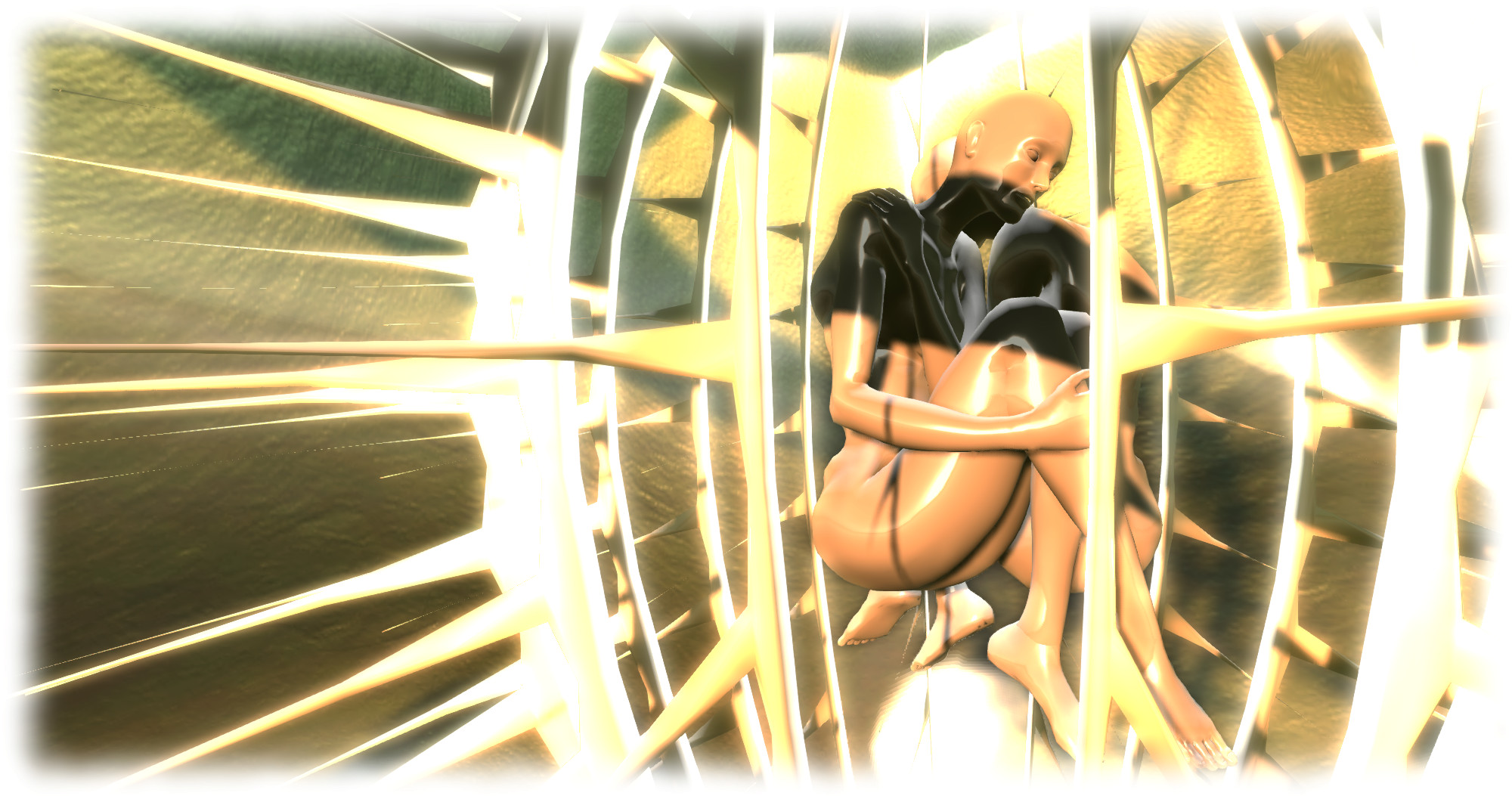
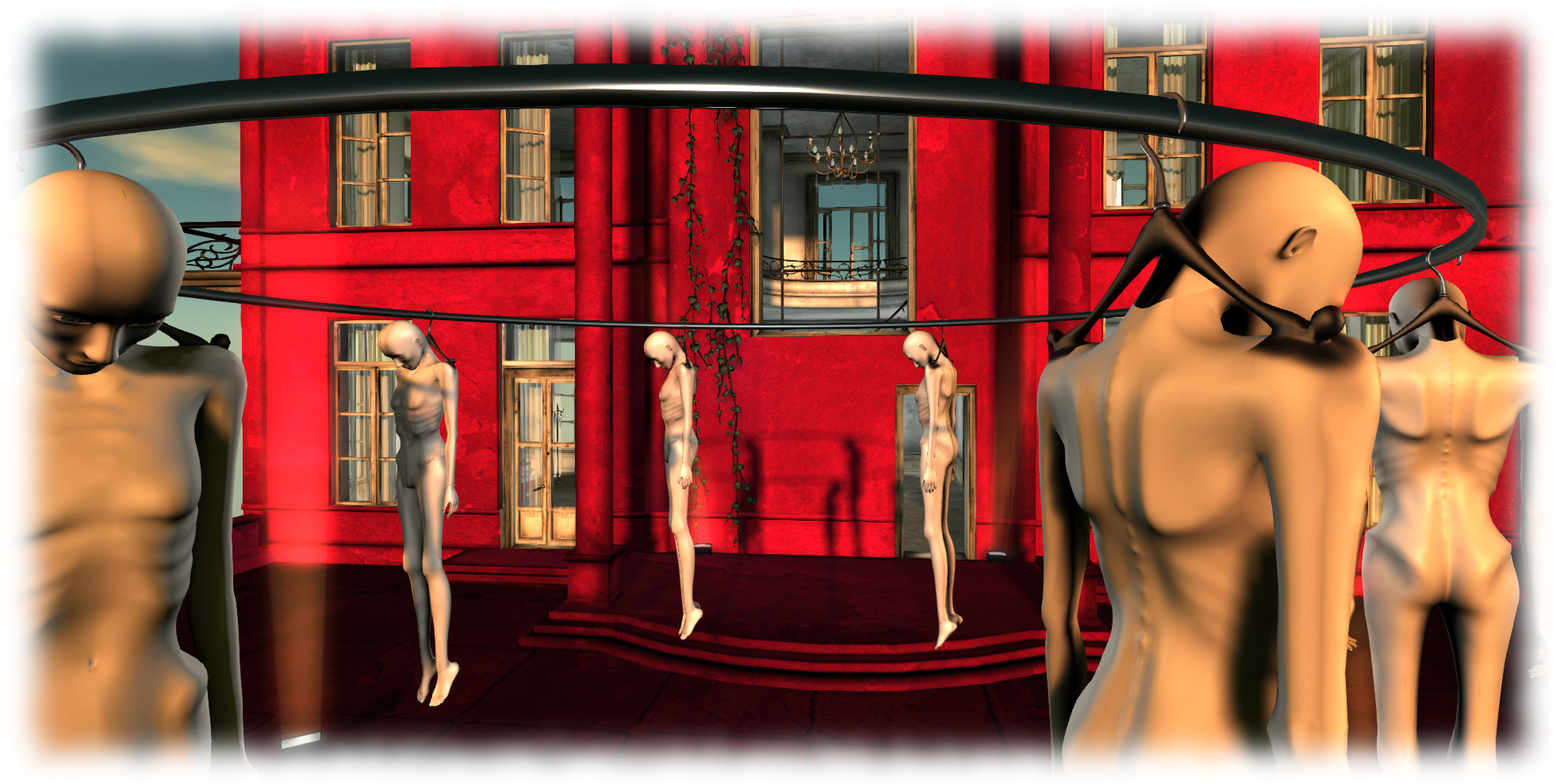
In the second, the subject matter focuses on self-abuse in the form of anorexia nervosa and Bulimia nervosa, and the destructive effects they can have on those stricken with them. This is also accompanied by a story, that of the Doll’s House.
When Life Gives you Apples ... Run! - LEA 6
When Life Gives you Apples … Run – LEA 6

There is strong symbolism throughout this installation, be it with the story platforms, or the sculpture of the caged women. Even the tunnel winding up through the apple core has a meaning of its own, for example; an echo of the way in which maggots can bore through an apple, ruining its wholesome appearance via decay from the inside, just as relationships or lives which might appear whole from from outside are slowly decaying from within, as with the vignettes presented by this build.

As noted towards the top of this article, When Life Gives You Apples … Run is a provocative piece; but one of Rebeca’s strengths is that she’s never fought shy of making people think.  As such, this is a worthy piece on which to close the current UWA Full Sim Art series.

Related Links

OnLive announce pilot L$ payment programme for new SL Go users

SL go logoImportant note: The SL Go service is to be shut down on April 30th, 2015. For more information, please read this report.

OnLive, the company providing the SL Go service, announced on Monday, March 9th, that new users signing-up to the service can now pay for their use of the service with Linden dollars via a pilot scheme involving secure in-world payment booths offered through OnLive’s SL Go support island.

The news came via a statement from OnLive that reads in part:

You’ve probably heard of SL Go, the viewer that streams Second Life from the cloud in ultra-rich graphics, right to your tablet or low powered computer.  You might have wanted to try it, but hate giving out your credit card info and personal information.  Well, we now have a great solution for you!
If you sign up for SL Go with a NEW USER account you can buy weekly subscriptions in-world using Linden Dollars (L$). There is a private sign up booth where you can create your free SL Go account, and then pay for subscriptions using L$. Each week is only L$650, and you can buy up to 4 weeks at a time.  Also, you can return and renew or extend your subscription in-world at any time.

Dennis Harper, OnLive’s Product Manager for SL Go contacted me to provide a few extra details. “This move will initially be for a limited number of new users,” he said. “The fact is, while payment in Linden Dollars has been frequently requested, we just don’t know how the community will use this new feature. Hopefully, given Linden Dollar payments have been so requested, this will be wildly popular.  If so, we will take the cap off and offer it to all SL Go user and subscribers.”

Part of the problem here is that payment via L$ can only be made on a non-recurring basis; so there is a risk that people could end-up signing-up to use SL Go for a week, and then never renewing, which would not be particularly good for OnLive’s business model or for SL Go itself. Hence the pilot programme, which allows OnLive to test the water.

The new SL Go in-world payment centre - new users can use this to sign-up for an SL Go account, and renew their payments
The new SL Go in-world payment centre – new users can use this to sign-up for an SL Go account, and renew their payments, with Dennis Harper (centre) and Jersey and Robby (to the right) from OnLive

However, if the pilot does prove successful – and Dennis and OnLive believe it will be – then paying for your subscription to SL Go via L$ will become a standard payment option provided by OnLive, and the company will implement a means by which existing SL Go users can transition to paying for their  use of the service with Linden Dollars if they so wish.

Another reason for not offering L$ payments immediately to existing users is that of technical complexity; there’s a lot involved in providing the means for users to switch over to a L$-based payment plan. As such, it makes sense for the company to trial the system with new users first.

The payment centre provides teleport disc to three secure sign-up areas ...
The SL Go in-world sign-up and payment centre provides up to three teleport discs to three secure sign-up areas (the number available may vary, depending on whether some / all of the sign-up areas are currently being used – they will accept only one avatar at a time)

“Solving the transition issue is difficult and will take some more time,” Dennis told me. “We need to figure out how to ‘stack’ payments via Linden Dollars upon an existing recurring subscription end-date, and implement a means by which their existing recurring can be cancelled, without it impacting their use of the service.”

He continued, “And then what happens if a user decides payment via L$ isn’t for them, and they’re happier using a recurring subscription? How do we facilitate switching them back, again without impacting on their use of the service or making them sign-up all over again? So it’s much more complex, both technically and from a user-experience angle, to provide Linden Dollar payments to existing users.

“But, if the pilot programme works out, it is something we’ll be working towards providing!”

Once at a sign-up centre, a new user can operate the TV screen to view the OnLive SL Go wesbite securely (no-one else can see it) and register a new OnLive account for themselves. The orb next to the TV can then be used to made their first payment of L$650
Each of the sign-up areas provides instructions on how to sign-up for an OnLive account using the television, how and how to download the OnLive client (PC / Mac) and app (iOS / Android). A payment sphere is also provided for your initial payment (made to OnLiveBanks Resident), which is a minimum of L$650 for one week

In the meantime, those wanting to give SL Go a try, but who might have fought shy of the idea due to the need to supply credit card and personal information can now do so by visiting the in-world sign-up and payment centre at SL Go Island. Signage at the centre will walk you through the sign-up process (which you only have to complete once; after that, you can renew your use of SL Go via the payment orbs located on the ground level of payment centre).

Please note that, for obvious reasons – including the potential to game the system – users signing-up via the in-world payment method will not have the 7-day free trial period offered to them (it can, for example, be too easily gamed).

If you haven’t tried SL Go yet, and would prefer to pay via subscription, you can still sign-up via the SL Go website, which is still offered with the  free 7-day trial period. Existing users can obviously sign-up for a new OnLive account using the in-world method if they wish, but will then be paying for two OnLive accounts until such time as they cancel one or the other.

Once you have created an account in this way, you can conitnue paying for the service via the payment globes at the ground level payment centre - there is no need to teleport to the secure areas in order to make further payments
Once you have created an account in this way, you can continue paying for the service via the payment globes at the ground level payment centre (payments made to OnLiveBanks Resident) – there is no need to teleport to the secure areas in order to make further payments

Remember, SL Go isn’t for everyone. But if you have a need to access Second Life while on the go from either an iPad or Android tablet (using the SL viewer only at present), or if you have a low-end computer on which you’d like to run Second Life in all its full richness (using either the SL viewer or Firestorm), then SL Go may well be for you.

2015 viewer release summaries: week 10

Updates for the week ending: Sunday, March 8th, 2015

This summary is published every Monday, and is a list of SL viewer / client releases (official and TPV) made during the previous week. When reading it, please note:

  • It is based on my Current Viewer Releases Page, a list of all Second Life viewers and clients that are in popular use (and of which I am aware), and which are recognised as adhering to the TPV Policy. This page includes comprehensive links to download pages, blog notes, release notes, etc., as well as links to any / all reviews of specific viewers / clients made within this blog
  • By its nature, this summary presented here will always be in arrears, please refer to the Current Viewer Release Page for more up-to-date information.

Official LL Viewers

LL Viewer Resources

Third-party Viewers

V3-style

  • No updates.

V1-style

  • Cool VL Viewer
    • Stable branch updated to version 1.26.12.34 – March 7th
    • Experimental branch to 1.26.13.2 – March 7th
    • Legacy branch to 1.26.8.90 – March 7th
    • Release notes

Mobile / Other Clients

  • LittleSight for Android updated to version 1.6.1.0 on February 22nd – core update: changing the default log-in to a user’s home location to avoid log-in failures.

Additional TPV Resources

Related Links

Armenelos: the returning

Armenelos, Calas Galadhon; Inara Pey, March 2015, on Flickr Armenelos, Calas Galadhon (Flickr) – click any image for full size

In December 2014, Ty Tenk  contacted me to let me know that Calas Galadhon would be closing its gates for the month of January 2015, while he and Truck Meredith took their annual hiatus from things following the busy October through December period. He also informed me that during the hiatus, there would, again as usual, be some remodelling within the parks, and as a result, the long-running recreation of the famous Santorini, located in the Armenelos region, would be packed away, and the region itself re-purposed.

While Santorini may well have gone from Calas Galadhon, Armenelos itself formally re-opened on Sunday, March 8th, and true to their word, Ty and Truck have created something truly fabulous. Relocated to occupy the north-west corner of the estate, and sitting alongside a new addition to the park, Long Lake, which Ty and Tuck have added to Calas in order to bring the total number of regions in the park back up to 12, the new Armenelos is a visual and aural delight.

Armenelos, Calas Galadhon; Inara Pey, March 2015, on Flickr Armenelos, Calas Galadhon (Flickr)

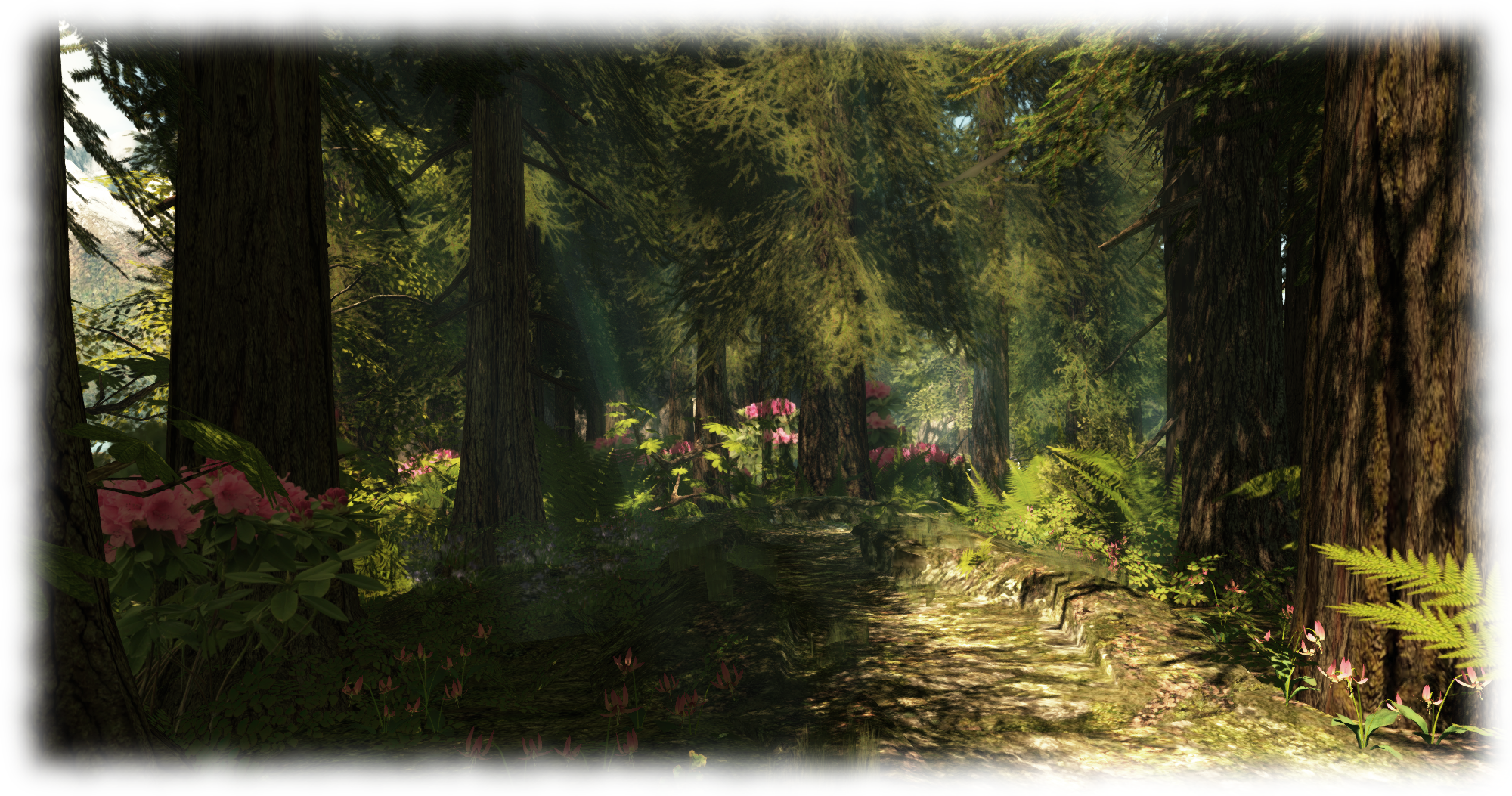
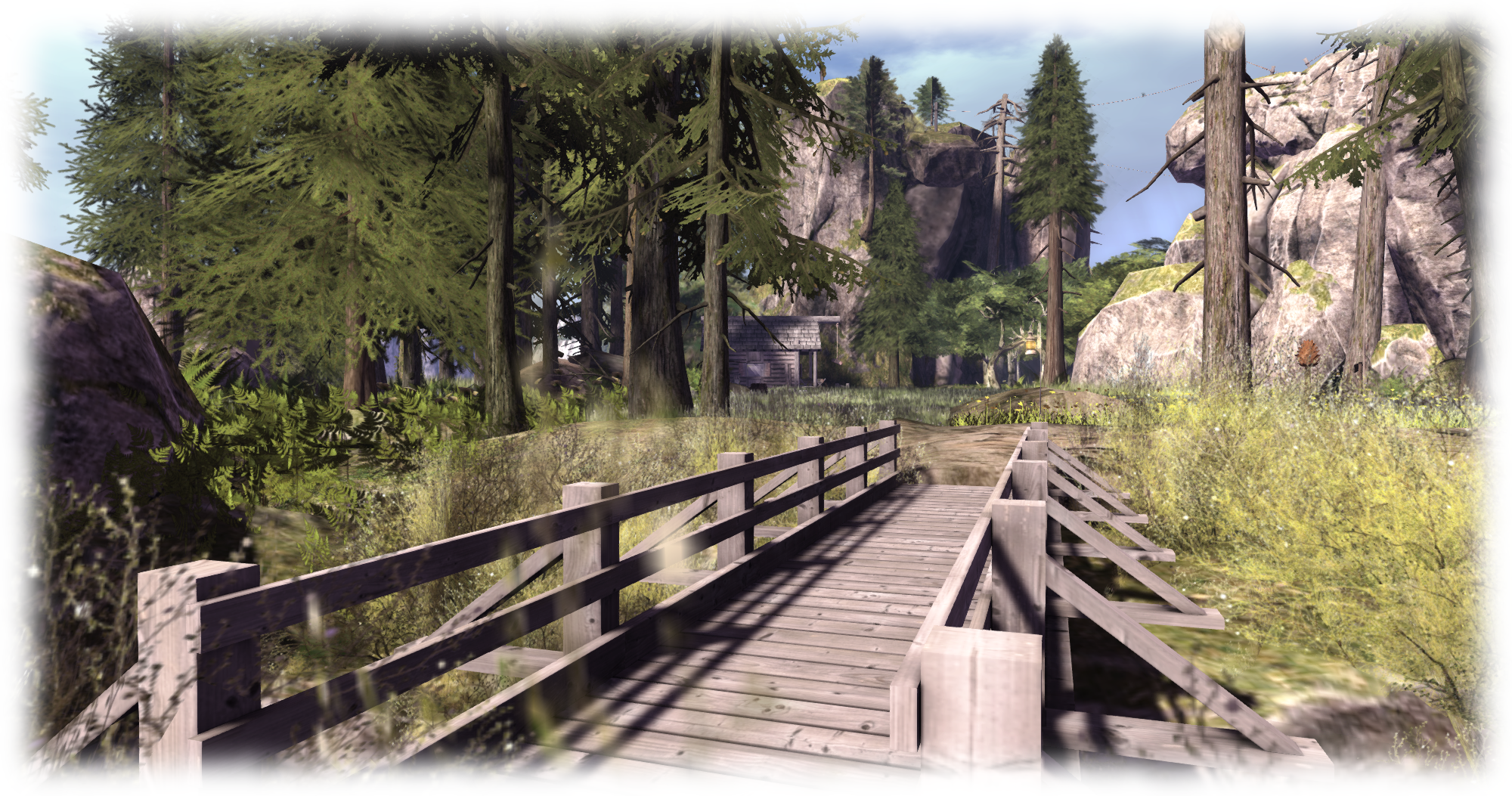
On arrival, the visitor is presented with a rugged, wooded landscape, with high cliffs facing the sea to the west, west, and which drop slowly to lower-lying land to the east, and the bridge connecting Armenelos with the  mostly low-lying islands of Long Lake, and which in turn offer passage to the Misty Mountains.  Across Armenelos, tall spires of rock and flat-topped plateaus push their way between the trees, offering high vantage points from which to survey the world, while paths an trail wind through the tall grass and under the shade of high boughs, encouraging visitors to wander and explore.

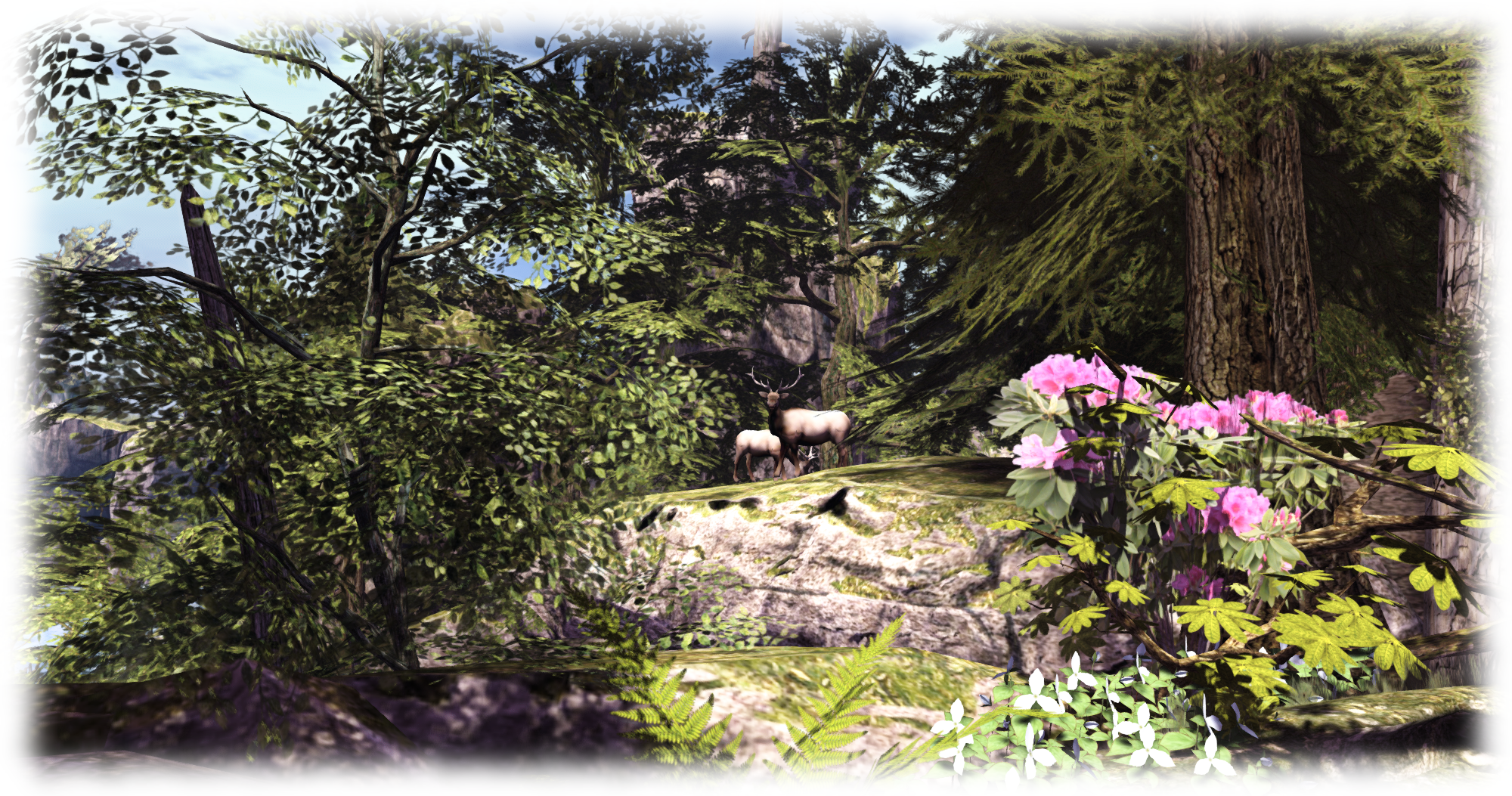
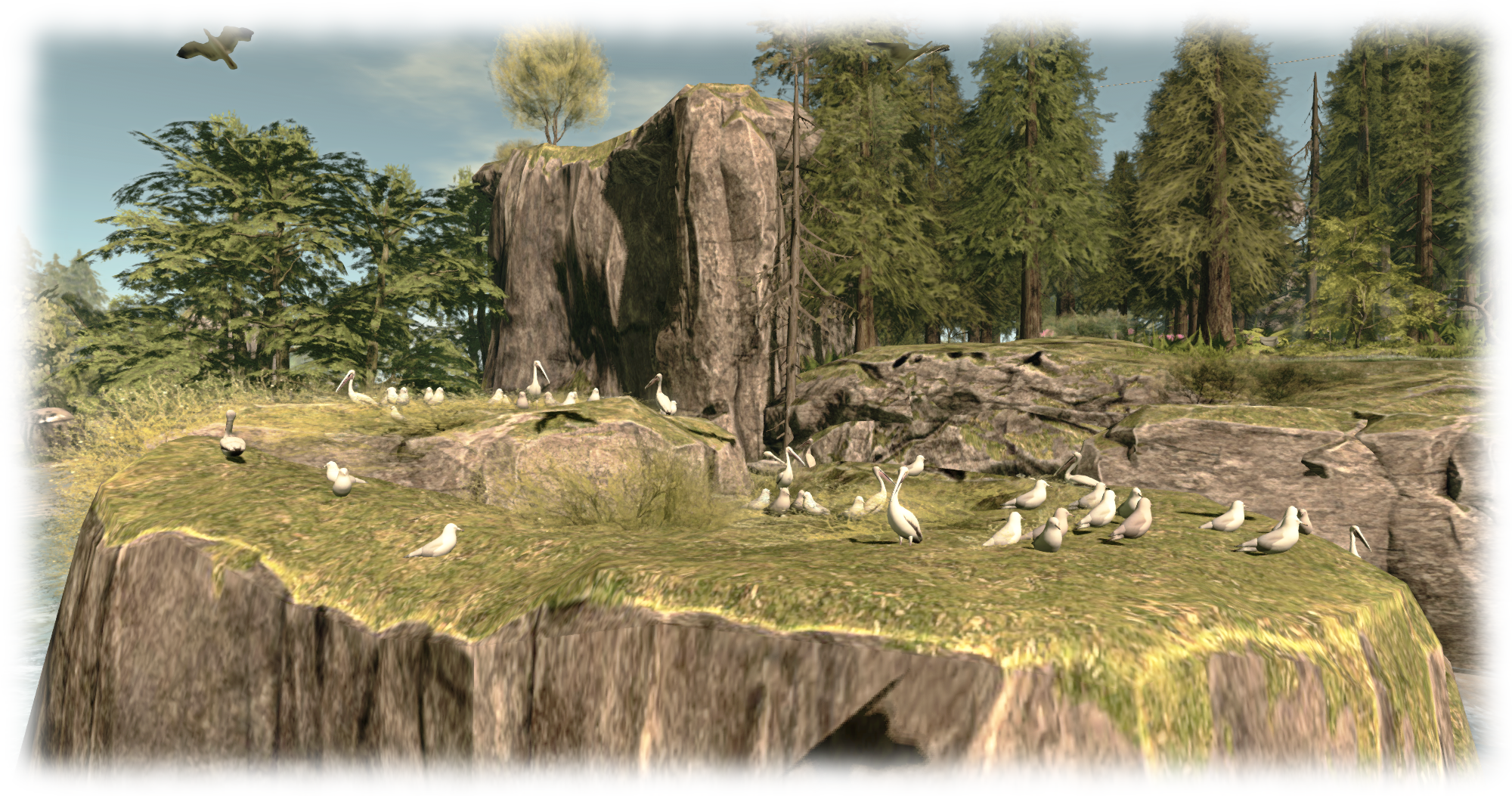
And there really is a lot to see; so much so, that unless you are keen-eyed, you’re liable to miss many of the finer touches tucked away across the region which bring it to life. For a start, make sure to have local sound enabled; Armenelos has a wonderful sound scape that enhances the feel of immersion: waves crashing against the cliffs; the singing of birds inland, the bark and cry of gulls wheeling over offshore island  where they and pelicans are nesting; the honk of male deer, the plaintive cry of a high-soaring eagle or two; the slightly worrisome howl of wolves through the trees…

Armenelos, Calas Galadhon; Inara Pey, March 2015, on Flickr Armenelos, Calas Galadhon (Flickr)

Signposts close to the landing point will point you in the general direction of many of the region’s attractions, such as the oriental pavilion, where you can enjoy a refreshing cup of tea under the benevolent gaze of Buddha. From here you can follow a wooden board walk around the rocky escarpment that rises to one side of the pavilion and hop onto a boat with a friend or two and enjoy a trip around and through the waters of Armenelos and Long Lake, passing the Dolphin Cafe, which remains in a re-modelled form on the west side of the land, and which resume its live entertainments from Monday, March 9th at 18:00 SLT (Oz’s club also remains overhead as well).

For the daring, there’s the opportunity to scale the high plateaus and then traverse between the various high-points via rope glides supplied by Cube Republic, which have excellent camera positioning for giving you a real feel for shimmying your way over deep gorges on a single length of rope! There are also, of course, all the touches one would expect from Ty and Truck – places to sit and chat, to cuddle or dance, and hidden walks which might not be discovered on a first visit.

Armenelos, Calas Galadhon; Inara Pey, March 2015, on Flickr Armenelos, Calas Galadhon (Flickr)

For me the magic of Armenelos doesn’t just come from all of this; it also comes from the little details that have been added throughout the region, and which really do require a keen eye in order to spot. Such as spotting one of Morgan Garrett’s marvellous and beautifully detailed little brids sitting on a bough or watching you from the side of a board walk, song occasionally bursting forth from it; or looking up into the branches of a tree and spying a little lizard, frozen in place, looking back and you and pretending it really isn’t there…

Given all of this, you’ve probably gathered that Armenelos isn’t so much a place to be visited, but rather to be experienced. It its new form, it addes further depth to the already remarkable Calas Galadhon parklands – which, if you haven’t visited before, I strongly urge you to do so, as there is much to see, including new attractions. Should you do so, remember you can take a horse from near the park’s main entrance and ride up from Calas Galadhon, through Mirrormere and over the Misty Mountains to Long Lake (which, btw, offers activities of its own), and then on to Armenelos, making for a wonderful trail ride.

Armenelos, Calas Galadhon; Inara Pey, March 2015, on Flickr Armenelos, Calas Galadhon (Flickr)

When visiting, please also remember that Ty and Truck provide all 12 of the Calas Galadhon park regions purely for the benefit of other residents. They do not offer land rentals or use the regions to run an form of business, nor profit from the estate. They provide 40% of the total running costs out of their own pockets, the rest being made up by donations by visitors. So please, when visiting, do consider using one of the donation points scattered throughout the park to show your appreciation for, and support of, their work and generosity in bringing to much to Second Life for us all to enjoy.

Related Links

Short circuits on Mars and mapping asteroids

CuriosityFollowing my last Curiosity update, which noted that other than for one potential drilling / sampling target, work was wrapping-up for the Mars Science Laboratory in the “Pahrump Hills” location on the lower slopes of “Mount Sharp”, the decision was taken to indeed gather one more sample.

The selected target had been dubbed “Telegraph Peak”, and sits towards the top end of “Pahrump Hills”. It was selected because Alpha Particle X-ray Spectrometer (APXS) measurements carried out by the rover during its 5-month “walkabout” in “Pahrump Hills” revealed the rocks in the area to be relatively enriched in silicon when compared to the corresponding amounts of aluminium and magnesium, which is somewhat different to rocks sample prior to the rover arrival at the basal slops of “Mount Sharp”. This enrichment has also shown to increase the further up the slopes of “Pahrump Hills” the rover climbed, which is of interest to the science team.

“When you graph the ratios of silica to magnesium and silica to aluminium, ‘Telegraph Peak’ is toward the end of the range we’ve seen,” Curiosity co-investigator Doug Ming explains. “It’s what you would expect if there has been some acidic leaching. We want to see what minerals are present where we found this chemistry.”

Sampling took place on February 24th, 2015 (PDT) or Sol 908 for the rover on Mars. For the first time in Curiosity’s time on Mars, it was carried out with no preliminary “mini-drill” operation. Instead, the science team judged that analysis of the rock by APXS indicted it was of a very similar nature to the previous two sample drilling sites in “Pahrump Hills”, and the new lower percussion drilling capabilities the rover now has were judged as sufficiently safe enough to go ahead with a direct sample gathering operation.

How the drill works: On the left, a view of the drill mechanism mounted on the rover's turret, with the drill bit centre bottom. On the right a cutaway showing the sample collection mechanism in the drill bit
How the drill works: On the left, a view of the drill mechanism mounted on the rover’s turret, with the drill bit centre bottom. On the right a cutaway showing the sample collection mechanism in the drill bit

As I’ve covered previously in these pages, obtaining a sample for analysis is a multi-part operation. First the rock is drilled, and a core sample forced up through the drill bit into a one of two sample collection chambers at the top of the drill mechanism. From here, the sample is “shaken” through a feed to another device in the rover’s robot arm turret called CHIMRA – the Collection and Handling for In-Situ Martian Rock Analysis system, used to separate the tailings through a series of sieves, ready for different sizes of sample grains to be passed through the the rover’s on-board laboratory systems.

Both of these operations require the use of the drill’s percussive system to vibrate the turret, forcing material both from the drill’s sample collection chamber and through CHIMRA. However, on February 27th, during the initial operation to move the sample tailings from the drill chamber to CHIMRA, Curiosity’s on-board fault protect system identified a transient short circuit within the robot arm’s electronics. The immediately resulted in all arm-related activities being shut down, and the arm and turret locked into position ready for diagnostic operations to commence.

A transient short can occur for a number of reasons, and can pass without significant problems. However, it may also indicate a potential issue which might require some measure of action, such as a change in operating procedures or a restriction on how a mechanism is used, in order to avoid the issue becoming a serious problem in the future. To this end, following the fault report, mission engineers started diagnosing the problem, with almost all rover operations halted while they did so.

A monochrome image from Curiosity’s Navigation Camera (Navcam) shows the position in which the rover held its arm for several days after a transient short circuit triggered on-board fault-protection programming to halt arm activities on February 27th, 2015 PDT, the 911th Sol of the rover’s work on Mars.

On Thursday, March 5th, as a part of the investigative process, the rover was commanded to carry out a series of vibration tests of the kind performed while forcing the transfer of samples from the drill to CHIMRA. The vibrations were carried out with the robot arm and turret in the same orientation and position which caused the initial triggering of the fault protection system, and in the third of 180 repeat motions, a similar transient short occurred, lasting less than one one-hundredth of a second, enough to trigger the rover’s fault protection systems, and confirming there does appear to be some kind of electrical issue.

Tests are now under-way to determine whether or not the short will occur with the turret in different orientations, and may be followed by additional tests to see if it occurs with the arm in different positions. If no shorting occurs with either a change in the orientation or position of the turret / arm, then the most obvious step in preventing any recurrence of the issue is to avoid placing the turret / arm in the same orientation for sample transfer operations during future drilling activities.

It is hoped that the tests can be completed in the course of the next week. If they show that operations can be resumed safely, it is anticipated that the sample transfer operations will be completed, and Curiosity will then be ready to resume its climb up “Mount Sharp”, leaving “Pahrump Hills” via a narrow valley the science team have dubbed “Artist’s Drive”.

Continue reading “Short circuits on Mars and mapping asteroids”

Lost Paradise

The Paradise of CyberPolis

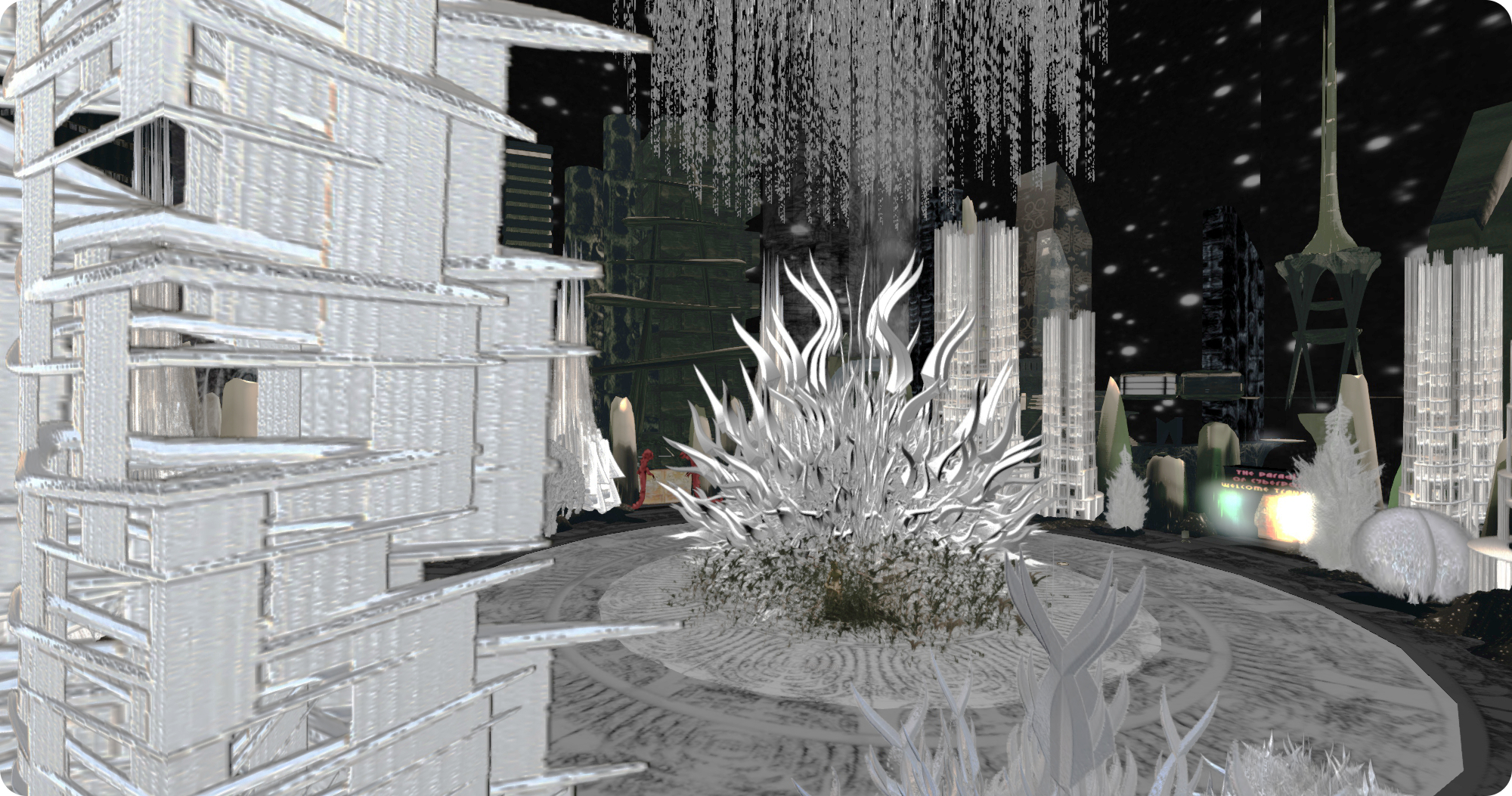
Currently open to explore, although the official opening doesn’t take place until Sunday, March 15th, is The Paradise of CyberPolis, by Asmita Duranjaya and Sable (snakeappletree) at LEA 12. It is billed as a “a grey-scaled story and game-based art installation”, and comes with a narrative storyline visitors are asked to follow whilst exploring the installation, solving clues, with the explanatory notes reading:

Crash-landing on an urban planetary system …

A researcher is slowly awaking from unconsciousness, starting to explore the environment of an ancient, abandoned cyber-city and to solve its mysteries. Seven letters need be found to experience the last surprising solution.

The Paradise of CyberPolis

The starting point is the researcher’s crashed aircraft, complete with unconscious space-suited researcher. A HUD is also offered, and you’ll need this in order to unlock (literally) the mysteries and make your way to the surprising solution.

The HUD actually takes the form of a journal (available in English or German), written by the researcher, describing their initial examinations of this world and the discoveries made. Your task is to follow the clues in the book, re-trace the researcher’s  footsteps and learn all that they have learned, and in the process find the seven letters mentioned in the introduction. Four of these will be required to unlock the gates of the cyber-city proper (your initial investigations taking place outside of the city’s core), while all seven are needed to unlock the final secret.

The Paradise of CyberPolis
The Paradise of CyberPollis

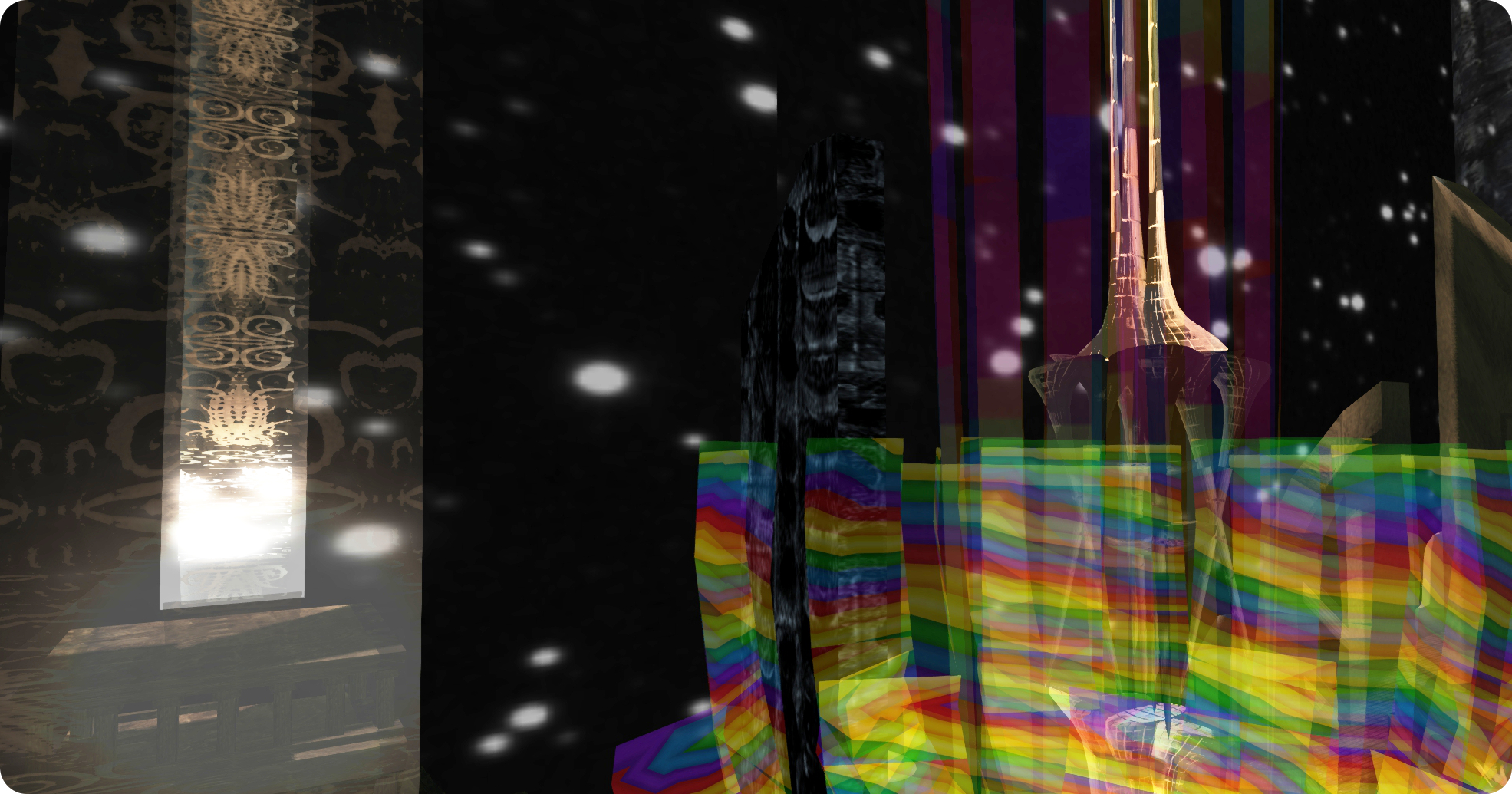
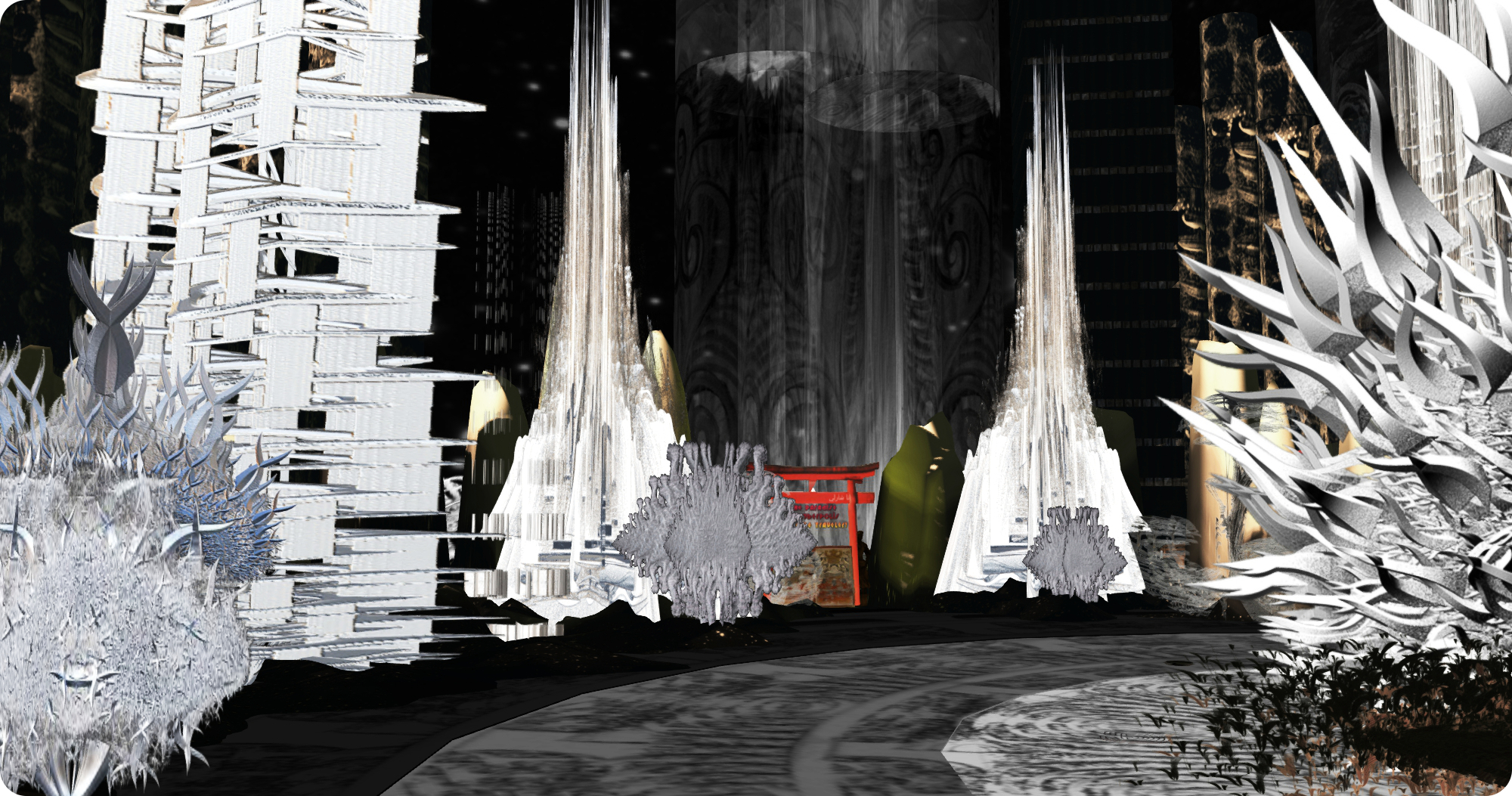
Along the way you’ll encounter a curious environment with mixed influences from the worlds anime, cyberpunk and dystopian sci-fi, in a story with something of a spiritual slant. Most of the landscape is a muted greys and whites, but there are splashes of colour scattered throughout, which form visual cues to places you might want to investigate more closely.

As a game, the idea almost works; you read the book, you riddle the clues, you uncover the required letters. But there is a problem. Of the seven letters to be discovered, only three actually require you investigate the city due to them requiring direct interaction with in-world objects to properly identify the letters in question; the other four can be discovered just by reading the book. Thus, it is possible for some of the visual context of the story to be lost as one simply reads ahead, identifies the letters and goes directly to things like opening the gates of the inner city; and sad to say, I’m not sure that much would be lost from the experience in doing so.

The Paradise of CyberPolis

The build itself, while interesting to explore, bears a strong resonance to the NeoCyberCity both artists recently built at Asmita’s own Space4Art / Port Lyndus region (indeed, the two builds appear to share many common elements). As such, it’s actually quite hard to determine why there was a need to utilise an LEA region to produce this particular piece, rather than incorporate it into a pre-existing and similarly themed environment already operating.

Related Links