Update April 3rd: As per this LL blog post, the Facebook photo upload has been re-enabled by Facebook.
SL Share is the viewer-side capability which allows Second Life users to share pictures, thoughts, etc., with their Facebook account.
Since its launch, it has proven extremely popular among SL users who have no issue in linking their SL and RL identities, and who see it as a means of telling friends about their SL activities. However, a recent spike in usage of the capability highlighted the fact it is in violation of Facebook’s policy by posting SLurls with images sent to Facebook.
As a result, the Lab has announced that the photo upload capability within SL Share has been disabled by Facebook, and the Lab are now working with Facebook to resolve the issue.
The Lab’s blog post announcing the situation reads in full:
Facebook recently contacted us to let us know that the Photo Upload feature of SL Share is not permitted to automatically include location SLURLs in posts made from the application. We’re working with them to get a hotfix out ASAP, but in the meantime the Photo Upload feature in SL Share will not work, as Facebook has temporarily disabled that part of the application. SL Share’s Status Update and Check-In features will continue to work.
When SL Share’s full functionality is restored, SLURLs will no longer be included when you share a picture using Photo Upload, but you will still be able to let your Facebook friends know where to join you in Second Life by using the Check-In feature.
We apologize for the inconvenience this may cause you and are working to get a fix out ASAP. We’ll use this blog to keep everyone posted with any updates and will of course let you know once the issue is resolved as well. Thank you for your patience.
SL Share: the inclusion of SLurls with uploaded images (2nd image from left) is against Facebook policy
The situation likely means that any TPVs what have also included the SL Share capability into their offering will need to adopt any hotfix forthcoming from the Lab once it has been made available.
The [Void], LEA 27Storm Septimus’ newly opened AIR-6 installation The [Void] is not, in the words of one of her friends who witnessed it being built, “a happy fun town”. But then, it’s not designed to be, as Storm explains in the comprehensive introductory notes:
The idea was to create a representation of the space that falls between waking and sleeping, but one born of an exhausted mind.
As such, this is a place where insomnia rules, and the line between reality and the imagination becomes increasingly twisted, mixing the two together the longer the condition goes on, confusing the eye and mind.
The [Void], LEA 27Insomnia isn’t the easiest of subjects to tackle for many reasons – the most obvious being that few of us ever suffer from it, and for those who do, it isn’t perhaps the easiest sensation to describe, even when willing to do so; particularly once it has gone on so long, our mental faculties are less than optimal unable to correctly process even the most basic sensory inputs.
This is a very dark piece – literally. If your viewer doesn’t automatically switch to the region’s default windlight, flip it over yourself to AnaLu Outdoor City Night (or failing that, Midnight, if your viewer doesn’t have a really dark option). Do bear in mind the images here have been toned-up to reveal details. The darkness is intentional; long-term insomnia is said to induce feelings of confusion, disorientation and upset, and the use of an extremely dark setting of this piece soon induces the same feelings in the visitor.
The [Void]. LEA 27You start off boxed into a claustrophobic environment where the only sources of light coming from flickering television sets, the first of which will provide information on the installation, the rest of which appear to be literal flashes of random thought from a tired mind (and also, in places, the artist, offering words of comfort).
Nothing is linear here; movement is a case of feeling your way around, walking, falling, flying and discovering things as shapes and forms loom out of the darkness. Here and there, power cables from the different television screens snake through the murky world, offering guidance; but how much guidance rather depends.
The [Void], LEA 27Frustration is liable to be a common reaction to initial attempts to explore, as will be the temptation to try to “turn up the lights” with a brighter windlight. I’d encourage you to try to resist the latter and accept the former; frustration and confusion are very much a part of the experience, as noted above. Just stay with things, and you will find your way around. Remember, as per the hints card, touch is an important part of the experience, and keys and a heart play important roles in moving you between the various levels of the piece, which range from high in the sky, right down to beneath the waves and back again (the last being the one genuinely bright element o the exhibit).
Symbolism is strong throughout the piece, such as with the aforementioned televisions. Poppies are also much in evidence here as well, unsurprisingly given their link with opiates and sleep (perhaps the greatest desire of the insomniac), their association with death and remembrance (the memory of times when sleep came), and their classical links with resurrection after death (perhaps mirrored in the insomniac’s mind as their awakening after that hoped-for deep and peaceful sleep they long to experience).
This is a quite powerful piece, assuming you can keep your frustration from getting the better of you – I confess, I read Honour’s post on it in the LEA blog late at night and hopped over only found my own (minor, in the scheme of things) tiredness caused me to get frustrated enough to give up first time around!
The [Void], LEA 27I understand from the introductory notes that some live events may be planned for The [Void]. Keep an eye on the LEA blog for details.
When exploring, I often find myself re-visiting familiar regions. There are several reasons for this: they tend to change with the seasons; they are eye-catching; I like spending time sitting in them and keeping an eye on what is going on; they are often dramatically and beautifully remodelled and so on.
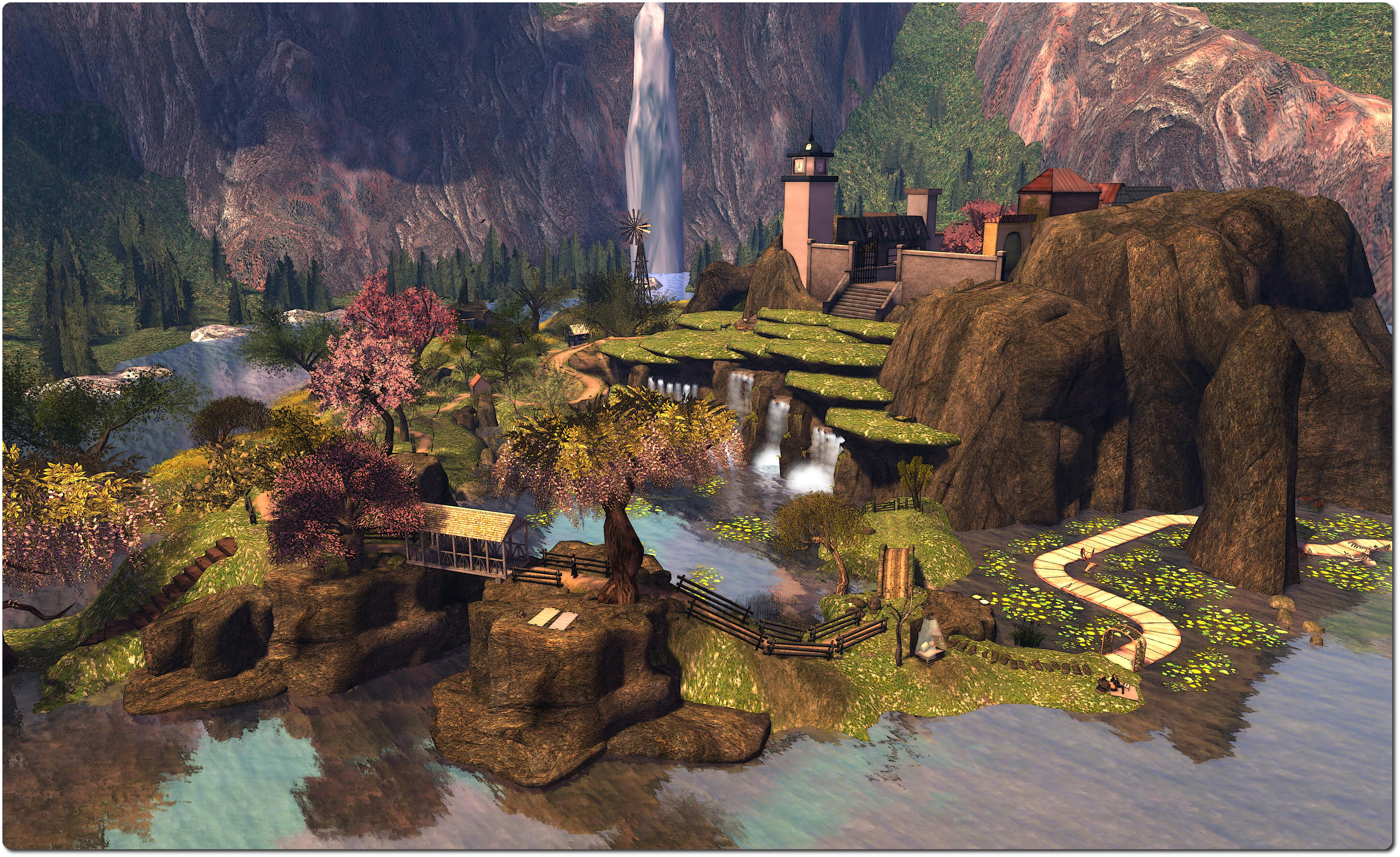
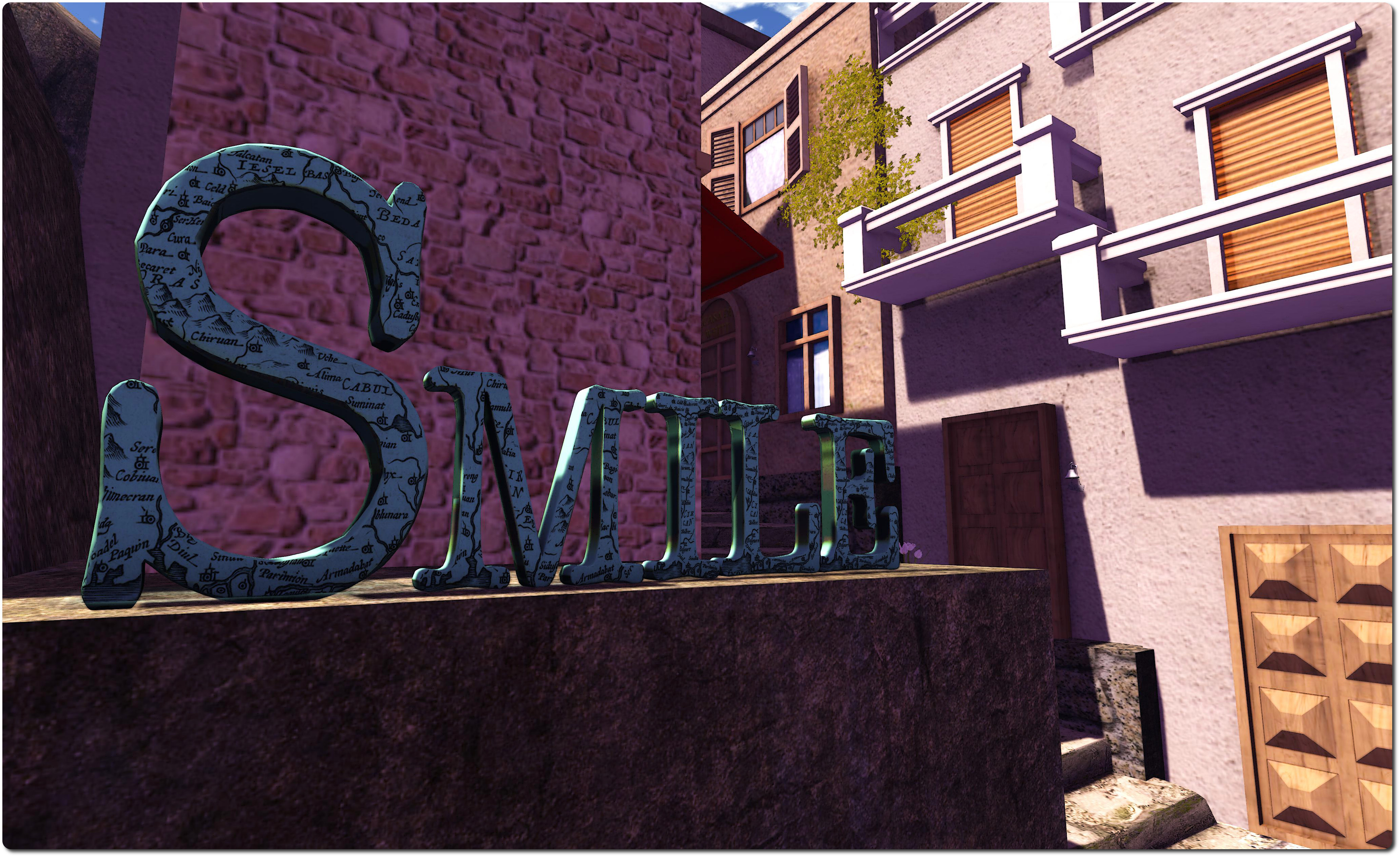
It All Starts with A Smile neatly encompasses all of these reasons as Kaelyn Alecto and Maxxster frequently refresh their region with a new look and style – so I tend to get pulled back there very frequently. In this case, however, there was another reason for my visit as well: the region is the subject of its very own photography contest, of which more anon.
One of the things I love about IASWAS is that when the region is remodelled, it is completely remodelled, offering lots that is new to see and experience while also retaining certain elements which link each rebuild to the last, giving a sense of history to the region.
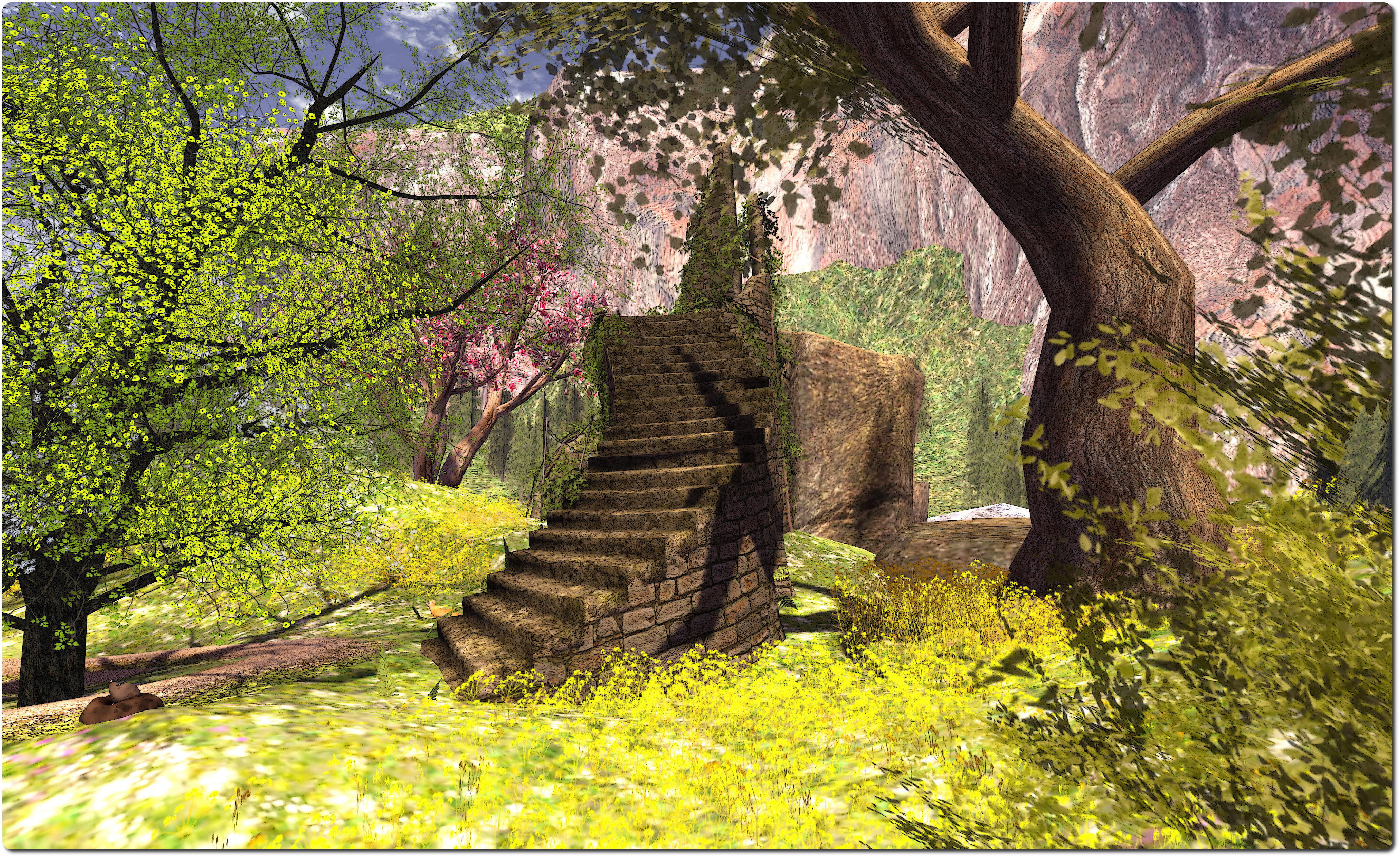
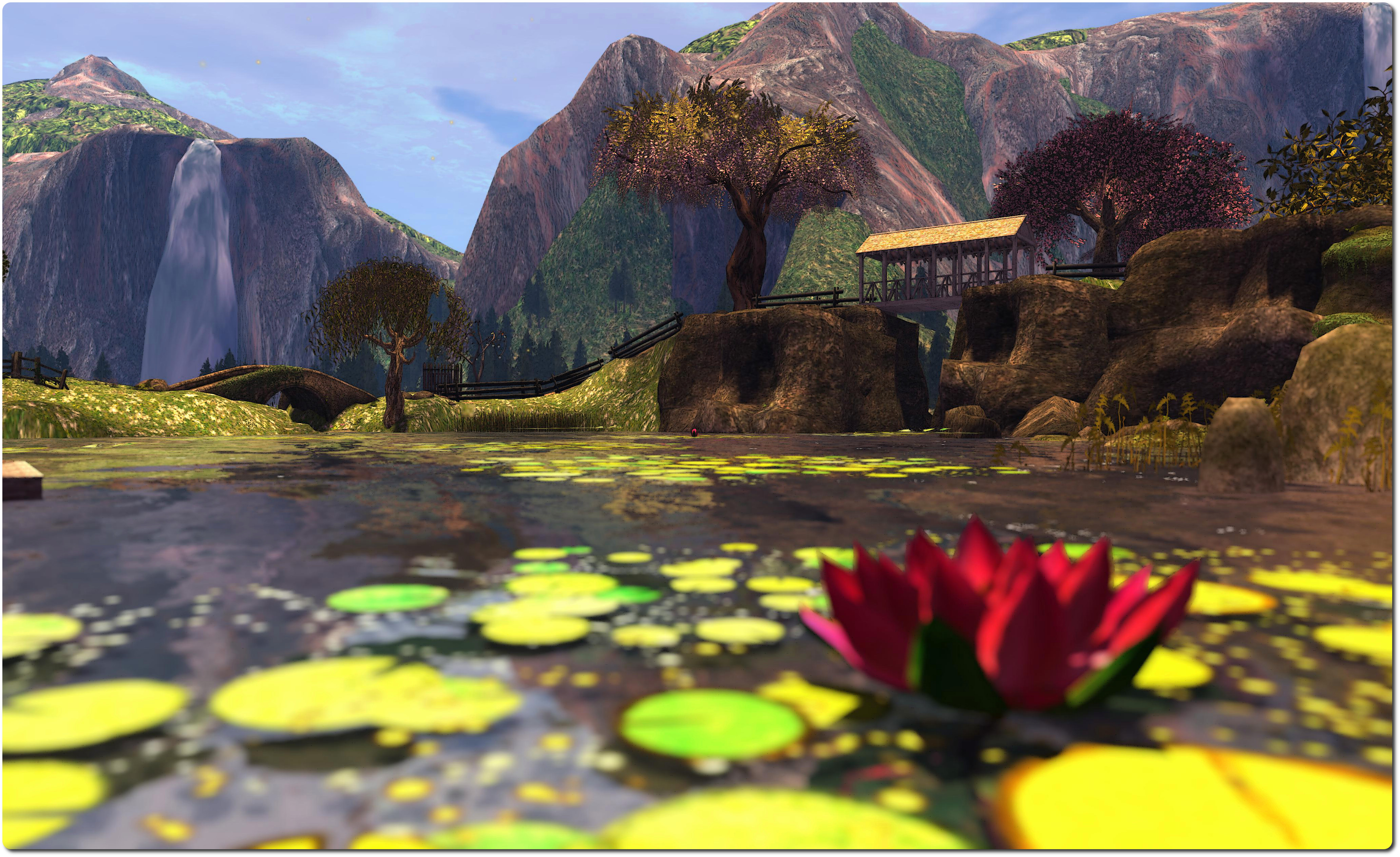
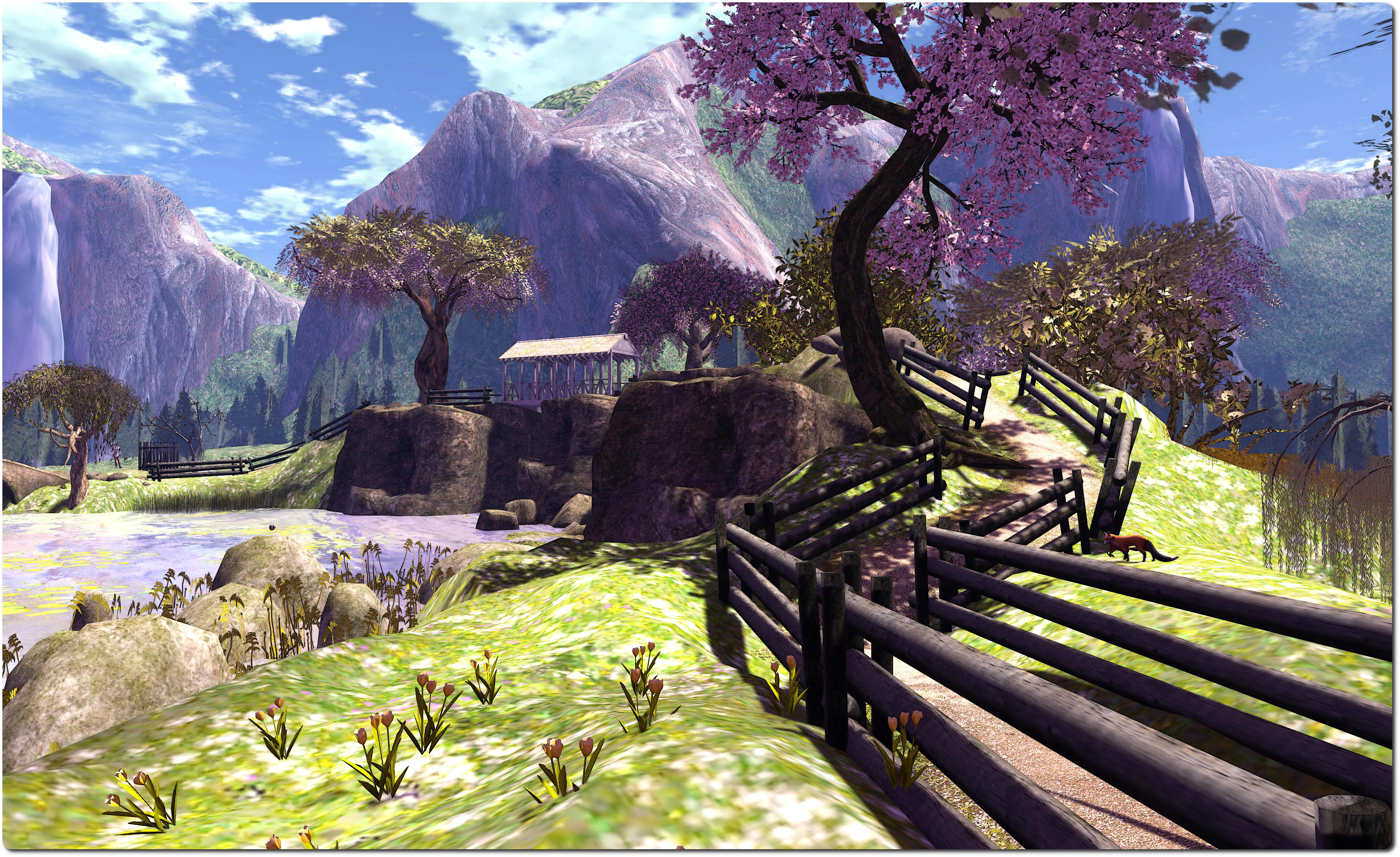
Following a winter scene with windswept roads, cottages with snow-laden roofs and a small town square offering some shelter against the winter winds, the region is now basking in springtime. and with the change in season comes much to see.
Onyx Isle is now a very rural location. Yes, there is still a small collection of houses and buildings towards the centre of the region which exhibit a Mediterranean feel, with shuttered windows, bright colours, and sreets winding between them with places to sit and eat al fresco.
Follow the path down from the arrival point, and it will lead you out over the water, past assorted works of art and critters, to the IASWAS cafe, then on around the headland and past a dance floor before it finally returns you to dry land, where you can continue your explorations along a choice of routes. Throughout, there are places to sit and tarry, either on your own or with one or more friends, and enjoy the surroundings. Those who feel particularly active can take a rowing boat around the island while those looking for something a little more relaxing can sit a while and paint if they wish.
This is a place where you’ll want to keep your eyes peeled – there are a lot of subtle details which can be easily missed, not all of which are in plain sight. And for the photographer, there and lots of opportunities for landscape, wildlife and portrait picture-taking, which is just as well, given the aforementioned photo contest.
This is running from now through until the end of the month, and anyone is invited to join-in. Some L$10,000 on offer to the winner, with Dutchie, Essential Soul & XIAJ providing store credit/gift cards. There are also second and third place prizes to the value of L$5,000 and L$3,000 apiece provided by Studio Skye. Entries are limited to three per avatar, and should be submitted to the competition Flickr group no later than March 30th. In addition, entrants should note:
Pictures HAVE to be taken at It all starts with a smile, and past as well as present of the region are acceptable
Pictures may include avatars and do not have to be landscape shots
Post-processing is allowed, but not required – a good raw shot will have just as much chance to win
Pictures should not contain any nudity.
The judges for the event are Alex Bader, Froukje Hoorenbeek, Steven Dean & superjaix.
Whether you opt to take part in the contest or not, if you’re looking to find early signs of spring in Second Life, It All Starts with A Smile is the place to visit.
On Saturday March15th 2014, the Firestorm team hosted a meeting and Q and A session to discuss the recent 4.6.1 release, provide updates on a number of issues, and answer audience questions.
While the meeting was recorded, the Firestorm team are aware that many of their users have hearing difficulties, and / or prefer to read text, so this transcript has been supplied on their behalf.
When reading, please remember:
This is not a word-for-word transcript of the entire meeting. While all quotes given are as they are spoken in the video, to assist in readability and maintain the flow of conversation, not all asides, jokes, interruptions, etc., have been included in the text presented here
In the interests of readability, topics in the transcript are not necessarily presented chronologically compared to the video. For example: questions asked during the various updates, etc., are presented in the Q and A section of the transcript, rather than at the point at which they were asked (unless directly relevant to the topic being discussed). Similarly, topics of discussion which came up during the Q and A session, but which were not tied to specific questions, have been placed under their own subject heading outside of the Q and A section
If there are any sizeable gaps in comments from a speaker which resulted from asides, repetition, questions to others etc,, these are indicated by the use of “…”
Timestamps are provided as guidance should anyone wish to hear the comments in full from any speaker on the video
Questions /comments were made in chat while speakers were talking. This inevitably meant that replies to questions would lag well behind when they were originally asked. To provide context between questions and answers, questions in the transcript are given (in italics) at the point at which each is addressed by a member of the Firestorm team, either in voice or via chat.
Please note: This transcript is provided for informational purposes only. I am not an official member of the Firestorm team, and technical or support issues relating to Firestorm cannot easily be addressed through these pages. Such requests for assistance should be made through the in-world Firestorm Support groups or at the Firestorm support region.
The TL;DR Summary
The following is a brief summary of topics discussed. Timestamps in braces refer to times in the video where the relevant commentary can be heard. All sections are expanded upon in the main transcript – click on the timestamp to go to them.
[0:0015] viewers are often subject to flase flagging by anti-virus programs as carrying a potential virus / Trojan. With the Firestorm 4.6.1, Norton anti-virus in particular had issues with viewer, prompting a positive response from Norton’s support
[0:14:32] Mac issues update: work is being done on some Mac issues within the Lab, but there is no major project to address problems some users are having. Firestorm are somewhat stymied in dealing with issues due to both a lack of developers / developers with free time and because some of the issues are beyond their ability to resolve
[0:31:00] Windows XP officially reaches its end-of-life on Aprial 8th, 2014. What does this mean for users on XP using Firestorm?
[0:38:25] Even running a 32-bit viewer on a 64-bit OS yields stability improvements, although if you have a 64-bit version available, it’s obviously preferable to use that on a 64-bit OS
[0:57:40] Firestorm are often critiqued on the frequency of releases. The team are moving to imporve things to a 3-monthly cycle, and there are reasons why a more frequent cycle may not be feasible
[1:21:05] It remains that Firestorm will not offer nightly or weekly builds, because there are significant support issues
[1:27:32] The team already try to release based on feature sets, however, a time-based cycle offers potentially better management of releases in keeping with the needs of the developers, QA and support
[1:35:21] The target will therefore be a 3-monthly cycle of major releases, with possible interim releases with bug fixes or for special features, such as might be the case with the group ban functionality
[1:58:53] With a target of a 3-monthly release cycle, it is probable that the next 2-3 releases are going to be primarily focused on incorporating features and capabilities coming out of the Lab, simply because there are so many of them: group bans, SSA updates, AIS v3, interest list, voice updates, etc.
[2:01:55] The new download server has performed admirably with not craches or other issues.
[1:55:40] Firestorm classes – with a new release just out, don’t forget there are Firestorm classes which cover all the new features, including things like the updated Contact Sets
Questions and Answers: including information on clean installs / re-installs; using settings back-ups; troubleshhoting issues; the status of voice improvements; why group limits are unlikely to increase in the near future; helping Firestorm support, etc.
There’s not a lot to report a present this week in terms of ongoing project work from the Lab.
Server Deployments: week 12
There are no server deployments scheduled for week 12 on the Main channel or the RCs.
SL Viewer
On Monday March 17th, the Lab issued the latest iteration of the Google Breakpad RC, version 3.7.4.288045, for the purposes of improvements to crash and statistics logging. It has been anticipated that this may be the last iteration of the Breakpad RC for a while.
It is anticipated that the remaining RCs will be updated during week 12.
Group Chat
Om March 17th, Ebbe Altberg indicated that group chat was being worked upon by the Lab via a Tweet in response to a complaint:
When asked about this at the Simulator User Group Meeting on Tuesday March 18th, Kelly Linden was able to say:
As Ebbe has confirmed someone is looking at and working on group chat. However it is a non-trivial problem saddled with a lot of legacy and high expectations. I have reviewed some of the changes so I do know changes are being made that sound like they will make improvements.
Important note: The SL Go service is to be shut down on April 30th, 2015. For more information, please read this report.
When OnLive launched their SL Go service, a comment following my preview article on the service asked if I’d report back about any ongoing experiences I have with it.
At the time, I indicated it would be unlikely that I’d do so, as I rarely have need to access Second Life when away from my main computer, and when such occasions do occur, I have Lumiya at my disposal which tends to meet all the needs I have for mobile SL access.
However, I decided that in the interests of testing / reporting, I’d take some time to drive SL Go on my Nexus 7 2013 HD.
For those unfamiliar with Asus’ 2013 offering on behalf of Google, the Nexus 7 HD features a 7-inch screen with a 1920×1200 resolution at a whooping 323 ppi, a Qualcomm Snapdragon S4 Pro CPU paired with an Adreno 320, 400 MHz GPU and 2 GB RAM and, in the case of the model I have, 16 GB internal storage. As such, it runs Lumiya beautifully. But what of SL Go?
Wandering trhough LennonParkOnTheRock using SL Go on the Nexus 7 HD (overlay closed) – click for full size
Well, frankly and unsurprisingly, it runs SL Go pretty fabulously. As with the Samsung Galaxy Tab 3 OnLive loaned me for the SL Go preview, SL Go is slick and fast on the Nexus and beautifully clear – most of the time (a caveat I’ll return to in a moment).
Rather than a quick on / off with the service, I spent time wandering around LennonParkOnTheRock, which I’ve reviewed in these pages (using Firestorm for the photos, simply so I can access all the windlights I tend to use). I explored the trails and paths, had a chat with one of my blog subscribers (/me waves to Ringo), and tried a few snaps both via screen capture (1920×1200) and via the viewer’s snapshot floater & e-mail (allowing me snaps at 4096×2497).
Overall, and allowing for the fact my Internet connection was a tad bit ropy at the time due to an intermittent line fault, my experience on the Nexus was easily equitable to that gained on the Galaxy Tab 3. However, the additional real estate offered by the latter’s 10-inch screen did make it perhaps a preferable choice for me when using SL Go, even with the higher and crisper resolution on the Nexus.
LennonParkOnTheRock captured on the Nexus at 4096×2497 using the snapshot floater & forwarded to my e-mail account – click for full size
In my original preview of SL Go I made mention of the fact that there is obviously a lower limit in terms of screen size where using the service is liable to become impractical, even with the overlay and the ability to zoom-in on the UI. This is something OnLive acknowledged in our chats about the service prior to launch as well. However, quite where this limit is comes down to a number of factors – with eyesight perhaps topping the list, alongside (maybe) screen resolution.
For me and my eyes, which aren’t quite what they used to be (although in difference to Spike Milligan / Eccles, they never used to be my ears….) my Nexus 7 is probably that lower limit. Yes, it was great having SL displayed in all its glory on the screen – graphics at Ultra, shadows, ambient occlusion and all the rest, but after 30 minutes, I started finding it hard to focus and found things getting a little blurry due to eyestrain (hence my little caveat earlier). This is not a fault of OnLive’s; I think there is simply too much detail on the Nexus’ screen for my eyes to comfortably process without me feeling some strain.
Of course, I could partly mitigate this by zooming-in on specific areas of the screen, reducing my overall field of view. But this raised its own issues; if I wanted to use a tool bar button or menu option, for example while zoomed-in, I had to first zoom back out and then zoom back in again to ease the amount of strain I was feeling behind my eyes – and this did start to get a little tedious in its own right. It also wasn’t something I noticed so much when using the bigger 10-inch screen of the Galaxy Tab (or at least, I wasn’t so conscious of it when using the Tab).
SL Go on my Nexus 7 HD + keyboard
But leaving this aside, SL Go did run exceptionally well for me. The overlay, as with the Samsung Galaxy Tab 3, performed flawlessly, and the Bluetooth keyboard I use with my Nexus allowed me to chat a lot more easily than using the on-screen keyboard, and was obviously completely non-invasive on the screen, which was a big plus when compared to having just an on-screen keypad for text use.
So, would I be tempted to use SL Go over Lumiya?
That’s a tough one for me to answer and not necessarily because of the current SL Go pricing plan. The fact is that I rarely need to access SL when away from may home computer, and when I do, Lumiya actually more than meets most of my needs, as noted at the top of this article. However, and more to the point, I’ve been a firm supporter of Lumiya and Alina’s work ever since Oz Linden gave me a nudge towards it back in early 2012, and so have a certain loyalty in that direction which I’m unwilling to set aside purely on the basis of new shiny.
But that said, were there an occasion when I wanted to be in-world which benefited from having all the graphical richness of the viewer when away from my PC, then yes, I’d opt for SLGo, even with the current pricing plan. In fact, given my “mobile SL” needs are so rare, the fact that the service currently does have a metered payment system actually makes it more attractive to me than were it to have been introduced purely on a subscription basis.
This should not be taken to mean I’m against the service having a subscription payment option – I’ve already expressed an opinion that OnLive should offer both. It’s purely that even $25.00 for 10 hours of SL access via my Nexus is most likely going to last me a good several months based on past habits, thus making it potentially a lot lighter on my purse than a straightforward subscription service.
As it is, and putting questions of payment plans and what OnLive might or might not do in the future (and they are monitoring things closely, believe me) aside, I do now have two options for using SL from my Nexus should the need arise. And, eyesight allowing, choice is always a good thing, right?
 Update April 3rd: As per this LL blog post, the Facebook photo upload has been re-enabled by Facebook.
![The [Void]](https://modemworld.me/wp-content/uploads/2014/03/void-11_001.jpg)
![The [Void]](https://modemworld.me/wp-content/uploads/2014/03/void-9_001.jpg)
![The [Void]](https://modemworld.me/wp-content/uploads/2014/03/void-19_001.jpg)
![The [Void]](https://modemworld.me/wp-content/uploads/2014/03/void-13_001.jpg)
![The [Void]](https://modemworld.me/wp-content/uploads/2014/03/void-17_001.jpg)


 Important note: The SL Go service is to be shut down on April 30th, 2015. For more information, please read


 Inara Pey: Living in a Modemworld