SL photography and me

I’m the first to admit that photography is a little hit-and-miss with me. My efforts within SL aren’t particularly great and I can burn water easier than I can get to grips with PhotoShop. However, when it does come to taking SL photographs, I can be grateful that there are great Viewers out there that can even overcome the handicap of having me sitting at the keyboard – Exodus and Niran’s being two prominent cases.

Thank heaven, as well, for client-side Windlight.

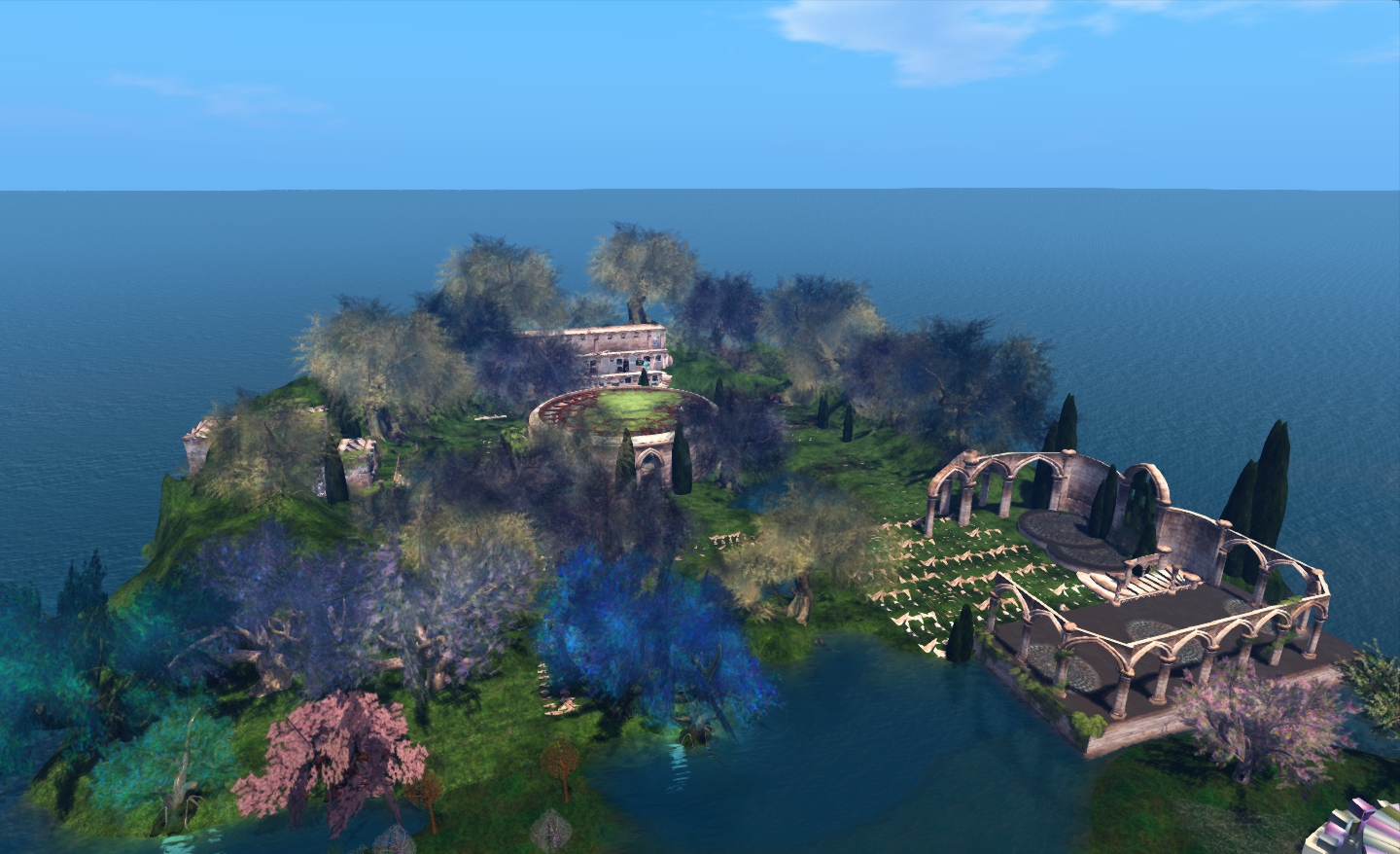
Over the past few days, I’ve been trying to update my various photosets – buoyed on by the discovery that not only does Flickr have a slideshow capability (yes, I’ve only recently noticed it does!), but also because I’ve got more space to play with there. Most of this work has involved revisiting places I’ve written about in my “virtual destinations” pieces in order to try and do them real justice.

So, in a blatant bit of self-promotion, here’s a list of the posts I’ve updated, and links to their associated Flickr slideshows. The latter are hardly likely to fall into the category of “amazing” pictures – but I hope they at least please the eye. Feel free to take a look.

I’ve also added a list of slideshows to the main page index, on the right, directly below the Viewer reviews lists.

Viewer release summary 2012: week 16

This is a weekly summary of changes to all SL Viewers / clients of which I’m aware and which are in popular use across the grid / listed in the TPVD. Detailed links to said Viewers / clients can be found in my Viewer Round-up Page. The links supplied in this summary are either to change logs or to reviews within this blog.

Updates for week ending: 22 April, 2012

  • The SL Beta Viewer rolled to 3.3.1.254008 and Development Viewer rolled to 3.3.2.254043, which includes the new local textures viewer (textures can be used in builds, but will only be visible to you; other users will see them greyed-out) – both released on the 17th April
  • Dolphin reached a jumbo number, 3.3.3.23747, code-named “Armageddon”, which includes Linden Lab’s “local textures” solution integrated into it, replacing the code common to most TPVs (note this doesn’t replace the “temporary upload” option within the image upload floater), together with the single AO “button in a button” solution that has been appearing across V3.2 TPVs over the last few months. Lance explains the “Armageddon” code name in terms of a video clip, which kind-of has a link back to “747”…
  • Niran V Dean has rectified recent computer issues, making a 2nd PREVIEW release of version 1.33 of Niran’s Viewer. This includes a hosts of tweaks, a number of very cool additions (including two excellent camera presets and make a large number of fixes, include implementation of assorted STORM JIRA. I’ll be reviewing the full release of 1.33 in-depth in the near future
  • Zen Viewer passed rapidly through version 3.3.2.8, and reach 3.3.2.9 with various fixes and tweaks in both
  • Cool VL Viewer rolled out 1.26.4.9. Among the changes made are a number of LSL support updates and a fix to the Linux version to prevent the Viewer crashing when uploading rigged meshes

Related Links

Images from Fantasy Faire 1: The Tides

“The Tides (by Alia Baroque) – the silent stones of a society who harnessed the power of the strong and heavy sea and ruled across the waves.”

The Tides is one of two ocean-themed region in this year’s Fantasy Faire. It is sponsored by Fallen Gods Inc, and the build is by Fallen Gods proprietor, Alia Baroque and features works by SL sculptor Amael Juran as part of its set-piece. I’ve previously visited Alia’s builds and Annon, Athan and Selidor, which I found enchanting.

I confess to also loving The Tides; not only is the build stunning and the attention to detail superb, the build contains powerful echoes of ancient civilisations and  – Greek, Minoan, and so on – and also ancient legends, notably that of Atlantis.

Here are some highlights of this superb build (as always, click any to enlarge).

The Tides
Heroic: two of the bronze sculptures that adorn The Tides teleport point
What lies beneath: the detail isn’t limited to the raised walkways and piered buildings…
…although even beautiful builds can have a dark side: a watery prison, perhaps to hold those awaiting their turn in the Jail and Bail fundraiser?!
Macmoragh & Muse: one of the Featured Stores at The Tides
Alien orrery: inside Macmoragh & Muse

Parametric deformer: Qarl updates (2)

It’s been a while since we’ve had news on the mesh parametric deformer project.  So it was good to hear Karl Stiefvater (Qarl Fizz, formerly Qarl Linden), the man behind the code, to provide a brief update on matters in this week’s  Metareality podcast:

[27:58] Sorry guys; so here’s an update on the deformer. I have been obscenely busy in the last three months work-wise, and I have not had the chance to work on it much. That said, I did start working on it again on Monday [the 16th April] and I should have a release this weekend … The deformer’s going to happen, you don’t need to worry about that. Linden Lab has committed to getting it working; if they reject it for dumb reasons, I think that would – while they’ve done dumb things in the past, I don’t think that will happen; that would surprise me.

Given that there have been unfounded rumours circulating that Linden Lab are trying to “kill” the deformer  – which seem largely based on the premise that the project doesn’t appear to be progressing as fast as some people believe it should – hopefully, Karl’s update will set matters to rights, and see an end to such rumours.

For my part, I’ll be keeping an eye on Karl’s website at qarl.com, and will relay any news that is forthcoming.

In the meantime, there has been an interesting discussion going on within the SL official forums relating to standard sizes in SL and mesh. It’s worth a read and gives pause for thought – particularly Max Graf’s very considered input to the discussion.

Related Links

With thanks to Gianna and the Metareality podcasts.

Fantasy Faire: The story starts this weekend – with you!

This weekend sees the start of Fantasy Faire 2012, in aid of Relay for Life. From Saturday April 21 to Sunday April 29, 2012, thousands of Second Life residents and creators will come together to support the global fight for a world without cancer. In all, nine sims have been transformed into a mix of fantasy themes, with eight regions providing worlds of content to explore, shops to peruse and events to enjoy, with the ninth acting as a gateway and event point.

More than 130 of SL’s fantasy creators have come together to support this year’s event, with a huge range of creations on offer through stores, and special limited-edition items and other goodies to be auctioned-off as a part of the ongoing events.

The sims themselves are all magnificent builds, richly diverse and beautifully put together to present unique and eye-catching environments to explore.

The Fairelands Junction – where your journey can begin

When the Faire opens on the 21st, you can start your journey from the Fairelands Junction. Here you’ll find the auction wall and the main teleport hub to the other sims of the faire, each represented by its own alcoved fresco within the central round structure on the sim.

The teleports – touch a fresco to teleport to a sim
The eight main regions of Fantasy Faire 2012

Where you go from here is up to you. I’ve had the good fortune to take a tour of the sims ahead of the opening, so hope to provide a quick tour here – click on the name of each region for details on the stores you’ll find there.

 Nu Orne

The ruins of Nu Orne

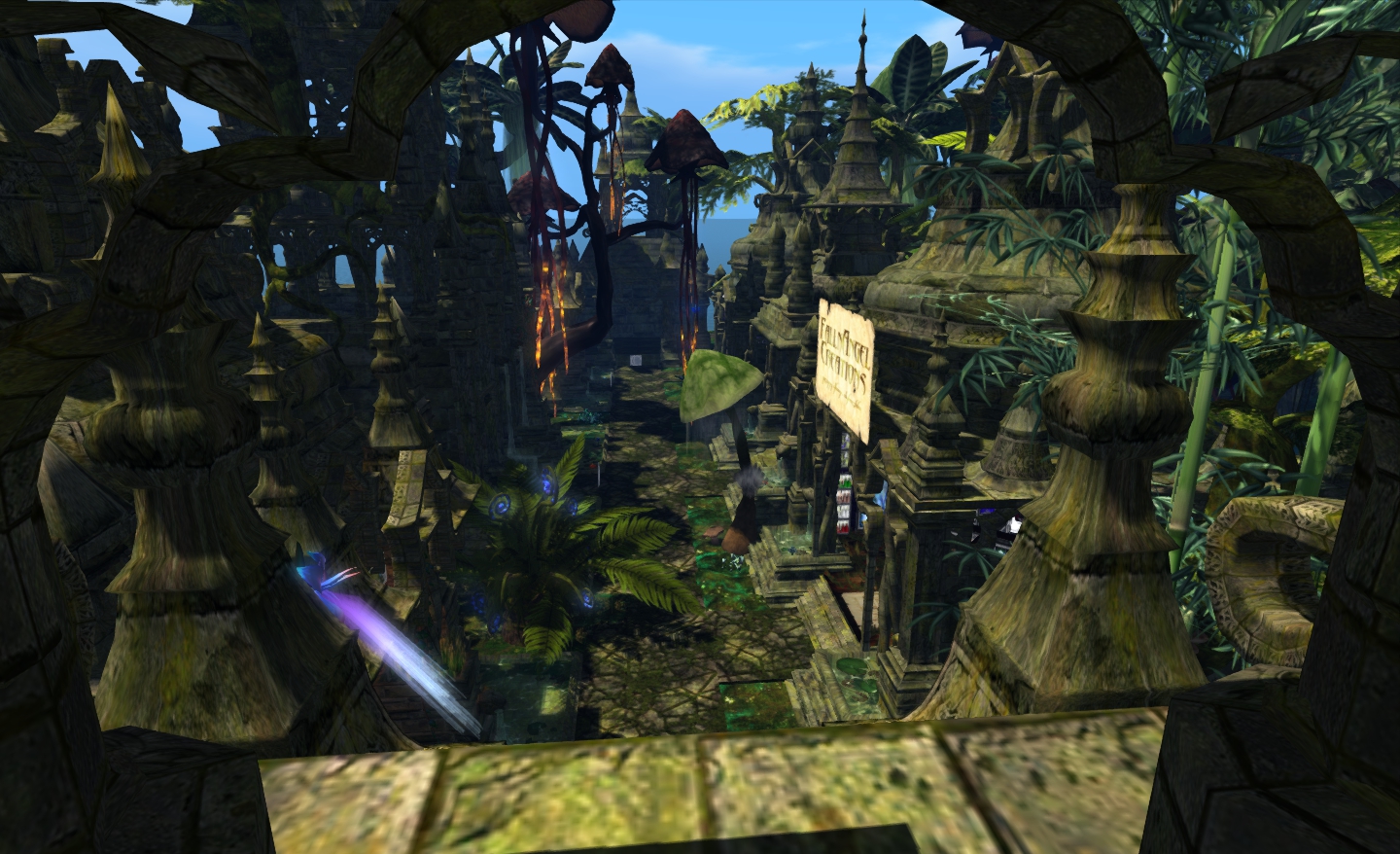
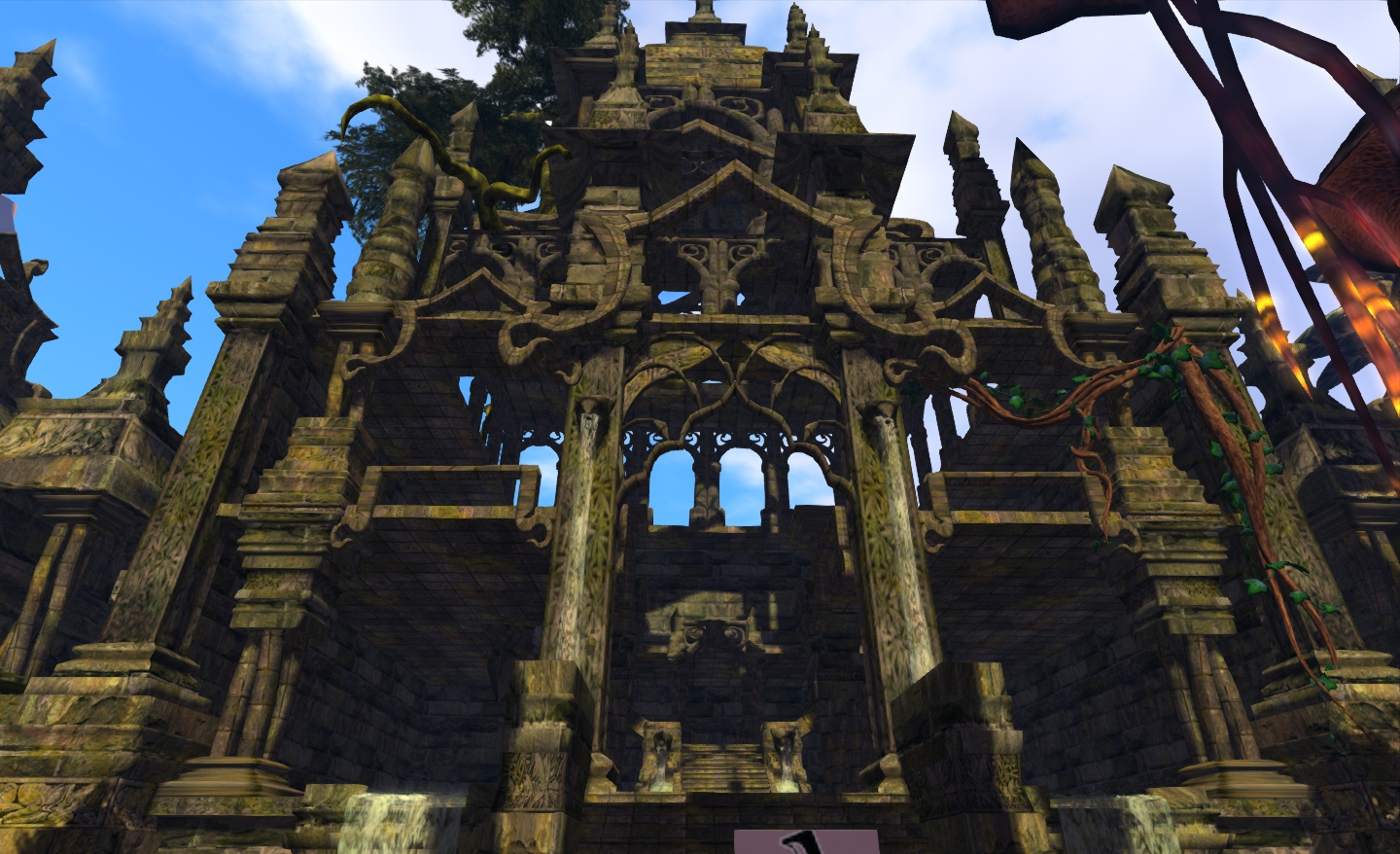
Deep in the jungle lies the mystical ruins of Nu Orne, where temple-like structures sit amidst the encroaching trees and undergrowth as the sun filters through the rising mists overhead.

As with all the sims, the teleport will deliver you to an arrival point directly outside the main sponsor’s store. From here, wander the walkways between the ancient buildings, explore the stores and keep an eye on things – there is much more going on with the builds in each of these sims than at first meets the eye.

Nu Orne – where trees encroach and mysteries may lie hidden…
Ancient temples…?

Jungle Bungle

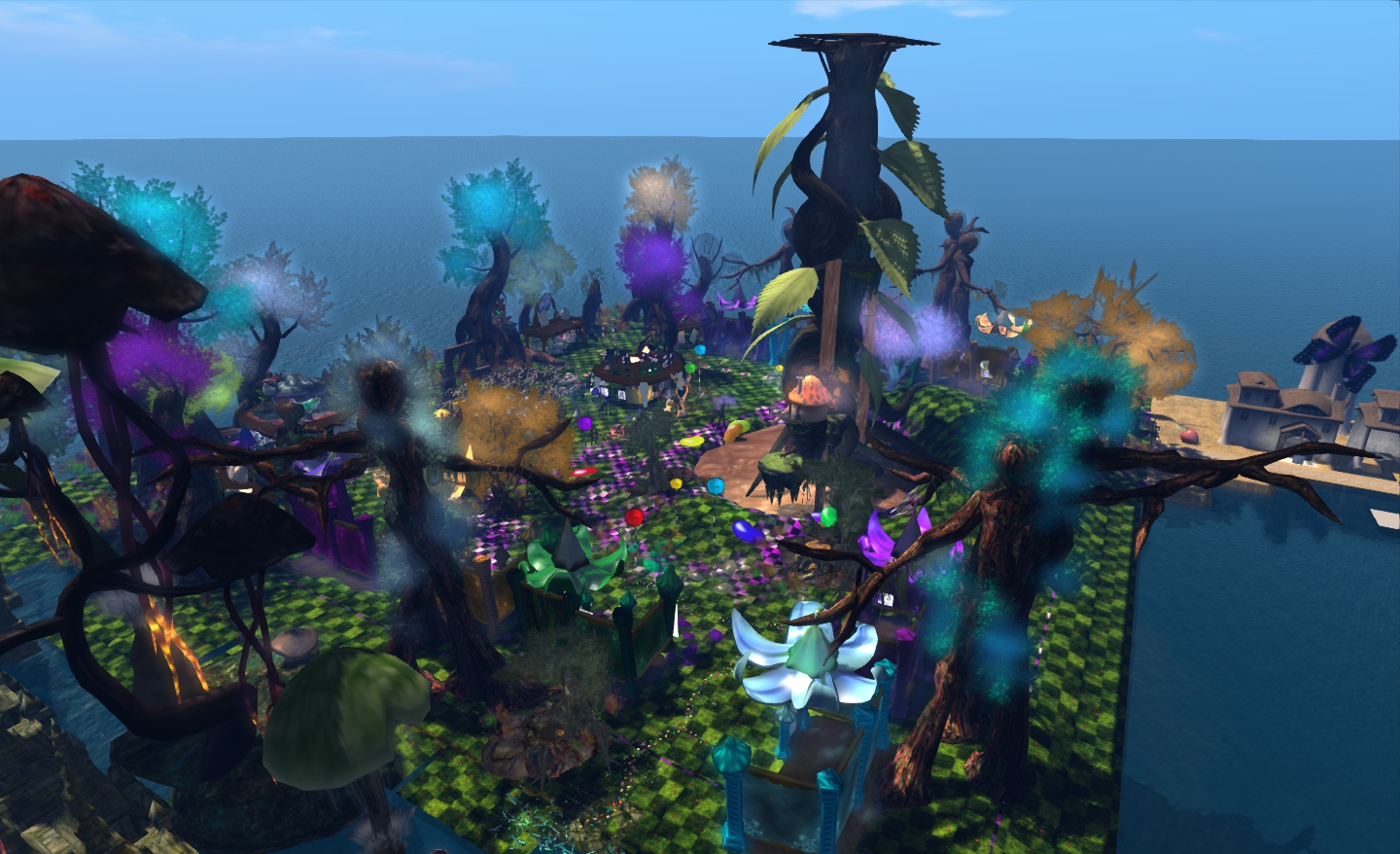
From the rain forest-like enclave of Nu Orne, one passes to the verdant richness of Jungle Bungle.

Jungle bungle

Despite the name, Jungle Bungle is more open than one might imagine, and watched over by huge wood carvings made from living trees – are these the Children of the Forest from legend?

Who are the great wood carvings?

This is part of the attraction with this years’ Faire and it’s theme: The story starts with you – because you get to make up stories as to how each sim arose.

A great attraction with each is that as well as the shops and event areas, there are also places to meet and chat with friends and strangers – a camp fire here, a cauldron of bubbling soup (?) there – all inviting one to stay, sit and linger a while as the world turns and people come and go.

Meandervale

Meandervale: whimsical

From jungle-y themes to the whimsical fancy of Meandervale, with its charming windmills with butterfly sails and (for me) memories of Charlar Linden, as trees row their little boats along the meandering waterways.

Memories of Charlar?

AO, AO, it’s off to walk we go…

AOs – Animation Overriders – have been part and parcel of Second Life since not long after the dawn of time (or at least not long after someone figured out how to lose the duckwalk by one means or another).

Today, AOs are a fact of life in SL and come in many forms: some just handle the “basics” – walks, sits, stands; others combine functions, providing a one-stop solution for walks, sits, stands, dances, poofers and other little toys. Most run through scripted HUDs, some run via the client itself. Some handle just one set of animations, some can be configured with multiple sets of animations, driven by notecards; some even allow drag-and-drop. Beyond this there is a whole range of scripted attachments which may also contain a wide variety of animations, often for specialised use, but which also might contain walks, sits, and the like. Finally, and most recently, we have the rise of client-side AO systems, some of which have differing capabilities to one another.

It’s a bewildering plethora of approaches – although in the case of HUD systems and client-side AOs, most use the same core system of animation interpretation, the famous ZHAO (2) format.

As to advantages and disadvantages, all systems suffer from them to one degree or another. Client-side AOs for example, can override scripted animations, resulting in an avatar appearing to jerk around or behave strangely as the two animation clash.  Some AOs can be script-heavy – at least in terms of the number of scripts they contain; this can lead to finger-pointing by those with an eye on public or client-side script counters, regardless of how  efficient the scripts may actually be in terms of resource use.  Recent developments in Client-side AOs mean that drag-and-drop is fully supported – no need to send time and effort configuring notecards; the downside is, each TPV supporting the system tends to require a dedicated set of links within your inventory – so if you do swap between Viewers (using one for RP, another for photography, for example), then this can become a source of annoyance.

Now it appears that Linden Lab are considering the question of AOs, and whether to develop an approach of their own. This has been hinted at in the number of user group meetings, and is now the subject of debate over on the SLU forums.

Some have taken LL’s interest – expressed through Oz, as a sign that the Lab are looking towards a client-side implementation of some form of AO (perhaps animation controller  might be a better description) with the Viewer. However, as Adeon Writer notes in opening the discussion, LL have both the client and the server at their disposal, so are relatively free to approach the issue from any number of angles without being exclusively tied to a client-side solution.

A variety of ideas have been suggested in the SLU thread – some of which run very close to capabilities found in the latest client-side AO system; whether this is because people are happy with that system and wish to see it replicated, or whether it is because some are unaware of the client AO capabilities, is unclear. One idea that has gained support is for having a “wearable” attachment that allows animations to be associated with specific avatars have also been put forward (so you have one associated with your “normal” avatar, another if you have a “pixie” avatar, another for your “tiger” avatar, and so on), with an edit capability similar to any other wearable editor.

The problem here, of course, is that not only are there many potential routes towards a solutions – there is also the veritable minefield LL must tread simply due to the widespread use of scripted AOs and HUDS.  If they are seen to be doing anything that is  perceived to be about to “break” or “compete” with existing content, regardless of how wrong such perceptions might be, they are liable to find themselves being chased up a tree faster than a cat with an oversized dog on its tail…

Those at the Lab are obviously aware of this and it’s liable to be a reason why the matter hasn’t been dealt with before; despite claims to the contrary, the Lab is actually loathe to knowingly break content. It’s also most likely why Oz is taking time to understand the flavours of client-side AO used by TPVs in order to find out what works, what doesn’t, and how LL can work alongside existing HUD systems.

However you look at it, it is fair to say that something needs to be done to improve the current means by which AOs – client-based or HUD-based work. Neither is, from the perspective of the new user, a particularly elegant solution and requires something of a learning-curve in order to understand. Developing an alternative that is both easy to grasp, and which offers a high level of functionality for the sophisticated user, however, isn’t going to be a simple matter – if only because we all have differing needs from an AO, and the needs of the novice user don’t always sit well with the needs of the seasoned user.

For my part, I long ago gave up the use of an AO HUD in favour of a client-side solution, as the latest AO found in most v3.2-based TPVs offers me the greatest flexibility, occasional clashes with scripted animations notwithstanding. However, I do have the advantage in having several pre-prepared ZHAO-2 notecards, so switching over to (and switching between) client-side AOs is relatively simple. Given that the AO also supports multiple configuration cards, switching between sets is also easy. Which is not to say this approach is perfect; two of my irritations with it remain:

  • There’s the aforementioned inventory bloat when dozens of duplicate links are added to my inventory each time I opt to use an AO notecard with a Viewer equipped with a client-side AO
  • There is no persistence between relogs when running multiple AOs – the client will default to the first AO notecard / set in the list, regardless as to whether I’ve set a default or not.

Personally, I’d like to see a well-implemented animation control system from LL; they have the resources at their disposal to develop something that works fast and well and can meet the widest range of requirements from ease-of-use through to minimal resource demands. Perhaps even one that is extensible and takes into account purpose-based uses such as within combat environments (although that might well tread on a lot of toes). It’s not going to be an overnight thing – again, full kudos to Oz for feeling matters out on the technical side. It’ll be interesting to discover what – if anything – does develop down the road, and whether we will see anything emerge from LL in terms of AO system development / implementation.