Yavanna’s pod tours: agreement reached between Linden Lab and Yavanna that will see normal operations resume
Updated, August 25th: following Patch’s forum post, Yavanna issued a note card through the in-world Pod Riders group stating her pleasure with the outcome, and I’ve quoted it at the end of this piece.
On Friday, August 21st, I reported on the news that for various reasons – including her on-going recovery from being stricken by COVID-19 -, Yavanna Llanfair, had decided to suspend the automated running of her Mainland YavaScript Pod tours (see: YavaScript Pod Tours Mainland operations suspended – UPDATED).
At the time, there was a certain amount of confusion over what may have happened with regards to an account suspension she had received in late July. As I noted in an update to that original report, this matter had particularly confused Patch Linden, who commented on a forum thread on the subject, promising to look into things.
Keeping his word, on Monday, August 24th, Patch provided a further update:
Howdy everyone!
I have returned with an update! 😁 We have just met with Yavanna and I am super excited to say that we will be working more closely together going forward on not only helping to support the pod tours system as it currently exists, but also expanding it in to other areas it does not reach today. I’m sure that as expansions and other fun add-ons unfold, there will be more updates on those as they happen. For the immediate future, the pod tour system should be retuning to normal functionality.
By “returning to normal functionality”, Patch presumably means that the automated running of the pods across the Mainland will shortly resume.
In the meantime, speculation has already started on what the “expansions” to the system might be – including suggestions such as using the pods to make tours of Bellisseria and the SS Galaxy, which as I reported in January (see: SS Galaxy drops anchor at Bellisseria), is now moored off the west coast of that continent.
Obviously, time will tell where the expansions are concerned, but for now, Patch’s immediate news is being warmly received by the majority of Mainlanders concerned about the situation, and pod users.
Update – Yavanna’s Comments on the Outcome
Following the publication of this article, Yavanna issued a note card giving her very positive reaction to the understanding that has been reached between herself and the Linden, which reads in full:
Dear pod riders,
I am very pleased to report that I’ve just had an extremely constructive meeting with Patch Linden, Derrick Linden and Tommy Linden. Hopefully I won’t get suspended for a pod crash again! (It was clearly a mistake). I have therefore removed the server block on the pods.
It’s actually better than just that though. We were able to discuss possible future joint ventures, and how they could help me going forward. So I’m very happy about the outcome of all this.
I’m extremely grateful to you all for your support. It’s not been an easy time for me lately for reasons I’ve talked about before, but your good wishes have made me feel so much better.
I’m still going to be mostly keeping out of SL for the moment, but as the winter nights draw in and I feel better in myself I hope to be working on more pod projects.
Currently open at ArtCare Gallery, curated by Carelyna, is an ensemble exhibition featuring Black Rose, Juidlynn India, Eva Burroughs, Ladmilla and Eli, and Patrick Ireland, all of whom are presenting theme selects of their art.
For States of Mind, Lamilla and Eli present 24 of their image / poem combinations focused on reflections on life, love, relationships, some of which can lean towards darker, more regretful thoughts, all of which are richly evocative in both form and words – as is always the case with this unique pairing. Rounding out the exhibition is a thirteenth piece sans words, that offers a slide show of images that are again intended to poke at the grey matter.
ArtCare Gallery, August 2020: Ladmilla and Eli
With Flowers and Sea, Black Rose offers two selections of her physical world paintings which, as the title of her exhibit indicate, focus on flowers and on the sea. The former total seven pieces that are rich in colour, reflective of the vitality and life of their subject matter – which in this case includes butterflies as well as plants.
In the neighbouring bay art eight pieces representing the sea that again use colour to reflect the changing nature of both the ocean and our relationship with it. Some are offered in lighter, paler colours or given predominantly in blue, suggestive of the colder nature of the sea, or the way in which oceans and weather can so often quickly change their moods. Other offer warmer tones – yellows, oranges and reds, with the Sun sitting low over the waters and / or lighting the bellies of clouds. With their softer, warmer shades they remind us of our more romantic views of the sea.
ArtCare Gallery, 2020: Black Rose
Warmth might also be an adjective that could be applied to Judilynn’s selection of art, presented under the title Texture and Tone, given the deeper colours on offer in these paintings. Another might be tactile, because – and again in reflection of the title of the collection – these are pieces that are visually physical in their layering on paint and colour.
Most of the pieces are richly abstract in form – and thus powerfully evocative (just look at The Lighthouse, for example, and the richness of colour and narrative it contains). Two perhaps lean more to a suggestion of neo-impressionism with a modern edge.
ArtCare Gallery, August 2020: Judilynn India
Eva Burrough’s Visus Aquam (the sight of water) returns to an aquatic theme, the focal point of which is a stunning rendering of water bordered on either side by two sets of superb images of tropical and semi-tropical fish. beyond these, on the wall separating this collection from that of Judilynn are three abstracted images of coral that are as captivating as the six fish paintings, and which offer something of sense of flow between the two exhibits, given their abstracted style. Facing them, and rounding-out the collection are images of ships and lighthouses captured from within Second Life, and two intriguing monochrome studies of coral.
In Carnival, Patrick Ireland offers an unusual trip through his art, and I mean that in a literal sense: re a bumper car, take a seat and get up close and personal with Patrick’s remarkable avatar studies, all of which are powerfully expressive and rich in narrative.
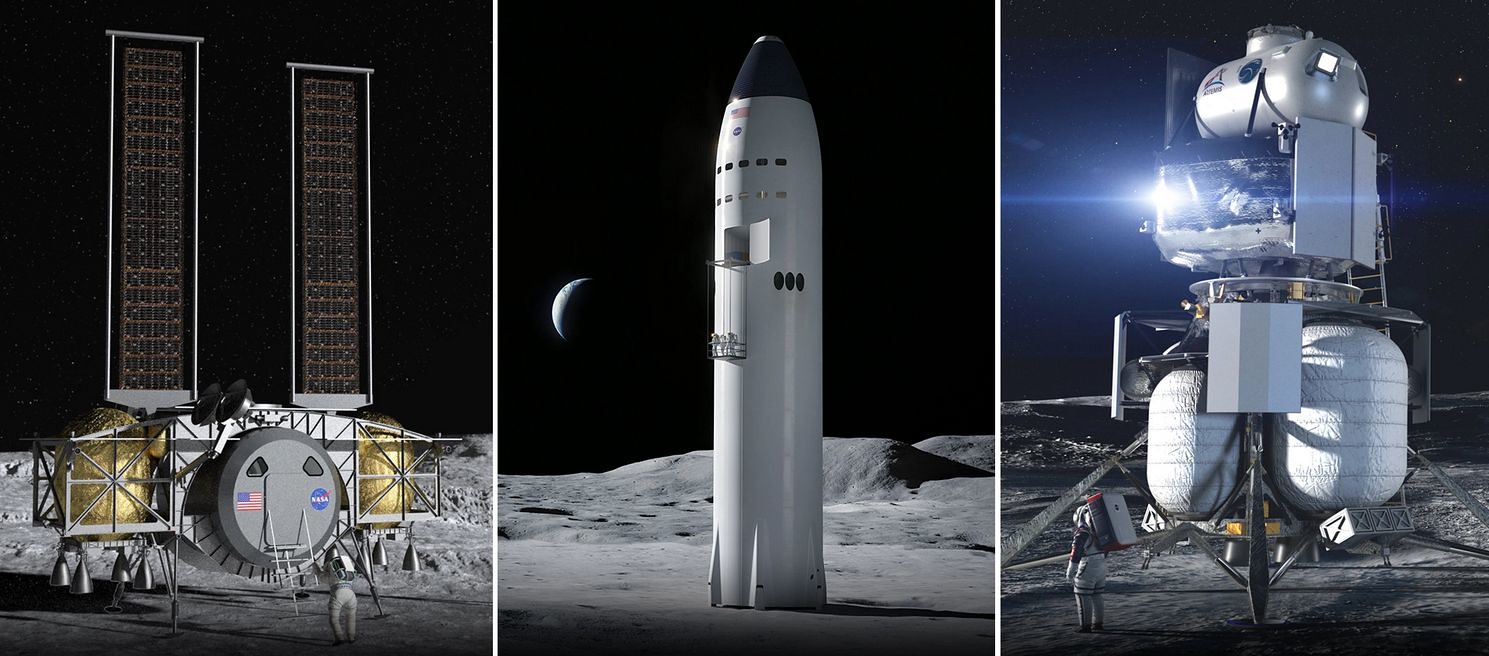
The three proposals for NASA’s Human Landing System vehicles under consideration of the US Artemis programme. Left: the Dynetics lander / ascent vehicle; centre: the modified SpaceX Starship; right: the National Team’s descent / ascent modules. Credit: NASA
In late April, NASA awarded funding to develop human landing systems for the agency’s Artemis lunar programme to three commercial groups: SpaceX, Dynetics and the so-called “National Team” of Blue Origin, Lockheed Martin, Northrop Grumman and Draper.
All three are taking different routes to supply vehicles capable of landing humans on the surface of the Moon and then returning them to lunar orbit for onward transit to Earth. For the initial mission, which NASA has time-tabled for 2024 – a highly ambitious date – one of the three vehicles must be capable of delivering a crew of two to the south polar regions of the Moon and then back to orbit.
On August 20th, 2020, the National Team delivered a full engineering mock-up of its proposal lander / ascent vehicle to NASA’s Johnson Space Centre (JSC).
For those familiar with the Apollo lunar lander, the National Team’s vehicle is a veritable monster, standing over 12 metres (40 ft) in height. It comprises three elements: a descent element that physically lands on the Moon and that is topped by the ascent element, both of which are helped down to the lunar surface by a transfer element.
The National Team design. From left-to-right: the transfer vehicle (Northrop Grumman), the descent module with the ladder and landing legs (Blue Origin), and the Ascent stage (Lockheed Martin). Credit: Blue Origin
It’s a combination of vehicles that build on a definable heritage. The descent element is being designed by Blue Origin using the technology the company has been developing over the last three years for its automated lunar lander, Blue Moon.
The ascent stage, meanwhile, is being developed by Lockheed Martin leveraging technology used in NASA’s Orion Multi-Purpose Crew Vehicle (MPCV), the capsule vehicle that will be used to ferry crews to and from Lunar orbit. Finally, the transfer stage uses technology and elements from Northrop Grumman’s automated Cygnus resupply vehicle serving the International Space Station (ISS).
The newly delivered mock-up will remain at JSC through until early 2021. It will be used by NASA engineers and astronauts to ascertain how the vehicle works, what is required, and helping engineers within the National Team to validate the team’s approach to getting crew, equipment, supplies, and samples off and on the vehicle.
In all, the three contractors were awarded a total of US $967 million that would be used to meet the costs of the first 10 months in developing each of their proposals of a Human Landing System (HLS). Of the three, the National Team took the lion’s share of the funding, some US $579 million. As well as delivering the engineering mock-up to JSC, the National Team is also preparing for a certification baseline review of their proposed design, with NASA expected to release a draft of the call for proposals for the next phase of the programme in early September.
For their design, Dynetics is also working with Draper and with Sierra Nevada Corporation, the developers of the Dream Chaser space plane. Their design is the smallest of the three proposed HLS vehicles – and potentially the most flexible. It is effectively a two-stage craft comprising a core lander / ascent vehicle of a squat design, supported by “drop tank” units that provide fuel for the initial stages of descent to the lunar surface, and which are jettisoned as their supplies are used.
The core craft is designed to carry crew or cargo down to the surface of the Moon and return crews back to orbit to rendezvous with an Orion MPCV or the Lunar Gateway. In addition, the uncrewed cargo variant is designed so that once cargo has been unloaded, it can be utilised as an additional module for a lunar base, providing a means for the base to be routinely expanded.
SpaceX – a surprise receiver of funding for HLS – is proposing the use of a modified version of its Starship vehicle, one sans aerodynamic surfaces, as these will not be required for operations to / from the surface of the Moon.
It is expected that NASA will de-select one of the proposals in early 2021, allowing the remaining two to continue. However, there has been a crimp put in plans: NASA requested some US $3.3 billion specifically to fund the HLS programme in fiscal year 2021, but under the proposed House budget, only US $670 million is allocated to HLS development, and the Senate’s budget proposal may not significantly raise this.
Was the Sun Once Part of a Pair?
A theory published in the Astrophysical Journal Letters on August 18th, 2020, dips into the theory that the Sun was once part of a binary pair.
The theory itself isn’t new: the Sun was one of a number of stars formed around the same time in the “local cluster”, and so may well have been twinned with another early in its life, before the gravitational influences of other stars in the cluster forced them apart. In fact, in 2018, astronomers from the Instituto de Astrofísica e Ciências do Espaço in Portugal announced they may have discovered it in the form of star HD 186302, some 184 light-years away – although this has yet to be proven.
An artist’s impression of the Sun (foreground) with its former twin. Credit: unknown
In the new publication, scientists from Harvard University point to the Oort cloud – a complex combination of a ring of icy planetesimals (the Hills Cloud) and a larger, more distant sphere of such objects, both of which lie beyond the heliosphere, as indicative that the Sun once had a companion.
Conventional thinking has it that the Oort cloud formed from debris left over from the formation of the solar system and its neighbours. However, models designed to show this have been unable to produce the expected ratio between scattered disk objects within the Hills cloud and outer Oort cloud objects. But if a relatively close stellar companion is introduced to the mix, modelling the formation of the Oort cloud elements and the distribution of objects within them becomes clearer, the paper’s authors claim. Not only that: it may actually help explain how life on Earth started.
Oort cloud objects are rich in water ice and the minerals and chemicals essential to starting life. Having a stellar companion for the Sun dramatically increases the amount of perturbations that might ripple through the Oort cloud and send some of its objects to fall into the solar system – and potentially collide with Earth, bring that water and those compounds with them.
While hardly new to SL, rezzing systems are something I’ve written about on a few occasions as a means of making convenient use of space, and being quickly able to swap between house interiors with things like Linden Homes (see: Saving your Bellisseria house designs for re-use with a rezzing system) and / or being able to swap back and forth between vehicles within taking up too much in the way of LI by keeping them rezzed all the time (see: Adding a little vehicle space with a rezzing system).
I’ve used such systems extensively throughout my SL time, particularly with reference to house / landscape designs, where I’ve tended to lay out house and landscape and then drop everything into a rezzer so that we’ve always been able to swap back and forth with house and garden options relatively easily – with the usual caveat that anything placed in a rezzer must have Copy / Modify capabilities.
With our recent move to Second Norway (see: Farewell, Isla Pey, hello, Isla Caitinara), I again wanted us to have the freedom to swap between houses, but not quite to the same extent as with our old island. The latter was totally based on mesh landforms (due to limitations of terrain texturing available to us), so it was easy to have house designs, furnishings and landscaping placed within individual rezzers. With the new island, the layout is such that given we may want to change the house and some of the grounds from time-to-time, the gardens are pretty much as we want to keep them. Therefore, using a single rezzing system containing multiple house options makes a lot more sense. However, while the RF Scene Rezzer I’ve previously used does support this kind of approach could be used, it does rely of on coalesced objects to create a scene, and these can be tricky to manage when they comprise a lot of objects.
The broad design of the islands in Second Norway make them very amenable to tucking away houses, be they a relatively large design like our “skytower” …
So, whilst looking for a further alternative, I came across Ydille’s Multi Scene Rezzer & Multi Scene Erazer Pro V5. I’ll confess that when I saw the price – just L$49 – I was sceptical as to how well it would work. For that I owe Ydille an apology, as this is actually one of the most capable personal rezzing systems I’ve yet used, offering the kind of capabilities normally reserved for systems costing ten times the fee.
In short, the system provides the following capabilities:
Storing and rezzing up to eleven individual scenes (e.g. house, furnishings, gardens, etc.).
Auto-clearing a currently rezzed scene before rezzing another.
Rezzing multiple scenes side-by-side.
Easy updating of individual scenes, or adding further scenes to a rezzer up to the maximum of 11.
Using one than one rezzer in a single location.
Options to:
Manually clear all currently rezzed scenes.
Relocate the rezzer without impacting object placement.
Set access to the rezzer to one of owner, group or public.
In addition, the Pro V5 rezzer includes the ability to configure the rezzing options menu with unique names via note card.
For our purposes – easily swapping between different house options – the system is absolutely perfect, and set-up couldn’t be easier, comprising two main steps: creating your scene(s) and then updating the rezzing menu.
….Or something a little more cosy, like a stone cottage – note the change to the grounds in front of the house as well
Creating A Scene
Lay out the items to form a scene (in our case, the house, its furnishings and fittings, and the immediate surrounding plants).
Edit each object in turn and:
Rename it in accordance with the system’s object naming convention (see below).
Drop the system’s Position / Eraser script into it.
Allow the script to record the object’s position (region X,Y,Z co-ordinates and rotation).
When the Item is ready – the script’s hover text will flash in yellow – Take the object back to inventory.
Drop the updated object into the scene rezzer’s contents.
Repeat for all remaining objects in the scene.
Object Naming Convention
Items for a scene must use the correct naming convention. For the first 9 scenes in a unit, this takes the form of “S1_[name]”, “S2_name”, etc.
So items for the first scene might be: called “S1_house”, “S1_sofa”, “S1_chair”, etc.
While items for the second scene might be “S2_house”, “S2_sofa”, “S2_chair”, etc.
Items for the 10th and 11th scenes follow a similar convention, but without the underscore (so S10House, S10Sofa, etc.).
Updating the Rezzing Menu
Ydille’s Multi Scene Rezzer & Multi Scene Erazer Pro V5 provides a customisable scene rezzing menu.
By default, the Pro V5 rezzing system has a pre-configuring scene rezzing menu (“Skybox”, “Pool”, “Clouds”, Plants”, etc.). These names can be updated to more meaningful terms by editing a note card contained in the rezzer itself. To change them:
Edit the note card in the rezzer.
Delete the 11 single-line entries in the top portion of the card (“Skybox”, “Pool”, “Clouds”, Plants”, etc.).
Replace them with your own names, one per line.
If you have less than eleven scenes, you must add additional lines (use a space or period), so the list is always 11 items long.
Save the note card.
Note that you can update the note card as you add further scenes to your rezzer.
Using the System
When you’ve loaded one or more scenes:
Click the rezzer.
Click the Rez Scenes button to display your available scenes.
Click the button of the scene to be rezzed.
Allow the scene to rez.
By default, any current scene that is rezzed will be deleted. This can be toggled off / on via the Pre Erase button on the the rezzer’s main menu. Access options can similarly be set by clicking the Access button to toggle between Owner, Group and Public. Please refer to the system’s documentation for further notes.
Another look at the cottage – a design from Domineaux Prospero we’ve not used in a few years
Observations
Considering it is only L$49, the Multi Scene Rezzer & Multi Scene Erazer Pro V5 packs in a lot, as noted, and is extremely easy to use. Given I didn’t really want to dramatically change the overall layout of our new island home, but wanted a quick means of changing the house space, it has already proven to be absolutely ideal for our needs on Isla Caitinara, Certainly, if you’re looking for a low-cost personal rezzing system – if you’re looking for a system to sell items, you’ll need to look elsewhere – this system really cannot be beaten – and it is capable of packing in a lot large scene areas than we”re using.
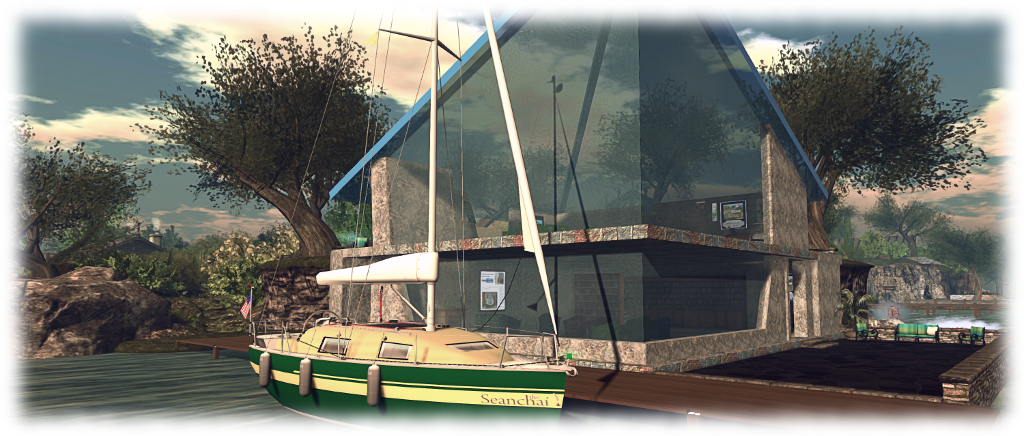
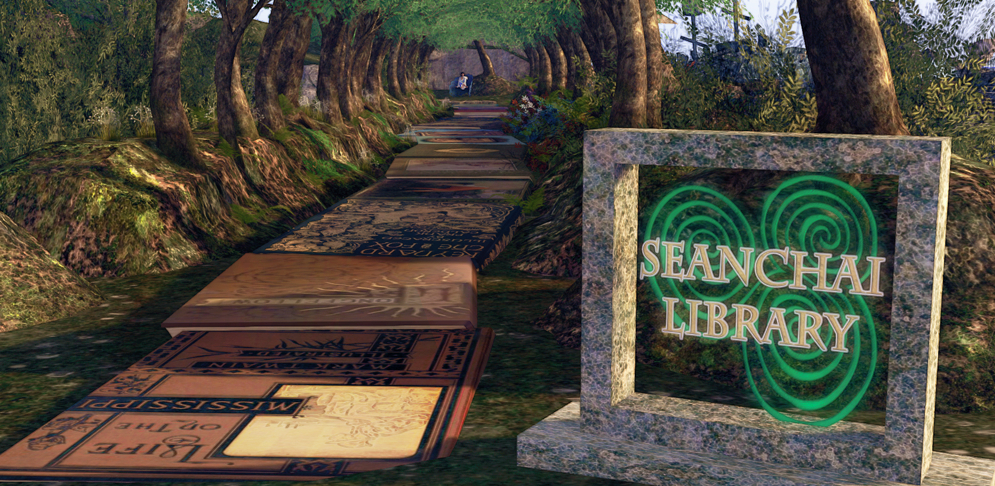
It’s time to highlight another week of storytelling in Voice by the staff and volunteers at the Seanchai Library. As always, all times SLT, and events are held at the Library’s home, unless otherwise indicated. Note that the schedule below may be subject to change during the week, please refer to the Seanchai Library website for the latest information through the week.
Sunday, August 23rd, 13:30: Splash! Tales of the Sea
Seanchai Library presents tales from above and below the sea: legend, myths, and adventure from the Splash celebration for merfolk.
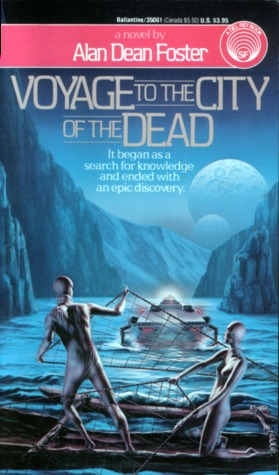
Monday, August 24th, 19:00: Voyage to the City of the Dead
Gyro Muggins reads the 11th volume in Alan Dean Foster’s Humanx Commonwealth series, first published in 1984.
The Humanx Commonwealth is an interstellar ethical/political entity spanning multiple star systems and worlds. One of the more unique of these worlds is Horseye, the home of three alien cultures and renowned throughout the Commonwealth for having the most spectacular river valley anywhere in the known galaxy.
It is both the cultures and the river that has drawn scientists Eitienne and Lyra Redowl to Horseye. Now, after months spent in quarantine, they embark on a voyage to the source of the 12,000 long River Skar, and study it and the peoples living on its banks.
Veterans of exploration and discovery, the Redowls believe they are ready to face anything. But how can you prepare for things like treachery, lies and greed? For a local legend would have it that at the source of the Skar lie a great treasure – and the locals who appear to be willing to help the Redowls in fact plan on finding it for themselves.
Assuming, that is, the treasure is in fact something at can be regarded as offering wealth or power…
Tuesday, August 25th:
12:00 Noon: Russell Eponym, Live in the Glen
Music, poetry, and stories in a popular weekly session at Ceiluradh Glen.
19:00: The Griffin and the Minor Canon
Willow Moonfire reads Frank R. Stockton’s tale for younger readers.
Hearing of a stone image over the main door of an old, old church, the last remaining griffin flies down to the town to sate his desire to learn about how he looks to others. His arrival stokes fear among the townsfolk, who demand the church’s young canon go and learn what “the monster” wants.
Caring only for the well-being of the people, the canon escorts the griffin to his stone likeness, who is well pleased by the statue, regarding it as an “admirable likeness”. So much so, that he decides to stay, following the young canon as he goes about his daily tasks.
The townsfolk, however, are less than happy with this turn of events, fearing for their safety and what might happen at the time of the Autumn Equinox, when the griffin must partake of food. And so they conspire to send the young curate out into the wilds as the equinox arrives, hoping he will lead the griffin away and little caring if the canon lives or dies.
And so the stage is set for the Griffin’s nobility to be displayed for all to see, shining beside the Minor Canon’s innocence and shaming the selfishness of the townspeople.
Shandon presents Rosemary Claire Smith’s adventure in time travel with a touch of Sci-fi. Also in Kitely: teleport from the main Seanchai World grid.kitely.com:8002:SEANCHAI.
21:00 Seanchai Late Night
Finn Zeddmore presents contemporary Sci-Fi-Fantasy from on-line sources including Light Speed, Escape Pod, and Clarkesworld magazines.
Seanchai Library is Moving!
After three years at Holly Kai, Seanchai Library is moving to pastures new (and larger!). The last sessions at Holly Kai Park will be on Thursday, September 3rd. I’ll have a full update on their new location on or just after that date.
The following notes are taken from the TPV Developer meeting held on Friday, August 21st, 2020. These meetings are generally held every other week, unless otherwise noted in any given summary. The embedded video is provided to Pantera – my thanks to her for recording and providing it. Time stamps are included with the notes will open the video at the point(s) where a specific topic is discussed.
The Love Me Render RC updated to version 6.4.8.547427 on Friday, August 21st. This update to the viewer includes a number of EEP improvements and fixes (among a list of rendering fixes / improvements):
SL-13539 [EEP] Large reflection on the water when facing certain angles.
BUG-228992 [EEP] Appearance lighting is broken when ALM is enabled.
BUG-228914 [EEP] Deferred Soften Shader fails to link when Atmospheric Shaders are disabled. This causes Debug viewer builds to crash.
BUG-228882 [EEP] Disabling glow rendering while ALM is off results in massive rendering flicker.
BUG-228781 [EEP] Specular color interpreted wrong (too bright) from point lights.
BUG-228581 [EEP] Specular map reflections are way too weak.
BUG-228840 [EEP] cloud texture is rendered backwards.
BUG-228431 [EEP] Water lighting is wrong at certain camera angles.
BUG-228752 [EEP] Sky turns black when render quality is lowered to Low-Mid.
BUG-225784 [EEP] BUG-225446 regression – HUDs are again affected by environment setting and BUG-225446 [FIXED] [EEP] HUDs are affected by Atmosphere & Lighting changes.
The rest of the official viewer pipelines remain as follows:
Current release viewer version 6.4.7.546539, dated August 11, promoted August 17, formerly the Arrack Maintenance RC viewer – NEW.
Release channel cohorts:
Mesh uploader RC viewer, version 6.4.5.544027, July 27.
Project viewers:
Custom Key Mappings project viewer, version 6.4.5.544079, June 30.
Copy / Paste viewer, version 6.3.5.533365, December 9, 2019.
Project Muscadine (Animesh follow-on) project viewer, version 6.4.0.532999, November 22, 2019.
Legacy Profiles viewer, version 6.3.2.530836, September 17, 2019. Covers the re-integration of Viewer Profiles.
360 Snapshot project viewer, version 6.2.4.529111, July 16, 2019.
General Viewer Notes
As noted in my CCUG summary,the Legacy Profiles viewer has been further prevented from making progress due to additional web-side changes that need to be made to enable privacy settings (who can see your feed posts) to work correctly.
An updated version of the Mesh Uploader RC viewer should be available in week #35.
[6:35-7:45] LL are running a test viewer internally with updates to address the FPS drop seen within EEP viewers on Windows when compared to non-EEP viewers (and for which one of the less-than-ideal workarounds people have been using is to disable Linden Water rendering via CTRL-ALT-SHIFT-7). While it may not completely resolve all FPS issues in EEP, it does offer noticeable improvements, and if all goes well, the updates will be merged into the current Love Me Render RC viewer.
“Lots of progress going on” within Project Uplift (moving all SL services to AWS).
There will be “some posts to the LSL forum” in the near future specifically for scripters about things people should be testing. Details are scant at this point in time, but the changes are described as “not particularly scary”.






 Inara Pey: Living in a Modemworld