A traditional event during the RFL season is the Bid Me Bald challenge organised by the Relay Rockers. As the name suggests, people are invited to bid (make donations to RFL) to see a well-known Second Life resident go bald for a period of time in-world. First held in 2007, Bid Me Bald is presented as a means to honour those who have lost their hair as a result of their cancer treatment, with those volunteering to participate going bald for one day for each L$5000 raised through donations.
In 2017, to mark the 10th anniversary of Bid Me bald, a new twist was added to the mix when three teams from Linden Lab put themselves up for bidding / donations in Bid A Linden Bald. Their willingness to participate saw a total of L$1,478,599 (approx. US $5686) raised, and members of the Concierge Team went bald for a total of 297 days afterwards.
For 2018, the Lab is again participating in Bid Me Bald, with three teams once more joining in – Product Operations, Support Leaders, and Support Agents. The team raising the least amount of money will once again go bald for the amount of days equal to the total of the team raising the most, with the time shared among the losing team members.
The donation Kiosks for Bid A Linden Bald, a part of the Relay Rockers Bid Me Bald event
Product Operations
Support Leaders
Support Agents
Alexa Linden
Ami Linden
Corky Linden
Ekim Linden
Garry Linden
Evie Linden
Grumpity Linden
Keira Linden
Ginger Linden
Oz Linden
Tommy Linden
izzy Linden
Patch Linden
Kristin Linden
Madori Linden
Sparky Linden
TJ Linden
Vix Linden
Vanessa Linden
Bid A Linden Bald this year takes place between Monday, April 30th 2018 and Wednesday, May 9th 2018, and coincides with the Relay Rocker’s multi-team fund-raising even, Relaystock. Held between Friday May 4th, through Sunday May 6th, 2018 inclusive, RelayStock will feature entertainment and live performances provided by individual Relay For Life teams for the entire Second Life community to enjoy, and you can find out more about it on the Relay Rockers website.
To join in the fun of Bid a Linden Bald, visit the bidding kiosks in-world and make a donation to the team you’d like to see win (or against the team you’d like to see lose!).
The was no deployment or restart for the Main (SLS) channel on Tuesday, May 1st. The channel remains on server maintenance package 18#18.04.13.514504, containing internal fixes and a fix for BUG-214702.
On Wednesday, May 2nd, the simulator release candidate channels should be updated as follows:
Magnum and LeTigre should receive server maintenance package 18#18.04.30.515008, which includes updates to simulator communication protocols aimed at improving region crossings and teleports, deployed for the last week to a number of selected regions on Blake Sea via the Snack RC channel.
LlRequestUserKey and LlName2Key
The Lab has released two new LSL functions: llRequestUserKey and llNameToKey, both of which are in connection to the upcoming return of Last Names (see this blog post and this blog post for more):
llRequestUserKey:
Requests the Agent ID for the agent identified by name from the dataserver. The name given may be either the current name of an avatar or a historical name that has been used in the past. If no agent can be found with the supplied name this function returns the value NULL_KEY.
It returns a handle (a key) that can be used to identify the request when the dataserver event is raised.
Note that agent being searched for with this function does not need to be signed on to Second Life.
Returns a key the Agent ID for the named agent in the region. If there is no agent with the specified name currently signed onto the region, this function returns the value NULL_KEY. Names are always provided in the form “First[ Last]” or “first[.last]” (first name with an optional last name.)
If the last name is omitted a last name of “Resident” is assumed. Case is not considered when resolving agent names.
Uses a different mechanism to look up agent information to the older llKey2Name().
Bakes on Mesh project viewer, version 5.1.3.513936, dated March 30th.
360 snapshot viewer, version 5.1.3.513006, dated March 6th (this version can have significant rendering issues, see my hand-on update).
Linux Spur viewer, version 5.0.9.329906, dated November 17th, 2017 and promoted to release status 29th November 2017 – offered pending a Linux version of the Alex Ivy viewer code.
Obsolete platform viewer, version 3.7.28.300847, May 8th, 2015 – provided for users on Windows XP and OS X versions below 10.7. This viewer will remain available for as long as reasonable, but will not be updated with new features or bug fixes.
Environment Enhancement Project (EEP)
Rider Linden re-confirmed that while EEP will allow different Windlight settings at altitude above a region / parcel, the zones will be set at 1000 metre intervals (1,000, 2,000, 3,000 and 4,000) and set by the simulator – they will not be user-configurable as can be done with Firestorm (viewer-side only). His hope is also to have scripted per-agent Windlight settings as part of the initial deployment of EEP; however, this is TBC.
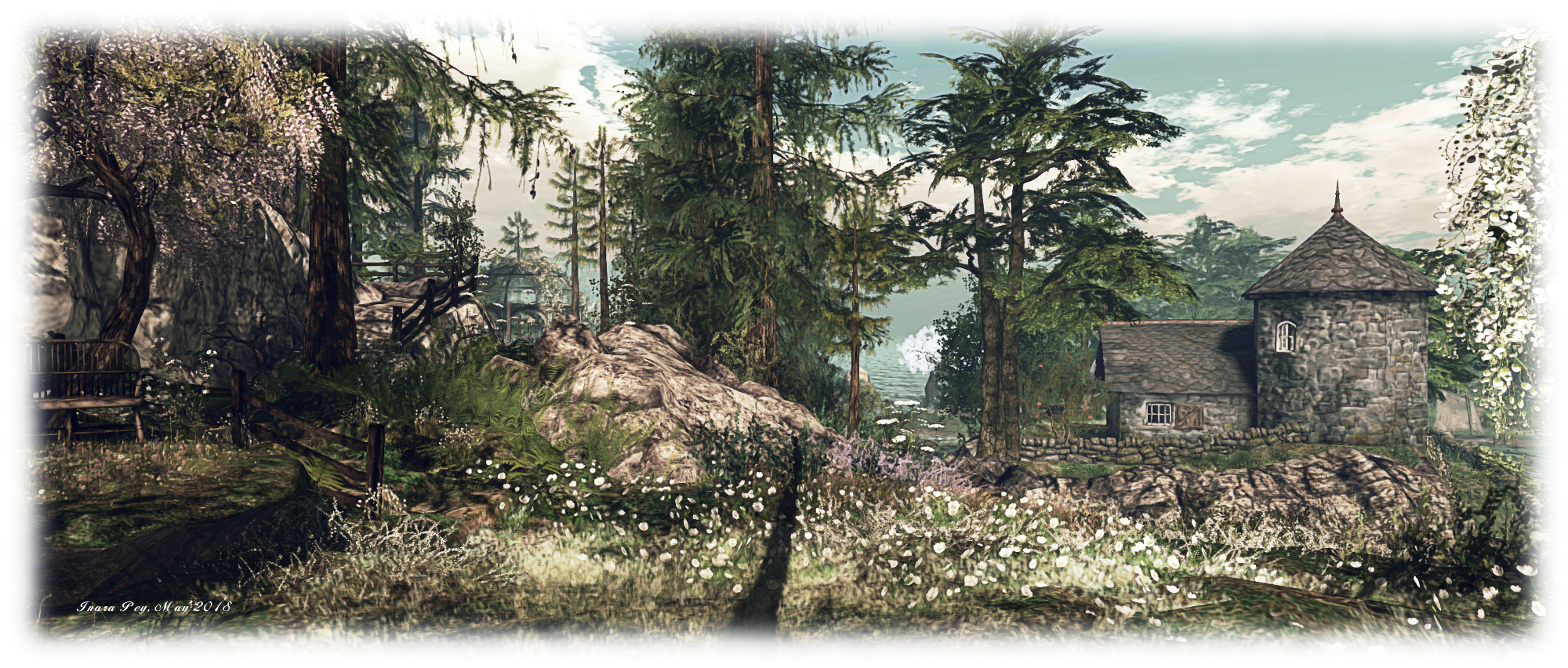
We were delighted to receive an invitation from Ima Peccable to visit the newly re-opened The Shire, the enchanting Tolkien-themed region designed by Chocolate Aftermath, and which Ima is now helping to run. As it’s been over two-and-a-half years since our last visit, we grabbed the first eagle flight across the waters and dropped in for a visit.
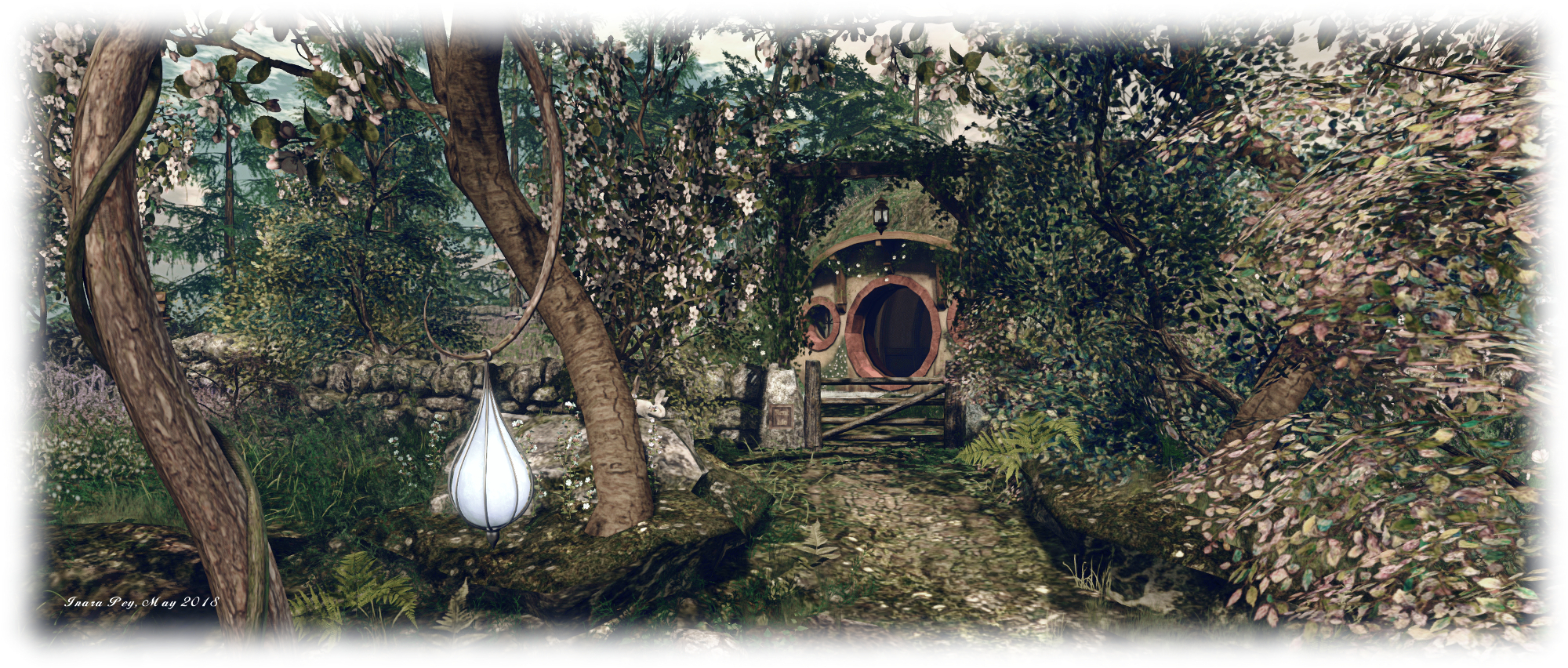
For me, the great attraction with this region has always been the way it blends considered region design with a very Shire-like feel, where hobbits and Big Folk can mix.
The new design for the region retains this feel, although the landscape is perhaps further removed from Tolkien’s Shire, being somewhat rugged and suggestive of a coastal region of Middle Earth, complete with multiple small islands lying off the main bulk of the land. There’s also more of an elven feel to the place than perhaps on our last visit, which harkens back to the time of my first visit in March 2015, when the region originally captivated my eye and heart.
I’m not sure whether it is merely a matter of the intervening years playing tricks on me or not, but this new iteration of The Shire seems to have more rental properties on offer than previous iterations. Nevertheless, it still has plenty for the casual visitor to see and appreciate, and the overall design means that it is hard to accidentally transgress into someone’s private space.
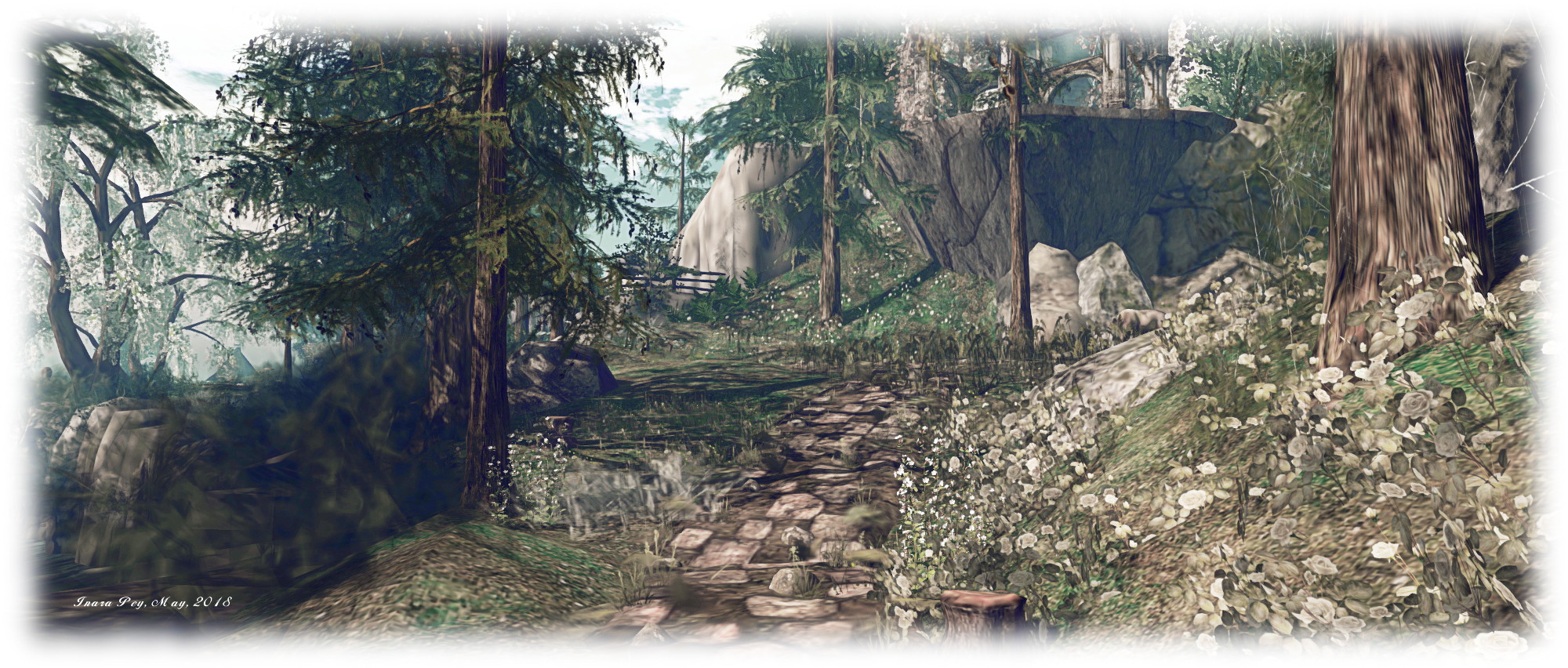
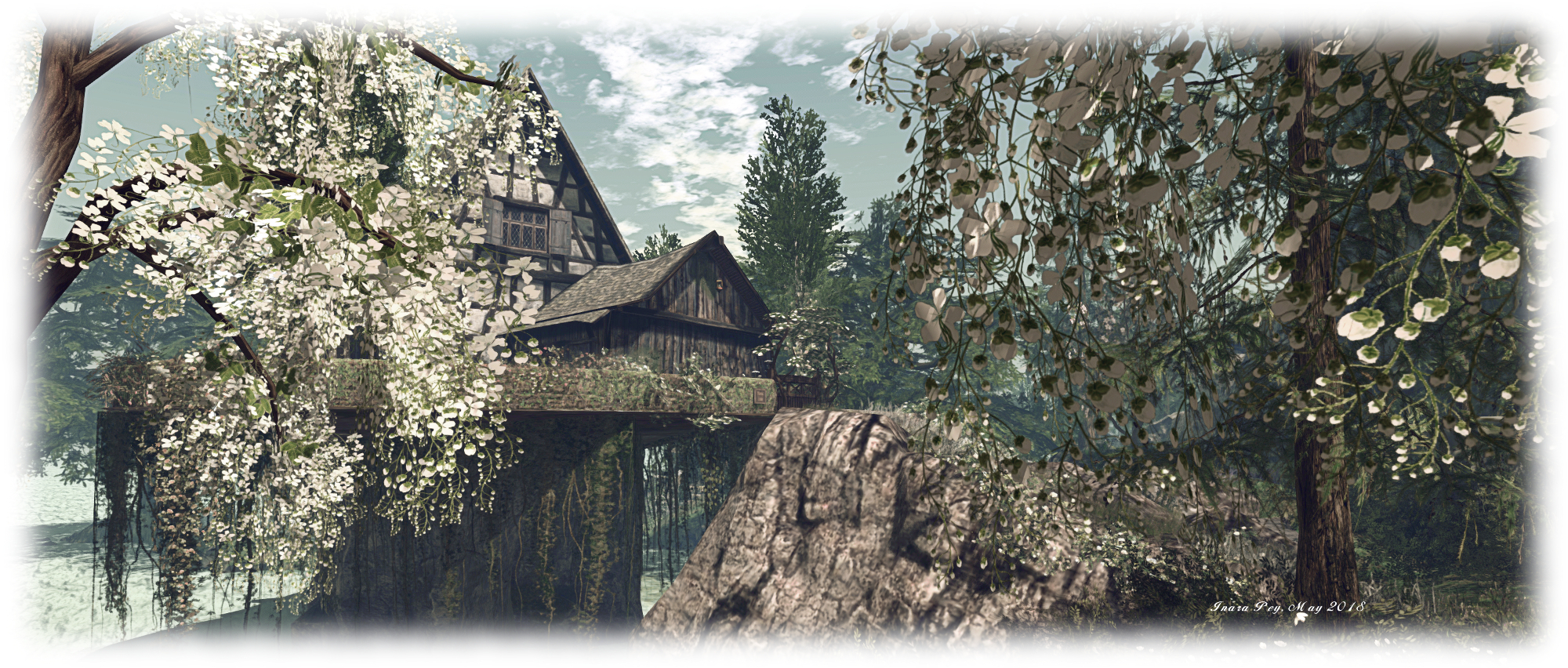
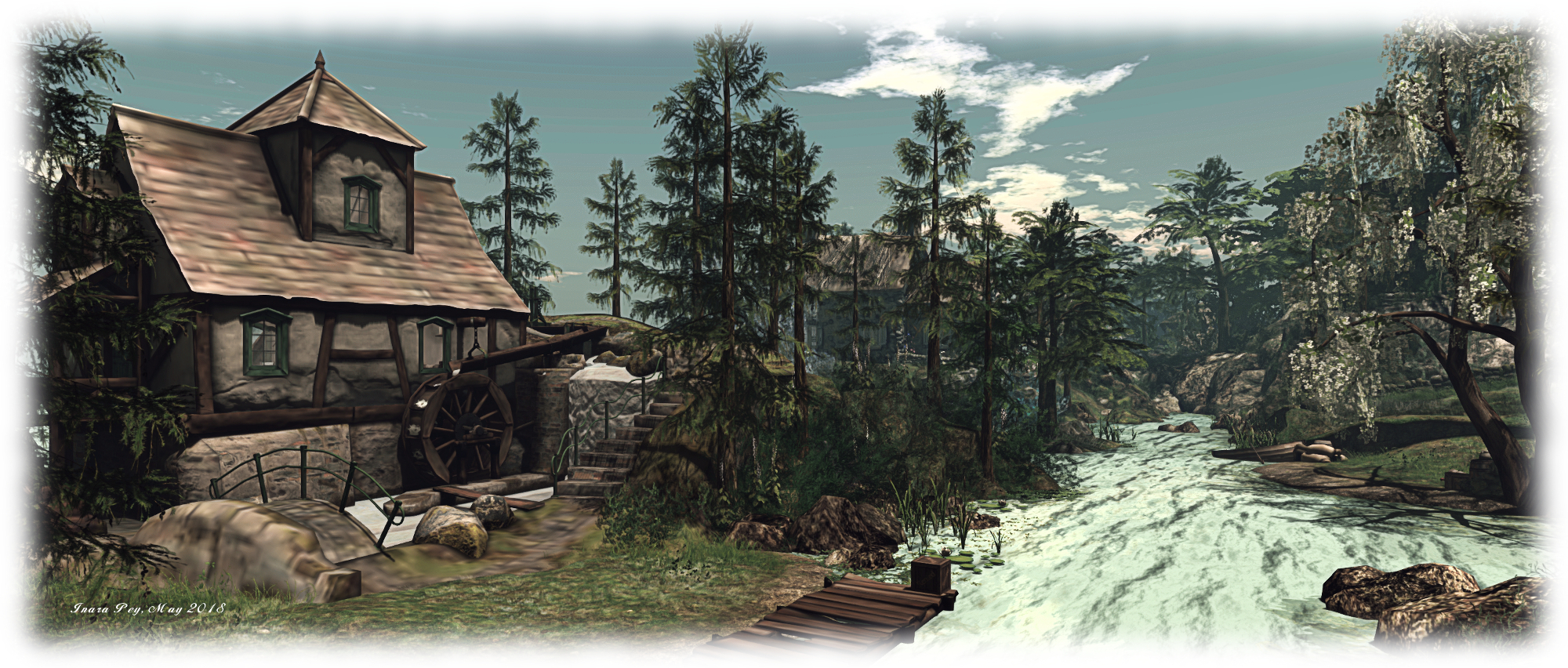
A good many of the rental parcels are located on the outlying islands or on small headlands extending from the main bulk of the land, with its public upland areas located atop the tall cliffs. It is here that the landing point sits within a pair of tree houses linked by a rope bridge and which is home to the rental map for the region. It shares the plateau with a garden area and a windmill, with different paths leading down from the plateau offer assorted ways to explore the region along its public paths.
The rental properties are a mix of hobbit holes and regular houses, while two towers suitable for wizards overlook the land. There aren’t intended for rent (as far as we could tell at least, but appear to offer high perches from which to look out over the land. Also to be found along the paths and trails leading around the region are elven-like gazebos offering places to sit under crystal domes – and in one case at least, a feast fit for a … hobbit; while out on a tongue of land stretching out into the water sits a larger structure, set for weddings or other celebratory events.
These seeking a place to live in Second Life that has its roots in fantasy but without overburdening rules might want to give The Shire a look; the mix of accommodation is rich and – for those wanting a little extra privacy – extends into the sky, where houses float serenely on little airborne islands of their own. Also scattered around the region are little reminders of Tolkien – such as the spider’s webs to be found here and there providing little echoes of a certain journey through Mirkwood, while mushrooms can also be found, offering another reminder of a path trod by a certain group of hobbits.
The public area of the region seems to be a little more limited that in previous iterations, and the outlying islands, while offering those renting them an added level of privacy, do tend to break up the land somewhat – there’s no direct route from them to the public places should residents wish to enjoy them. However, this doesn’t detract from the peaceful beauty of the region nor the opportunity to take photos or simply relax with a visit. Certainly, for those who wish to rent a parcel within The Shire, the region has a lot to offer by way of finding a Homely House.
Is it worth the time? is it worth the price? Do you see yourself in the white spotlight? Then play the game tonight.
– Play The Game Tonight by Kansas
Hi there, This is R. Crap Mariner, your Dance Correspondent.
I’ve been photographing dance shows for over a year, but one thing I promised myself was that I’d stick to shooting dance. I wouldn’t get all involved in the whole scene, I wouldn’t blog any of it, and God forbid I ever think of taking the stage myself, let alone choreograph my own routines. “No, no, no, no, no, no.” I said when people taunted and tempted me. I was not going to give in.
Point. Shoot. Leave. That’s the plan. Stick to it.
Well, I kinda screwed that all up. Because I début at Guerilla Burlesque’s pitshow on April 13th.
You see, in order to better understand dance performance, I figured I had to perform at some point. Especially if I were to get away with some of the jokes with my Don’t Make Me Call The Dance Police column. It’s a case of “put up or shut up.”
But it wouldn’t just do to ride someone else’s mover and be their puppet. Not that there’s anything wrong with that, and the times I’ve done that have been fun…
(Had to fight Terri to get that last Club Image mover, but she got even with me by shivving me in the lunch line.)
But I felt that I had to try to make my own. Kind of like how Hunter Thompson immersed himself into a story with Gonzo and George Plympton would put on a helmet or strap on some cleats in his participatory style. Or Gonzo the great would… erm… okay, he was a Muppet. Never mind.
Building my own act would give me a better appreciation of what it takes for a choreographer to put together a routine and also to learn the different styles that each director and choreographer brings to the table. Finally, everybody’s got their short cuts, tricks, and signature elements in an act, so building something to work with allows them to say, “Hey, there’s an easier way to do this…” or “I know of a better version of this object…”
Looking back over the process and the plan, I’m going to share my journey with you. It’s the order in which I did things, and not necessarily the right order to follow. Also, it’s not a cookbook with individually numbered steps to follow to build your own act. You’re going to need to fill in some of the gaps and details on your own or in your class or with your teacher.
Most importantly, maybe you’ll read my story and think “If that dingbat can do this, maybe I can, too?”
WARNING: This article is long. Really, really long. I’d break it up into multiple parts, but… nah. Anywhere you slice it, you’re cutting into my soul. Let’s just mark this edge here as the cliff from which you can dive into the madness. Wheeeeeeeee…
… splat.
“You think that something’s happening…”
When I start anything, I watch Internet Genius, Motivator, and Commentator Ze Frank’s Invocation For Beginnings.
Yes, the man who challenged the world to dress up their vacuum cleaners and make an Earth Sandwich. That man. Internet God, he is.
This video gets me in the mindset to be patient, forgiving, persistent, and accepting. If you’ve got a ritual or routine or motivator, use it to get in the right frame of mind.
Plus, he’s got a lot of good quippy quotes over the years of using the Internet as a playpen, even if he isn’t a pretty princess.
“But it’s only what you’re hearing…”
The longest journey begins with a swift kick in the ass, so yeah, I started to watch performers and learned from what I saw, asking questions and opinions from others in private chats for what they thought worked well, what didn’t, my thoughts on the routines and what I took away from the experience.
This was both easy and hard. I mean, yeah, I enjoy going to performances and shooting photography, but I also needed to learn the language of dance and what made a good performance with dances, sets, costumes, etc. And also, learn what didn’t work, such as overwhelming particles, slow-rezzing sculpties, too many textures, dance moves that just didn’t fit the song, acts that were too small for the stage, costume changes that fail due to lag, etc.
The Basics
Here’s the basic components of a dance act:
The event list contains the commands for a performance engine to run. It’s a run-down of animations, positions, and shouted commands to various effects or your costume changer.
The movers pass along the movements and animations to dancers as well as objects on the set.
The way points provide a path along which the movers travel, and they mark the speed and pauses along that path.
The packlist contains a list of all the objects for the set, including the movers.
The camera list contains all of the camera moves that you want the viewer to experience, but we’re not covering that here.
You pack everything into the performance engine, including dance animations and set objects. The engine controls everything in the act.
You set up folders for your costume, and RLV folders for any costume changes.
The stage contains a centre-point to let the performance engine know where things go or happen.
Put them all together, and… okay, you’re dancing to silence. Gotta hand a song track to the host/deejay/music director too.
We’ll cover all of these things, plus a few frustrations and surprises along the way.
Cica Ghost is widely known for her 3D art installations – which I always find a joy to blog about. Within many of her installations visitors will often find little two-dimensional stick figures, often animated. While perhaps less well-known to many more recent appreciators of art in Second Life, is that these two-dimensional pieces are very much a part of Cica’s Art, and have formed central parts of past exhibitions she has displayed in-world.
A reminder of this can currently be found at the Paris Metro Art Gallery, which is hosting a modest but charming exhibition of Cica’s work, 2D and 3D. On display are five of Cica’s 2D art elements, four of them her wonderful stick figure characters: three framed, and the fourth to be seen riding his bicycle along one wall, appearing and disappearing at either end of the barn-like setting for the exhibition.
Also on offer are several of the quirky (and fun) little vehicles Cica often provides within her 3D installations so that visitors can drive around in them.
The first of these – and one of my favourites – is the catomobile from 50 Cats (see here for more), just inside the gallery’s front entrance and sitting with the 2D art.beyond the dividing wall are six more of the vehicles, with the Catomobile, BirdCar and MouseCar offered as drivable models for pootling around the exhibition space. As well as these, the exhibition has elements visitors my recognised from installations such as the metals girders seen in the likes of Bird People (see here).
This is small, uncomplicated exhibition, and a great introduction to Cica’s art for those unfamiliar with her larger exhibitions, and a great reminder of her past work for those who are.




 Inara Pey: Living in a Modemworld