Hands-on: Second Life 360-degree snapshot viewer

Credit: Linden Lab
Credit: Linden Lab

On Wednesday October 26th Linden Lab announced the release of the 360o snapshot viewer, which I’ve had the good fortune to be able to play with for the last week.

The viewer is still very much under development, and has been released as project viewer with a number of caveats against it as development continues. Essentially, it allows you to take a set of images (6 in total) of the location around your camera, and then produce these as a scrollable 360o view – you can see the results in action on this sample page. Just click drag on an image to manually scroll around it.

The viewer is available via the Alternative Viewers wiki page as project viewer, with documentation on the wiki. As noted there are some caveats concerning it, which need to be kept in mind:

  • The 360o capture operates all around your field of view simultaneously. This can lead to conflicts with the viewer’s Interest List, so that objects which may be “behind” your camera position may not be properly rendered, etc. To avoid this, always pan your camera around  (or turn your avatar around if you are taking a picture from your avatar’s position) to completely view the scene and allow things to initially load, before taking a shot.
  • The current viewer saves the resulting image to your local disk as a zip file. You’ll need to set-up your own local web host in order to view them (or if you have your own website, you could set one up there). Again, this will be changing as the project develops
  • However, even in this format, once you are viewing an image, you can download it in a 2:1 aspect ratio suitable for upload to Flickr for sharing with friends and viewing in 360o.

As I’ve covered three of the 360o camera HUDs available in Second Life, I’m offering the rest of this article as a walk-through in using the new viewer and viewing your photos.

Note – these instructions apply to Windows, I don’t have access to a Mac to provide guidelines for that platform.

Setting Your Viewing Environment

Before taking your photos, you’ll need – for the time being at least – to set-up a simply local web server. Callum Linden has made this relatively easy.

  • Download Python from the Python website. You can select to install either Python 3.5.x (latest) or Python 2.7.x (the Lab uses Python 2.7 as a point of reference).
  • When installing Python, make sure you add the installation to your Windows path.
    • If you are installing Python 3.5.x, simply check the box in the installer
    • If you are installing Python 2.7, click the Advanced button in the installer, scroll down the list of customisable options and set Add Python .EXE to Path to Will be installed on local hard drive.
Adding the Python 2.7 EXE to the Windows path
  • Download the Lab’s 360 snapshot web viewer ZIP file from the Lab’s 360 snapshot wiki page.
    • If you are familiar with Mercurial, you can clone the existing web framework via the link given in the wiki page. I found going the ZIP file route easier.
  • Unzip the web viewer files to a location on your hard drive.
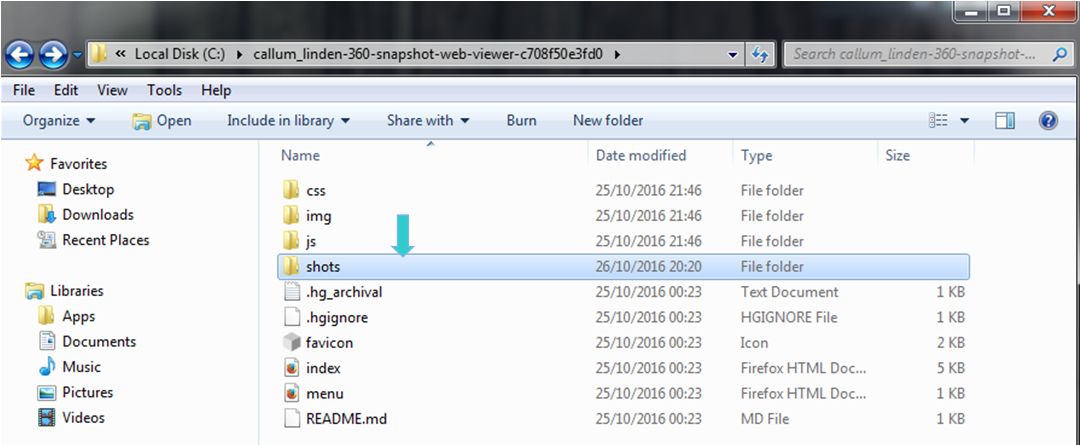
Web you have unzipped the web viewer package, you should have a folder looking like this - note the SHOTS folder, this is where you'll be wanting to save your snapshot sets
When you have unzipped the web viewer package, you should have a folder looking like this – note the SHOTS folder, this is where you’ll be wanting to save your snapshot sets (Windows environment)

Using the Viewer

When you have downloaded and installed the 360o snapshot viewer, proceed as follows:

  • Position your avatar  / camera at the centre of the area you wish to photograph. If you are using your avatar, not that you should “hide” it via removing all attachments and alpha-masking, or by using something like a “vanish” gesture.
    • Note that you can positioning your camera for a 360o snapshot simply by positioning your camera (e.g. using ALT-zoom or by flycamming).
  • Make sure you freeze the clouds in order to assist the image “stitching” process, and to avoid visual discontinuities in the finished image. Use Menu > World > Environment Editor >Sky Presets > Edit Presets. You should also avoid using Depth of Field.
  • Set your preferred windlight / time of day setting.
  • Turn your camera / avatar slowly around in a circle to view everything in the field of view around it, and allow everything to render.
  • Open the Snapshot floater and click on the 360 option – not that although this displays the filter options for snapshot, the filter effects are not currently captured when taking  360o shots.
  • When you are ready, Click Save to save the image set – you will be prompted to save a ZIP file to your hard drive.
    • Navigate to the location where you unzipped the web viewer files (above) and then save the ZIP file (with a suitable file name) in the SHOTS folder.

Continue reading “Hands-on: Second Life 360-degree snapshot viewer”

Lab blogs on recent updates in Second Life

The Haunted Halloween Tour is once again back for 2016, and accessible through the revamped portal parks
The Haunted Halloween Tour is once again back for 2016, and accessible through the revamped Portal Parks

On Monday, October 24th, Linden Lab blogged about some recent updates in Second Life, some of which I’ve previously covered in these pages. These comprise:

  • Four new Premium members’ sandboxes arranged in a 2×2 grid, with each region running an individual simulator channel (Main Channel Sandbox A, Magnum Sandbox A, LeTigre Sandbox A, and BlueSteel Sandbox A). These are intended to allow creators to test differences and potential issues with region crossings between different simulator channels as they are deployed.
  • A new Premium members’ Weapons Testing sandbox intended to provide an improved means for testing weapons systems without relying on public sandboxes.
  • The new scripted llSit feature for use with Second Life experiences.

Also included in the post is a note about the revamped Portal Parks. Now comprising two regions apiece, these provide access to all of the Lab-present experience and games available in Second life: Linden Realms (still apparently the most popular), PaleoQuest, The Cornfield and the Grid Hunt, together with the seasonal locations of Winter Wonderland, Isle of View, Halloween, and some new “social” areas which join the Gnome Village.

The overall layout of individual regions remains the same: a central landing point hub surrounded by signposted paths leading to the portals for each of the experiences, or to the social areas. In addition, a path now winds its way through the landscape of each pair of portal park regions, passing a further hub which looks almost like it is intended to be a central landing point, half-way between each of the  hubs.

In particular, the new design allows for further experiences to be added to the hubs over time, the most recent accessible one being the port to the Gaming Islands, which I covered back in August 2016. As the Lab’s blog post notes, there’s also a couple of hints of new experiences yet to come.

A hint of things to come? One of the unnamed areas in the revamped Portal Parks

Given the nature of some of the experiences, not all are open all year round; hence why a visit today will reveal the Winter Wonderland and Isle of View (Valentines), for example, closed by barred gates. However, one that is again open is the Haunted Halloween Tour, which returns for its third season.

Initially opened in 2014, the Haunted Halloween Tour was the Lab’s first public trial of an experience which encompassed the Oculus Rift. It returned in 2015, this time sans Oculus support, but offering new twists and turns to keep people entertained. It’s back again, complete with the heavy nod towards a certain 80s film franchise (“they’re heeeere!”) and what I thought were a couple of new wrinkles compared to 2015 (but given a year has passed, I could be wrong on this). At 12-ish minutes long, I still find it a tad drawn out, but for those who like their spooks, it’s worth a visit.

If you want to tour the revised Portal Parks, grab the SLurls below:

Philosophical frenemies: Altberg and Rosedale

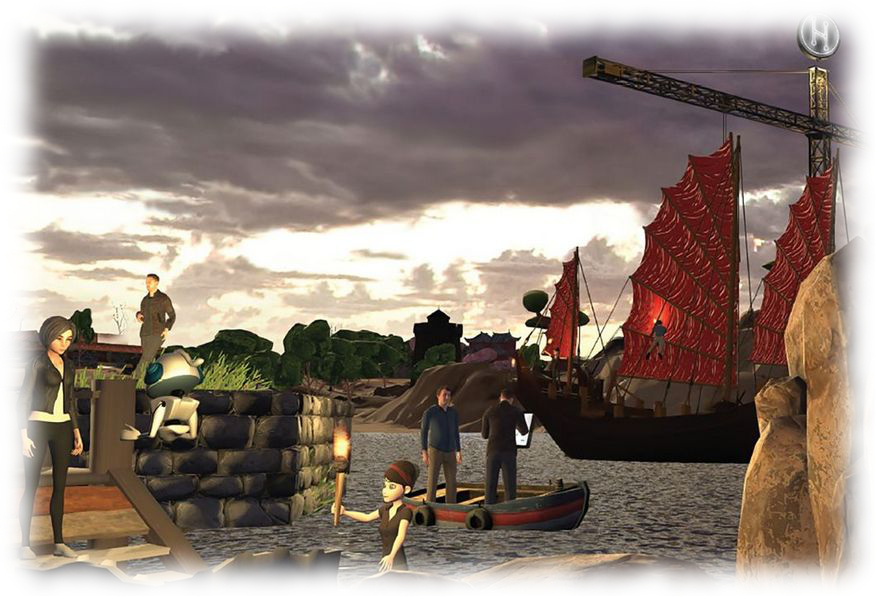
High Fidelity - a composite promotional shot. Credit: High Fidelity (via Wired)
High Fidelity – part of a composite promotional shot. Credit: High Fidelity (via Wired)

Yesterday, a Tweet from Jo Yardley pointed me to an interesting article in Wired by Rowland Manthorpe, entitled Second Life was just the beginning. Philip Rosedale is back and he’s delving into VR. It’s a lengthy, fascinating piece, arising out of a week Manthorpe spent with High Fidelity, while also taking time to poke his head around the door of Linden Lab, offering considerable food for thought – and it kept me cogitating things for a day, on-and-off.

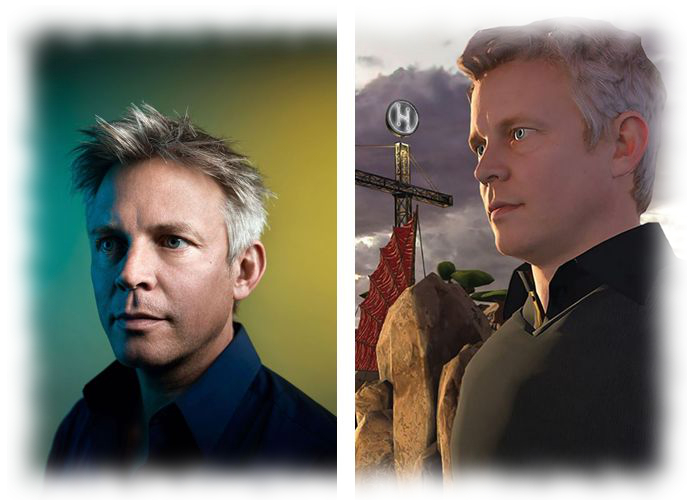
There’s some nice little tidbits of information on both platforms scattered through the piece. For those that have tended to dismiss High Fidelity as a place of “cartoony” avatars, the images provided with the article demonstrate that High Fidelity are walking along the edge of the Uncanny valley; compare the Rosedale-like figure seen the a High Fidelity promo shot within it with a photo of the man himself (below). There’s also further indication that in terms of broader creativity and virtual space, High Fidelity is “closer” to the Second Life model of a virtual world than Sansar will be.

On the Lab’s side of things, we also get confirmation that multiple instances of the same space in Sansar will not be in any way connected (“One school group visiting the Egyptian tomb won’t bump into another – they will be in separate, identical spaces.”). There’s also a hint that Linden Lab may still be looking at Sansar as a “white label” environment.

High Fidelity can still be critiqued by some in SL for it's "cartony" avatar. The reality is however, that for those who wish, avtars in High Fidelity can be extremely life-like, as this picture of what Philip Rosedale might look like in High Fidelity (r) shows when compared to an actual photograph of him. Credits: High Fidelity / Jason Madara
High Fidelity can still be critiqued by some in SL for its “cartoony” avatar. The reality is however, that for those who wish, avatars in High Fidelity can be extremely life-like, as this picture of what Philip Rosedale might look like in High Fidelity (r) shows when compared to an actual photograph of him. Credits: High Fidelity / Jason Madara

But what really makes the piece interesting is the philosophical differences apparent in developing these platforms; each is very much rooted in the nature of the man at the helm of each company.

Rosedale is a dreamer – and that’s not a negative statement. He’s been driven by “dreams” and “visions” throughout most of his post Real Networks career. He also leans heavily into the collaborative, open borders model of development. Both have influenced the working spaces he builds around him. Reading Manthorpe’s piece, the High Fidelity office appears to be run along a similar laissez-faire approach as marked the early years at Linden Lab:  people dabble in what interests them, focused on the technology; there’s a belief that if the company cannot solve a problem (such as practical in-world building using hand controllers), someone “out there” will, and all will be well.

By contrast, Altberg is more consumer / direction oriented with Sansar. Initial market sectors have been identified, work has been broken down into phases. A structured development curve has been set; as we’ve seen from Lab Chat and other sessions, there’s a reasonably clear understanding of what should be tackled first, and what can be pushed further down the development path. The platform itself is closed, controlled, managed.

Sansar Screen Shot, Linden Lab, August 2016, on Flickr Sansar (TM) Screen Shot, Linden Lab, October 2016, on Flickr

In adopting these approaches, and given their somewhat complicated business relationship (Rosedale still have “sizeable” financial holding in Linden Lab; linden Lab was one of the small investors in High Fidelity’s $2.4 million round of seed funding), Rosedale and Altberg describe their relationship as “frenemies”. They are both working towards similar goals, and dealing with the same consumer-facing technology, and are equally sniffy of the other’s product. Rosedale sees Sansar is being potentially too closed, too pigeon-holed in terms of how it will be perceived by consumers; Altberg sees High Fidelity as being to focused on the technology, and perhaps demanding more effort than most on-line consumers in the Facebook pre-packaged content age might be willing to invest.

When looked at from outside, the Rosedale / High Fidelity approach is perhaps more in keeping with the state of VR once all the hyperbole surrounding it is brushed aside:  VR may well be part of our future, but no-one can honestly say at this point just how big a part of our future it will be. The Altberg / Linden Lab approach is rooted business pragmatism: identify your markets and seek to deliver to those markets; build your product to reflect the market as it grows.

Neither approach is necessarily “right” or “wrong”, and there is certainly no reason why both cannot attract their own market share. But I have to admit I find myself leaning more in Altberg’s direction.

This is admittedly partly because a lot of Rosedale’s broader comments about High Fidelity, the Internet, etc., come across as re-treads of things said ten years ago about Second Life and a transformative future never realised. But it’s more particularly because  – as noted above – no-one really knows how pervasive VR will be on a broad level. Other technologies such as augmented reality (AR) and mixed reality (MR) currently lie within the shadow cast by the hyperbole surrounding VR, but have the potential for far greater impact in how we conduct our lives and business. So identifying a market share and aiming for it seems to be the more solid approach insofar as establishing a user base and revenue flow might be concerned*.

Time will obviously tell on this; but one fact is clear: however you regard the philosophies held by Rosedale and Altberg, Manthorpe’s article is a must read. A considered, well presented, in-depth piece, it is sits as a catalyst for considerable thought and potential discussion.

*Edited 25 October 2015, to include this sentence, which was accidentally removed from the initial publication of this piece.

2016 viewer release summaries: week 42

Updates for the week ending Sunday, October 23rd

This summary is published every Monday, and is a list of SL viewer / client releases (official and TPV) made during the previous week. When reading it, please note:

  • It is based on my Current Viewer Releases Page, a list of all Second Life viewers and clients that are in popular use (and of which I am aware), and which are recognised as adhering to the TPV Policy. This page includes comprehensive links to download pages, blog notes, release notes, etc., as well as links to any / all reviews of specific viewers / clients made within this blog
  • By its nature, this summary presented here will always be in arrears, please refer to the Current Viewer Release Page for more up-to-date information.

Official LL Viewers

  • Current Release version: 4.1.1.320331 (dated dated October 4th), promoted October 10th – no change
  • Release channel cohorts (please see my notes on manually installing RC viewer versions if you wish to install any release candidate(s) yourself):
    • Project Bento  RC (avatar skeleton extensions), updated to version 5.0.0.320815 on October 20th – parity with release viewer, minor fixes
    • Maintenance RC viewer updated to version 4.1.2.320804 on October 20th – parity with release viewer
  • Project viewers:
    • No updates.

LL Viewer Resources

Third-party Viewers

V4-style

V1-style

  • Cool VL viewer Stable branch updated to version 1.26.18.29 and the Experimental branch updated to version 1.26.19.31, both on October 22nd (release notes).

Mobile / Other Clients

Additional TPV Resources

Related Links

A metaphorical Tumor in Second Life

MetaLES: Tumor
MetaLES: Tumor

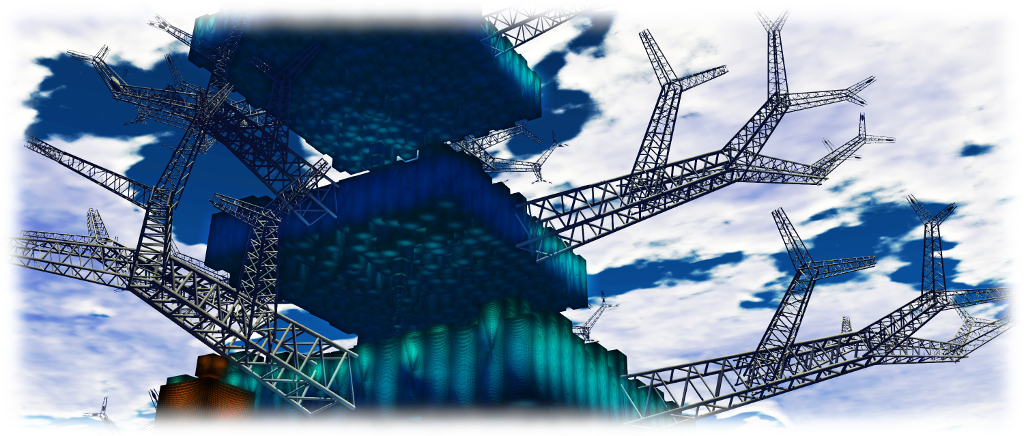
“This work is my acknowledgement of greed for material things of human kind which is so powerful that it is going to cost us our own existence,” Igor Ballyhoo states of his new installation, Tumor, now open at MetaLES. “This is not [an] effort to fight it, it is not made in least hope to change anything, it is just a recording of my observation of human society at this point.”

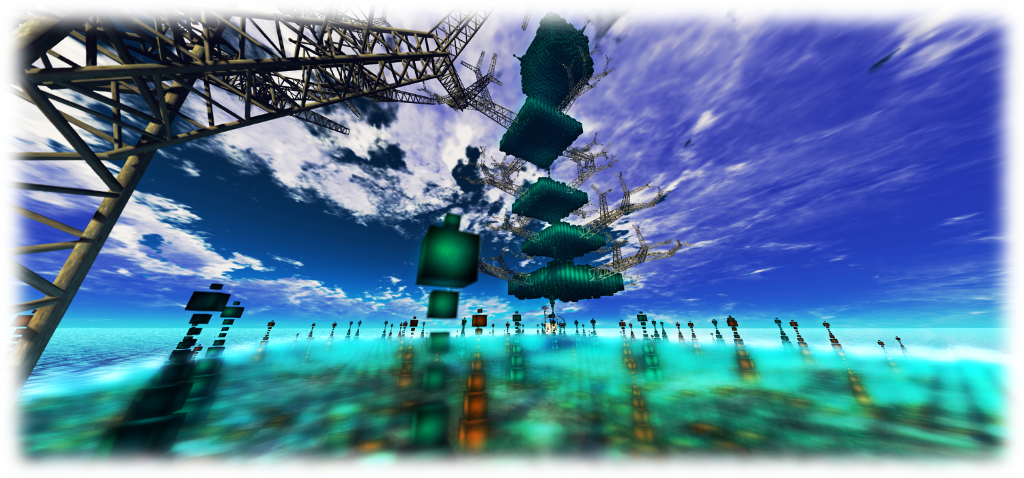
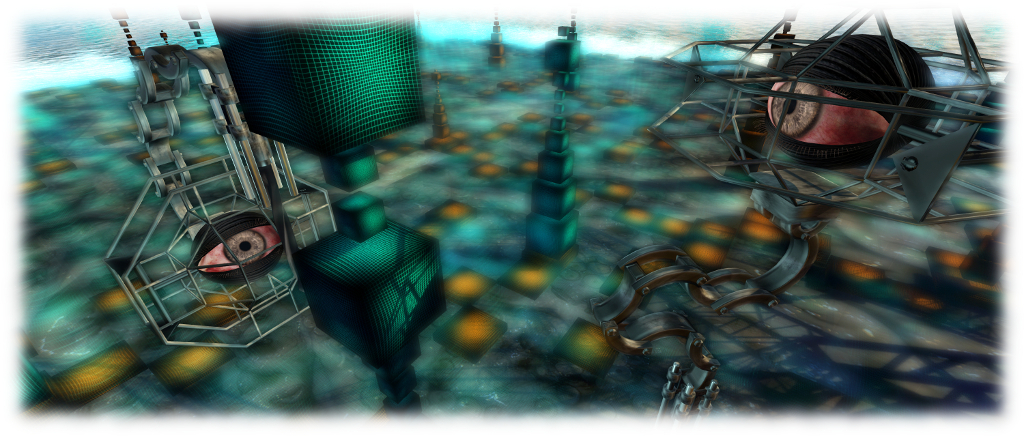
Across a flat, misted plain – reached via teleport of the region’s skyborne landing point – strange structures rise, strange cubic conifers, denuded of branches and leaves. Underfoot, square stepping-stones of brown earth vie with an oily, sludge-like morass pulsating around them, The glowing mist hovers above this, with closer examination revealing it to be sheets of a digital grid pattern which blurs this strange, almost alien landscape into a soft focus.

MetaLES: Tumor
MetaLES: Tumor

But none of this holds the attention for long. Across the region a massive steel pylon raises multiple arms splitting and branching over and again as they reach into the sky. It stands as the embodiment of a the great metal pylons which march across many countries of the world, feeding our insatiable need for energy. Even the metal arms, rising into pincer-like pairs which seem to pluck and pull at the ball of the Sun overhead, offer a further metaphor for our energy greed.

More of these grasping metal arms and fingers can be seen overhead, stretching out from the sides of huge structures rising into the sky. Their blocky forms shimmering in the sunlight and defying the eye to pick out details, they rise one atop the last like great drilling platforms, oblivious of the strange, denuded and oozing landscape below, topped by a strange gigantic cube of cubes.

MetaLES: Tumor
MetaLES: Tumor

As a statement and as an art installation, Tumor is a powerfully visual piece, underlined by its dedication to  Georgina Hope “Gina” Rinehart, climate change sceptic and CEO of Hancock Prospecting, a company which could be said to have questionable concerns over the environmental impact of its projects. It will remain open until the end of November. At the time of writing, it overlaps lanjran Choche’s photographic exhibition, 5Y Smoking, which can also be reached via teleport from the landing point.

SLurl Details

Tumor (MetaLES, rated Moderate)

Space Sunday: success, loss and safe modes

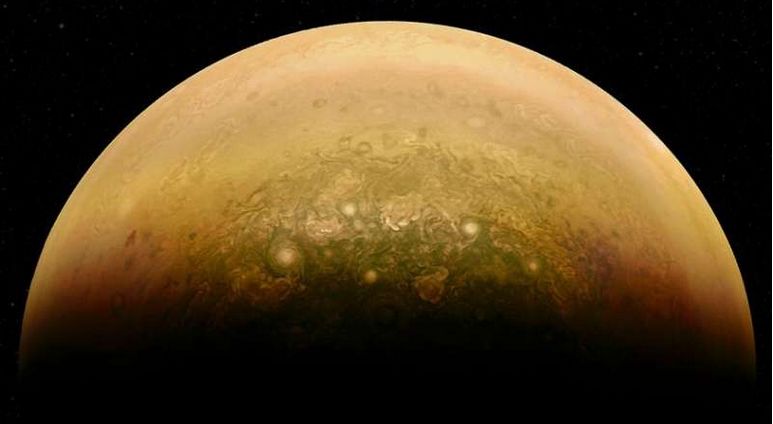
A colour-enhanced image of Jupiter's south pole, created by "citizen scientist" Alex Mai, as a part of the public Junocam project. using data from Juno's JunoCam instrument. Credit: NASA/JPL / SwRI / MSSS / Alex Mai - see later in this article for an update on the Juno mission
A colour-enhanced image of Jupiter’s south pole, created by “citizen scientist” Alex Mai, as a part of the public JunoCam project. Credit: NASA/JPL / SwRI / MSSS / Alex Mai – see later in this article for an update on the Juno mission

On Wednesday, October 19th, 2016, the European Space Agency (ESA) attempted, for them, a double first: placing a vehicle successfully in orbit around Mars (the Trace Gas Orbiter, or TGO) and landing a vehicle on the planet’s surface (the Schiaparelli demonstrator).

Launched in March 2016, TGO is the second European orbiter mission to Mars, the first being Mars Express, which has been operating around the red planet for 12 years. TGO’s mission is to perform detailed, remote observations of the Martian atmosphere, searching for evidence of gases which may be possible biological importance, such as methane and its degradation products. At the same time, it will to image Mars, and act as a communications for Europe’s planned 2020 Mar rover vehicle.

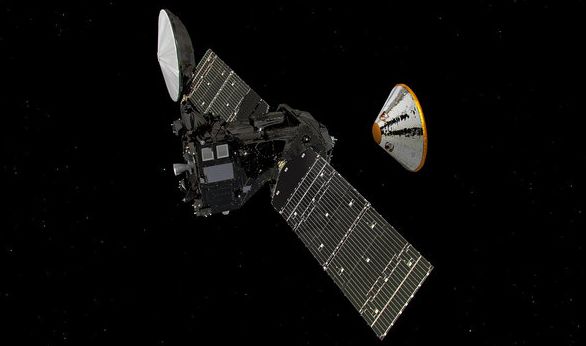
October 16th, 2016: the Schiaparelli EDM separates from ESA's TGO, en-route for what had been hoped would be a safe landing on Mars. Credit: ESA
October 16th, 2016: the Schiaparelli EDM separates from ESA’s TGO, en-route for what had been hoped would be a safe landing on Mars. Credit: ESA

TGO’s primary mission won’t actually start until late 2017. However, October 19th marked the point at which the vehicle entered its preliminary orbit around Mars.  Orbital insertion was achieved following a 139-minute engine burn which slowed the vehicle sufficiently  to place  it in a highly elliptical, four-day orbit around Mars. Early next year, the spacecraft will begin shifting to its final science orbit, a circular path with an altitude of 400 km (250 mi), ready to start its main science mission.

On Sunday, October 16th, prior to orbital insertion, TGO had bid farewell to the 2-metre diameter Schiaparelli  Entry, Descent and Landing Demonstrator Module (EDM), which it had carried to Mars. The EDM was specifically designed to gather data on entry into, and passage through, the Martian atmosphere and test landing systems in preparation for ESA’s 2020 rover mission landing. 

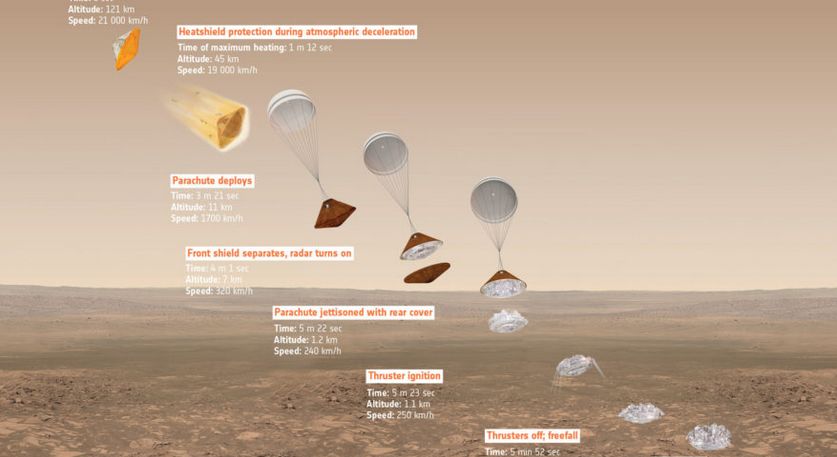
Schiaparelli's route to the surface of Mars. Credit: ESA
Schiaparelli’s route to the surface of Mars (click for full size). Credit: ESA

Once separated from TGO, Schiaparelli travelled ahead of the orbiter, entering the Martian atmosphere at a speed of 21,000 km/h (13,000 mph; 5.8 km/s / 3.6 mi/s), at 14:42 UT on October 19th. After using the upper reaches of the Martian atmosphere to reduce much of its velocity, Schiaparelli should have proceeded to the surface of Mars using a mix of parachute and propulsive descent, ending with a short drop to the ground, cushioned by a crushable structure designed to deform and absorb the final touchdown impact. Initially, everything appeared to go according to plan. Data confirmed Schiaparelli had successfully entered the Martian atmosphere and dropped low enough for the parachute system to deploy. Then things went awry.

Analysis of the telemetry suggests Schiaparelli prematurely separated from its parachute, entering a period of free fall before the descent motors fired very briefly, at too high an altitude and while the lander was moving too fast. Shortly after this, data was lost. While attempts were made to contact the EDM using ESA’s Mars Express and NASA’s Mars Reconnaissance Orbiter (MRO) it was not until October 20th that Schiaparelli’s fate became clear.

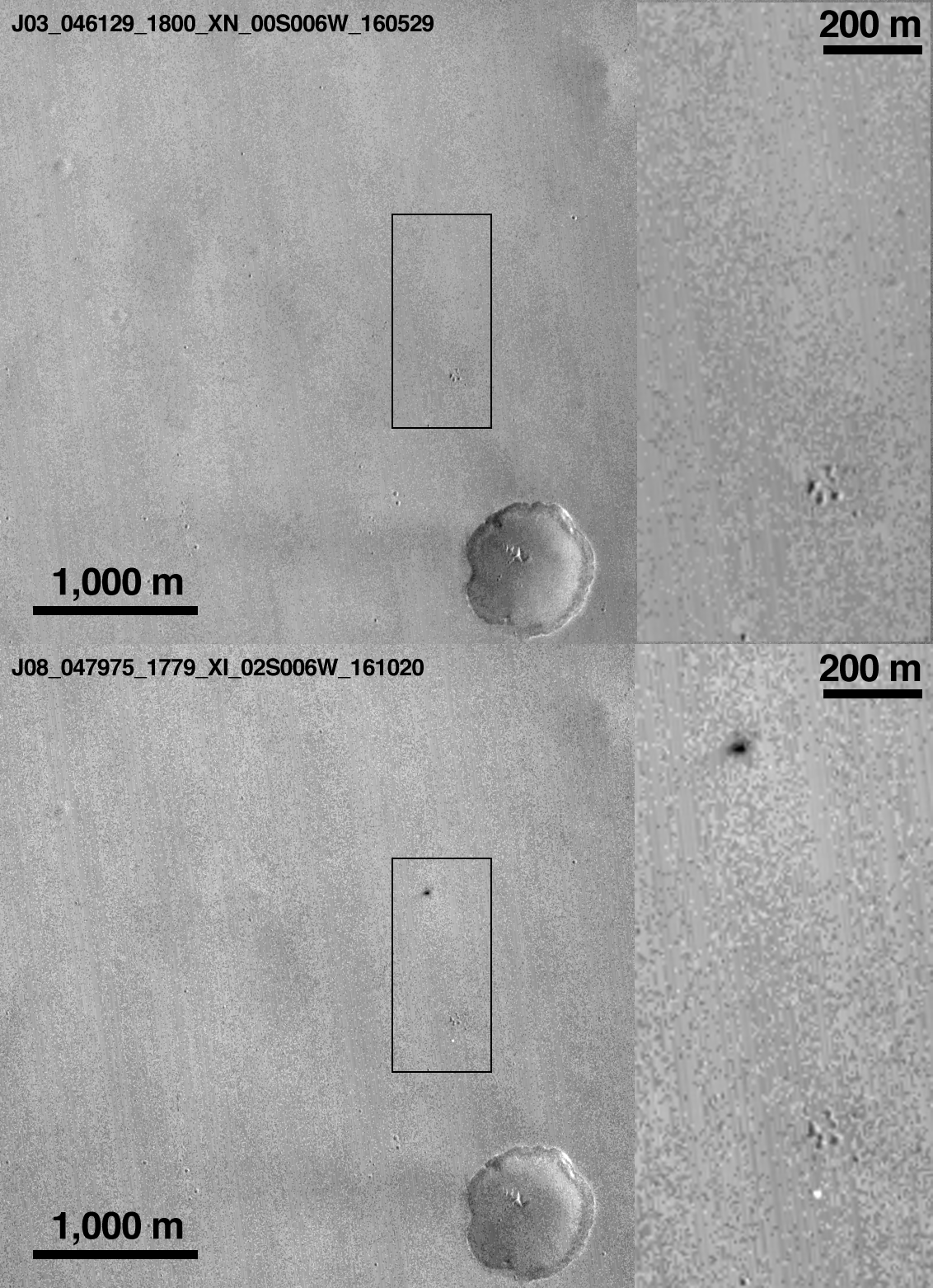
Images taken by MRO  of Schiaparelli’s landing zone revealed a new 15x40m (49x130ft) impact crater, together with a new bright object about 1 kilometre south of it. The crater is thought to be Schiaparelli’s impact point, and the latter the lander’s parachute and aeroshell.

In releasing the NASA images on October 21st, the European Space Agency stated,”Estimates are that Schiaparelli dropped from a height of between 2 and 4 km (1.4-2.4 mi), impacting at a  speed greater than 300 km/h (186 mph). It is also possible that the lander exploded on impact, as its thruster propellant tanks were likely still full.”

Point of impact: on the left, images of Schiaparelli's landing zone taken in May 2016 and on October 20th, 2016, superimposed on one another, the October 20th image clearing showing an impact feature. On the right, an enlarged view of the same two images, showing the impact feature and, south of it, the white canopy of Schiaparelli's parachute. Credit: NASA/JPL / MSSS
Point of impact: on the left, images of Schiaparelli’s landing zone taken in May 2016 and on October 20th, 2016, superimposed on one another. The October 20th image clearly shows an impact feature with a bright object to the south, thought to be Schiaparelli’s parachute canopy. On the right, an enlarged view of the same two images. Credit: NASA/JPL / MSSS

While the lander carried a small suite of science instruments which would have been used to monitor the environment around it for a few days following the landing, the major part of the mission was to gather data atmospheric entry and the use of parachute and propulsive descent capabilities. ESA believe this part of the mission to have been a success, even with minimal data gathered on the propulsive element of the descent.

In the meantime, TGO is currently on a 101,000 km x 3691 km orbit (with respect to the centre of the planet). It is fully functional, and will undertake instrument calibration operations in November, prior to commencing the gentle aerobraking manoeuvres designed to reduce and circularise its orbit around Mars.

Continue reading “Space Sunday: success, loss and safe modes”