As always, please refer to the server deployment thread for updates or changes.
There was no deployment to the Main (SLS) channel On Tuesday, September 27th.
On Wednesday September 28th, all three RC channels should receive the same new server maintenance package, which includes a fix for BUG-40565, introduced as a result of the deployment of the week #38 server maintenance package.
SL Viewer
Unless something untoward has happened with the latest RC version, it is anticipated the VLC Media Plug-in viewer will be promoted to de facto release status this week. A new maintenance RC is also anticipated. In the meantime, the current batch of official viewers remains unchanged from week #38:
Current Release version: 4.0.8.319463 (dated September 9), promoted September 15 – formerly the Visual Outfit Browser RC viewer
Project Bento (avatar skeleton extensions), version 5.0.0.319893, dated September 22nd
VLC Media Plugin Viewer RC, version 4.1.1.319856, dated September 20th – replaces QuickTime in the Windows viewer with a media plug-in based on LibVLC
Obsolete platform viewer version 3.7.28.300847, dated May 8, 2015 – provided for users on Windows XP and OS X versions below 10.7.
Experience Scripted Sits
As per my blog post of September 23rd, Rider Linden is working on a new scripted sit capability for Experiences. The new LSL functions form Project Espeon (after the Pokémon character), and Rider has produced a proposal document on the new functionality, which can be read in PDF format. The capability can also be tested on ADITI (the beta grid) in the following regions: Leafeon or Umbreon or Sylveon, with test content is available on Leafeon. If anyone testing them has suggestions or feedback, please raise a JIRA against Project Espeon.
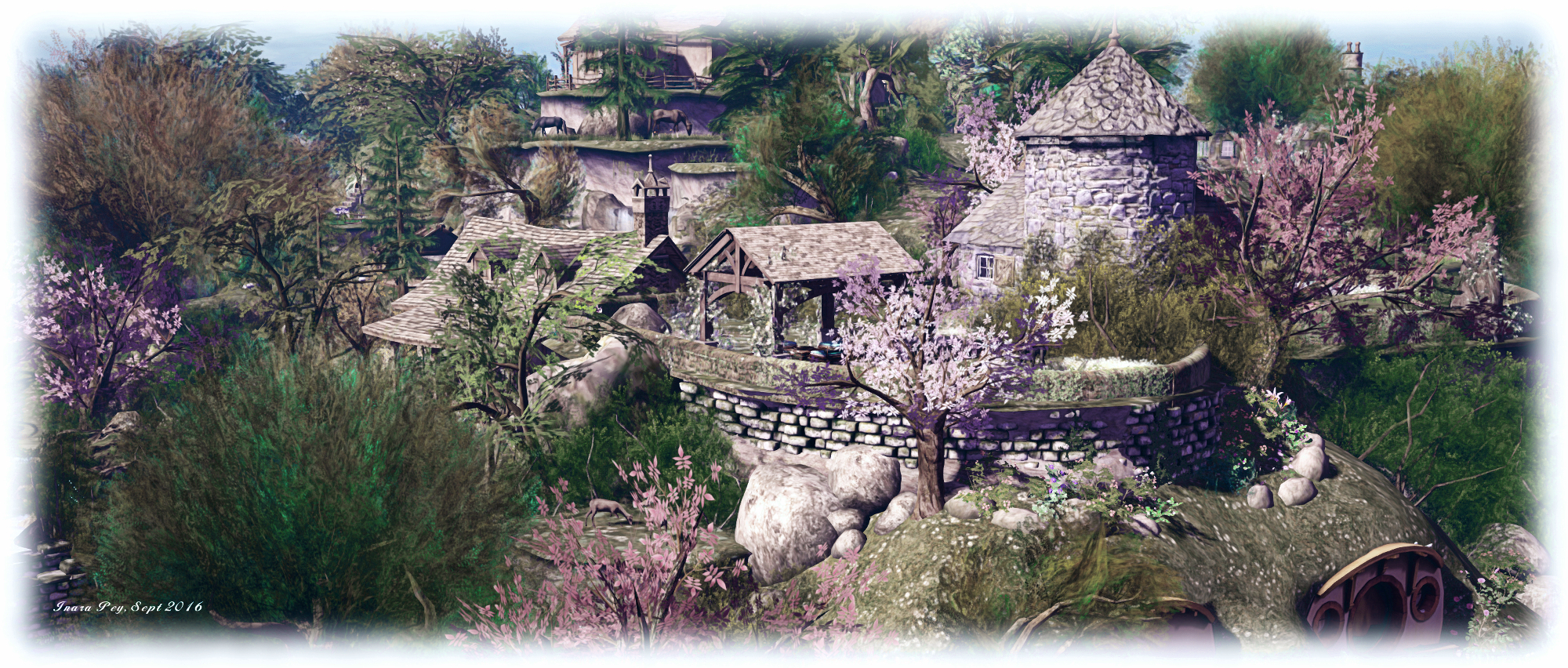
I’ve been a little quiet blogging-wise these last couple of days because I’m at it again: re-building the island home. It’s Caitlyn’s fault (or at least that’s my excuse … until she says otherwise 🙂 ); she showed me some photos of Scotney Castle, which sent us on a hunt for something that could be converted into a similar-looking place.
Nothing we found really appealed, but in mooching around The Domineaux Effect by Domineaux Prospero, I came across a cosy little two room cottage. And of course, Domineaux also makes a great boat dock (imaged above, now at the southern end of the island). And, well, once discovered things have to be purchased, don’t they?
Anyway, the work is almost done in getting things ship-shape, so normal service will be resumed very shortly! 🙂 .
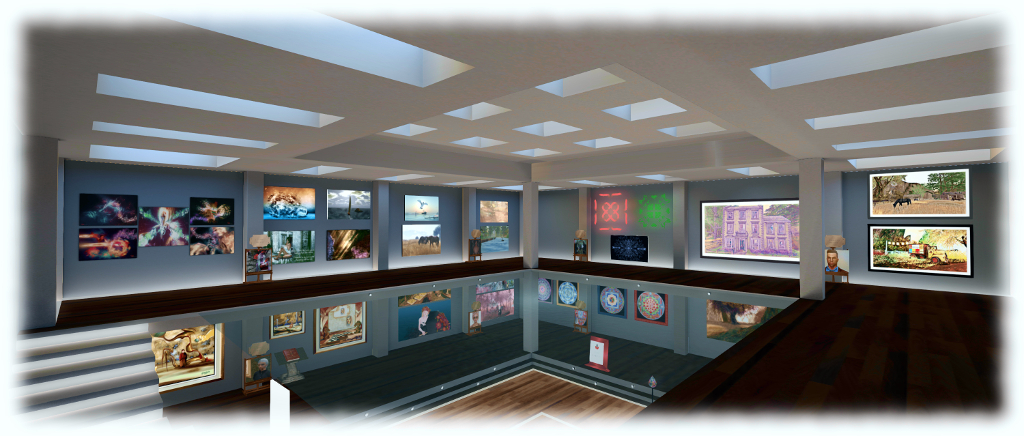
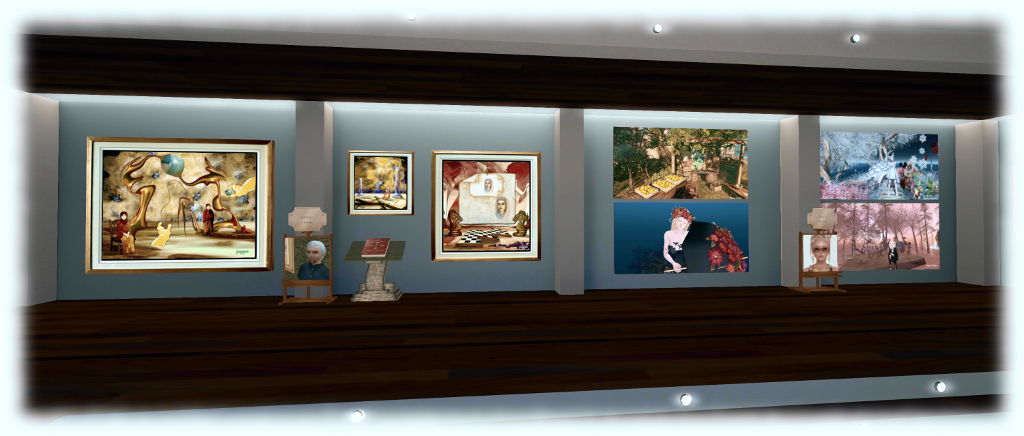
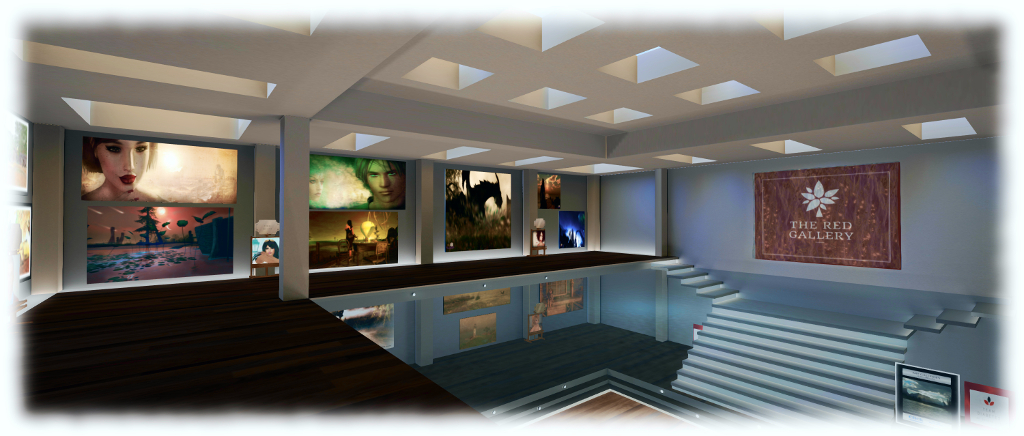
The Red Gallery has been established to support Team Diabetes of SL in their work raising funds for ADA. Each exhibition will feature a number of artists displaying their art, with proceeds of sales split between the artist and Team Diabetes of SL. Each exhibition will likely be for a period of two months.
For the inaugural exhibition, the featured artists are Aradia Aridian, John Brianna, Sheba Blitz, Eucalyptus Carroll, Ilyra Chardin, Layachi Inchen, Methisa Kira, Ramsa Luv, Doasilike Resident, Kodymeyers Resident, Timaaj Resident and Tisephone Resident. Between them they present a rich mix of art, ranger from modern “traditional” in-world landscapes and avatar studies, through to more abstract pieces and art generated in the physical world and imported in to Second Life; all of which makes for an engaging and eye-catching exhibition.
For those who prefer to donate directly, Team Diabetes of Second Life donation kiosks are available on the lower level of the gallery.
Established in 1940, the American Diabetes Association is working to both prevent and cure diabetes in all it forms, and to help improve the lives of all those affected by diabetes. It does this by providing objective and credible information and resources about diabetes to communities, and funding research into ways and means of both managing and curing the illness. In addition, the Association gives voice to those denied their rights as a consequence of being affected by diabetes.
About Team Diabetes of Second life
Team Diabetes of Second Life is an official and authorised fund-raiser for the American Diabetes Association in Second Life. Established with the aim of raising funds in support of diabetes treatment and to raise awareness of the disease in SL, Team Diabetes of Second Life was founded by Jessi2009 Warrhol and John Brianna (Johannes1977 Resident), and is served by an advisory board comprising Eleseren Brianna, Veruca Tammas, Sandie Loxingly, Rob Fenwitch, Earth Nirvana and Dawnbeam Dreamscape, with Saiyge Lotus serving as a special advisor.
Updates for the week ending Sunday, September 25th
This summary is published every Monday, and is a list of SL viewer / client releases (official and TPV) made during the previous week. When reading it, please note:
It is based on my Current Viewer Releases Page, a list of all Second Life viewers and clients that are in popular use (and of which I am aware), and which are recognised as adhering to the TPV Policy. This page includes comprehensive links to download pages, blog notes, release notes, etc., as well as links to any / all reviews of specific viewers / clients made within this blog
By its nature, this summary presented here will always be in arrears, please refer to the Current Viewer Release Page for more up-to-date information.
Project Bento (avatar skeleton extensions) RC version 5.0.0.319893 released on September 14 (download and release notes)
VLC Media Plugin Viewer RC updated to version 4.1.1.319856 on September 20 – replaces the QuickTime media plugin for the Windows version of the viewer with one based on LibVLC (download and release notes)
Cool VL viewer Stable branch updated to version 1.26.18.25 and the Experimental branch updated to version 1.26.19.27, both on September 24th (release notes)
Euorpa’s icy, mineral-stained surface as imaged by NASA’s Galileo mission – see below (credit: NASA / JPL)
NASA have been teasing the press and pundits with news that they have a “surprising” announcement to make about Europa, one of Jupiter’s four Galilean moons (so-called as they were first recorded by Galileo Galilei).
Slightly smaller than our own Moon, Europa is covered by shell of water ice, much of it discoloured by mineral deposits and by deep cracks. This icy surface might only be relative thin, on the order of a handful of kilometres in extent, or it might be tens of kilometres thick, and sits over an ocean which is mostly likely liquid water, although some argue it might actually be an icy slush, perhaps extending to 100 km (62.5 miles) in depth.
The ocean is made possible by tidal flexing enacted by the massive gravity of Jupiter as well as from the other large Galilean moons. This generates heat within Europa, and this heat stops the water from freezing solid.
An artist’s impression of how a huge plume of water, over 200km (125 mi) high, which erupted from Europa in 2012 and was “seen” by the Hubble Space Telescope, might have looked like if witnessed from the vicinity of Europa. Credit: NASA / ESA / M. Kornmesser.
Exactly how much heat is generated as a result of this flexing isn’t known, but it has been suggested that the ocean floor could be home to volcanic activity with hydrothermal vents and fumeroles responsible for pumping huge amounts of minerals into the water, as well as supplying energy, potentially marking Europa’s ocean as a place where basic microbial life might arise.
The discovery of life on Europa isn’t going to be the subject of the NASA press conference. It will instead reveal the findings of a Europa observation campaign using the Hubble Space Telescope linked to the potential for a liquid water ocean being present under the moon’s ice. I’ll likely have more next week.
Nor is Europa likely to be alone in harbouring a subsurface ocean among the Galilean moons of Jupiter. In 2015 data from the Hubble Space Telescope confirmed that Jupiter’s largest moon, Ganymede, has an underground ocean that contains more water than all of Earth’s combined. Hubble was used to carry out a spectrographic observation of Ganymede’s aurorae, displays of light in the atmosphere. Because aurorae are controlled by a moon or planet’s magnetic field, observing changes in how they behave offers insights into what is happening beneath the surface of the planet or moon. In Ganymede’s case, the aurorae allowed scientists to confirm a long-suspected subsurface salt water there.
Pluto’s Liquid Heart
A global mosaic of Pluto captured by New Horizons from a distance of 450,000 km (280,00 mi) from Pluto byt New Horizons on July 14th, 2015, coloured from data received by the RALPH instrument on the spacecraft, reveals the planet’s heart-shaped mark, the left “lobe” of which is formed by the massive depression dubbed “Sputnik Planum”. Credit: NASA/JPL / JHU/APL / SwRI
In June, I wrote about a paper proposing Pluto harbouring a liquid water ocean beneath its surface. The paper, by Planetary Science Institute Senior Scientist Amy C. Barr and Noah P. Hammond of Brown University, reached its conclusion after a prolonged study of Pluto’s geological features, including “Sputnik Planum”, a massive depression on the planetoid which forms one “lobe” of Pluto’s distinctive “heart”.
Barr and Hammond’s work focused on the lack of ice II on Pluto – a place where ice II should be expected to form. Had it done so, it would have caused volume contraction, resulting in the formation of compressional tectonic features on the surface of the planet. However, Barr and Hammond found no evidence for such features on Pluto in all of the images returned by the New Horizons spacecraft which flew past Pluto and its twin, Charon, in July 2015. This led them to conclude that Pluto’s interior is warmer than might be expected, which would both prevent ice II from forming and potentially give rise to a liquid ocean beneath Pluto’s frozen crust.
Now, a second paper has been published in Geophysical Research Letters, offering a suggestion as to how deep that ocean is, and its potential composition. Another research team at Brown University have been investigating the dynamics between Pluto and Charon, and the likely formation and development of the “Sputnik Planum” depression, which is thought to have been initially created by the impact of an object some 200 km (125 mi) across at some point in Pluto’s formative years.
Pluto and Charon are tidally locked with each other, so they always show each other the same face as they rotate. “Sputnik Planum” sits directly on the tidal axis linking the two worlds. This suggests the basin has what’s called a positive mass anomaly — it has more mass than average for Pluto’s icy crust. As Charon’s gravity pulls on Pluto, it would pull proportionally more on areas of higher mass, which would tilt the planet until “Sputnik Planum” became aligned with the tidal axis.
The surface ice on “Sputnik Planum” is constantly being renewed both by atmospheric deposition from above, and convection action from below, suggesting a source of heat beneath the ice, which in turn could be keeping any subsurface ocean liquid. Credit: NASA/JPL / JHU/APL / SwRI
But why would a crater – essentially a hole in the ground – be a positive mass anomaly? Part of the answer probably lies in the huge amount of nitrogen ice which has accumulated in the basin over the aeons, adding mass to the basin.
But the ice isn’t thick enough on its own to create the amount of mass needed to make “Sputnik Planum” have positive mass. Water, however, could have sufficient mass.
An impact creates a dent on a planet’s surface, followed by a rebound. That rebound pulls material upward from deep in the planet’s interior. If that material is denser than what was blasted away by the impact, the crater ends up with the same mass as it had before the impact happened. Any material added to it after the impact and rebound would therefore add mass to it, creating a positive mass anomaly.
I recently received an invitation from Patti Peregrine to visit her quarter region holding at Serena Pirates Wells, called Vecchi Amici (“Old Friends”) Winery. As I’m familiar with Patti’s work from her time at Hestium I where she worked with my friend Boudicca Amat (and which you can read about here), I made it a point to hop across to take a look as soon as time allowed.
Currently featured as at Editor’s Pick in the Destination Guide Vecchi Amici is a simply done but delightfully eye-catching corner of Tuscany brought to life in Second Life by someone with an eye for layout and ambience. And for those who enjoy their wine (/me moves her glass out of sight), it is just the spot to while away an afternoon.
Located atop a gentle slope on the north-east side of the region, Vecchi Amici presents a small, active vineyard before which sit a little orchard (so is cider also produced here?). A path meanders through a little grove of trees, passing the vines on one side and a large pond on the other, as it winds its way up to a converted villa.
Fronted by a low stone wall and a line of fir trees and with walled gardens shouldering it on either side, the villa offers visitors a comfortable place to sit and relax, with a small café area to one side of its large, single room and comfortable chairs and sofa on the other. Outside, water splashes in a fountain, and a bench seat is shaded by a young maple tree. A small terrace to one side of the villa offers a swing seat and access to one of the walled gardens, where butterflies weave patterns over the flowers and wooden benches offer further places to sit. The garden to the other side of the villa offers another pleasing mix of flowers, benches, butterflies and – for the hungry – a little afternoon tea set out on a dainty table.
Those with a taste for wine may well be waylaid on their way up the villa by opportunities to sample the local produce either from the bottle or – if it is ready – straight from the tap of an ageing barrel. Just across the path, the pond offers a little retreat where samples can be enjoyed while watching the local swans and dear.
Small and simple it might first appear, but there is an elegance to Vecchi Amici which more than lives up to its name; a visit is like a return to a familiar old friend of a place; there’s a refined, aged fell to the villa, and the setting lends itself to photography. Should you enjoy your visit, do please consider a donation towards the vineyard’s continued presence in Second Life.




 Inara Pey: Living in a Modemworld