SL project updates 16 1/1: Login failures; Project Bento

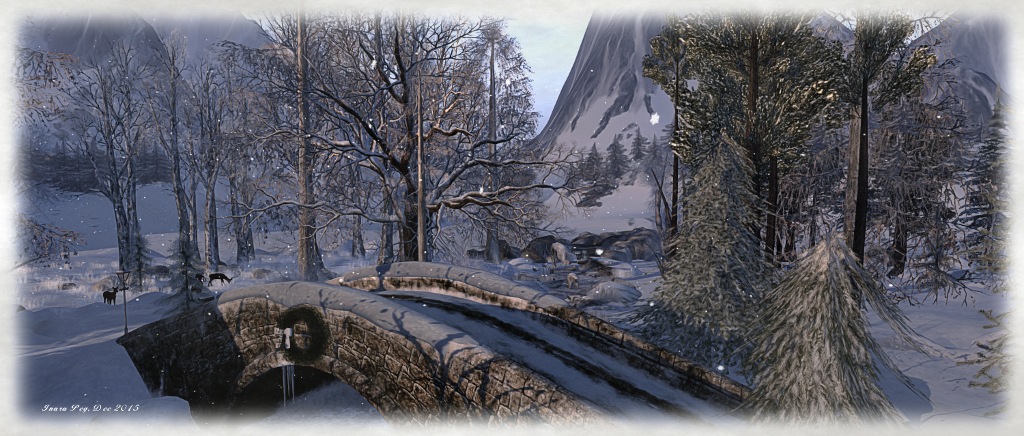
The Trace too; Inara Pey, December 2015, on Flickr The Trace Too (Flickr) – blog post

Server Deployments

The weekly scheduled server deployments will not resume until week #2 of 2016 (week commencing Monday, January 11th), when there should be a deployment to the three release candidate channels.

SL Viewer

The Maintenance RC viewer was updated on Tuesday, January 5th to version 4.0.1.309460. This sees MAINT-5760 “Favourites sort order reverts every session and no favourites display at the login screen for single name “Resident” accounts” removed from the resolved issues list.

The Quick Graphics RC viewer (graphics preset options and Avatar Complexity) updated to version 4.0.1.309320, also on Tuesday, January 5th. This sees the addition of two further fixes to the resolved issues list:

  • MAINT-5541 “[QuickGraphics] 0 complexity avatar renders as jelly”
  • MAINT-5567 “[QuickGraphics] A mesh attachment causes avatar to be jellybaby while Avatar complexity is set to No Limit”.

Login Failures – Friends List Updates

People have been experiencing log-in failures recently, which appear to be related to issues as the viewer loads / updates the Friends list as a part of the log-in process (see BUG-11032 and BUG-11127).

A typical error message displayed when the log-in failure occurs
The log-in failure issue generates s generic error message

The problem is account-specific, and when I asked Oz and Simon Linden about the problem, and whether a more permanent resolution might be forthcoming, during the simulator User Group meeting on Tuesday, January 5th, Oz replied, “yes, we think we understand what’s up with that… fix is in the works”, although he declined to elaborate further.

In the meantime the advice remains as specified by Alexa Linden on BUG-11032: if you are unable to log in as a result of the problem, you will need to file a support ticket explaining the problem and noting it is a Friends List Login Failure. Support should then be able to fix your account.

Project Bento

There’s no major news on Project Bento beyond what I’ve already reported to date. However, given the project is now in a public beta, user group meetings associated with the project are now open to all as well.

Meetings will take place on Aditi at Mesh Sandbox 2 (note that is an Aditi, location, not the main grid) at 13:00 SLT every Thursday, with the first public meeting scheduled for Thursday, January 7th. In announcing the meetings, Oz Linden also requested those who have any available, to bring example content using the new avatar skeleton extensions along to the meetings (but do notes the region is rated General!).

In the meantime, Cathy Foil, one of the content creators involved in Bento has produced video explaining how the work was handled within the initial development group,

Aditi Password Changes

As I noted in my 2015 week #51 project updates report, there are changes coming in the way Aditi inventory syncs with Agni are handled, which will also affect Aditi password changes. These changes are still to be deployed, so in the meantime, anyone wishing to change their password on Aditi should do so via a support ticket.

Those wishing to attend the Project Bento meeting on Aditi and who have not logged into the beta grid for a while, many want to check that they can in advance of Thursday, January 7th, and if necessary file a support ticket requesting a password update, as noted above.

Object_Rezzer_Key

Object_Rezzer_Key is a new parameter which is to be added to llGetObjectDetails()  early in the New Year. It will allow a rezzed object to find the key of its parent rezzer, then use llRegionSayTo() to chat back to that parent – see my 2015 Project updates: server and Project Bento report for more.

Commenting on this work at the Simulator User Group meeting, Simon said:

OBJECT_REZZER_KEY is in QA and the release process … if things go steady, it would see the beta grid later this week or next, and possibly RC in 2 weeks.   That’s all tentative, of course. … OBJECT_TOTAL_INVENTORY_COUNT and OBJECT_PRIM_COUNT are in the next release (before that one).


In the Press: a virtual world without Parkinson’s

Tom Boellstorff and his digital alter ego, Tom Bukowski (image: Steve Zylius / UCI)

There are probably few Second Life residents who keep an eye on blogs and the more well researched media reports on Second Life who are unaware of Fran Seranade’s story.  Now 88 years old, Fran is a keen Second Life resident, who spends time in-world with her daughter and son, enjoying much of what the platform can offer: dancing, Tai Chi, swimming, horseback riding, walking, exploring. All far removed from the physical world, where she suffers from Parkinson’s Disease, which deeply affects her ability to do many of the things we take for granted: such as simply getting out of a chair and walking to the next room.

Fran’s story, and that of Creations for Parkinson’s and their support of Team Fox, the fund-raising arm of the Michael J. Fox Foundation for Parkinson’s Research (MJFF)  first came to my attention in September 2013, thanks to an excellent article in the San Diego Union-Tribune by Pam Kragen. Fran’s story has also been related by Draxtor Despres in his World Makers video series, as well as being featured in numerous other SL-related blogs.

Fran Swenson (Fran serenade in Second Life), seen with her avatar and friends in Second Life
Fran Swenson (Fran Seranade in Second Life), seen with her avatar and friends in Second Life

It is now also the story used to introduce an article appearing in UCI News, the on-line newsletter of the University of California, Irvine, which explores the work of Tom Boellstorff, a professor of anthropology at the university.

In A (virtual) world without Parkinson’s, Heather Ashbach talks to Tom about his ongoing work with Fran and other Parkinson’s Disease sufferers using Second Life, which is now part of a US $276,900 National Science Foundation study that began in July 2015, and will run through until June 2018, examining how on-line environments affect social interaction and self-understanding as well as physical-world experiences of disability.

Tom's work has also been more broadly covered through The Drax Files World Makers #31, which I covered here
Tom’s work has also been more broadly covered through The Drax Files World Makers episode #31, which I covered here

Tom’s work as an anthropologist studying our digital interactions with ourselves and others has already given rise to two books, Coming of Age in Second Life: An Anthropologist Explores the Virtually Human, and Ethnography and Virtual Worlds: A Handbook of Method. With this study, he hopes to build on the knowledge he’s acquired over the last several yeas of study, and also learn which aspects of on-line social interaction are linked to specific disabilities and how differing platforms and devices are utilised.

“Billions of people now participate in on-line environments – social networking sites like Facebook, games, virtual worlds,” he notes in the article. “Since some early human first picked up a stick to use as a cane, persons with disabilities have been at the forefront of technology innovation, so it’s natural that they would be doing creative things in virtual worlds too.”

His examination of Parkinson’s and the effect Second Life has had on those suffering from it is not limited to Fran; the article specifically touches on the lives of Solas NaGealai, who founded the original Team Fox presence in Second Life (and whose story I covered in August 2014), and architect DB Bailey, and they are two among many Tom has talked to within Second Life.

Second Life has provided Solas wearing one of her own gowns
Second Life has provided Solas NaGealai to continue her love of fashion and design, and provided her with the means to directly support MJFF through Team Fox SL.

Solas was diagnosed with a particular form of Parkinson’s Disease known as Young Onset Parkinson’s Disease (YOPD) – the same form of the disease which struck Michael J. Fox.

When first diagnosed, Solas was a full-time fashion designer. However, as the illness progressed, she was forced to leave that career behind. Fortunately, her discovery of Second Life allowed her a way to re-engage in her passion for design, and she founded her own fashion label at Blue Moon Enterprise.

Prior to his diagnosis, DB Bailey was a noted architect who, among other projects, collaborated on the design of Los Angeles’ Walt Disney Concert Hall. Since the disease has forced him to step back from that career, he’s been able to use Second Life as his creative outlet as an architect and artist.

Tom’s work, which has involved in-world and face-to-face interviews and studies, has also touched upon the possible physical benefits some of those with disabilities report as a result of their use of Second Life. In Fran’s case, for example, she his indicated an improvement in her sense of balance and co-ordination as a result of using the platform. This is something Tom has suggested might be down to what is called “mirror neurons“, with Fran’s brain responding positively to the visual stimulus she receives as a result of her in-world activities. However, examining such potential benefits does not form a part of the current study, primarily because Tom is not a medical doctor; but he is of the opinion that they are worth  future examination.

The psychological and sociological benefits of using platforms like Second Life in matters of healthcare are clear, and have been the subject of many studies. With the promise of more immersive VR experiences and opportunities now on the horizon, a better understanding of how different platforms and mediums assist those with disabilities enjoy a richer, fuller life is liable to be of enormous benefit, and also offers an opportunity for broader public discussion on matters of disability and the use of technology.

As Tom himself notes in closing the interview with Heather Ashbach, “disability is a fascinating category of human experience because anyone can enter it at any moment – we’re all just a car accident away. And even if we avoid it, if we live long enough, age will present us with obstacles that limit our ability to function as we currently do. Studying how people adapt through the use of technology helps advance the public conversation on disability and digital technology.”

Altogether, an excellent read, and one thoroughly recommended.

Let it Snow! in Second Life

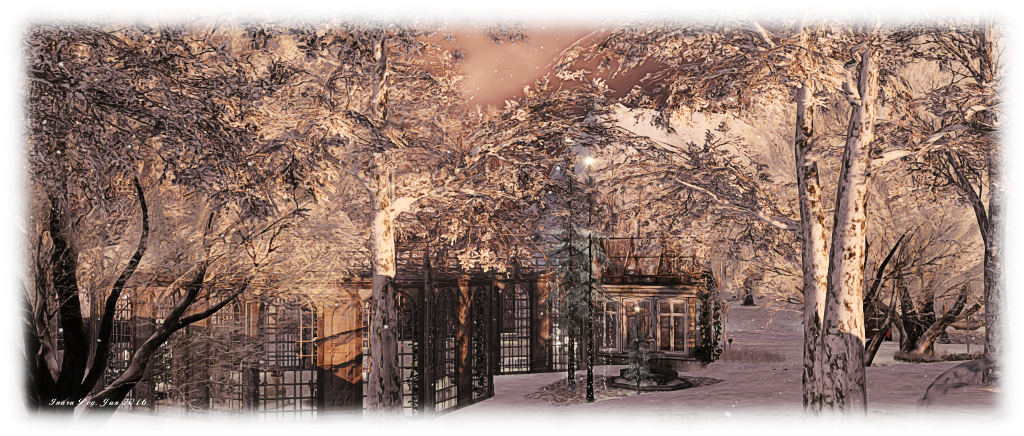
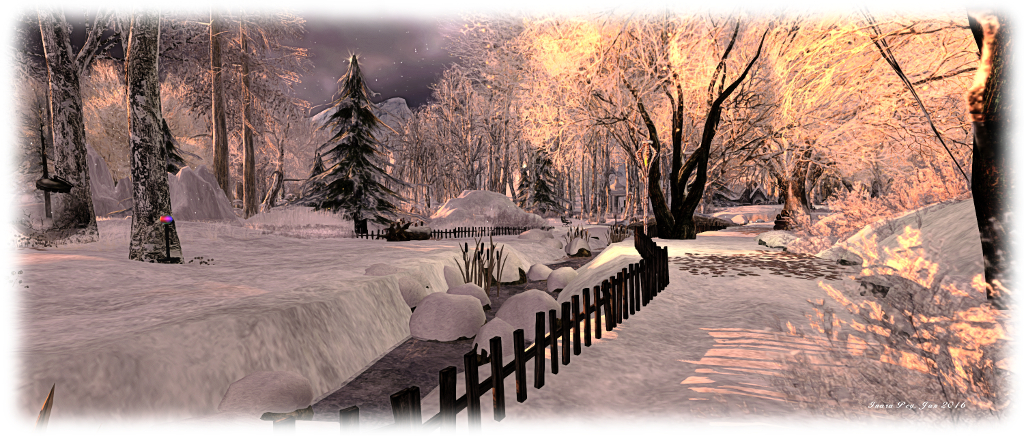
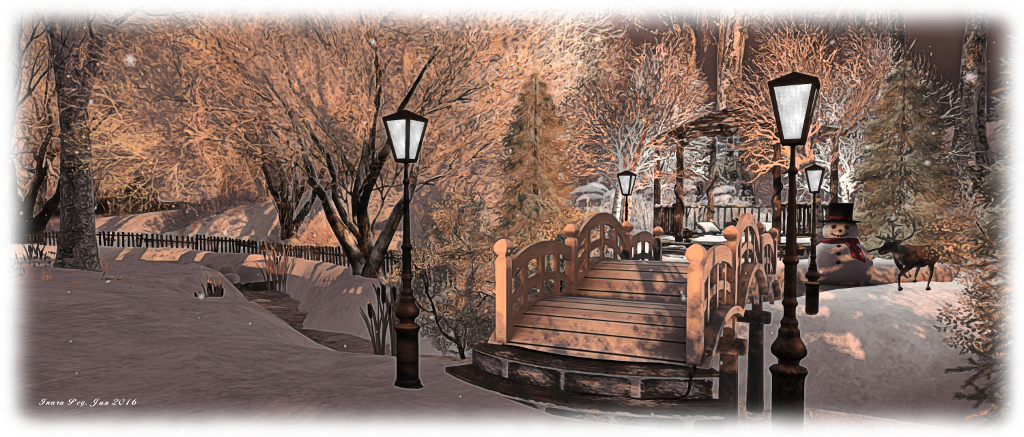
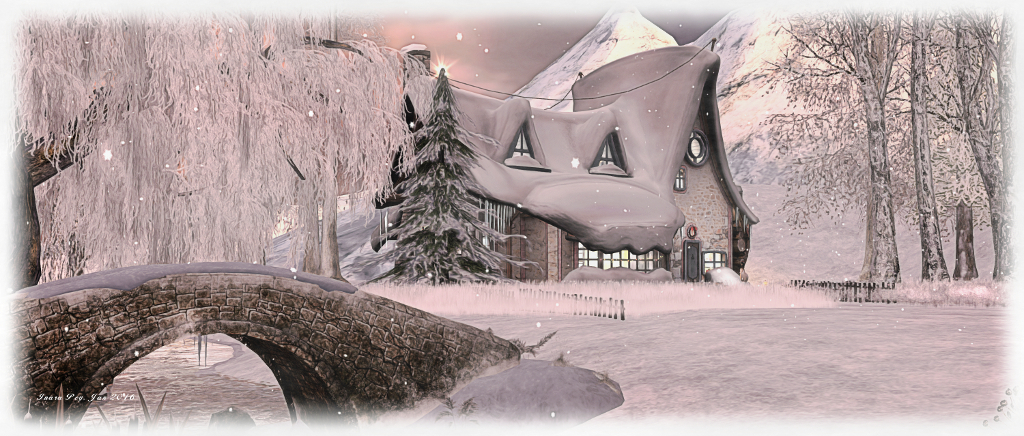
Let it Snow!; Inara Pey, January 2016, on Flickr Let it Snow! (Flickr) – click any image for full size

In December 2014, I visited artist Milly Sharple’s winter themed Let it Snow! on the Isles of Lyonesse, and I’m more than happy to say it is once more with us, the region again offering snow, fronted trees, wintry walks, opportunities for dancing and, of course, for photographs.

Those who visited Let it Snow! in 2014 will immediately be struck by the feeling of familiarity and homecoming; there is much here that echoes last year’s build – but there is also much that has changed, making a visit more than worthwhile. From the landing point towards the middle of the region, visitors are free to wander as they please as snow falls from a cloudy sky (courtesy of an all-encompassing dome) lit by a lowering sun, the landscape braced on two sides by tall hills.

Let it Snow!; Inara Pey, January 2016, on Flickr Let it Snow! (Flickr)

There are paths to be found, snow-covered but still visible, showing the way between the cottages and other buildings to be found within the isle, but for the most part routes are set by avenues between the trees which, in summer, would doubtless be greensward. Thus a walk through Let it Snow! is truly a journey of discovery; and there is much to be found, be it the cottages scattered far and wide, huddling under the lee of hills or sitting boldly atop them, or at the little brick-built Christmas Shop sitting across from a n open-fronted café, both offering rest and refreshment, or the many little places lovers and couples can snuggle in one another’s company, the chimes of a music box playing in the distance and birds chirping overhead.

Everywhere you do wander, you will doubtless come across plenty of opportunities for outdoor dancing, while a great glass house offers a romantic setting if you want to be more formal when taking your partner by the hand. Those seeking a warm, quiet sit down indoors will find it in a couple of the cottages, with the LAQ cottage toward the south-east corner of the region, and not too far from the landing point, offering a particularly comfortable retreat.

Let it Snow!; Inara Pey, January 2016, on Flickr Let it Snow! (Flickr)

Those with a keen eye will also doubtless spot little signs scattered around the landscape. Touching any of these will rez a sled you can ride on your own, or with a friend. Once seated on it, touch the menu to get yourself properly posed and then use *Move* to get yourself going (cursor / WASD thereafter).

In December 2014, I described Let it Snow as a delight. It still is – one that is beautifully photogenic, as you might expect. It’s also a place where descriptions are really superfluous; far better go along and enjoy. You’ll probably find Caitlyn and I lurking around as well 🙂 .

Let it Snow!; Inara Pey, January 2016, on Flickr Let it Snow! (Flickr)

SLurl Details

High Fidelity: Stephen Wolfram and more on tracking

HF-logoOn Tuesday, December 29th, High Fidelity announced that Stephen Wolfram has become their latest advisor.

British-born Stephen Wolfram is best known  for his work in theoretical physics, mathematics and computer science. He  began research in applied quantum field theory and particle physics and publish scientific papers when just 15 years old. By the age of 23, he was studying at the School of Natural Sciences of the Institute for Advanced Study in Princeton, New Jersey, USA, where he  conducted research into cellular automata using computer simulations.

Stephen Wolfram via Quantified Self

When introducing Wolfram through the High Fidelity blog, Philip Rosedale notes this work had a profound impact on him, as did – later in life – Wolfram’s 2002 book, A New Kind of Science.

More recently, Wolfram has been responsible for WolframAlpha, an answer engine launched in 2009, and which is one of the systems used by both Microsoft’s Bing “decision engine” and also Apple’s Siri. In 2014, he launched the Wolfram Language as a new general multi-paradigm programming language.

In become an advisor to High Fidelity, Dr. Wolfram joins Peter Diamandis, the entrepreneur perhaps most well-known for the X-Prize Foundation, Dr. Adam Gazzaley, founder of the Gazzaley cognitive neuroscience research lab at the University of California, Tony Parisi, the co-creator of the VRML and X3D ISO standards for networked 3D graphics, and a 3D technology innovator, Professor Ken Perlin of the NYU Media Research Lab, and Professor Jeremy Bailenson, the director of Stanford University’s Virtual Human Interaction Lab.

In their October update published at the start of November, High Fidelity followed-up on the work they’ve been putting into various elements of tracking movement, including the use of BinaryVR for tracking facial movement and expressions. In particular, the company’s software allows users to create a their own virtual 3D face from 2D facial photos, allowing them to track their facial animations in real-time, transforming them onto the CG representation of their face.

Ryan balances one object atop another while Chris uses the gun he picked-up with a hand movement, then cocked it, to try and shoot the yellow object down
Ryan balances one object atop another while Chris uses the gun he picked-up with a hand movement, then cocked it, to try to shoot the yellow object down

Integration of the BinaryVR software allows High Fidelity to track users’ mouth movements through their HMDs, allowing their avatars to mimic these movements in-world, as Chris Collins demonstrates in the update video. The company has also been extending the work in full body tracking, as seen in my October coverage of their work, and this is also demonstrated in the video alongside of more in-world object manipulation by avatars, with Chris and Ryan building a tower of blocks and Chris then picking up a gun and shooting it down.

The hand manipulation isn’t precise at this point in time, as can be seen in the video, but this isn’t the point; it’s the fact that in-world objects can be so freely manipulated that is impressive. That said, it would be interesting to see how this translates to building: how do you accurately sized a basic voxel (a sort-of primitive for those of us in SL) shape to a precise length and width, for example, without recourse to the keyboard or potentially complicated overlays?

Maybe the answer to this last point is “stay tuned!”.

Vote for Windlight Magazine in the UK Blog Awards

UKBA-logoThe UK Blog Awards, sponsored by Odeon Cinemas, Debenhams department stores,  and Hills Balfour PR agency, was founded in 2014 “to recognise true viral style and creative excellence across a variety of 16 UK industries, as well as awarding 2 sub-categories: Best Storyteller and Most Innovative award.”

“For what may seem like a lifetime, company employees and private individuals have been found Blogging about opinions, facts and sharing good practice with viewers of the worldwide web since the early 1990s,” the organisers note. “So, here at UKBA we thought it was about time that individual Bloggers and companies received recognition for all your well-earned innovative opinions and content!”

Nominations for the 2015 UK Blog Awards were held over November / December 2015, and one of the blogs nominated for a possible award has been Second Life’s own Windlight Magazine, for which I’m privileged to be a Contributing Writer.

Windlight-Jan-16
Read the January 2016 edition of Windlight Magazine

Since its inception in July 2015, Windlight has become perhaps the premier arts magazine in Second Life, featuring a team of highly talented writers (and I’m not simply saying that because I do contribute!), and an outstanding editor / founder in the form of John (Johannes1977 Resident).

During the months following its inaugural issue, Windlight Magazine has provided superb coverage of the arts in Second Life, and has gradually encompassed broader elements of the platform – travel, fashion, etc.

At the same time, the Magazine has sought to promote the arts through the Windlight Fellowships, has supported notable charity activities, and has most recently stepped in to sponsor the UWA art gallery.

During this same period, the Windlight blog has become a go-to resource by which people can discover the arts in Second Life, learn how to improve their SL photography, find advice on art, photography and writing, read reviews of places to visit in-world, and more. As such, it is a worthy nominee for a UK Blog Award.

UKBABut it needs your help.

Public voting on blogs nominated for the 2015 Awards commenced on Monday, January 4th and will run through until the end of February. The top 10 most popular blog from the various categories in the nominations will then be shortlisted for judging by an adjudicating panel of experts, with the winners being announced at a special awards evening which will in London ion Friday, April 29th, 2016 (full details TBA).

To help ensure Windlight Magazine might be one of those finalists, please click on the image immediately above right, and place your vote.

Doing so might not only help Windlight Magazine reach the finals and possibly receive and award, but it will also help promote Second Life and Second Life arts to the rest of the world.

Additional Links

2015 viewer release summaries: week 53

Updates for the week ending Sunday, January 3rd

This summary is published every Monday, and is a list of SL viewer / client releases (official and TPV) made during the previous week. When reading it, please note:

  • It is based on my Current Viewer Releases Page, a list of all Second Life viewers and clients that are in popular use (and of which I am aware), and which are recognised as adhering to the TPV Policy. This page includes comprehensive links to download pages, blog notes, release notes, etc., as well as links to any / all reviews of specific viewers / clients made within this blog
  • By its nature, this summary presented here will always be in arrears, please refer to the Current Viewer Release Page for more up-to-date information.

Official LL Viewers

  • Current Release version: 4.0.0.309247, December 17th – no change
  • Release channel cohorts (See my notes on manually installing RC viewer versions if you wish to install any release candidate(s) yourself):
    • No updates
  • Project viewers:
    • No updates.

LL Viewer Resources

Third-party Viewers

V4-style

V1-style

  • Cool VL Viewer updated as follows: Stable version to 1.26.16.6 and Experimental branch to 1.26.17.4, both on January 2nd, 2016 (release notes).

Mobile / Other Clients

  • No updates.

Additional TPV Resources

Related Links