2015: a look back – part 2

Baby's Ear; Inara Pey, July 2015, on FlickrBaby’s Ear, July 2015 (Flickr) – blog post

Christmas is upon us, and following not far behind, the year’s end, which is often a time of reflection as we look back over the old before pausing to await the arrival of the new. It’s become something of a tradition in these pages to look back over the virtual year’s events as I’ve seen and reported them through this blog, and offer a chance to revisit the ups and downs and the good and the bad the last twelve months have brought us.

To make things easier, I’m once again breaking thing down into three parts, this section look through the months of May through August. You can find January through April here; September to December will be following soon.

The Lab

At the end of April, the Lab put out a blog post reminding people of their Second Life Affiliate Programme, something I caught at the start of May. This is the programme allowing SL  users to associate a sign-up link to Second Life in their own website, blogs, social media channel, etc., and earn a commission on new SL registrations (which meet set criteria) using that link. While not new, the blog post served as reminder that the programme is still running, and that LL are casting a wide net in their attempts to gain new users. July saw the Lab also launch resident-focused promo videos on YouTube.

Following-up on comments made at the Meet the Lindens event at Sl12B in June, I put together a brief profile on Bjorn Laurin (Bjorn Linden), the Lab’s (then) new VP of Product overseeing both SL and “Project Sansar”.

With the success of the Meet the Lindens event at SL12B (see below), the Lab invited users to ask the CEO via a forum thread in July. As a part of facing the media, Ebbe Altberg and Second Life appeared on the US TV series Dr Phil dealing with computer game addiction, showing to more beneficial side of engaging in computer games and, MMOs and immersive environments.

Second Life
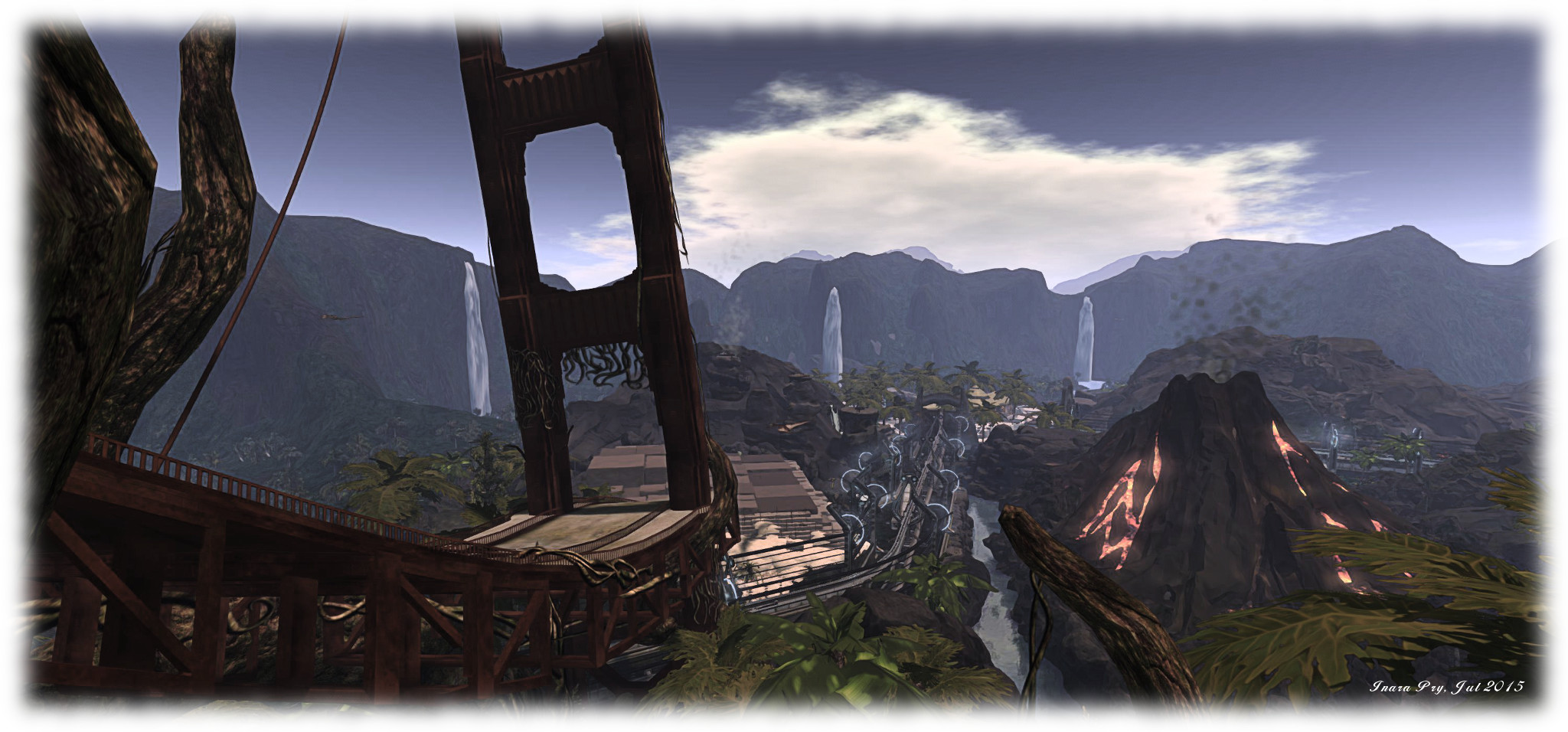
PaleoQuest; Inara Pey, July 2015, on FlickrPaleoQuest, arrived in Second Life at the end of July 2015

May opened with a feedback meeting for the ongoing Viewer-Managed Marketplace beta. VMM suddenly moved with a jolt in July, with the start of the final run of automated listing migrations which came earlier than expected. This was completed in early August, when VMM was considered to be fully “live”.

In May, those using Facebook were informed there would likely be problems in uploading SL images to that service as a result of Facebook taking time to convert to a new API, while at the end of that month, I tried-out the Lab’s New User Experience, which had been updated to make use of Experience Keys – at least on a basic level.
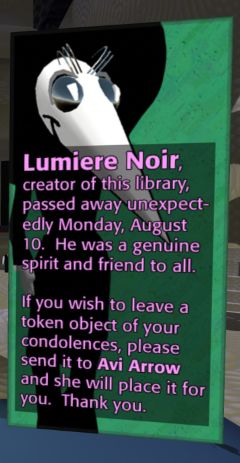
August 2015 brought the said news of the passing of long time resident lumiere Noir, founder of the Ivory tower of Primitives
August 2015 brought the said news of the passing of long time resident Lumiere Noir, founder of the Ivory tower of Primitives

Premium members saw their group limit raised to 60, then in August Concierge support was extended to all Premium members, before the surprise news came that VAT charges were dropped for Premium memberships, and the monthly subscription was modestly reduced.

In June we got the news that there were no more updates or improvements being planned for my.secondlife.com (the Profile feeds), while to help those on Windows XP and versions of OS X older than 10.7, the Lab introduced the obsolete platforms viewer, which is still available at the end of 2015. Meanwhile, Avatar complexity and the graphics presets capability finally appeared in a project viewer.

In July I took another look at the Experience Keys viewer, as it reached release status,  and the Lab issued the notifications project viewer, while the Dolphin viewer bid a farewell. August saw the Lab acknowledged ongoing issues with land damage following changes they’d made, and promised to get things sorted. August also saw first word that validation checks on mesh uploads, etc., were to be more directly enforced server-side in the near future.

The Virtual Pfaffenthal ramped-up in July to offer a look into a pivotal period of Luxembourg’s history, linking the physical world and the virtual in the process, a story Drax was able to cover brilliantly in the October Drax Files World Makers.

After the loss of SL Go at the end of April, Bright Canopy reached the end of a very rapid, but well-planned and managed development cycle, and launched at the end of August.

Project Sansar

During the end of April / beginning of May, speculation was mounting that “Sansar” might be the name of the Lab’s new platform for virtual experiences. I dropped a line to the Lab on the subject as I wrote about the speculation, asking them about both “Project Sansar” and “Sansar”, and on May 5th they replied to me and confirmed via Twitter that “Project Sansar” was an interim code-name for the new platform.

Ebbe Altberg talked “Project Sansar” at the 2nd Silicon Valley Virtual Reality (SVVR) conference, providing more insight into the platform and some of the Lab’s views on the challenges they face. He also talked “Sansar” to Bloomberg in June.

“Sansar” also featured during Ebbe Altberg’s conversation at the SL12B Meet the Lindens event, for which I provided a transcript, and also summarised the comments made about “Sansar” during Troy and Danger Linden’s conversation at their Meet  the Lindens event, and from recent media reports.

In an attempt to separate wheat from chaff, I presented the first in a semi-regular series, The Sansar Summary, focusing on what had been said about the new platform, rather than looking at rumours and speculation. Meanwhile, in August, Ebbe sat down with a glass of red wine for a fireside chat with Upload VR’s Nick Ochoa to discuss SL and “Sansar” in a conversation uploaded to YouTube.

And while it may have been slightly later than planned, the Lab finally announced the “Sansar” closed alpha was officially under-way in August.

Continue reading “2015: a look back – part 2”

Words, images, music: a story speaks in Second Life

Coma: I Can't Speak!
Coma: I Can’t Speak!

Coma: I Can’t Speak!, is a collaborative installation now open at the Black Label Exhibitions Corner. Conceived and produced by Storie’S Helendale (GlitterPrincess Destiny) with the support of Kristine Blackladder, AnnaFrancesca, Monique Helendale and models  Fritz Citron, Aleks Piers and  Terrygold, coma: I Can’t Speak! uses images and a poem, read out over the audio stream, to convey a story.

The arrival point offers instructions on how to enjoy the exhibition to the fullest. first among these is the suggestion you run the viewer with the graphics quality slider set to Ultra; however, I’d respectfully suggest that it’s more important that you are able to have ALM enabled, and Shadows set to Sun/Moon + Projectors, so I’d suggest adjusting your viewer to whatever settings work best for you to achieve the latter (including cutting back on the draw distance, if this further helps with frame rates). Do make sure you enable the audio stream as well, this is an essential part of the piece.

Coma: I Can't Speak!
Coma: I Can’t Speak!

Once you’re set, step through the scrolling image to enter the installation proper – preferably during the break between playbacks of the music. This will allow you time to collect a copy of the poem from jut inside the entrance.

The poem is read by Storie’S Helendale over a soulful, piano / cello piece, the story unfolding in images around the walls, running from the left as you enter. The images are beautifully presented; muted tones set against a black background, projected lighting framing them perfectly.

Coma: I Can't Speak!
Coma: I Can’t Speak!

To fully appreciate both poem and images, they must be taken together; their relationship entirely symbiotic, flowing and intertwined, emotional resonance ebbing and flowing between them and, ultimately, surrounding the observer.

And what is the story being told? That is something I’m not about to reveal; spoilers never sit well. All I will say is that the story here – to me at least – is layered, and you might find your interpretation flexing and changing as the poem unfolds and you move from image to image, or as you examine the images sans words while the music plays on, or again while the poem is again read. Love, loss, hope, regret, fear, longing, all seem to be threads of narrative waiting for the listener / observer to catch.

Coma-3_001
Coma: I Can’t Speak!

And I do recommend remaining to hear the poem at least twice, and taking the time to appreciate the images whilst just the music is playing. You might be surprised at how your interpretation might reshape itself as you follow the various threads of narrative.

I’m not sure how long Coma: I Can’t Speak! will run, although it only opened on December 23rd, 2015, so I would anticipate it being available for a while. And I most certainly do recommend it for viewing.

SLurl Details

2015: a look back – part 1

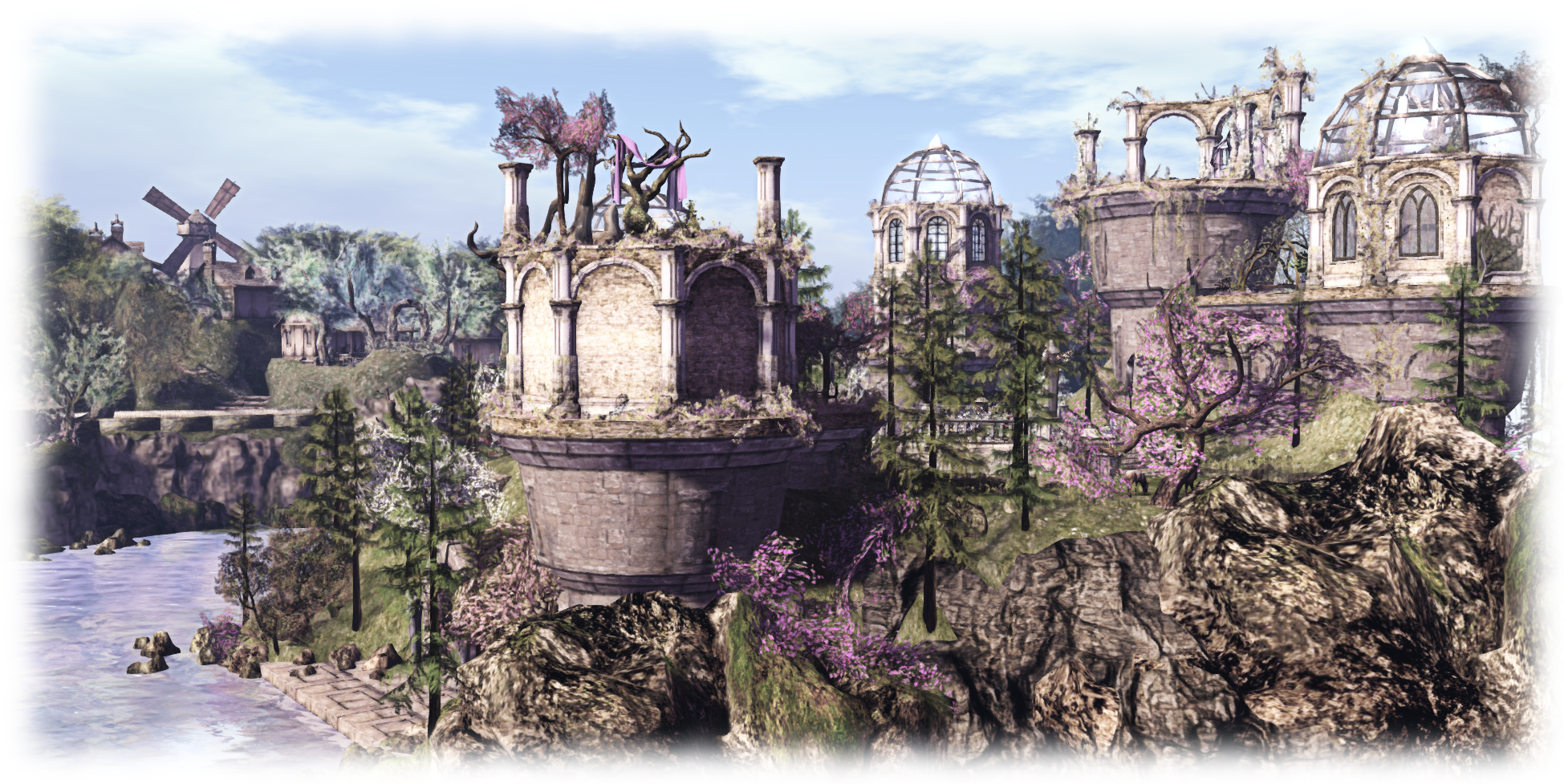
Armenelos, Calas Galadhon; Inara Pey, March 2015, on Flickr The Shire one of  39 regions and locations I explored in the first four months of 2015

Christmas is upon us, and following not far behind, the year’s end, which is often a time of reflection as we look back over the old before pausing to await the arrival of the new. It’s become something of a tradition in these pages to look back over the virtual year’s events as I’ve seen and reported them through this blog, and offer a chance to revisit the ups and downs and the good and the bad the last twelve months have brought us.

To make things easier, I’m once again breaking thing down into three parts, starting with a look back over January through to the end of April.

The Lab

The Lab kicked-off the year by announcing they had partnered with Skrill to provide users with further options for their payment activities, including buying L$ and paying account fees, as well as additional local currency options for those Residents outside the United States. Skrill actually gave word of the partnership ahead of LL, as I reported in my own article on the news.

February saw the photo booth contest open, with the Lab opting to try for a judging-by-panel approach to the contest, rather than simply operating a popular vote approach. A L$19,000 prize pool was on offer, although issues with contacting some of the users led to delays and a little confusion after the fact. As it was February and the month of romance, there was also an invitation for users to visit the Isle of View, or for those seeking a little more fun, there was the resumption of the of the Lab vs. residents snowball fight, which took place in the (then) recently opened Winter Wonderland.

Lindens in action: Torley Linden takes airborne aim; and a (possibly paranoid?) android from the Governance Team

The Lab also took the time to ask for assistance from the community. The first request was related to matters of inventory losses, and marked the start of a long-term project to try to improve inventory handling and management in Second Life. The second request was made to open-source developers to help maintain the viewer on the Linux platform.

February also saw me offer a brief look back over Ebbe Altberg’s first year helming the Lab, while confirmation came that Mitch Kapor had stepped back from an active role in the Lab’s board of directors, while remaining an investor in the company – a point which seemed lost to some following this confirmation.

During March, In the first of a series of moves, most of which appear to be driven by matters of compliance, the Lab called a halt to the use of Linden Dollars outside of their own platforms. Elsewhere, the Lab, in what was a good move, shifted emphasis on the perks being offered to those taking Premium membership, prompting me to one again mull over the idea of Premium perks.

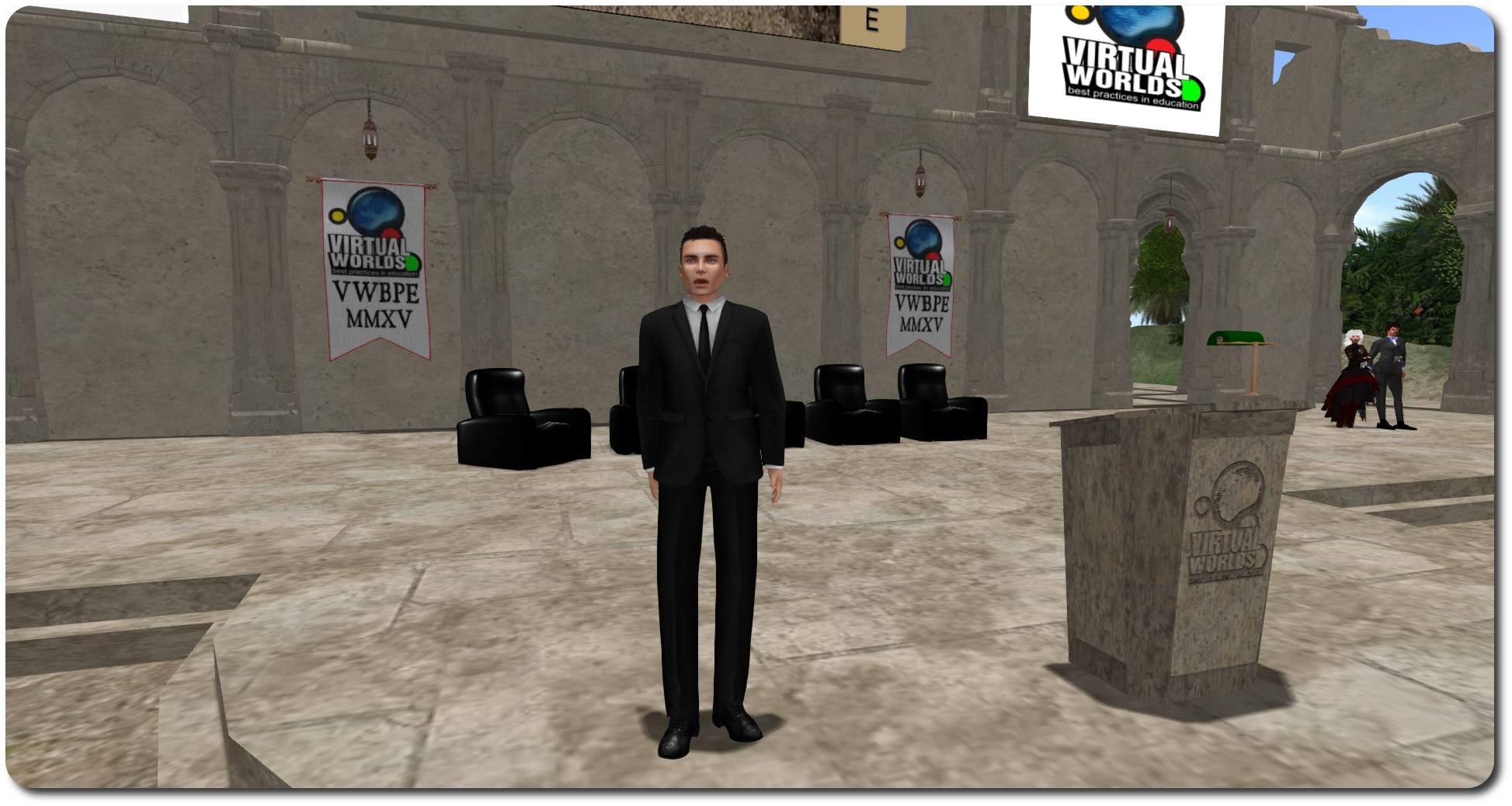
Ebbe Linden as he appeared in-world at the VWBPE 2015 conference in March

Also in March, Ebbe Altberg was the opening speaker at the 2015 Virtual Worlds Best Practice in Education (VWBPE) conference, although he opted to take more of a Q&A approach, addressing questions on both Second Life and the Lab’s next generation virtual worlds platform.ahread of this, and in February, in keeping with moves to re-engage with the education community, a request was made for educators to share their success stories.

We also saw the first of what were to become semi-regular opportunities to meet the Lindens announced, which drew a fair number to the photogenic Meauxle Bureaux, as I reported at the time.

Second Life

My own thoughts on Second Life for 2015, started with further musings on the issue of tier – and subject which in some quarters still appears to be surprisingly misunderstood, as demonstrated in frequent comments on the subject which persist in comparing Second Life with much smaller operations.

Capabilities-wise, the start of 2015 saw a final farewell to the last of the legacy avatar baking code, the start of work to fix group chat, and confirmation that the Lab would be replacing llqtwebkit with Chromium Embedded Framework set to bring modern media handling capabilities to Second Life. Elsewhere, the Alchemy TPV developers revealed they had found one of the culprits behind issues of viewer texture thrashing; those little image icons displayed in chat headers, etc., can be quite obnoxious!

Playing with avatar hover height in February 2015 (and the reason I call my alt my "Crash Test Alt" - she suffer a lot!), the long-awaited Lab replacement for the much missed z-offset height adjustment
Playing with avatar hover height when it was released on Aditi, the beta grid, in February (and the reason I call my alt my “Crash Test Alt” – she suffers a lot!), the long-awaited Lab replacement for the much missed z-offset height adjustment. The capability reached release status in the viewer in March 2015

Continue reading “2015: a look back – part 1”

Season’s Greetings to all!

Xmas-4
Kaleidoscope, 2015 – blog post

Merry Christmas to all, and thank you to everyone who takes the time to drop by this blog and read my ramblings!

And a little re-run of a suitable machinima; please excuse the self-indulgence!

In the Press: Social VR – Sansar and Second Life

"Project Sansar" promotional image via linden Lab
“Project Sansar” promotional image via linden Lab

I caught a Tweet on December 22nd (my apologies to the sender, I forgot to bookmark it and so can’t state form whom it came It was Rocky Constantine, as he correctly reminds me in the comments) which pointed those reading it to an article on the PSFK website with the enticing title, A Look Into a More Social Virtual Reality With the Makers of Second Life, by Ido Lechner. It makes for an interesting read.

The banner image is that of Second Life – and for once, it’s actually post circa 2010, and is quite reasonable in looks, and gets kudos points for being there, rather than the more usual 2007/8 images which tend to get used. Although that said, an image of the old v1 UI, circa 2007/8, plonked in the middle of the article doesn’t do SL any favours.

After a slightly blusterful introduction lauding Virtual Reality for already being a major disruptive force in our lives (and then admitting it has yet to go mainstream), the article settles down to discuss – and the title suggests – the more social aspects of VR in a chat with Lab’s own Ebbe Altberg and Director of Global Communication, Peter Gray.

This is a terse, and to-the-point piece, managing to both cover familiar ground (LL’s “head start” in running SL for 12+ years,  the ability for users to generate content – and income – with the service, etc), and to give more insight into what “Project Sansar” may offer in terms of accessibility, and some of the reasoning behind the Lab moving in that direction. In particular, and where accessibility is concerned, Lechner notes:

PC games have traditionally had a heightened learning curve for older audiences who have a hard time navigating worlds with mouse and keyboard, but Project Sansar looks to be an all-inclusive medium thanks to a more instinctual set of controls. Gesture-based movements, advanced expressive avatars (the kind that’s rigged to your real life expressions), voice chat, haptic feedback and other progressive modes of interaction will all be welcome additions to the game.

That the Lab is looking at the plethora of new hardware that being developed around the first wave of VR headsets isn’t exactly news – Ebbe Altberg has pointed to this very fact a number of times of late. However, it does again point to the fact that while very distinct and separate entities, “Sansar” and Philip Rosedale’s High Fidelity are in some ways travelling the same road in terms of aspirations with their ability to adopt emerging technology. But there is something else in this statement which draws my attention.

When it comes to all these new and wonderful ways of interacting with the digital, people are very quick to blame the keyboard and mouse. In 2014, for example, Philip Rosedale when addressing the VWBPE conference that year, directly pointed to the poor old keyboard and mouse as being one of “the” technological barriers to entry into virtual environments.

Yet the fact is, the keyboard and mouse have been our primary means of interaction with computer systems for so long that using them is sort-of “intuitive”; we can all grasp their use pretty easily. Who is to say all these wonderful now methodologies for interaction won’t also bring their own issues with them, thus presenting those “older audiences” Lechner mentions with precisely the same kind of “heightened learning curve” as is perceived to be the case when it comes to using the keyboard and mouse within certain environments?

Professor Jeremy Bailenson (image: Stanford University)
Professor Jeremy Bailenson – a strong influence on the Lab’s thinking (image: Stanford University)

Another common thread between High Fidelity and “Project Sansar” (which again should not be taken to mean the two are in any way linked) comes in the persona of Jeremy Bailenson of the Virtual Human Interaction Lab at Stanford.

Bailenson serves as an advisor to High Fidelity, alongside of Tony Parisi and Ken Perlin in particular, and as I’ve previously covered in these pages and Peter Gray states to Lechner, Bailenson’s work is greatly influencing the Lab’s approach to Sansar, which is no bad thing.

Certainly, Bailenson has offered some incisive views on the potential and pitfalls in VR, and his views and outlook are very relevant when considering the social / psychological impact of VR. Hence the Lab would seem to be availing itself of the right spheres of influence as it develops “Sansar”.

The focus on the social aspect of Second Life (and potentially of “Project Sansar”) is an interesting new direction to take when comparing this with earlier media discussions the Lab has had. In those, the focus has tended more towards emphasising the potential for “Sansar” among a defined set use cases with those vertical markets where VR can be seen has having great potential: education, training, design, healthcare, architecture, etc (again, it is no accident that the first public demonstration of “Sansar” came during San Francisco’s month-long Architecture and the City Festival in September 2015). Although all of these do get a mention at the end of the piece.

Certainly, there can be no doubting the social power that Second Life has, and both Altberg and Gray are entirely correct in pointing towards the added depth the environment has given developing relationships. So really, there is no reason to doubt that, as / if / when “Sansar” can be accessed by more-and-more people, the same cannot be repeated there.

Nevertheless, I confess to remaining sceptical of “Sansar” really ever reaching the kind of audience numbers the Lab has tended to boldly predict. Second Life has had a hard time reaching beyond a certain level in terms of user traction. Like it or not, the central reason for that isn’t really to do with the difficulty in entering SL or the UI, or “understanding” what SL is “about” once people are inside it (although all have a role to play, for sure).

It simply comes down to people not seeing Second Life as having relevance in their daily lives. Given that VR is supposed to bring us a whole new world of immersive opportunities, distractions, capabilities and so forth, all designed to keep us informed, entertained, involved and immersed – who is to say “Sansar” and environments like it also won’t face a similar uphill batter when it comes to people seeing them as relevant to their already involved physical and virtual lives?

Which doesn’t mean the I don’t think “Sansar” will “fail” or isn’t worth the effort. The Lab does need to move with the times, and there is certainly no reason that while Sansar may remain niche is a similar manner to SL having always been niche, there is no reason why it cannot settle into a much larger niche. Or, as seems more likely to be the case, take up residence in multiple niches and ride along comfortably within them.

Winter at Asalia House in Second Life

Asalia House; Inara Pey, December 2015, on FlickrAsalia House (Flickr) – click any image for full size

It’s been two years since my first visit to Asalia House, the homestead region primarily designed by Ryu  and Kyo Asalia. As two years is a very long time in Second Life, I was intrigued to see the region to still be in place, and headed over to take a look at what may have changed in the intervening time.

Back in 2013, the region was split into three islands, all of which offered something of a tropical look and feel. This island theme remains, but it is now very different – which is not to say any of the photogenic quality of the region has been lost. Not  at all.

Asalia House; Inara Pey, December 2015, on FlickrAsalia House (Flickr)

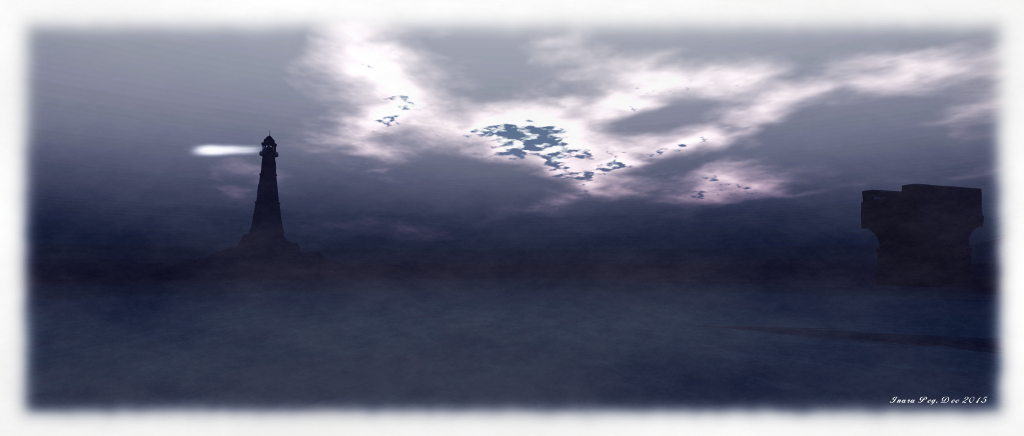
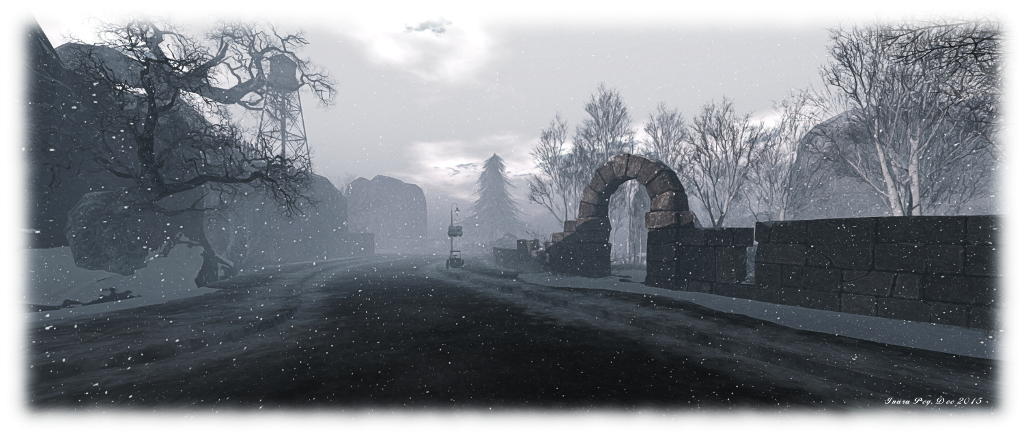
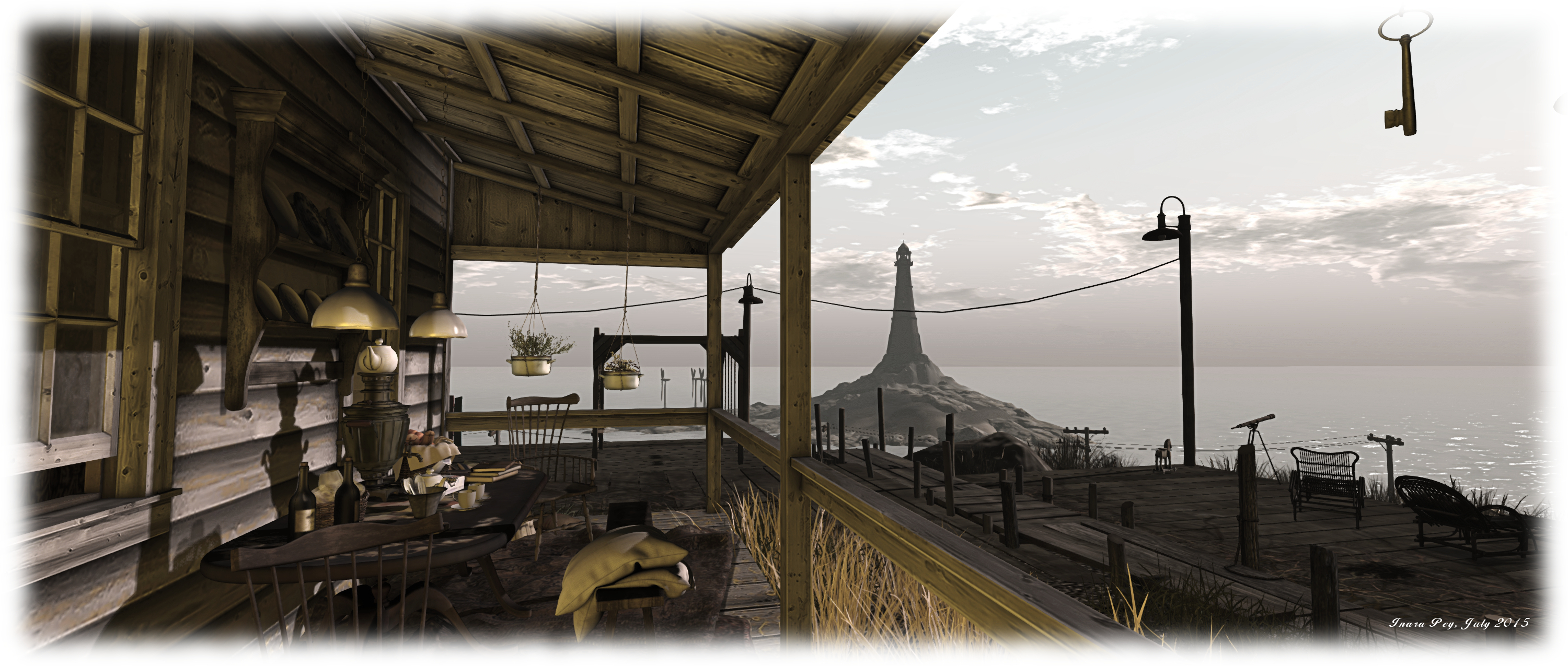
The largest of the three island is a rocky affair, caught in the midst of winter; snow falls from above, covering the landscape in a growing white blanket. A road snakes along the north side of the island, although it doesn’t really go anywhere; at one end it faces the frigid waters of the sea, at the other, a set of steps bar further comfortable progress were you to be driving. It does, however provide a dramatic view out over the misty waters to the single finger of a lighthouse rising to the north-east.

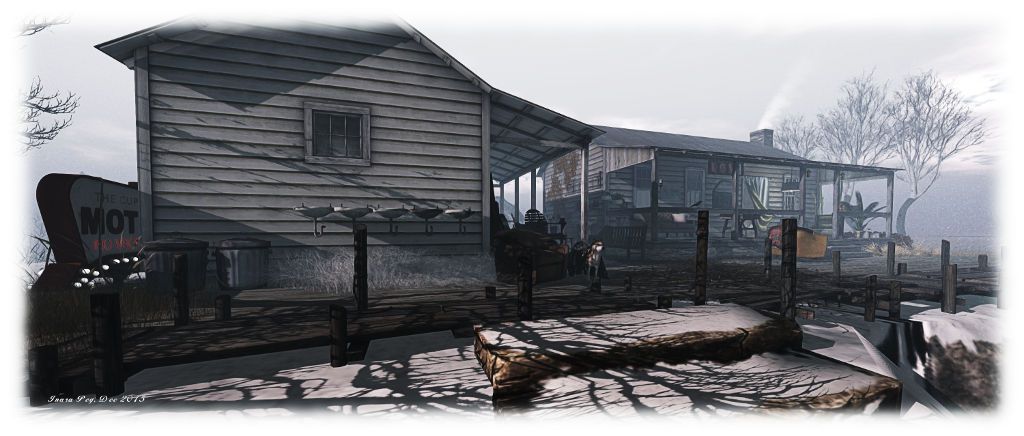
Above the road, sitting on a flat plateau of rock into which a stepped path has been lain to provide access, sit two wood-panelled cabins, their tin roofs rusting slowly. A sign outside suggests these might be a motel – but it is deceptive, and merely part of the bric-a-brac to be found without and within the cabins.

Asalia House; Inara Pey, December 2015, on FlickrAsalia House (Flickr)

There are not the only buildings on the island, further along the road sits a small studio cabin, whilst set over the cold sea, and reached by passing under a natural arch of rock from the road, sits a studio converted from an old shipping container.

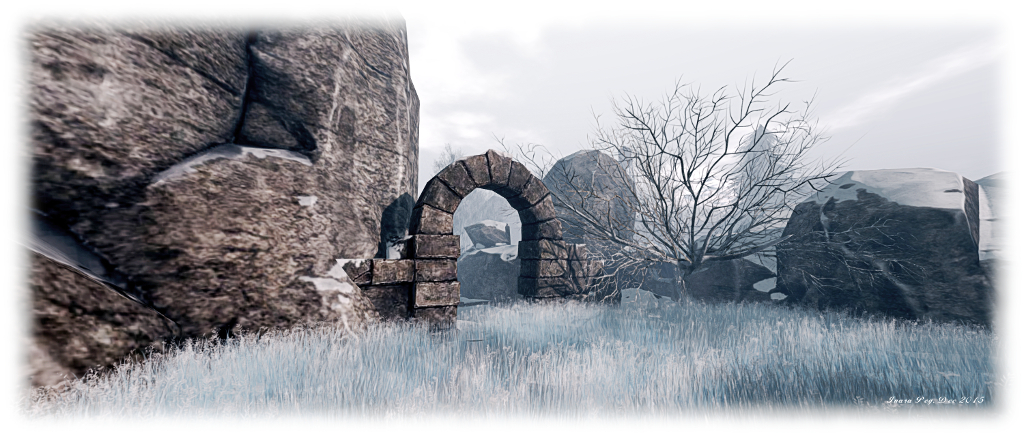
Don’t let the apparent simplicity of the island fool you, however. There is much to be found, including motifs which help give it the feeling of being a place – such as the stone arches standing guard on either side of a small stone bridge, and at the edge of the snow-covered field standing beyond the bridge. These suggest this island was once the location for a much older building or buildings; a feeling increased by the ruin sitting just off the coats, and the old stone walls to be found alongside the road, and which form the outline of a structure next to one of the arches.

Asalia House; Inara Pey, December 2015, on FlickrAsalia House (Flickr) – click any image for full size

After exploring the main island, should you find yourself feeling a little cold, look to the north-west and you might see a faint glow. This marks the location of a smaller, marshy isle, free from snow and the cold, where you can sit on a crescent moon and watch the world turn around you.

In introducing me to Asalia House in 2013, Eddie Haskill described it as “magical”. He wasn’t wrong then, and that description still applies today. It’s most certainly not a place to be missed by the discerning SL traveller.

SLurl Details