The Firestorm team has formally announced the forthcoming blocking of version 4.6.1 of the popular third-party viewer. The move, which is part of Firestorm’s policy of only allowing three active version of their viewer to access Second Life,
The plan is for this block to only affect Second Life, it should not prevent OpenSim users continuing with version 4.6.1 if they so wish. However, at the time this article was written, this was still being tested.
The Firestorm announcement on the blocking reads in full:
In keeping with our three-version rule, we will be applying a block to version 4.6.1 on Friday, February 20th. This block will only apply to logins for Second Life grid; OpenSim grid logins should still work. Versions 4.6.5, 4.6.7 and 4.6.9 will be the only officially supported versions, but we highly encourage all users to be on our latest release of 4.6.9.
Version 4.4.2 is still exempt from the rule due to Mac-specific issues. However, Linden Lab’s statistics from January 21st indicate that there are still around 8,000 people using this ancient, pre-fitted mesh version. Because of the volume of users who cannot see the world properly, it is harder and harder to justify allowing it to remain exempt. We will be blocking it as well before our next release.
If you are using version 4.6.1 please update as soon as possible to avoid problems logging in on the 20th.
Currently, it looks as though the next release for Firestorm should be around the end of March or early April; however, this is not an official date – the viewer is still being worked on. Therefore, eyes should be kept on the Firestorm blog for information on the next release.
At midnight SLT on the 13th/14th February, 2015, One Billion Rising in Second Life will commence 24 hours of music, performance and art is support of the global One Billion Rising campaign.
Now in its third year in both the physical world and the virtual, the campaign uses music and dance to draw attention to the domestic and societal violence so many woman face in their every day lives, and to provide a platform from which action can be taken in changing our attitudes towards gender-based violence.
As with previous years, Victor1st Mornington has again brought together a stunning 4-part stage for the main events, which straddles the four OBR regions of OBR Drum, OBR Dance, OBR Rise and OBR Change. modelled on a huge turn table, complete with stylus and record, the stage is marvellously in keeping with the overall themes of music and dance.
“No surrender” by Secret Rage
Around this central stage, visitors can follow the path past this year’s art installation and also to the additional poetry and performance stage located in OBR Dance, with the picture Gallery alongside it on OBR Rise, both of which face the Sculpture Garden (on OBR Change) and the 2Lei installation (on OBR Drum) across the main stage.
Full details of the events taking place over the 24 hours of the event can be found on the official website’s event schedule.
2Lei installation at OBR 2015
A critique sometimes levelled at OBR / OBR in SL is that the issues it raises cannot be solved by dance. Well, that’s absolutely true, just as marching through the streets carrying placards and banners is unlikely to have a lasting impact on whatever it is people might be marching about.
BUT like marches and protests, dance and music does serve to draw attention to matters; it provides a means by which people are encouraged to stop and think, and through which information and ideas can be disseminated. And it does so in a manner which is a lot less confrontational and antagonistic than a march or protest might be seen, particularly in some parts of the world where the right to protest, even peacefully, isn’t always a given. And that’s an important point to remember.
About One Billion Rising
One Billion Rising was the biggest mass action in human history. The campaign, launched on Valentine’s Day 2012, began as a call to action based on the staggering statistic that 1 in 3 women on the planet will be beaten or raped during her lifetime. With the world population at 7 billion, this adds up to more than one billion women and girls.
On 14 February 2013, people across the world came together to express their outrage, strike, dance, and RISE in defiance of the injustices women suffer, demanding an end at last to violence against women. On 14 February 2014 OBR called on women and men everywhere to harness their power and imagination to rise for justice. In 2015, OBR are calling for a revolution for change.
“Presently striving to become an artist in Second Life”, is how Lusus Saule describes himself. I think he’s being far too modest; his artistry is clearly evident in his work, and I find it remarkable that I haven’t seen more of his pieces exhibited through SL galleries.
As it is, his work can primarily be found on display in his own Lusus Art gallery complex, a suite of four gallery spaces located in the Port Lydius art region and nested behind the i4 Galleries.
Officially opened in October 2014, the spaces are currently displaying four aspects of his work which all have a decidedly mathematical leaning, and which each present a series of fascinating studies.
I was actually drawn to his work when I spied one of his fractal images on a poster while visiting Port Lydius for other reasons. As regular readers know, this particular form of art has a specific attraction for me, so seeing the poster encouraged me to go take a look, and I was quite delighted by all I discovered.
“These images were created with the 3D fractal software called Mandelbulber,” Lusus says of the pieces on display in his Fractals exhibit. Five of these are quite strikingly offered in the kind of panoramic format I personally feel is ideal for capturing the beauty of this type of work. Intriguingly, Lusus says that these items were the result of getting sidetracked using the software while working on a larger project.
“I originally wanted to see if it was possible to create an immersive experience by creating fractal images that surrounded the viewer,” he says. “[So] look out for these some time in the near future!” I can say that it is something I’ll certainly be doing.
Alongside of the fractal exhibition can be found Droste Images. Here Lusus presents series of images taken in, and of, regions in Second Life which he has then manipulated to create finished works based on the Droste effect. This essentially sees the same image repeated within itself, each version geometrically reduced. Such images form visual instances of strange loops, itself a foundation of fractal geometry, making it the ideal partner to the fractals exhibit. Indeed, some of the images on display here are suggestive of another mathematical form which utilises fractal properties: mandelbrots.
Across the courtyard from Fractals and Droste Images can be found Op Art and Animated Gifs.
Op Art blends of Op Art and Kinetic Art in a series of striking pieces which have a geometric / mathematical foundations. Traditionally, Kinetic Art relies on the observer’s movement around the art (be it 2D or 3D) to generate the sensation of motion. While this is clearly evident in the pieces displayed here, Lusus has added to it through the use of scripts to generate additional movement.
This actually gives these pieces considerably greater depth, and when combined with slow, simple camera movement when viewing them, can result in some startling effects, most of which are rather difficult to capture in a still image. The movement and depth within individual pieces can also change simply as a result of the distance from which they are viewed, giving rise to a range of optical effects and illusions that enhance the Op Art aspect of the works.
Animated Gifs,as the name implies, presents a series of animated GIFs to the observer – although they may not appear to be animated when first viewed. This is because Lusus is utilising SL’s Media On a Prim capability for his work. This means that in order to be correctly seen, media needs to be enabled within the viewer, and individual images clicked upon (the frames may go white for a few seconds prior to the images displaying).
The result of this is a series of animated images and abstracts, all following geometric patterns which are perhaps both more fluid and complex than might otherwise be achieved through purely scripted means of showing animated gifs. Again, still images don’t really capture the dynamic nature of these pieces, they have to be viewed first-hand.
Whether viewed individually, or toured together, Lusus’ gallery spaces are more than worth a visit. You can also find out more about his activities in SL via his website, and if you’re ever in need of a helping hand with an aspect of using Second Life, be aware that he also curates the Metaverse Tutorials website as well.
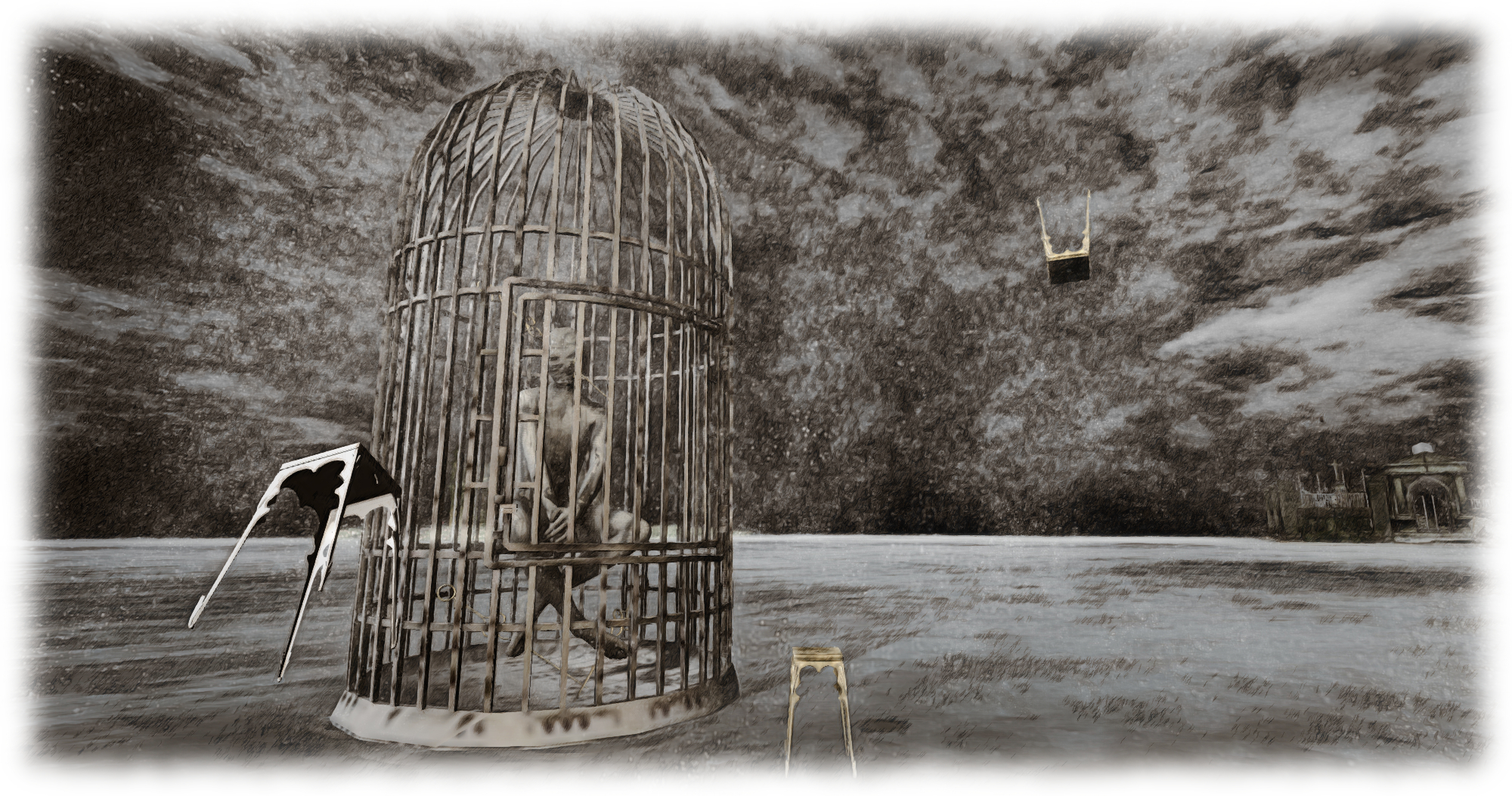
“”” Oporuto “”” is one of those places in Second life that can defy definition. Designed by ダックスフンド (Dachshunds), this homestead region is a curious blending of intent and motifs. There is a small mall here, to be sure, offering avatars, household items and more from a number of creators; but finding it might take a little time, as there are curios visible on your arrival which offer distraction and demand investigation as you wade through the ankle-deep water, heavy with a blanket of low-lying mist.
Aside from the store area, ringed by trees and quite hidden from view behind ancient walls, four island-like areas present themselves to visitors, scattered between which are individual pieces of sculpture and other items that give the place something of a feel of being an art display.
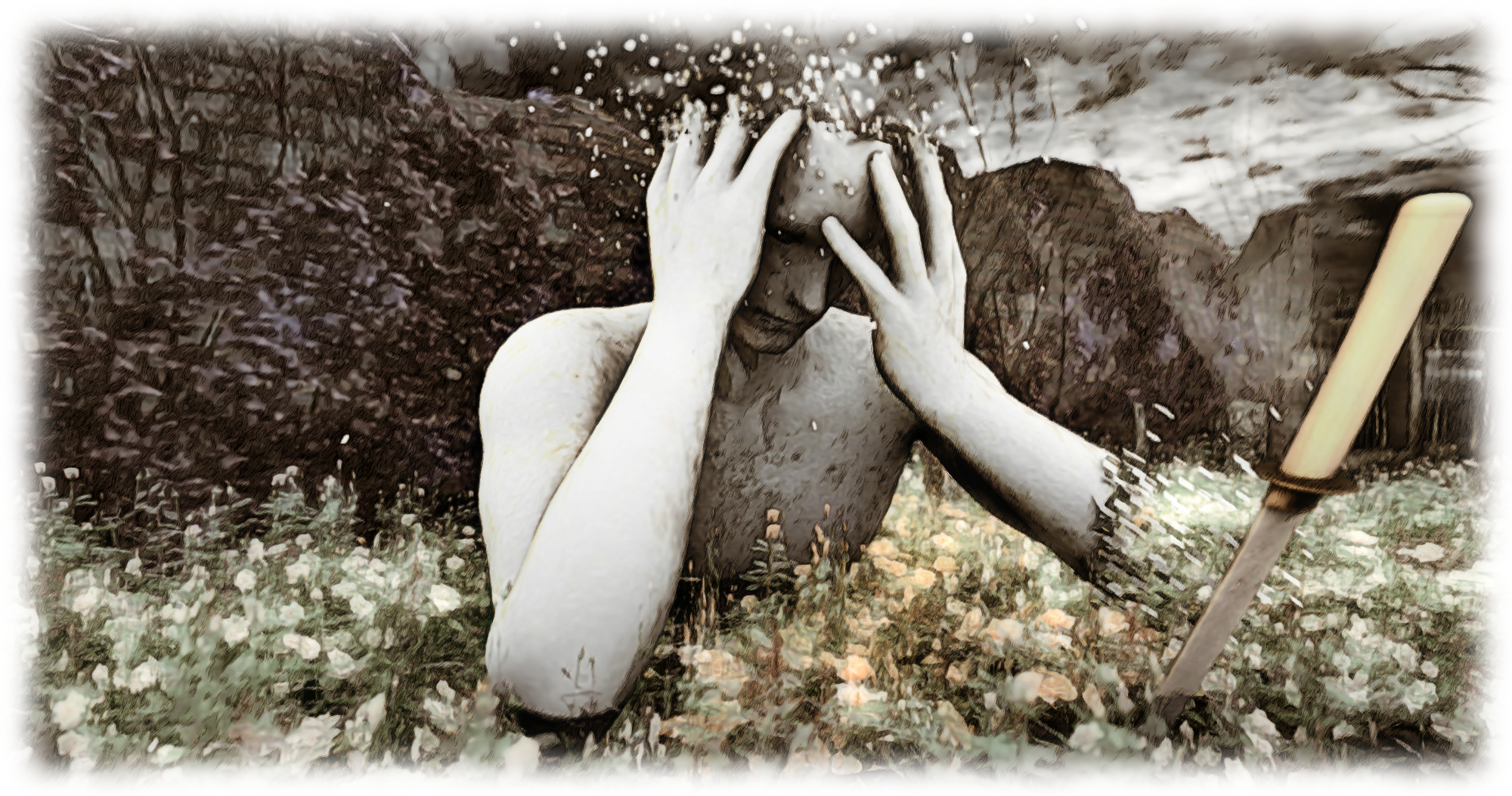
There are dark elements to be found here; graveyards rise from the mist, shadowy forms floating through them, and cages and sharply-pointed instruments can be found. But so to are themes of love, and hints of fairy-tale memories.
Charm and menace can also be found intertwined, perhaps most noticeably through the tiny figure peeking through the window of a shattered house at an empty bed. Depending on one’s mood, the painted smile on the little face can at first give a poignant feel to the tableau before perhaps turning a little more sinister – or can do exactly the reverse: first appear sinister and threatening before become gentler and more caring.
There are elements of whimsy to be discovered as well, such as with the oversized cats frolicking around a rowing boat with translucent fish. For those of a contemplative mood, and snowbound window opens out onto a warm summer sky from the pages of a fairytale book, offering a place for one to sit and ponder.
All told, this is a strange place, rich in imagery and not above odd little contradictions in tone, as noted. Rezzing is closed, but the opportunities for photography are many, although I would perhaps warn that there is a lot going on in places in terms of particle effects, etc., that I found my GTX660 labouring at times. Wandering the region is a little like wandering through a landscape shaded by the memories of dreams and nightmares; what can be found here might not appeal to everyone, but that doesn’t make it any the less captivating.
The Isle of View, the “official” destination for Valentine’s Day reappeared on the grid earlier in the month (my thanks to Bixyl for poking me about it when it appeared), and on Thursday, February 12th, the Lab invited people to consider spending a part of Friday, February 13th visiting the isle.
Love is in the air and Valentine’s Day is just a few days away! Pink and red dominate, chocolate sales sky-rocket, and we’re reminded that the true hallmark of love is in the quality of time we spend with our loved ones.
Come to the Isle of View on February 13th for some Pre-Valentine’s Day fun. Meet up with other Residents and enjoy all the romance that Isle of View has to offer – boat rides, fireworks, kissing booths – a treasure trove of memorable moments just waiting to be made with someone special.
Why Friday, February the 13th? That’s a good question. Once upon a time, the Lab used to participate in Valentines Day through things like kissing booths (yes, you could get to kiss a Linden!). So, given the invite is for a week-day visit, does this mean those popping along might just find a Linden or two within the Isle’s kissing booth?
Will there be Lindens in in the Isle of View kissing booths?
The Lab is keeping mum on that; instead, all they are saying is:
Why February 13th? Because we believe in love, and there is still time to find a special someone for the big day.
If you’ve got a Valentine – bring them to the Isle of View. If you’re currently looking for a Valentine – come to the Isle of View. If you have several Valentines – well lucky you – bring them all to the Isle of View!
But you never know, after all, they did recently re-launch another staple of Lab / resident fun, the snowball fight. So, if Valentine’s day is your thing, why not pop along to the Isle of View on February 13th and find out. You can always visit again on the 14th with your loved one, if you don’t want them to spy you loitering around the kissing booths…
On Monday, February 10th, 2014, Ebbe Altberg officially took-over the reins as the CEO of Linden Research Inc. (aka Linden Lab).
The news of his appointment, which had been released not too long before his arrival, and after the Lab remained steadfastly silent after the departure of his predecessor had entered the public domain, tended to bring retorts of “who he?”, promoting me to pull together something of a profile on him from various sources, which tended to draw largely positive feedback. I also took the liberty of offering a couple of suggestions on the day he arrived at LL, which appeared to be appreciated:
So, now we are a year on, how have things been, overall?
For me, given I originally wrote that “open letter” to him on the subject of communications, the turn-around has been both noticeable and appreciated. At the first of his many public appearances with bodies of users and groups which marked his opening months at the Lab, Ebbe effectively announced at the 2014 VWBPE event that the door is once again open, and demonstrated as much by spending almost 90 minutes addressing questions from users.
Following that, we saw re-engagement through forums, further bridge building with educational and non-profit organisations, the re-opening of the JIRA, the lifting on the ban on Linden staff entering SL using their Linden accounts unless they were on official business, and fresh (and persistent) use of the blogs once more to present news, information and updates – such as Monty Linden’s superb range of posts on the HTTP work, or Landon Linden’s equally informative posts such as The Recent Unpleasantness. As the year progressed the Lab continued to open windows as well as doors, seeking to re-engage with the community through a variety of means, from pro-actively seeking input from users on potential improvements to SL through to something as simple as the return of the annual snowball fight.
Ebbe Altberg: one year in the Hot Seat
All of this has been to the good, even if some approached this “new” openness (actually more of a return to how the Lab used to be) with suspicion. Some of it was perhaps understandable; at the start of his tenure at the Lab, Ebbe’s predecessor seemed to initially breathe life into matters of communication (even then a priority in many people’s eyes) – only for the door to been slammed shut again within a few months.
Some might even argue that such re-engagement is trivial “in the scheme of things”; I’d say not so. Engagement and communication lie as two of the foundations of trust between a company such as a Lab and its user community; therefore putting them both back in place does do much to stem the erosion of that trust.
Elsewhere, things may seem to have been a little slower. While there have been changes for the better for SL in technical terms, it’s fair to say that these have been more incremental and evolutionary, rather than revolutionary. But then, SL is a decade-plus old platform; getting truly revolutionary with it isn’t that easy. Instead, what we’ve had is a continuation of approach started prior to Ebbe’s arrival at the Lab – and quite rightly, too.
Far better to allow projects of proven likely benefit to continue to their conclusion and then build on them, than to suddenly try to jump tracks and do something else entirely, even if it does promise lots of new shiny in the process. As it is, the improvements this work has brought to the vast majority of users are undeniable. What’s more the approach has meant the thorns long ignored, such as group chat issues (another pressing problem put to Ebbe when he arrived) are also getting attention.
Ebbe Altberg also worked to put Linden Lab and Second Life front-and-centre of the debate on the future of the metaverse through opportunities such as SVVR’s Creating the VR Metaverse panel, and in discussions about the future of VR outside of games through opportunities such as at Engadget Expand NY in November 2014 (above) where he joined Matt Bell, Marte Roel and host Ben Gilbert.
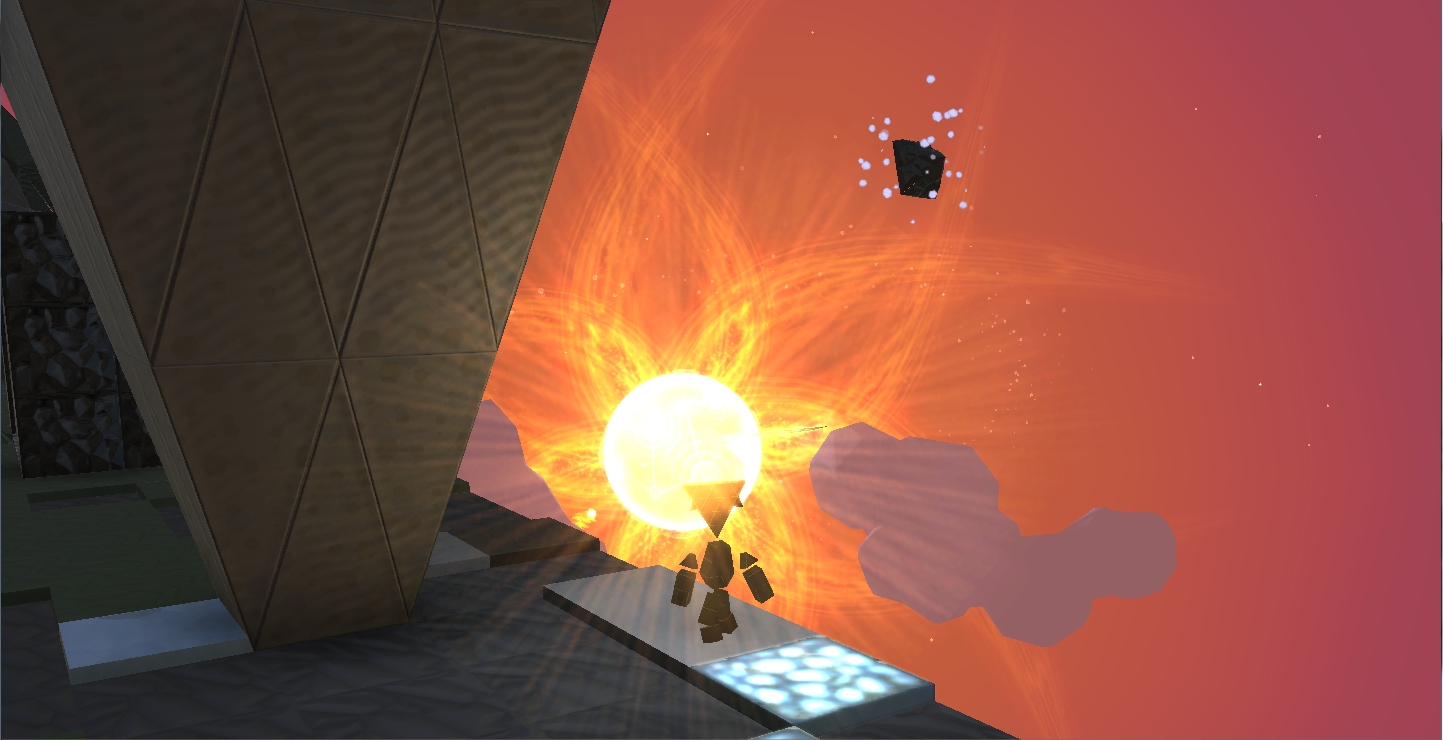
Where things have perhaps been radical have been outside of Second Life, such as the dropping of almost all of the products that marked the company’s attempts to diversify its portfolio and potentially generate additional revenue. Again, this was actually something started before Ebbe’s arrival, but which he supported – hence the axing of Creatorverse, dio and Versu, to be followed later in the year by the closure of Patterns development and the sale of Desura.
In truth, when first announced, the idea of the Lab looking to diversify its revenue stream through a broader product base was a good one; the problem was the follow-through never really matched expectation and became too much of a grand experiment.
Of all the products the Lab developed or acquired, only Blocksworld has demonstrated it has real legs, while Creatorverse and dio, always appeared to be far too limited in appeal to ever gain deep and lasting traction, so trimming them was a sensible move. It was also hard to see how the acquisition of Desura could offer the Lab practical revenue growth outside of meeting its own needs, or without on-going investment and development which would in turn offset the value of revenue gained. Even so, Patterns and Versu, did appear to offer potential. Versu has certainly since gone on under its own steam (full kudos to the Lab for allowing it to do so), while Patterns, even though still under development, built up a small but loyal following on both Steam and Desura, and the announcement of its passing did give rise to upset.
The little “Dorito man” headed off into the sunset in October, as Patterns followed Creatorverse, dio and Versu in being axed from the Lab’s nascent product portfolio. It was followed in November by news that Desura had been sold.
 The Firestorm team has formally announced the forthcoming blocking of version 4.6.1 of the popular third-party viewer. The move, which is part of Firestorm’s policy of only allowing three active version of their viewer to access Second Life,







 Inara Pey: Living in a Modemworld