Space Sunday: an “existential” rocket, Mars, and a bit on JWST

The Astra LV0006 launch literally goes sideways…

On August 28th, 2021, Astra Aerospace attempted to make the fourth launch of its Rocket 3 vehicle designed to place payloads of up to 150 kg to Sun-synchronous orbits 500 km altitude.

After two unsuccessful and one partially-successful flights of the launch system, it was hoped that this flight, carrying an instrumentation payload for the United States Space Force under the Space Test Program (and which was not designed to separate from the launch vehicle), would be a complete success.

Lift-off from Pacific Spaceport Complex – Alaska on Kodiak Island (high northern latitudes being ideal for polar orbital launches) came at 22:35 UTC, and it was immediately clear the rocket was having something of an existential moment, experimenting with moving sideways away from the launch pad, rather than upwards.

After almost 20 seconds of moving thus, the vehicle decided that “up” was perhaps the better option, and proceeded to climb into the sky, performing more-or-less perfectly through an ascent to 50 km altitude, successfully passing “max-Q” (the period when a launch vehicle experiences the maximum dynamic pressures across its frame) in the process and throttling to full power in a press for orbit.

Sadly, due to the post-lift-off incident, the vehicle had exceeded its range safety limits, risking passage over populated areas on mainland Alaska. The order with therefore given to shut down the first stage motors let it crash back into the sea.

Subsequent analysis of data suggests that one of the 5 Astra-built Delphin motors powering the rocket’s first stage failed at launch, likely resulting in off-centre thrust that caused the vehicle to strike one of its launch mounts, resulting in the sideways tilt and motion. However, despite the loss of the vehicle, the fact that it autonomously recovered to make a successful ascent to a point where, but for range safety concerns, it would likely have achieved a successful orbit, is seen as a remarkable testament to the rocket’s guidance and flight control systems.

Further launches will be pending a complete view of this flight.

Mars Updates

The Mars 2020 rover Perseverance is getting ready to make a second attempt to obtain rock samples for analysis and storage.

As I recently reported, a first attempt at sample gathering didn’t end successfully when it was discovered after-the-fact that the rock selected for the sample was made up of material too fine to be retained within the rover’s drill / sample mechanism following drilling.

Abandoning that attempt, the rover was directed to travel 455 metres to a small ridge dubbed “Citadelle”, where it will now attempt to gather a fresh sample. The area was selected as it appears to be able to withstand erosion by the Martian wind better than the surrounding ground, and has a number of interesting rock formations in it.
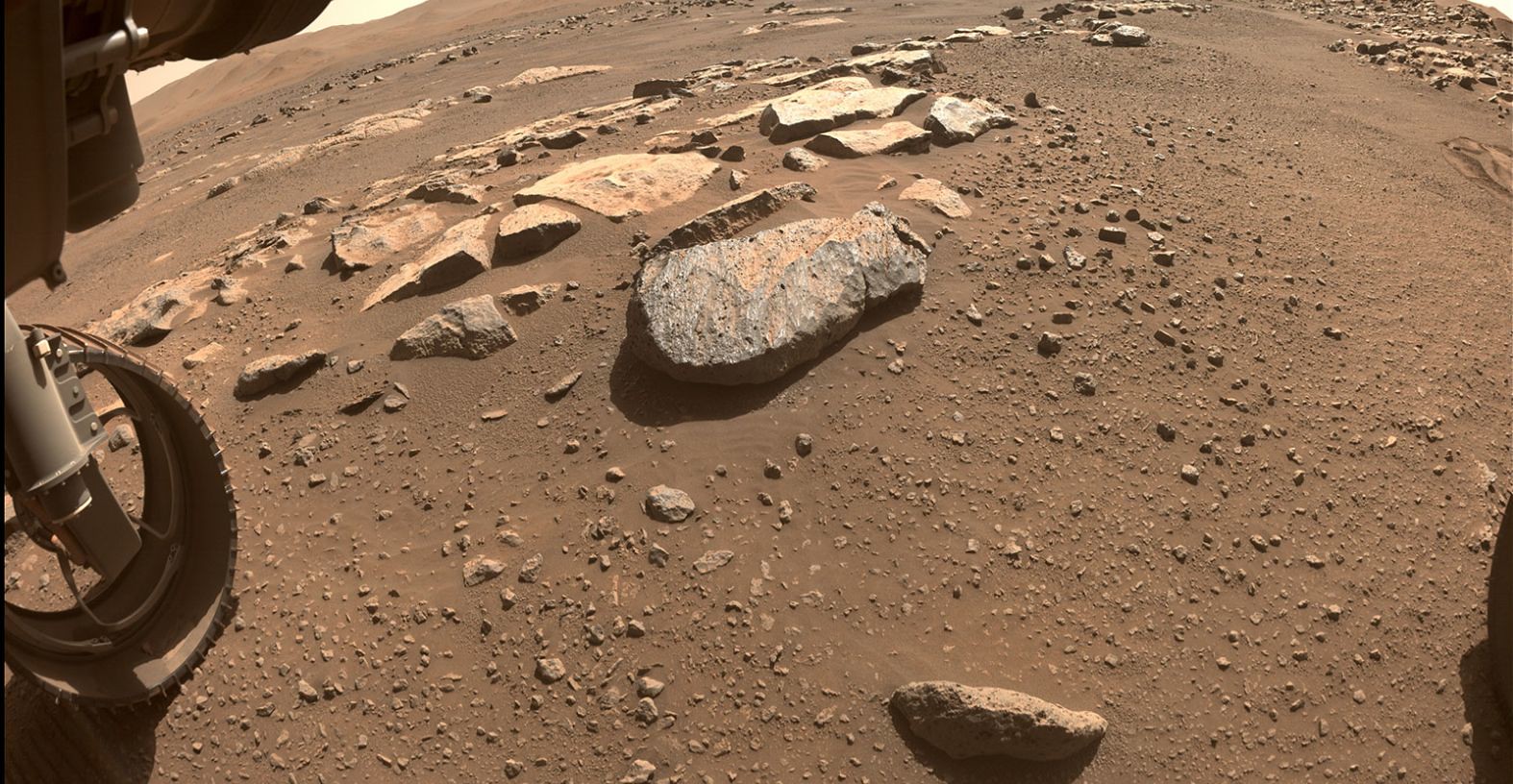
A look at the rock dubbed “Rochette” (image centre) at the “Citadelle” ridge that has been selected as the next target for an attempt by Perseverance to gather samples for analysis / caching. This image was captured on August 26th, 2021. Credit: NASA/JPL

In order to help ensure a sample has been collected post-drilling, a new step has been introduced into the process: once drilling has been completed, the arm and turret will be raised and positioned to allow the rover’s MastCam-Z cameras to image as a visual confirmation that there is material within it. Once confirmed, processing of the sample tube through to the rover’s on-board storage area will then be allowed.

Nor has the first “empty” tube been an entire waste – it now contains a sample of pristine Martian atmosphere, something the mission had intended to collect at some point, and so it will form a part of a sample cache of tubes the rover will at some point deposit on the surface of Mars in anticipation of collection by a future sample return mission.

While atop Citadelle, Perseverance will use its subsurface radar, called RIMFAX – the Radar Imager for Mars’ Subsurface Experiment – to peer at rock layers below it. The top of the ridge will also provide a great vantage point to look for other potential rock targets in the area.

NASA has also confirmed the next mission to Mars, due to be launched in 2024. In keeping with the agency’s approach to alternating surface missions with orbital missions, it has approved the ESCAPADE mission of twin satellites for launch in 2024.

Led by the University of Berkeley, California, the Escape and Plasma Acceleration and Dynamics Explorers mission is a relatively low-cost (under US $80 million including launch costs) attempt to put two small satellites, dubbed “Red” and “Blue” into orbit around Mars to further study the Martian atmosphere and its interactions with the solar wind.
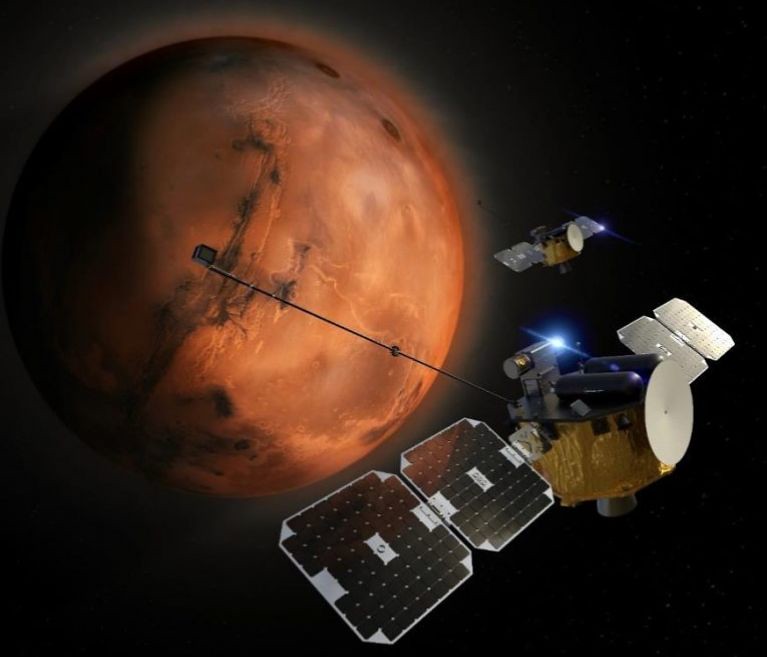
An artist’s impression of the ESCAPADE satellites approaching Mars. Credit: NASA

The satellites will be launched using two Rocket Lab Electron rockets, with the company’s Photon satellite bus used to protect / power them during a low-energy, 11-month cruise to Mars. This marks a significant increase in Photon’s capabilities, the bus originally having been designed to support the launch of satellites into Earth or cislunar orbits. As such, the mission is seen as a “high risk” venture – but as the team behind ESCAPADE note, most missions to Mars come with a price tag of US $800 million or more, and roughly a 90-95% chance of success in reaching Mars / Mars orbit. ESCAPADE is estimated as having an 80% chance of success in doing the same – but at one-tenth the cost, thus making the increased risk in using Rocket Lab systems worth the effort.

Once in orbit, the mission will collect data that could help reconstruct the climate history of Mars and determine how and when it lost its atmosphere. ESCAPADE also will study the ionosphere of Mars, which can interfere with radio communications on the surface and between Earth and Mars colonists. Finally, with simultaneous two-point observations of the solar wind and Mars’s ionosphere and magnetosphere, ESCAPADE will provide a “stereo” picture of this highly dynamic plasma environment in the planet’s upper atmosphere.

And when it comes to human missions to Mars, a new study from the University of California Los Angeles proposes a novel way of reducing the impact of radiation during the journey to / from Mars: by launching during periods of high solar activity, notably the periods immediately following that of solar maximum, when the Sun is at its most active. While launching missions during periods of high solar radiation to reduce the risk of radiation exposure might sound counter-intuitive, there is some logical to the idea.

Simply put, interplanetary missions face two radiation risks – solar, which can be reasonably well mitigated against in a variety of ways (but not entirely avoided or made “safe”) and galactic cosmic rays (GCRs), which are considerably harder to deal with, and more devastating in their impact. However, during periods of high solar activity, the more energetic solar radiation actually deflects GCRs away from the solar system. So the UCLA study suggests that by launching crewed missions in the years immediately following a period of solar maximum could massively reduce exposure to GCRs without significantly increasing the risk from solar radiation.

Just how practical it would be to restrict missions to Mars to certain time frames within the Sun’s 11-year cycle is debatable. If we are to practically explore and possibly establish a permanent presence on Mars, missions will need to be a lot more frequent; so more practical research into things like garment materials, materials used in space vehicle design, etc., that could help mitigate both primary and secondary radiation would likely be far more practical. However, the bright spot in the UCLA study does suggest that if missions are kept to below 4 years duration, then radiation exposure could be seen as “acceptable” – and currently, the more favoured “opposition” class of mission of 2.5 to 3 years duration falls inside that limit.

Continue reading “Space Sunday: an “existential” rocket, Mars, and a bit on JWST”

Sundvik’s touch of rural Norway in Second Life

Sundvik, August 2021 – click any image for full size

Update, August 30th: well, that was a little embarrassing. It appears that within 24 hours of this piece seeing the light of day, Sundvik was removed / closed / flattened as a result of an overdue land rent payment. SLurl removed to prevent accidental drownings!

Occupying half a Homestead region, Sundvik is a setting designed by Zaffy Kiyori Bailey (Zaffy Kiyori) that is intended to offer “a quiet Norwegian-inspired” location open for photography, exploration and relaxation.

This is an engaging build, one that can probably be understood in terms of general layout in less time that it takes to describe it via the written word – but which still offers a lot to take in.

Sundvik, August 2021

The southern end of the setting sits a low rectangle of of land on which sits a small corner of a town – the kind of space you might imagine has been built out from the base of a fjord to make living space. The the south side of this land offers wooden moorings with local fishing boats coming alongside. Given this is a Scandinavian setting, the Cape Cod ad on the side of a waterfront shed might seem a little odd – but perhaps that’s just a local advertiser’s sense of fun.

Houses and places of business sit on this finger of land, and while some might appear to be private, a sign on the corner of the cobbles road provides the assurance than they are all open to the public and can be visited. All are fairly modest in size, with the exception of the converted warehouse at one end of the street, an outdoor café.

Sundvik, August 2021

To the north, the waters appear to be shallower in nature going by the rocks that raise their heads above the waves and the lighthouse standing guard over them and the foam-created water. A buoy marks a single channel though the waters to further moorings, these the home of rowing boats and canoes rather than fishing boats.

A low bridge angles across these northern waters to reach a single large island, a hut raised on stout wooden legs sitting atop it. This elevates the deck on which it stands to make way for a set of tanks below – tanks which may hold the fuel for heaters that serve the hot tub on the deck itself, and possibly the gas fire inside the hut – although admittedly, they seem a little big for either purpose.

Sundvik, August 2021

This is a genteel setting with plenty of opportunities for avatar photography in particular, although there is also much to offer those who enjoy landscape photography as well. This attractiveness is enhanced by the fact all of the houses are furnished, adding to the sense that this is a living coastal town, a place removed from the bustle of major urban areas and offering a have of escape for those who can find their way too it.

With thanks to Shawn Shakespeare for the landmark!

Sundvik, August 2021

SLurl Details

  • Sundvik (Queensville, rated Adult)

Impressions and surrealism in Second Life

ArtCare Gallery, August 2021: Anja and Therese Carfagno

August 26th, 2021 saw the opening of a joint exhibition at Carelyna’s ArtCare Gallery. featuring the work of two very different artists whose work nevertheless presents something of a whole when presented side-by-side.

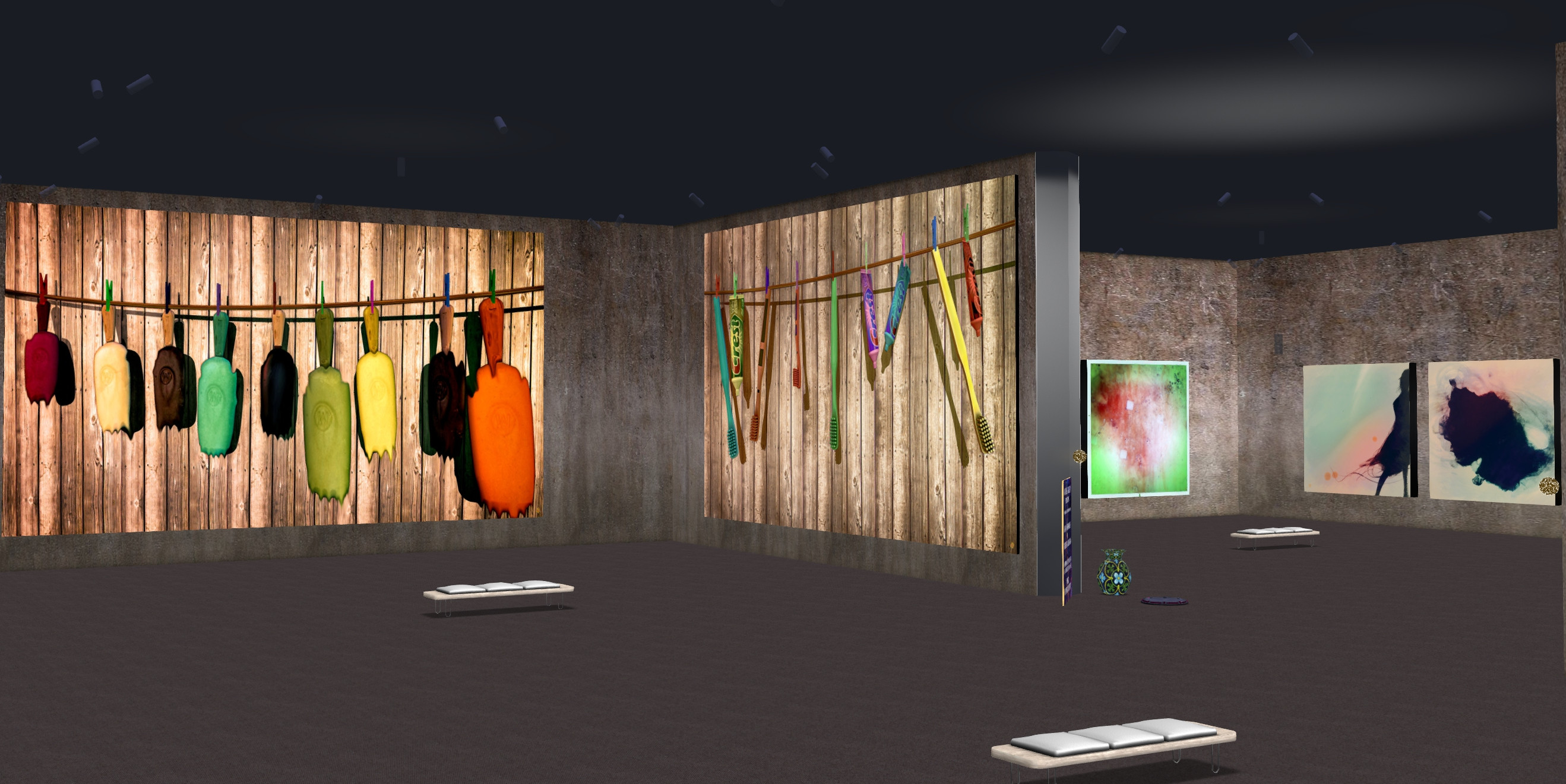
Anja (Neobookie) describes herself as a Second Life photographer who enjoys exploring Second Life and capturing the places she visits – as witnessed with her Flickr stream.  However, as she has demonstrated in recent exhibitions, she has a gift for creating pieces of surrealist art that perfectly encompass the richness of that movement, and at ArtCare she presents six large-format pieces in proof of this.

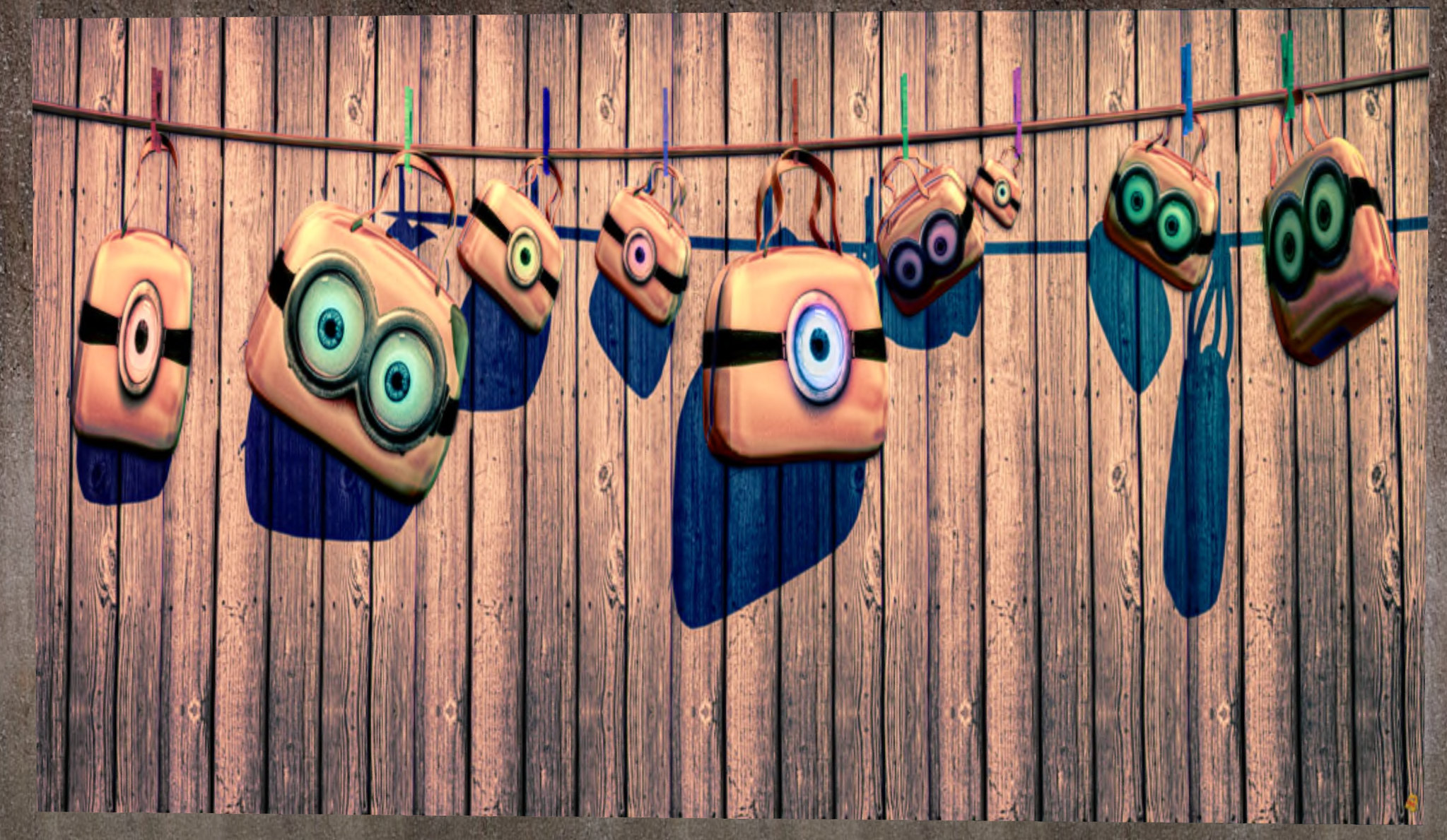
Each offers a backdrop of a wooden fence in front of which has been strung a washing line, and it is what is on the line that forms the focus of each piece. Offered in vibrant colours, these subject range from surf boards to toothbrushes and toothpaste tubes, passing by way of  Minion handbags and melting ice lollies. and more.

ArtCare Gallery, August 2021: Anja

These are images that initially appear simple in their presentation, rich in colour but which – for those who look – perhaps offer a little comment on life and living (might Minion Bags, for example a commentary on the drive for us all to conform as best we can to the dictates of  modern consumerism, and Ice Ice Baby a reflection on the passage of time (or the brevity of summer?). But however you take them, there is no mistaking the joy and lightness each piece offers when simply taken in its ability to bring together the ordinary and the extraordinary to create completely something truly unique and engaging.

Therese Carfagno is an artist with an intriguing range of styles and presentation that can encompass real and Second Life photography, her work touching upon abstraction, collage, impressionism, expressionism and more.

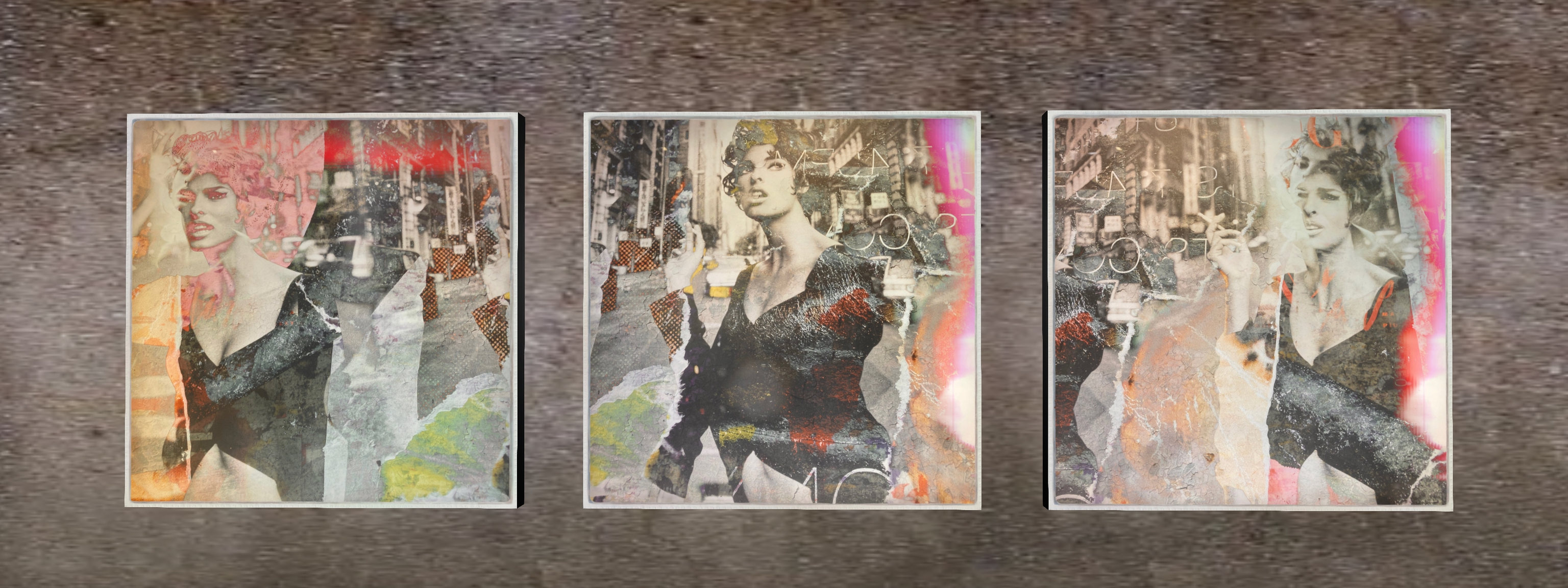
The pieces offered at ArtCare very much reflect this richness; they are also offered as “families” or “collections” of themed images, ranging from pairs of pieces through to a quartet entitled Blood. Within them we can find abstraction in the form of Wall, collage in the triple set entitled Sophia and digital overlays with the Sita pairing – and more, including a touch of sensuality a triple set of monochrome pieces. However, the most striking set is that of Blood, a quartet of portraits, again monochrome, that offer a depth of narrative that forces the attention to come back to it over and over.

ArtCare Gallery, August 2021: Therese Carfagno

The contrast between these two small exhibitions couldn’t be stronger in terms of colour: Anja’s works are all vibrantly saturated in their use of colour, their brightness infectious. With the exception of the Wall and Sophia series, Therese’s selection is generally heavier in tone – if not mood;  the colours more muted, and lean more towards monochrome. Individually, they are very different selections, yet together they offer a flow of art and style from one to the other that is impressively engaging.

Needless to say, a visit to this joint exhibition is highly recommended.

SLurl Details

Once Upon A Tide in Second Life

Once Upon a Tide, August 2021 – click any image for full size

I first dropped into Once Upon A Tide, a build by Mïa ((zielonooka1) occupying a homestead region, just on a month ago as July was drawing to a close. If I’m honest, I cannot remember whether the landmark came from Mïa herself (my apologies to her if it did!), whether I heard about the region through other means (in which case my apologies to whoever poked me about it) and I grabbed the LM on that first visit, or the landmark came via other means. Anyway, it’s taken me a while to put fingers to keyboard and write about the setting, as I’ve (a little unfairly) allowed other things to get in the way – so again, apologies to Mïa.

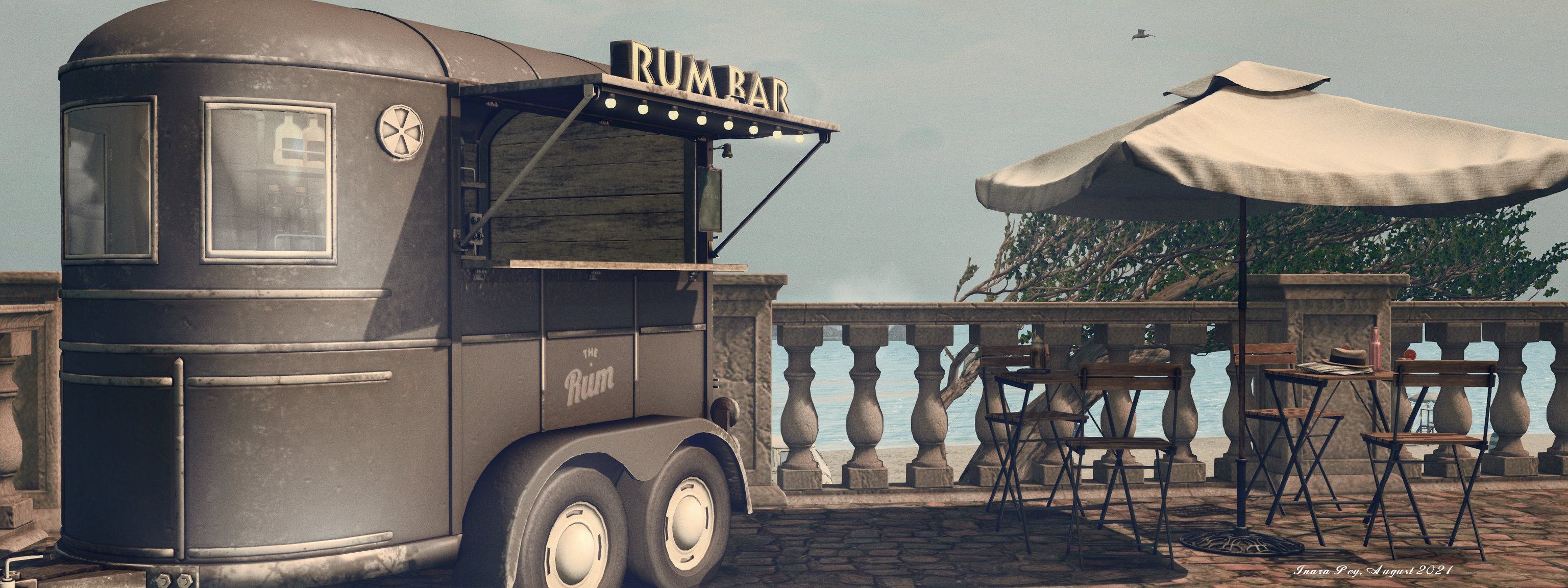
No description is provided for the region in it’s About Land floater, but that’s not a problem, as it makes for a charmingly easy visit for those who drop in, offering – in the words from Mïa’s profile – “a little bit of Ireland”. The focal point for the setting is a compact rectangle of buildings, sitting as both a waterfront promenade of businesses look down over a sea wall to the west and the fishing boats that are making their way to wooden and concrete piers and as a beachfront row of businesses as they look eastward over broad cobbles and broader sands to more waters, these broken by sandbars and rocks that are in turn watched over by the local light house.

Once Upon a Tide, August 2021

The landing point sits at the top of the wide steps that offer a way down from the rectangular street scene to the sandy beach, presenting visitors with a choice – to walk around the shops and places of business as they stand back-to-back and side-to-side as if in defensive huddle atop their sea walls, or trot down to the sands and wander over their warmth.

A walk around the former will reveal that the majority are façades, although one of the pubs and the neighbouring coffee shop each have interior décor as well as outdoor seating on the cobbles, should anyone fancy a sit down. But the fact the majority of the builds are façades doesn’t diminish them; they collectively offer numerous opportunities for photography  – joining the local group will provide those who need them with rezzing rights (just – as I always tend to request – remember to pick up anything you put out when you’re done).

Once Upon a Tide, August 2021

The beach, meanwhile, runs along most of the east side of the island, curving around its south side to become a narrower ribbon of sand before it encounters a rocky shoulder extending out from the town’s sea walls. Here, tucked between the wall and the tide, is a place for outdoor music, the nearby steps providing a handy route up to the pub and coffee house for those who might be in need of refreshment after dancing in the Sun. Along its eastern arm, the beach offers numerous places to sit, the opportunity to snag some fish’n’chips, and even the chance to watch some home movies (aka YouTube) whilst lying on the sand.

To the north, the land becomes a little more rugged. Low cliffs mark the northern coastline, a place where a quartet of beach houses stand over the waters below, supported on wooden piles and beams that extend outward from the edge of the cliffs. These are available for rent by those who wish to extend their visit in the region (or even make it a most home – 100 LI is included in the rental fee).

Once Upon a Tide, August 2021

Between the beach houses and the town sits what might have once been the grounds of a large building many, many decades ago. These now sit as informal gardens, just a single block of ancient stonework and arches remaining. Poles strung with lights stand close by, suggesting this might also be a place for outdoor events as well – a fact also spoken to by the plastic cups strewn  under the lights, awaiting collection.

Between the northern cliffs and the sands of the east beach, the land stands as a grassy table, offered as a camp site and the preserve of a pair of trailer homes that look as if they’ve dropped in from the United States, the battered pick-up truck with its Alabama plates adding to this feeling. A meal is being prepared alongside an outdoor fire, and someone has put together a makeshift tub for bathing – although I have to admit, the campsite’s weather report system had me smiling.

Once Upon a Tide, August 2021

Easy on the eye and the viewer, offering room to relax, opportunities for photography and a setting where the various points within the region both sits as a individual settings and flow together as a whole, making Once Upon A Tide interestingly varied for explorers and photographers alike.

SL Details

A quartet of artists at Elven Falls in Second Life

Elven Falls Gallery, August 2021: Sisi Biedermann

Elven Falls Gallery, operated and curated by Ant (AntoineMambazo) and Aires Hax, is a relatively recent venture to arrive on the Second Life art scene, offering four galleries spaces for art exhibitions, and a growing sculpture garden for 3D work. The majority of the gallery spaces each offer two floors in which artists may display their work, with all four halls currently being occupied by a quartet of artists who offer displays that are fully engaging, whether taken individually or collectively.

Sisi Biedermann is an artist I’ve often covered in these pages; so much so that it is probably well known to regular readers that I find her once of the most engaging, evocative and remarkable artists in Second Life; her work apparently knows no boundaries, and she is ever-willing to engaging in genres and and experiment with styles, approaches finishes, whilst her subjects involve everything from the natural world through in-world settings to the fantastical and even touches on the abstract and the near-surreal. Thus, her exhibitions are often a voyage of discovery even for those who are familiar with her work.

Elven Falls Gallery, August 2021: Sisi Biedermann

At Elven Falls, Sisi offers what I’m going to call a triptych (and admittedly using the terms a little loosely in this case) exhibition, in that it comes in three parts – two of which are very definitely connected. These are on the lower floor of the hall, where Sisi takes us on a walk through two well-tended gardens. The English garden to the left that has the inevitable neatly mown lawns and rose bushes (as well as other floors), while to the right we pass through a Chinese garden with water features.

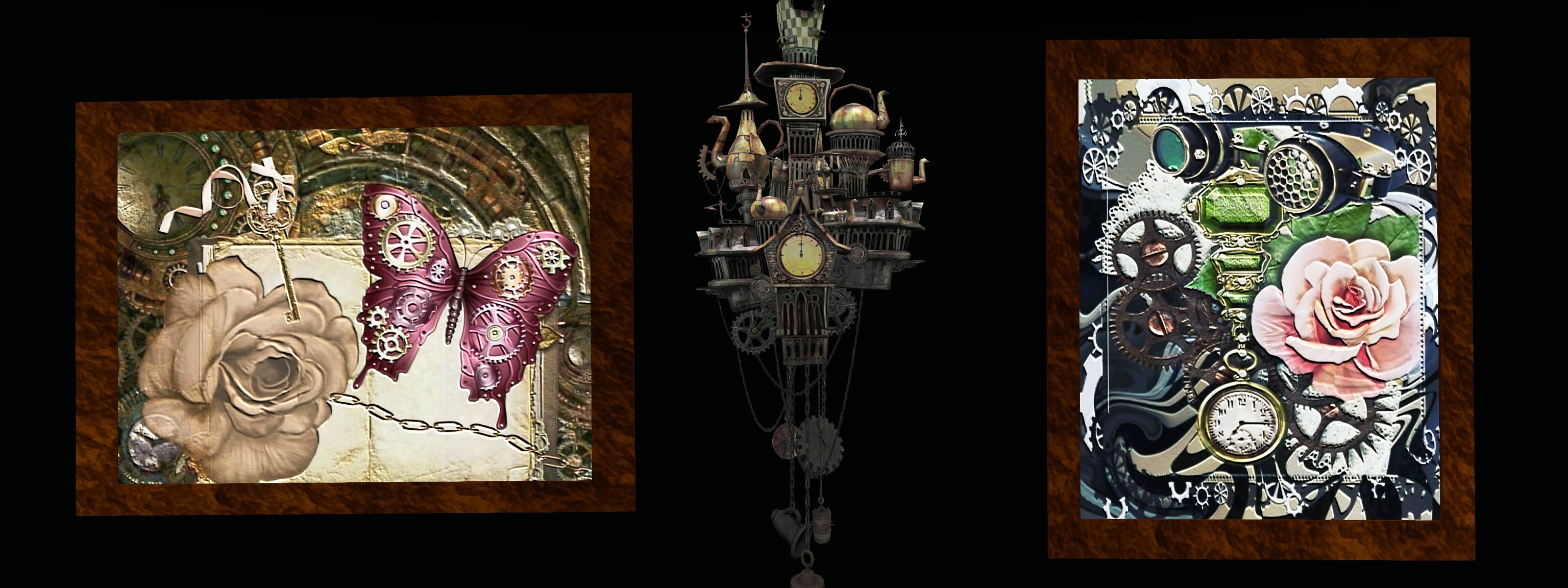
Given Sisi is a photographic artist and a painter, I’ve no idea if these images started as the former and were then processed in to the latter, or began as acrylic-based paintings; but the truth is, this doesn’t matter: all of the pieces are given a slightly surrealist bent that makes them captivating in their beauty. Meanwhile, on the upper floor of the gallery, Sisi exchanges the peace and beauty of the garden for another world entirely, that of Steampunk in all its mechanical and Victorian glory. A stunning collection of digital images finished as etchings, these images sit as a kind of middle panel in this “triptych”, straddling the two, offering a further demonstration of Sisi’s range of artistic expression.

Elven Falls Gallery, August 2021: JudiLynn India

JudiLynn India also needs no introduction here, also being an artist whose work never fails to attract my attention. A painter focusing on abstract work, she has been active in Second Life as an artist since 2010, and her work never fails to catch the eye with its form and richness of colour.

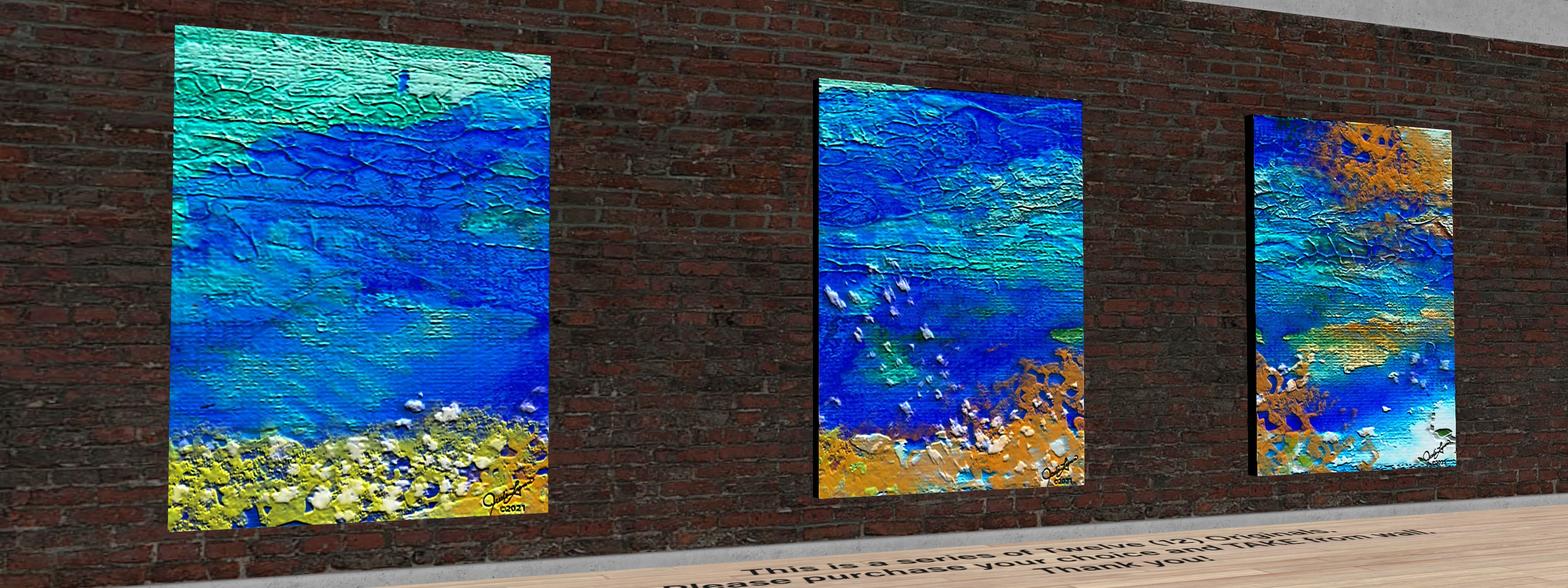
At Elven Falls, Judilynn splits her display into four parts. Three (two on the lower floor of her exhibition space and one on the upper), each present sets of 12 original pieces, Defined as sets in terms of colour, they are offered for sale on the basis that when sold, the purchaser takes the original from the gallery, leaving a blank space. The rest of the space offers a more “traditional” – displays of JudiLynn’s art in which the purchaser receives a copy, and the original remains on display. Whether original or copies, all of these pieces again demonstrate the richness of JudyiLynn’s abstract work.

Elven Falls Gallery, August 2021: Kraven Klees

Should one call Kraven Klees an artist or an illusionist, is a question that often comes to min when viewing his work.

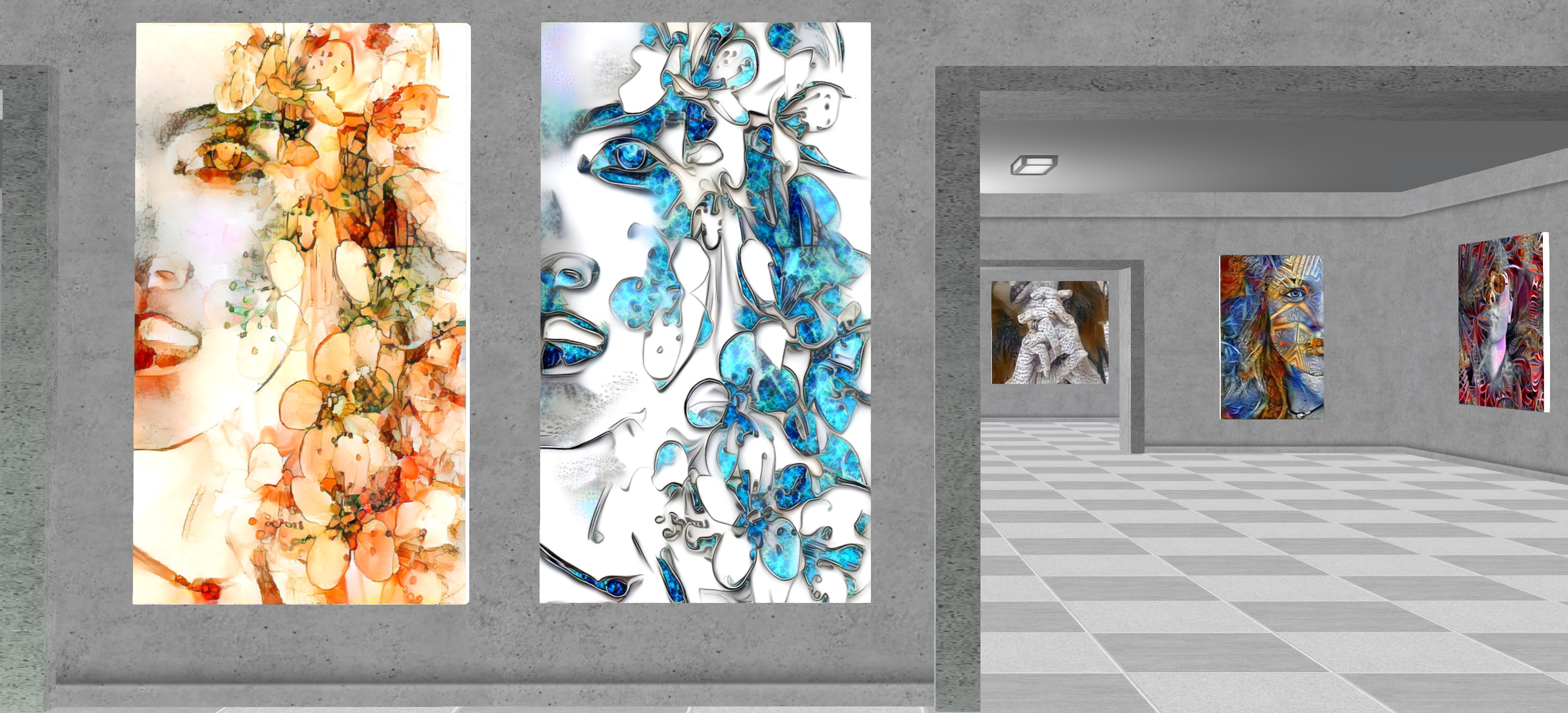
Working in mixed media this incorporates digital manipulation and techniques that include fractal abstraction, digital impressionism and a touch (in places) of surrealism, he more that qualifies as the former. Yet in his finished work, there is something more; these are works that speak not so much of conscious focus in their creation as they do of abstracted automonism. Such is the unconscious foundation within his work, Kraven’s pieces also call for a pareidolic or apophenic response from the observer as the eye moves from perceiving each image as a whole to focusing on its parts and back again.

Here, Kraven presents a range of his art that can be fully appreciated on both levels – use the teleport disk outside of the main gallery building and between the halls holding the exhibitions by JudiLynn and Sisi in order to reach the upper levels of the gallery.

Elven Falls Gallery, August 2021: Faith Maxwell

Faith Maxwell is an artist whose work is new to me, despite the fact she has exhibited widely in a Second Life. Working in both 2D and 3D formats, she produces the most engaging pieces as wall-mounted art and free standing sculpture that range from the abstract to contemporary in style, passing by way of Modern Art. These are piece that, whether animated or static, have a richness of life about them that is immediately apparent, drawing the to each in turn to appreciate its beauty and form.

Smaller than the exhibits by the other artists, occupying just a single level of gallery space, this is nevertheless as an engaging a display of work as the others, toe smaller number of pieces allowing the eye and mind to feel more settled in viewing them.

SLurl Details

2021 SUG meeting week #34 summary

Sunvana, May 2021 – blog post

The following notes were taken from the Tuesday, August 24th, 2021 Simulator User Group (SUG) meeting. The meeting was recorded by Pantera Północy, and the video is embedded at the end of this summary. Note this summary focuses on the key points of the discussion where there is something to report.

Server Deployments

Please refer to the server deployment thread for updates.

  • There were no deployments to the SLS Main channel on Tuesday, August 24th, leaving the simulator version at 562252.
  •  On Wednesday, August 25th, all SLS RC channels should be updated to simulator version 2021-08-19.563028. This will see all simhosts on these channels receive the changes intended to improve simulator performance first made with deployment 561609. In addition the simulators on these channels will have fixes for BUG-231064 “The changes to llUnsit() that allow experience use are not working” and an update to ensure llChar() now properly returns the Unicode Replacement Character (�) for all out of range, even if the input value is negative.

HTTP Out Proxies Oopsie

Tuesday, August 24th did see a back-end update, which those using objects using HTTP may have noticed, with their URL becoming invalid. Monty Linden described the situation thus:

This morning at 09: 00 SLT, I started a deploy of the new http-out proxies. Within the first minute, the whole thing had gone badly. [We] Ended up with a resource conflict and AWS rolled back, as is its habit. Unfortunately, a small load balancer change was already in play. For reasons known and unknown, LB rollback often is a bit rough and traffic out the edge was impacted. [The issue] took about 5-10 minutes to clear. 
I will try that again after some tool fixes, and hopefully avoid the disruption. Sincerest apologies for the service interruption.

SL Viewer

The Happy Hour Maintenance 2 viewer, version 6.4.23.562602, was released on Monday, August 23rd (viewer dated August 20th). This viewer includes a range of fixes, including crash fixes and EEP improvements. This viewer also sees the viewer toolchain updated to C++17.

All other official viewers remain as follows:

  • Release viewer: version version 6.4.22.561752, formerly the CEF Update RC viewer, issued July 24 and promoted August 10  – NEW.
  • Release channel cohorts:
    • Simplified Cache RC viewer, version 6.4.22.561873, issued August 9.
    • Grappa Maintenance RC, version 6.4.22.561850, issued July 29.
  • Project viewers:
    • Legacy Profiles viewer, version 6.4.11.550519, dated October 26.
    • Copy / Paste viewer, version 6.3.5.533365, dated December 9, 2019.
    • Project Muscadine (Animesh follow-on) project viewer, version 6.4.0.532999, dated November 22, 2019.
    • 360° Snapshot project viewer, version 6.2.4.529111, dated July 16, 2019.

In Brief

  • Some have been a little confused over grid-wide Experiences. .At the meeting, it was repeated that such Experiences are the preserve of Linden Lab only; there are no plans in the works to make user-created Experiences grid-wide.
  • Some have reported traffic count issues for their regions. LL have noted there was a problem “a few weeks ago”, but it should have been resolved. Anyone finding their region is not reporting traffic correctly should file a bug report.
  • The adjustment to resolve the issue of Mainland regions looking excessively dark under certain EEP lighting (e.g. when shadows are enabled in the viewer) is across all regions, as previously reported in these update, but the switch to enable it has yet to be thrown.