As a cultural movement, surrealism developed in Europe towards the end of the First World War, and is best known its visual art, music and writings that offer the juxtaposition of different realities to challenge the eye and the mind.
In terms of art, those embracing the movement initially tended towards scenes and settings that could appear unnerving – or at best illogical – that could bring together the ordinary and the extraordinary, the approach intended to allow the artist’s subconscious to express itself more than their conscious processes. Thus, pieces often feature the elements of surprise and that of and non sequitur, which tend to become the focus of their art when viewed, rather the being an expression of the philosophical movement surrealism was intended to be.
Nitroglobus Roof Gallery: Anja’s Surrealism
However, when well executed, surrealist art brings together a balance; a joining of the natural with the non sequitur, of colour with form and the subconscious of the artist with the imagination of the observer that is captivating and extraordinary to witness.
This is absolutely the case with the art of Anja (Neobookie), who is the artist of the month for June 2021 at Nitroglobus Roof Gallery, curated by Dido Haas. On display is the most stunning exhibition of surrealist art it has been my pleasure to witness, one that fully embraces the core principals of the movement whilst encompassing broader photographic and artistic techniques and commentary.
Nitroglobus Roof Gallery: Anja’s Surrealism
Through her work, Anja is able to touch on subjects in her images in a way that is entirely non-directive. Take Free Willy, Survivors, and Wrong Shipping for example, with their subtle suggestions of our relationship with the world around us.
Elsewhere might be found commentary on the human condition – life and relationships – and an embracing of technique such as fata morgana and chiaroscuro that is simply captivating. But, and at the risk of repeating myself, it is important that you do not try to directly seek meaning in these pieces – rather allow them to talk to you, a Anja herself notes:
Do not try to understand all of the images shown, but just let them affect you. Even after two rounds of wandering, are you able to discover a pattern? Is there a common theme or common thread? Crazy, crazier, craziest seems to be the only connection and thing in common in this colourful collection of ‘Anja’s Surrealism’.
Nitroglobus Roof Gallery: Anja’s Surrealism
So, do take the time to drop into Nitroglobus through June and let Anja’s Surrealism to whisper its words to you.
An annular eclipse with the Sun’s horns. Credit: unknown
Thursday, June 10th will bring forth an annular eclipse of the Sun that will be visible from Western Europe and North America (weather permitting!).
An annular eclipse is when the distances from the Earth and the Moon and the Earth and the Sun are such that as the Moon comes between Earth and Sun, its disk is too small to completely “blot out” the Sun’s disk.
The event on June 10th will occur at a time when Earth is approaching aphelion – the point in its orbit furthest from the Sun (which it will reach on July 5th), and when the Moon has just passed apogee – the point in its orbit around the Earth when it is furthest from our world. This means that when seen from Earth, the Moon will have an apparent diameter of 29’ 34”, and the Sun 31’ 30”.
Note: you should never, under any circumstances look directly into the Sun, even when wearing sunglasses. Not even during an eclipse.
While annular eclipses are regarded as being less spectacular than a total eclipse, they do have a beauty of their own, and are actually far more common – and will become more and more common in the aeons to come, due to the fact that the Moon is very slowly edging ever further from Earth, and so is ever so gradually forever slipping beyond the “Goldilocks zone” where its apparent diameter will at times almost match that of the Sun’s to present us with a total eclipse.
Not that this will be any time soon – astronomers estimate that it will be another 1.4 billion years before this planet witnesses its last ever total eclipse.
For the event on June 10th, the good news is that the eclipse will be above the horizon for North America from Florida and in an arc curving through the western and central United States and Canada to reach the Bering Strait, whilst in Europe a similar curve will run from the southern tip of Spain across all of Western Europe and parts of Eastern Europe before turning tightly over Russia to also reach the Bering Strait.
Path of the June 2021 annular eclipse
The bad news is the path of annularity, which offers the very best views of the eclipse, lies along a sparsely populated arc that runs across remote regions of Ontario, Hudson Bay, Northern Quebec and North-western Greenland before crossing the North Pole and ending at dusk on the Arctic shores of Siberia.
Even so, millions across the north-eastern half of North America, nearly all of Europe and Russia will see various stages of a partial solar eclipse, with parts of the United States being especially fortunate in being is the sweet spot for witnessing the a ‘sunrise horns’ eclipse, which will be visible for those up and about in the early hours in the Great Lakes down through the New Jersey-Pennsylvania/Delaware tri-state region..
Speeded-up ‘eclipse-rise’ as seen from Toronto, Canada. Credit: Stellarium
Those within this arc can project an image of the Sun onto a plain white surface using a telescope or binoculars in order to see the “horns” – an effect caused as the Moon passes partially across the Sun’s disk (see right).
Those outside the path of greatest impact should still notice a dimming in daylight during their local period of eclipse (times on the images here are all UTC, so adjust for your time zone).
Or, for possibly the easiest and safest way to view the eclipse – again, weather permitting – is to hop over to the Virtual Telescope Project, who will be hosting a live broadcast of the event starting a 09:30 UTC on Thursday, June 10th.
NASA to return to Venus
For the first time in more than three decades, NASA plans to send robotic mission to Venus, with two mission proposals selected for funding in the latest round of the agency’s Discovery programme.
DAVINCI+, or Deep Atmosphere Venus Investigation of Noble gases, Chemistry, and Imaging, will be led by the Goddard Space Flight Centre. It will send a probe into the planet’s atmosphere, measuring noble gases and other elements that can provide information on how its runaway greenhouse effect developed. Cameras on the probe will hopefully provide high-resolution images of massive geological features known as “tesserae” on the planet’s surface that may be similar in form to Earth’s continents.
VERITAS, or Venus Emissivity, Radio Science, InSAR, Topography, and Spectroscopy, will be run out of the Jet propulsion Laboratory, and will map the planet from orbit using a synthetic aperture radar system. It will also search for infrared emissions that could help scientists determine if there is active volcanism on Venus.
Hardware for both missions will be built by Lockheed Martin at an estimated cost of US $500 million per mission, with both set to be launched between 2028 and 2030, although NASA will not award actual launch contracts for either until later in their development.
NASA is off to Venus with DAVINCI+ (l) and VERITAS (r). Credit: NASA
In being selected, the Venus missions elbowed their way past the Io Volcano Observer and Triton Trident missions which had also been under consideration for Discovery funding.
The first of these would have sent an orbiter to study the most volcanic place in the solar system, Jupiter’s moon Io, in and attempt to understand the role tidal heating plays in planetary formation. Meanwhile, the Trident mission would have sent a robotic vehicle on a flyby through the Jovian system en route to Neptune, where it would fly by the planet – and through the atmosphere of it’s geologically active moon, Triton.
While Io Volcano Observer may get to fly in the near future, things are a little more complex for the Trident mission, as this requires a particular planetary alignment between Earth, Venus, Jupiter and Neptune, that allows it to use their gravities to gather the velocity needed to reach Neptune without the associated fuel load. Such alignments only occur once every 13 years. , with the next occurring in 2026/27, meaning the next opportunity for the mission will not come until 2039/40.
The DAVINCI+ mission entry and descent at Venus. Credit: NASA
However, NASA sees value in funding two Venus missions as both DAVINCI+ and VERITAS are very different in their science objectives, offering the potential to massively increase our knowledge of Venus for a comparatively small cost.
Another aspect that weighed in their favour is that both of the Venus missions can function as technology demonstration missions. VERITAS will host an updated version of a deep space atomic clock first flown on an Earth-orbiting spacecraft in 2019. This will assist in radio science observations and autonomous spacecraft manoeuvres. Meanwhile, DAVINCI+ will fly a new ultraviolet imaging spectrometer.
The decision to go ahead with DAVINCI+ and VERITAS marks the first time dedicated US missions to fly to Venus have been funded since the Magellan radar mapper orbiter, which operated between 1989 and 1994. It also marks an interesting contrast: since 1989, NASA has spent some US $28 billion on missions to Mars, whilst science spending on Venus has barely passed the US $3 billion in the same period.
Elvion, the homestead region design by Bo Zano (BoZanoNL) has always been a place to which I’m drawn. Since its inception and through several iterations, it has presented a haven of natural peace and beauty in Second Life that can smooth both troubled mind and upset heart, and which never fails to offer the eye and camera much to see and appreciate.
As far as I can recall, Bo has tended to keep his designs to the ground level, but with the iteration I visited at the start of June, he’s made use of the space available overhead as well and the ground level environment. The result is a setting of three distinct parts, each complete unto itself whilst also joining naturally with its companions to offer visitors much to see and appreciate – and even more space to reflect.
Elvion, June 2021
The ground level of the region presents a setting that in part echoes past Elvion designs in terms of general landscape and the mix of land and water, but which is nevertheless unique in its presentation, sitting as a small, low-lying island, the partial region surround suggesting it might be part of an small archipelago.
This island, rich in summer greens and the bright colours of wild flowers, is home to the main landing point that sits to the the south-east, watched over by a mature pelican and young goat. Two large buoys are stranded on the shore here, rusting and fading under the Sun. Their position raises the question of whether they might have been deposited by some past storm that tore them from their anchor chains or if they were simply abandoned by human hands, their work out in the channels beyond the island long since finished.
Elvion, June 2021
A path leads the way up from the landing point to where an A-frame house sits as a quiet retreat, places to sit and appreciate the view both on its raised deck and among the flowers growing around it. This house is, together with a small gazebo / pergola sitting closer to the landing point and overlooking the rocky shoreline, pretty much the only sign of human habitation to be found on the island, allowing its rugged beauty to be fully appreciated.
The path from landing point to house will lead visitors past one of the region’s little pug dogs that have in the past been named after either the Three Stooges or members of the Rat Pack (along with other animals found in past Elvion iterations), but who sits unnamed here, keeping an eye on the region’s information givers and pointing the way to the teleport signs.
Elvion, June 2021
Set as a group of wooden signs, these provide access to the two sky settings within the region at the time of my visit.
Touching Forest will carry you to – unsurprisingly – a woodland setting. It’s a place in the blooms of spring and colours of summer that could so easily be pictured as a further part of the island, the A-frame house waiting to rise back into view if you just wandered far enough in the right direction through the surround mist.
Elvion, June 2021
At the same time, however, those surrounding mists, the ruins and the trails winding over the the grass and rocks to a domed stone gazebo and the falls and water that lie beyond it, present the feeling that its is genuinely an altogether different place to the island; somewhere altogether more mystical.
Walking the path from the landing point and its ruins to – and beyond – the waterfalls and their streams, I felt I was wandering into some corner of Westeros or perhaps a forgotten outlier of Imladris, such is the deep sense of place bound within the setting that encourages the imagination to take flight.
Elvion, June 2021
Dreamland, the highest of the settings in terms of general elevation offers a similar connection to both forest and the island through its landing point, which sits within a ruined abbey, and the surround rich foliage of trees.
But step beyond the confines of the old walls, and you find you have been transported somewhere entirely different: a place where desert and grasslands intertwine – but whether it is a place where prairie meets dustlands or veldt meets desert’s edge, is entirely up to you.
Elvion, June 2021
A thatched cottage and nearby windmill give a slight European lean to the setting, but at the same time, were a herd of cattle to come through the scrubby grass, driven by weather-beaten cowpokes, they would be at all out of place.
And certainly, for those with wearable horses, this is a location with more than enough room for riding, whilst those seeking places to sit and reflect, cogitate or enjoy the company of another, there is also plenty here to be found.
Elvion, June 2021
Beautifully conceived and executed, Elvion remains a joy to visit and behold.
The following notes were taken from my audio recording and chat log of the Content Creation User Group (CCUG) meeting held on Thursday, June 3rd, 2021. These meetings are chaired by Vir Linden, with dates available via the SL Public Calendar and the venue for the CCUG is the Hippotropolis camp fire.
SL Viewer
There have been no updates for the viewer for the week, leaving the pipelines as follows:
Release viewer: Eau de Vie Maintenance viewer, version 6.4.18.558266, dated April 23, promoted April 29 – No change.
Love Me Render (LMR) 5 viewer, version 6.4.19.560171, dated May 27.
Maintenance 2 RC viewer – Fernet, version 6.4.19.559726, dated May 19.
Project UI viewer updated to version 6.4.19.559612, May 14.
Project viewers:
Legacy Profiles viewer, version 6.4.11.550519, dated October 26.
Copy / Paste viewer, version 6.3.5.533365, dated December 9, 2019.
Project Muscadine (Animesh follow-on) project viewer, version 6.4.0.532999, dated November 22, 2019.
360 Snapshot project viewer, version 6.2.4.529111, dated July 16, 2019.
General Viewer Notes
The current version of LMR 5, 6.4.19.560171 is set for promotion to de facto release status at the start of week #23 (commencing Monday, June 7th).
This viewer includes a fix for BUG-230789 “[MAINT-E] Alpha failures with Release 6.4.18.558266 (64bit)”.
The New User Experience project viewer will follow LMR 5 as the next viewer on the runway for promotion to de facto relapses.
There is to be a “general push to improve graphics performance over the next few months”.
BUG-5975 “Normal map rendering issue when UV island tangent basis has angular difference and mesh is smooth shaded” is an issue that should be fixed with LMR6. This may cause some content breakage, but will do more to fix an unwanted edge case that can affect content.’
The majority of the meeting focused on a discussion of this issue, which is more fully explained in this document, with Ptolemy Linden from the graphics team noting that investigations in to how best to resolve the problem and those related to it for SL are still on-going,
ARCTan
Summary: An attempt to re-evaluate avatar rendering costs and the cost of in-world scene rendering, with the current focus on avatar rendering cost / impact, with the in-world scene rendering / LI to be tackled at some point in the future.
Work has finally started on the UI refactoring to present people with a “one stop shop” for displaying surrounding avatar complexity information and action upon it.
This work is currently separate to the work on revising that actual formulas used for calculating avatar complexity, but the new UI should work with the existing calculations / values. The idea is to make the UI elements for ARCTan visible in a project / RC viewer whilst work continued on the new calculation formulas, then merging the new formulae into the viewer down the road.
It is currently anticipated that the viewer with the UI work will appear some time in the “next several weeks”.
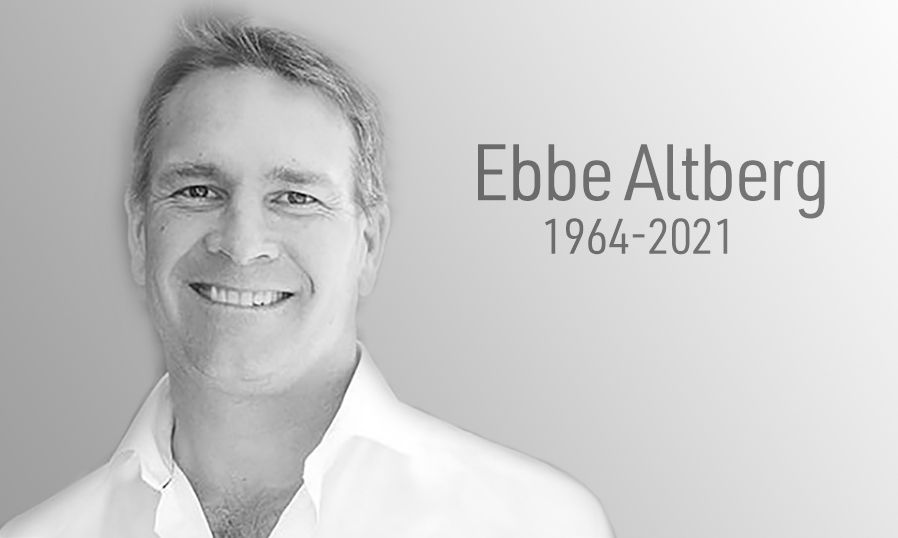
On Friday, June 4th, Linden Lab broke the news that the company’s CEO, Ebbe Altberg had passed away.
The post, from Patch Linden, reads in part:
Second Life found new highs in 2020 between a worldwide pandemic taking grip, through the times of a tumultuous leadership change in the United States, and during movements of civil changes that will forever live in history books. Second Life provides many with the comfort of a normal that continues to exist for all of us, where many use it to escape real life pressures, stressors and day to day challenges. In Second Life we can be our ideal, our best, celebrate all that is good across the world together. Sadly we have also seen some people go, and they will never be forgotten as they touched us, gave us their best from their hearts, minds and souls – this thing called real life sometimes knocks on our door and makes a call.
As I am here before you today, it is with profound sadness that I share with you Ebbe passed away yesterday evening restfully and surrounded by the love of his family.
This is deeply sad news for all of those who knew or had contact with Ebbe during his seven-year tenure at LL. His arrival at Linden Lab the start of February 2014 came at a time when user / Lab relationships were at a particularly low state, and his arrival could not have been more timely.
From the outset, it was clear that he had more than a passing knowledge of the platform – his son, Aleks, had been keenly involved on the Teen Grid, up to and including starting his own business, and Ebbe himself was a long-time friend of former Linden Lab board member Jed Smith (who had actually tried to get Ebbe to join the company once before).
Referring to himself as a “left-brain / right brain kind of person” – he graduated Middlebury College (Vermont USA) with a degree in Fine Arts with a concentration in Computer Applications, it is fair to say he not merely was aware of the potential of Second Life – he was positively enthusiastic about it, technically and creatively.
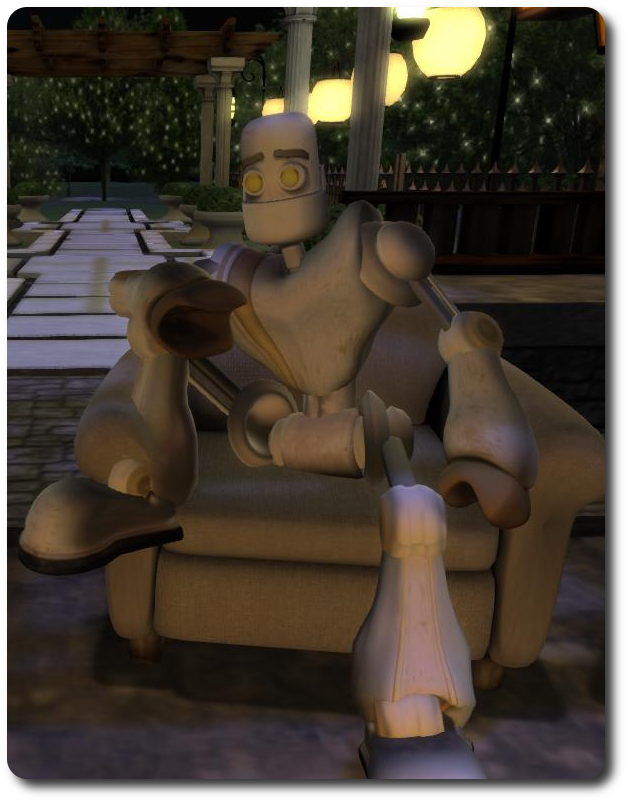
Ebbe Linden (Ebbe Altberg) as he appeared at one of his first official engagements with users after joining Linden Lab, February 19th, 2014.
From the outset, he was openly and warmly communicative with the platform’s user base, getting in-world as often as he could to meet people either casually or via small and large events – such as an early “fireside chat” a handful of us were invited to attend just a handful of days after his official arrival at the Lab, or via larger town hall style meetings, and appearances at events such as VWBPE, the SLB celebrations the Lab Chat sessions and their successor, Lab Gab, and more.
His openness and honesty did much to renew users’ faith in Second Life – but occasionally carried something of a price. When he popped-up at a Third-Party Viewer Developer meeting in June 2014 and mentioned in passing that the Lab were working on a new platform (which we would come to know as Sansar), the resultant conniptions among users was very palpable (and, being honest, partially fuelled by some hasty and somewhat inaccurate tweeting of his comments sans proper context) – which would require numerous repeats by both Ebbe and other at the Lab that the new platform did not mean “the end” for Second Life, but the company was committed to both.
In this latter regard, he fully supported the team that came together under Oz Linden to continue to build-out and improve SL and make it more accessible to people, whilst always stepping forward and facing the ire of users over perceived wrong-doings and working to further build / re-build confidence in company and product.
Nor was his enthusiasm constrained to platform and users – he faced the media head-on on numerous occasions in the US and international, proud to talk-up Second Life, Linden Lab, virtual worlds and the potential of VR, a technology to which he became an ardent convert. He also had the foresight to spin-out the lab’s expertise in virtual tokens into a subsidiary, Tilia Pay, presenting linden Lab with a further means of generating business for itself.
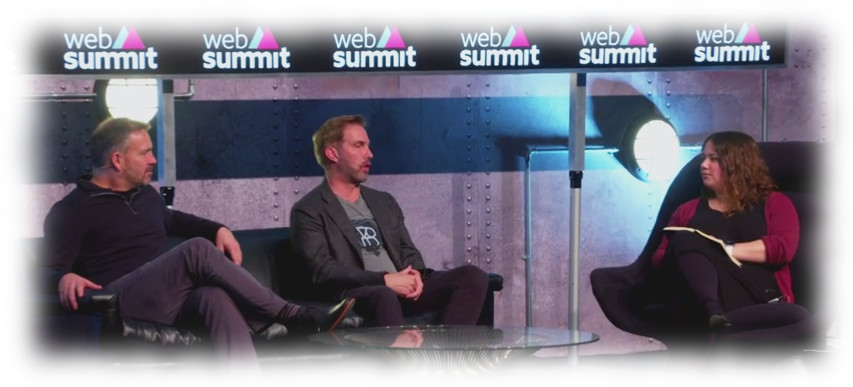
Ebbe Latberg (l) with entrepreneur Ken Bretschneider and Sophie Charara (Wired UK) discussing virtual environments at the December 2015 Web Summit, Dublin
Prior to joining Linden Lab, his career have been wide-ranging, encompassing both major global corporations such as Yahoo and Microsoft, much of which I covered in a brief profile I was able to put together on him just appear he officially joined LL, and I was pleased to note that he and I had shared interests in both Formula 1 racing and space exploration, which allow for some early conversations between us.
The precise cause of Ebbe’s passing has not been made public, but it was clear to many through various sources that he appeared to be affected by a long-term illness, and over the last 12 months in particular, his presence had been somewhat conspicuous by its absence (I believe that perhaps his last public appearance as CEO was the occasion of Oz Linden’s retirement earlier in 2021).
However, it is clear that illness did not in any way blunt his determination to ensure Linden Lab and Second Life in a much stronger and better position than when he joined the company – a determination that included the hard choice of letting go of Sansar, and guiding the company through the difficult waters of acquisition and bringing into the fold investors who have the vision and willingness to move both company and platform forward.
Given this, and despite the shadow cast by the announcement of his passing, I’ve little doubt that he could be justifiably proud of all that he achieved at Linden Research Inc., and because of his dedication and enthusiasm, both the platform and the company are much better and stronger today than perhaps they’ve ever been.
My deepest and sincerest condolences to Ebbe’s family and all at Linden Lab at this time. I can honestly say that for all of us who have been invested in Second Life, he was more than just a CEO, he was a fellow resident an adventurer on the virtual frontier. He shall be greatly missed.
Having opened its door in mid-May, Jamison Arts is a boutique style gallery operated by Harlow Jamison (HarlowJamison), a long-term Second life resident enjoying a new lease of life within the platform.
Located in a cosy building of a style popular with SL gallery owners simply because it naturally lends itself to being used as exhibition space, Jamison Arts offer two floors for displaying art, which might be used for joint or ensemble exhibitions or (potentially) for a focused exhibition of a single artist’s work
Jamison Arts: SabrinaCooke
For the May / June exhibition – which I’m getting to a little late, so my apologies to Harlow and the artists – the former is the case, with Harlow devoting the ground level of the gallery to a New Artist Showcase featuring the work of SL photographer SabrinaCooke, with the upper level split between the original art of Jaelle Faerye and original digital art by Aruba DeCuir.
The exhibition marks the first Sabrina has made in Second life – although she is active on Flickr and has displayed her work in the physical world. Centred on avatar studies and portraits, the pieces she presents at Jamison are an engaging selection of work that both captures the beauty and vitality of the Second Life avatar, and which off a masterclass in chiaroscuro for those who may wish to witness more after my last article on the subject.
Jamison Arts: SabrinaCookeNor is it solely chiaroscuro that is demonstrated here. Colour, lighting, focus, cropping, attention to detail – all are woven together into a series of images, each one of which forms its own single-frame story.
One the upper floor, the space is split between Jaelle and Aruba, with Jaelle presenting a series entitled Animals, a series of paintings on that very subject, with a particular focus on horses. The majority appear to be watercolours, and while I’d perhaps prefer to see them in a larger style if only to discern more of the detail within them, they are all pieces that are beautifully presented.
Jamison Arts: Jaelle Faerye
Aruba’s art is broad ranging, with “traditional” pieces vying for attention with more abstracted pieces and collages. Here she present a small selection of paintings that lean towards the latter, with several pieces offering text to get the grey matter working.
Offering three very different artistic styles that come together into a single engaging exhibition, Jamison Arts offers a richness of talent well worth seeing before the current exhibition draws to a close.







 Inara Pey: Living in a Modemworld