Logos representative only and should not be seen as an endorsement / preference / recommendation
Updates for the week ending Sunday, October 20th
This summary is generally published every Monday, and is a list of SL viewer / client releases (official and TPV) made during the previous week. When reading it, please note:
It is based on my Current Viewer Releases Page, a list of all Second Life viewers and clients that are in popular use (and of which I am aware), and which are recognised as adhering to the TPV Policy. This page includes comprehensive links to download pages, blog notes, release notes, etc., as well as links to any / all reviews of specific viewers / clients made within this blog.
By its nature, this summary presented here will always be in arrears, please refer to the Current Viewer Release Page for more up-to-date information.
Note that for purposes of length, TPV test viewers, preview / beta viewers / nightly builds are generally not recorded in these summaries.
Official LL Viewers
Current Release version 6.3.2.530962, formerly the Vinsanto Maintenance RC viewer, dated September 17, promoted October 15th – NEW.
Release channel cohorts:
Maintenance RC viewer, version 6.3.3.531784, released on October 18th.
Voice RC viewer updated to version 6.3.3.531811 on October 18th.
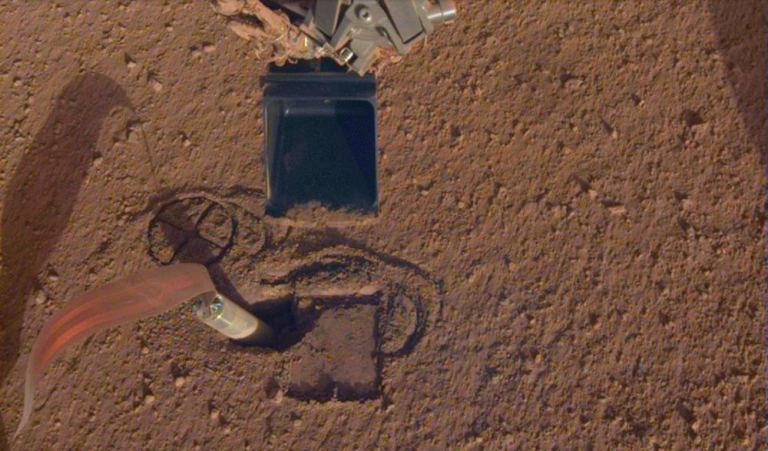
The arm-mounted camera on NASA’s InSight lander captures an image of the scoop at the end of the arm pushing gently against the HP³ “mole” in an attempt to get it burrowing once more. The data cable trailing from the “mole” is packed with sensors designed to measure sub-surface heat flow, and so reveal more about the interior of Mars. Credit: NASA/JPL
NASA’s attempts to free the heat-sensing “mole”, deployed onto the surface of Mars by the InSight lander mission at the end of 2018 have met with some success.
As I reported at the start of October, the “mole”, a special probe that forms a key part of the Heat Flow and Physical Properties Package (HP³), is designed to propel itself up to 5 metres (16 ft) beneath the surface of Mars in order to record the amount of heat escaping from the planet’s interior, helping scientists determine more about the planet. However, Since February of 2019, it has been stuck, having travelled just 30 cm and leaving it partially sticking out of the ground. Numerous attempts to get it moving again have been tried, none of which, up until this most recent attempt, had managed to get the “mole” moving again.
The problem was believed to be down to the self-propelled probe being unable to generate sufficient friction against whatever material it had burrowed into in more to gain downward traction. At that time, I noted that the mission team where hoping to use the lander’s robot arm to apply direct pressure against the exposed portion of the probe in the hope of pushing it against the side of the hole it has so far created, giving it sufficient traction to resume burrowing.
On October 14th, 2019, the German team responsible for the “mole” confirmed the attempt had worked: the probe had resumed progress during the initial test, burrowing a further 3 cm (just over an inch). That may not sound much, and it certainly doesn’t mean the “mole” is in the clear; however, it does tend remove the other lurking fear: that the probe had in fact hit a solid mass such as a boulder or rock that was impeding its downward progress.
In this image, the “mole” can be see canted to one side, giving rise to fears it may have struck a large rock or boulder beneath the surface and was being pushed sideways each time it tried to propel its way forward. Given it has now moved downwards once more, the risk of a rock being in the way now seems unlikely. Credit: NASA/JPL
The mole still has a way to go, but we’re all thrilled to see it digging again. When we first encountered this problem, it was crushing. But I thought, ‘Maybe there’s a chance; let’s keep pressing on.’ And right now, I’m feeling giddy.
– Troy Hudson, JPL engineer-scientist leading the US side of
efforts to get the “mole” moving again
This doesn’t mean the “mole” is free and clear however; the extent of the loose material it appears to have burrowed into is unknown, and as the data cable connected to it cannot be used to simply haul it back out of the initial hole, the decision has been made to keep the scoop of InSight’s robot arm pressed against the exposed portion of the probe until such time as it can no longer provide support. The hope is that by the time this has happened, the mole will have moved beyond the looser material that seems to be hampering downward movement. However, in case if it has not, the team are now looking at other options to try to assist the probe – such as filling-in the hole behind it in the hope that sufficient material falls around it to provide it with the traction it needs.
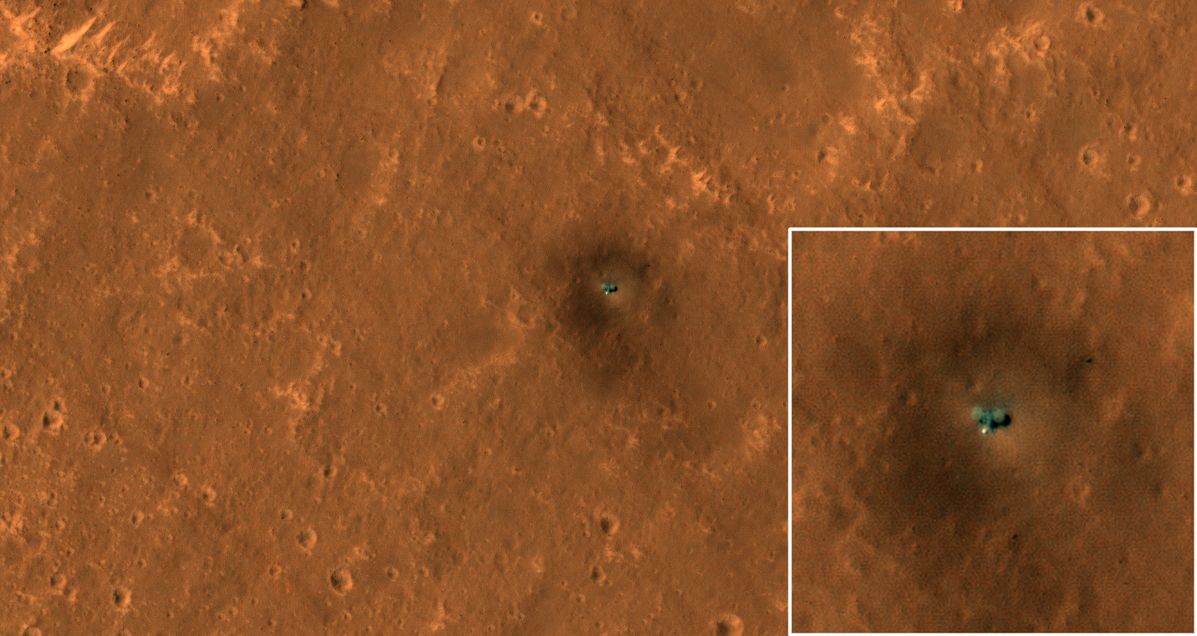
Throughout its time on Mars, InSight has been under observation by NASA’s Mars Reconnaissance Orbiter, which routinely passes over the Elysium Planitia region where InSight landed. As such, it has been able to image the lander on several occasions, but on September 23rd, 2019, MRO directly overflew InSight’s landing site at an altitude of 272 km (169 mi), and the orbiter’s HiRISE imaging system captured what is regarded as the best image yet of InSight (blow).
The HiRISE camera on NASA’s Mars Reconnaissance Orbiter got its best view yet of the InSight lander on September 23rd, 2019. Image credit: NASA/JPL / University of Arizona
The main image above shows the lander on the surface of Mars surrounded by the blast circle left by its landing motors. The inset image shows the lander in greater detail, revealing its two circular solar panels, each just over 2 m (7 ft) across (in green), with the body of the lander between them (brighter green). The bright dot just below the lander is the protective dome covering the seismometer deployed to the surface of Mars along with the HP³ mentioned above. Also visible in the main image is a series of diagonal streaks on the Martian surface. These are the tracks left by dust devils that have passing through the area.
As well as issuing the image of InSight on October 16th, NASA also released an animated GIF showing the Mars Science Laboratory’s progress up the slopes of “Mount Sharp” (Aeolis Mons). The GIF switches between two shots of “Mount Sharp” taken at the same overhead angle and roughly two months apart. Between them, they show Curiosity’s progress across 337 m (1,106 ft) of what was dubbed the “clay bearing unit”. The first image, which has Curiosity circled near the top, was captured on May 31st, 2019 as the rover was sitting within “Woodland Bay”. The second image shows Curiosity on July 20th, 2019, as it sat on a part of the unit called “Sandside Harbour” further up the slopes of “Mount Sharp”.
Curiosity, as seen by MRO on May 31st, 2019 (top) and July 20th, 2019 (centre), as the rover traversed the “clay bearing unit” on the slopes of “Mount Sharp”. Credit: NASA/JPL / University of Arizona
UK and Japan Plan to Send Rovers to the Moon
Both the United Kingdom and Japan are planning to become part of a select community (thus far!) of countries that have operated rover vehicles on the surface of the Moon.
To date, only three nations have operated rover vehicles on the lunar surface: Russia, with its Lunokhod 1 and Lunokhod 2 rovers, China with its Yutu rovers (all of which were automated vehicles) and America with the Apollo lunar roving vehicle famously driven by the astronauts of Apollo 15 through 17. The Japanese and British rovers will be very small, as carried to the Moon as part of a robotic lander called Peregrine being developed by US commercial organisation, Astrobotic, one of the former contenders for the Google Lunar X Prize.
The Japanese rover, called Yaoki, is a single axle vehicle designed by Dymon Co., Ltd, based in Tokyo and specialising in robotic systems development. The company has been working on the design for eight years, with the overall technology design having been finalised in 2018, and the development cycle including several hundred hours of field testing, causing Dymon to dub it, “the smallest but most effective wheeled rover ever produced.” A video of the little rover undergoing field testing has been released by one of the engineers working on the project that – while a little dramatic in places – highlights Yaoki’s capabilities.
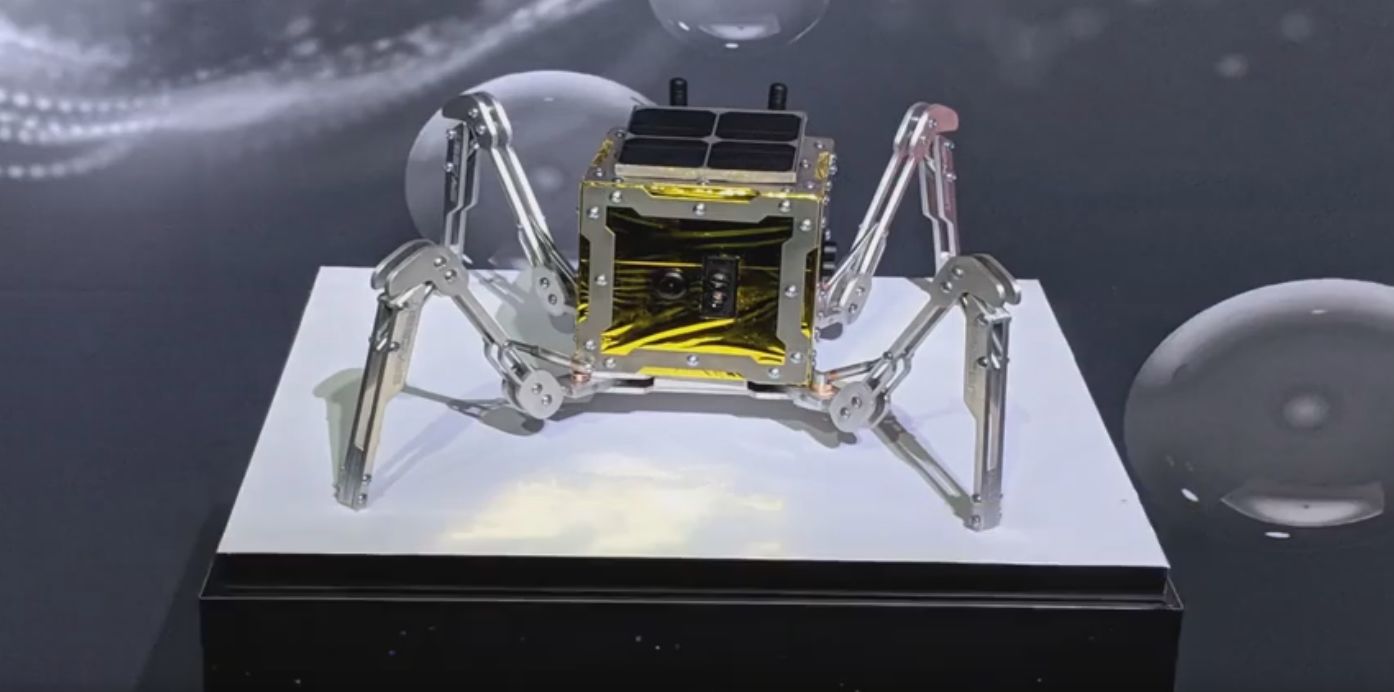
The British rover weighs-in at just 1 kg (2.2 Lb) and is solar-powered with a range of some 10 m (33 ft). However, unlike traditional rovers, it will not have wheels or even tracks – it will get around by walking on four spider-like jointed legs. Like the Japanese rover, it will be equipped with high-definition video and camera systems.
Developed by a London-based company called Spacebit, the rover is more of a proof-of-concept unit than outright science instrument; if Successful, Spacebit hope that the little rovers will become a feature of multiple missions, exploring both the surface and sub-surface regions of the lunar surface – they are specifically designed to scuttle into small lava tubes and explore them.
A model of the Spacebit rover. Credit: Spacebit
The Peregrine lander is designed to deliver payloads to the Moon at a cost of US 1.2 million per kilogramme in support of NASA’s Artemis lunar exploration programme. Its payload limit is some 264 kg (584 lb), although the mission carrying the two rovers – which will be the first flight for the lander will only carry 90 kg of payload. It is currently scheduled for a July 2021 launch using a United Launch Alliance Vulcan rocket – the first certification launch for that vehicle.
The cost of the mission – US $79.5 million – is being met by NASA, with the agency supply providing 14 of the lander’s total of 21 payloads, which between them will mass 90 kg and will include at least one other, larger rover vehicle. The proposed landing site is Lacus Mortis, a relatively flat northern latitude plateau. Once there, the lander and its rovers are expected to operate for 8 terrestrial days.
An artist’s impression of the Peregrine lunar lander. Credit: Astrobotic
Note: The Huntington Beach build has closed, and the region reposed.
Huntington Beach is a seaside city in Orange County in Southern California, located 35 miles south-east of down town Los Angeles.
– From About Land, Huntington Beach
So reads the introduction to Jade Koltai’s new public homestead region of Huntington Beach that opened to the public earlier in October. Jade is, as many will be aware, Serene Footman’s long-time collaborator in s range of region designs, many of which I’ve written about in these pages down through the years. So on hearing about this build (via my ever-vigilant region spotter, Shawn Shakespeare 🙂 ), I was keen for us to go take a look – more so, perhaps, as (a good while ago now) I travelled through the real Huntington Beach while on a trip following the Pacific Coast Highway.
Huntington Beach, October 2019
Today, the town is best known for its almost 16 km (10 mi) long beach, the tides of which have led to Huntington Beach to becoming known as Surf City, and being granted trademarks as “Surf City USA” (both of which were the cause of, and factors within, a long-running dispute with Santa Cruz, California that was finally settled in 2008). However, the city has a long and colourful history, part of which is reflected in Jade’s design.
Huntington Beach perhaps came to prominence in the early part of the 20th century (although settlements in the area obviously go back much further than that). At that time, people were encouraged to settle in the area by an encyclopaedia company offering free parcels of land in the area to those purchasing the entire set of their books for US $126 (roughly US $3,200 in today’s terms). Those who did so found their parcels ballooned in value when oil reserves were found beneath them, leading to something of a oil rush. The first well to extract this oil was established in May 1920 – and within 18 months, the number of well heads had grown to 59, giving the coastline of Huntington Beach its distinctive “forest” of giant oil derricks dominating the skyline – and it is this aspect of the city that is reflected most clearly in Jade’s design.
Huntington Beach, October 2019
For her inspiration, Jade uses a series of photos of the Huntington Beach and the neighbouring coastline as it appeared during the heydays of oil production, headlined by one taken from Huntington Beach Pier (one of the city’s lasting landmarks) in the 1960s. These sit to the south east of the region, the beach running north-west, complete with a nod towards the pier (first established in 1904). The latter is understandably not as grandiose as the original, because that would take a couple of additional regions to achieve, given it is 560 metres in length, but it presents a starting point for exploration, home as it is to the region’s landing point.
The derricks are divided by a central road, reflecting a further photo in the series, albeit one of derricks divided by a road in Long Beach, a little further north around the coast. However, it is largely with the initial 1960’s image to which Jade sticks: at the northern end of the road is a smattering of buildings suggesting the edge of a town, all of which – along with the cars scattered among them – have a ’60s vibe to them.
Huntington Beach, October 2019
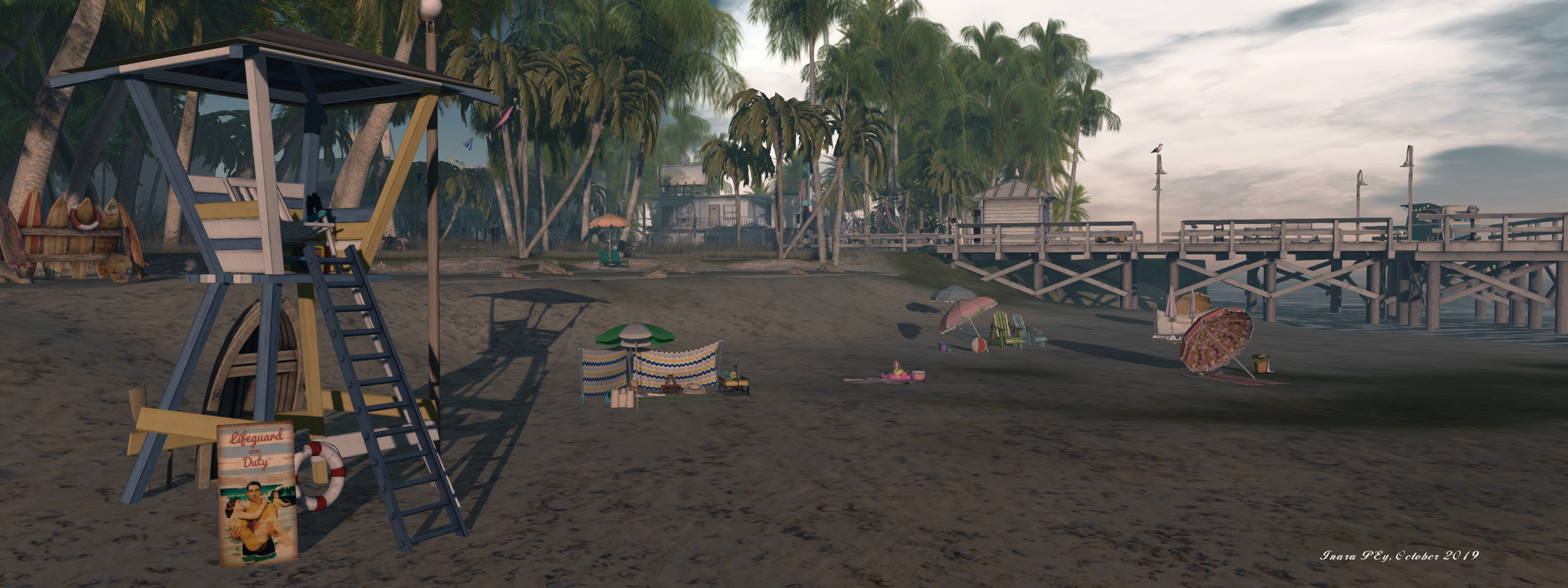
The beach has a similar feel to it as well, the sand looking a tad tired and the advertising in that 50’s-60’s style, although unlike its namesake, this beach benefits from palm trees hiding the marching lines of oil towers from those deciding to partake a walk along the sand or out onto the pier.
Oil production does continue at Huntington Beach today, although the massive derricks have long since been removed to leave the city looking a lot more naturally suburban, the ocean front and beach protected from over-development. However, production is in decline; the US Geological Survey estimates no more than perhaps 866 million barrels of oil remain, although best estimates put the amount that can be reasonably extracted at some 370 million barrels. This means that the remaining oil extraction work is liable to come to an end in the near future, leaving Huntington Beach city fairly exclusively reliant on tourist and vacation trade for revenue generation – hence the city filing for, and being granted, multiple trademarks related to it being “Surf City USA”.
Huntington Beach, October 2019
While fossil fuel extraction and use are both messy and driving a fair amount of pollution, Jade’s Huntington Beach nevertheless offers a reminder of a boom-time past in America’s history, one that burst into life on the west coast in the early decades of the 20th century and echoed through to the end of the millennium. Needless to say, it offers numerous opportunities for photography, although I personally found the default Windlight perhaps a little too oppressive – not that others cannot be used if you feel the same way. Photos that are taken may be submitted to the region’s Flickr group, and tips towards the region’s upkeep are welcomed at the pier.
Artspace 2535, Ribong Gallery – Harbor Galaxy, October 2019
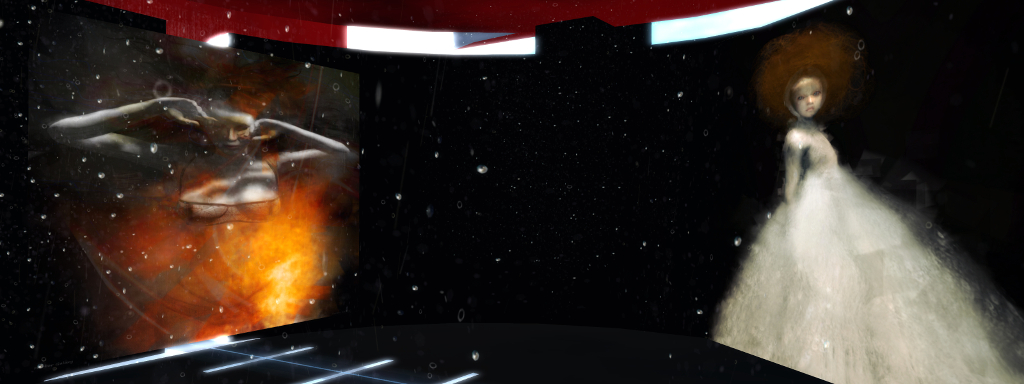
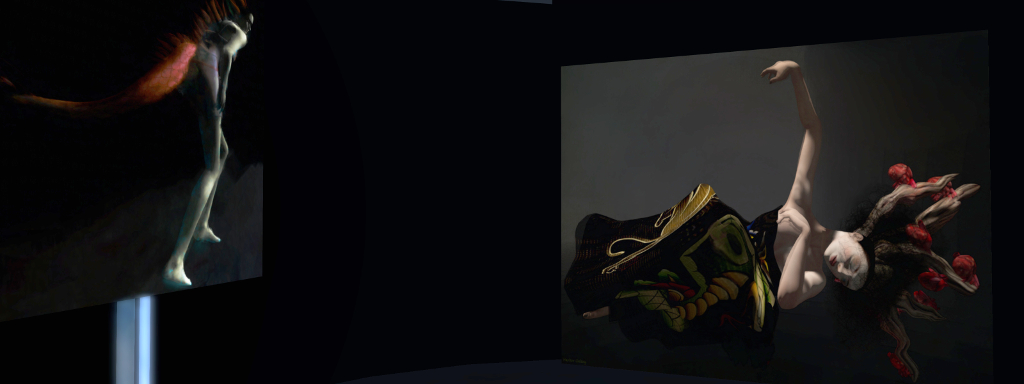
Now open within the Artspace 2535 area of Ribong Gallery, curated by Santoshima, is a collection of images by Harbor Galaxy. entitled Alter Ego, it features some of the artist’s favourite avatar characters, and it offers an intriguing walk through her imagination.
And I do mean “walk” in a literal sense: the arts is set out in s series of rooms the visitor is encouraged to walk through it turn from the landing point. Each offers at least one piece of art and these are – to borrow a phrase from the introduction to the exhibition – monumental in size. They tower over visitors, drawing us into each them, allowing, perhaps for a greater appreciation of the narrative each holds within it.
Artspace 2535, Ribong Gallery – Harbor Galaxy, October 2019
This walk through the rooms also symbolises a part of Harbor’s philosophy on art and creativity, that “the path of creation travels in one direction, then back again.”, although in this case, the walk takes us through the exhibition and then onward to an opportunity to visit the rest of the Ribong gallery spaces.
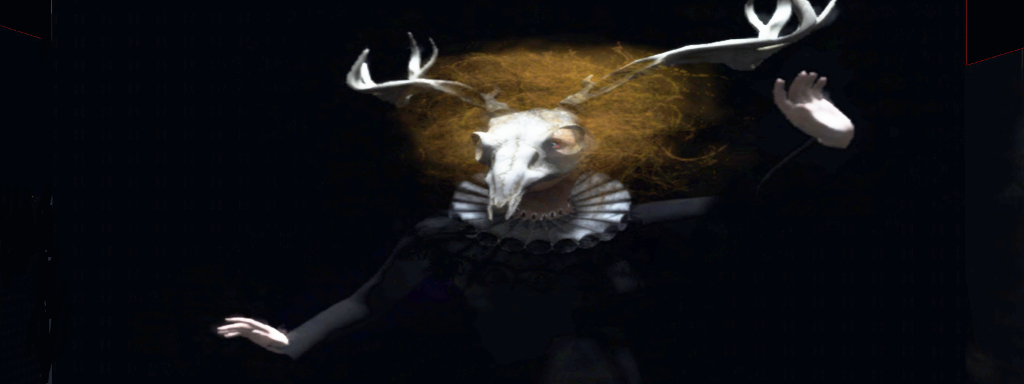
The art itself is visually striking – not just because of its physical size, but also in framing, content and presentation – so much so that individual descriptions of pieces are perhaps wasted, and viewing first-hand is required, particularly as the setting with its use of light and colour is very much a part of the overall exhibition. That said, I will admit to being particularly drawn to the two Mage images and Toxic Dreams a couple of rooms beyond them. Precisely why these images in particular caught and held my eye isn’t entirely clear to me, although I suspect with the Mage images, a degree of mythology played a part; looking at them, I found myself caught with thoughts of the shaman-like version of Herne the Hunter once popularised in a UK TV series.
Artspace 2535, Ribong Gallery – Harbor Galaxy, October 2019
With a “formal” launch at 14:00 SLT on Saturday, October 19th (having has a “soft” opening on Friday, October 18th), Alter Ego is an engaging, somewhat immersive exhibition.
In 2018, Fantasy Faire Radio partnered with Seanchai Library to broadcast a live radio adaptation of Mary Shelley’s classic Frankenstein; or, The Modern Prometheus in celebration of the 200th anniversary of the novel’s original publication.
Now, as we approach Halloween 2019, the adaptation is being re-broadcast as a two-part event over the weekend of Saturday, October 19th and Sunday, October 20th.
Frankenstein is infused with elements of the Gothic novel and the Romantic Movement – and it has been argued it could be considered the first true science fiction novel. This is because a central character determines to follow “modern experiments in the laboratory” to achieve fantastic results, rather than simply achieving those fantastical results through fantastical means. Since its publication. the story has had a considerable influence in literature and popular culture and spawned a complete genre of horror stories, films and plays, as well as itself being turned into the last two, as well as being the focus of television and radio adaptations, musicals and even a ballet production.
The Fantasy Faire Radio broadcast features the voices of Da5id Abbot, Corwyn Allen, Zander Greene, Elrik Merlin, and Caledonia Skytower, with Shandon Loring as Victor Frankenstein’s creation in an adaptation of the original novel by Skytower and Abbot. Those wishing to do so can tune into the broadcasts on Saturday and Sunday as follows (times are SLT):
However, for those who would like to hear either or both of the broadcasts in-world and in the company of others, two special listening parties will by taking place:
CocoaJava Cafe in Babbage Canals, New Babbage, hosted by Ceejay Writer during both the Saturday and Sunday broadcasts. The CocoaJava Cafe is a casual Steampunk/Victorian literary venue. Authors and bookworms are often found lounging on floor pillows by the fireplace or sipping a drink at the café tables. Mind the shop cat though, he’s odd.
Seanchai Library’s Ceiliuradh Glen at Holly Kai Park, hosted by Caledonia Skytower for the Saturday Broadcast, with special Halloween music and dancing playing for an hour after the broadcast concludes (and possibly in the half hour before). Seanchai Library has been promoting stories and literature through live voice presentations since 2008. “The Glen” is one of six venues the Library has established at its home on Holly Kai Park, and pays tribute to Seanchai’s beginnings in the old West of Ireland Charity Estate.
Frankenstein on Fantasy Faire Radio is sponsored by The Ravenheart Museum of Art, Culture, and Curious Things, featuring one of the largest public collections of Alia’s Baroque’s Libertine Eggs by Alia Baroque, and hosting the exhibition A Conspiracy of Ravens (read here for more about both exhibitions).
The following notes are taken from the TPV Developer meeting held on October 18th, 2019. A video of the meeting is embedded below, my thanks as always to Pantera for recording and providing it. This was a relatively short meeting, with a lot of text-based general chat. This being the case, key points are summarised below without the usual time stamps.
SL Viewer News
On Friday, October 18th, 2019:
A new Maintenance viewer, version 6.3.3.531784 and code-named Wassail, was released. This viewer is based on the current release viewer and contains some 30 fixes and includes viewer manager 2.0.531000 (used in launching the viewer).
The viewer RC viewer was merged with the current release viewer and updated to version 6.3.3.531811.
The remaining viewer pipelines remain as follows:
Current Release version 6.3.2.530962, formerly the Vinsanto Maintenance RC viewer, dated September 17, promoted October 15th, 2019 – NEW.
Legacy Profiles viewer, version 6.3.2.530836, September 17. Covers the re-integration of Viewer Profiles.
Project Muscadine (Animesh follow-on) project viewer, version 6.4.0.530473, September 11.
360 Snapshot project viewer, version 6.2.4.529111, July 16.
The Linux Spur viewer, version 5.0.9.329906 and Obsolete Platform viewer 3.7.28.300847 (Windows XP / Mac OS X below 10.7), are no longer listed on the Alternate Viewer page, but remain available via direct link.
In Brief
Currently, the next viewers in line for possible promotion are the Ordered Shutdown viewer and the Voice Update viewer, although the latter is awaiting either an update or information from Vivox.
Texture Loading / Caching viewer: work has resumed on this viewer, but it still remains some way out from appearing as a public release. Rider and Aura Linden are both working on this, although both are also engaged on other viewer projects.
Viewer build tools update (Visual Studio 2017 and Xcode 10.3 for OS X): said to be in “good condition” but no commitment as to when it will start to be used for production viewers.
As per my CCUG notes, the remaining issues for EEP are largely graphics related, both of the new graphics resources, Ptolemy and Euclid Linden are getting up to speed to be able to work on the project.








 Inara Pey: Living in a Modemworld