Bay City Fairgrounds set for the 10th Anniversary celebrations
Bay City celebrates its tenth anniversary on Sunday May 20th, and the Bay City community is marking the day with a another special time of festivities and fun to which everyone is invited!
Activities will kick-off at noon SLT with a parade line-up at the band shell in Bay City – Harwich. At 12:30 SLT, the parade will make its way down Route 66, and proceed to the Bay City Fairgrounds in the North Channel region. DJ GoSpeed Rasere (GoSpeed Racer) will be providing the music throughout the parade, which will be followed by at live concert from 13:30 SLT onwards at the fairgrounds.
The line-up for the concert this year comprises (all times SLT):
13:30 – 14:30: Parker Static-Riley (Parker Static) – Parker started singing at a very early age; being in a musical family her passion for singing was inevitable. Her repertoire ranges from pop through ballads, jazz, R and B to soft rock and more. She has received numerous awards including Showtime Magazine’s TOP 10 performers in SL and the Soul Train’s Best Female entertainer of the year.
14:30 – 15:30: Erika Ordinary – singing mix of popular songs and those she has written. She plays several instruments, with a focus on the guitar and ukulele, and especially loves the juxtaposition of darker themed songs played on such a bright, happy instrument as the ukulele.
15:30 – 16:30: Stratus Mactavish – with a light guitar playing style, Stratus has an easy-going, soft, smooth and intimate sound. He showcases showcasing bright acoustic arrangements of popular songs, plus a few atypical acoustic arrangements of songs normally considered as being outside the acoustic genre.
All Second Life residents invited to participate in the event. Celebration goods, including parade float bases and ideas, are available at the Bay City Community Centre, in the Daley Bay region for those who wish to be a part of the parade. Ample viewing areas are provided. The music event is also open to all who desire to attend — not only Residents of Bay City
About Bay City and the Bay City Alliance
Bay City is a mainland community, developed by Linden Lab and home to the Bay City Alliance. The Bay City Alliance was founded in 2008 to promote the Bay City regions of Second Life and provide a venue for Bay City Residents and other interested parties to socialize and network. It is now the largest Bay city group, and home to most Residents of Bay City.
It’s time to highlight another week of storytelling in Voice by the staff and volunteers at the Seanchai Library. As always, all times SLT, and events are held at the Library’s home at Holly Kai Park, unless otherwise indicated.
Sunday, May 20th
13:30: Tea-Time with Tolkien
Join Corwyn, Kayden, and Caledonia in Ceiliúradh Glenon Holly Kai for more from Tolkien’s “Lord of the Rings” Trilogy. This week: The Mirror of Galadriel and the Passing of the Grey Company.
With water from the stream Galadriel filled the basin to the brim, and breathed on it, and when the water was still again she spoke. “Here is the Mirror of Galadriel,” she said. “I have brought you here so that you may look in it, if you will.”
The air was very still, and the dell was dark, and the Elf-lady beside him was tall and pale. “What shall we look for, and what shall we see? ” asked Frodo, filled with awe.
“Many things I can command the Mirror to reveal,” she answered, “and to some I can show what they desire to see. But the Mirror will also show things unbidden, and those are often stranger and more profitable than things which we wish to behold. What you will see, if you leave the Mirror free to work, I cannot tell. For it shows things that were, and things that are, things that yet may be. But which it is that he sees, even the wisest cannot always tell. Do you wish to look?”
Frodo did not answer.
“And you?” she said, turning to Sam. “For this is what your folk would call magic. I believe; though I do not understand clearly what they mean; and they seem also to use the same word of the deceits of the Enemy. But this, if you will, is the magic of Galadriel. Did you not say that you wished to see Elf-magic?”
18:00 Magicland Storytime – Mrs Piggle-Wiggle
Mrs. Piggle-Wiggle lives in an upside-down house and smells like cookies. She was even married to a pirate once. Most of all, she knows everything about children. She can cure them of any ailment. Patsy hates baths. Hubert never puts anything away. Allen eats v-e-r-y slowly. Mrs Piggle-Wiggle has a treatment for all of them.
The incomparable Mrs. Piggle-Wiggle loves children good or bad and never scolds but has positive cures for Answer-Backers, Never-Want-to-Go-to-Bedders, and other boys and girls with strange habits.
2000 years from now, the Earth has acid oceans, mutating exploding plants, silent, tentacled observers, doomed Hill cities, nomad Outcasts, vicious, power-mad rebels.
In this world, fully depleted of freely floating oxygen – it has all been trapped in the Nitrogen Fix –, humans are the last native animal species on the planet. What civilization is left is isolated and separated.
A doomsday scenario? perhaps. But Hal Clement has a knack for making this beleaguered, suffering version of Earth and the trials of those living on it far more enticing that might be first thought.
Join Gyro Muggins as he travels to Clement’s world and see what might be found there.
Tuesday, May 22nd: The Cold Dish (Walt Longmire #1)
Two years ago, four boys were put on trial for raping a Cheyenne girl. Now one of them – Cody Pritchard – is dead, shot and dumped in with a local farmer’s sheep.
For Walt Longmire, it means his hope of finishing out his term as sheriff of Wyoming’s Absaroka county in peace and quiet is at an end; instead, he finds himself in the middle of a murder investigation.
Plenty of people had cause for wanting Cody Prichard dead but who had the guts to do the deed? And are his three compadres next on the hit list? For Longmire, it means facing one of the more volatile and challenging cases in his twenty-four years as sheriff. One in which he means to ensure that revenge, so often regarded as a dish best served cold, is never served at all.
Join Craig Johnson as he reads the first volume of Craig Johnson’s tales of Sheriff Walt Longmire.
Wednesday, May 23rd 19:00: Hello, Universe
In one day, four lives weave together in unexpected ways.
Virgil Salinas is shy and kind-hearted and feels out-of-place in his loud and boisterous family; Valencia Somerset, who is deaf, is smart, brave, and secretly lonely, and loves everything about nature; Kaori Tanaka is a self-proclaimed psychic, whose little sister Gen is always following her around; and Chet Bullens wishes the weird kids would just act normal so that he can concentrate on basketball.
None of them are friends; at least not until Chet pulls a prank that traps Virgil and his pet guinea pig at the bottom of a well.
This leads Kaori, Gen, and Valencia on an epic quest to find the missing Virgil. Through luck, smarts, bravery, and a little help from the universe, a rescue is performed, a bully is put in his place, and friendship blooms.
Join Caledonia Skytower as she reads Erin Entrada Kelly’s 2018 Newbery Medal Award-Winning tale.
Thursday, May 24th 19:00: Tales from the Mos Eisley Cantina
Shandon Loring reads The Storm Trooper’s Tale. Also presented in Kitely (hop://grid.kitely.com:8002/Seanchai/144/129/29).
Please check with the Seanchai Library’s blog for updates and for additions or changes to the week’s schedule.
The current charity is Project Children, growing peace in Northern Ireland one (or two) children at a time.
Clinamen (clīnāre, to incline), is the name Roman poet and philosopher Titus Lucretius Carus gave to the unpredictable swerve of atoms, as a means of defending the Epicurian view of atomism. It is also the title Giovanna Cerise has chosen for her latest installation, now open at DiXmiX Gallery (you’ll find it in the The Atom club / event space within the gallery building).
Clinamen is the second recent exhibition by Giovanna which offers a philosophical lean (no pun intended), following as it does From the Worlds to the World (see here for more). It’s a piece that has broad philosophical foundations. There is Lucretius, as noted above, and the ancient philosophical science of atomism – the belief that nature consists pure of atoms and their surrounding void, and that everything that exists or occurs is the result of the atoms colliding, rebounding, and becoming entangled with one another as they travel through that void. Most notably, the piece is founded on the ideal of free will, as put forward by the Greek philosopher and science thinker, Epicurus.
Epicurus was an atomist. However, he saw atomism as espoused by earlier thinkers such as Democritus as being to regulated. They believed atoms could only travel in straight lines. This meant that no matter how atoms struck one another or how many times they rebounded from one another, their paths were all pre-determined. Epicurus found this determinism to be too confining, as it left no room for free will. So instead, he believed the motion of some atoms could actually exhibit a “swerve” (parenklisis in Greek, clinamen in Latin), making their paths more unpredictable, thus reaffirming the role of free will.
Within her exhibition, Giovana offers a range of three-dimensional forms and structures. In the one hand, these are rigid, almost geometric in shape, offering a reflection of the deterministic element of atomism. Yet within them, edges are blurred and hard to see, while the geometry of some contain more natural, extruded forms while others have rippled, flowing surfaces. They cannot be the product of purely straight-line, deterministic flight, and so they reflect parenklisis and the more Epicurean view of atomism.
This Epicurean view is ultimately born witness to by our own reactions to the installation. How we each chose to see and interpret / re-interpret the structures and forms presented bears witness to the exercise of our own free will.
In this way Clinamen is an intriguing play on art and philosophy; an exhibit where subjective reaction really does play an active role in perceiving the installation and the ideas on which it is founded, simply because doing so is an exercise in the application of free will.
The following notes are taken from the Content Creation User Group (CCUG) meeting, held on Thursday, May 17th, 2018 at 13:00 SLT. The meeting is chaired by Vir Linden, and agenda notes, etc, are usually available on the Content Creation User Group wiki page.
Audio extracts from the meeting are included, where relevant. Please note, however, that Vir’s microphone occasionally seemed to cut out while I was recording, so some of his comments may sound a little choppy.
Animesh
Project Summary
The goal of this project is to provide a means of animating rigged mesh objects using the avatar skeleton, in whole or in part, to provide things like independently moveable pets / creatures, and animated scenery features via scripted animation. It involves both viewer and server-side changes.
Project Viewer
The Animesh project viewer was updated on Tuesday, May 15th to version 5.1.4.515420. This update comprises:
Bug fixes, including improved handling of animation notifications which should result in fewer cases of animations failing to display for some Animesh objects.
New checks on when a skeleton is needed for a nominally Animesh object – now one should be present only when the linkset contains at least one rigged mesh, and this should update correctly when link/unlink operations take place, or other state changes.
The ARC calculations for animesh objects has also been updated based on some feedback with the previous build.
Alongside of this there has been a simulator update in support of some of the changes in the viewer (e.g. with regard to animation notifications and updates). Also, to help with persistent across things like region crossings and region restarts, animation information is now stored in the state of the Animesh object itself, when it gets serialised. However, there are reports the animation data is lost on a SHIFT-copy action.
Server-Side Work
As well as the simulator updates for Animesh mentioned above, the Lab is continuing with QA work on server-side support for Animesh to prepare it for deployment to the main (Agni) grid. However, no ETA as yet for the server-side code.
Remaining Major Issues
Rigged Mesh Level of Detail / Bounding Box Issues:This has been the subject of several recent CCUG report in these pages, and is the subject of BUG-214736. Essentially, attachments on avatars swap their LOD models as if they were scaled to the overall avatar bounding box. For example, if an avatar bounding box is forced to 15 metres on a side, any rigged object worn by that avatar will swap LODs as if it were 15 metres in size, no matter how small, forcing viewers around it to use its highest LOD model unnecessarily.
Investigations had led to questions in the Lab of how to get things to behave correctly while recognising there may be broader performance issue that need to be addressed. So Graham Linden has been trying to make sense of what might be pulled into the current Animesh project to improve things and what might require a deeper dive into performance in general as a separate piece of work. So at present this remains in the category of “to be determined” in terms of moving to making Animesh available on the main grid.
Joint Offset Constraints: It’s been noted that setting (deliberately or accidentally) a bad joint offset with something like the mPelvis bound can result in undesired results (the cited example is an Animesh test bear on Aditi appearing to stand 75 metres off the ground when not animating). This has led the Lab to consider constraining he distance a joint can be offset to no more than 5 metres for Animesh objects. However, as this is recognised that doing so could break existing content, a more elaborate solution is still being investigated by the Lab.
Adjacent Regions and Animesh Animations: There is an issue where Animesh objects in adjacent regions fail to animate from a avatar’s perspective when someone logs-in. This is thought to be a handshaking / viewer update issue. Essentially, it can take up to a minute for adjacent regions to understand an agent (avatar) in another region can “see” objects within it, and needs to start sending animation updates to the viewer controlling that avatar.
90-degree Rotation Issue: It’s been noted that when converting some static mesh objects to Animesh, the visual mesh appears rotated through 90 degrees when seen in the Animesh viewer. However, the physics mesh doesn’t have the same rotation applied, leaving it perpendicular to the visible mesh – see BUG-139251.
This appears to be related to the fact that the viewer expects the mesh to be aligned to +x=forward – whereas mesh creation tools such as Blender and Maya don’t – by default – use the same orientation. As the issue only affects some mesh (and in theory could be corrected by setting the required rotation in mesh building tools), Vir asked the question if this is something that should be addressed in the viewer.
If this issue isn’t addressed in the viewer (which is where it manifests), it potentially means a good proportion of existing content which might otherwise be converted to Animesh will exhibit the same issue when associated with an avatar skeleton, possibly eliminating it from use as Animesh.
If the issue is to be addressed in the viewer, the problem is how to apply the logic to ensure mesh items which don’t exhibit the physics rotation issue don’t end up exhibiting the issue as a result of the fix being incorrectly applied.
Z-Axis offset un the Mesh Uploader: This currently doesn’t work when a skeleton is applied to a mesh object.
Bakes On Mesh
Project Summary
Extending the current avatar baking service to allow wearable textures (skins, tattoos, clothing) to be applied directly to mesh bodies as well as system avatars. This involves server-side changes, including updating the baking service to support 1024×1024 textures, and may in time lead to a reduction in the complexity of mesh avatar bodies and heads.
This work does not include normal or specular map support, as these are not part of the existing baking service.
Anchor Linden is investigating adding further channels to the Bake Service in addition to those recently added, again specifically for use with Bakes on Meshes (they will not work with the system avatar). These will hopefully comprise:
Separate channels for the left arm and left (currently these are mirrored from the avatar’s right side) to allow for asymmetrical avatar options.
Three additional “general purpose” channels to be defined and used as required by creators.
These channels will eventually be surfaced as tattoo layers in the viewer, which will have an updated UI for creating new layers.
Injecting Texture Information into the Bake Stack
There has been a request to allow applier creators to use a scripted means to “inject” textures into the Bake Service via a script (see BUG-216137).
It has arisen out of concern that Bakes on Mesh a) won’t offer the same ease-of-use as HUD-based appliers many users are familiar with; b) it could make the majority of existing applier systems obsolete as mesh head / body creators move towards less complex “onion layer” designs, requiring applier makers to completely re-work all of their existing clothing options. Offering a means to provide Bakes on Mesh with a similar capability as applier systems and allow applier makers to more easily update their existing systems. However:
The proposed solution is a non-starter, as the Outfit system on which the Bake Service relies, has no notion of textures. Thus, offering a means to “inject” textures into the bake stack essentially creates a separate (and potentially conflicting) representation of the bake stack.
If it is seen that a more applier-like approach to Bakes on Mesh, any solution will form part of a follow-up project, rather than being part of the initial implementation.
We all have blood. We all feel. We all matter. We are all different.
– Shyla the Super Gecko (KriJon)
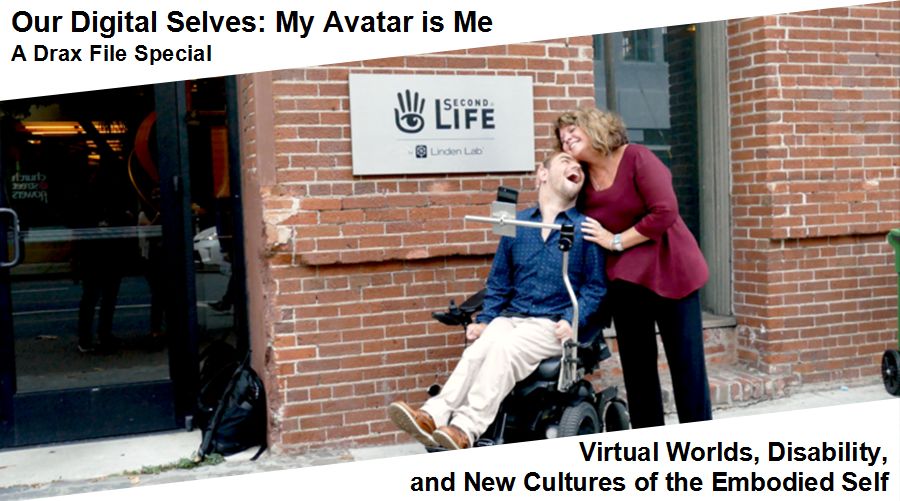
Our Digital Selves: My Avatar is Me is a new video documentary by Draxtor Despres, which officially unveiled on Thursday, May 17th, to coincide with Global Accessibility Awareness Day.
It’s a powerful 74-minute piece which, as Draxtor himself notes, “Was supposed to be a slightly extended episode of The Drax Files World Makers,” but which, “ballooned into a dense investigation into the power of living vicariously through an avatar in Second Life and next generation virtual worlds like High Fidelity and Sansar.”
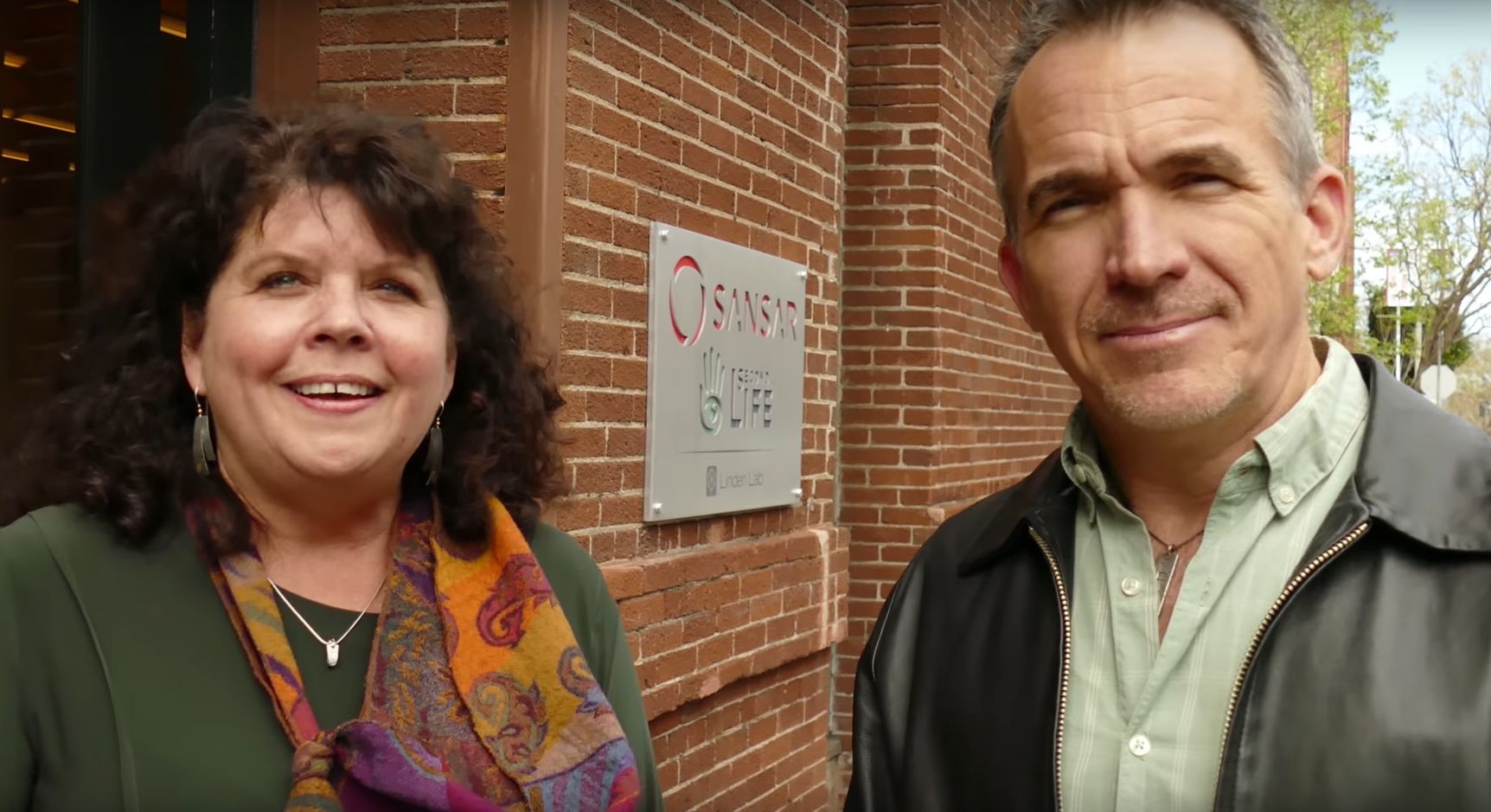
The documentary grew out of a desire to follow the work of Tom Boellstorff and Donna Z Davis (respectively Tom Bukowski and Tredi Felisimo in Second Life). For the last three years, Tom and Donna have been engaged in a National Science Foundation funded study formally entitled Virtual Worlds, Disability, and New Cultures of the Embodied Self, and more informally referred to as Our Digital Selves.
I first covered this study in Exploring disability, new cultures and self in a virtual realm, back in 2016, when I outlined Donna and Tom’s examination of the experiences of people with disabilities – visible and invisible – who are using Second Life to represent themselves, possibly free of the shadow of any disability, engage with others and do things they may not be able to do in the physical world.
How is the internet changing the ways people think of themselves as individuals and interact as members of communities? Many are currently investigating this important question: for this project, the researchers are focusing on the experiences of people with disabilities in “virtual worlds,” three-dimensional, immersive on-line spaces where people with disabilities can appear any way they choose and do things they may not be able to do in the physical world.
– Donna Davis and Tom Boellstorff introducing Virtual Worlds,
Disability and New Cultures of the Embodied Self
Using in-world meetings and discussion groups, Donna – a strategic communications professor at the University of Oregon specialising in mass media & society, public relations, strategic communication, virtual environments and digital ethnography, and Tom – a professor of anthropology at the University of California, Irvine – set about engaging with Second Life users. Through these sessions they explored the many facets in living with a disability, people’s reactions to those with disabilities, and the experiences those with a wide range of physical and other disabilities – the ability diverse, as Donna notes – find within virtual spaces.
Donna Z Davis and Tom Boellstorff (Tredi Felisimo and Tom Bukowski in Second Life), co-researchers in Virtual Worlds, Disability, and New Cultures of the Embodied Self, supported by the University of California, Irvine; the University of Oregon; and the National Science Foundation.
Covering enormous ground over the three years – including providing participants with virtual space in-world at Ethnographia Island where they might express themselves and their relationship with their condition – Virtual Worlds, Disability and New Cultures of the Embodied Self is perhaps best described as a voyage of discovery and revelation for all those involved – researchers, participants and observers alike. And it is this voyage that the documentary Our Digital Selves: My Avatar is Me encapsulates.
The documentary focuses on thirteen participants in the study who, along with their avatars transcend their various disabilities through artistic expression and making a home for themselves in the digital realm.
Starting with the idea of freedom through embodiment that environments like Second Life offers as a result of the almost entirely free-form way in which we can express ourselves through our avatars visually free from the disabilities or imperfections that might otherwise define us, the film moves onto the concept of being rooted to a place, and the idea that having that space allows us to further define and extend who we are. This idea of “emplacement”, as Tom calls it leads to an initial exploration of the places the study participants built on Ethnographia Island.
Jadyn Firehawk, one of the original participants in the study – and who first notified me about it in January 2016 – before her installation ” Reconstructing Identity After Disability”, Ethnographia Island, 2016
It is here that the personal stories begin to unfold, with Jadyn Firehawk describing what those of us blessed with sound minds and bodies might take for granted in ourselves those around us: performing every day tasks when living with an invisible disability. It’s easy enough to show understanding and compassion – and make allowances for – those with physical disabilities. Yet how often do we (if only silently) question or shy away from those with mental / emotional disabilities when they raise the subject of their health, simply because we don’t see physical evidence of their disability?
These stories are fascinating, moving, and deeply revealing studies; not only in terms of those relating them, but also in what they say about the sheer power of a platform like Second Life to imbue creativity, to form relationships, to encourage our desire to push past barriers – physical, mental, personal and societal – and even to re-grant the authority for us to control our identity and how much of it we choose to reveal to others.
In this, the video not only covers matters of personal representation of self when living with a disability, but covers wider issues of identity, revealing who we are, have the right of control over what is revealed to others about ourselves. In the age of Facebook, Google, data gathering, Cambridge Analytica style activities, this is an issue that reaches far beyond what might be seen as the “core” subject matter of the study – be which nevertheless is part and parcel of the idea of embodiment; one which does affect us all.
The stories revealed through the film are moving, insightful – and revelatory; not “just” because of what they reveal about the participants, but in the way it can cause measures of self-reflection and encourages thoughts on our own virtual embodiment: what it means to us, how it exercises our desire for growth, etc.
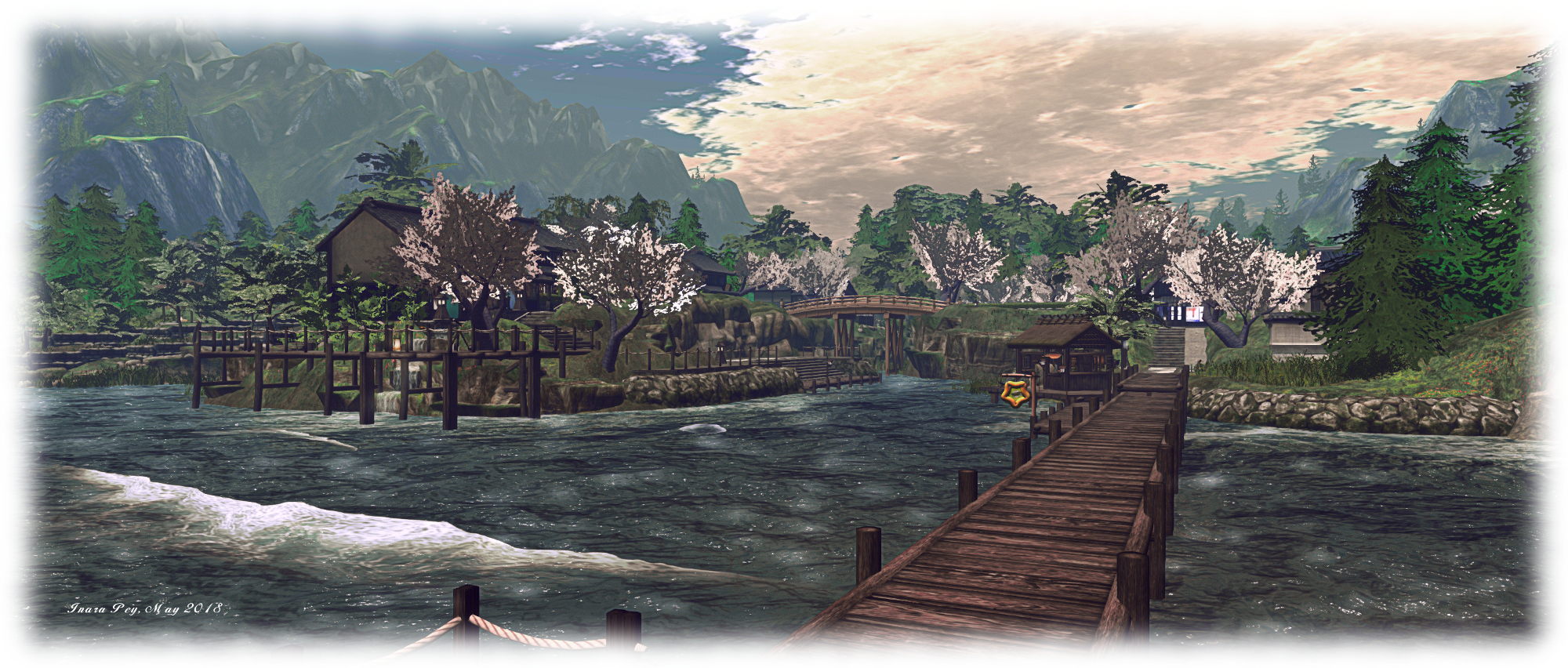
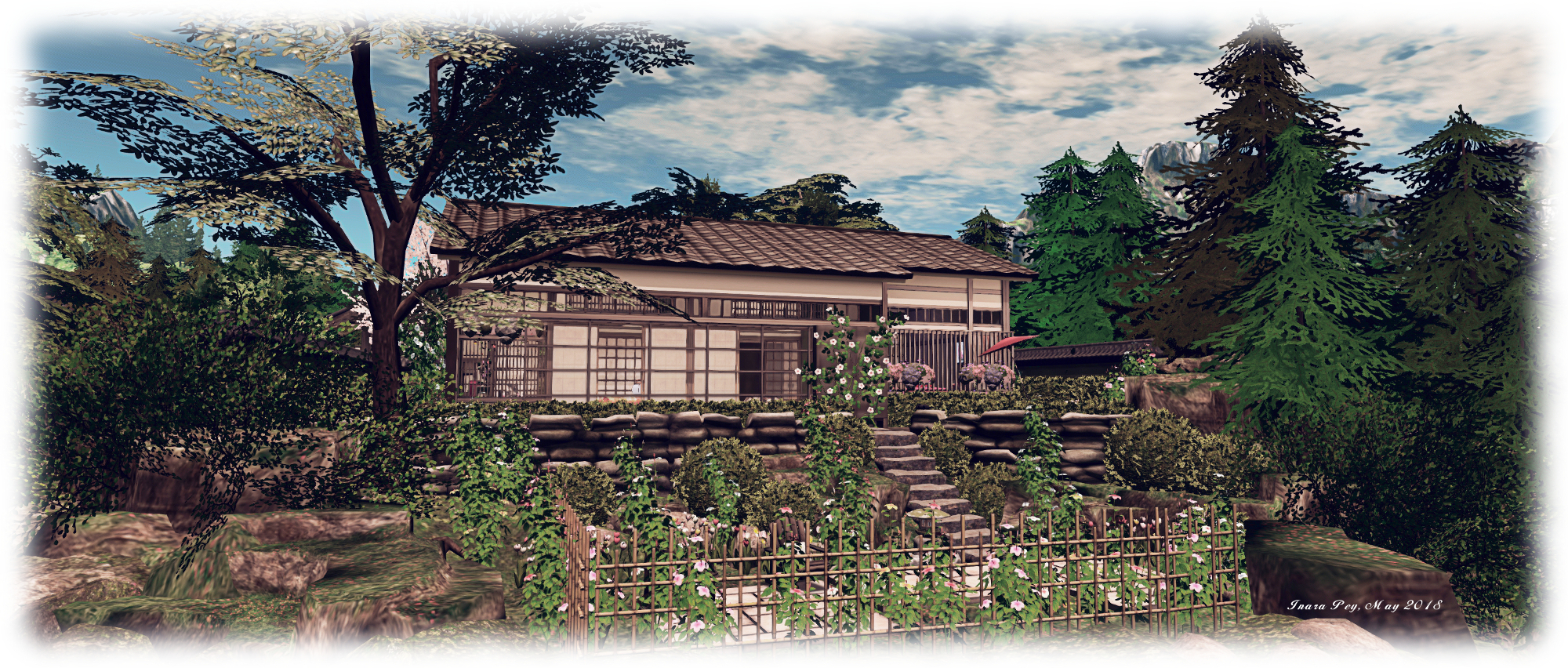
Village of Ahiru is a full region themed along Japanese / Edo period lines (although the time frame for the region isn’t specifically the Edo period, as evidenced by things like the bicycles to be found scattered along the extensive paths and walks within the region).
The main landing point, located in the sky above the region offers an introduction to the setting, noting it is a mixed public / private location with a number of rental properties to be found within it. However, providing the privacy of those renting is respected, visitors and photography are both welcome, and for those wanting to get a little more in character, two vendors at the landing point offer free female and male kimonos.
Ground level is reached via a map teleport board. This lists all of the public areas, and denotes the rental properties – the majority of which are located to the east of the region, with a few more located on the southern coastline. The large rentals are surrounded by walls guarding their inner gardens / courtyards, and smaller properties can be identified by the “mailbox” rent boxes on their walls.
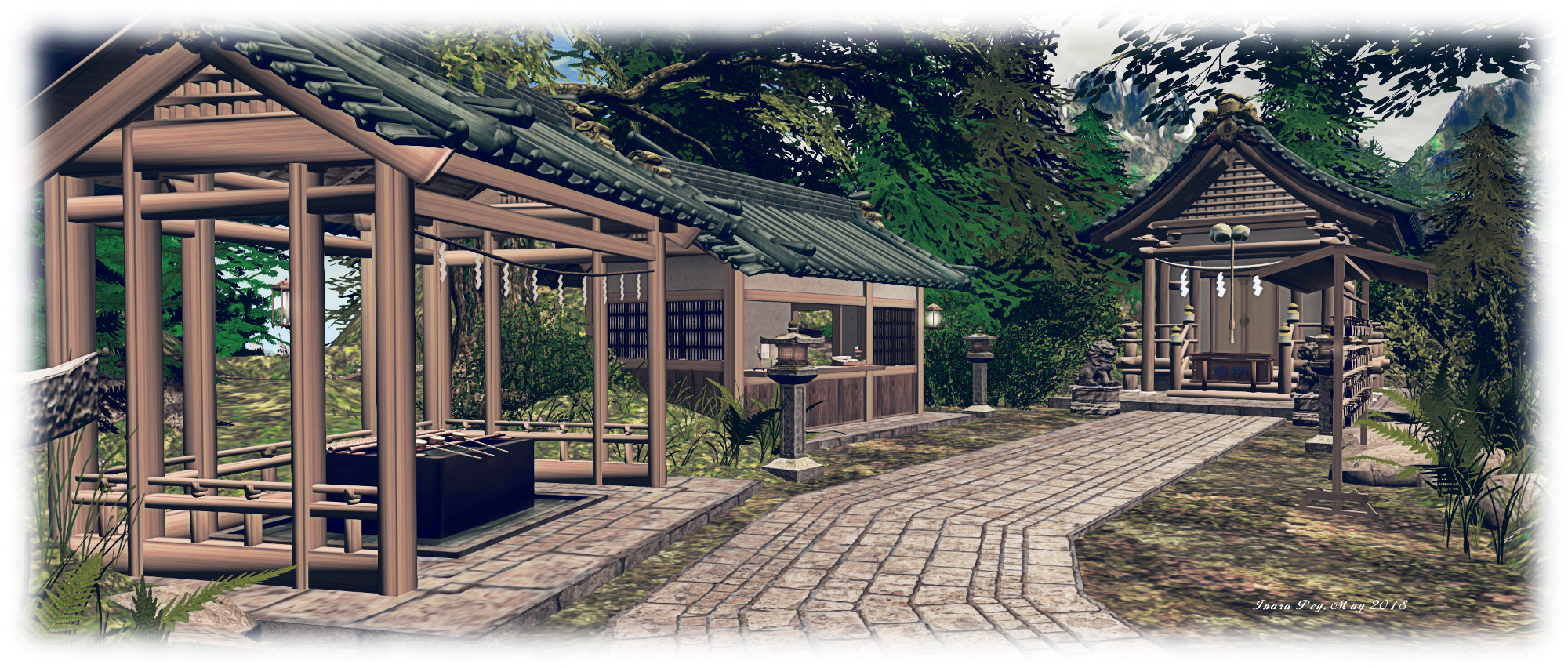
At ground level, the region is split into two land masses by a narrow river. Public areas straddle both of these islands, so decided on where to start a visit is open to choice. However, having spent time wandering through the village, I’d recommend the shrine on the south island or the Onsen or theatre on the north island as being good starting points; they are all public places, and offer good map reference points when making your way around the region.
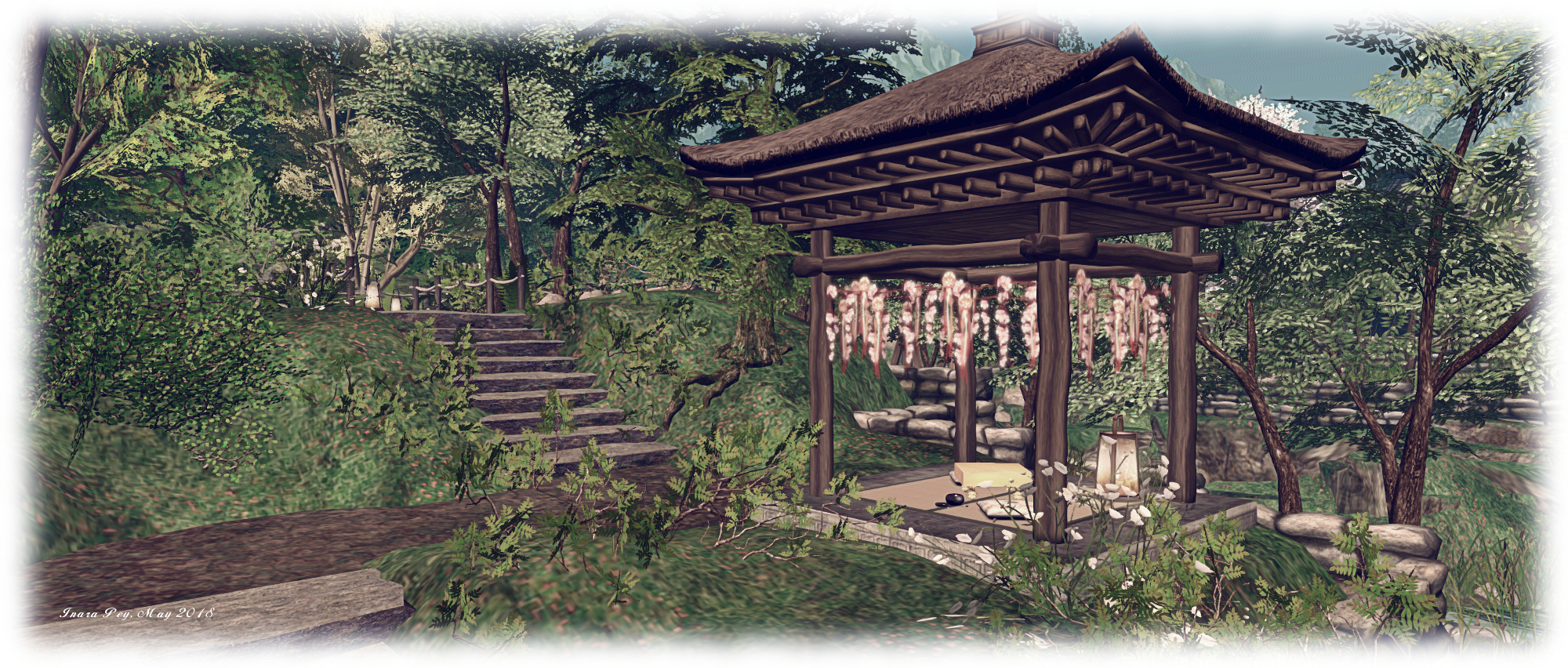
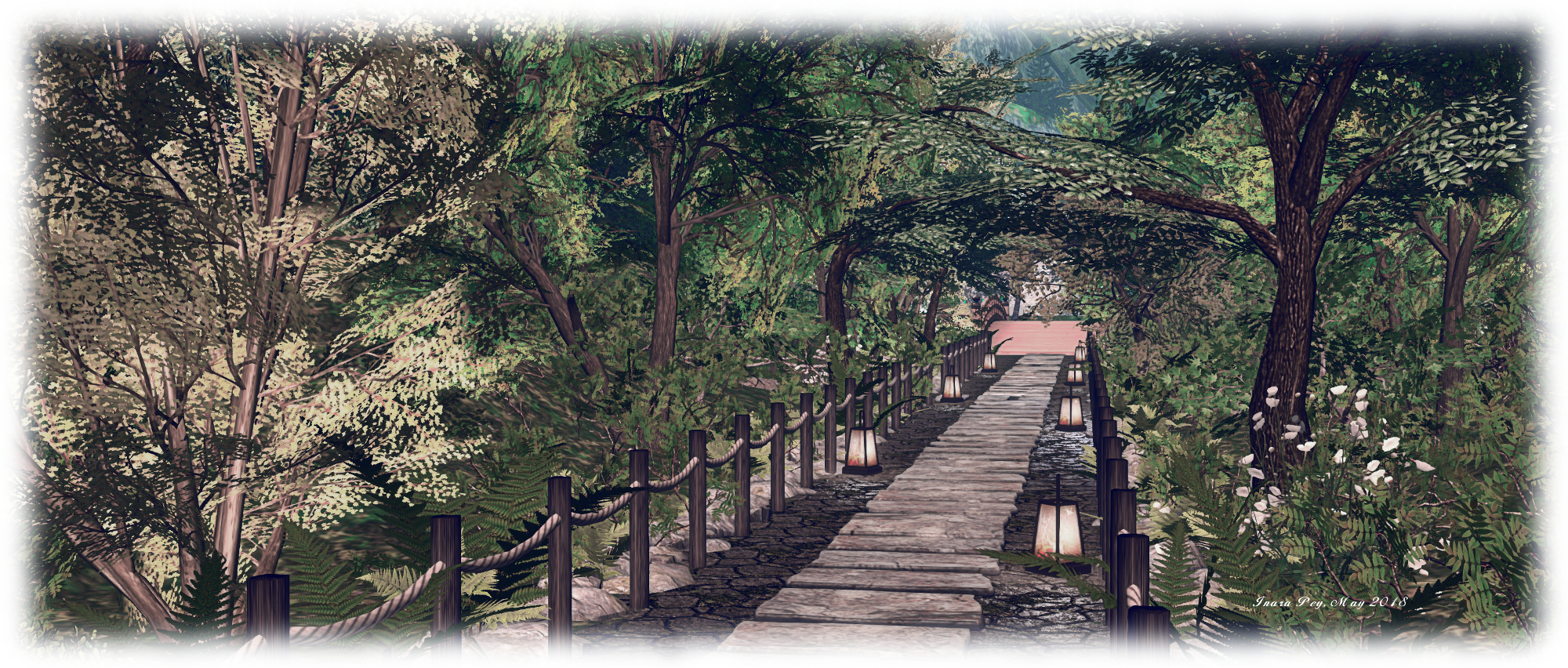
Richly wooded, Village of Ahiru also has a veritable web of paths and trails running around and through it. Climbing and descending over stairs and steps, winding around hills, passing under the arched canopies of trees, some of these paths are paved, some form grass tracks and others are marked by stepping-stones or look like cinder tracks. The thing that the have most in common is that they form a complete network which, as you follow it as paths cross and divide, serves to make Village of Ahiru feel a lot larger than the usual 256 metres on a side region.
From the grand bulk of the Theatre, visitors can head south along an arrow-straight avenue to one of the bridges spanning the river. Branching from this to the right (west) and east (left) are paths leading to other points of interest: a wild garden with standing stones, a more formal garden area with pavilions, a little waterfall spanned by another little bridge and opportunities to relax.
To the left from the theatre avenue, stone steps offers a way to the ochaya (tea house) located on one of the region’s two high points. Or if you prefer, you can follow the path around the hill on which the tea house sits and find your way to the impressive Osen, with heated and cold water pools for bathing. With waters following past its entrance from water falls, this is perhaps the centrepiece of the region, and another point at which a teleport map board can be found for those wishing to hop between locations. The second high point for the region is located on the southern island. It is home to the region’s shrine and overlooks the rental properties to the east and south, the base of the hill again surrounded by paths.
Other highlights within the region include a small commercial shopping area, a children’s playground nestled under the trees, and several lookout points such as the waterside hangout – and perhaps one or more places to discover. “As usual, my areas have a couple places hidden away,” principal designer Hatsumomo (Yasyn Azemus) informed me during our visit. I’m not going to give these all away, but I did enjoy discovering the Café Grotto.
Surrounded by mountains, rich in flora and trees, and laid out in such a way to give the impression of far more space than the region might otherwise suggest, Village of Ahiru makes for an engaging visit with plenty to see and discover while exploring.

 The line-up for the concert this year comprises (all times SLT):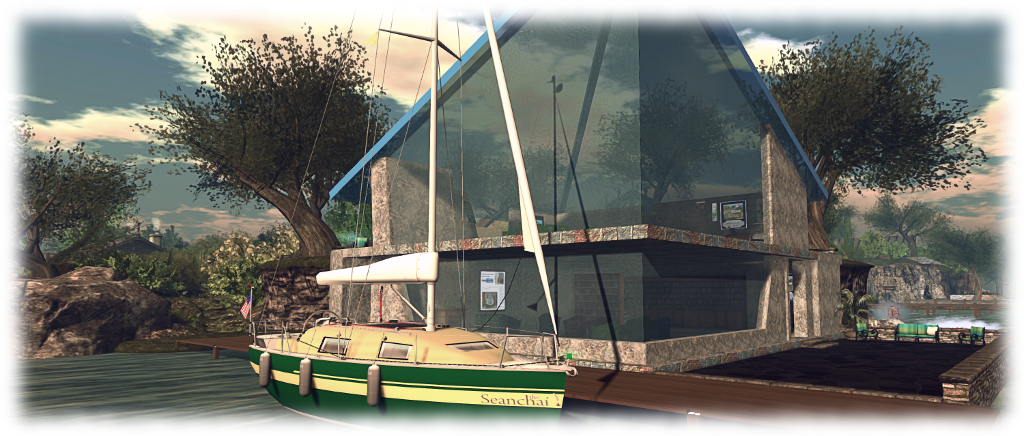


 Inara Pey: Living in a Modemworld