As always, please refer to the server deployment thread for the latest news and updates.
On Tuesday, January 16th, 2018 the Main (SLS) channel was updated with the server maintenance package deployed to the RC channels in week #2.maintenance package 18.01.08.511751 comprises internal fixes.
Speaking at the Simulator User Group meeting on Tuesday, January 16th, Simon Linden indicated that the next RC deployment should be in week #4 (commencing Monday, 22nd January.
SL Viewer
The Alex Ivy 64-bit viewer, version 5.1.0.511732, dated January 9th, 2018, was promoted to de facto release status on Tuesday, January 16th, 2018. All other viewer in the pipelines remain unchanged at this point in time, although the Voice and Nalewka RC will be updated in due course for parity with the Alex Ivy code base. This means the viewer pipeline currently reads as follows:
Current Release version 5.1.0.511732, dated January 9th – formerly the Alex Ivy Maintenance RC
Release channel cohorts:
Nalewka Maintenance viewer version 5.0.10.330173, January 10, 2018.
Voice RC viewer, version 5.0.10.330039, December 12.
Project viewers:
Project Render Viewer version 5.1.0.511604, January 3, 2018.
Obsolete platform viewer version 3.7.28.300847, May 8, 2015 – provided for users on Windows XP and OS X versions below 10.7.
Other Items
Simon Linden is working on a new feature – due to go to Aditi (the beta grid) for testing soon – but will not be drawn on specifics at this point in time.
Joe Magarac (animats) has been digging into the viewer code handling region crossings in an attempt to improve avatar handing when seated on objects and looking at the “partial unsit”issue (when the avatar becomes visual detached from a vehicle on a region crossing, but acts as if still attached (e.g. appearing seated, with any attempt to stand causing a viewer crash. He’s documented his work on a Firestorm JIRA (see FIRE-21915). Commenting on the work, Oz Linden indicates that if Joe would like to submit the change to the Lab (via the Second Life JIRA) the Lab would be interested in working with him to further improve agent / object handling during region crossings.
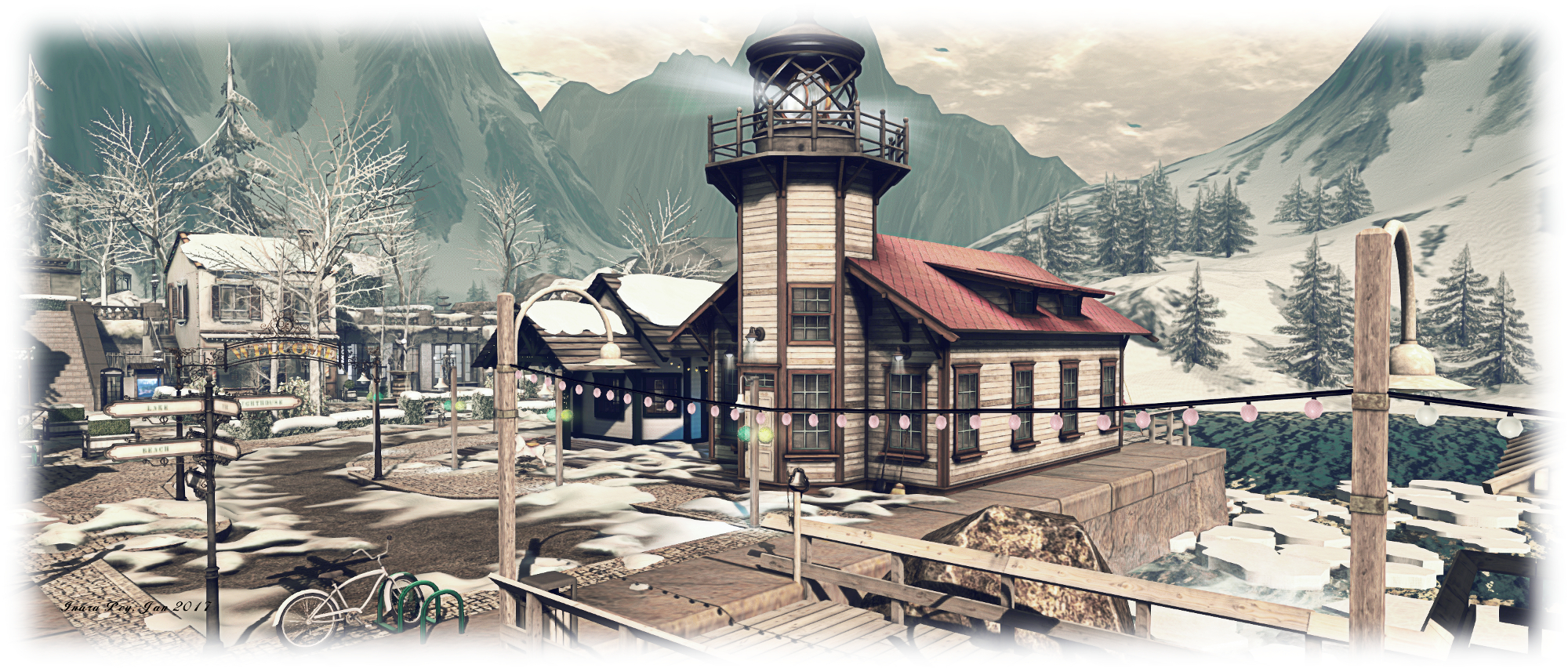
Miro Collas tapped me about taking a visit to Ivy Falls, an Adult rated Full region open (in part) to visitors to enjoy, explore and photograph, so we hopped over on a Sunday evening for a look around.
“It is a sim I built and share with my friend Rekka,” Kere Delcon says of the region, Rekka being Rekka Berchot. He continues, “Our private homes are on the north side of the land, but the rest is open and free for all to explore and use. Fair warning, though! It’s an adult playground designed for adults only to enjoy.” Ivy Falls is gay-friendly, and the Adult warning appears to reference the hints of BDSM which can be found in the region – nothing that is in any way blatant, but which can be found indoors in places.
Our visit began high above the majority of the land, atop a table of rock rising from near the centre of the region – although at the time of our visit, there was no set landing point. Not only does this offer a vantage point from which to survey the rest of the land and the surrounding mountains, it also provides an introduction to the region via a noticeboard, which offers a general welcome and a few notices on visiting – particularly in reference to the private homes on the north side of the region.
There are two means for getting off of this plateau (not including jumping – flying is disabled by default): a teleport pad or a via a hang glider. The former is located by the welcome sign, and offers a quick route to any one of the major locations in the region. The hang glider can be obtained from the west end of the plateau (an empty glider will auto-rez as the previous one is used) and is fun to fly. use the arrow keys for banking or increasing / decreasing your speed, and the page keys to climb / descend, and simply stand when you are close to the ground.
The major locations open to visitors comprise the aforementioned lighthouse, a bar, a bath house / gym complex with a terrace before them, complete with a playable game of chess; a nearby bar and beach (with beach cabins, which have their own teleport option), a sauna a little more out in the wilds, a camp site, and a pier where sailing and rowing boats are moored. All of these destinations are within easy walking distance of one another across the south extent of the region, with the beach, cabins and pier to the west, and the sauna up in the rock uplands to the east.
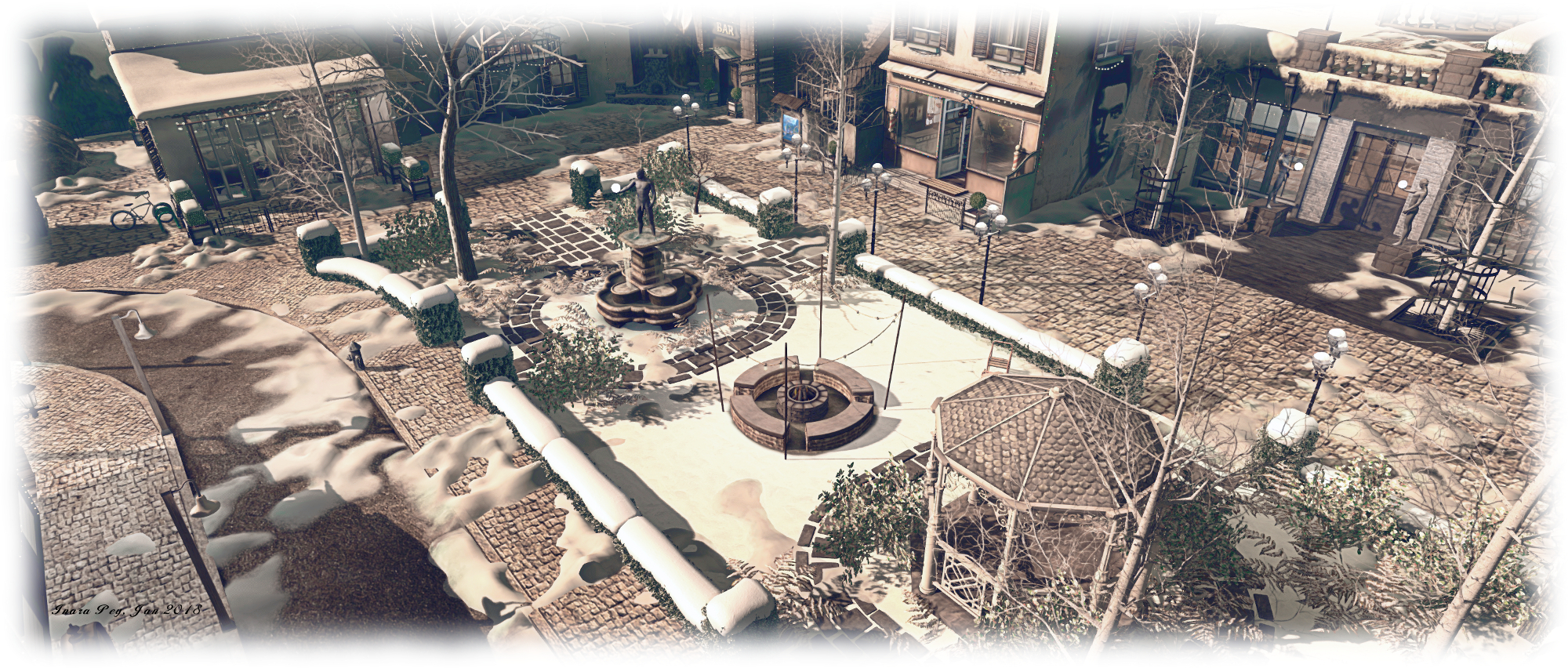
Most of the southern side of the land resembles a small resort town, nestled under craggy shoulders of sheer rock faces. This is the home of the elevated terrace and gym / bath house facilities (indoors and out), together with a small club house looking out over the snow-covered terrace. Beneath this, to the west, and linking it with the beach and pier, is a small commercial parade, with various businesses including a cosy café, a studio, a gentlemen’s hairdressers, the bar (through the door and downstairs), and what appears to be a gallery awaiting occupation. With cobbled paving and a small outdoor seating area with gazebo, fire pit and fountain, this part of the region is watched over by the red-roofed lighthouse.
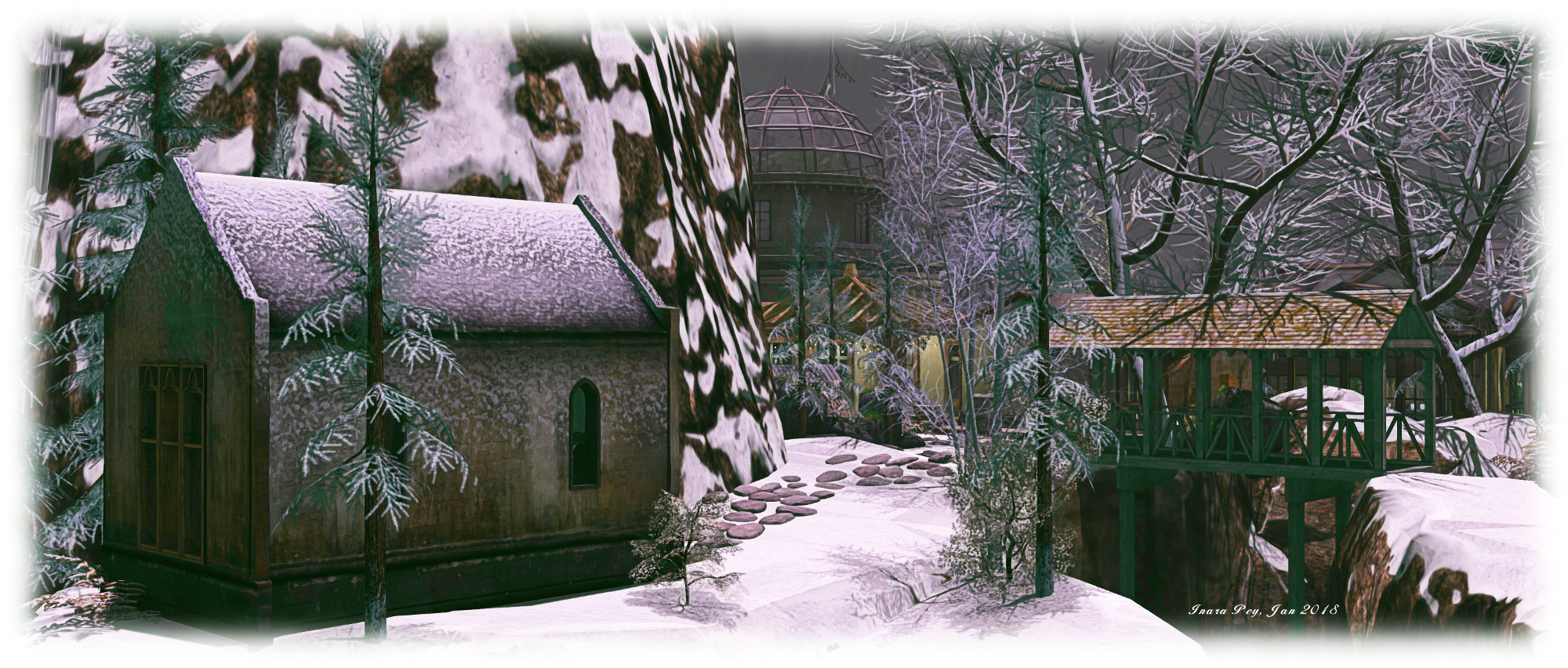
It’s well worth exploring this side of the region carefully, as there are numerous footpaths winding their way around it. Some – such as the one leading under a rock arch to the beach on the west shore, may be obvious to the eye, other – such as those leading off the trail to the sauna – perhaps less so. The later in particular offer an excuse for a walk, and when followed reveal one or two more points of interest.
The private residences, as noted, are on the north side of the region, and physically separated from the rest of the land by a lake served by two channels of water – all of which are currently frozen in the winter setting. When exploring, it can be tempting to slip across the ice and continue wanderings on that northern shore – so please do keep in mind Kere’s request to respect the privacy of the residents there, and stay away from that side of the region unless invited.
Set in a perpetual winter evening’s light, this iteration of Ivy Falls makes for a pleasant visit with plenty of opportunities for the Second Life photographer, either using the default windlight or under assorted daytime settings – I opted to take some of mine under a morning setting.
On Monday, January 15th, Ux Hax and Second Life partner, Romy Nayar, announced that their art region, MetaLES, would be closing at the end of the day. The announcement came in a simple statement passed through a number of art group:
After 8 years of art, fantasy and work MetaLES ..O.. closes its doors. Many thanks to all the artists, bloggers, friends and visitors who made it possible, The decision is for the lack of time to dedicate to the project.
Kisses and hugs
Romy & Ux
“Yes today is the last day,” Ux informed me. “We are sad, but the art in SL will continue!” He went on to say that the lack of time mentioned in the notices is related to a new physical world project he and Romy are involved in. However, he refused to be drawn into providing any specifics for the time being.
My first exposure to MetaLES was back when it was referred to as Per4mance MetaLES ..O.., and came with the installation Conformational Change by Selavy Oh. However, it wasn’t until 2013 and Cica Ghost’s Ghostville that I regularly started blogging about the region and installations hosted there.
From the start, MetaLES proved a popular venue for some of Second Life’s top artists – Selavy, Rebeca Bashly, Cica, Cherry Manga, Eupalinos Ugajin, Moya, Bryn Oh, Kicca Igaly, Nessuno Myoo, Igor Ballyhoo, to name but a few, together with Romy and Ux themselves. The depth of art displayed on the region speaks volumes on the esteem in which both Romy and Ux are held by the SL arts community. For my part, one of the great attractions of the installations presented through the region has been the depth of narrative in so many of them.
For example, both Haveit Neox and Igor Ballyhoo both explored ecological issues with The Haul and Tumor respectively; JadeYu Fang examined our anxieties through OpeRaAxiEty; Rebeca Bashly explored ideas of birth, growth and life, and renewal with Queens Gambit Declined, while Ux and Romy explored the tarot through a multi-part series of installation in Escenas / Scenes (see here, here and here).
Such is the richness of art displayed at MateLES over the years, that it is hard to pick out a personal favourite – I thoroughly enjoyed all of those mentioned above, as well pieces like the exploration of Gaston Leroux’s Le Fantôme de l’Opéra in A Bit of Red, by Kicca Igaly and Nessuno Myoo, and lighter installations like Romy’s Sparky’s.
MetaLES is currently hosting three exhibitions, all of which will end with the closure: Shattered, by Theda Tammas, Melancholy by Ini Inaka and Journey into Communication by Nevereux (see here). All three are well worth a visit.
SLurl Details
Journey into Communication (MetaLES, rated: Moderate) – only available until the end of Monday, January 15th, SLT.
Logos representative only and should not be seen as an endorsement / preference / recommendation
Updates for the week ending Sunday, January 14th
This summary is published every Monday, and is a list of SL viewer / client releases (official and TPV) made during the previous week. When reading it, please note:
It is based on my Current Viewer Releases Page, a list of all Second Life viewers and clients that are in popular use (and of which I am aware), and which are recognised as adhering to the TPV Policy. This page includes comprehensive links to download pages, blog notes, release notes, etc., as well as links to any / all reviews of specific viewers / clients made within this blog
By its nature, this summary presented here will always be in arrears, please refer to the Current Viewer Release Page for more up-to-date information.
Official LL Viewers
Current Release version 5.0.9.329906, dated November 17, promoted November 29th – formerly the “Martini” Maintenance RC – No Change.
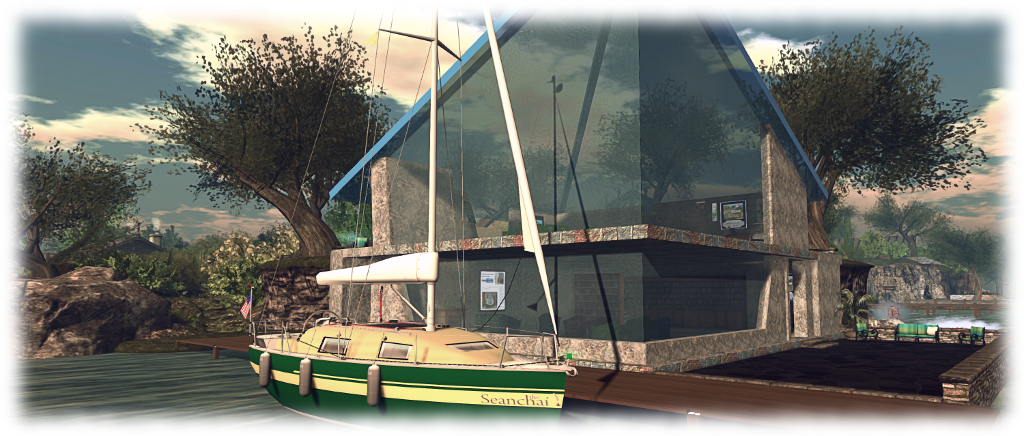
It’s time to highlight another week of storytelling in Voice by the staff and volunteers at the Seanchai Library. As always, all times SLT, and events are held at the Library’s home at Holly Kai Park, unless otherwise indicated.
Monday, January 15th 19:00: The Wolfen
Whitley Strieber is perhaps best known for his book for Communion, a non-fiction account of his alleged experiences with non-human entities. However, his is also a writer of horror fiction, with The Wolfen being his first published novel (1978).
When two New York Police Department uniformed officer are violently killed, detectives Becky Neff and George Wilson are tasked with investigating the incident and bringing the perpetrator/s to justice. The evidence reveals the two uniformed officers were quickly and brutally attacked by some kind of animal – so rapidly, in fact, neither were able to fire their service handguns – one even had his hand and gun ripped from his arm before having time to open fire on his attacker. Worse, both men were disembowelled, their organs devoured.
Gathering the evidence from the crime scene, Neff and Wilson start their investigation by trying to understand what kind of animal might have left the bloody paw prints around the bodies. This leads them down a path that touches on the issue of police corruption which involves Neff’s policeman husband is taking money from certain groups. As more bodies are discovered, Neff and Wilson are drawn into a world where the natural meets the supernatural: the forgotten parts of New York where the abandoned of the city live – and are preyed upon by the Wolfen.
Join Gyro Muggins as he takes us inside Neff and Wilson’s investigations.
Tuesday, January 16th 19:00: Fractured Symmetry
In the future and 1,000 light years from Earth, a woman of action works for a reclusive, enigmatic genius…
Blair MacAlister is an expert at Judo, a credible AI hacker, and a certified pilot of craft atmospheric and interstellar. Her favourite weapon is sarcasm, or failing that, her ever-present blaster. Her boss is Terendurr the Black Stone: technical wizard, expert in the ethnography of myriad races, fancier of rare foods and wines, and even rarer fractalites. An Entharion Quadromorph, exiled from his homeworld and under constant threat of assassination, he is also somewhat irritable.
Together they investigate mysteries based on science, in a setting that brings them into contact with all the main races of Civspace: The mysterious Junn, the affable but biologically intense Raylics, the chaotic and powerful Oro-Ka, the commercial minded Keret, and the cynical Phair.
At the centre of their cases are transformative genetic therapies, unlikely fossils, the linked neurology of symbiotes, and more. Terendurr is over 300 years old and has seen and endured the worst and strangest the galaxy has to offer. Will Blair prove as durable as her boss?
Join Corwyn Allen as he reads selections from Fernando Salazar’s 2017 novel.
Wednesday, January 17th, 19:00: Poems of Hope
With Aoife Lorefield.
Thursday, January 18th, 19:00: Star Wars: The Force Awakens
With Shandon Loring. Also presented in Kitely (hop://grid.kitely.com:8002/Seanchai/144/129/29).
Please check with the Seanchai Library’s blog for updates and for additions or changes to the week’s schedule.
The featured charity for January / February 2018 is Reach Out and Read, giving young children a foundation for success by incorporating books into paediatric care and encouraging families to read aloud together.
The Earth and Moon as seen from OSIRIS-REx. Credit: NASA/OSIRIS-REx team and the University of Arizona
NASA’s Origins, Spectral Interpretation, Resource Identification, Security – Regolith Explorer (OSIRIS-REx), launched in September 2016 is on a mission to gather samples from the surface of asteroid Bennu and return them to Earth (see my previous reports here and here). It’s a huge undertaking, one which will take the vehicle on a journey of some 7.2 billion kilometres (4.5 billion miles).
Part of this journey involved OSIRIS-REx looping past the Earth in September 2017, in a gravity assist manoeuvre design to increase its velocity by some 13,400 km/h (8,400 mph) to almost 44,000 km/h (27,500 mph), and swing it on to an intercept with the asteroid, which it will reach in October 2018. During this Earth flyby, scientists carried out an extensive science campaign, allowing them to check and calibrate the probe’s suite of science instruments.
A part of this campaign involved testing the probe’s camera system, using it to take pictures of the Earth and Moon during September and early October. Several of these images, captured on October 2nd, 2017, were used by NASA used to create a to-scale composite image of the Earth-Moon system, which was released into the public domain on January 3rd, 2018 (seen above).
At time the images were taken, the spacecraft was approximately 5 million km (3 million mi) from Earth – or about 13 times the distance between the Earth and Moon. It was created by combining pictures captured using blue, green and red filters, allowing it to present a true colour view of the Earth and Moon as they reflect sunlight. Looking at it, one cannot help by be reminded of just how small and fragile our place in the universe really is.
China’s Space Ambitions
In reporting on China’s space programme, I’ve frequently noted the growing ambitious nature of their endeavours. A mark of this is that in 2017, China mounted more than 20 successful launches – including some for foreign nations such as Venezuela, as a part of China’s desire to expand their commercial launch operations – matching Russia’s launch efforts, and sitting not that far behind the USA.
At the start of January 2018, the China Aerospace Science and Technology Corporation (CASC) upped the ante, indicating that in 2018, they plan to carry out 35 launches through the year. At the same time, CASC’s sister organisation, China Aerospace Science Industry Corporation (CASIC) indicated it would be carrying out at least 5 launches during the year – four of them in the span of a week – while the Chinese private sector corporation, Landspace Technology, indicated it would commence launch operations during the year. Like America’s SpaceX, Landspace plan to become a major force in commercial sector launch operations, initially with satellite payloads, but ramping to flying people into space in around 2025.
One of the more notable missions China plans to launch in 2018 is the Chang’e 4 mission to the Moon’s far side. This is a two-phase mission, commencing in June 2018 with the launch of a communications relay satellite to the Earth-Moon Lagrange point. It will be followed in December by a lander / rover combination which will land on the lunar far side to commence science studies. It will mark the first attempt to carry out long-term studies on the side of the Moon permanently facing away from Earth – not to mention the first far side lunar landing.
The Chang’e 3 lander (top) and Yutu rover share similar designs with the upcoming Chang’e 4 lunar surface mission. Credit: National Astronomical Observatories of China
The CE-4 Relay satellite is required in order for communications to take place between Earth and the Chang’e 4 lander and rover.
As the Moon is tidally locked with Earth, and always keep the same side pointed towards us, there is no way to have direct communications with any vehicle on the lunar far side. This is overcome by placing a satellite in the Earth-Moon L2 position, where it can maintain a steady position relative to the Earth and the Moon’s far side, enabling communications between the two, and keeping scientists and engineers on Earth in contact with the lander and rover.
The lander / rover combination will explore part of the 180 km (112.5 mi) diameter Von Kármán crater, believed to be the oldest impact crater on the Moon. It lies within the South Pole-Aitken Basin, a vast basin in the southern hemisphere of the far side which extends from the South Pole to Aitken crater.
The crater is of general interest because it contains about 10% by weight iron oxide (FeO) and 4-5 parts per million of thorium, which can be used as a replacement for uranium in nuclear reactors. In addition, the South Pole-Aitken Basin – one of the largest impact basins in the solar system (about 2,500 km / 1,600 mi across and some 13 km / 8.1 mi deep) – also contains vast amounts of water ice. These deposits are believed to be the result of impacts by meteors and asteroids over the aeons, which deposited ice within the basin, which lies in almost permanent shadow.
The water deposits will be part of Chang’e 4’s studies – China has already announced its intent to establish a human mission on the lunar surface, and relatively easy access to water ice could be a critical part of sustaining a human presence there. To carry out their studies, both the rover and the lander will carry a range of science instruments and experiments, including systems supplied by Sweden, Germany, the Netherlands and Saudi Arabia.
In addition, the lander will include a container with potato and rockcress seeds, together with silkworm eggs to see if plants and insects can survive in the lunar environment. It is hoped that if the eggs hatch, the larvae would produce carbon dioxide, while the germinated plants would release oxygen through photosynthesis, allowing both to establish a simple life-sustaining synergy within the container. If successful, it might allow larger biotic systems to be developed and used to augment the life support systems in a lunar base while providing additional foodstuffs.
2018 should also mark the return to flight of the Long March 5, China’s most powerful launch vehicle. This entered service in November 2016, but flights were suspended in 2017 following the failure of the vehicle’s second launch in July of that year. Long March 5 is critical to China’s ambitions, as it will be the launch platform for the Chang’e 5 (2019) and Chang’e 6 (2020) lunar sample return missions, the modules to be used in a planned space station, due to start in 2019 with the launch of Tianhe unit, and boost the Mars Global Remote Sensing Orbiter and Small Rover mission to the red planet in 2020.
A slight fuzzy TV image of the Long March 5 launch on July 2nd, 2017. The vehicle suffered “an anomaly” shortly after lift-off and eventually crashed into the Pacific Ocean. 2018 should see the Long March 5 resume operations. Credit: CCTV
The 2018 return-to-flight of the Long March 5 will likely involve placing a Dongfanghong-5 (“The East is Red”) communications satellite, which will be placed in low Earth orbit.









 Inara Pey: Living in a Modemworld