A return to the Art of Nature in Second Life

Art by Nature

Ani (Anibrm Jung), who is an award-winning photographer in the physical world and who has been active in Second Life since 2006, recently opened a new gallery space at Gallery Graine and the Riverside Café.

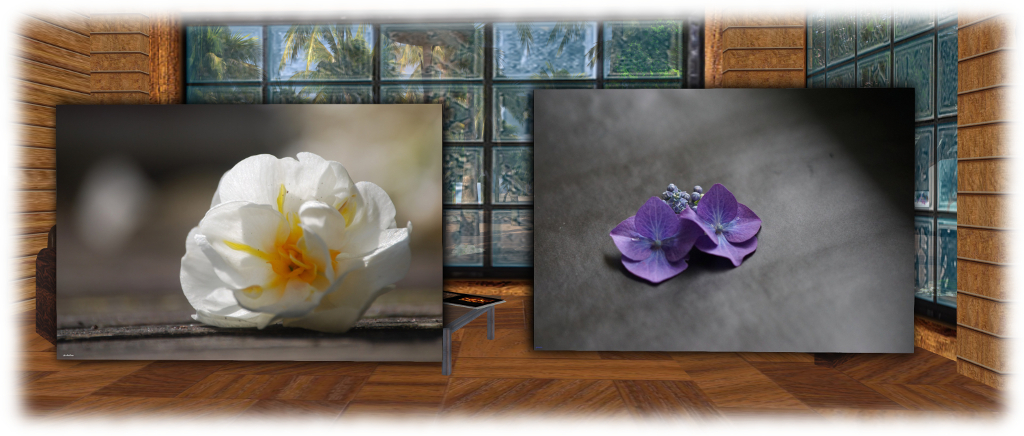
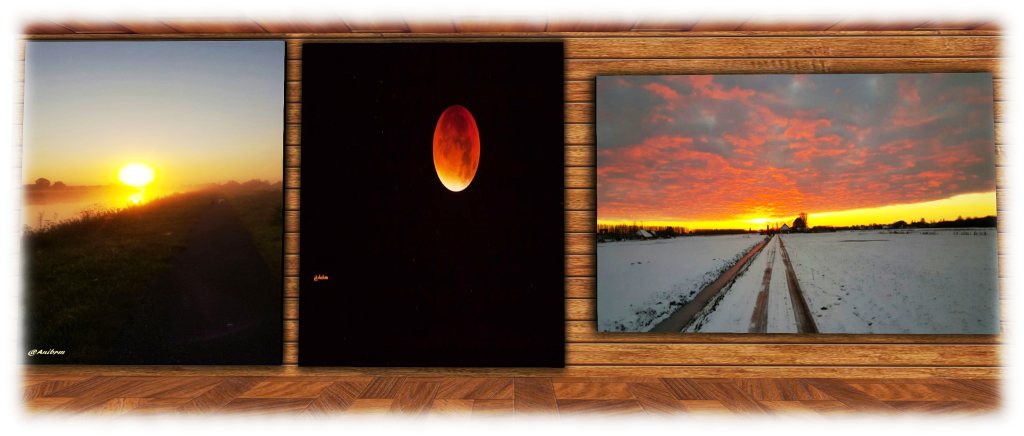
Based in the Netherlands, Ani specialises in photographing nature. She captures many of her images in her own garden using only her camera and natural light; everything is framed directly through the viewfinder, and no cropping nor image manipulation is used after the fact. In this way, we are able to see each picture exactly as she did when taking it, allowing us to share her own sense of closeness with her subjects.

Art by Nature

Art by Nature, the name of her gallery space, demonstrates this in a powerful tour-de-force  of her work, spread across two floors of the gallery space. Offering a combination of macro images, wildlife studies and landscape and coastal studies, the gallery makes for an engaging visit.

I’ve long been fascinated by Ani’s work – there are times when art and photography from the physical world perhaps doesn’t gain the recognition it deserves in Second Life. Ani’s photography should persuade those who feel physical world art doesn’t work in-world otherwise. Superlatives such as “magnificent”, “beautiful” and more really don’t measure up to the images Ani has brought in-world. Her composition is – to use another superlative – exquisite; these are pictures that would grace any home – digital of physical.
Art by Nature

Were I asked to pick any particular pieces of Ani’s work, I’d honestly be hard put. However, her pictures of cats and ducks (seen in the middle image of this article),  are especially endearing and – having cats of my own – I repeatedly found myself drawn back to them in particular. But that said, all of the pieces on display are fully deserving appreciation – and purchase for those so minded.

SLurl Details

  • Art by Nature, Gallery Graine and the Riverside Cafe (Blue Curacao, rated: Moderate)
Sansar: a voyage to the Moon and back

LOOT Interactive NASA Apollo Museum

Given my interest in space exploration, it really shouldn’t come as any surprise that my second Exploring Sansar article focuses on the LOOT Interactive NASA Apollo Museum, based on the Apollo Saturn Centre at the Kennedy Space Centre. However, there is another reason for my doing so: as the Sansar Creator Beta opened, it was – and remains as of the time of writing this piece – one of the most comprehensive demonstrations of Sansar’s potential for creating standalone, easily accessible educational / historical interactive virtual spaces.

As the name states, this experience is a celebration of America’s triumph in sending men to the Moon and returning them safely to the Earth at what was the dawn of the space age. As politically motivated as it may have been, Apollo was – despite the tragedies and near-disasters which marked it – a huge triumph of humankind’s determination and technical prowess.

LOOT Interactive NASA Apollo Museum

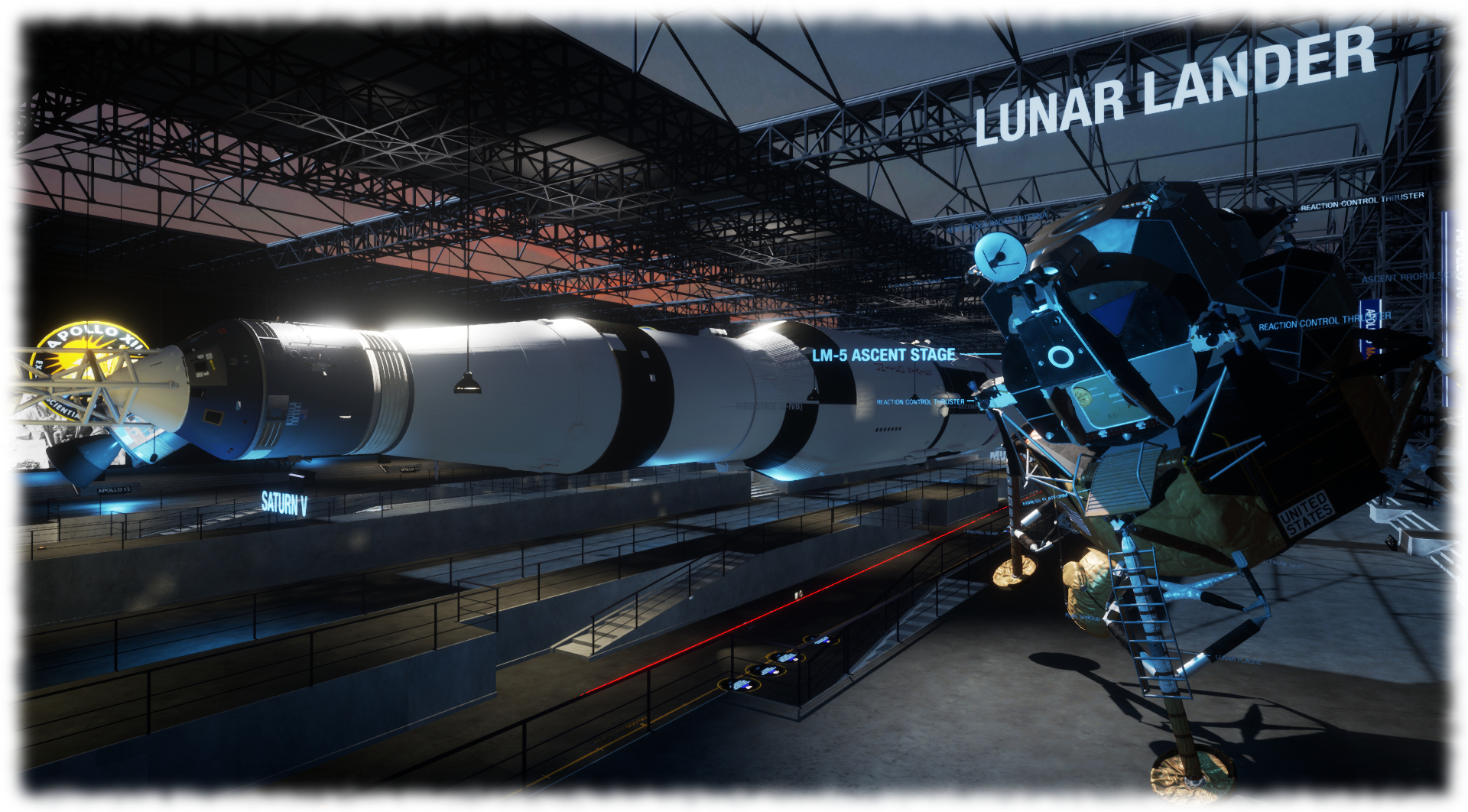
Unsurprisingly, given this *is* a museum, the setting is that of a mammoth hanger-like structure dominated by the huge form of an Apollo Saturn V rocket lain upon its side. Visitors arrive in a presentation area at the “base” of the rocket where, facing the five F1 engine bells of the  S-IC first stage of the booster, is a huge video screen, used to present a film on the entire Apollo programme, from birth, through development and the horror of Apollo 1, through to the triumph of Apollo 11, and thence onwards through the remaining six missions to the Moon, together with the recovery of the near-loss of Apollo 13.

Flanking the Saturn V are two raised galleries featuring the Apollo missions with photos, mission logos and information boards. These start with the tragic loss of Apollo 1 and astronauts Grissom, White and Chaffee and run down either side of the rocket, progressing through the preparatory missions leading up to the first manned lunar landing, and thence on through Apollo 17.

LOOT Interactive NASA Apollo Museum

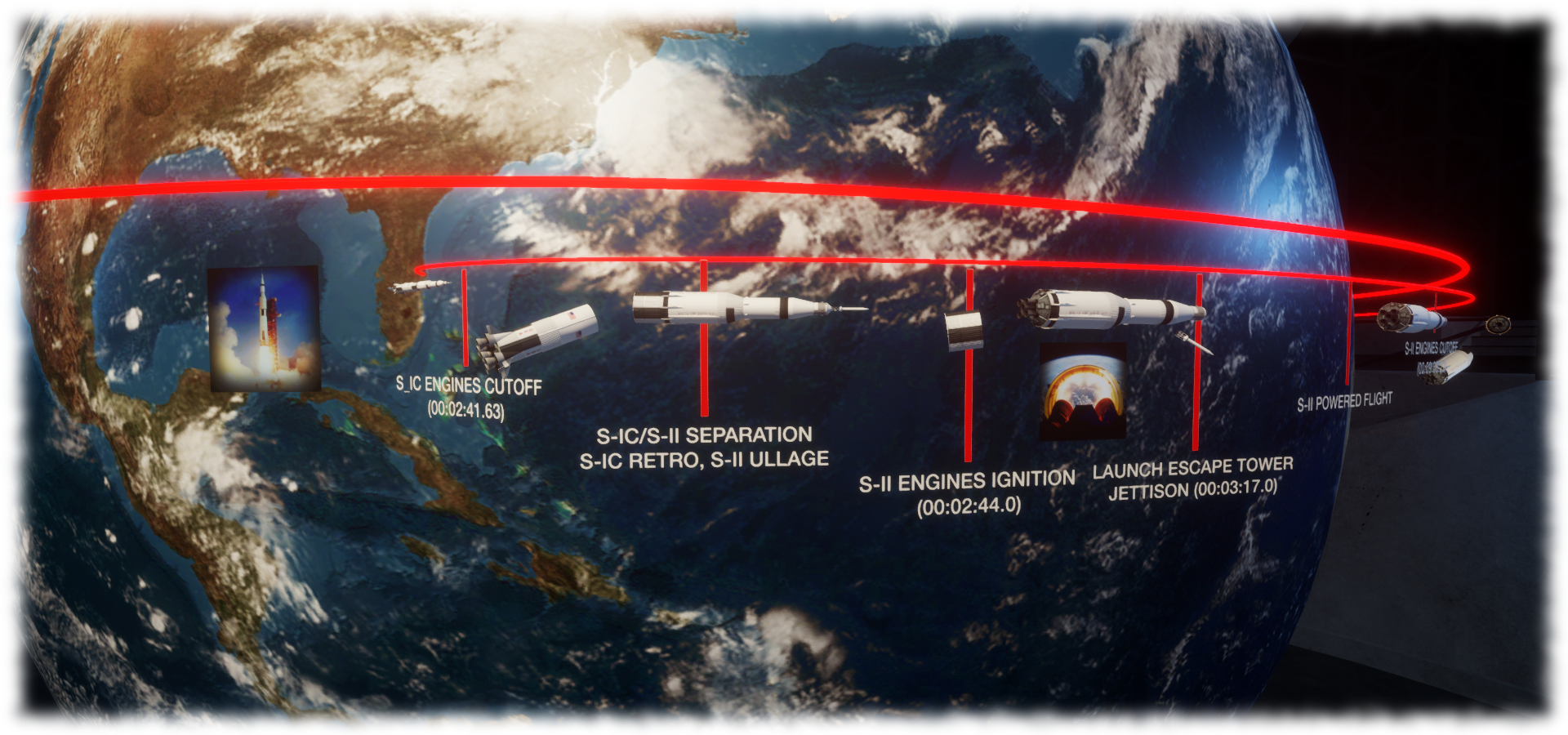
Sitting either side of the nose of the Saturn V are the LEM and the CSM. These and the rocket are neatly labelled, and the Service Module is shown with a cutaway in roughly the area where the liquid oxygen tanks exploded on Apollo 13, crippling it and leading to the rescue flight around the Moon. In the well between these display areas, starting with a model of the Earth, are a pair of time lines for the Apollo 11 mission. The first covers the journey from the Earth to the Moon, with principal events indicated along the way by scale models and annotations / information panels. The other similarly documents Apollo 11’s return to Earth.

Also, on the floor of these time lines are a series of interactive circles. Stepping on these will play audio clips of conversations between Mission Control and Apollo 11, and commentary from NASA on the mission status. There are other audio elements to be discovered as you explore the museum: an extract from Kennedy’s famous speech at Rice University in September 1962, when he uttered those immortal word, “We choose to go to the Moon.” There’s also audio at the Saturn V display.

LOOT Interactive NASA Apollo Museum

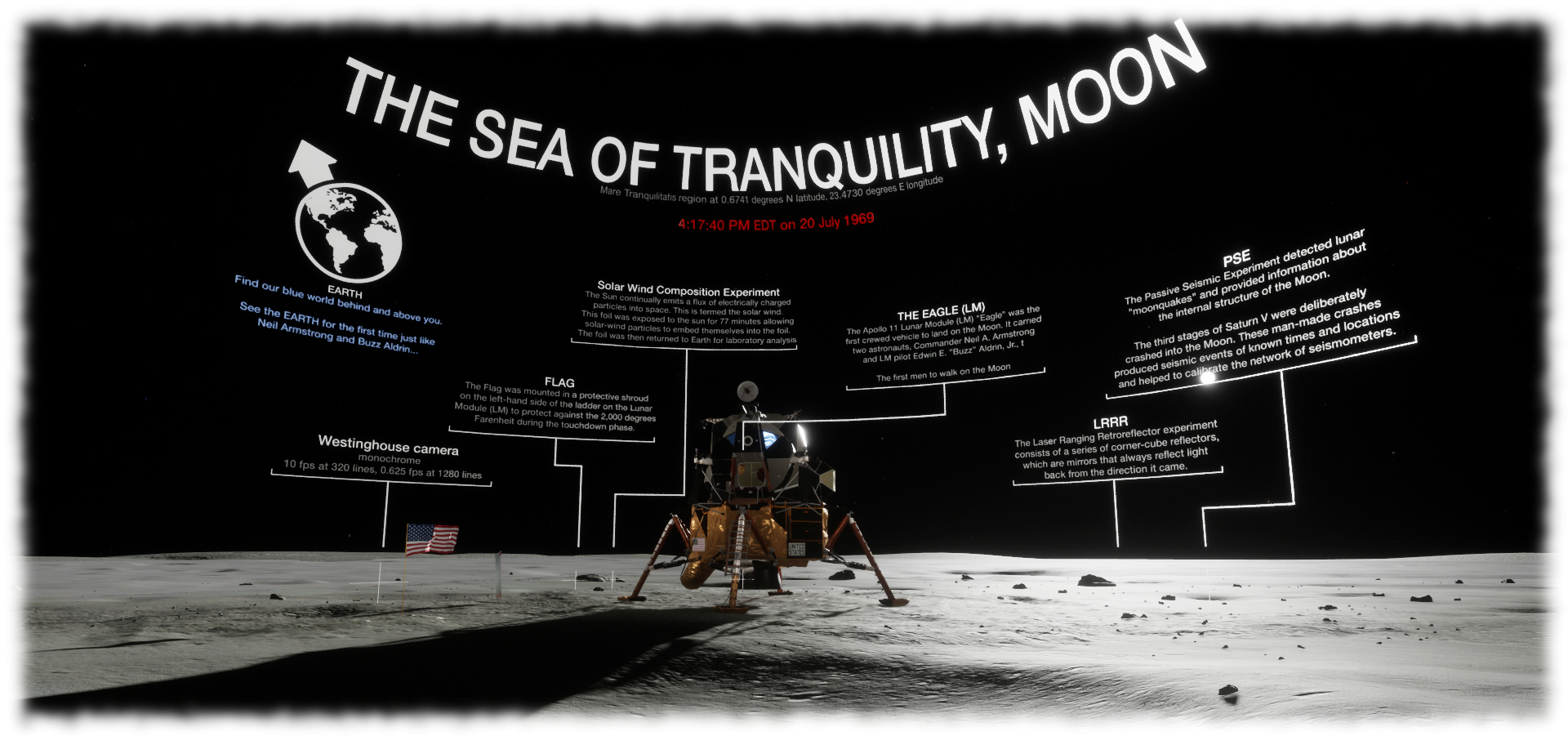
Beneath a model of the Moon which shows the landing areas of the six Apollo missions to reach its surface, sits a teleport disk. Simply step on it to be carried 384,400 km (240,250 mi) to Mare Tranquillitatis – the Sea of Tranquillity – and to where the Apollo LEM Eagle as it sits on the Moon. Pan / look up from here while you’re exploring, and you’ll get to see one of the most heart-catching sights a human can witness: looking back across the blackness of space to the beautiful, fragile marble of Earth.

Sansar’s current status does tend to limit what can be done interactively on the platform, and this in turn limits some of the effectiveness of experiences like this. For example, it would be nice of have a finer level of control over audio; right now, it is possible to end up with different audio elements confusingly overlapping one another (I have to admit I also found the clump-clump of shoes on solid floor is also a little off-putting when walking on the Moon). It would also be nice to have more interactive elements as well; as it is, the hanging information area above the Sea of Tranquillity setting is informative, but alignment with the appropriate elements can be difficult if you move.

LOOT Interactive NASA Apollo Museum

Nevertheless, the NASA Apollo Museum is an engaging, informative and immersive experience, offering a promise of just where Sansar might lead us as features and capabilities are added.

Experience URLs

Team Diabetes of Second Life announces third season

Team Diabetes of Second Life recently announced its third fund-raising season. Founded in 2015 by Jessi2009 Warrhol and John Brianna (Johannes1977 Resident), Team Diabetes of Second Life is the official and authorised team of the American Diabetes Association in SL. Their mission is to raise awareness, tolerance, and funds for diabetes in the virtual world of Second Life. According to the World Health Organisation in 2016 some 422 million adults in the world have diabetes and 1.5 million deaths are directly attributed to diabetes each year.

The 2017 Team Diabetes of Second life season will run from October 2017 to December 2017, with the following events scheduled to take place:

  • October 13th though 31st: Scare Me Silly Shopping Event (off-season event).
  • November 1st through 30th: National Diabetes Month, featuring:
    • November 1st through 15th: The Red Hunt.
    • November 4th and 5th: Team Diabetes Kick-off – Tour de SL.
    • November 5th, 2017: Season Celebration & Bike Race.
    • November 12th, 2017: The Red Ball.
  • December 1st to 10th: Winter Showcase & Winter Art Show.
  • December 31st, 2017: Team Diabetes of Second Life’s Season Ends.

Merchant and Blogger Applications

Team Diabetes of Second Life is currently seeking designers and merchants willing to participate in their events and in helping in raising funds for the American Diabetes Association. Involvement in all events is free, all designers and merchants are asked to do is follow the donations rules provided for each event. Currently, designers and merchants can apply for:

  • Scare Me Silly application (October 13th-31st, 2017)
  • The Red Fling application (November 1st-30st, 2017)

Further event applications will be posted on the Team Diabetes of SL website in due course.

Bloggers wishing to support and cover Team diabetes of SL events are asked to complete 2017 Team Diabetes of SL Blogger’s Application.

In addition to the events mentioned above, individuals, businesses, and organisations are encouraged to hold fund-raising events in support of Team Diabetes of Second Life! The official 2017 fund-raising season tool kit will be available to the second life public on September 1, 2017, at the organisation’s office in the Non-Profit Commons, Second Life.

About the American Diabetes Association

 Established in 1940, the American Diabetes Association is working to both prevent and cure diabetes in all it forms, and to help improve the lives of all those affected by diabetes. It does this by providing objective and credible information and resources about diabetes to communities, and funding research into ways and means of both managing and curing the illness. In addition, the Association gives voice to those denied their rights as a consequence of being affected by diabetes.

About Team Diabetes of Second life

Team Diabetes of Second Life is an official and authorised fund-raiser for the American Diabetes Association in Second Life. Established with the aim of raising funds in support of diabetes treatment and to raise awareness of the disease in SL, Team Diabetes of Second Life was founded by Jessi2009 Warrhol and John Brianna (Johannes1977 Resident), and is served by an advisory board comprising Eleseren Brianna, Veruca Tammas, Sandie Loxingly, Rob Fenwitch, Earth Nirvana and Dawnbeam Dreamscape, with Saiyge Lotus serving as a special advisor.

Additional Links

A further Long Journey in Second Life

Long Journey Cafe; Inara Pey, February 2017, on FlickrLong Journey Cafe – click any image for full size

In March 2017 Caitlyn and I visited Long Journey on the advice of friends Shakespeare and Max – and we thoroughly enjoyed our visit. We headed back there in August after Shakespeare IM’d to say the parcel had undergone a relocation and a rebuild, and is now known as Long Journey Café.

The redesign is every bit as atmospheric and charming as the one we visited in March, which trains a tracks once again playing a role – and further shows that you don’t necessarily need an entire region, Full or Homestead, in order to make something unique and photogenic.

Long Journey Cafe; Inara Pey, February 2017, on FlickrLong Journey Cafe

A visit begins on one of the four levels the parcel has been split into, at the terminus of a small tramway. The tram itself appears to be just arriving, and going by the camera set up close by, is the subject of a film or documentary. The tram tracks pass over a cobble surface, which provides access to a little café – one of several in the parcel – alongside of which is a set of steps leading to one of the upper levels.

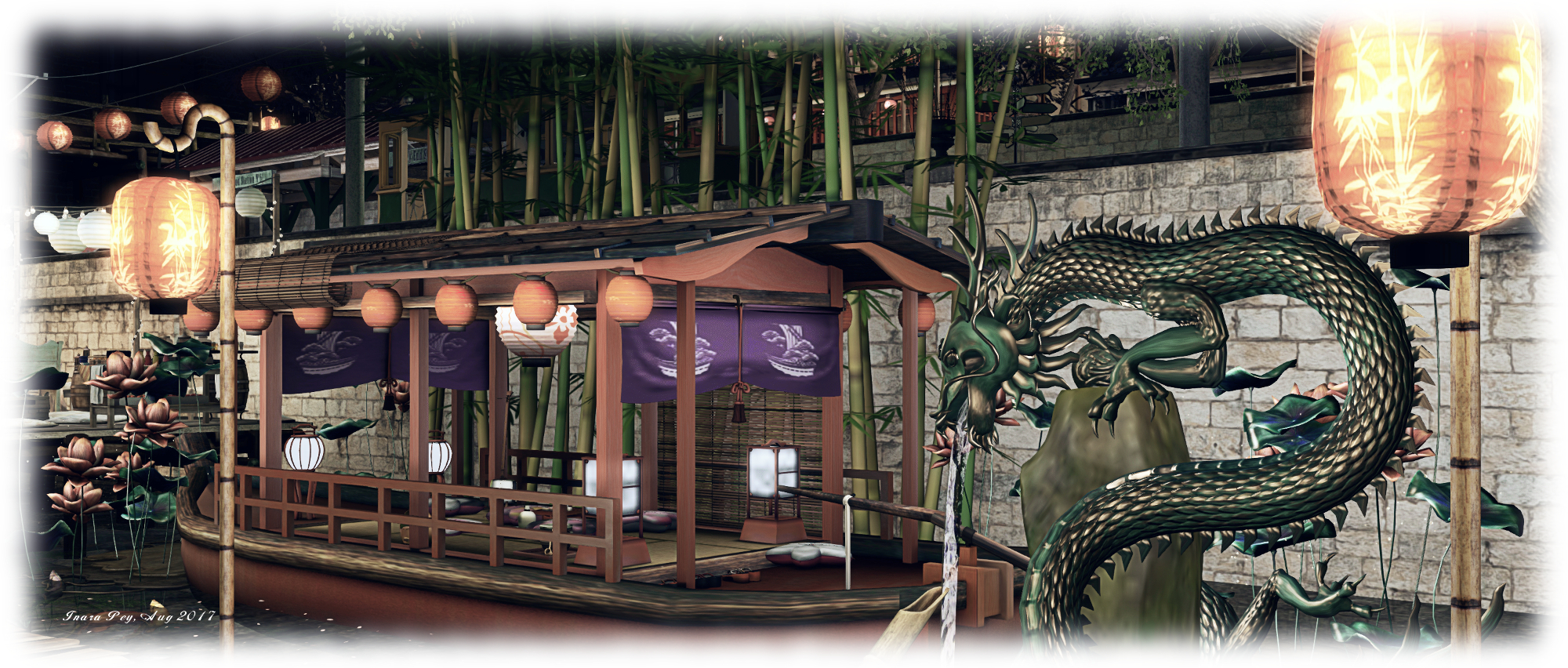
This upper level road comprises a small motel, not exactly in its prime, and neighbouring cafés and eateries before it ends in a rickety looking, but quite sound, set of wooden steps and walkway raised on a wooden scaffold. These provide access to the remaining levels in the build – a railway carrying viaduct with a canal below. More little boutique café sit on platforms under the arches of the viaduct, reached by a wooden walkway running parallel to the bridge. These little eateries face an entertainment stage built out over the canal and a modest floating restaurant.

Long Journey Cafe; Inara Pey, February 2017, on FlickrLong Journey Cafe

Follow the board walk along the canal far enough, and you’ll find steps offering a way back up to the tram level and another little street of shops, or wooden stairs making their way up the railway line. Nor is this all; a second set of steps descend from the elevated walkway, giving access to the large warehouse sitting at the northern end of the parcel, while the path around the film camera sitting at the end of the tram station can be used to reach a tattoo parlour, if you’re so inclined.

All of this is presided over by the tall figure of an Indonesian statue – although this, and many of the details in the region may not always be easily seen. On our first visit, Caitlyn and I arrived at night, with snow falling and which showed up the local lighting to good effect; it also meant we had to explore carefully in order not to miss anything. However, on a return visit, 24 hours later, the parcel was bathed in sunlight, suggesting its environment changes according to the owner’s whim or perhaps a schedule.

Long Journey Cafe; Inara Pey, February 2017, on FlickrLong Journey Cafe

Yang (Sun2idea) has an eye for detail, and this latest iteration of Long Journey demonstrates this once again.

SLurl Details

April Linden explains August 22nd’s Second Life woes

Tuesday, August 22nd was not a particularly good day for Second Life, with an extended period of unscheduled maintenance with log-ins suspended and those in-world advised to refraining from rezzing No Copy objects, or making any LindeX related transactions, etc.

If these words sound familiar (except the date), it’s because I wrote them a year ago to the day, on August 23rd, 2016, when Second Life experienced some significant issues.

Back then, the problem was the core database. The initial problems on August 22nd, 2017 weren’t software related, nor were they related to the Main (SLS) channel deployment taking place at the time. Instead, they lay with a piece of hardware, as April Linden, writing in the Tools and Technology blog, explained in another concise explanation of the problem, which started:

Early this morning (during the grid roll, but it was just a coincidence) we had a piece of hardware die on our internal network. When this piece of hardware died, it made it very difficult for the servers on the grid to figure out how to convert a human-readable domain name, like www.secondlife.com, into IP addresses, like 216.82.8.56.

Everything was still up and running, but none of the computers could actually find each other on our network, so activity on the grid ground to a halt. The Second Life grid is a huge collection of computers, and if they can’t find other, things like switching regions, teleports, accessing your inventory, changing outfits, and even chatting fail. This caused a lot of Residents to try to relog.

We quickly rushed to get the hardware that died replaced, but hardware takes time – and in this case, it was a couple of hours. It was very eerie watching our grid monitors. At one point the “Logins Per Minute” metric was reading “1,” and the “Percentage of Successful Teleports” was reading “2%.” I hope to never see numbers like this again.

Unfortunately, as April went on to explain, the problems didn’t end there, as the log-in service got into something of a mismatch once the hardware issue had been resolved. Whilst telling viewers attempting to log-in to the grid their attempts were unsuccessful, the service was telling the simulators the log-ins had been successful. Things didn’t start returning to normal once this issue had been corrected.

There is some good news coming out of this latter situation however, as April goes on to note in the blog post:

We are currently in the middle of testing our next generation login servers, which have been specifically designed to better withstand this type of failure. We’ve had a few of the next generation login servers in the pool for the last few days just to see how they handle actual Resident traffic, and they held up really well! In fact, we think the only reason Residents were able to log in at all during this outage was because they happened to get really lucky and got randomly assigned to one of the next generation login servers that we’re testing.

Testing of the new log-in servers has yet to be completed, but April notes that the hope is they be ready for deployment soon.

Thanks once again to April for the update on the situation.

SL project updates 34/1: server, viewer, MIME Type updates

Cocoon, Japan Rose; Inara Pey, August 2017, on Flickr Cocoonblog post

Server Deployments Week #34

Please refer to the deployment notice for the week for latest updates and news.

  • On Tuesday, August 22nd, the  Main (SLS) channel was updated with server maintenance package, 17#17.08.11.328159, comprising internal fixes and the following feature requests:
    • BUG-5398: llGetObjectDetails() constants OBJECT_SELECTED & OBJECT_SAT_UPON. This sees the addition of two new parameters:
      • OBJECT_SELECTION_COUNT – returns how many agents are selecting any link in a linkset
      • OBJECT_SITTER_COUNT – returns how many agents are sitting on any links in a linkset.
    • BUG-9666: llGetObjectDetails() constants OBJECT_REZ_TIME, OBJECT_CREATION_TIME and OBJECT_RETURN_TIME.
    • BUG-134057 OBJECT_CREATION_TIME output precision possibly clamped – this sees a shift to 6-digit precision.
  • The three RC channels are, at the time of writing, TBD on the status of any update. However, it is believed (as per Rider Linden at the Simulator User Group meeting), should have additional logging for altitude changes, a couple new constants for llGetObjectDetails and some additional validation for mime types passed into HTTP requests. There is also a change that lets you customize what is passed in the Accept header.

SL Viewer

There have been no viewer updates so far this week, leaving the various pipelines as follows:

  • Current Release version 5.0.6.326593, released on May 26, promoted June 20 – formerly the AssetHTTP RC viewer – overview
  • Release channel cohorts:
  • Project viewers:
  • Obsolete platform viewer version 3.7.28.300847, dated May 8, 2015 – provided for users on Windows XP and OS X versions below 10.7.

llHttpRequest MIME Types Updates

On Thursday, August 17th August, Oz Linden opened a forum thread of on the latest MIME type update the Lab is implementing. The latest changes involve validating the MIME type values:

  • The HTTP_MIMETYPE parameter to llHTTPRequest is checked. LSL will validate these for proper format; requests that attempt to send an improperly formatted type will send a debug channel error, not send the request, and return a null request key.
  • If you use the new HTTP_ACCEPT option to llHTTPRequest (which allows you to further restrict the type your script expects), the Content-Type of the response is checked to see that it matches your restriction; if it does not, the http_response event will be a 415 error and the body will be “Unsupported or unknown Content-Type”. Further details about HTTP_ACCEPT can be found in llHTTPRequest on the SL wiki.
  • Incoming HTTP requests to a script check to see if the Content-Type in the request is formatted correctly and that it is an allowed type (it always checked for allowed types). Previously, it was possible to send a type that was syntactically invalid but matched an allowed wildcard type. Incoming parameters are not validated. If an incoming request has an improperly formatted or unacceptable MIME type, LSL responds with a 415 error response and no event is generated for the script.

Scripts using any of the above can be tested on the following regions:

Other Items

Script Memory

The Lab periodically receives requests for the Mono script memory limit (64Kb) to be increased.

There are concerns about any increase. Not everyone writing Mono scripts do so efficiently or conservatively; any increase in limits could lead to avatars carrying much larger script loads (even allowing for multiple scripts to achieve functions which might otherwise be managed in a single, large script), impacting teleports and regions during the same. Some suggestions have been offered by users for reducing such potential impact:

  • Limiting additional script memory to creators of experiences – which is not seen as overly positive.
  • Limiting any increased script memory for premium members – which might be an incentive for some to upgrade.
  • Limiting the number of scripts (currently around 2,500) a single avatar can have attached.
  • Forcing limits on memory use at compile time – which presupposes the about of memory a script in operation will require at compile time, which might not always be the case.

As it stands, it is unlikely the Lab will have time to investigate any increase in script limits – but they are aware of the requests.