SL project updates 2017-4/1: Server, camera pre-sets, Nvidia issue

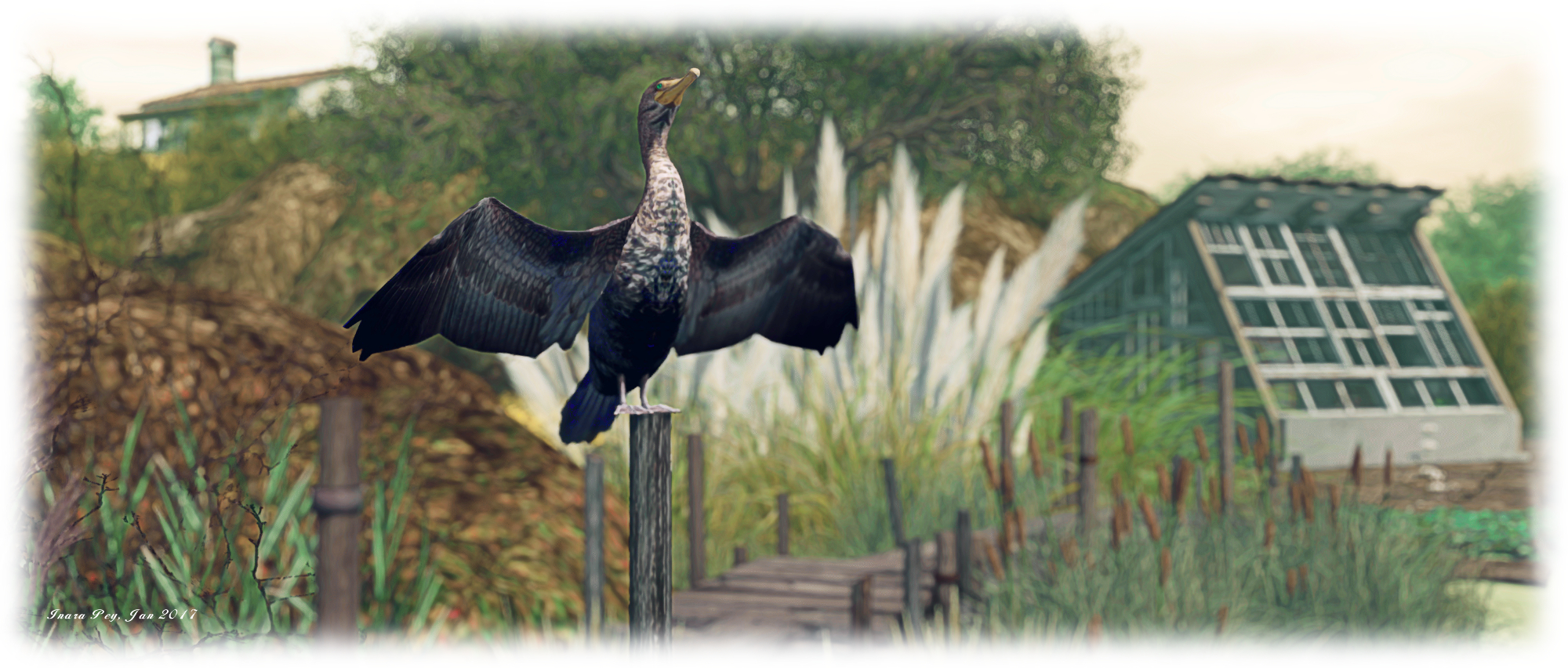
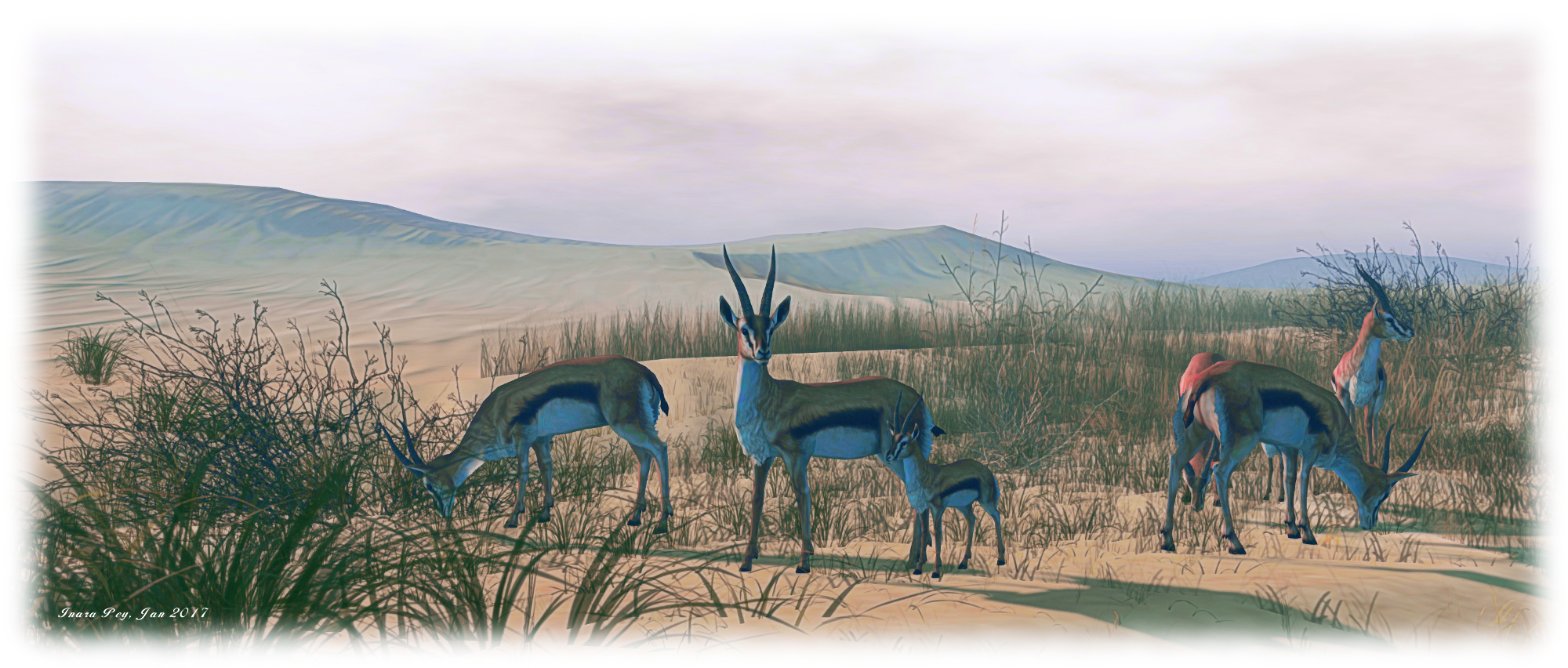
Devin, Devin; Inara Pey, January 2017, on FlickrDevinblog post

Server Deployments

As always, please refer to the server deployment thread for the latest updates.

On Tuesday, January 24th, the Main (SLS) channel was updates with the same server maintenance package deployed to the RC channels during week #3. This includes a partial fix for (non-public) BUG-3286, “Can’t move object” fail notifications (fixes for regions/objects with longer names are pending), together with enhanced server logging and minor internal server enhancements.

There will be no RC deployment on Wednesday, January 25th – but the RC region will be restarted in keeping with the Lab’s new policy of restarting the channels every 2 weeks, regardless of whether or not there is an associated deployment.

The next RC deployment is expected to be week #5 (commencing Monday, 30th January, 2017).

SL Viewer

No changes since my last update. The status of viewers in the pipeline remains thus:

  • Current Release version: 5.0.0.321958, dated December 1st, promoted December 5th, 2016 – formerly the Project Bento RC viewer
  • Release channel cohorts:
    • Maintenance RC viewer, version 5.0.1.322791, dated January 12th
  • Project viewers:
    • Project Alex Ivy (LXIV), 64-bit project viewer, version 5.1.0.501863 for Windows and Mac, dated January 10th
    • 360-degree snapshot viewer, version 4.1.3.321712, dated November 23, 2016 – ability to take 360-degree panoramic images – hands-on review
  • Obsolete platform viewer, version 3.7.28.300847, dated May 8, 2015 – provided for users on Windows XP and OS X versions below 10.7.

Camera Presets

As I noted in a recent TPVD meeting update, Jonathan Yap is working on a code contribution for the official viewer which will allow users to set and save their own preferred camera presets in the viewer.

The idea is that, like the graphics presets functionality Jonathan contributed to the viewer in 2016, users will be able to define their own placements for the SL camera around their avatar (e.g. an over-the-should view, a view from overhead, etc.), which can then be saved and selected / used as required. Jonathan has only recently started on the work – which has an associated feature JIRA, STORM-2145 – but that should hopefully change once various decisions have been made by the Lab.

Nvidia Driver 378.49 + 64-bit Viewer Bug

Nvidia release their 378.49 driver on Tuesday, January 24th, and it can cause an unusual bug / issue with 64-bit viewers. The problem was first noted on Firestorm 5.0.1 (see: FIRE-20774), but I have repro’d it on the Lab’s own 64-bit project viewer (version 5.1.0.501863 at the time of writing) and  on Alchemy 4.0.0 (a crash issue had prevented comprehensive testing on Alchemy 5.0.0 at the time of writing).

The Nvidia 378.49 driver bug which can occur with 64-bit viewers when ALM is disabled, as seen on a 64-bit version of Windows)
The Nvidia 378.49 driver bug which can occur with 64-bit viewers when ALM is disabled

The issue only manifests when Advanced Lighting Model (ALM) is disabled in a 64-bit viewer, and renders the in-world view with an odd blue tinge which almost looks like the blue colour channel is impinging on the red channel. As noted in the Firestorm JIRA, enabling ALM can prevent the issues, as can toggling Glow off when ALM is disabled. See the Firestorm JIRA for workarounds, should you encounter the problem.
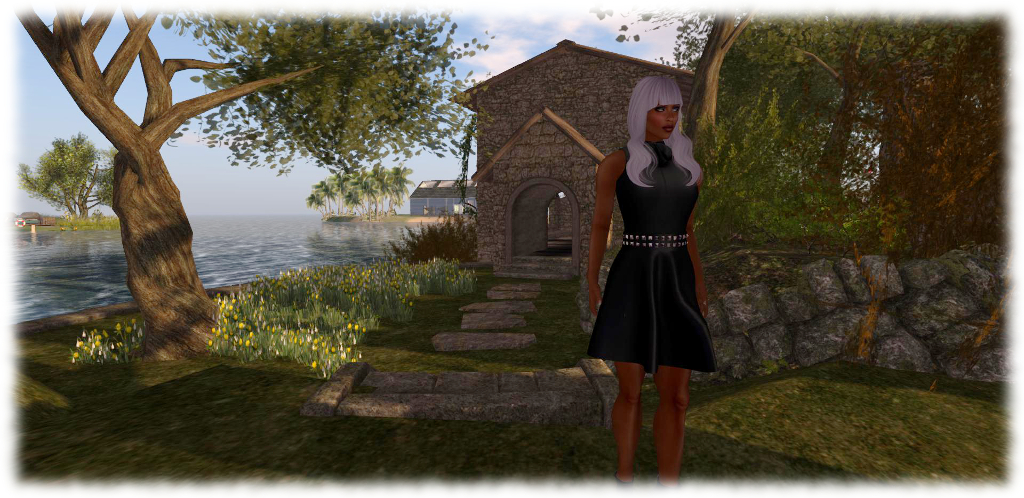
How the same scene looks in the same viewer (SL Alex Ivy 64-bit project viewer for Windows, version 5.1.0.501863 at the time of writing)

The issue was raised at the Simulator User Group meeting on Tuesday, January 24th, a JIRA for the issue on the Lab’s 64-bit project viewer is available on BUG-41294.
 

The gentle elegance of Whimberly in Second Life

Whimberly, Whimberly; Inara Pey, January 2017, on FlickrWhimberly – click any image for full size

Whimberly, a homestead region designed by Staubi (Engelsstaub), is another location Caitlyn and I were introduced to through Shakespeare (SkinnyNilla). He, along with his partner, Max (Maxie Daviau), has a knack of finding beauty spots in Second Life, and Whimberly is certainly that.

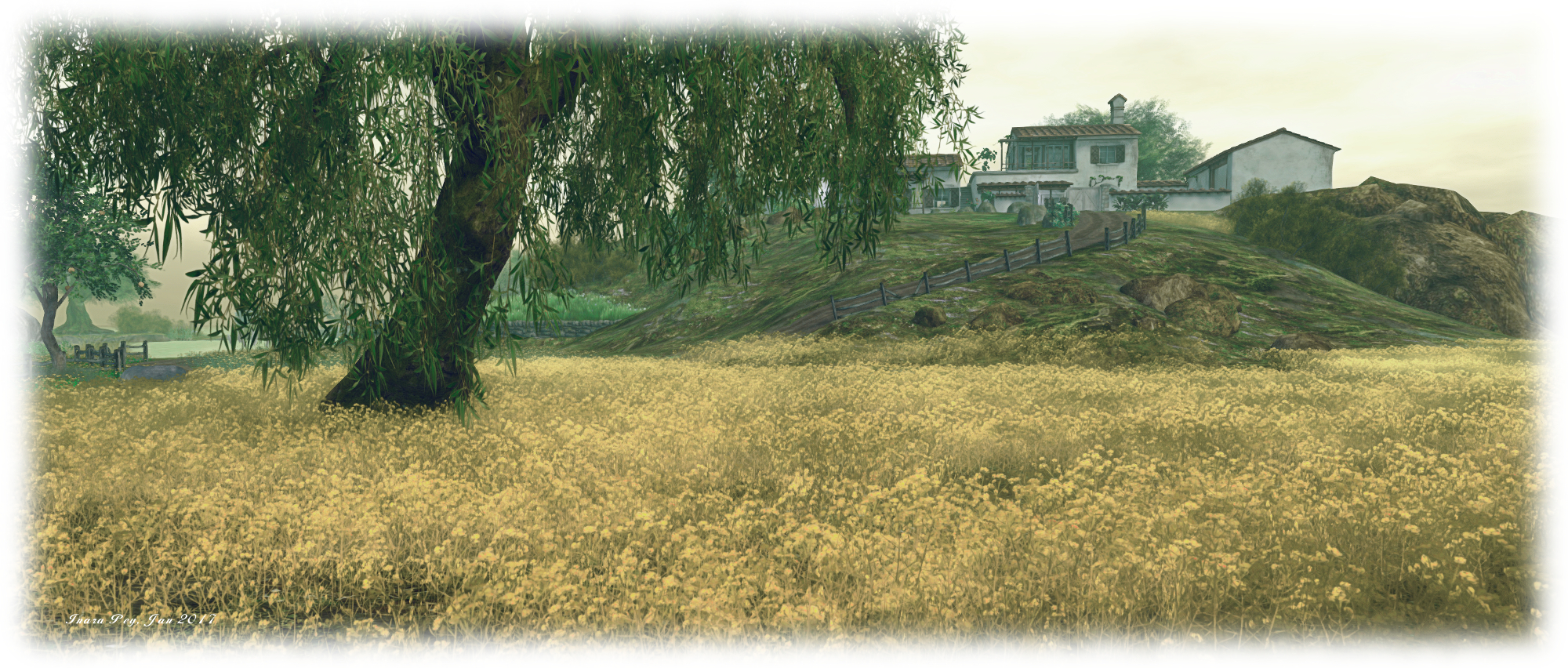
This is another region leaning towards a Mediterranean theme, split into two islands under clouds lit from above by the sun, filtering its light across the landscape. A villa stands atop the single, low hill on the larger of the two islands, neat lines of grape vines arranged around the slopes leading up to it, standing as if marshalled ready to march smartly down the hill to where a dirt track runs between the hill and the region’s landing point.

Whimberly, Whimberly; Inara Pey, January 2017, on FlickrWhimberly

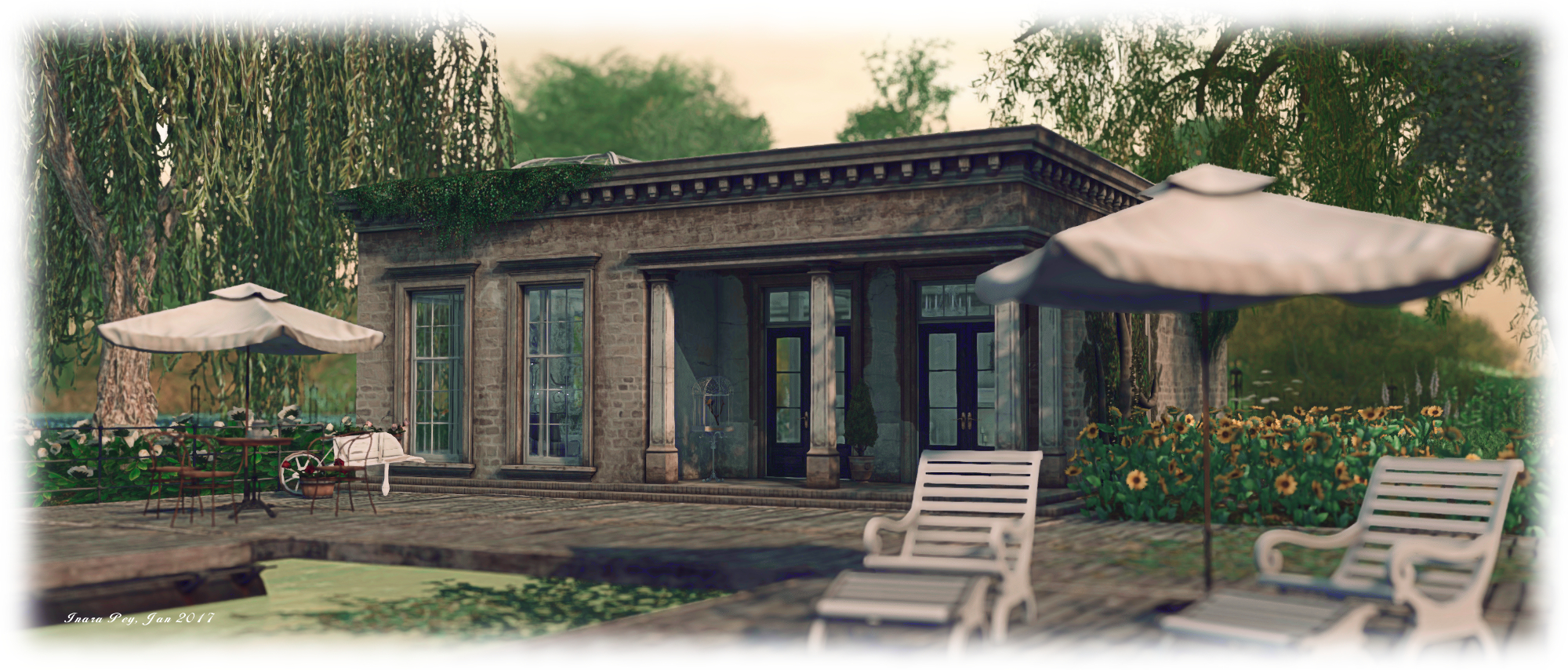
The track curls gently around the foot of the hill before branching, one arms climbs the gentle slope to the villa, the other following the curve of the coastline. Stone steps also lead up to the villa, passing between the lines of grapes. At the top, on the villa’s outer terrace, fruits are laid out for sale on the outer terrace of the villa, and geese roam. A cart with wine casks and an old pick-up truck add to the suggestion that this is a working estate, but the inner courtyard, with its pool, games room, barbecue and outdoor lounge area, carries a sense that this a more of a holiday location than a working vineyard.

Perhaps it is both; to the north, and on the lowlands beneath the villa, sit a cabin and a flat-roofed building. both offer comfortable, if small, accommodation. Might it be that those on vacation sleep within these, whilst availing themselves of the villa and its facilities for the rest of their needs?

Whimberly, Whimberly; Inara Pey, January 2017, on FlickrWhimberly

To the east of the villa, and nestled at the foot of the hill on which it sets, is an artist’s studio, occupying the corner of an aged terrace which drops abruptly into the water. Smoke rises from a brazier a short distance away, where sits a small deck, one of several places on the island visitors can relax, a wooden board walk linking it to the studio, while its back sits to the dirt track.

Between the villa’s hill and the arms of the dirt track – the same track which passes by the landing point – sits a field of oilseed rape. It’s not hard to imagine a gentle breeze stirring the seed heads, causing them to dance in unison like ripples across a lake. Follow the track west and north, and it will bring you to one of the “holiday homes”. A short distance from this, across open grass, sits the bridge offering access to the smaller island. This points  a slender finger out over the water, dissected for most of its length by another track which brings visitors to a lone caravan sitting in the shade of one of the region’s scattered trees, and another wooden deck sitting out over the water.

Whimberly, Whimberly; Inara Pey, January 2017, on FlickrWhimberly

Whimberly is beautifully elegant in its simplicity of presentation. It offers much to explore without leaving the visitor overwhelmed, while the attention to detail means there are a lot of little touches to be discovered and enjoyed, all set beneath a sky crafted to suit the setting and completing the ambience of the region. Should you enjoy a visit, please consider a donation at the landing point to help with the upkeep of the region.

SLurl Details

2017 Viewer release summaries week 3

Updates for the week ending Sunday, January 23rd

This summary is published every Monday, and is a list of SL viewer / client releases (official and TPV) made during the previous week. When reading it, please note:

  • It is based on my Current Viewer Releases Page, a list of all Second Life viewers and clients that are in popular use (and of which I am aware), and which are recognised as adhering to the TPV Policy. This page includes comprehensive links to download pages, blog notes, release notes, etc., as well as links to any / all reviews of specific viewers / clients made within this blog
  • By its nature, this summary presented here will always be in arrears, please refer to the Current Viewer Release Page for more up-to-date information.

Official LL Viewers

  • Current Release version: 5.0.0.321958, dated December 1, promoted December 5 (no change) – formerly the Project Bento RC viewer download page, release notes.
  • Release channel cohorts (please see my notes on manually installing RC viewer versions if you wish to install any release candidate(s) yourself):
    • No updates.
  • Project viewers:
    • No updates

LL Viewer Resources

Third-party Viewers

V5-style

  • No updates.

V1-style

Mobile / Other Clients

Additional TPV Resources

Related Links

Space Sunday: the last man on the Moon

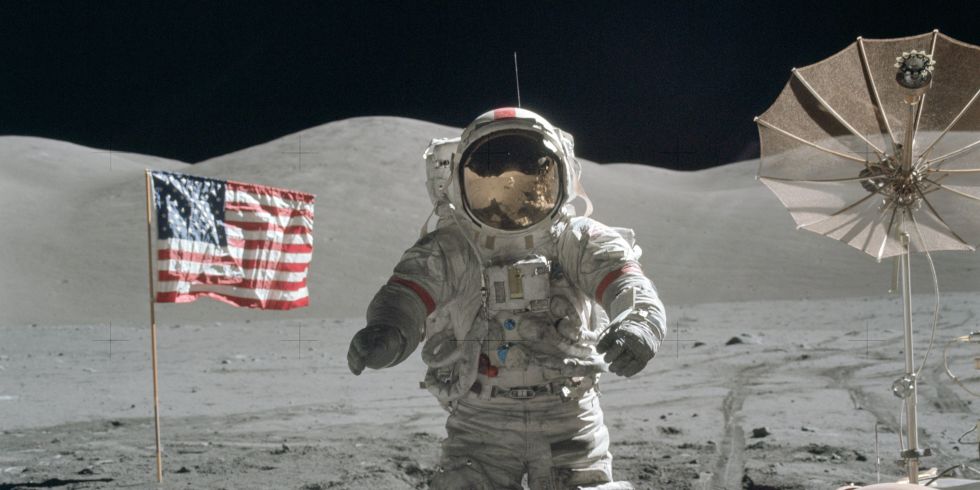
Eugene Andrew "Gene" Cernan, Commander, Apollo 17, in the Taurus-Littrow valley, December 1972
Eugene Andrew “Gene” Cernan, Commander, Apollo 17, in the Taurus-Littrow valley, December 1972. Credit: Harrison Schmitt / NASA via Getty / AFP

Eugene Andrew “Gene” Cernan, Captain, United States Navy (retired) and former NASA astronaut, passed away on Monday, January 16th 2017 at the age of 82. The commander of Apollo 17, he was – and currently remains – the last man to walk on the surface of the Moon, in what was arguably the most significant of the Apollo lunar missions.

Born in Chicago, Illinois in March, 1934, he attended Purdue University, Indiana, where he gained a Bachelor of Science degree in Electrical Engineering in 1956. While at the university. he took a commission as an Ensign in the U.S. Naval Reserve Officers Training Corps. Following his graduation, he attended U.S. Naval Flight Training, qualifying as an attack pilot, and went on to log more than 4,000 flying hours in jet aircraft and completed over 200 aircraft carrier landings.

In 1963, Cernan completed his education under the auspices of the US Navy, obtaining a Master of Science degree in Aeronautical Engineering from the  U.S. Naval Postgraduate School. Later that same year, he was selected by NASA as a part of their third intake of Astronaut Candidates, and participated in both the Gemini and Apollo programmes.

His first flight into space, aboard Gemini 9A started with a tragedy. The original Gemini 9 flight had been scheduled for Elliot See and Charlie Bassett. However, when they were unfortunately killed when their NASA aircraft crashed at the end of February 1966, the mission was re-rostered as Gemini 9A, and Cernan and his flight partner, Thomas Stafford, were promoted from back-up to prime crew.

Gemini 9A was to prove a mission plagued with misfortune. The first attempt to launch the mission, in May 1966 had to be scrubbed when the uncrewed Agena Target Vehicle Gemini 9A would rendezvous and dock with once in orbit  was lost not long after launch. This required a delay while a second Agena was prepared for flight, being launched on June 1st, 1966. However, once in orbit, telemetry from the vehicle suggested a launch shroud had not been correctly jettisoned.

On approaching the Agena following their launch on June 3rd, Stafford and Cernan confirmed the sections of the shroud, although open, had failed to detach, leaving the vehicle looking – in Stafford’s words – “Like an angry alligator out here rotating around”. He and Cernan indicated they were willing to carefully approach the Agena and try to nudge the shroud elements clear of the docking adapter, but mission control nixed the idea, fearing the Gemini vehicle might be damaged in the process. Instead, the crew rehearsed docking runs with the target vehicle and tested rendezvous abort procedures.

The "angry alligator" of the Agena target vehicle with launch shroud elements still attached, as seen from Gemini 9A on June 3rd, 1996. The nose of the Gemini vehicle can be seen at the top of the image, and the craft were some 20.3 metres (66ft) apart
The “angry alligator” of the Agena target vehicle with launch shroud elements still attached, as seen from Gemini 9A on June 3rd, 1996. The nose of the Gemini vehicle can be seen at the top of the image, and the craft were some 20.3 metres (66ft) apart. Credit: NASA

On the third day of the flight, Cernan became the third man (and America’s second) to walk in space. However, this part of the mission also proved troublesome. The Gemini spacesuits were not water-cooled, and had to be “inflated” prior to egressing the vehicle. Cernan found the latter made the suit almost completely inflexible and a serious impediment to his movement. This meant he had to exert himself a lot more, and because the suit had no proper cooling, he face the genuine risk of suffering heat prostration.

Nor was this all; the build-up of heat meant his helmet faceplate fogged to the point where he could barely see, and there were serious concerns about him getting back into the Gemini. His EVA was  curtailed without all goals being met, and after 128 minutes in space, Cernan eventually made it back inside the spacecraft. As a result of this experience, the Apollo spacesuits were redesigned to incorporate an undergarment using a water circulation system to cool the wearer – and approach still used in modern space suits.

Cernan next flew in space in May 1969 as part of the final Apollo dress-rehearsal mission for an actual landing on the Moon. Apollo 10, which saw Cernan and Stafford again fly together, and joined by John Young, became the second crewed mission to orbit the Moon (the first being Apollo 8, in December 1968), and the fourth crewed flight of Apollo overall. The focus of the mission was for Stafford and Cernan to pilot the Lunar Module to just 15.6 km (8.4 mi) above the lunar surface, gathering critical data which would allow the powered descent systems aboard future Lunar Modules to be correctly calibrated for their missions.

Gene Cernan in 1969, ahead of the Apollo 10 flight during a NASA press conference. A Snoopy toy sits next to him, indicative of the Apollo 10 lunar module call sign
Gene Cernan in 1969, ahead of the Apollo 10 flight during a NASA press conference. A Snoopy toy sits next to him, indicative of the Apollo 10 Lunar Module’s call sign. The Command Module was called Charlie Brown. Credit: NASA

In most respects, the Apollo 10 Lunar Module was fully capable of flying a mission to the surface of the Moon – it just lacked sufficient propellent in its ascent engine fuel tanks to make a successful flight back to rendezvous with the Command Module.  This later prompted Cernan to joke, “A lot of people thought about the kind of people we were: ‘Don’t give those guys an opportunity to land, ’cause they might!’ So the ascent module, the part we lifted off the lunar surface with, was short-fuelled. The fuel tanks weren’t full. So had we literally tried to land on the Moon, we couldn’t have gotten off.”

Apollo 10 reached lunar orbit on May 21st, 1969, three days after launch, and remained there for a further three days, completing the Lunar Module tests in the process, before returning to Earth. It was a mission which set both records and firsts. It was the first (and only) Apollo Saturn V mission to launch from Pad 39B at Kennedy Space Centre; it was the first (of only two, the other being Apollo 11) Apollo missions to comprise veterans of previous missions into space.

Continue reading “Space Sunday: the last man on the Moon”

Elo’s Ray of Light in Second Life

Ray of Light
Ray of Light

I first encountered the art of Elo (Elorac Paule) at the Nitroglobus Roof Gallery in an intriguing and key-catching display entitled Always Closer (see here for more). I was therefore delighted to learn from friend (and arts) Owl Dragonash, that Elo would be exhibiting Ray of Light, a selection of her work at Commune Utopia.

For those not familiar with it, Commune Utopia is a Bohemian community within Second Life with over 1800 group members. Founded by Sedi (Seductive Dreamscape), the commune celebrates creativity, passion, laughter, music and art, and fosters a caring, inclusive environment all are welcome to visit and enjoy – and join, if they wish. Owl handles a lot of the music aspects of the commune, and details on events can be found both on her blog, and on the official Commune Utopia blog.

Ray of Light
Ray of Light

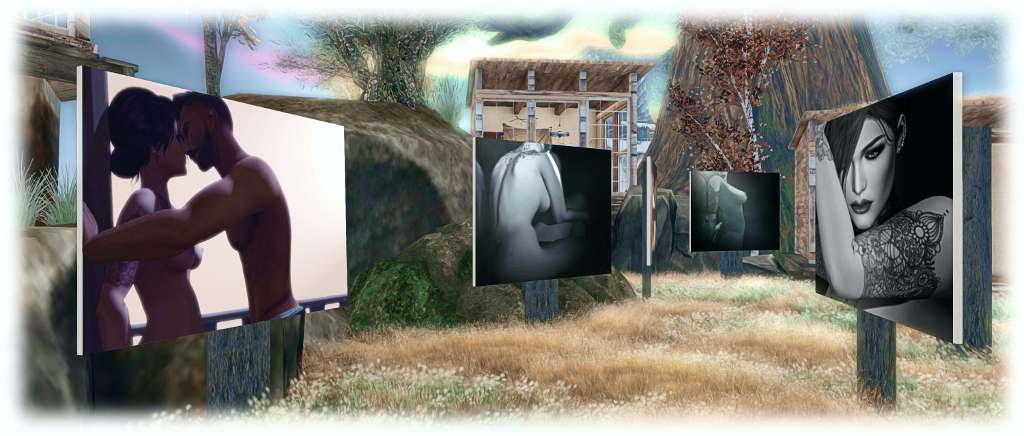
With Ray of Light, Elo presents fourteen of her captivating studies, most of which should be considered NSFW, and all of which contain considerable expression. One or two among them may be familiar from Elo’s other exhibitions, but this doesn’t in any way reduce them experience of seeing them here. These are emotive, seductive and physical pieces, rich in their allure and perfectly suited to being displayed together.

Offered in a large format and in an outdoor environment, these are very much personal studies, focused on Elo herself. As such they reveal a number of facets of her personality, and dip into some of her explorations of sensuality in Second Life. Coupled with the fact many of the images have nudity (hence the NSFW note), this personal, sensual aspect to the pieces might be taken to mean the visitor is perhaps cast into the role of voyeur.

Ray of Light
Ray of Light

However, I’d suggest this is not the case. For the majority of the pieces, whether colour or monochrome there is far more of an invitation for us to become partners within the  scenes set by the pictures, rather than the suggestion that we are furtive observers. This adds a layer of emotional response: the desire to reach into these pictures, caress and share is powerful.

Ray of Light is an excellent exhibition, offered in a setting which invites wider exploration as well – be it the small art studios perched around the exhibition area, or the rest of the region as a whole.  Recommended.

SLurl Details

Science fiction, mystery, and the literary greats with Seanchai Library

It’s time to kick-off another week of storytelling in Voice by the staff and volunteers at the Seanchai Library. As always, all times SLT, and events are held at the Library’s Second Life home at Bradley University, unless otherwise indicated.

Monday, January 23rd 19:00: Desertion

Gyro Muggins reads Clifford D. Simak’s 1944 short story with a twist of transhumanism in the form of pantropy  – of which it is perhaps the earliest example.

desertionKent Fowler is the head of a human mission to Jupiter, a planet found to be inhabited by creatures called “lopers”, which have adopted to Jupter’s hostile environment. With the technology at their disposal, the human researchers are able to transform volunteers into “lopers”, so they might more readily explore Jupiter. But something has apparently gone wrong.

Of the first four transformees sent out from the research facility, none have returned. When one more also fails to return, concerns are raised that the transformation process may be flawed. Rather than risk anyone else, the head of the expedition opts to have himself changed into loper form, together with his dog, whom he hopes will keep him company.

Once transformed and “on” Jupiter, the Fowler discovers he has considerably greater ability than provided by his human form, as does his dog. The two are able to communicate telepathically, exchanging ideas and observations gathered during their time in human and canine form. Both feel their enhanced state leads them to a greater calling than that of the humans’ original mission…

Tuesday, January 24th 19:00: A Monstrous Regiment of Women – Part 2

Begins with Caledonia Skytower.

Wednesday, January 25th

14:00 – Explore the World of John Steinbeck in Kitely (grid.kitely.com:8002:EXPLORESeanchai)

The World of John Steinbeck - the Steinbeck Gallery, Kitely (grid.kitely.com:8002:EXPLORESeanchai)
The World of John Steinbeck – the Steinbeck Gallery, Kitely (grid.kitely.com:8002:EXPLORESeanchai)

From January 20th through February 5th, Tacoma Little Theatre, Tacoma Washington State, presents Of Mice and Men directed by Niclas Olson. Based on Steinbeck’s 1937 novella of the same name, the play will once again be supported by Senchai Library as a part of their Explore the Arts series, hosted on the Kitely OpenSim grid (grid.kitely.com:8002:EXPLORESeanchai), where a special World of John Steinbeck has been created.

On Wednesday, January 25th at 14:00 SLT / PDT, virtual world users are invited to join in with a Hypergrid Safari to Explore the World of John Steinbeck, led by Caledonia Skytower. The tour will feature all of the facilities built by Seanchai, and cover their work in supporting the Tacoma Little Theatre’s production of Of Mice and Men, and explain how the partnership between the theatre and Seanchai Library, through the use of virtual spaces, encourages attendees of the play to explore more of Steinbeck’s life and work, and experience the history of the times about which he wrote.

There will be a special article on The  World of John Steinbeck in this blog in the near future.

19:00: The Atrocity Archives

atrocity-archives“Bob Howard is a low-level techie working for The Laundry, a super-secret government agency. While his colleagues are out saving the world, Bob’s under a desk restoring lost data. None of them receive any thanks for the jobs they do, but at least a techie doesn’t risk getting shot or eaten in the line of duty. Bob’s world is dull but safe, and that’s the way it should have stayed; but then he went and got Noticed.

“Now, Bob Howard is up to his neck in spycraft, alternative universes, dimension-hopping Nazis, Middle Eastern terrorists, damsels in distress, ancient Lovecraftian horror and the end of the world.

“Only one thing is certain: it will take more than control-alt-delete to sort this mess out…”

Join Corwyn Allen as he delves in The Atrocity Archives, the first volume of the Laundry Files, by Charles Stross.

Thursday, January 26th

19:00: An Evening with Hemingway, Tolstoy and Saki

With Shandon Loring.

21:00 Seanchai Late Night

With Finn Zeddmore.


Please check with the Seanchai Library SL’s blog for updates and for additions or changes to the week’s schedule.

The featured charity for January / February is Heifer International, working with communities to end world hunger and poverty and to care for the Earth.