Farewell to Mont Saint Michel in Second Life

Mont Saint-Michel
Mont Saint Michel – click and image for full size

Update: November 21st 2016: Mont Saint Michel is now back in Second Life, same SLurl.

Update: October 10th, 2016: almost a year after it had first been indicated the region was closing, Mont St Michel has now gone from Second Life. Tyche Shepherd noted its depature during her August end-of-month survey of the grid.

Update, November 3rd: Mont Saint Michel remains open at the start of November, as pointed out to me by Petr Hastings-Vanbeeck. see my update for more.

I saw via Ciaran’s blog that one of Second Life’s landmark sites, Mont Saint Michel, is to close at the end of September 2015.

Region holder and owner of the *Edwelweiss* brand, Moeka Kohime, announced the closure in a brief note on her Flickr stream, citing an “economical reason”. whether this refers to finding tier an increasing burden or a fall-off in donations and / or rentals (or a combination of all three), isn’t clear. However, given her Edelweiss brand will be relocating in-world, tier does seem to possibly be the culprit here.
The hidden secret within Mont Saint-Michel
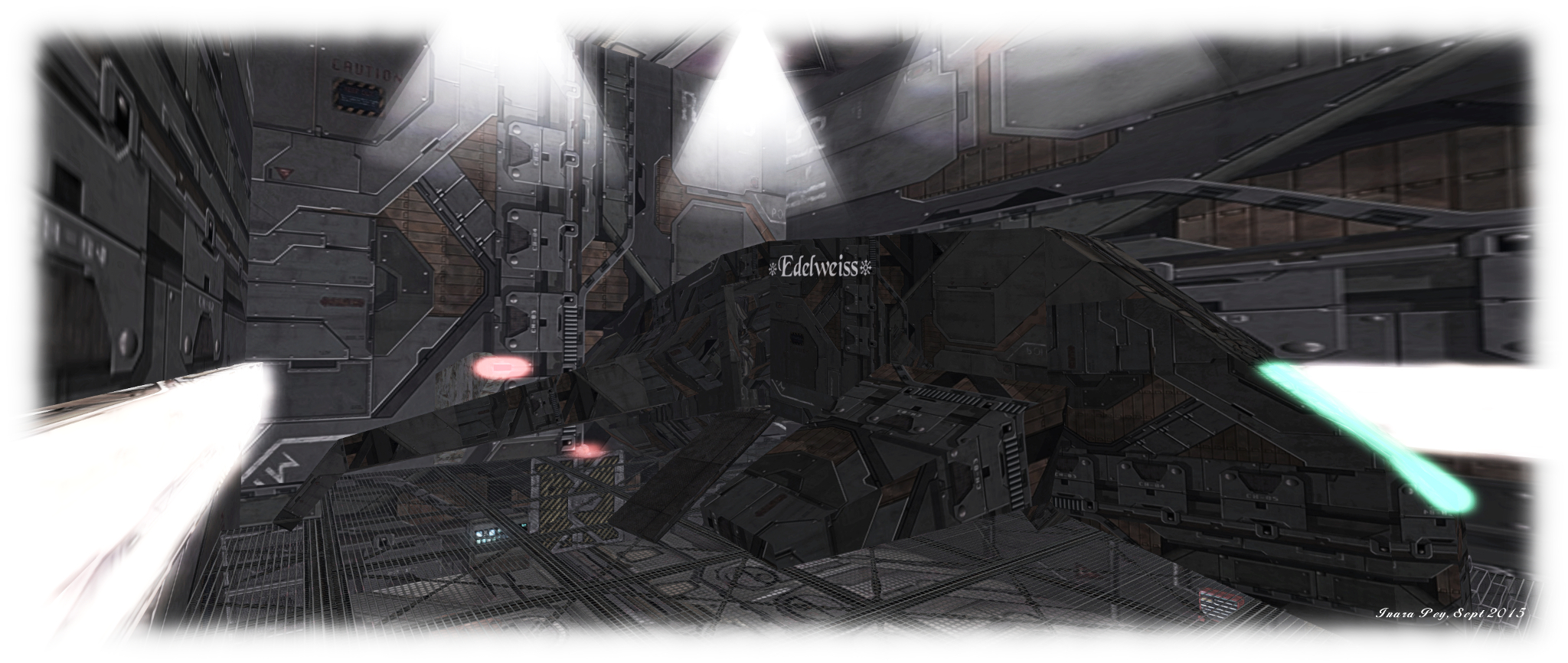
The hidden secret within Mont Saint Michel

For my part, I paid my first visit to Mont Saint Michel far back in 2011, back when two regions existed: Mont Saint Michel, the beautiful reproduction of the Abbey citadel at the mouth of the Couesnon River in France, and a region representing the causeway and vehicle park outside of the citadel’s walls.  While I’d been aware of the build for a long time prior to that visit, it wasn’t until that first visit that I really understood why it was a popular attraction for residents (even if I did miss its hidden secret at the time!). Since then, I’ve often been back over the years to wander the streets and climb the stairs up to the great abbey, although I’ve only blogged about it once between then and now, and that was in 2013.

What is impressive about the region is the level of detail within it, and the fact that it is navigable by avatar. As I said back in 2011:

The Mont faithfully reproduces the original in almost every visual aspect; no mean feat given it occupies an area a quarter of the size of the original. Yet it is not just a mere “look but don’t touch” showpiece: it is also scaled to allow avatar access, providing a fully immersive experience for visitors who can walk through the narrow streets, browse shops and wend their way up to the magnificent monastery that crowns the island.

Given this, Mont Saint Michel has always struck me as an ideal candidate for exploration using something like the Oculus Rift, and losing it before HMDs allow us to do so, and to see it so fully and immersively is to be counted our loss.
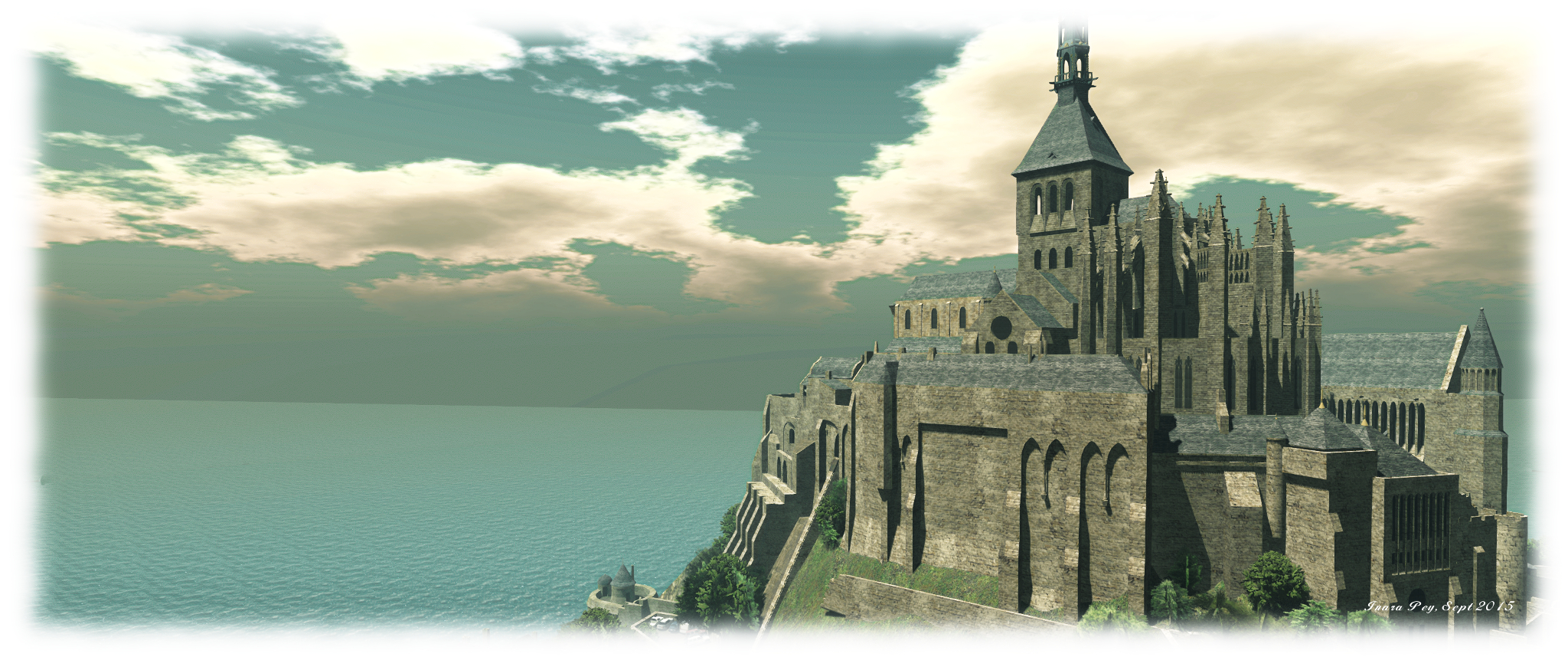
Mont Saint-Michel
Mont Saint Michel

It’s not clear precisely when the region will close, but if you do wish to pay a last (or first) visit, I’d recommend you do so sooner rather than leaving things right until the end of the month, sometimes regions have a habit of vanishing a little earlier than anticipated. To Moeka, I would like to add my thanks to those from many others, for creating and sharing such an incredible build with us over the years.

SLurl Details

Line and Shadow in Second Life

Line and Shadow
Line and Shadow

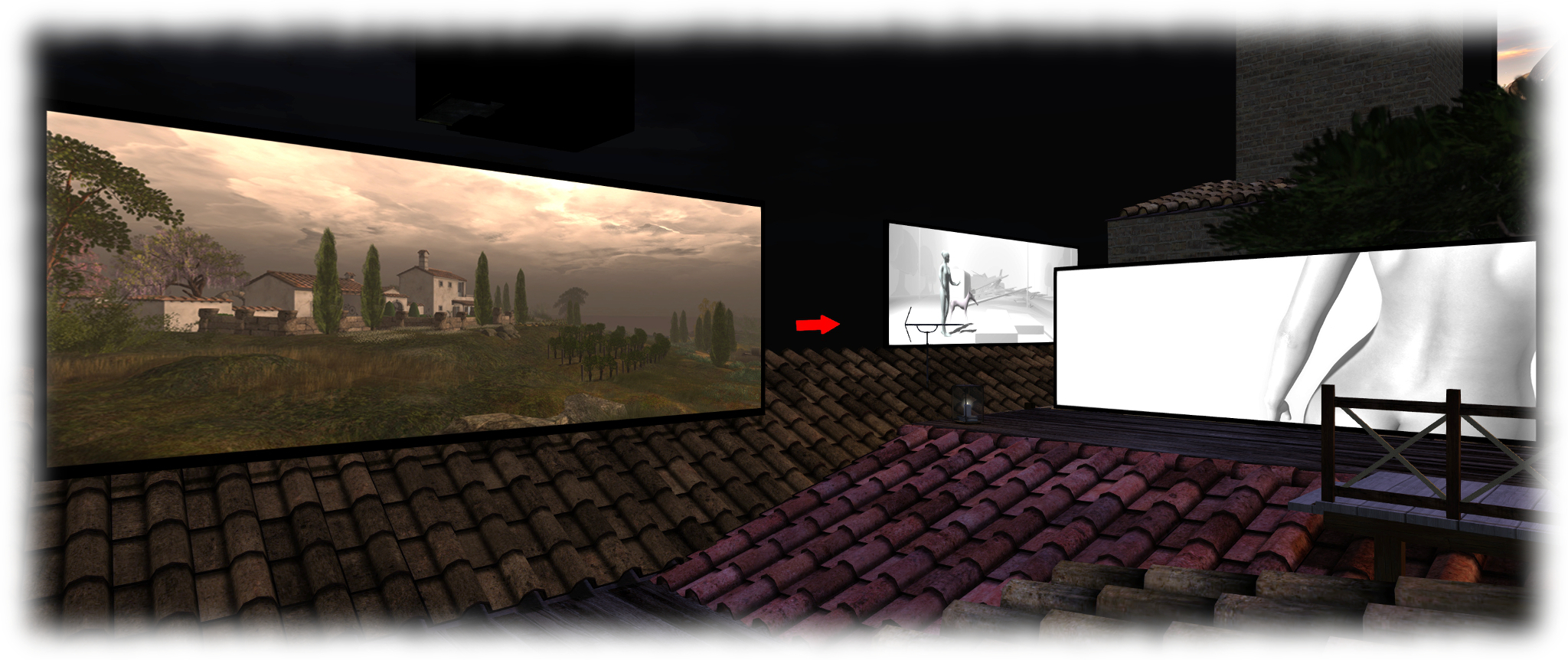
Open now, and for approximately two weeks at Solodonna Land’s Art on Roofs gallery space operated by Sniper Siemens and Elettra Beardmore and curated by Terrygold, is an exhibition of  images by noted Second Life photographer Ziki Questi.

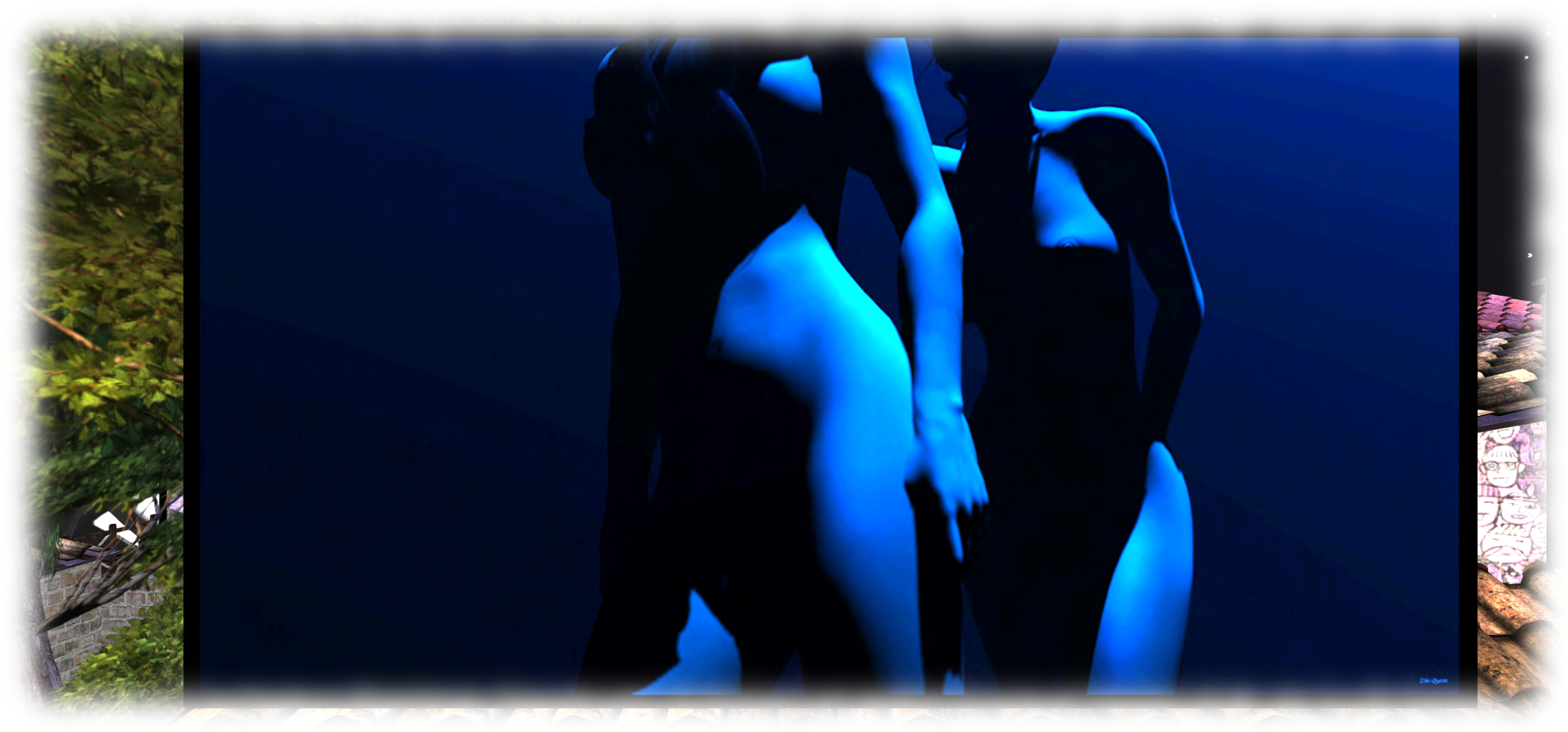
In Line and Shadow, Ziki notes that she offers images taken at various locations (including Art on Roofs itself), between May and September 2015, together with a series of erotic images she has taken of herself and partner Kinn, to present a display of some 24 images in total.

Ziki’s work has always been captivating to the eye, and the images on display here are no exception. Her familiar panoramic image ratio is once again used to enormous effect, bringing forth her subject matter perfectly.

Line and Shadow
Line and Shadow

Some of the images on offer form what might be considered something of a Second Life retrospective, because while some of the images feature places we can visit and enjoy today, such as Sommergewitter and Bella Place; many of the landscapes featured belong to places which have now sadly passed into memory, such as Roche, Santaurio and The Forgotten City.

Art installations are also very much a feature, and unsurprisingly so, given Ziki’s extensive coverage of the arts in SL. Thus it is that visitors will encounter images of Bryn Oh’s piece for Distrito Distinto, which recently featured at MetaLES, Neva Crystall’s HuManoID, Alpha Auer’s Alpha Tribe, and Storm Septimus’ Failure to Thrive.

Interspersed between the landscape and art images are the more personal / erotic pieces. These offer a strong contrast in terms of content whilst further demonstrating Ziki’s measured eye for composition and framing.

Line and Shadow
Line and Shadow

This is yet another impressive display of work by an artist whose reputation is well-deserved, and who never fails to capture the very essence of her subject matter, presenting images which both captivate and entice.

SLurl Details

The Drax Files 32: facilitating art and machinima in Second Life

Jay Jay Jegathesan (Jayjay Zifanwe in SL) patron to the arts in Second Life and founder of the University of Western Australia's presence in Second Life
Jay Jay Jegathesan (Jayjay Zifanwe in SL) patron to the arts in Second Life and founder of the University of Western Australia’s presence in Second Life

With machinima, you are getting a glimpse into the soul of the artist. They’re not making this film so they can sell tickets at the movies. They are making this to show you who they are.

– Jayjay Jegathesan

The above statement comes at the start of The Drax Files World Makers episode 32, and perhaps perfectly encapsulates a good part of the message offered within it. It also encompasses much of what Second Life is for so many of us: a means of expressing ourselves fully and freely and without the burdens we often face in the physical world – a point Jay Jay also makes later in the film.

This segment is a slight departure from previous episodes, in that it could be said to cover two different, if related, themes. On the one hand, it offers insight into the amazing world of Second Life machinima and the ways in which the platform  offers many unique ways of artistic freedom for film-makers. On the other it is a personal look at Jay Jay’s own role within the platform, both at founder and manager of the University of Western Australia’s presence in-world and through it  a patron and champion of the arts and machinima through his in-world alter-ego, Jayjay Zifanwe.

Natascha Randt and Karima Hoisan are two of the featured machinima-makers in segment #32 of The Drax Files, their work helping to illustrate both the rich diversity of machinima films made in SL and the unique opportunities for collaboration across the world offered by the platform

These two threads, woven together through the UWA’s ongoing series of art and machinima challenges, make for one of the most complex pieces yet produced by Drax as a part of the World Maker series. In it, he precisely balances insight and understanding into the appeal of machinima and the creative potential Second Life offers the medium with a clearly understandable examination of Jay Jay’s and the UWA’s work in-world, presenting audiences not necessarily well-versed in Second Life with a narrative flow combining both elements into a cohesive whole.

UWA's Winthrop Clock Tower & Reflection Pond as reproduced in Second Life and a landmark frequenctly featured in UWA machinima contest entries
UWA’s Winthrop Clock Tower & Reflection Pond as reproduced in Second Life and a landmark frequently featured in UWA machinima contest entries

From Jay Jay’s opening comment, we see machinima initially framed through the UWA’s ongoing series of art and machinima competitions (such as Pursue Impossible, which is currently underway), and which serves also to underline the fact that just about every kind of film genre and type known in the physical world can be produced within the virtual – and to extremely high standards.

This richness of opportunity is further underlined with brief statements on their art by some of second Life’s top machinima makers such as Rysan Fall (long a personal favourite), with clips from films by others such as Tutsy Navarathna (ditto). Through this comments, albeit  individually brief, the audience gains a well-rounded view of machinima and its creative power and value, as well as into way so many find it so personally satisfying.

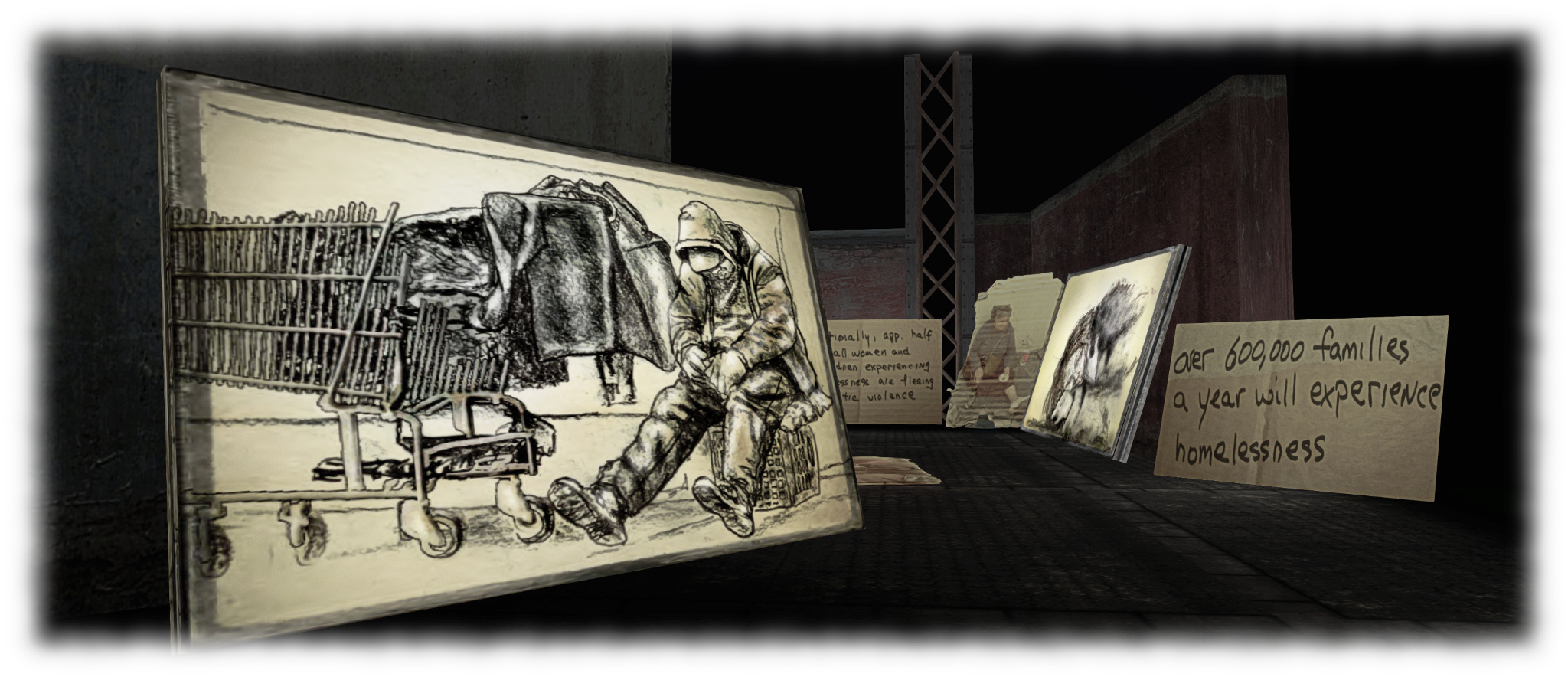
And just in case there are any doubts over machinima’s position as a genuine form or artistic and creative expression, I’d at least point to Rysan Fall’s short film Invisible City. This not only topped-out the machinima category for the Project Homeless competition sponsored by the City of Parramatta, new South Wales, it took second position overall in the competition, beating many films made solely in the physical world with its context, narrative and production quality.


Rysan Fall’s brilliant Invisible City

Art and machinima serve many purposes in Second Life, just as they do in the real world, and it is to the UWA’s credit that they have sought to embrace this as much as possible through their promotion of virtual arts – such as with their involvement in Project Homeless, as mentioned above.

Continue reading “The Drax Files 32: facilitating art and machinima in Second Life”

A little bit of Junk in Second Life

Junk; Inara Pey, September 2015, on FlickrJunk September 2015 (Flickr)

I’ve written a few times about some of the advantages shopping in-world can have, quite aside from the benefits of easy browsing, sharing time with friends, etc., simply because many content creators with land of their own put as much care and effort into providing a place people will want to visit as much for itself as for the shopping experience.

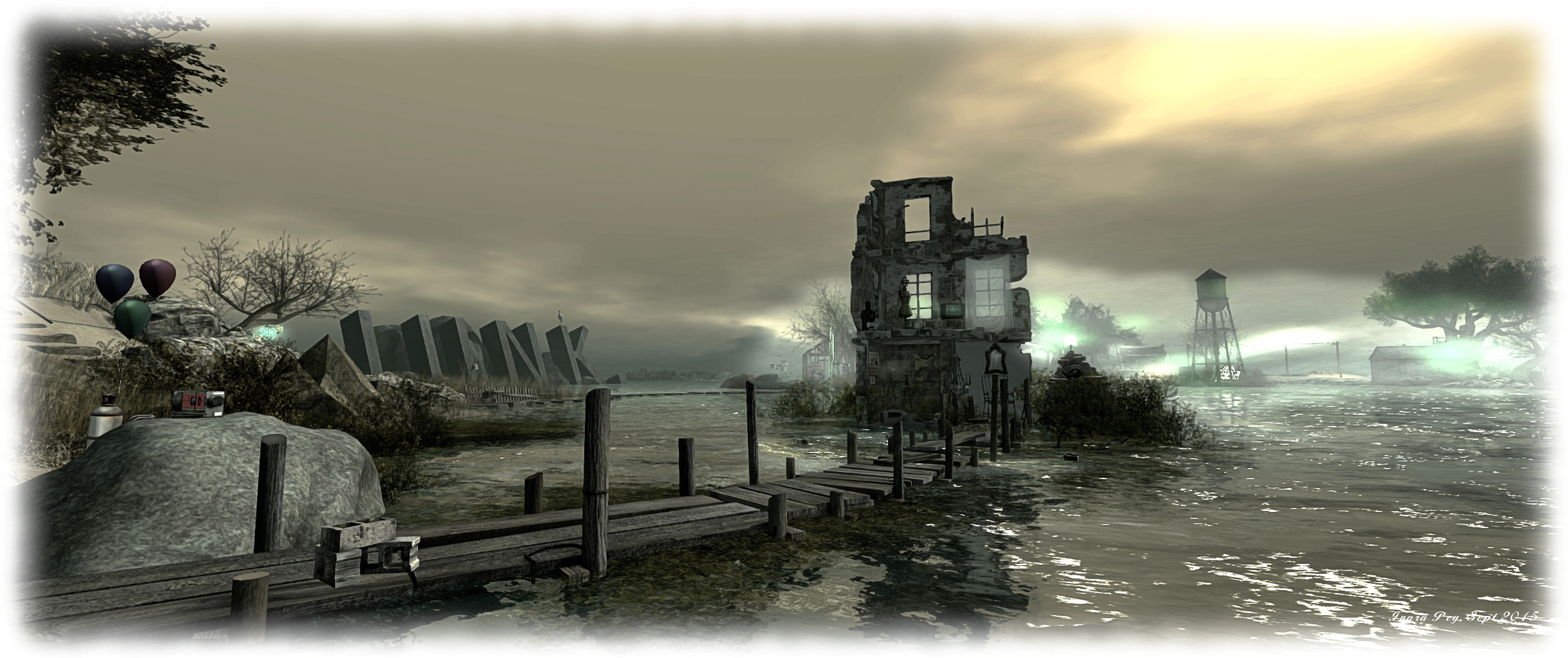
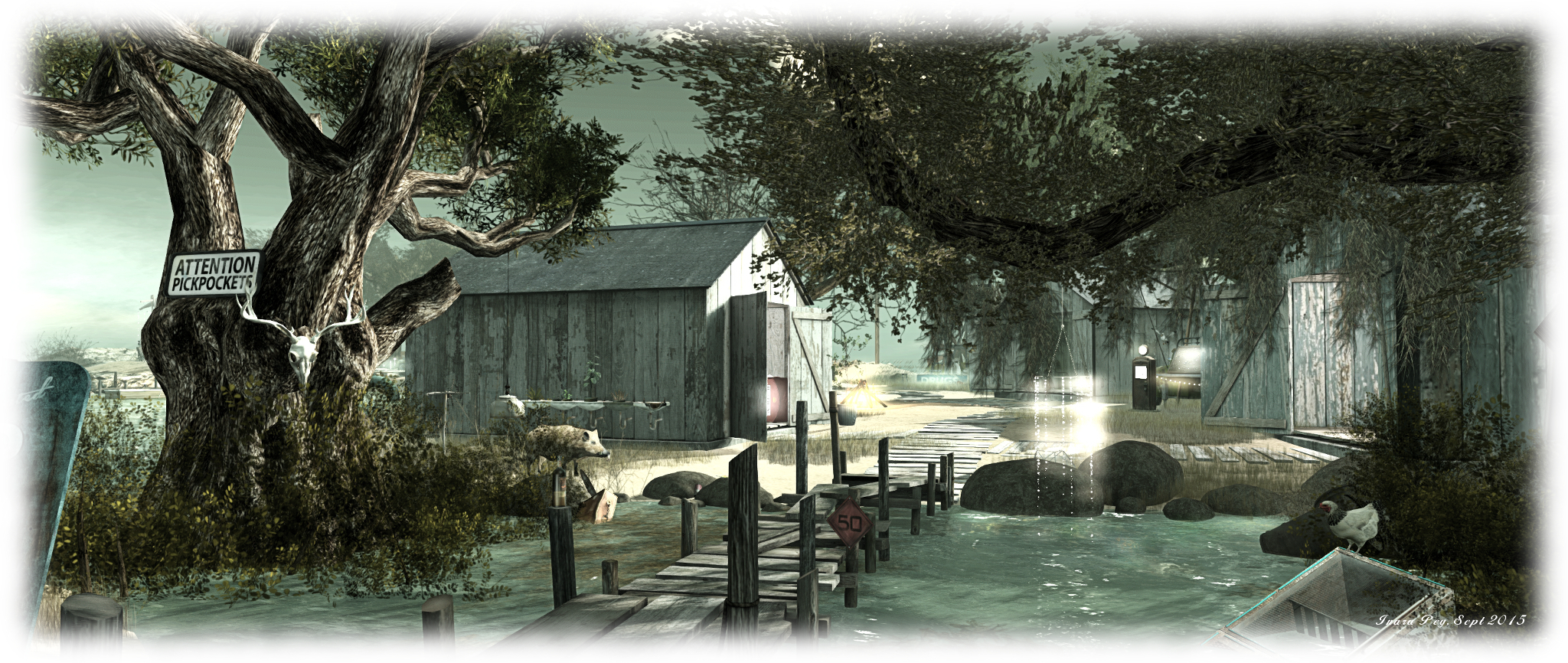
Tab Tatham is one such creator. Her region, called simply Junk, the name of her store, is wonderfully atmospheric in design and execution. So much so that not only does it provide an eye-catching place to visit as well as to spend time shopping, for me it is also mindful of another region design I always enjoyed and admired: Jordan Giant’s The Colder Water, which makes it doubly attractive.

Junk; Inara Pey, September 2015, on FlickrJunk September 2015 (Flickr)

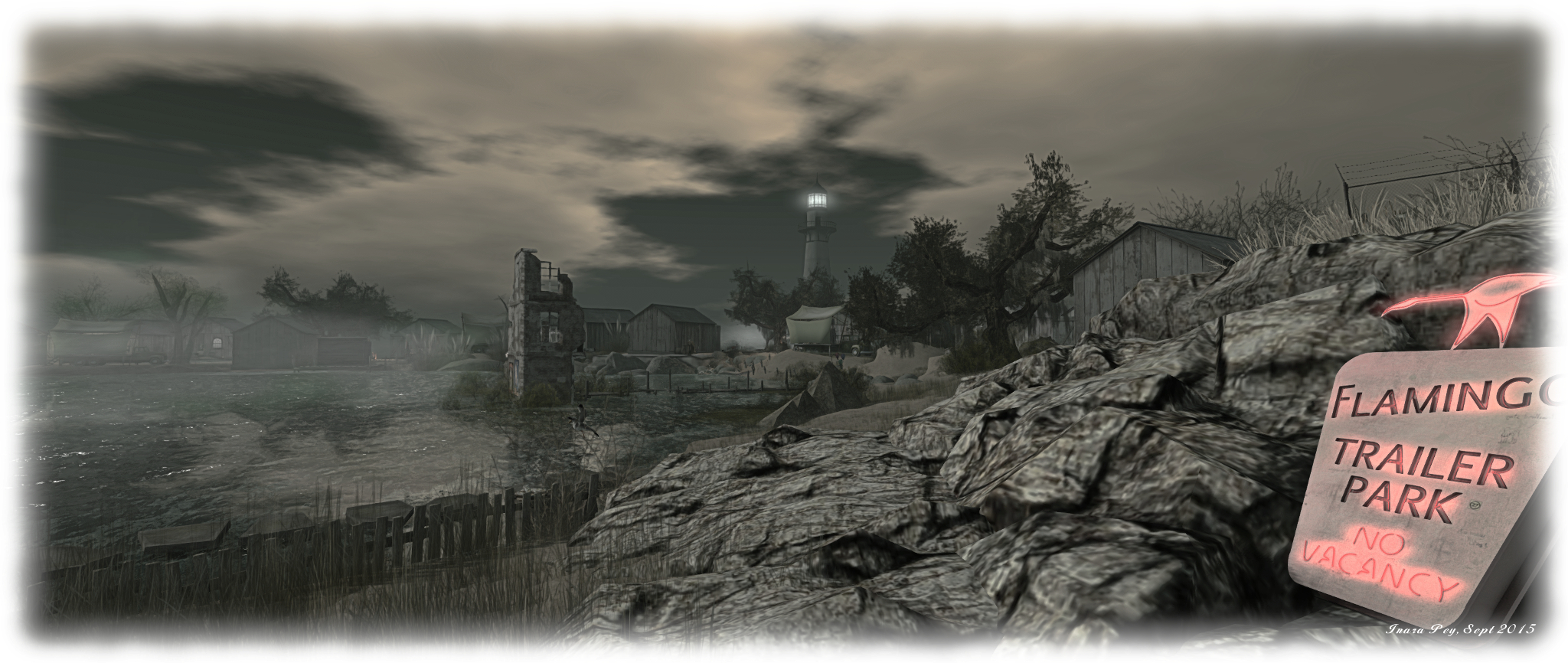
Like The Colder Water, Junk offers a crescent island with a landing area atop a broad, rocky plateau at one end, which sweeps down and around to rocky “tail”. It is also cast within a twilight world which suits it admirably, watched over by the slender finger of a tall lighthouse sitting just off the coast of the main island, something which again carries an echo of The Colder Water, although this lighthouse is very much still functional.

Which is not to say the one is in any way modelled on the other, there is also much which stands the two designs apart and make them entirely unique and individually attractive. My comparison is purely a means of showing how my memories of one had me feeling a comforting warmth of familiarity on my arrival at the other.

Junk; Inara Pey, September 2015, on FlickrJunk September 2015 (Flickr)

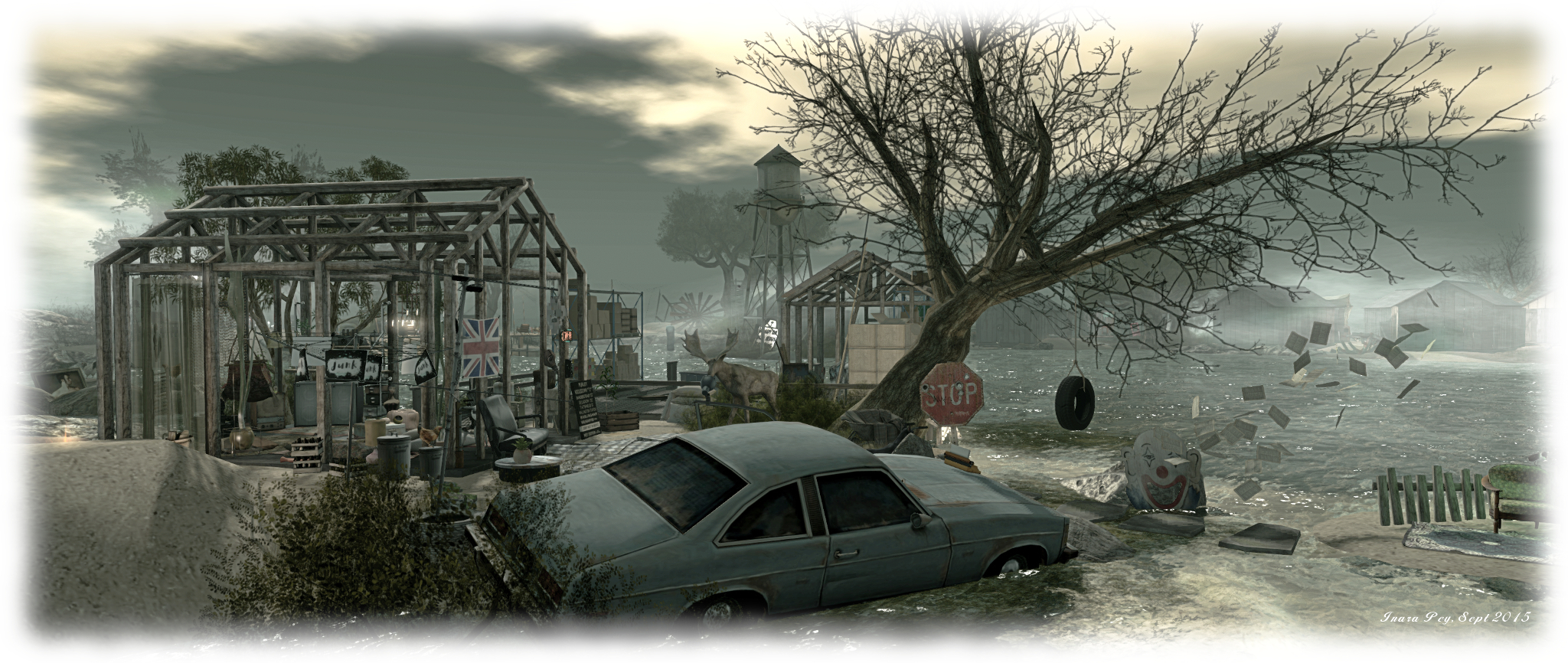
From the arrival area, which also forms the store’s information area, the visitor can wander the length of the island, Tab’s store being laid out as a series of sheds (Tab’s own designs) and awning-draped flat-bed trucks either side of the island’s sandy ribbon. Between these winds a board walk of loose-laid planks, enticing the visitor onwards in exploration.

At the far end of the island’s curve sits a live events area, built out over the water, with seating areas both on and near it, and the stage provisioned by another awning-hung truck. Braziers made from old oil drums, glowing with the heat of the fires burning inside them offer warmth should the sea breeze turn cold,  while the seating – whether made by Tab or by others – is wonderfully home-spun in styling, adding enormously to the overall ambience of the place.

Junk; Inara Pey, September 2015, on FlickrJunk September 2015 (Flickr)

Just off the main island, and sitting within its curve, are two little islands. On the first, barely more than a rocky outcrop, sits what appears to be the last remnants of an old factory. Further out, and reached via a set of stone flagstones which allow visitors to keep their feet dry, is a little warehouse area which offers cosy places to sit as well.

For those who like spending time meandering around market stalls or poking through little stores of bric-a-brac and suchlike, then a wander through Junk is liable to delight; it evokes such feelings perfectly, quite aside from any real or imagined sense of familiarity the region design may evoke. There is also a whimsical quirkiness present as well, which adds to a visit enormously, be it through spotting Nessie sitting in the water or smiling at the lantern carrying crane lighting the board walk, or any one of a dozen or more little touches which bring a smile to the lips.

Junk; Inara Pey, September 2015, on FlickrJunk September 2015 (Flickr)

Whether you are shopping for something that’s a little unusual and pleasing to the eye design-wise, or just out to see what you can find when it comes to furnishings and decor, be sure to take a look at Junk – you’re liable to find it is anything but.

SLurl and Other Details

Bright Canopy: relaunching Wednesday, Sept 23rd

Bright CanopyAfter experiencing a stormy official launch period at the end of August 2015, which resulted in the service having to be suspended, Bright Canopy have indicated that their streaming service for Second Life and OpenSim users will be re-opening to users on Wednesday, September 23rd.

The official announcement is due to be made at 23:59 GMT (15:59 SLT) on Tuesday, September 22nd via the Bright Canopy website. However, the text of the announcement has been released ahead of this to a number of bloggers including myself, with permission for us to help circulate the news in advance.

The announcement reads in full:

Launch Reboot

Bright Canopy is back!

Bright Canopy has been down now for almost one month. We have done our best to be transparent and communicative during the downtime. Please be sure to read the community meeting transcript for all of the details.

We have been working with Frame on a new pricing plan that will allow us to offer the service immediately. We will continue working on options that will improve our costs on the back-end and allow more  flexibility in the future.

For now, this is what we have:

  • $17 per month includes 20 hours of service.
  • Additional time $0.02 per minute
  • 30 minute minimum for sessions
  • If you use 10 hours or more of additional minutes, that will be charged immediately, otherwise additional minutes are charged at the beginning of the next month.

So if you sign up for Bright Canopy, you will be charged $17. You will receive 20 hours of server time. Once you have used that time, if you continue to use the service, you will build-up overage time at $0.02 per minute with a minimum purchase of 30 minutes ($0.60). If you use less than 10 more hours, your card will be charged for those additional minutes (plus the $17 for the new month’s subscription) at the beginning of the next month. If you use 10 or more hours of additional minutes before the end of the month, those minutes will be charged immediately.

  • So if you use 5 additional hours during the month, you would spend $6 more . This would mean your credit card would be charged $21 at the beginning of the next month.
  • If you use 10 additional hours, you would be charged $12 now and $17 for your monthly subscription at the beginning of the next month.

It is our sincere hope that our community will find value in what we offer and are able to use the service to enhance their time in their virtual worlds. We look forward to being of service to you.

It is important to note that this is an entirely new payment model which supersedes all previous models, and requires users to sign-up to it anew in order to be able to use the service.

The Bright Canopy service allows the viewer and all Second Life content to be streamed directly to a user’s browser. In order to do this, the service relies on Amazon’s Elastic Compute Cloud for the actual service hosting and delivery, and Frame, a company with considerable experience in provisioning optimised Windows applications to users via the cloud, to facilitate that delivery.

As I explained in a recent blog post, unexpected and sustained fluctuations in the Amazon Spot Instance pricing mechanism during August adversely affected Bright Canopy’s ability to offer the service in a financially sustainable manner, forcing the company to suspend the service.

The hope is that will this new pricing plan, the company will be able to re-launch the service in a way that will meet the immediate needs of users whilst also, as the official announcement notes, allowing the company to work with Frame to possibly improve pricing for users in the future.

Pursue Impossible: as the entries continue

Mistero Hifeng: "Dream", Pursue Impossible
Mistero Hifeng: “Dream”, Pursue Impossible

With the prize pool standing at over L$560,000, the list of entries in the University of Western Australia’s (UWA)  Pursue Impossible Art & Film Challenge continues to grow while the clock slowly counts away the days to the deadline for submissions at midnight SLT, on October 31st, 2015.

The Pursue Impossible theme is in recognition of the UWA adopting Pursue Impossible as their clarion call to students in the physical world to achieve their fullest possible potential by studying with the university.

Within the competition, entrants are invited to consider what their “impossible” might be. Perhaps it is the goal they have achieved or which they’ve seen achieved by their loved ones, friends or family; or perhaps it is a consideration of those things we deem to be impossible, but which we may still pursue and conquer as individuals or collectively. Or maybe it is an illustration of how virtual environments empower people to visualise, create and push the boundaries of the possible. There are many options and opportunities to consider.

Art submissions must have COPY permissions, and must not exceed 150 LI, and must be free from any copyright issues – if third-party content is used in an entry, permission must and been sought and granted from the creator for its inclusion in the Challenge. Machinima entries should preferably no longer than 4 minutes and 30 seconds, must be specifically made for this challenge. All submissions should allow casual viewers to interpret how the theme is represented, or provide a means by which the piece can be understood in the context of the challenge theme.

For full details on the challenge, including submission guidelines and rules, please refer to the UWA’s Pursue Impossible announcement.

Nino Vichan: Pursue the End of Homelessness - Pursue Impossible
Nino Vichan: Pursue the End of Homelessness – Pursue Impossible

As well as the art and machinima category prizes, there will also be special cash prizes for audience participation. The prize pool for this currently stands at L$15,000 apiece for the two categories (art and machinima).

I’ll have news on the audience participation requirements once they have been officially announced by the UWA directly. In the meantime, don’t forget to check the art entries at the UWA Gallery and the video submissions on the UWA blog.

Related Links