Heart and Soul
Inara Pey: Living in a Modemworld
Second Life, virtual worlds and virtual realities
Update, April 6th, 2013: Please also see my updated status report.
The new avatar baking project took a step closer on December 14th, as LL started to release more in the way of technical details on the project and launched a project viewer.
Code-named Project Sunshine, and a part of the Shining Project, this work is aimed at improving avatar baking and at eliminate bake fail issues.
The project represents a sizeable change in how Second Life works, and as such will take time to fully implement, requiring extensive changes to the viewer itself – something which Nyx Linden has previously referred to as, “Some pretty scary viewer re-architecting”, as well as a good part of the back-end services – hence why it has taken so long for the project to mature. Because of the degree of changes taking place, Linden Lab have consistently promised, via Oz Linden, that TPV developers would some eight weeks notice prior to any initial deployment of the new service in order for them to ensure they can integrate the required viewer-side code changes, test them, and ensure they can support the new service.
Speaking at the TPV Developer meeting on Friday 14th December, Oz reiterated the 8-week lead time before adding, “Today begins the clock! … You get at least two months from now before we begin rolling server-side baking out to the main grid, at least beyond a test region or two.” So while the precise timescale as to when the new baking service will start to appear on the main (Agni) grid remains open, TPVs can now start to engage in the project, a step which itself brings it one step closer to reaching the grid.
Currently, avatar baking is essentially driven from the viewer. In summary (and without drilling too much into detail), this means that when a system layer outfit or item of clothing is changed (including alpha layers), the updates are applied locally in the user’s viewer. They are then uploaded to the server the user is connected to, which then passes the updates out to the other viewers connected to it, so that other users get to see the change as well. This process has several points of potential failure: communications between the viewer and the server may be interrupted, for example, with the result that the server doesn’t receive all the information pertaining to an outfit change, with the result that – again as just one example – the user sees their avatar perfectly fine, but others see the avatar as blurred / grey. In some instances, the process can fail such that while the user sees their avatar wearing the desired outfit, other see the same avatar still wearing the “old” outfit.
The new service will hopefully eliminate these issues by moving much of the emphasis for the baking process from the viewer to a new “Texture Compositing Service”. The viewer will retain some elements involved in avatar baking – the actual baking of the avatar shape (i.e. shape values and IDs) will still take place on the viewer side, for example. However, the new compositing service will take over most the donkey-work and handle the majority of avatar baking data and communications (excluding prim-based attachments).
As with many of the new services being introduced into Second Life by LL, the new baking service will be HTTP driven (the current system is UDP protocol based) which should have an additional benefit of speeding up the entire avatar load process when logging-in to SL and in fetching textures.
How the entire process should work can be summarised as follows:
To further TPV developers understand the new system and answer their questions, Nyx Linden dropped by the TPV developer meeting on Friday 14th December. Note that what follows is an overview of Nyx’s discussion from the point-of-view of providing digestible information on the new service for “general” users, rather than a in-depth review of the full technicalities of the system and Q&A session.

Please use the page numbers below to continue reading this article
 Jessica Lyon has announced she and the Phoenix / Firestorm team will be holding an Office Hour meeting, and all users are invited. Jessica is particularly keen to have users on Phoenix attend the meeting, commenting:
Everyone is invited and encouraged to attend but I especially want to see Phoenix Viewer users in attendance as the primary topic will be about Phoenix and its future. I also would like to see all you angry people who have been flaming and hating on us in our blog comments. I’d like to address your complaints so please at least be on the stream if you can.
Because the lack of Phoenix Viewer development and in fact the future of the Phoenix Viewer itself needs to be discussed and your questions/concerns need to be addressed.
Firestorm users are also obviously welcome.
Those wishing to attend / join the stream are advised to turn up around 30 minutes ahead of the meeting. As there are limited slots for both the in-world event and the stream, it would be advisable if those attending the event don’t also run the stream, as this could prevent others who are unable to get in-world from watching and listening on-line.
The event will be recorded for future playback.
 As generally happens in long-duration space missions, media attention around Curiosity is waning somewhat as the initial gee-whiz factor wears off and the reality of this potentially being a multi-year mission kicks-in and journos start seeking the next gee-whiz headline. As such, the next time Curiosity really hits the headlines, it’ll likely be for one of three reasons: Something Big has happened science-wise; someone has sensationalised upcoming news a-la Joe Palca; or something on the rover has broken. Indeed, a combination of the second two points is already occurring.
But that’s the nature of news cycles. Once the glamour and the wow has worn off, the interest fades and it is only the sensational (or titillating, in some circumstances) which does get reported. It’s why news and feature editors aren’t really interested in hearing about Second Life (“Second Life? You show me a million people a day are signing-up to it, and I’ll run it. Otherwise all you have is yesterday’s news…”).
In the meantime, Curiosity rolls onward towards “Mount Sharp” is what is still only the prelude to its mission on Mars; a prelude which has already yielded remarkable results in just four short months.
Ever tried to take a picture of yourself? It’s not easy unless you have some frame of reference to guide you – such as an LED screen on your camera / device on which you can actually see how the shot will look prior to taking it. “Great photo, other than the fluffy bunny apparently trying to climb out of your right ear….”
Imagine how much harder it is to do the same remotely over a distance of more than 90 million kilometres (56 million miles). Yet on Sols 84 and 85 (October 31st / November 1st), that’s precisely what Curiosity did, producing a beautiful high-resolution composite image of itself quickly seen the world over.
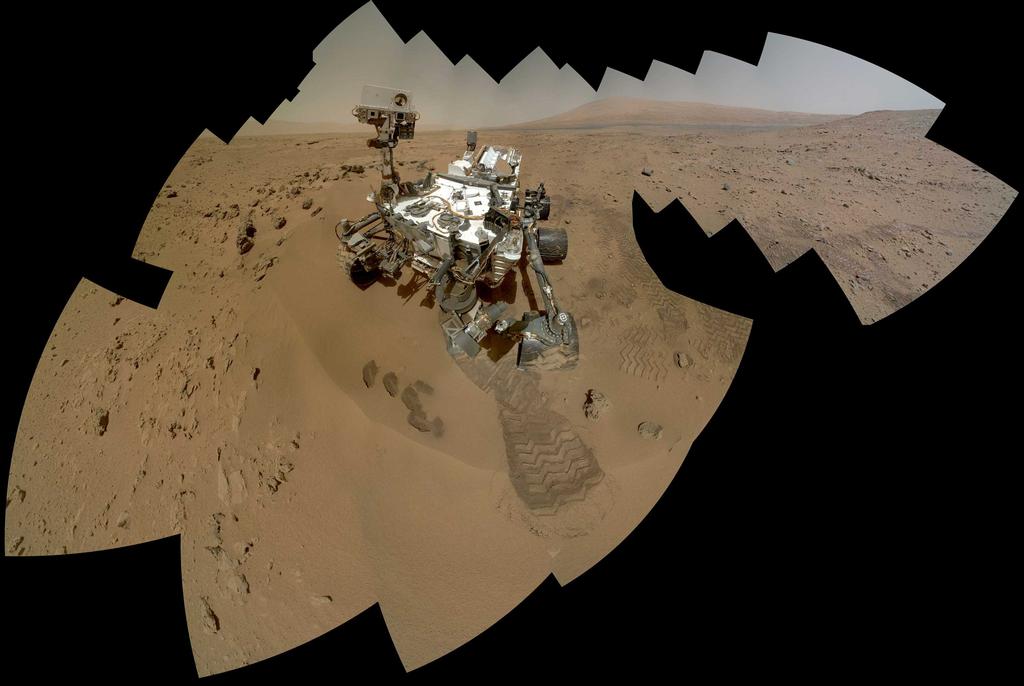
The portrait was put together using dozens of high-resolution images captured using the rover’s Mars Hand Lens Imager (MAHLI), located on the turret at the end of Curiosity’s robot arm in a complex series of manoeuvres. But this wasn’t just a case of point-and-click and hope for the best, then go back and try again. Everything had to be planned well in advance earth-side prior to the rover being told to “get on with it”.
But how do you choreograph something over a distance of 90 million kilometres? Phoning home in brief bursts isn’t going to cut it.
Enter Curiosity’s earth-based “twin”, another of the unsung heroes of the MSL mission. Located at the Jet Propulsion Laboratory in Pasadena, California, the VSTB – Vehicle System Test Bed – is the closest thing NASA have to a “second Curiosity“. It comprises all of Curiosity’s major elements – wheels, chassis, bodywork, drive system, electrical system, mast, camera systems, robot arm, turret systems and so on (all minus the nuclear “battery” powering the real MSL rover) – and it forms a critical element of the overall mission. Using the VSTB engineers can troubleshoot any issues which may occur with the rover’s major systems and mission planners can map complex manoeuvres using things like the robot arm, allowing them to build up a precise set of commands required to perform a given task prior to uploading them to Curiosity on Mars and allowing the rover to carry them out.

Please use the page numbers below to continue reading this article

Friday 14th December will see the The Dickens Project open its gates for a two-week long celebration of Charles Dickens and his work as a part of the festivities which have been taking place around the world to mark the 200th anniversary of his birth.
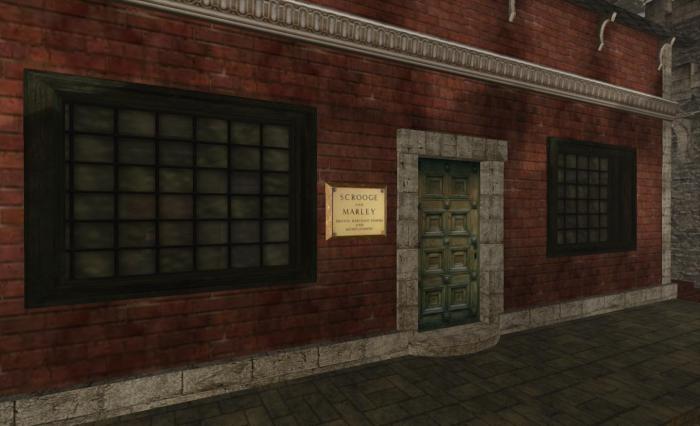
The Dickens Project is being organised by Storyfests SL and will taken place on land donated to the project by the Community Virtual Library at their home region of Info Island. It will comprise daily presentations (in Voice) of Dickens’ seasonal classic, A Christmas Carol and encompass some of his other works in an inateractive, immersive setting.
The schedule, as it stood on Thursday December 13th is as follows – but please make sure you check for the latest details on the Storyfests blog.
Friday December 14th, 14:00
Saturday December 15th, 17:00
Sunday December 16th – TBA
Monday December 17th – Stave One ~ Marley’s Ghost
Tuesday, December 18th – Stave Two ~ The First of Three Spirits
Wednesday, December 19th – Stave Three ~ The Second of Three Spirits
Thursday, December 20th – Stave Four ~ The Last of The Spirits
Friday December 21st – Stave Five ~ The End of It
Saturday December 22nd – OTHER DICKENS! TBA
Sunday December 23rd and Monday December 24th
Tuesday December 25th – CHRISTMAS DAY
Wednesday December 26th – OTHER DICKENS!
Thursday December 27th – Closing Day and “Alternate Versions Presentations”
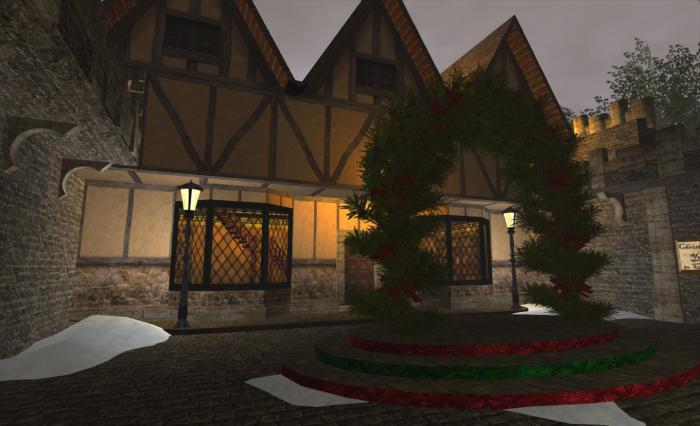
As mentioned above, The Dickens Project site also features places to explore as part of the celebration. These allow you to:
Ever wonder what inspired the creation of the character Ebenezer Scrooge? Ever wonder why Dicken’s wrote “A Christmas Carol” and then followed it up with a Christmas novella a year for the next five years? You can discover all these things at The Dickens Project!
The Dickens Project stands as a remarkable, immersive collaborative project, bringing to life the world of Srouge, Bob Cratchit and all in word and in all three dimensions. So come one, come all and enjoy a festive treat and celebrate the life and works of Charles Dickens and the power of great literature.
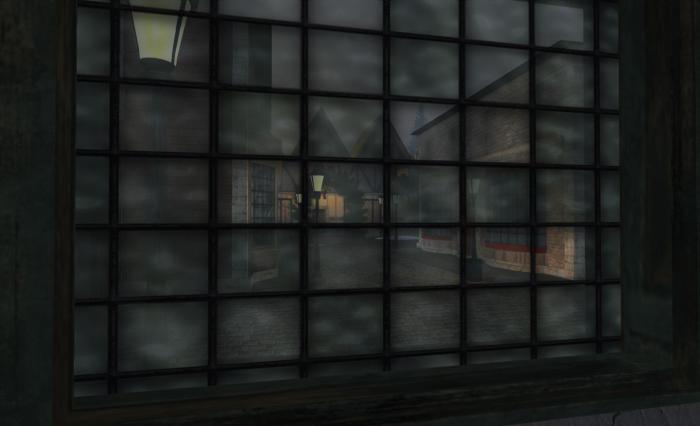
All gratuities received during the event will be donated to the Community Virtual Library in SL.

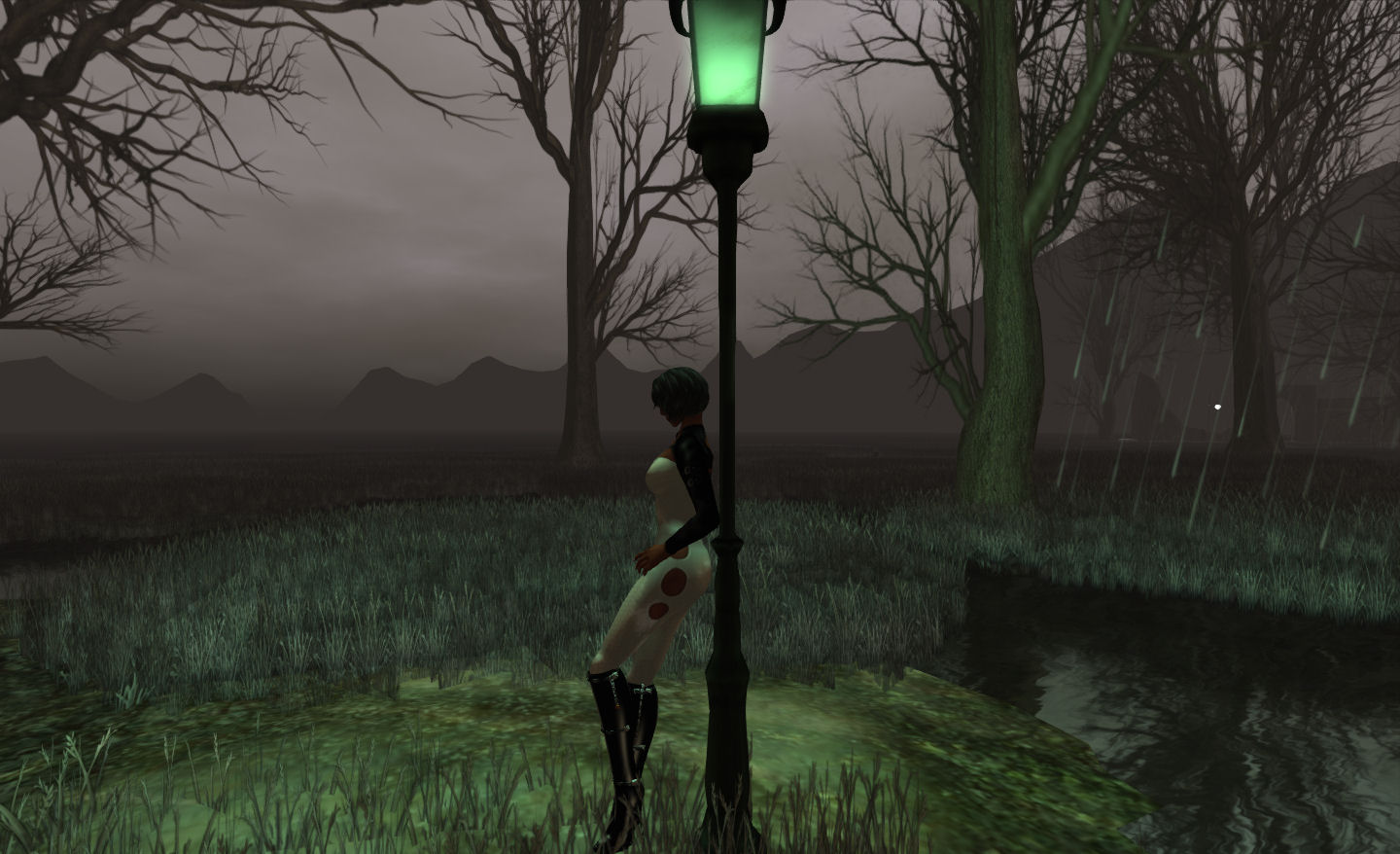
“All those moments will be lost in time, like tears… in… rain…”
#2 of an occasional series.
 Inara Pey: Living in a Modemworld