Space Sunday: Moon flights and rovers

SpaceX have the aspirational aim of landing Starship on the Moon in 2022, and using it to deliver cargo to the Moon in support of human operations there, by 2024. Credit: SpaceX

SpaceX President and COO Gwynne Shotwell has shed a little more light on the company’s plans for this Starship space vehicle.

Two prototypes of the vehicle are currently being developed for test flights at the company’s facilities in Boca Chica, Texas and in Florida, with the company hoping to fly one of them – most likely Starship Mk 1, being readied at Boca Chica – to an altitude of 20 km before the end of the year.

Beyond this, Starship is designed to be lifted to orbit atop the company’s new Super Heavy reusable booster and undertake missions to the surface of the Moon and then to Mars – and possibly beyond. Speaking at the 2019 International Astronautical Congress, Shotwell specifically addressed the company’s nearer-term aspirations, marking 2022 as the year they’d like to put Starship on the Moon for the first time:

We want to get Starship to orbit within a year. We definitely want to land it on the Moon before 2022. We want to […] stage cargo there to make sure that there are resources for the folks that ultimately land on the Moon by 2024, if things go well, so that’s the aspirational time frame.

Such a flight to the Moon won’t be made by either Starship Mk 1 or Mk 2 – these are intended purely for atmospheric flight tests – descent handling, landing capabilities, etc., and to define any changes that need to be made prior to the company committing to building at least two orbital test vehicles – Starships Mk 3 and Mk 4, before they progress to trying for the Moon.

This makes the time frame for the lunar missions as given by Shotwell very aggressive. They are dependent on the company quickly completing atmospheric tests of the vehicle, then moving to being able to undertake orbital missions and integrated with the Super Heavy in order to undertake the lunar flights – particularly the cargo delivery missions -, hence why Shotwell emphasised the “aspirational” nature of the time frame.

Starship Mk 1 filmed during the September 28th, 2019 livestream event. Credit: SpaceX

While the time frame is in keeping with Elon Musk’s own aggressive approach to such matters (and he would appear to love the sound of them whistling past, as next to none of his stated target dates for SpaceX, Tesla or any of his other ventures have ever been met), it is next to impossible to see how a 2022 goal can ever be met; there is simply too much to be achieved between now and then – such as actually flying a starship vehicle for the first time, or getting it and the Super Heavy booster to a point where they can be tested together, leave alone making any attempt to land a 50-odd metres tall cylinder on the rough and uneven surface of the Moon without it either breaking itsself on landing – or just toppling over.

Beyond the 2024 target for cargo missions, Musk has also stated that he’d like to have a lunar base established by 2028 – although Shotwell didn’t directly reference this, probably quite wisely.

In the meantime, and aside from these goals, SpaceX has already been contracted by Intuitive Machines and ispace. Both companies working with NASA to deliver payloads to the Moon ahead of the agency’s 2024 Artemis programme human Moon landing. However, this contractor are for the use of the company’s proven Falcon launch system, not the behemoth.

NASA Developing Lunar Rover

In preparing for, and as a part of, humans returning to the Moon, there will be a range of automated landing and rover missions. I recently wrote about one of these missions, intended to deliver a series of payloads to the lunar surface, including innovative mini-rovers from the UK and Japan (see Moles, rovers, and spacewalks). Now NASA has confirmed it is developing an automated rover of its own.

The rover, called VIPER (Volatiles Investigating Polar Exploration Rover), is due for delivery to the lunar surface in December 2022. Its mission is to gather data that will help inform future missions about  the South Pole-Aitken Basin and the eventual construction of a base there. One of its specific goals is to locate water ice, characterise it as it lies under the lunar regolith and then drill down to the ice to determine how it sits within with regolith and then analyse the samples.
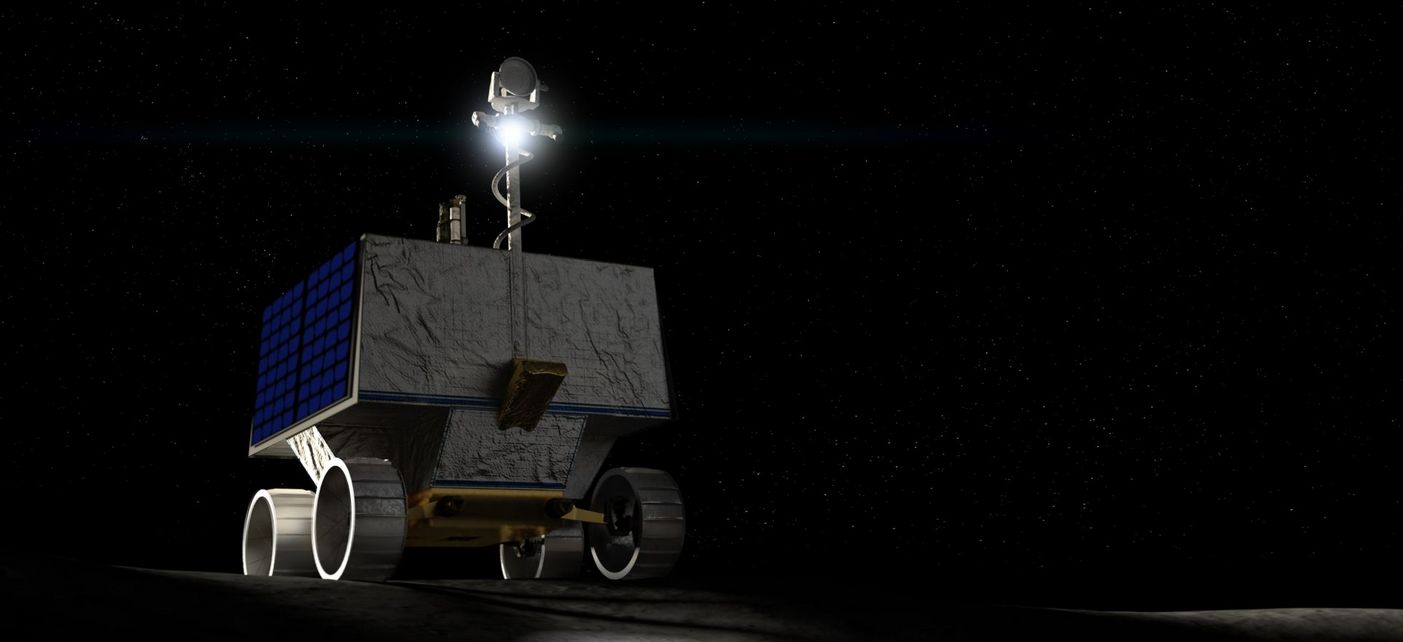
An artist’s impression of VIPER on the Moon’s surface. Credit: NASA

There is strong evidence for extensive sub-surface water ice within the Moon’s South Polar region, including in the bottoms of craters that never see sunlight, and characterising / accessing this water ice is seen as critical to NASA’s lunar ambitions, as it could be utilised in a number of ways, including providing oxygen for breathing or as propellant.

Roughly the size of a golf buggy (around 1.4 m × 1.4 m × 2 m), VIPER is being designed to travel multiple kilometres over a primary mission period of 100 days, carrying a suite of instruments comprising:

  • The Neutron Spectrometer System – designed to detect sub-surface hydrogen (potentially water) from a distance, suggesting prime sites for drilling. It measures the energy released by hydrogen atoms when struck by neutrons.
  • The Near InfraRed Volatiles Spectrometer System – designed to analyse mineral and volatile composition; determine if the hydrogen it encounters belong to water molecules (H2O) or to hydroxyl (OH).
  • The Mass Spectrometer Observing Lunar Operations – designed to analyse mineral and volatile composition by measuring the mass-to-charge ratio of ions to elucidate the chemical elements contained in the sample.
  • The Regolith and Ice Drill for Exploring New Terrain – capable of drilling up to 1 m (3 ft) into the lunar regolith to gather ice samples.
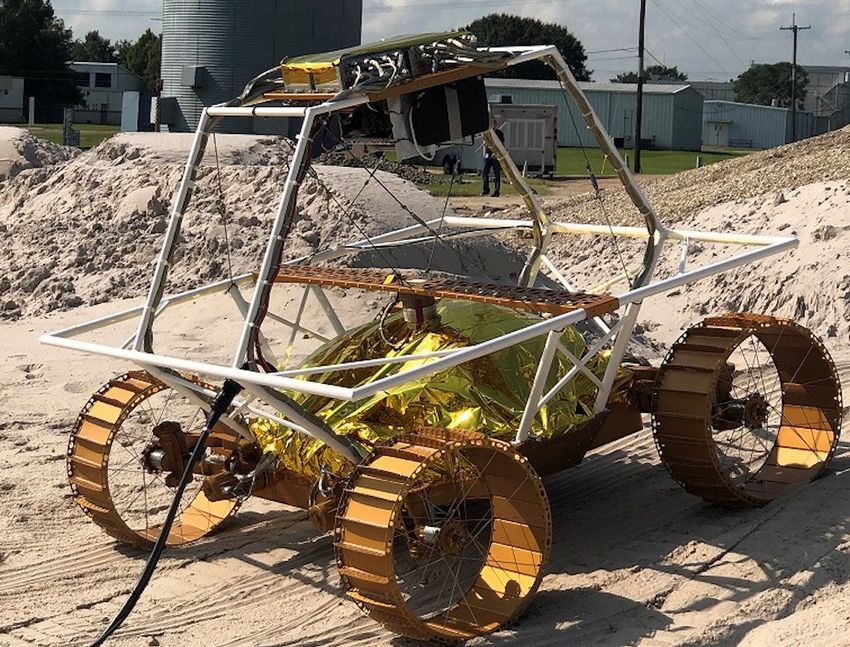
A VIPER prototype being tested at the Johnson Space Centre. Credit NASA/JSC

As well as gathering and quantifying ice and water samples, the hope is that VIPER will gather data that can be used to create the first detailed water resource maps of the Moon that will be used to further inform decisions regarding human mission to the lunar surface.

The key to living on the Moon is water – the same as here on Earth. Since the confirmation of lunar water-ice ten years ago, the question now is if the Moon could really contain the amount of resources we need to live off-world. This rover will help us answer the many questions we have about where the water is, and how much there is for us to use.

– Daniel Andrews, VIPER mission project manager

No landing site has been determined for the rover at present, but it will be delivered to the Moon under NASA’s Commercial Lunar Payload Services (CLPS) programme, using a lander vehicle developed by Astrobotic and launched via a United Launch Alliance booster. VIPER itself is being developed by NASA’s Johnson Space Centre, Texas, with the science package provided by Kennedy Space Centre, NASA Ames Research Centre and Honeybee Robotics, with the entire programme being managed by NASA Ames.

It’s incredibly exciting to have a rover going to the new and unique environment of the South Pole to discover where exactly we can harvest that water. VIPER will tell us which locations have the highest concentrations and how deep below the surface to go to get access to water.

– Anthony Colaprete, VIPER project scientist
Continue reading “Space Sunday: Moon flights and rovers”

Space Sunday: a mini-shuttle, Pluto’s far side & mole woes

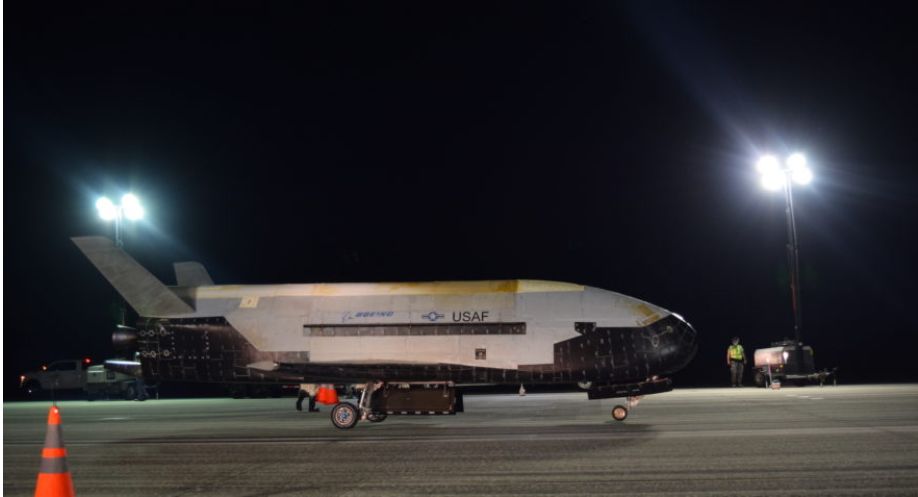
The super-secret X-27B spacecraft sitting on the Shuttle Landing Facility (SLF) at Kennedy Space Centre not long after its return to Earth on October 27th, 2019 after 780 days in orbit. Credit: NASA / USAF

Sunday, October 27th, 2019 saw the return to Earth of one of the US Air Force X-37B “mini-shuttles” after a record-breaking 780 days in space.

The uncrewed vehicle, originally developed by NASA, has been operated by the USAF since it took over the programme in 2004, undertaking the first drop-tests of the vehicle in 2006. Since starting orbital missions in 2010, the vehicle has been subject to much speculation and conspiracy theories, largely because most of its orbital operations have been classified, with only a few details of experiments carried being offered to the public.

Officially designated Orbital Test Vehicle (OTV), there are two X-37B vehicles known to be in operation, although it is not clear which vehicle returned to Earth on October 27th, 2019 at 03:51 EST – while the USAF has previously noted the vehicle engaged in a mission as either OTV 1 or OTV 2, they remained silent on the vehicle involved in this 5th mission both prior to its September 7th, 2017 launch atop a SpaceX Falcon 9 booster, and throughout the mission, although it is believed that based on the mission count to date, it was most likely OTV 1.

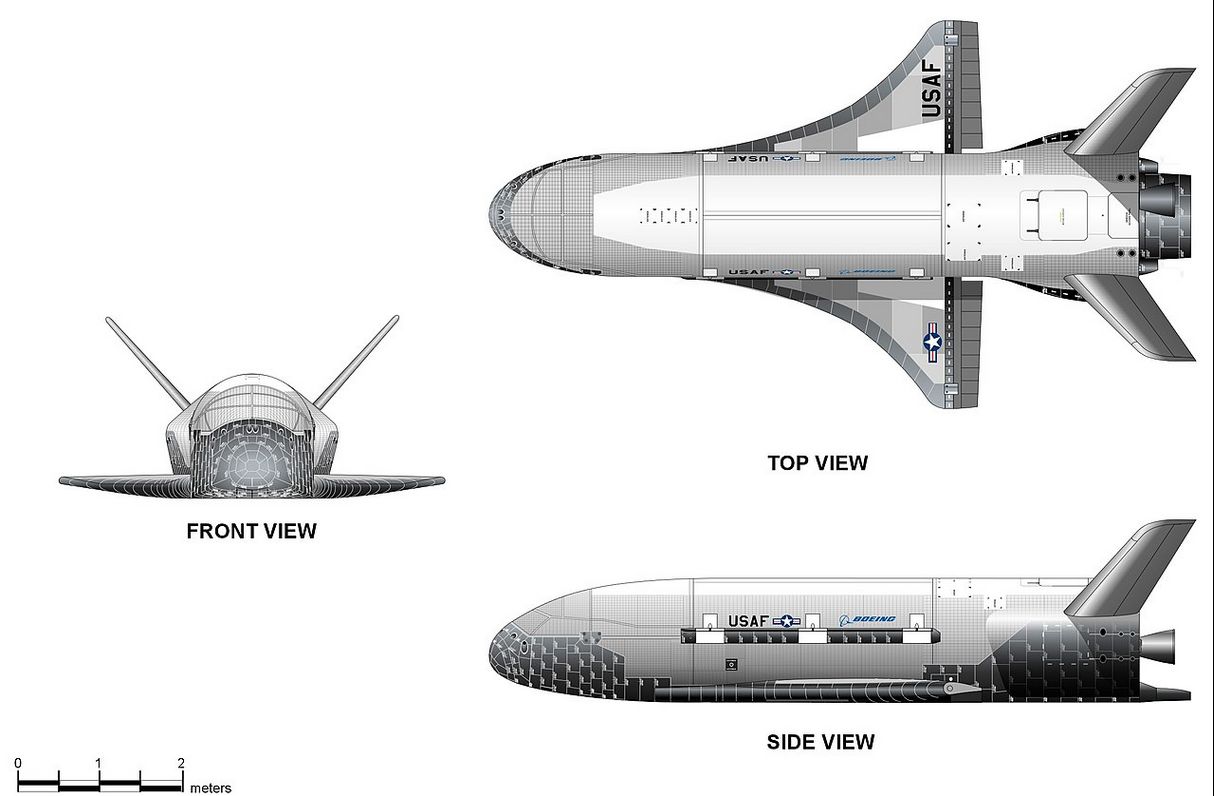
Three views of X-37B OTV 2 by Giuseppe De Chiara

As with previous missions, the majority of the vehicle’s payload has been classified, with the USAF only confirming one experiment carried was the Advanced Structurally Embedded Thermal Spreader II (ASETS-II), a system for dispersing heat build-up across flat surfaces such as electronic systems such as CPUs and GPUs through to the likes of spacecraft surfaces.

Elsewhere, the USAF has indicated that OTV will be used to test advanced guidance, navigation and control systems, experimental thermal protection systems, advanced avionics and propulsion systems and  lightweight electromechanical flight systems. Some of these have been witnessed through all five of OTV’s missions to date – notably the vehicle’s guidance, navigation, control and flight systems. It is some of these uses that have led to the speculation around the vehicle’s intended purpose.

This latest mission, for example, saw an OTV inserted into a higher inclination orbit than previous missions. This both expanded its operational envelope and allowed the vehicle to modify its orbit during flight. Both of these aspects of the mission caused some to again point to the idea that that OTV is intended to be some form of weapons platform (highly unlikely when one considers the complexity of orbital mechanics), to the the idea that it is some kind of super-secret spyplane (again unlikely, given that the US operates a network of highly-capable “spy” satellites).

Infographic on the US Air Force X-37B. Credit: space.com

Even when it comes to the tasks OTV is designed to perform, fact is liable to be more mundane than conspiracy theory would like. For example, while OTV has been used to test a new propulsion system, it is not some super-secret (and mythical) EM drive NASA has supposedly developed, but rather a Hall effect ion drive thruster.

OTV-5 / USA-277 not only achieved the longest duration flight of the programme to date, it marked the first time an X-37B was launched from Kennedy Space Centre and return to KSC – all the previous flights had been been launched from either Cape Canaveral Air Force Station, Florida (adjacent to KSC) or Vandenberg, California, Air Force Base, although the previous mission, OTV-4 / USA-212 was the first to land at KSC’s Shuttle Landing Facility (the first 3 missions all landing at Vandenberg AFB). Overall, the 780 day mission brings the total time the X-37B vehicles have spent in space over 5 missions to an astonishing 2,865 days, or (approx) 7 years and 10 months, in orbit – more than double the total amount of time (1,323 NASA’s entire shuttle fleet spend in orbit over 30 years of operations.

The next flight for the system is expected to launch in the first half 2020.

Pluto’s Far Side Revealed

In July of 2015, NASA’s New Horizons vehicle, the core part of a mission of the same name, shot through the Pluto – Charon system, making its closest approach to the dwarf planet and its (by comparison) oversized moon on July 14th of that year. Launched in 2006 the mission spent a relatively brief amount of time in close proximity to Pluto as it shot through the system at 50,700 km/h (31,500 mph), but it has completely turned our understanding of this tiny, cold world completely on its head – as I’ve hopefully shown in writing about Pluto and the mission in these pages.

So much data was gathered during the fly-by that it took months for the probe to return it all to Earth, and even now, four years after the encounter, that data is still being sifted through and researched. Within the data were many, many splendid high-resolutions of the “encounter side” of Pluto – the sunward-facing side of the planet the spacecraft could clearly image as it sped into closest approach – many of which have again appeared in these pages as well as elsewhere.

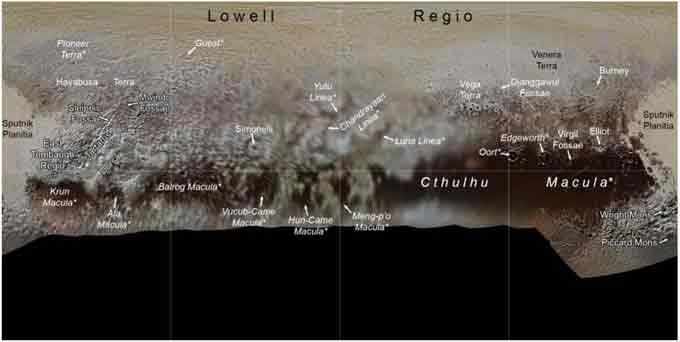
A Map of Pluto’s far side. Credit: NASA / New Horizons / S. A. Stern et al., 2019

However, the joy at the amount of information the mission returned has been mixed with a degree of frustration. The nature of the fly-by means that while New Horizons gathered spectacular images of the “encounter side” of Pluto, by the time sunlight was falling across what had been the “far side” of the dwarf planet during closest approach, the probe was so far away it could not capture images to the same level of resolution as gained with the “encounter side”.

Continue reading “Space Sunday: a mini-shuttle, Pluto’s far side & mole woes”

Space Sunday: moles, rovers, and spacewalks

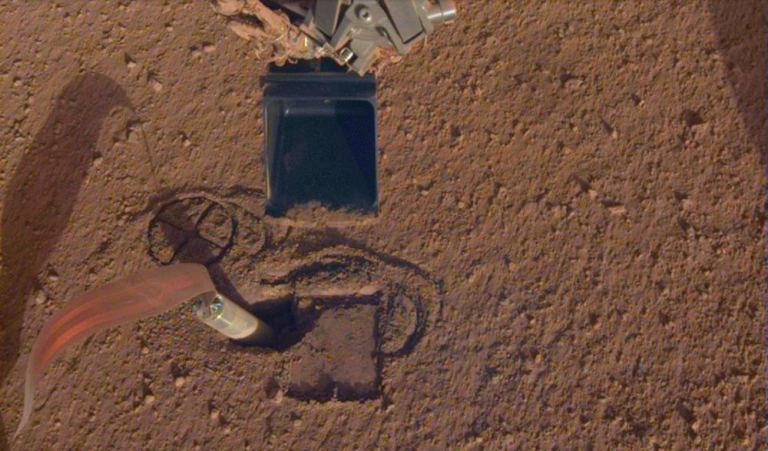
The arm-mounted camera on NASA’s InSight lander captures an image of the scoop at the end of the arm pushing gently against the HP³ “mole” in an attempt to get it burrowing once more. The data cable trailing from the “mole” is packed with sensors designed to measure sub-surface heat flow, and so reveal more about the interior of Mars. Credit: NASA/JPL

NASA’s attempts to free the heat-sensing “mole”, deployed onto the surface of Mars by the InSight lander mission at the end of 2018 have met with some success.

As I reported at the start of October, the “mole”, a special probe that forms a key part of the Heat Flow and Physical Properties Package (HP³), is designed to propel itself up to 5 metres (16 ft) beneath the surface of Mars in order to record the amount of heat escaping from the planet’s interior, helping scientists determine more about the planet. However, Since February of 2019, it has been stuck, having travelled just 30 cm and leaving it partially sticking out of the ground. Numerous attempts to get it moving again have been tried, none of which, up until this most recent attempt, had managed to get the “mole” moving again.

The problem was believed to be down to the self-propelled probe being unable to generate sufficient friction against whatever material it had burrowed into in more to gain downward traction. At that time, I noted that the mission team where hoping to use the lander’s robot arm to apply direct pressure against the exposed portion of the probe in the hope of pushing it against the side of the hole it has so far created, giving it sufficient traction to resume burrowing.

On October 14th, 2019, the German team responsible for the “mole” confirmed the attempt had worked: the probe had resumed progress during the initial test, burrowing a further 3 cm (just over an inch). That may not sound much, and it certainly doesn’t mean the “mole” is in the clear; however, it does tend remove the other lurking fear: that the probe had in fact hit a solid mass such as a boulder or rock that was impeding its downward progress.

In this image, the “mole” can be see canted to one side, giving rise to fears it may have struck a large rock or boulder beneath the surface and was being pushed sideways each time it tried to propel its way forward. Given it has now moved downwards once more, the risk of a rock being in the way now seems unlikely. Credit: NASA/JPL

The mole still has a way to go, but we’re all thrilled to see it digging again. When we first encountered this problem, it was crushing. But I thought, ‘Maybe there’s a chance; let’s keep pressing on.’ And right now, I’m feeling giddy.

– Troy Hudson, JPL engineer-scientist leading the US side of
efforts to get the “mole” moving again

This doesn’t mean the “mole” is free and clear however; the extent of the loose material it appears to have burrowed into is unknown, and as the data cable connected to it cannot be used to simply haul it back out of the initial hole, the decision has been made to keep the scoop of InSight’s robot arm pressed against the exposed portion of the probe until such time as it can no longer provide support. The hope is that by the time this has happened, the mole will have moved beyond the looser material that seems to be hampering downward movement. However, in case if it has not, the team are now looking at other options to try to assist the probe – such as filling-in the hole behind it in the hope that sufficient material falls around it to provide it with the traction it needs.

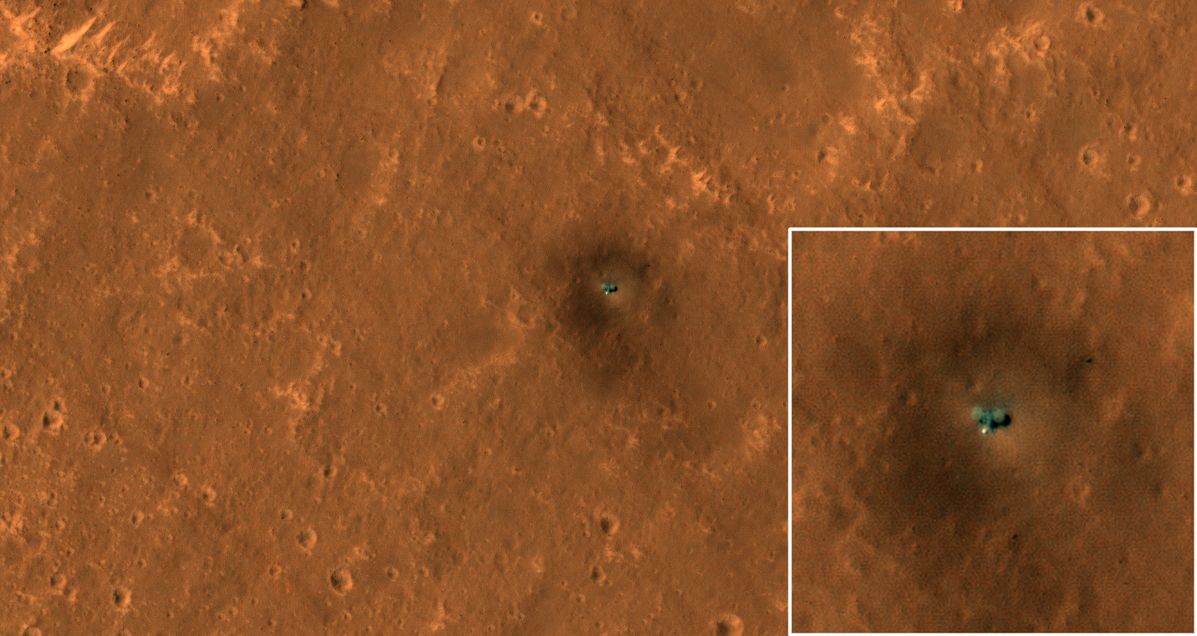
Throughout its time on Mars, InSight has been under observation by NASA’s Mars Reconnaissance Orbiter, which routinely passes over the Elysium Planitia region where InSight landed. As such, it has been able to image the lander on several occasions, but on September 23rd, 2019, MRO directly overflew InSight’s landing site at an altitude of 272 km (169 mi), and the orbiter’s HiRISE imaging system captured what is regarded as the best image yet of InSight (blow).

The HiRISE camera on NASA’s Mars Reconnaissance Orbiter got its best view yet of the InSight lander on September 23rd, 2019. Image credit: NASA/JPL / University of Arizona

The main image above shows the lander on the surface of Mars surrounded by the blast circle left by its landing motors. The inset image shows the lander in greater detail, revealing its two circular solar panels, each just over 2 m (7 ft) across (in green), with the body of the lander between them (brighter green). The bright dot just below the lander is the protective dome covering the seismometer deployed to the surface of Mars along with the HP³ mentioned above. Also visible in the main image is a series of diagonal streaks on the Martian surface. These are the tracks left by dust devils that have passing through the area.

As well as issuing the image of InSight on October 16th, NASA also released an animated GIF showing the Mars Science Laboratory’s progress up the slopes of “Mount Sharp” (Aeolis Mons). The GIF switches between two shots of “Mount Sharp” taken at the same overhead angle and roughly two months apart. Between them, they show Curiosity’s progress across 337 m (1,106 ft) of what was dubbed the “clay bearing unit”. The first image, which has Curiosity circled near the top, was captured on May 31st, 2019 as the rover was sitting within “Woodland Bay”. The second image shows Curiosity on July 20th, 2019, as it sat on a part of the unit called “Sandside Harbour” further up the slopes of “Mount Sharp”.

Curiosity, as seen by MRO on May 31st, 2019 (top) and July 20th, 2019 (centre), as the rover traversed the “clay bearing unit” on the slopes of “Mount Sharp”. Credit: NASA/JPL / University of Arizona

UK and Japan Plan to Send Rovers to the Moon

Both the United Kingdom and Japan are planning to become part of a select community (thus far!) of countries that have operated rover vehicles on the surface of the Moon.

To date, only three nations have operated rover vehicles on the lunar surface: Russia, with its Lunokhod 1 and Lunokhod 2 rovers, China with its Yutu rovers (all of which were automated vehicles) and America with the Apollo lunar roving vehicle famously driven by the astronauts of Apollo 15 through 17. The Japanese and British rovers will be very small, as carried to the Moon as part of a robotic lander called Peregrine being developed by US commercial organisation, Astrobotic, one of the former contenders for the Google Lunar X Prize.

The Japanese rover, called Yaoki, is a single axle vehicle designed by Dymon Co., Ltd, based in Tokyo and specialising in robotic systems development. The company has been working on the design for eight years, with the overall technology design having been finalised in 2018, and the development cycle including several hundred hours of field testing, causing Dymon to dub it, “the smallest but most effective wheeled rover ever produced.” A video of the little rover undergoing field testing has been released by one of the engineers working on the project that – while a little dramatic in places – highlights Yaoki’s capabilities.

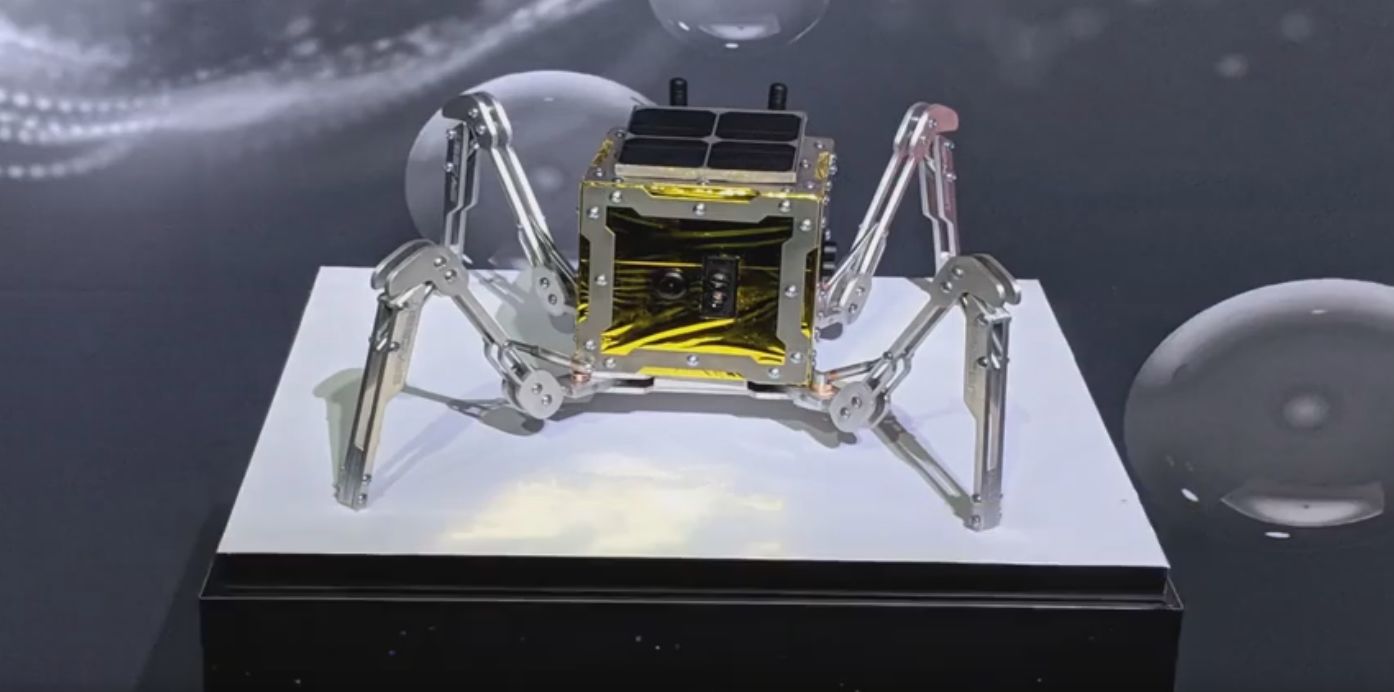
The British rover weighs-in at just 1 kg (2.2 Lb) and is solar-powered with a range of some 10 m (33 ft). However, unlike traditional rovers, it will not have wheels or even tracks – it will get around by walking on four spider-like jointed legs. Like the Japanese rover, it will be equipped with high-definition video and camera systems.

Developed by a London-based company called Spacebit, the rover is more of a proof-of-concept unit than outright science instrument; if Successful, Spacebit hope that the little rovers will become a feature of multiple missions, exploring both the surface and sub-surface regions of the lunar surface – they are specifically designed to scuttle into small lava tubes and explore them.

A model of the Spacebit rover. Credit: Spacebit

The Peregrine lander is designed to deliver payloads to the Moon at a cost of US 1.2 million per kilogramme in support of NASA’s Artemis lunar exploration programme. Its payload limit is some 264 kg (584 lb), although the mission carrying the two rovers  – which will be the first flight for the lander will only carry 90 kg of payload. It is currently scheduled for a July 2021 launch using a United Launch Alliance Vulcan rocket – the first certification launch for that vehicle.

The cost of the mission – US $79.5 million – is being met by NASA, with the agency supply providing 14 of the lander’s total of 21 payloads, which between them will mass 90 kg and will include at least one other, larger rover vehicle. The proposed landing site is Lacus Mortis, a relatively flat northern latitude plateau. Once there, the lander and its rovers are expected to operate for 8 terrestrial days.

An artist’s impression of the Peregrine lunar lander. Credit: Astrobotic

Continue reading “Space Sunday: moles, rovers, and spacewalks”

Space Sunday: the man who first walked in space

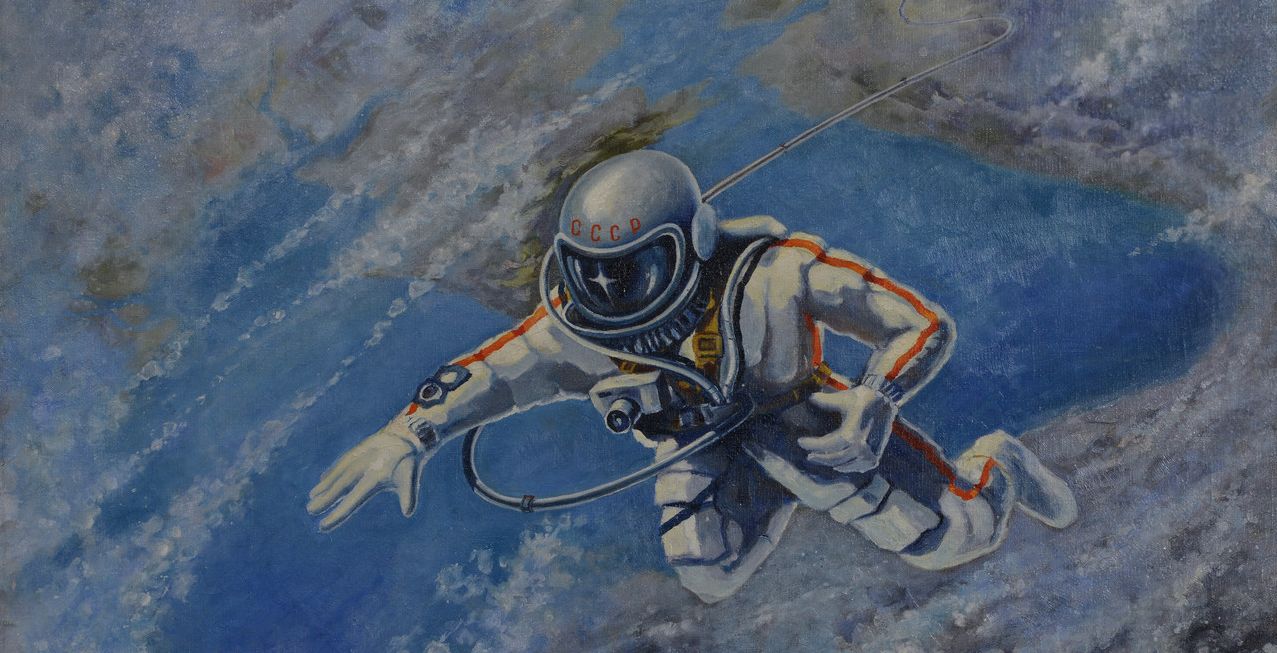
Alexei Leonov’s self portrait of his (and the world’s) first space walk, 1965.

On Friday, October 11th came the news that Alexei Arkhipovich Leonov, the first man to complete a space walk, and later the commander of the Russian side of the historic Apollo-Soyuz mission, had sadly passed away at the age of 85.

Leonov was born on May 30th, 1934, in the remote Siberian village of Listvyanka, Siberia, to which his father’s family had been exiled as a result of his grandfather’s involvement in the 1905 Russian Revolution. In 1936, his railway worker / miner father was falsely accused of “improper” political views during Stalin’s purges, and was imprisoned for several years, leaving Alexei’s mother to raise her children on her own.

Leonov was known as a quick leaner with a keen sense of fun and light-heartedness, as this 1960s shot – taken before his first space flight – with his cap jauntily cocked to one side shows. Credit: RIA Novosti

Creative from an early age, Alexei developed a talent for painting and drawing, going so far as being able to sell some of his pieces for extra money. However, he was determined to be a military aviator, and when his reunited family relocated to Kaliningrad in 1948, he was able to pursue more technical studies that enabled him to be accepted into flight training in the 1950s. Posted to the the Chuguev military pilots’ academy, he graduated in 1957 as both a qualified fighter pilot and parachute training instructor, and served three tours of duty in both roles, gaining 278 hours flight time in front-line fighters and completing 115 parachute jumps while training others.

His skills as a parachutist saw him accepted into the new cosmonaut training programme in 1960 – it had been decided that for early flights, rather than landing in their capsule, cosmonauts would be jettisoned from their Vostok craft using an ejector seat similar to jet fighters, allowing them to complete the last part of their return to Earth via parachute.

Alexei Leonov (back row, left), with some of his cosmonaut comrades, including Yuri Gagarin (first man in space), 2nd from the left, front row; Valentina Tereshkova (first woman in space), Gherman Titov (second cosmonaut in space, next to Leonov) and Pavel Belyayev (mission commander, Voskhod 2), right side, front row. This images was taken some time between April 1965 and March 1968 Credit: RIA Novosti archive

As a part of the original intake of 20 cosmonaut recruits, Leonov trained alongside Yuri Gagarin, the first human to fly in space and orbit the Earth, and Gherman Titov, the second Cosmonaut and third human in space. Like them, he was initially selected for Vostok flights, serving as back-up pilot to the 1963 Vostok 5 mission. However, before he could be rotated to a “prime” Vostok seat, he was one of five cosmonauts selected to fly the more ambitious Voskhod missions.

Voskhod was really a Vostok system but with the ejection seat and mechanism removed to make way for up to three crew seats, and with additional retro rockets attached to the descent stage to cushion the crew on landing instead of them being ejected. It was really an “interim” designed to bridge Vostok and the much more capable Soyuz (which wouldn’t fly until 1967), allowing Russia to match the America Gemini system in launching more than one man at a time. In particular, Leonov was selected with Pavel Belyayev (as mission commander) to fly the Voskhod 2 mission in which he would undertake the world’s first space walk.

This one-day mission was launched on March 18th, 1965 with the call-sign Almaz (“Diamond”). The design of the Vostok / Voskhod vehicle meant that the cabin could not be depressurised in order for a cosmonaut to egress the vehicle. Instead, a complicated airlock had to be fitted to the vehicle’s exterior. This comprised a metal mount surrounding the crew hatch, and to which was fitted an inflatable tube with a further hatch built on to it.

Alexei Leonov and avel Belyayev (r), pictured after their historic Voskhod 2 mission. Credit: unknown

Once in orbit, Belyayev helped Leonov add a backpack to his basic spacesuit that would supply him with 45 minutes of oxygen for breathing and cooling, pumped to him through an umbilical cord / pipe, and which included a second pipe and adjustable valve designed to vent small amounts of oxygen into space to carry away heat, moisture, and exhaled carbon dioxide. The airlock mechanism was then inflated and pressurised using air from the Voskhod’s supplies, extending it some 3 metres (9 ft) outward from the vehicle. After checking the integrity of the airlock tube, Belyayev opened the inward hinged crew hatch so Leonov could pull himself into the tube and the hatch re-secured behind him. Controls both inside the tube and the Voskhod allowed the airlock to be depressurised, allowing Leonov to open the inward-hinged “top” hatch.

Before exiting the tube, Leonov attached a video camera to a boom he then connected to the airlock rim, allowing live television pictures of his egress from the Voskhod to be captured and relayed to Earth. The sight of him exiting the vehicle reportedly caused consternation among some his family who didn’t understand the purpose of his mission!

When my four-year-old daughter, Vika, saw me take my first steps in space, I later learned, she hid her face in her hands and cried. “What is he doing? What is he doing?” she wailed. “Please tell Daddy to get back inside!”

My elderly father, too, was upset. Not understanding that the purpose of my mission was to show that man could survive in open space, he expressed his distress to journalists who had gathered at my parents’ home. “Why is he acting like a juvenile delinquent?” he shouted in frustration. “Everyone else can complete their mission properly, inside the spacecraft. What is he doing clambering about outside? Somebody must tell him to get back inside immediately. He must be punished for this!”

– Alexei Leonov, Two Sides of the Moon, written with U.S. Apollo astronaut David Scott.

Once clear of the airlock, Leonov encountered some difficulties. Not actually designed for the vacuum of space, his suit inflated and became semi-rigid, limiting his range of movements. He found he couldn’t reach a stills camera mounted on the front of his suit and intended to allow him to take photographs while outside the vehicle, for example. But worst was to come.

In training, Leonov had rehearsed sliding back into the airlock feet first, enabling him to easily swing the outer hatch back up into place to be secured and allow the interior of the tube to be re-pressurised so that Belyayev could then open the Voskhod’s hatch and guide him back into the spacecraft. However, he now realised he had a real problem.

With some reluctance I acknowledged that it was time to re-enter the spacecraft. Our orbit would soon take us away from the sun and into darkness. It was then I realized how deformed my stiff spacesuit had become, owing to the lack of atmospheric pressure [outside of it]. My feet had pulled away from my boots and my fingers from the gloves attached to my sleeves, making it impossible to re-enter the airlock feet first.

– Alexei Leonov, Two Sides of the Moon, written with U.S. Apollo astronaut David Scott,
describing his spacesuit issues

His only option was to enter the tube head-first and then work out how to turn himself around to close the hatch – except his suit had inflated such that it was too big to fit through the outer hatch ring. His only option was to use the oxygen relief valve to gently release pressure from the suit and deflate it. The problem? if he let out too much oxygen, he’d risk hypoxia and suffocation and if he let it out too quickly, he risked decompression sickness (or “the bends” as sea divers call it).

The first public indication that Leonov was in trouble came when the live video feed and radio broadcast were both cut and Russian state broadcasters switched to playing  Mozart’s Requiem in D Minor on repeat. Meanwhile, he cautiously went about releasing the pressure in his suit until he could wriggle his way into the airlock tube and, in a feat of contortion, turned himself around so he could secure the outer hatch. This effort proved almost too much for the suit’s primitive cooling system, and by the time Belyayev opened the Voskhod’s hatch and helped Leonov back into the capsule, he was in grave danger of passing out from heatstroke. However, their problems were far from over.

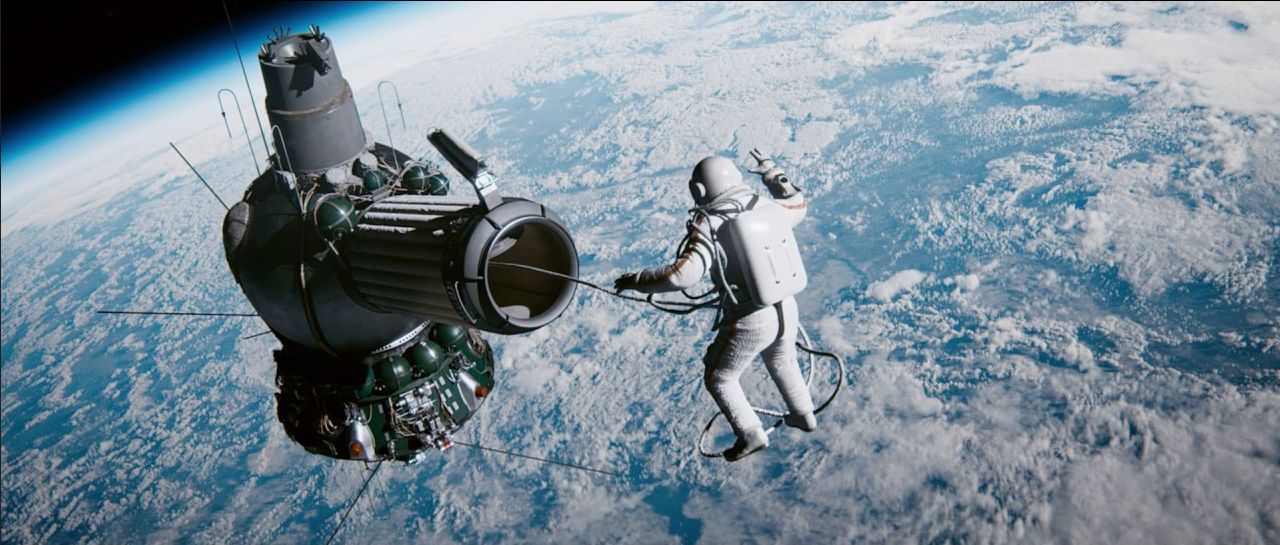
How it might have looked: a still from the 2017 Russian film Spacewalk, recreating Leonov’s historic 1965 space walk

Re-entry for the Voskhod was a three stage affair: eject the airlock, jettison the equipment module, then fire the retro-rockets on the descent module to drop the vehicle back into the denser part of Earth’s atmosphere. All of this was meant to be largely automated, but the guidance system failed due to an electrical fault taking out a number of systems, leaving Belyayev and an exhausted Leonov scrambling to handle things manually, literally clambering over one another to perform their assigned duties. As a result, the re-entry motors were fired 46 second late, enough to mean they would overshoot their planned landing site by over 380 km (241 mi).

However, this proved to be the least of their worries. No sooner had the rockets fired than the Voskhod went into a 10G spin, pinning the two men into their seats and rupturing blood vessels in their eyes. Through the observation port on his side of the vehicle, Leonov saw that the equipment module hadn’t fully separated from the descent module and lay connected to it via a communications cable. When the retro rockets fired to slow the decent capsule, the equipment module had shot past, causing the cable to snap taut and start the two modules tumbling around one another.

Continue reading “Space Sunday: the man who first walked in space”

Space Sunday: SpaceX Starship update

A Starship / Super Heavy pairing lifts-off from a dedicated launch facility in this still from an animated video produced by SpaceX for the September 28th, 2019 update. Credit: SpaceX

On the occasion of the eleventh anniversary of SpaceX achieving orbit for the first time with their Falcon 1 rocket on September 28th, 2008, CEO Elon Musk presented an update on the company’s progress developing its massive Super Heavy booster and interplanetary class vehicle, Starship.

It has been some 12 months since the last update on the development of the two vehicles – the last update really being overshadowed by the announcement SpaceX planned to fly a Japanese billionaire and his entourage around the Moon and back (see Moon trips, Mr Spock’s “home” and roving an asteroid for more), and the programme has moved on significantly since then, as indicated by the fact that the 2019 update took place at the SpaceX facilities in Boca Chica and against the backdrop of the first of the Starship prototype vehicle.

Starship Mk1 under construction at the SpaceX facilities near Boca Chica, Texas. Credit: unknown

Since its first public unveiling in 2016, the Starship / Super Heavy combination has been through a number of iterations and name changes. However, it is fair to say that things have now settled down on the design front, and what was presented at Boca Chica is liable to remain largely unchanged, assuming everything proceeds as SpaceX hopes.

In this, the flight capable prototype Starship at Boca Chica is the first in a series of such vehicles. A second is  under construction at the SpaceX facilities in Cocoa, Florida, and three more are planned, one of which will be used to make the first orbital flight within the next 6 months, and Musk suggesting another could be used in a crewed orbital flight within the next 12 months – which sounds exceptionally ambitious. Construction of the two initial Starship prototypes has not exactly been secret: both have been literally assembled in the open. So even ahead of the September 28th event, some were already developing renderings of the new Starship design compared to the last known iteration.

A rendering by Kimi Talvitie comparing the 2018 design for Starship (l) with the prototype (r). The rendering of the 2019 prototype was based on direct feedback from Elon Musk

The new design sees some significant changes in Starship – notably with the fins, canards and landing legs. The 2018 variant was marked by three large fins, two of which would be actuated (hinged for up / down motion relative to the hull) for atmospheric flight, with all three fins containing the vehicle’s landing legs. At the time of that design, I commented that this approach appeared risky: a heavy landing on the Moon or Mars might conceivably damage one of the actuated fins, affecting the vehicle’s ability to undertake atmospheric flight on its return to Earth.

With the new design, the fins are reduced to two and reshaped, both of which are actuated to hinge “up” and “down”. In addition, the landing system is now independent of the fins, removing the greater part of the risk of damaging them on landing. The number of landing legs is also increased to six. At the forward end of the vehicle, the canards are enlarged and hinged in a similar manner to the fins.

Starship’s basic specification. Note the “dry” mass of 85 tonnes is incorrectly stated in the slide: it is expected the production version of Starship will mass around 120 tonnes (the prototype masses around 200 tonnes. Credit: SpaceX

The remaining aspects of the design are more-or-less unchanged as far as the body of the ship is concerned: it will be some 50 metres (162.5ft) in length and have a diameter of 9m (29ft). The forward end of the vehicle will be given over to crew and passengers or cargo (or a mix of the two), although Musk now estimates the vehicle will – with the aid of the Super Heavy booster – be lifting up to 150 tonnes to low Earth orbit – an increase of roughly a third – and return up to 50 tonnes to Earth.

To help achieve this, the motor system has been slight revised. While six engines will still be used, three will now be optimised for vacuum thrust, ideal for orbital flight and pushing the vehicle out to the Moon or Mars, and the remaining three optimised for sea level thrust and capable of being gimballed for use during a descent through an atmosphere and landing.

Starship’s motor arrangement: three central Raptor engines optimised for sea level thrust and capable of gimballing and three outer vacuum optimised motors with fixed, large diameter exhaust bells for maximum efficiency. The “boxes” visible in the rendering are potentially additional cargo bins. Credit: SpaceX

During the presentation, Musk explained the rationale behind the use of 301 cold rolled stainless steel in the design, noting a number of reasons. Firstly, the cold rolling process results in a stronger, light finished product, and this becomes even stronger when exposed to the very low temperatures of cryogenic fuels. Thus, Starship and Super Heavy in theory have a structural strength equitable to that of carbon composites – but at a much lower overall mass.

Secondly, the cold rolled steel has very high melt temperatures, reducing the amount of direct heat shielding required, again reducing the vehicle’s overall mass. It is also both highly corrosion-resistant and easy to work with. This means that basic repairs to a vehicle on the surface of the Moon or Mars could be effected, or even that a Starship could even be dismantled and the steel from the hull re-purposed. Finally, there’s the fact that all these advantages are gained in a product costing around 2% that of an equivalent mass of carbon composite.

Starship Mk 1 filmed during the September 28th livestream event. Credit: SpaceX

In terms of heat shielding, the “windward” side of Starship (the side facing the fictional heat of entry into an atmosphere) will be coated with lightweight ceramic tiles. Somewhat similar in nature to those used within the space shuttle, they will be of a hardier material and less prone to damage. The re-entry profile was also discussed, with Musk comparing Starship to a sky diver.

To explain: the vehicle will approach the atmosphere at a relatively high 60-degree incidence, using the heat generated by contact with the upper atmosphere to slow its velocity from Mach 25 to a point where, once within the denser atmosphere, the vehicle is literally falling more-or-less horizontally. The fins and canards can then be used to maintain the vehicles orientation in a similar manner to that of a sky diver using his arms and legs. in addition, the lift generated by fins and canards will further help slow its descent until, roughly 2 km above the ground, the vehicle will rotate to a vertical position and use the three gimballed Raptor motors to make a propulsive, tail-first landing.

SpaceX plan to offer Starship in support of lunar operations – but the company’s goal is to establish a permanent human presence on Mars. Credit: SpaceX

Starship Mk 1 is equipped with the same sea level optimised Raptor motors as intended for the production vehicles.  SpaceX hope to see it make at least one flight before the end of the year – although the company has yet to secure a permit from the US Federal Aviation Authority to commence flights. This first attempt will be to an altitude of around 20 km (12.5 mi) before a descent and landing. If successful, the test programme involving the various prototype vehicles will unfold from there.

Continue reading “Space Sunday: SpaceX Starship update”

Space Sunday: Lunar landers, and robots in space

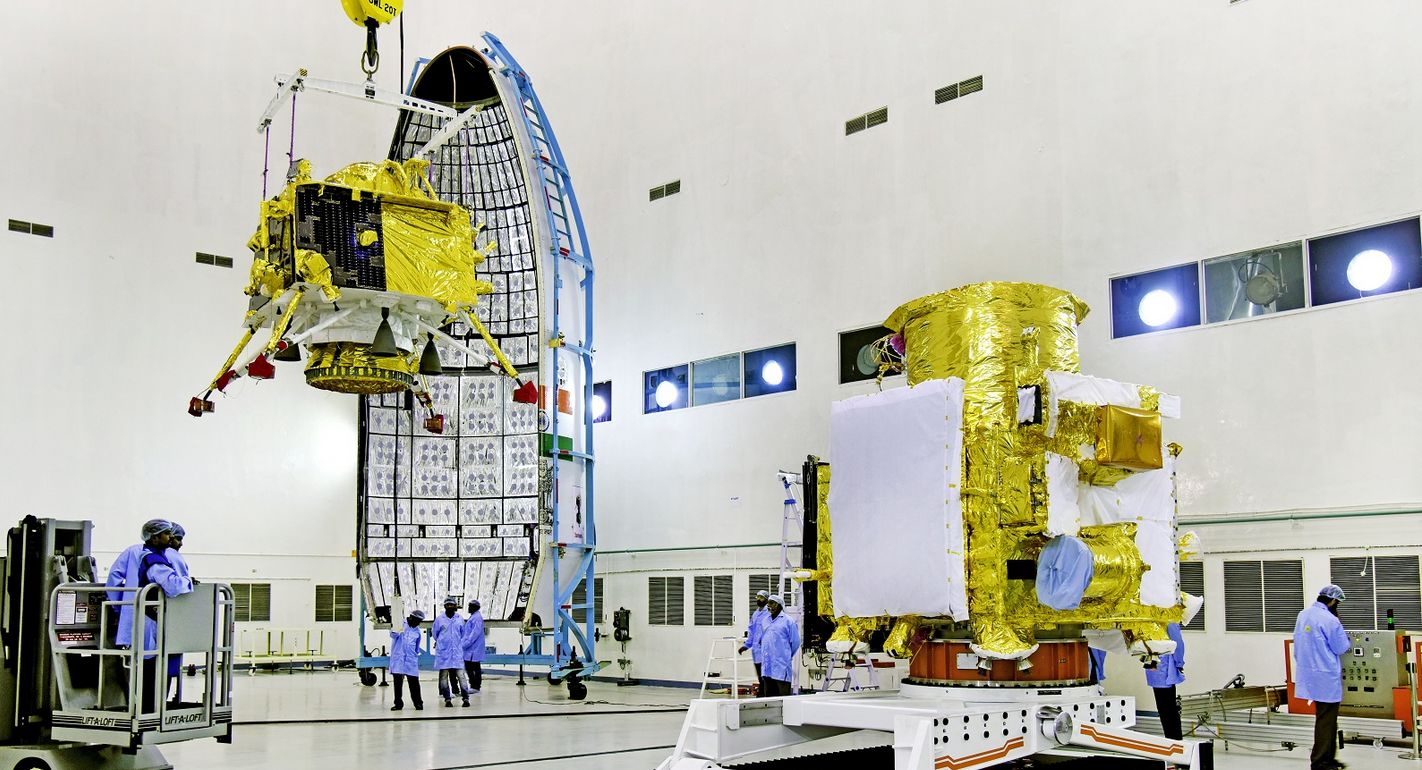
The bulky Vikram lander, with the Pragyan rover”garaged” inside, is hoisted aloft in a clean room, ready to be mated to the “top” of the Chandrayaan-2 orbiter (right). One section of the payload fairing that enclosed the craft during launch is visible in the background. Credit: ISRO

On Friday, September 6th, India was due to become the fourth country to successfully reach the surface of the Moon, with the touch-down of the Vikram lander, part of the Chandrayaan-2 (“moon craft-2” in Hindi) mission.

Launched in late July 2019, Chandrayaan-2 was set to be the latest in a series of high-profile missions undertaken by the Indian Space Research Organisation (ISRO) over the course of the last 11 years, which have included the  Chandrayaan-1 lunar orbiter (2008/2009) and the Mangalayaan (“Mars-craft”), launched in 2013 and still operational today.

As I’ve noted in recent Space Sunday articles, Chandrayaan-2 comprises three parts: the orbiter vehicle, the Vikram lander and a small rover called Pragyan (“Wisdom” in Hindi) carried by the lander. Vikram departed the orbiter vehicle on Monday, September 2nd, allowing it to begin a series of manoeuvres in readiness for a final decent and landing, scheduled for Friday, September 6th (western time, the early hours of Saturday, September 7th for India) in the Moon’s South polar region.

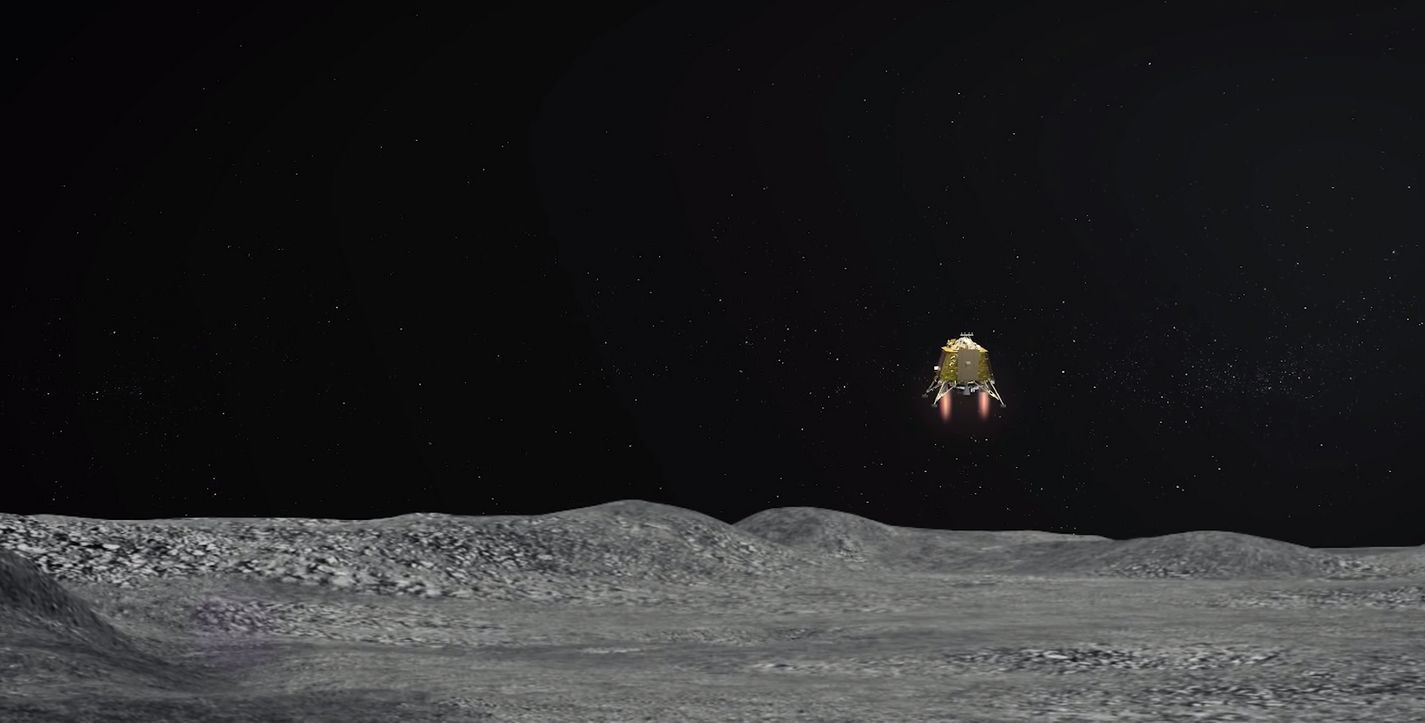
An artist’s impression of the Vikram lander coming in to land in the Moon’s south polar region. Credit: ISRO official video

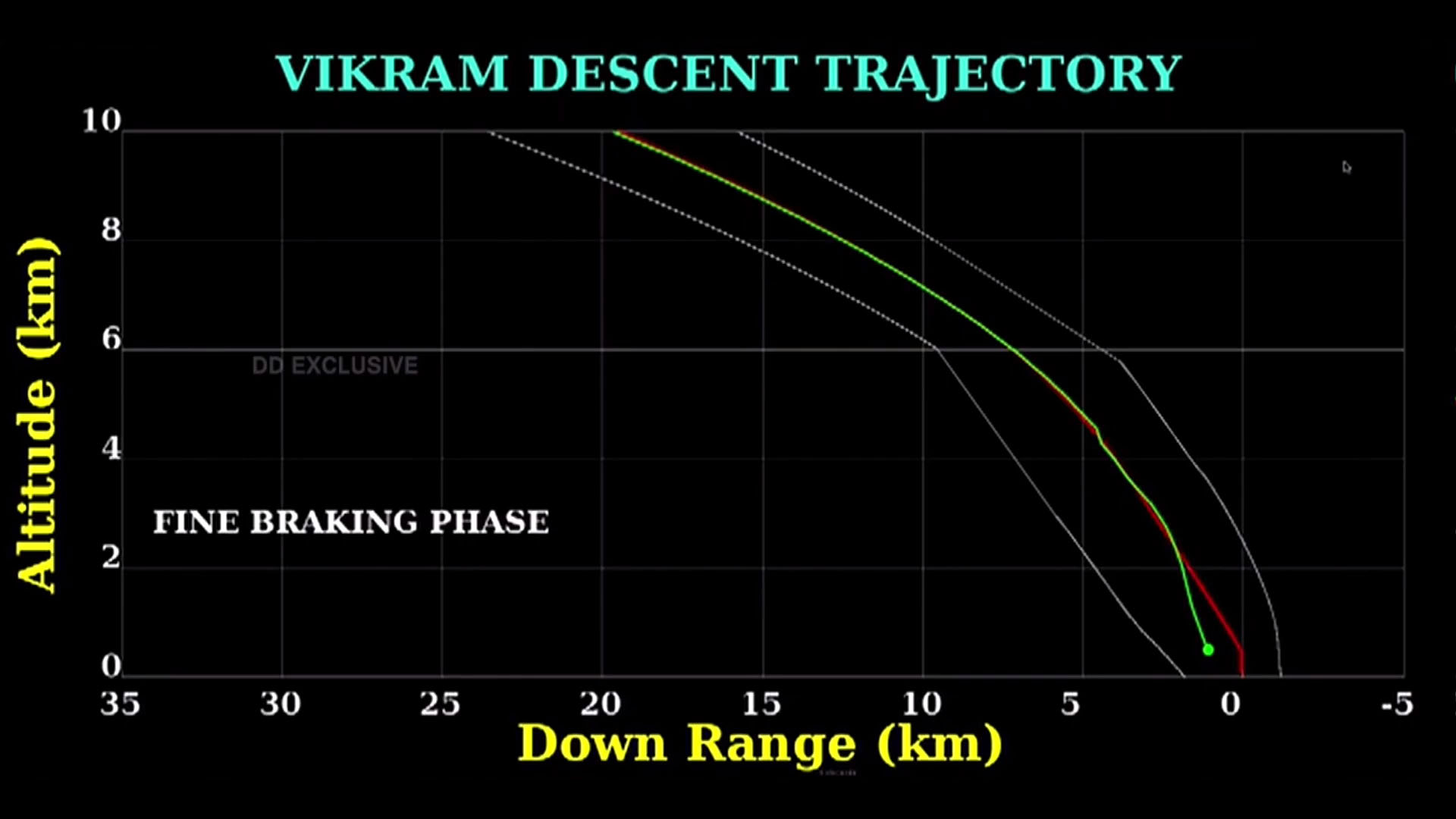
Initially, that final descent started well enough, with the lander about 550 km (344 mi) from the south pole as it fired its descent motor start the start of its final approach. At an altitude of 6 km (3.75 mi), it started a final sequence of engine burns referred to as the “fine braking phase”. Then all communications ceased.

ISRO issued a statement that the vehicle was performing nominally until around 2.1 km above the Moon, when the loss of communications occurred. However, images of the data received from the vehicle and released by ISRO appeared to suggest telemetry was being received when the lander was within 400 m of the lunar surface – and altitude at which it would be fully under its automatic guidance and landing software, and not reliant on commands from Earth. This seemed to suggest Vikram may have made a landing.

ISO stated communications with the Vikram lander were lost some 2.1 km above ground. However, a graphic of the vehicle’s descent towards the Moon (green above), appears to suggest telemetry was lost when the vehicle was between 300-400m above the lunar surface, and that it had drifted perhaps a mile from its planned descent track (red). If accurate, this suggests Vikram was in the fully automated terminal descent phase of its landing. Credit: ISRO

This idea gained ground as this article was being prepared, when an article published by Asia News international suggested Vikram has been spotted on the surface of the Moon, possibly 500m to 1 kilometre from its designated landing point. The article quotes ISRO’s director, Kailasavadivoo Sivan as saying:

We’ve found the location of Vikram Lander on lunar surface & orbiter has clicked a thermal image of Lander. But there is no communication yet. We are trying to have contact. It will be communicated soon.

Since then, the report has been repeated numerous times through various media (including an entirely UNofficial and unverified “ISRO Official Update” Twitter account) without (at the time of publication) official confirmation. This has made it hard to determine the veracity of the ANI report. Hopefully, the situation will become clearer in the coming days. One thing that could help define the lander’s condition would be an image captured by Chandrayaan-2’s main imaging camera. With a resolution of a third of a metre, it is the highest resolution camera in operation around the Moon.

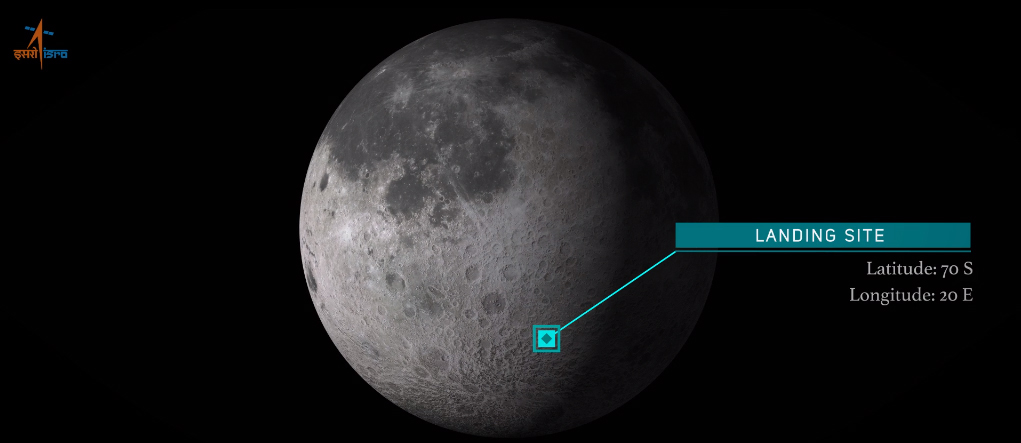
The planned landing site for the Vikram lander. Credit: ISRO

But even though the lander and rover may have been lost, the mission is far from over; the orbiter continues to function perfectly. It also carries the bulk of the mission’s science experiments – eight of the 13 carried by the mission. he data gathered by these systems should enable scientists to compile detailed maps of the lunar surface, revealing key insights about the Moon’s elemental composition, formation and evolution, and potentially help in assessing the moon’s stores of water ice.

In this latter regard, the mission builds on work performed by Chandrayaan-1, which revealed water is present at the lunar poles, with subsequent studies suggesting much of this water is ice on the floors of polar craters, which have been in permanent shadow for billions of years. If this ice is easily accessible, it could be a critical enabling resource for the eventual human settlement of the moon, providing water, oxygen and fuel (hydrogen).

In all, Chandrayaan-2 is expected to operate for some 7 years.

Proxima Centauri: An Angry Star with Bad News for its Planet

In 2016, I wrote about Proixma b, a planet roughly 1.5 times the mass of Earth orbiting our nearest stellar neighbour, Proxima Centauri, 4.25 light years away (see: Exoplanets, dark matter, rovers and recoveries). Since then, and as a result of the planet being within the star’s zone of habitability, there has been a lot of debate about the potential for it to support life.

An artist’s impression of Proxima b with Proxima Centauri low on the horizon. The double star above and to the right of it is Alpha Centauri A and B. Credit: ESO

Numerical models have indicated that Proxima b probably lost a large amount of its water in its early life stages, possibly as much as one of Earth’s oceans. however, those models also suggest liquid water could have survived in warmer regions of the planet – such as on the side of the planet facing its star (Proxima b is potentially tidally locked with its parent star, always keeping the same face towards it). This means other factors that might affect habitability must be examined. Chief among these is the overall activity of the parent star – notably flares, coronal mass ejections and strong UV flux -, all of which can erode a planet’s atmosphere, rendering it uninhabitable in the long term.

That Proxima Centauri is very active with flares has been known for some time, as has been the star’s ability to generate “super-flares”, one of which in 2016 briefly raised the star’s brightness to the point of making it briefly visible to the naked eye from Earth. This activity has suggested that Proxima b is unlikely to support life (see: Curiosity’s 5th, Proxima b and WASP-121b). But the debate has remained.

Over the past year, a team of scientists at the Konkoly Observatory in Hungary have been using data from the Transiting Exoplanet Survey Satellite (TESS) to observe Proxima Centauri’s flare activity over a two month period, split between April and June 2019. They found that in the roughly 55-day period, the star pent around 7% of its time violently flaring, with a total of 72 relatively large-scale flares observed. In particular, the energy of the eruptions put them as not far below “super flare” status, suggesting the star could produce a super flare perhaps once every two years.

TESS data on flare activity on Proxima Centauri: yellow triangles indicate flare activity, green triangles show particularly violent flare events. Credit: Krisztián Vida / Konkoly Observatory

Such frequent, high-energy eruptions almost certainly have a severe impact on the atmosphere of Proxima Centauri b, disrupting it to a point where it cannot reach any steady state, leaving it continuously in a state of disruption and alteration, making the potential for the planet to support life even more remote. However, it also raises a curiosity about the star: the underlying magnetic frequency evidenced by Proxima Centaur. Such activity is normally associated with fast-rotating stars with periods of a few days. However, Proxima Centauri has a rotation period of ~80 days; so why it should be so active is now a subject for investigation.

Continue reading “Space Sunday: Lunar landers, and robots in space”