Space Sunday: a helicopter, a space station and a big ‘plane

April 25th (mission Sol 64), Ingenuity’s sideways looking colour camera just manages to image NASA’s Perseverance rover as it observes the helicopter’s 3rd flight from a distance of 85 metres from Ingenuity. The black disc in the lower left is one of the helicopter’s landing feet. Credit: NASA/JPL

NASA’s Ingenuity helicopter drone has now complete four of its five initial flights on Mars, and in doing so, NASA has announced the programme has moved from demonstration flights to an extended “operational” flight regime covering at least a further 30 days. In particular, Ingenuity will be used to test how future aerial drones might be used in support of ground-based operations, with Ingenuity working in partnership with Perseverance, the Mars 2020 rover, as the latter commences the operational phase of its own science mission.

For Ingenuity to now enter a new operational demonstration phase, our team has been extremely happy and proud. It’s like Ingenuity is graduating from the test demo phase to, now, the new demo phase, where we can show how rotorcraft can be used.

– MiMi Aung, Ingenuity Project Manager

During its third flight, which occurred on Sunday, April 25th (mission Sol 64) Ingenuity flew a total of 100 metres, again at an altitude of around 5 metres, lifting-of from “Wright Brothers Field” to travel 50 metres downrange before hovering briefly and then returning to “Wright Brothers Field” and making a safe landing.

Along the way, the helicopter achieved another first – capturing a shot of Perseverance from the air. When enlarged, the image of the rover was slightly grainy, but the helicopter was moving at speed and was some 85 metres from Perseverance, with the colour camera set to periodically take photos – given the Earth-Mars distance, it simply isn’t possible to aim the camera in real time during a flight.
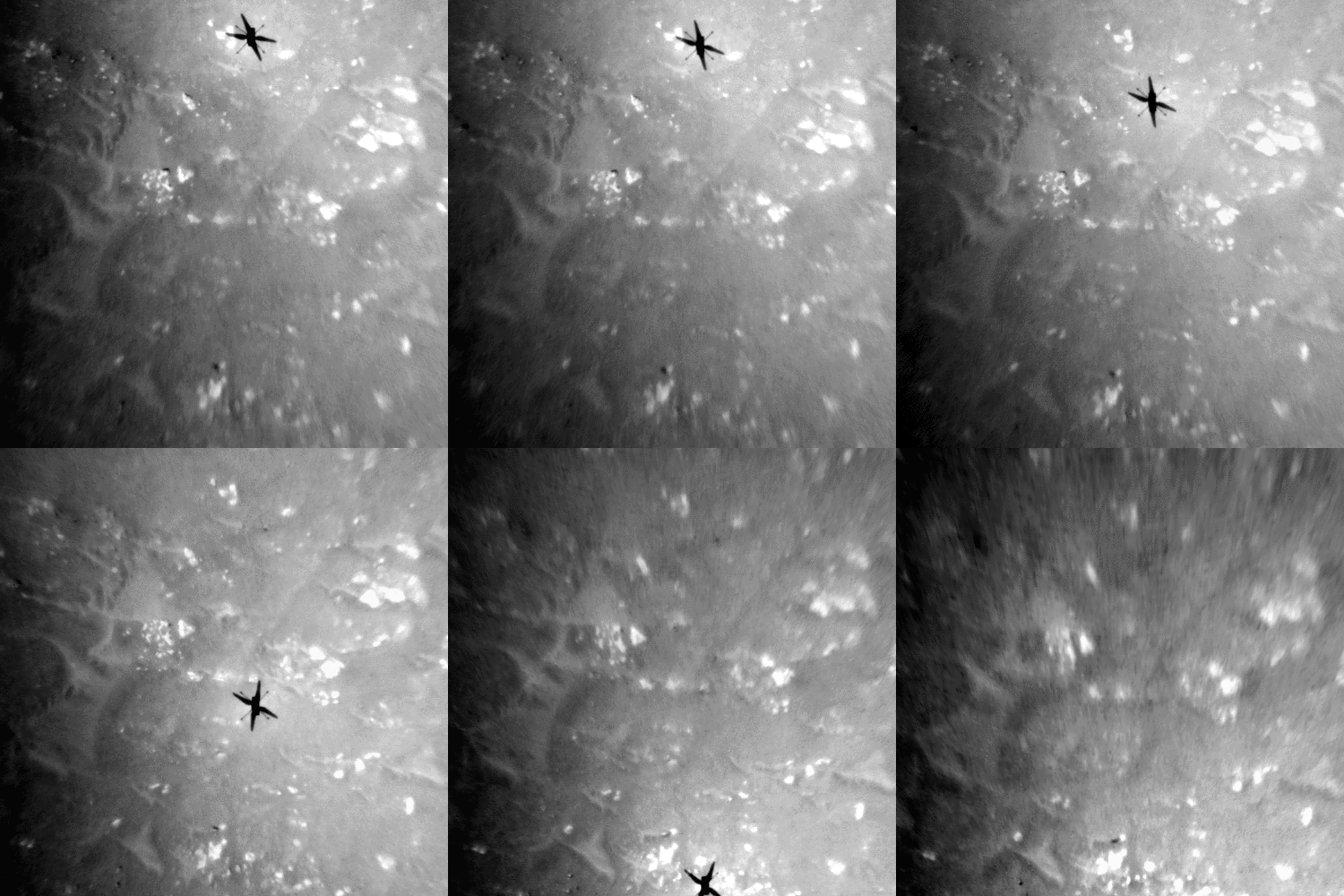
A series of still images from the downward-facing camera on Ingenuity strung together to produce an animation of the helicopter’s shadow passing over the surface of Mars. NASA/JPL

The helicopter’s 4th flight had been planned for Thursday 29th at 14;12 UTC, but was cancelled when Ingenuity has a further timing issue of the kind that caused a postponement of its pre-flight checks in early April. Whilst adjustments were made to the helicopter’s software to correct the issue, the engineering team noted that there was potential for it to again occur.

However the fact that the issue had been encountered meant the team were prepared for the problem, and 24 hours later, Ingenuity lifted-off to cover a total distance of 266 metres – 133 downrange and 133 back to “Wright Brothers Field”, flying for a total of 117 seconds, – well in excess of the planned maximum flight time of 90 seconds, and reaching a horizontal speed of 13 km/h.

Images from the flight were still being received and processed at the time of writing this article, but it is hoped that Ingenuity may have again caught Perseverance in one the five 13 megapixel shots taken with its sideways-looking colour camera. It  is also hoped that the microphones aboard the rover, which were turned on during the flight, may have caught the sounds of Ingenuity flying.

The Mastcam Z system on NASA’s Perseverance rover captures an image of Ingenuity flying downrange from during its 4th flight on April 30th, 2021. NASA/JPL

The decision to extend Ingenuity’s mission beyond the initial 30 days came as something of surprise: prior to the 4th flight being delayed, NASA were still talking in terms of the flight regime ending after the initial 30 days.

However, a re-evaluation of Perseverance’s science programme brought about a change of heart.  The initial flight extension is for a further 30 days, with further extensions possible if the helicopter can continue to operate in partnership with the rover, rather than the latter being a passive observer. Theoretically, there are no limits to how long Ingenuity might operate: it has no limiting consumables, and the only real threats to its operation being a crash, a mechanical issue or a failure resulting from the thermal stresses imparted by the day / night temperatures extremes.

China launches First Space Station Element

At  03:23 GMT on April 29th, a heavy-lift Long March 5B booster lifted-off from China’s Wenchang Spacecraft Launch Site on the island of Hainan, carrying the core module of the nation’s long-awaited permanent space station into orbit.

The Long March 5B used to launch the Tianhe-1 core module of the Chinese space station rolls out to the launch pad at the Wenchang Spacecraft Launch Site on Hainan Island, April 23rd, 2021, ahead of its April 29th launch. Credit: STR/China News Service
The 22.6 tonne Tianhe-1 (“Harmony of the Heavens”), also known as the Crew Cabin Module, is a 3-section unit designed to provide living quarters for a planned crew of 3 tiakonauts (as Chinese astronauts are called), with the associated life support systems, a power, propulsion facility that will provide power, life support, control and guidance for the entire station, and a docking hub.

Overall, the Tiangong space station is expected to comprise Tianhe-1 and two additional modules, Wentian and  Mengtian. The latter will provide a mix of research and science capabilities, together with further navigation avionics, propulsion and orientation control systems. Once launched, they will bring the station to around 60 tonnes in mass, with the option of additional capabilities being provided by Tianzhou resupply vehicles.

An artist’s illustration of China’s space station in Earth orbit. The core Tianhe-1 module extends from the centre to lower right, with a Tianzhou automated cargo / resupply vehicle docked at the aft airlock. Upper left shows a Shenzhou crew vehicle docked at the forward docking hub airlock. lower left and upper right are the two science modules with their solar arrays extended. Credit: Adrian Mann/All About Space magazine/Future Plc

Tiangong builds on the experience China gained in operating two (relatively short-lived) orbital laboratories, Tiangong-1 and Tiangong-2.  Despite its small size when compared to the 460-tonne International Space Station, the Chinese station will have a powerful research capability: fourteen internal experiment racks and more than 50 external docking points for instruments designed to gather data in the space environment, with 100 experiments already earmarked for flight on the station.

The two additional modules will not be launched until 2022. Before then, Tianhe will be visited by a automated Tianzhou resupply vehicle in May 2021. This will be followed in in June 2021 by the first crewed flight to the station. Tianzhou and crewed missions will then continue alternately in September / October 2021 and April / May 2022, before the science modules are launched for automated rendezvous with Tianhe-1 in May or June 2021 and August or September 2022.

Among its duties, the station will help China prepare for its planned crewed missions to the Moon and also co-operate a Hubble-class space telescope China plans to launch in 2024. This will occupy an orbit in a similar inclination to the station, allowing it to be serviced by crews operating from the station.

In  the meantime, the booster used to launch Tianhe-1 has caused consternation as China has effectively abandoned the 30 metre long core in low Earth orbit, and it is expected to make an uncontrolled re-entry into Earth’s denser atmosphere some time in the next week. This is a cause for concern as the booster’s orbit carries it over population centres such as New York, Madrid, Beijing and Wellington, New Zealand, and there are elements such as the motors that could survive entry into the atmosphere and strike the ground.

This is not the first time China has taken a cavalier attitude towards large mass orbital debris coming back to Earth: both the Tiangong 1 and Tiangong 2 orbital laboratories were left to make uncontrolled re-entries into the atmosphere, risking potential ground impacts.

Continue reading “Space Sunday: a helicopter, a space station and a big ‘plane”
A mission to Saturn, trapping a tiger and myths and tales

Seanchai Library

It’s time to highlight another week of storytelling in Voice by the staff and volunteers at the Seanchai Library. As always, all times SLT, and events are held at the Library’s home in Nowhereville, unless otherwise indicated. Note that the schedule below may be subject to change during the week, please refer to the Seanchai Library website for the latest information through the week.

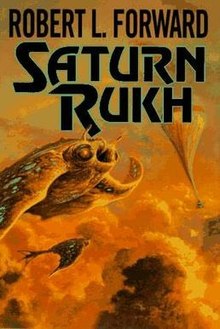
Monday, May 3rd: 19:00 Saturn Rukh

In an unspecified time in the future, a team of astronauts is sent to Saturn on what could be a one-way mission. Financed by a multi-national consortium, their mission is to establish a factory in to upper reaches of the planet’s atmosphere where it can “mine” Saturn’s abundant helium to produce “meta” (nitro-stabilised metastable helium), a powerful propellant.

If they are successful, each of the astronauts stands to earn a billion dollars on their return to Earth. The catch? They only have sufficient fuel to reach Saturn – they must use the factory to produce the fuel needed to make their return to Earth.

However, things go awry when the mission enters the Saturnian atmosphere – and crash-lands on the back of an enormous creature that “swims” through the atmosphere. Another of the creatures – which appear to be semi-intelligent and which the astronaut dub “Rukh” – swallows some of the mission’s equipment, leaving the team with no choice but to attempt to establish communications with the creatures and attempt to recover their equipment.

Join Gyro Muggins as he reads the last full-length novel by physicist and author Robert L. Forward.

Tuesday, May 4th

12:00 Noon: Russell Eponym, Live in the Glen

Music, poetry, and stories.

19:00: Just Hand Over the Chocolate and No-One Gets Hurt

Caledonia Skytower shares selection from author Karen Scalf Linamen’s collection of essays, focusing on two topics that are rising to the top-of-minds these days: Gardens, and Vacations.

Wednesday, May 5th, 19:00: When You Trap a Tiger

When Lily and her family move in with her sick Halmoni (grandmother), a magical tiger straight out of her halmoni’s Korean folktales arrives, prompting Lily to unravel a secret family history.

Long, long ago, Halmoni stole something from the tigers and now the tigers want it back. So the tiger visiting has arrvied with an offer for Lily: return what Halmoni stole in exchange for the return of her health Halmoni’s health.

It is a tempting offer; but deals with magical tigers are not always what they appear to be. So Lily must, with the help of her sister and her friend Ricky, find her voice and her courage, and face whatever trickery the tiger may conjure.

Caledonia Skytower reads the 2021 2021 Newbery Medal winning story by Tae Keller.

Thursday, May 6th

19:00: Antues, Part 1

Shandon Loring  tells the story of the monster and anti-hero from Bernard Evslin’s compendium of lore. (Also in Kitely).

21:00 Seanchai Late Night

Late night contemporary sci-fi and fantasy with Finn Zeddmore.

2021 CCUG and TPV Developer meetings week #17 summary

Poison Rouge, February 2021 – blog post

The following notes were taken from my audio recording and chat log of the Content Creation User Group (CCUG) meeting held on Thursday, April 29th 2021 at 13:00 SLT, and the TPV Developer’s meeting of Friday, April 30th.

These meetings are chaired by Vir Linden, with dates available via the SL Public Calendar. The venue for the CCUG is the Hippotropolis camp fire, and the TPV Developer meeting is held at the Hippotropolis Theatre.

SL Viewer

The Eau de Vie Maintenance RC viewer version 6.4.18.558266, dated April 23rd, was promoted to de facto viewer release status on Thursday, April 29th.

The remaining viewers in the pipeline comprise:

  • Release channel cohorts:
    • Love Me Render (LMR) 5 viewer, version 6.4.18.558365, dated April 22.
    • Maintenance 2 RC viewer – Fernet, version 6.4.18.558441, dated April 21.
  • Project viewers:
    • Legacy Profiles viewer, version 6.4.11.550519, dated October 26.
    • Copy / Paste viewer, version 6.3.5.533365, dated December 9, 2019.
    • Project Muscadine (Animesh follow-on) project viewer, version 6.4.0.532999, dated November 22, 2019.
    • 360 Snapshot project viewer, version 6.2.4.529111, dated July 16, 2019.

General Viewer Notes

  • The Legacy Profiles viewer should be getting an update that will include some cosmetic tweaks to the UI, but will be functionally identical to the current project viewer version.
  • The LMR 5 viewer is being readied for promotion to release status, and work on LMR 6 is continuing.
  • The revised Simple Cache viewer is back with LL’s QA team, and should be re-emerging fairly soon.
  • The improved UI viewer that is primarily intended to help new users looks like it will be issued during summer.
  • A viewer with a fix for the Mac notarisation fix (currently OS X users have to jump through some additional hoops to get the operating system to run the viewer) should be appearing Soon™.
  • Voice viewer: the Lab has been working to try to address the more annoying aspects of voice cutting out when someone is speaking. A viewer with various fixes / tweaks is currently being tested by Lab staff, and may be available for wider use also in a Soon™ time frame.
  • A further viewer in the works will include further updates / fixes for the Chrome Embedded Framework (CEF – used in media playback and streaming into SL).

One of the issues LL are running into is that thanks to the SNAFU following the release and roll-back of the original Simple Cache viewer, there is a growing number of official viewers stacking up waiting to enter the RC and project viewer pipelines.

RLV/RLVa and Experiences

Most people are familiar with the RLV and RLVa protocols / API functionality that is available in various third-party viewers. Whilst originally developed for more adult-oriented activities in Second life, these API options do have a wide range of other potential uses, some of which might be said to now be matched by Experience functionality (for example: automatic teleports).

While there is currently no specific project in the works to extend Experience functionality, the Lab has actually had internal discussions about the potential to provide various RLV-like options that could help improve Experiences. As such, the suggestion was made that if there are various (and generic, rather than adult-specific) use cases that might be achieved using RLV but would be useful to have as Experience functionality, these are noted in Jira feature requests so that they might be considered in due course.


Note: it was brought to my attention that not everyone is aware of the Soon™ joke. It is a play on the use of “Soon™” by Blizzard Entertainment, and the fact that, given LL’s preference not to present what might be taken as “tablets of stone” dates for the delivery of any given feature or bug fix, Oz Linden would refer to upcoming features / capabilities / fixes being available as “Soon”, “Pretty Soon” and “Real Soon / Real Soon Now”, which all become generally defined by the catch-all idea of “Soon™”.

Dropping into Inspira Gallery in Second Life

Inspira Gallery of At, April 2021 – Rachel Magic

I recently had occasion to drop into the Inspira Gallery of Art operated and curated by Mark Uladstron. At the time of my visit, the gallery was advertising itself as being in a “new waterside location” – although I have to admit, it is not a gallery I’d previously come across, so my apologies to Mark for not having done so sooner.

Occupying a two-storey building, the gallery also presents itself as a museum of art, combining exhibitions of art from both the physical world and created through the medium of Second Life, the Former coming in presenting reproductions of works by some of the most influential artists  – east and west – of their respective ages, These are all presented on the lower floor of the gallery, and at the time of my visit featured Leonardo da Vinci, Pablo Picasso and Gu Kaizhi (Changkang).

This is the first gallery museum I’ve visited in quite a while that offers an audio tour of some of the works on display (the very first art museum I visited that did so was the Vordun back in 2016 – see: The Vordun: a new art experience in Second Life). Here, the audio tour is provided for the exhibits of Picasso’s and da Vinci’s works. It is facilitated by a HUD which should be offered as you enter the gallery, but if not, it can be obtained by clicking the blue globe at the reception desk, and while not a necessity for a visit, I would recommend using it.

Inspira Gallery of At, April 2021 – Leonardo da Vinci

Once added to your screen, and unlike other tours of this nature, the HUD isn’t tied to a local experience, but is triggered by simply entering a hall where the tour in enabled. When you have done so, the palyback buttons are activated, and you just need to tap ESC on your keyboard a couple of ties to ensure your camera is free, then press the central Play / Stop toggle button in on the HUD. Doing so will trigger the HUD’s scripts and focus your camera on the first image within the exhibit  and trigger the associated audio track, together with a text display in local chat. In addition:

  • Clicking the “fast forward” or “rewind” buttons on the HUD will position your camera at the next painting in the sequence (or the previous, if moving back through an exhibit), again, triggering an audio / text exposition.
  • Clicking the Stop / Play button will re-centre the camera on your avatar, halting the audio / text. Providing you do not leave the hall, clicking the PLAY / STOP button again will centre the camera back on the last painting examined by the HUD and resume the audio / text expositions from there.
  • If you prefer, you can disable the text display or the audio by clicking either the Closed Caption or Audio toggle buttons directly under the main playback buttons.
  • Two further buttons will invite you to join the Inspire art group or receive a landmark to the gallery respectively.
Inspira Gallery of At, April 2021 – Pablo Picasso

The audio files appear to be drawn from a variety of sources, with some sounding slightly artificial / electronic in nature. The alternate between various male and female speakers, and the provided information strikes a good balance between being informative whilst avoiding going on too long.

As the audio doesn’t extend to the hall featuring Gu Kaizhi’s work, traditional museum-style information displays are provided for in-world reading. It would perhaps be nice to see these information plinths also offering a note card when clicked to help thought who might find reading such in-world text difficult, but again the information that is provided in informative and adds to the experience of a visit.

A noted politician, painter, poet, calligrapher and author – he wrote three influential books on the theory of painting – Gu is most noted today for his silk scroll paintings, which form the focus on the exhibit at Inspira.

Inspira Gallery of At, April 2021 – Gu Kaizhi

Stairs hidden behind the reception desk offer the way to the upper floor of the gallery, where two halls are devoted to Second Life artists. At the time of my visit, these were showing landscape images by the always captivating Rachel Magic (larisalyn) and pieces by Thomaz (Thomaz Blackburn). Between the halls is a cosy café / venue area, where images by Mark’s SL partner, Lisa Cruise (lisacruise), might be appreciated / purchased.

I will admit to being surprised that the reproductions of the images by da Vinci, Picasso and Gu are offered for sale. While I appreciate galleries, etc., in-world need to cover the cost of tier, seeing the images available via right-click buy did raise concerns (e.g. the potential for transgressing copyright on owned works or contravening any established Creative Commons (or other) licence that might be applicable, etc).

Inspira Gallery of At, April 2021 – Thomaz

However, this discomfiture duly noted, I will say that the Inspira Gallery of Art does makes for an engaging visit, and I particularly enjoyed becoming acquainted with Thomaz’s SL art, and the opportunity to see more of Rachel’s work on display.

SLurl Details

The S&H Hug & Kiss HUD ReAnimated

Ten of the animations to be found in the new Hug & Kiss 3.0. Via Meike Heston

There’s likely to be few in Second Life of a certain age who do not have, or have not encountered, Meike Heston’s Hug & Kiss animator. I’ve personally been using it for well over a decade – generally with the “mini” version tucked into a corner of my screen.

For those who have not come across it, it’s a HUD that allows you to select an avatar around you and offer them a hug or a kiss – in greeting, in farewell, in comfort or simply just because. If accepted, the system will animate them and your avatar so they will come together in the selected greeting – the vagaries of Second Life animation system allowing.

It’s a HUD that hasn’t been updated in over a decade – in part because Meike herself has been absent from Second Life for a fair amount of time, but also because it has always simply worked. However as Meike has once more been semi-active in Second Life, she’s been working with Chance Strike (ChanceStriker) on a completely new version of Hug & Kiss, and they gave me the opportunity recently to take it for a test drive.

Called Hug & Kiss Animator 3.0 ReAnimated, the most obvious difference between version 3.0 of the HUD and earlier versions is in its appearance, as shown below.

Left: The Hug and Kiss 3.0 (top) compared with the Mini Hug & Kiss 2.02. Right: the Hug & Kiss 3.0 buttons explained.

But a new look is only the start. Version 3.0 of Hug & Kiss has:

  • 16 completely new animations, twelve of which retain the names of their predecessors from earlier versions or which offer similar styles of animation under a new name, plus four brand new animations unique to version 3.0 of the HUD.
  • An improved height matching capability that automatically attempts to more accurately compensate for differences in avatar height of +/- 60 cm for a more realistic hug / kiss / pose (the vagaries of the SL animation system allowing).
The 11-step automated height adjustment system should help to better account for differences between avatar heights. Via
  • Ability to add your own animations / run your own configuration of animations – details are provided in the *config note card in the HUD itself.
  • Automatic update service – the HUD will notify you if / when an update is released,  and present you with the option of receiving it.

Given the nature of SL animations, the HUD still requires some basic preparation when wanting to greet someone – most obviously the avatars need to be face-on to one another – but otherwise the operation of the HUD is simple and direct,particularly for those familiar with earlier versions:

  • Use < and > to page through the HUD’s animation until the one you wish to use is displayed in the centre black button.
  • Click the centre black button to select the animation, and then click on the desired avatar name from the dialogue box in the top right of your screen.

Providing your target accepts the request, the animation will play, bringing both avatars together.

By default, animations will play for a set length of time, but if you would prefer great manual control,the the padlock button on the HUD can be clicked to set it to “locked”. Animations will now only end when the centre black button is clicked a second time.

And that’s pretty much it. As noted above, the configuration notecard within the HUD includes instructions should you wish to add couples animations of your own. I confess to not having tried this, simply because I don’t have any suitable animations, so I’ll lave that to others to explore.

General Observations

Overall, a nice update with animations potentially suited to a wider set of uses than previous versions (round-and-round might be used by a parent greeting a child, for example). In my testing, the height adjustment seemed to work well, and animations on the version 3.0 of the HUD looked more natural as a result.

At L$750, the HUD isn’t expensive, but it will be interesting to see if those with an earlier version opt to purchase it (no update path is available because both the animations and the control scripts are entirely new). I suspect this will come down to a  combination of how often the HUD is used and which animations in particular are used / appeal. And, of course, there are other options available through other creators, some at a lower price – so weighing-up which might be the better comes down to personal taste.

I do wonder if the “transparent” option might cause confusion, given it leaves the HUD on-screen (but “invisible”) so that it might come between a user and something they are trying to click in-world – but this is really more of a passing thought. That said, if making the HUD transparent doesn’t suit your needs, it will allow a certain degree of re-sizing should you wish it to have a smaller on-screen footprint – which is actually what I opted to do with it.

My thanks to Chance and Meike for the opportunity to try out / test the new Hug & Kiss HUD.

Marketplace Link

Space Sunday special: Michael Collins

Michael Collins in his official NASA Apollo 11 photo. Credit: NASA

On Wednesday, April 28th, 2021. the news came that Michael Collins, the Command and Service Module pilot on Apollo 11 had passed away at the age of 90.

Collins was the unsung hero of Apollo 11. While Armstrong and Aldrin held the world’s attention, he quietly circled the Moon in the CSM on his own. A natural loner, he stated he never really felt lonely, and in the 48 minutes of each orbit when he was out of radio contact with the Earth as Columbia passed round the far side of the Moon, has was not afraid. Rather, he felt “awareness, anticipation, satisfaction, confidence, almost exultation”.

Born on October 31st, 1930 in Rome, Italy, Collins, was the second son and forth child of James Lawton Collins and Virginia Collins ( née Stewart). The Collins family was steeped in military service, a fact that helped shaped Michael’s life.

Rising to the rank of of major-general, his father served in the 8th Cavalry during the Philippine–American War, and also saw deployments in both World Wars; he was also an aide-de-camp to General of the Armies John Joseph (Black Jack” Pershing. His brother – Michael’s uncle – was General J. Lawton Collins, the Army Chief of Staff during the Korean War. Collins’ elder brother, James Lawton Collins Jr., also served in US Army in World War II and rose to the rank of brigadier general, and served as the U.S. Army Chief of Military History from 1970 to 1982.

Given his father’s career, Collins spent the first 17 years of his life following his father to his various US and overseas posting. During this time – and possibly fuelled by his father’s tale of flying on a Wright Brother’s biplane in 1911 – he jumped at the chance to take the controls of a US Army Air Corp Widgeon being flown by a family friend, awakening a nascent talent for flying.

Graduating from college in 1948 Collins briefly toyed with the idea of entering the US diplomatic service,  but opted to follow in the footsteps of his father and older brother, entering the United States Military Academy at West Point, sharing his class with future fellow astronaut Ed White. Graduating from West Point in 1952 with a BSc in military science, Collins had the choice of pursuing an Army or Air Force career and decided on the latter in part because of his love of flying and the rate at which aeronautics were developing, and in part because given the careers of his father, uncle and brother, he was worried about accusations of nepotism should he enter the Army.

Collins aboard Apollo 11. Credit: NASA

It  turned out that Collins was a “natural” pilot who easily took to flying jets. After training, he was selected for advanced day fighter training – a highly dangerous activity at the time, with 11 of his classmates killed during the 22 weeks of the training course. He also trained with fighter-bombers and gained qualifications in nuclear weapons delivery as well as maintaining his edge as a fighter pilot, winning first prize in a 1956 gunnery competition.

During the late 1950s, Collins was awarded command of a Mobile Training Detachment allowing him to accumulate over 1,500 hours flying time, which in turn gained him admittance to the USAF Experimental Flight Test Pilot School. From 1960 through 1962, he flew numerous jet aircraft – although the test pilot’s life of hard flying and occasional ’bouts of hard drinking in celebration / commiseration encouraged him to quit smoking, with a four-hour flight as co-pilot of a B52 Stratofortress bomber getting him through the initial stages of nicotine withdrawal.

In 1962, like millions of others, Collins witnessed the flight of John Glenn, the first American to orbit the Earth. As s result, he applied to be a part of the second NASA astronaut intake, but his application was unsuccessful. However, as the Air Force was trying to enter space research via its own means, Collins applied for a new postgraduate course offered on the basics of space flight. He was accepted into the third class, studying alongside future astronauts: Charles Bassett, Edward Givens and Joe Engle.

In mid-1963 NASA started recruitment for their third astronaut intake – and Deke Slayton, the Chief of the Astronaut Office at NASA, personally called both Collins and Bassett and offered them places in the astronaut training programme after reviewing their applications.

After completing his basic training, Collins opted to take pressure suits and extravehicular activities (EVAs, also known as spacewalks) as his specialised area of study. In writing his autobiography, he admitted that he was concerned at being excluded from the planning for the first American space walk – undertaken by Ed White in June 1965 – despite have the greatest expertise in the practical operation of space suits and in EVA protocols.

He was the first Group 3 astronaut to receive a crew assignment – back-up pilot for Gemini 7, which assigned him a flight seat on Gemini 10, alongside mission commander John “Jim” Young, who would go on to become NASA’s most experienced astronaut, flying Gemini, Apollo and the space shuttle.

Collins (right) with John Young ahead of their Gemini 10 flight. Credit: NASA

Gemini 10 was one of the most ambitious of the Gemini programme. It carried fifteen scientific experiments – more than any other Gemini mission outside of Gemini 7; it also called for two EVAs, and multiple rendezvous and docking with two Agena target vehicles. The EVAs meant that Collins became the first person to complete two spacewalks in the same mission.

Following the success of the 3-day Gemini 10 mission, Collins was assigned to the backup crew for the second crewed Apollo flight (Apollo 2), serving as the lunar Module Pilot, with Frank Borman as Commander and Thomas P. Stafford the Command Module Pilot. The training exposed Collins to both piloting the lunar module and the command module, and allowed him to receive training as a helicopter pilot – helicopters being believed to be the best way to simulate the descent of the lunar module.

With the ending of the Gemini programme, NASA opted to reshuffle the Apollo mission line up, axing Apollo 2 as it was seen as largely a re-run of Apollo 1. This and alterations to the crew rosters resulted in Collins – with the benefit of his experience and vehicle exposure – being transferred from lunar module pilot to command module pilot. In his role, he was promoted to the prime crew for Apollo 8.

Tragedy and health then intervened: the first in the form of the Apollo 1 fired that killed Gus Grissom, Ed White and Roger Chaffee, and which prompted a redesign of the Apollo Command Module and a reorganisation of the planned Apollo flights. The second came as a result of Collins suffering a cervical disc herniation in early 1968 that required surgery. As a result, Collins was initially moved from Apollo 8 to Apollo 9, and then removed from that mission to allow time to recuperate from his surgery.

As a result of all of this, Collins was selected with fellow Group 3 astronaut Edwin “Buzz” Aldrin and the exceptional Group 2 astronaut Neil Armstrong for the crew of Apollo 11, now earmarked to make the first crewed landing on the Moon – providing Apollo 9 and Apollo 10 missions completed successfully.

Collins (left) with Edwin Aldrin and Neil Armstrong in an engaging black and white portrait (later colourised). Credit: NASA

Given his role as Command Module Pilot, Collins often trained separately to Armstrong and Aldrin – and given they would be the two who would be the first humans to land on the Moon, they often took the lion’s share of media interest . Yet it was his role in the mission that perhaps carried the heaviest burden: if anything went wrong with the lunar module that left his colleagues stranded, Collins would be the one who would have to abandon them to their deaths and return to Earth alone.

Apollo 11 lifted-off from Kennedy Space Centre on July 16th, 1969. The mission has been documented to such a degree (including in these pages), that little need be said about the major elements. While Armstrong and Aldrin were on the lunar surface, Collins – who was also responsible for design the mission’s patch – kept himself busy with a range of tasks aboard the command and service module, which he came to regard as his personal space to the extent he wrote a dedication to the vehicle in the equipment bay:

Spacecraft 107 — alias Apollo 11 — alias Columbia. The best ship to come down the line. God Bless Her. Michael Collins, CMP

He also dealt with a potential malfunction in the vehicle’s coolant system which, if unchecked, might have resulted in parts of Columbia freezing.

Mission Control advised him to follow a complicated procedure for taking manual control of the system as he passed out of radio range around the far side of the Moon. When he regained radio contact, he reported the issue dealt with – although he did so by the simple expedient of ignoring Mission Control entirely and simply switching the system to manual control and then back to automatic!

I am alone now, truly alone, and absolutely isolated from any known life. I am it. If a count were taken, the score would be three billion plus two over on the other side of the moon, and one plus God knows what on this side.

– Michael Collins, recounting how he felt after Armstrong and Aldrin had departed for the lunar
surface, and he was passing around the Moon’s far side
Carrying the Fire: An Astronaut’s Journeys, 1974)

Continue reading “Space Sunday special: Michael Collins”