Fossil Fractals in Second Life

Fossil Fractals
Fossil Fractals

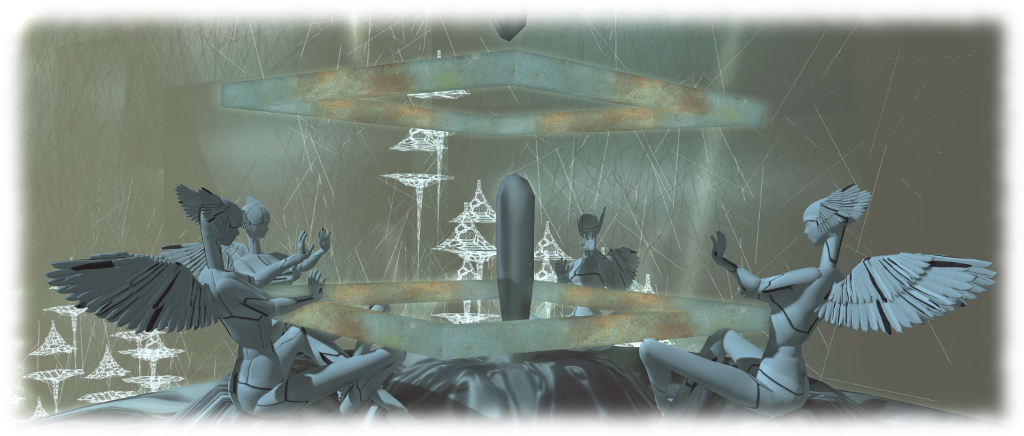
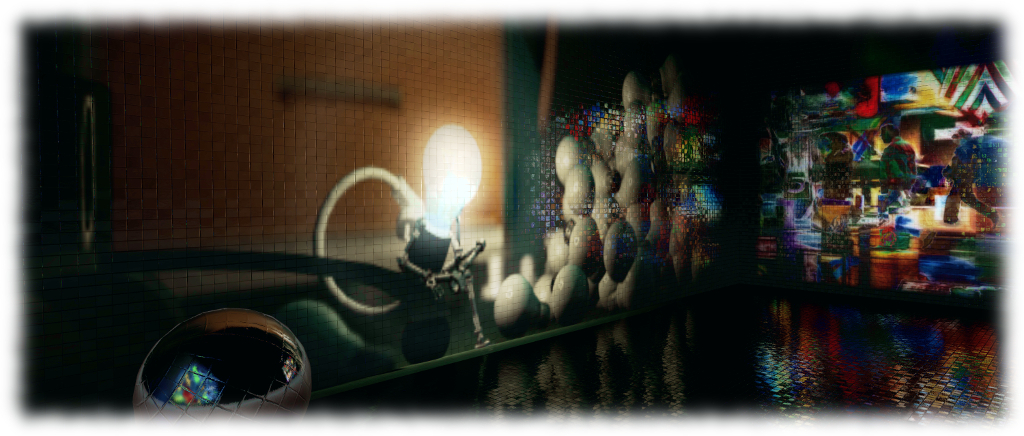
It’s pretty well established in these pages that I’m attracted to fractal art. So it was with some interest that I read about a new installation by Asmita Duranjaya entitled Fossil Fractals, currently on display at her InterstellART community region.

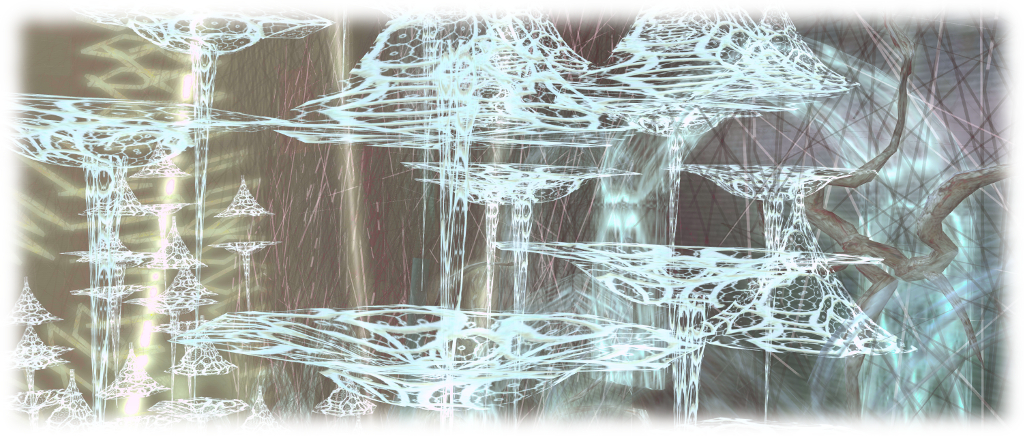
“This exhibition shows a new art technique meshing of fractal creations and making them relief-like 3D-art,” Asmita says of the exhibition. “The results look like fossils found on an exoplanet in the universe, being displayed for human eyes.”

Fossil Fractals
Fossil Fractals

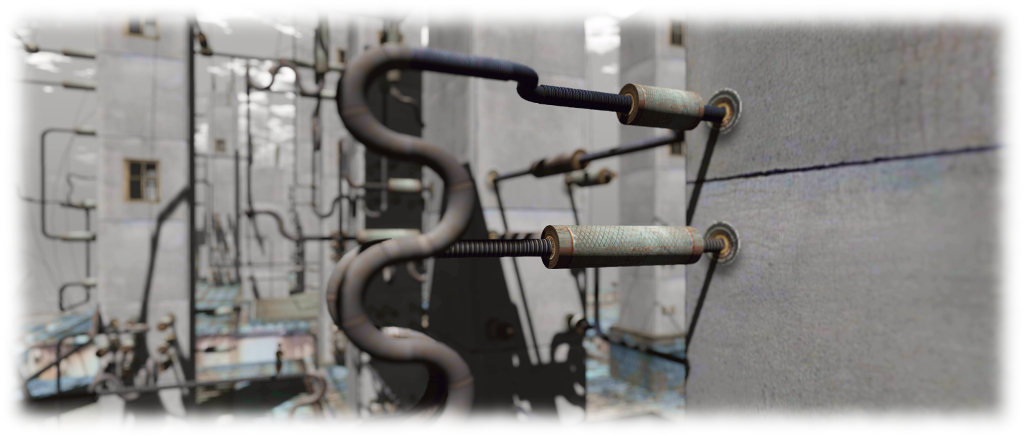
On display are around (I think) 16 pieces  – the display space is something of a maze, so finding them all requires a certain amount of walking along hallways and up and down steps and ramps! Each mesh piece is presented in a haut-relief format, and as Asmita notes, they are decidedly fossil-like in form – although the finishes on some suggest their origins might have been more mineral than organic.

The latter are quite exotic and alien is looks: crystaline structures rising from a flat base, demanding that one zoom and cam gently around them, the minerals and crystal fragments within them glittering gently. Others are more familiar in looks, displaying the spiral sweep found in ammonites. Some, from certain angles, look perhaps less like fossils and more relief maps of an alien world, as built up from 3D images taken from orbit. All of this makes the display an intriguing exhibit. If any of the pieces catch your eye, they are available to purchase.

Fossil Fractals
Fossil Fractals

As noted above, Fossil Fractals is displayed as a part of the InterstellART community, and when visiting it, you can also visit the surround (and overhead) galleries, some of which house permanent exhibits, others of which are supplied as studio space for artists. A teleport network is provided for getting around (and links to the ground level exhibition spaces), although the easiest way to get to the art studios (floating on islands overhead from Fossil Fractals) is to either fly or use a double-click TP. Those interested in joining the community should contact  Asmita directly.

SLurl Details

The history of the telephone in Second Life

The Telephone Museum
The Telephone Museum – click any image for full size

Today, the telephone – in the form of pocket-sized smartphones – is an essential part of most people’s every day life. Looking at one, it is hard to imagine how far the technology behind this means of long-distance communication has come since its birth in the 1870s.

Of course, we all know something of the history of the telephone, with names like Alexander Graham Bell and Elisha Grey (if not poor Antonio Meucci) being familiar to many of us, if only as a result of our school days. But what is it’s real story? How did the early telephones work? what have been the various eras of the ‘phone?

The Telephone Museum

Denzel Coy brilliantly and charmingly answers these questions in Second Life through his Telephone Museum. Within it, visitors can explore the telephone’s entire history, from its beginnings with the unfortunate Meucci, the unlucky Grey and the fortunate Bell, through the first box systems, to candlesticks and on to the rotary era – all the way up to the modern cellphone.

This is a fabulous environment for anyone interested in history or technology as well as the telephone. On displays are around 50 exquisitely crafted telephones from the last 140 years, made by a number of Second Life creators – Raya Jonson, Jin Zhu, Zaida Gearbox, Neotoy Story and Plato Novo, to name but a handful, as well as Denzel himself. Alongside of them are information boards complete with audio playback capabilities, allowing visitors to read or hear the information they contain, together with reproductions of adverts for telephones from the different eras, and more.

The Telephone Museum

The displays are laid out around two levels, with the lower progressing from information on Meucci, Grey and Bell, through to the arrival of rotary dial telephones in the 1920s. These displays are all offered around a model of the very first telephone device from 1876. From here, visitors can progress to the mezzanine level, and the history of the telephone from the 1950s through to the present day, with a brief detour into the world of the military field telephone.

As well as the audio capabilities, the museum includes a number of interactive elements – including the display case of the aforementioned 1876 device being alarmed against theft! There is also a gacha station, where visitors can obtain a number of items, including some rare models of the ‘phones on display and the Telephone Museum Ultimate Guide. There is also a trivia competition on the main floor, where people can test the knowledge they’ve gained during their visit.

The Telephone Museum

This is a superb exhibit to visit, perfectly presented in an environment designed by Denzel. Informative and educational, it is also entertaining and offers another look at just how exquisite mesh models can be in Second Life.

SLurl Details

Hidden Faces in Second Life

Nitroglobus Roof Gallery: Hidden Faces

Hidden Faces, now open at Nitroglobus Roof Gallery curated by Dido Haas, is an exhibition of photography by Monique Beebe. While no stranger to Second Life – she has been involved in the platform for the last decade – Hidden Faces marks the first public exhibition of her photography.

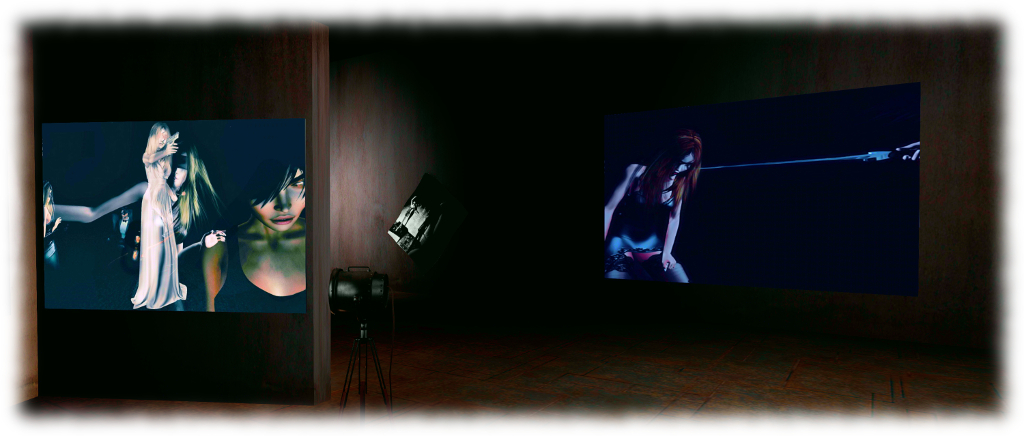
On display are twelve self-studies by Monique (or Moni, as she signs herself), offered in the familiar large format at Nitroglobus, which reveal the reason behind the exhibition’s title: in not one of them does the artist fully reveal her face. The most we see in those where her face may be partially exposed is the curve of cheek, soft line of jaw, sweep of nose and flare of nostrils and most particularly, the fullness of lips.

These glimpses are tantalising, sensual, and in at least one case – Thinking (seen at the top of this article) – edged with pensiveness. They draw us into the pictures in a physical way, the desire to reach out and caress a cheek, cup and gently lift a chin, to see the eyes that remain hidden, is powerful to the point of mesmerizing.

Nitroglobus Roof Gallery: Hidden Faces

Each of the poses offered is equally as sensual, with a couple probably NSFW. In many Moni is dressed in little more than her underwear or in sheer slips and tops; her poses nuanced, the dark backdrop to each piece further heightening its sensual feel. In two of those where her face isn’t visible at all, their sensual nature is carried in other ways: the lace ribbons tied around wrists, the drape of pearls down a naked back…

But there is more here has well. While Moni may be shy about revealing herself fully in the spotlight of an art exhibition, but because the images are so personal – both to her and in our reaction to them, they imbue a feeling of closeness with her without in any way casting us into the role of voyeur. Rather, the suggestion is that these are intimate moments being willingly shared with us, because we are trusted.

Nitroglobus Roof Gallery: Hidden Faces

Hidden Faces is a beautiful portfolio of work specifically created for this exhibition by an artist who may well be new to the SL exhibition circuit, but whose work is fully deserving of being seen by a wider audience. As such, I hope we’ll be able to see more of her work displayed at galleries in-world in the future. In the meantime, Hidden Faces will remain open through until late March.

SLurl Details

A Japanese Tea Garden in Second Life

Shareta Osumai Tea Gardens - links in article; click any image for full size
Shareta Osumai Tea Gardens – links in article; click any image for full size

As we all know, the Moles are the resident builders of Second Life who form the Linden Department of Public Works (LDPW). They take care of all the major Mainland infrastructure projects, up to and including activity locations such as PaleoQuest, The Horizons Experience, and other reached via the Portal Parks.

February tends to be Mole Month, with the annual Mole Day taking place in Bay City, celebrating the work of the Moles. 2017 has also been especially poignant for the Moles, as their long-term Mole-In-Chief, Linden Lab’s own Michael Linden, departed the company for pastures new. This being the case, I thought I’d take a little time out occasionally to visit some of the more notable Mole builds in Second Life which may not be as obvious as the “big” places like the Horizons Experience – and a good place to start, thanks to an indirect nudge from Kinnaird Flachra, seemed to be the Shareta Osumai Tea Gardens.

Shareta Osumai Tea Gardens - links in article; click any image for full size
Shareta Osumai Tea Gardens

The Tea Gardens can be found in three locations in Second Life: in the Premium East continent (which also includes Cape Ekim, and the mystery of dragons and Professor Linden, which I first visited far back in 2013), and at Premium South 2 and Premium South 3. All three locations, unsurprisingly, are identical, and form part of the hub for the Japanese themed Linden Homes.

The major feature of the gardens is the pagoda tea house which sits alongside and ornamental pond fed by a stream which tumbles and meanders down from nearby uplands. The tea house is set within a fenced garden, filled with autumnal trees and offering cobbled paths for wandering, the stream cross by delicately arched bridges, and with a small sand garden or meditation.  Those not wishing to walk can catch a ride around the garden on a mole-pulled ricksaw.

Shareta Osumai Tea Gardens - links in article; click any image for full size
Shareta Osumai Tea Gardens

Beyond the garden is a broader area of trees and cobbled walks to be enjoyed and, northwards, lies a path winding up into the hills to the local Info Hub, where various freebies can be obtained and people can learn about Linden Homes. This path, winding via stone steps, also leads the way via  Mole Temple – which (and while it didn’t contain anywhere near as many statues) reminded me a little of the Temple of 10,000 Buddhas, Shatin, Hong Kong.

It’s easy to be dismissive of the Linden Home continents – I’m not a great fan of many of the house styles myself, and do find myself wishing more was done to blend the edges of some more naturally into the sea where they form the edge of the grid – but areas such as the Shareta Osumai Tea Gardens, Cape Ekim and others scattered across these regions offer little gems awaiting discovery.

Mole Temple close to the Tea Gardens

SLurls and Links

All the tea garden areas are rated Moderate

Holly Kai Park: supporting Feed A Smile in Second Life

Brique Zeiner (Brique Topaz in SL), the driving force bethind Feed A Smile and some of the Kenya children from poor families for whom the programme provides daily warm meals
Brique Zeiner (Brique Topaz in SL), the driving force behind Feed A Smile and some of the Kenya children from poor families for whom the programme provides daily warm meals

We’ve made another small but important change at Holly Kai Park. Following discussions with Brique Topaz of Feed A Smile, we’re very pleased to announce that from February 2017 onwards, Holly Kai Park is an official supporter of Feed A Smile.

Feed A Smile is a programme run by Live and Learn Kenya (LLK) to provide nutritious warm lunches for over 400 children every day, paid for entirely from donations to the project – and over a third of the money comes from donations made by Second Life users. It is part of a broader programme managed by LLK, which includes finding sponsors to finance the education of children in Kenya, helping to provide them with everything they need: uniforms, shoes, text books, school supplies, etc., and even building a school in Nakuru, Kenya.

In addition, the organisation also provides medical and dental care for children, including check-ups and vaccinations. 100% of the donations received by LLK are transferred directly to Kenya to care for children, provide education, medicine, food, shelter and foster care. Nothing is lost to salaries, fees or administrative costs at LLK.

The Feed A Smile kiosk just inside the entrance to Caitinara Bar

To mark this modest collaboration, we have located a number of Feed A Smile donation kiosks around the key venues and locations in the park: the landing point, at the stage area on the Art Hill, at the Pavilion live events venue and, of course, in Caitinara Bar. We very much hope that when visiting the park, should you enjoy your time, you will consider making a donation to Feed A Smile in lieu of the more usual venue tips (we prefer not to take venue tips at the park).

Also, as we do not charge for the use of our venue spaces, we also ask that anyone booking and using them to please consider a donation to Feed A Smile / advertising the boards during their event.

Call for entries: UWA’s Transformations in Second Life

Image courtesy of UWA

The University of Western Australia looks likely to cease most of its presence in Second Life at the end of July 2017. However, before then the long-time patron of arts and artistic expression in Second Life is running one more major art exhibition, and recently put out a call for entries.

“Our final show is to be titled “Transformations” and is about beginnings, endings, transitions, change,” UWA’s art curator FreeWee Ling stated in the announcement. “The theme is deliberately vague in order to allow for the broadest possible interpretation. It is intended to highlight the technologies of SL as a medium for creative expression. We especially want work that reflects on the past in SL and/or imagines the future of virtual art.”

Those wishing to apply to be a part of the exhibition are invited to subject one piece in any or all of the following categories: 2D art, 3D art and / or machinima (so entrants can subject up to 3 pieces, one in each category). The closing data for entries is 23:59 SLT, on Sunday April 30th, 2017.

It is important to note that this event is an exhibition and not a UWA challenge / competition. There is no judging panel and there will be no prizes offered. However, official exhibition catalogue will be published on-line as part of the UWA Studies in Virtual Arts (UWA SiVA) journal series.

General guidelines for entries are:

  • As noted above, artists may submit up to one entry each in 3D, 2D, and/or machinima (up to 3 entries in total). Collaborations are encouraged, so if you participate as a named collaborator on any entry, you may also submit a separate entry as an individual.
  • Land Impact limit for 3D work is 300. Sound and light emitting objects should be carefully crafted in consideration of other nearby entries. Objects that might impact other nearby entries may have to be placed on a platform to isolate it. In such cases a poster and TP device will be placed in the gallery. Any entry with excessive script lag may be refused or returned for revision.
  • 2D entries should reflect the theme and must be images substantially created in SL. Post-processing (e.g., Photoshop effects) should be kept to a minimum.
  • Machinima entries can be of any length or subject matter as long a they are substantially produced using SL as the primary medium and conform to other criteria listed here. A poster and/or screen shot will be placed in the gallery and in the exhibition catalogue along with a link to the machinima.

For the full entry guidelines, including how to submit your entry, please refer to the call for entries blog post. All enquiries, concerns, etc., about entering the exhibition should be addressed directly to FreeWee Ling, who has final say on any issue.

Good luck to all who enter!

Additional links