Among Angels in Second Life

Among Angels

Bedrich Panacek-Guisse (Bedrich Panacek), co-owner of Ville de Coeur, invited me to visit a new art exhibition in the catacombs beneath the Citadel Gardens.

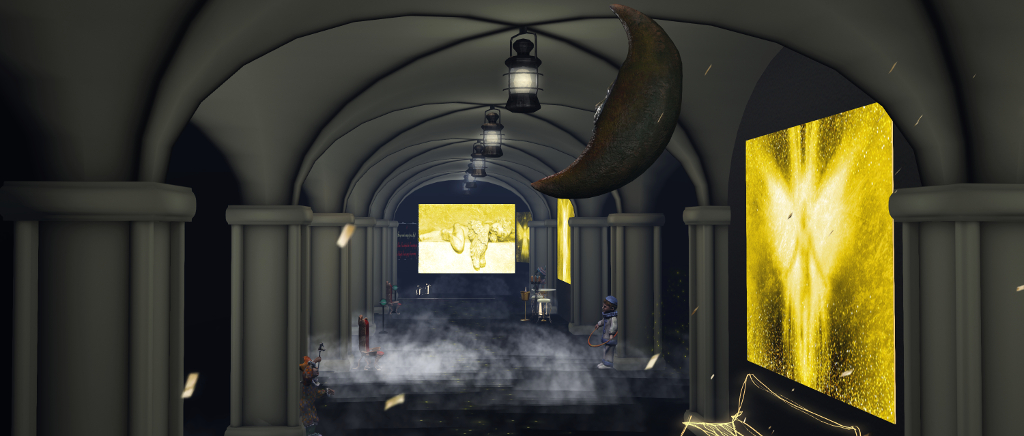
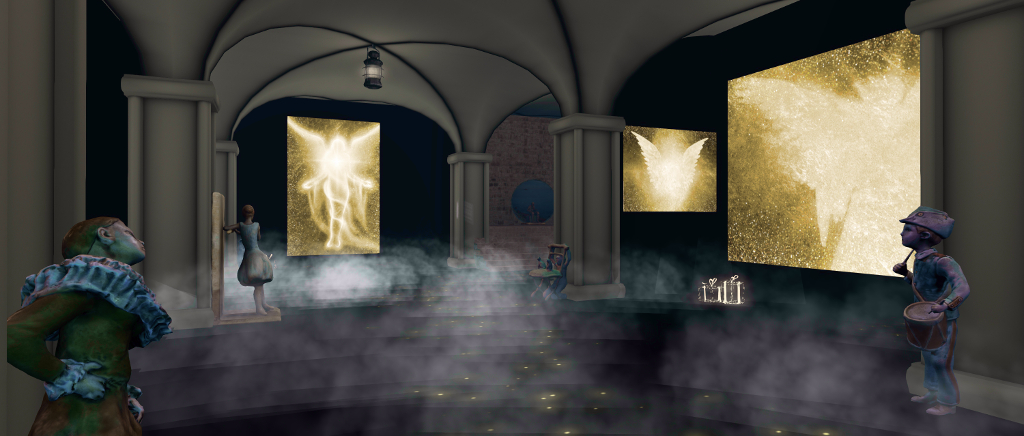
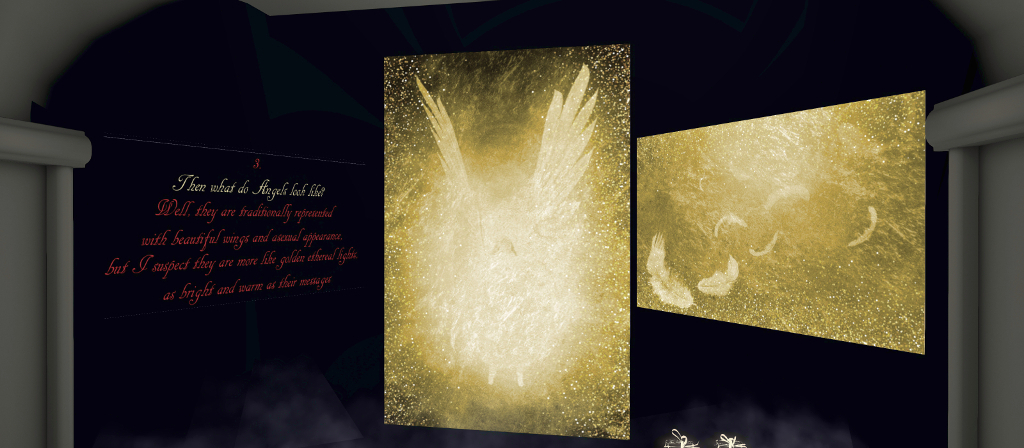
Among Angels is a story in art presented by JannaWhiskers. It depicts a conversation between a small girl and her mother on the subject of Angels. Images are presented in order, each with an accompanying text element relating the unfolding story. As such, it’s important to follow the directions through the catacombs from the entrance – although this is not hard.
Among Angels

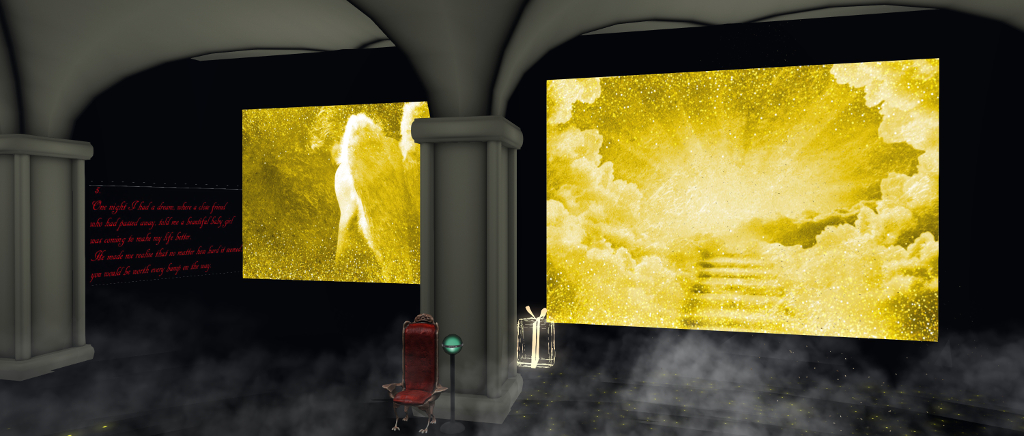
Janna was offered the opportunity to hold the exhibition after winning the Ville de Coeur Autumn Photo Competition. She presents some 30 images, not all of which have an associated text element, but they are all presented in a golden finish that can make details a little hard to discern at times, but which also brings a heavenly, other-worldly look to each, and is perfectly reflective of how we often imagine angels as being creatures of light.

The dialogue is presented in two colours: yellow (or gold, if you prefer), for the young girl, and red for her mother. Their words are woven into a mother / daughter discussion that might be seen as typical of many in the way it reflects the bond of love between the two, but which also reveals more. The child’s perception is clear and through her questions, she not only touches upon, but gently reveals, her mother’s own beliefs and  – faith?
Among Angels

As such, this is an evocative exhibition, one that is ideally suitable to the way it is presented through the halls of the catacombs, the route bringing to life the walk taken by mother and daughter as they talk. A walk given added depth through the inclusion of figurines by Silas Merlin, that offer a further sense of presence and company – or childhood – through the exhibition.

Places to sit are also offered through the halls, allowing visitors time to contemplate the art and appreciate the nuances of the story and the parental / child relationship. In addition, Janna offers a series of wire-frame gift boxes, each of which will present a gift when touched.

A touching exhibition, I couldn’t help but hear Robbie Williams’ Angels, some the lyrics seemed to aptly fit the theme of the exhibition.

And through it all she offers me protection
A lot of love and affection
Whether I’m right or wrong
And down the waterfall
Wherever it may take me
I know that life won’t break me
When I come to call, she won’t forsake me
I’m loving angels instead.
Among Angels

SLurl Details


Art Neveux in Second Life

DiXmiX Gallery: Art Neveux

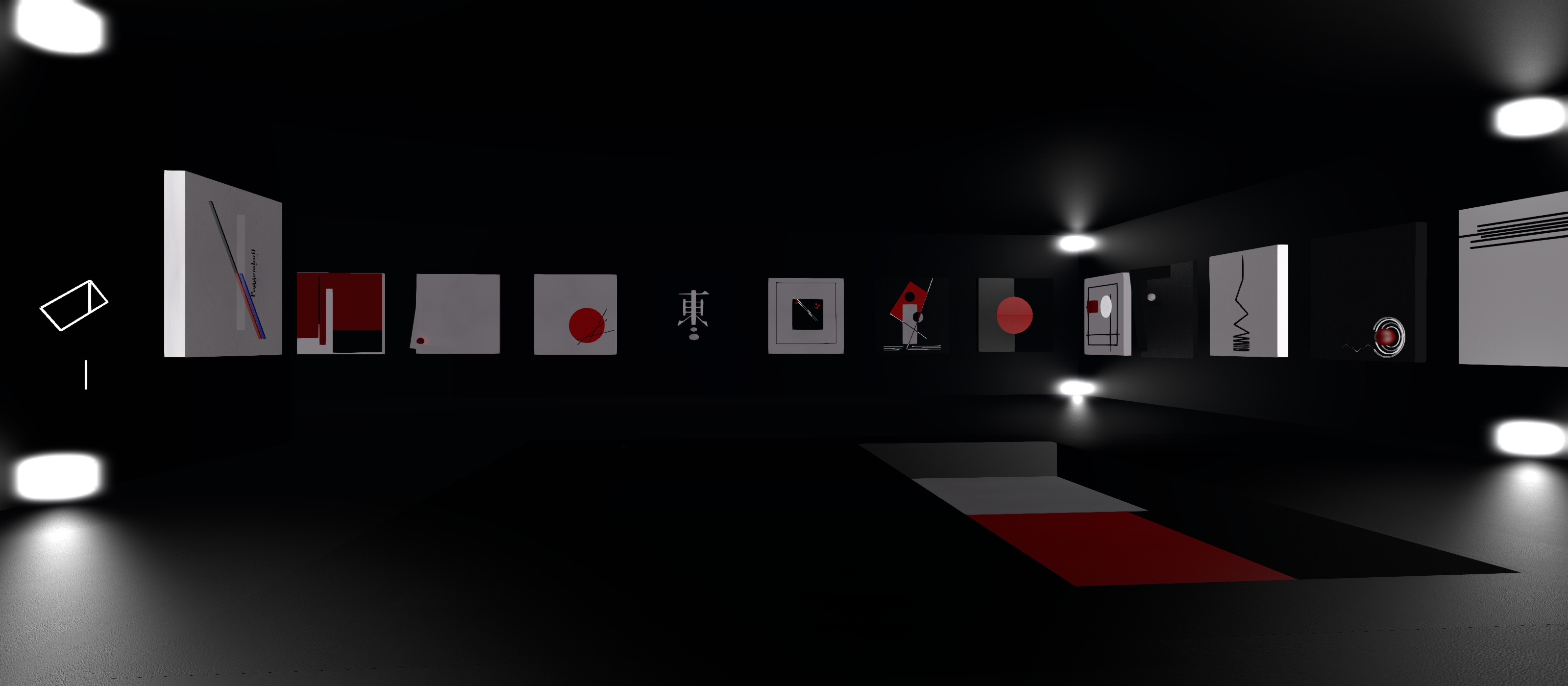
Open until the end of January 2019 at The Womb, the basement gallery space at DiXmiX Gallery, is Art Neveux, by Nevereux, and which I assume is a little play on her name and the term art nouveau.

A selection of constructs that offer 3D works designed to appear almost two-dimensional, this a somewhat difficult selection of art to quantify, being very subjective in nature – as Nevereux herself notes:

Design is fine. History is mine. An argument for art. Prim-cakes and some technology. Around the corner there is some extreme context. Others, so deliberately meaningless. If you want, it’s slathering jam on a toast. Sticking just for fun. And may whatever holds you up stay forever beneath you.  

DiXmiX Gallery: Art Neveux

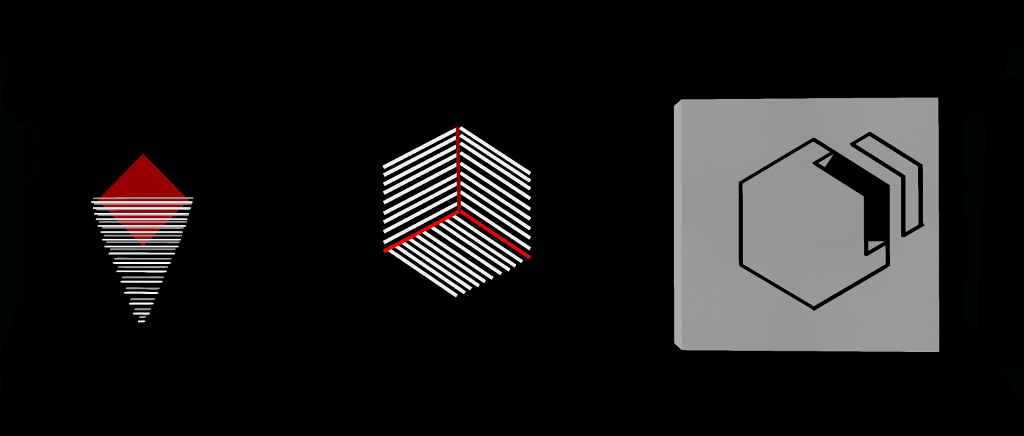
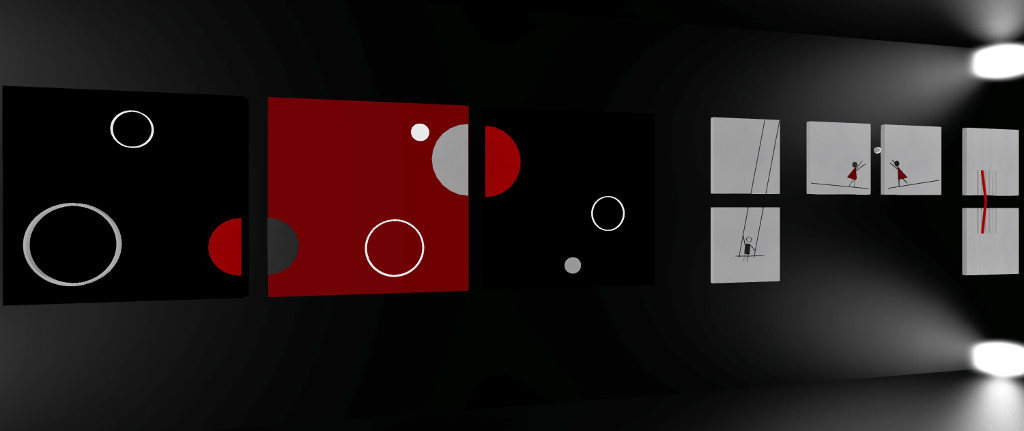
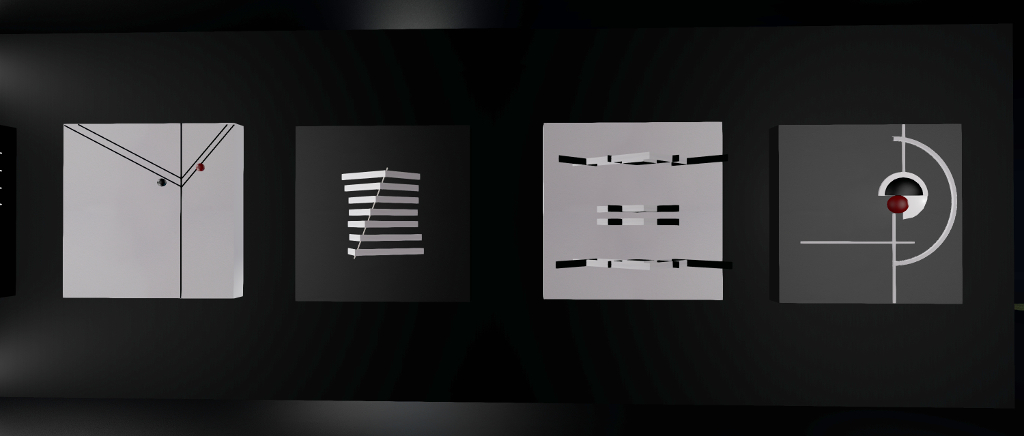
These are all pieces that are decidedly geometric in nature, presented in black and white, with red at times putting in an appearance. The net result is a series of stark – in the sense of their boldness – pieces that nevertheless have within them a sense of balance. Whilst art nouveau may well be suggested by the exhibition title, I’d perhaps lean towards its presence in the works here being only in a very modern interpretation; I tended to look on many of the pieces as being more abstract in nature, with some also carrying art deco motifs.

What I did find particularly interesting is the manner in which much of the art has been constructed. Rather than being completely original, most of the individual pieces are in fact constructs put together using building components by the likes of VetronUK, Chaser Haks and Isabelle Stoop. There is nothing wrong with art being created in this way, it happens all the time in the physical world; however, seeing the manner in which building components have been used within these pieces did have me recalling a discussion around an installation by another artist (and in another place) from earlier in the year.

DiXmiX Gallery: Art Neveux

Within that other installation, use was made of a series of mesh items readily available via the SL Marketplace, with little or no change made to them beyond outside of some retexturing. This led to a question being raised on whether the inclusion of such elements constituted “fair use”, and whether they justified the installation as a work of art; the argument being that their use hadn’t been sufficiently “transformative” to warrant either. It was not a view to which I could agree; I felt the inclusion of such elements was both fair and transformative, simply because they were integral to one’s response to, and interpretation of, the installation as a whole.

Such is the case here. Yes, many of the components used are “off the shelf” mesh shapes and forms designed to assist builders. However, the manner in which they have been brought together within individual pieces is transformative, both in terms of their individual use and in our interpretation of each complete piece.

DiXmiX Gallery: Art Neveux

There is also, in keeping with Nevereux’s own words, a sense of playfulness and illusion about some of the pieces offered (such as Palm Leaf, Belong, Warrior and Perspective, each of which should be cammed over carefully). These perhaps stand in reflection of the artist’s own nature – or perhaps a reminder that perhaps we shouldn’t look to deeply into individual pieces in order to discern “meaning”.

SLurl Details

A snowy Ponto Cabana in Second Life

Ponto Cabana; Inara Pey, December 2018, on Flickr
Ponto Cabana – click any image for full size

Update: Ponto Cabana has closed. SLurls have therefore been removed from this article.

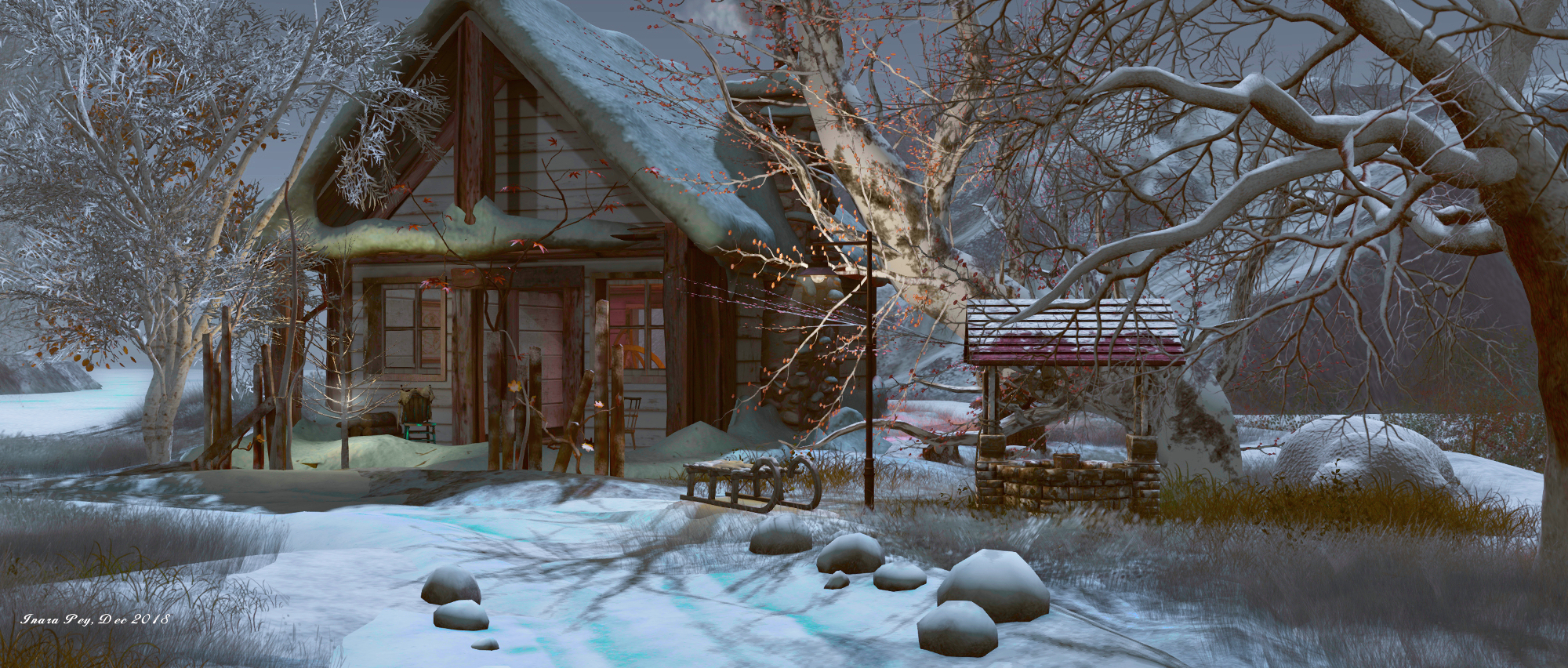
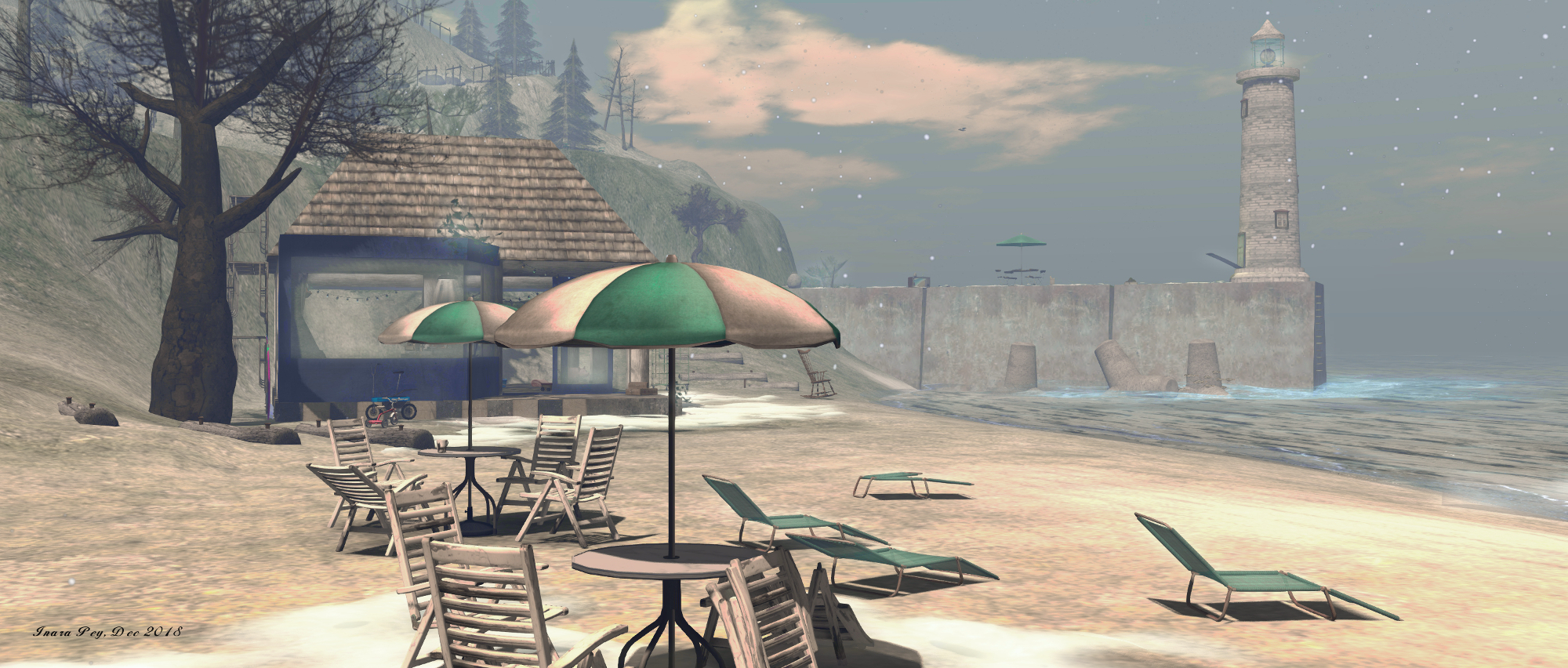
The last time we visited Ponto Cabana, the Homestead region sitting on Lemon Beach, it presented a place with both a colonial feel to it and one of great age (read here for more). Now, in the midst of winter, it has taken on a new design, one caught under snow and within the bonds of ice; a setting as evocative as the face it showed in July, and one that – for those of us who may feel like we’ve piled on a few pounds thanks to turkey and more – offers offer a taste of the great outdoors that might help put us in the frame of mind to take a few holiday strolls over the next few days!

While presenting a new design by region holder Iska (sablina), Ponto Cabana also carries echoes of its summer build that, for those of us who visited back around July, give it a sense of familiarity while offering much to see that is new and awaiting discovery.

Ponto Cabana; Inara Pey, December 2018, on Flickr
Ponto Cabana

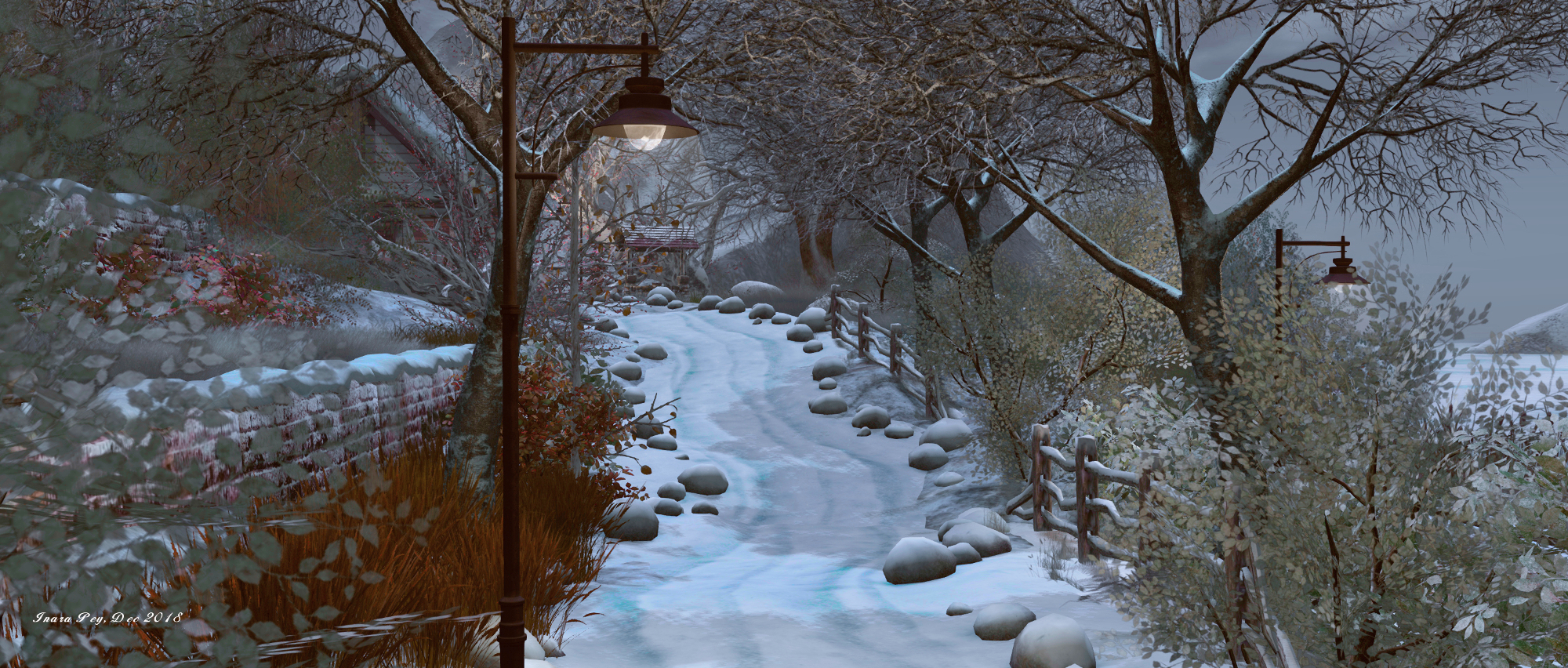
For example, the region largely remains split into two, linked by the span of a bridge. Further, the smaller of the two islands rises in terraces, a road curling up one side while stone steps offer a quicker route up to the table-top of the hill, much as it did back when it was home to a warmer setting.

However, where that hilltop was once home to a Spanish-style villa standing within and broad garden space with some of the terraces below it under cultivation, now the hill lies under snow and presented a more rugged face. It is also home to two red-painted houses that, with their red sides and white frames, might be taken for a farm. However, the courtyard before and between them perhaps offers a warmer greeting than can be found within either.

Ponto Cabana; Inara Pey, December 2018, on Flickr
Ponto Cabana

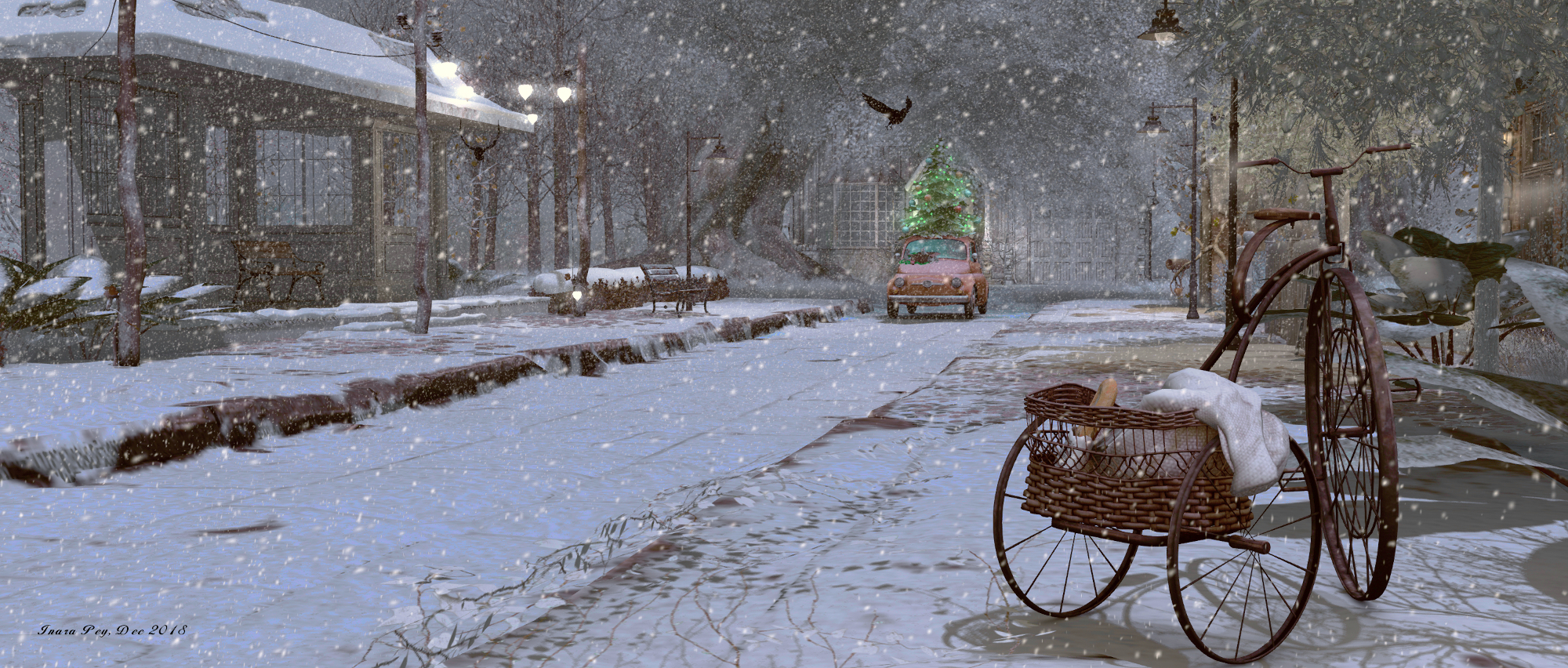
The larger island offers another little  town setting, this one perhaps more homely than July’s version, be retaining an element of ruin in the broken walls of what might have once been a house, or perhaps a chapel. Along the broad street, partially lain with wide train or tram tracks, snow falls heavily, coating footpaths, tracks, houses and gardens alike in a soft blanket that invites visitors to be the first to leave their footprints in its covering.

A small station sits forlornly alongside the tracks awaiting passengers, while at one end of the street, a car carrying a Christmas tree adds flickering warmth to setting as its little lights wink and blink. The houses and buildings here are sparsely furnished, yet there is still a welcoming air surrounding them and along the single street.

Ponto Cabana; Inara Pey, December 2018, on Flickr Ponto Cabana

Surrounded by a lake of ice, Ponto Cabana is a perfect Christmas wilderness setting for those looking to get away from the excesses of Christmas and who wish to spend time relaxing and appreciating simple winter solitude.   And if you really want to get away from it all, try a walk over the ice to the cabin on the smallest island, where a cosy time can be found.

Nostalgia at :nostos:deer: in Second Life

:nostos:deer:; Inara Pey, December 2018, on Flickr
:nostos:deer: – click any image for full size

Second Life is always changing. Not just technically in terms of capabilities and options, or even visually in terms of the overall look and feel; but physically as well. Regions come, regions go – often with much lamenting in the case of the latter. Regions change hands from public to private; settings change with time both in reflection of the seasons and as of the evolving nature of design and model building.

Such is the way of things, it is sometimes easy to forget that there can also be found in Second Life a sense of constancy; travel through the mainland continents, for example will reveal places that many not have changed for a very long time, offering glimpse’s of the grid’s past and a reminder that it does have a history.

:nostos:deer:; Inara Pey, December 2018, on Flickr
:nostos:deer:

While they can be harder to find, such places do exist among the myriad of private regions scattered across the grid. Take :nostos:deer:, for example, the full region held by Dora Nacht and Hide Mint, and home to their Little Hopper brand. I first visited it almost six years ago, in February 2013, when it was already over a year old. I’m not sure I’ve actually ever been back, but sorting through photos on my hard drive recently brought me to a folder of images taken during that visit; seeing it was still on the map, curiosity got the better of me, so I hopped over to take a look, and it was like stepping back in time.

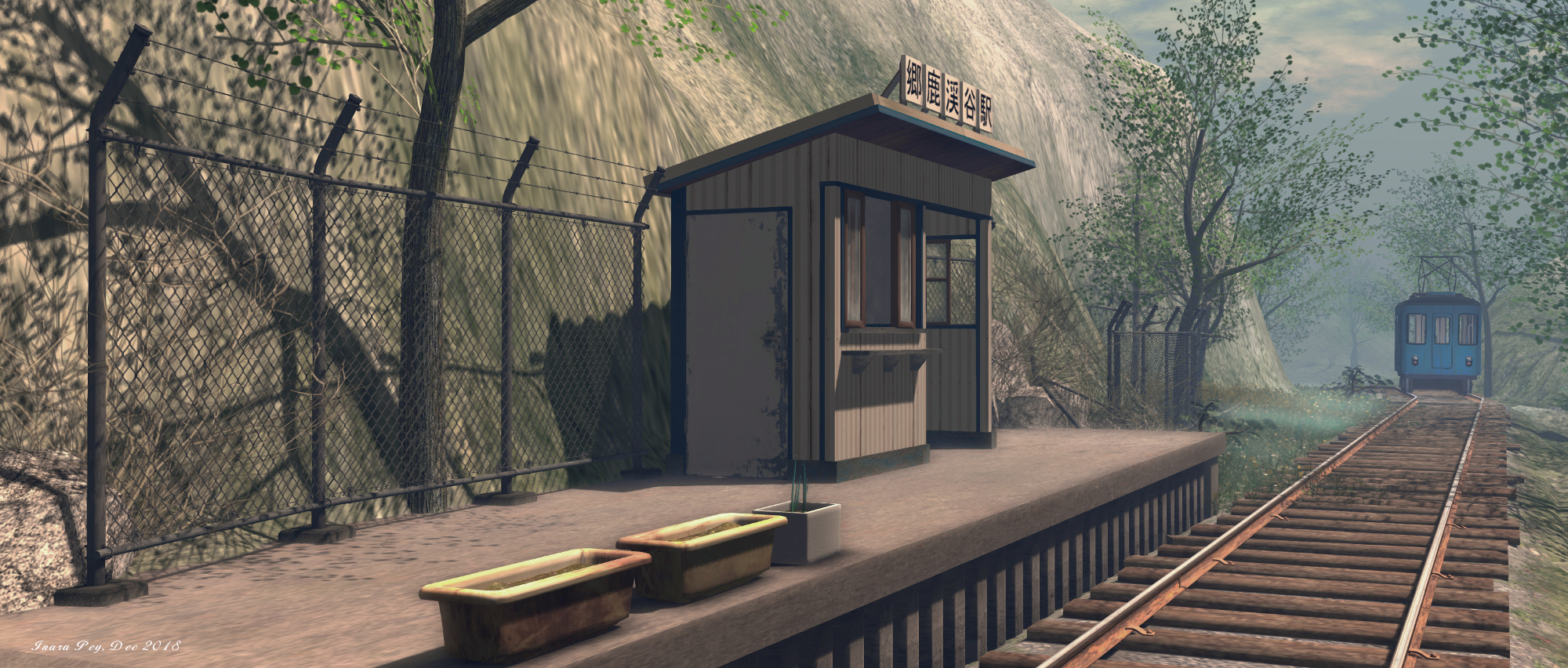
In 2013, I was struck by the simple design of the region and the sense of fun and whimsy within it, and it is true to start that, but for the snow present in 2018, almost nothing about the region has changed. The mine shaft entrance / teleport up to the skyborne store is still there, nestled by the deep gorge of the river that cuts through the region; the little purpose-built (by Hide) tram clatters along its single track, rolling from little station and out towards the coast before committing a 180-degree turn and trundling back as if it had a sudden change of heart; the east side beach is still watched over by the single finger of a lighthouse.

:nostos:deer:; Inara Pey, December 2018, on Flickr
:nostos:deer:

And there is the other little tram, still caught it time as it skitters on spinning wheels at the end of a track from which the bridge has vanished out from underneath it, rail sleepers tumbling like a twisted staircase into the sea below. Throughout the region, there is still an air that this is a place for doing things in a not-really-actually-doing-things kind of way.

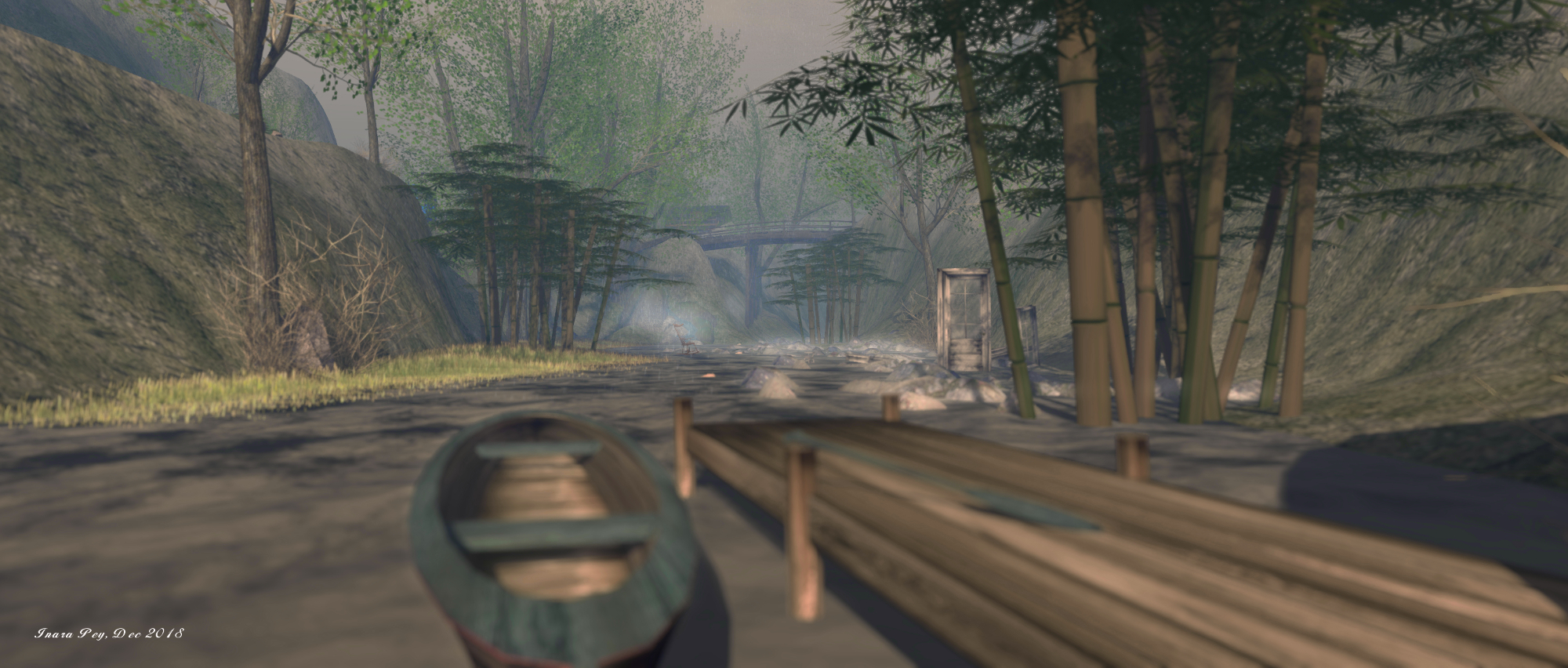
For example, the canoe awaits paddlers down in the river gorge, while the swan pedalo boats similarly await attention in the north-west. Elsewhere, wooden logs lie like abandoned sleepers to form paths both up hill and down dale for those wishing to follow them. But there is not sense of having to do all or any of this, with the region offering many places where people can simply sit and rest and let time pass them by.

:nostos:deer:; Inara Pey, December 2018, on Flickr
:nostos:deer:

Compared to the sophistication of modern region designs, some might view nostos:deer as “lacking”. It relies entirely on simple terraforming; there is no use of mesh landforms or other elements, the tress are predominantly prim-based, and so on. But that doesn’t make the region any less attractive per se.

Rather, the fact that it has stood so unchanged for so long allows it to stand as a glimpse into a bygone era of Second Life’s history. Equally, for those of us who remember it from visits taken four or five or six years ago, its unchanged nature causes a warming rush of familiarity, almost a sense of homecoming in keeping with the first part of the region’s name, mixed with a deep sense of nostalgia and re-discovery.

SLurl Details

Five Artists from Spain in Second Life

Diotima Art Gallery: Mario2 Helstein

Five Artists From Spain is the title of an exhibition at Diotima Art Gallery curated by Redi (Red Bikcin), that opened on Thursday, December 20th, 2018. It features, well, the work of five artists from Spain.

The five in question are: Duna Gant, Mario2 Helstein, Redi herself, the inimitable Kimeu Korg, and Peta Cometa (mariajo60).

Diotima Art Gallery: Duna Gant

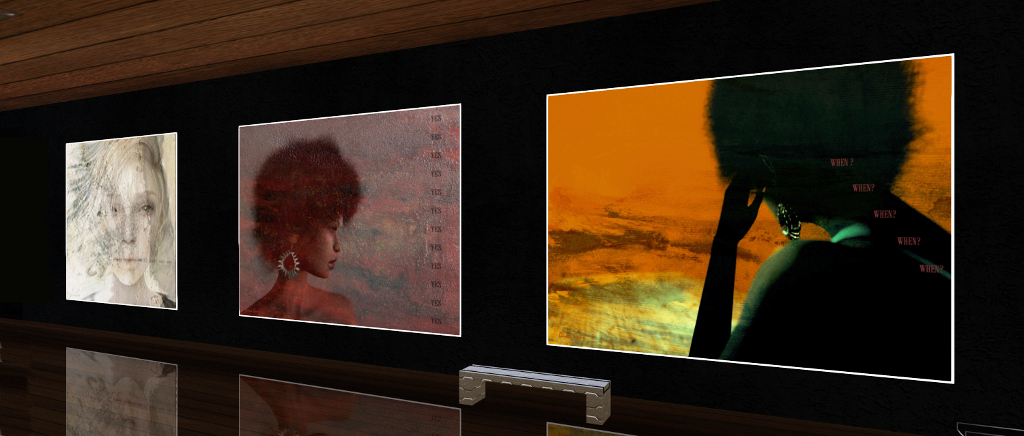
“My art is always a reflection of my emotions,” Duna states in introducing her art and herself. This is certainly the case with the five pieces presented here. Each is an avatar study rendered as a painting, and each represents an emotional reaction: No, Why?, Yes, When?, and Silence.

Within each, the force of the emotional response is borne in both the colour palette used to present each study, and the repetition of the titular word itself.

Diotima Art Gallery: Peta Cometa

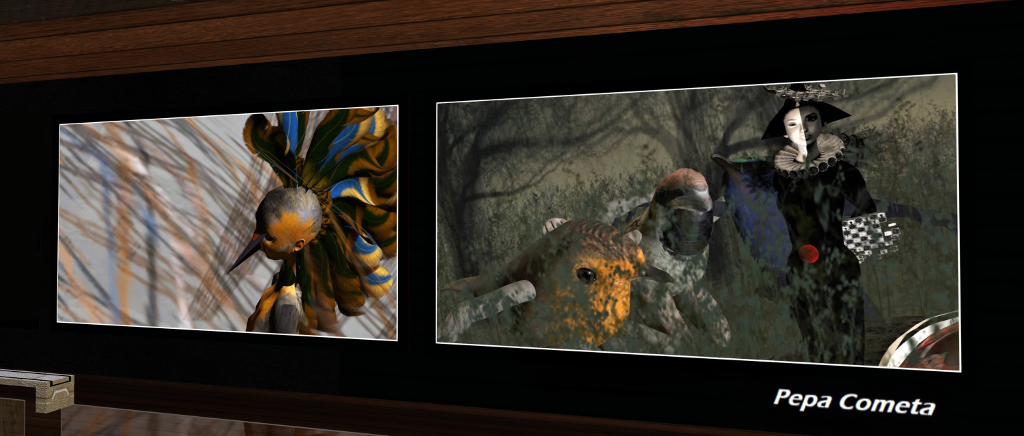
Facing Duna’s pieces are four untitled (at least in terms of their mounting) pieces by Pepa. Primarily avatar studies (there is perhaps a hint of mixed media in one), and are a n interesting mix that again play on emotions – albeit this time the emotions of the visitor. Are they indicative of happiness and / or gaiety, as suggested by the almost Hareliquinesque dress of one and the carnival-like mask of its neighbour? Or are they perhaps expressive of something else?

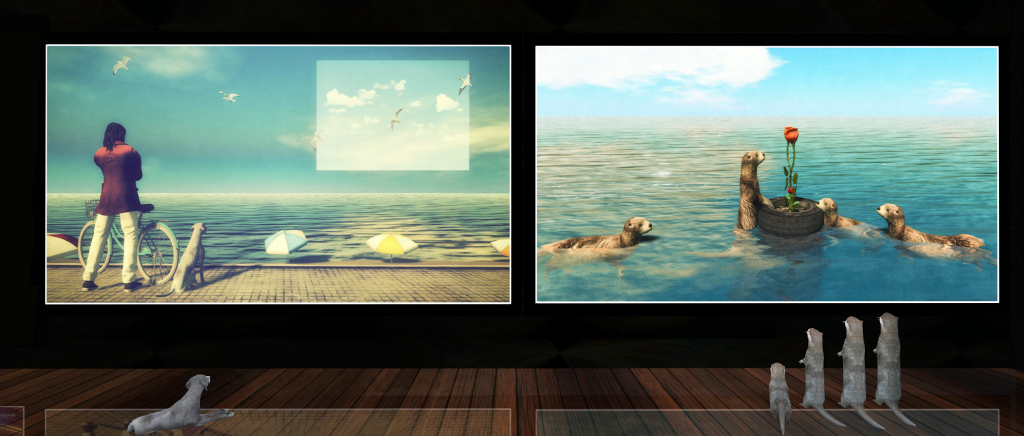
Kimeu’s work is always a delight to see; there is often a whimsy to his work that cannot fail to bring a smile to one’s lips. Here, he present four pieces, all of which strong feature the colour blue as a linking theme through both water and sky.

Diotima Art Gallery: Kimeu Korg

These are also pieces with a wonderful element of narrative within them, and it is quite possible to become lost within the likes of El Observador (The Observer), the first piece in the set on the right wall of the hall, while The Otters, facing the main entrance (and seen above, right) is purely and simply delightful. The addition of an appreciative audience to both of these pieces and to A Piece of the Sky (above, left) adds a further depth to the display.

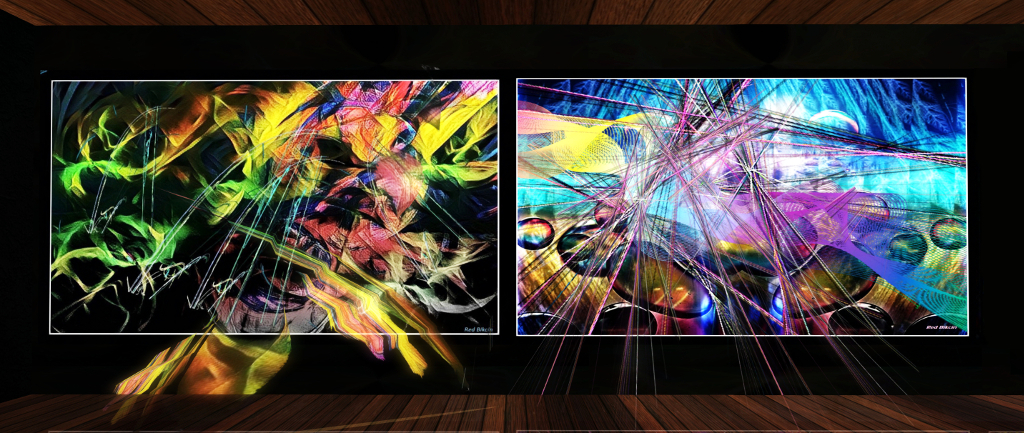
The rear portion of the gallery presents some marvellous abstract work by Mario2 and Redi. Mario’s 3D sculptures, together with his particle shows, never fail to impress, and the pieces offer here are no exception. From the mandala / fractal like forms of Efecto K and Object5, to the (almost seasonal, with its fruit suggestive of Christmas tree baubles) Arbol and the evocative Cara, these are all pieces that captivate the eye in both form and motion.

Diotima Art Gallery: Red Bikcin

Redi’s presentation also feature motion and combine 2D and 3D elements in three pieces of richly colourful abstract art, all of which can be quite mesmerising as the eye is drawn into their loops, lines, swirls and patterns.

My one small quibble with this exhibition is its lack of information on the artists themselves. While not vital to one’s appreciation of art, having a few liner notes on each of the artists involved in an ensemble exhibition like this can often serve curiosities piqued by the art, particularly in cases where a right-click Edit doesn’t reveal any links to the artist concerned (as it has perhaps been offered to the gallery as a texture for mounting and presentation by the curator).

SLurl Details

The peaceful wilderness of [Valium] in Second Life

[Valium]; Inara Pey, December 2018, on Flickr
[valium] – click any image for full size
Updated, January 2020: [Valium] has closed. SLurls have therefore been removed from this article.

[valium] is the name of the latest region design by Busta (BadboyHi) and held by Valium Lavender and to which I was pointed to by fellow SL traveller, Shakespeare. Busta’s designs are always been worthy of a visit (you can find out about Yasminia here and Meraki here), so I was keen to hop over and explore as the region officially opened its doors to the public on December 21st, 2018. And once again, both Busta and Valium are providing a region that is quite extraordinary in its eye-catching design.

A full region utilising the full region land capacity bonus, [Valium] is open to the public, although group membership is required. This is currently free, and will remain so through until January 7th, 2019, after which a L$250 fee will be applied. The latter is to both help with maintaining a certain sense of privacy for those renting properties on the region, and for a reason that will become clear later in this article. There are many places to be explored during a visit, but do be aware that there are the aforementioned private residences scattered around the region, so please do take care to avoid trespass when exploring.

[Valium]; Inara Pey, December 2018, on Flickr
[valium]

The Vision

To create a picturesque, rugged countryside setting with naturally beautiful nooks, twists, turns and hidden gems for public and private use. There are many public areas to explore and it will probably take several visits to see everything the sim has to offer.

– Valium Lavender, describing [Valium]

[Valium]; Inara Pey, December 2018, on Flickr
[valium]
This is a marvellously diverse setting, ranging from high peaks to coastal areas, mixing little docks, headlands, remote dwellings, ruins, and islands (albeit one or two of them being off-sim).

The landing point sits towards the centre of the region, meaning that no matter where you go, there is something to explore. A terraced area, it overlooks the low-lying western side of the region where the ruins of a church sits on the largest of the region’s islands, beckoning visits to it as it rises among the trees guarding it.

[Valium]; Inara Pey, December 2018, on Flickr
[valium]
While this island is connected to the rest of the land by three bridges, getting down to them from the landing point is a little circuitous, ensuring visitors have the opportunity to start explorations, as the route carries them over semi-paved areas, past the ruins of an old farmhouse (with one of the private residences just behind it), and on to the waterfront or for those who prefer, past an old folly and then down to the water’s edge, and second of the three bridges.

It is the multitude of footpaths that make exploring [Valium] a joy. Whether you go up or down, inland or directly (or as directly as you can!) to the coast, there is much to discover, appreciate and photograph. There’s the ruin of an old tower facing the church, for example, or the rickety cabin build out over the water to the north, caught in a local shower, or a further terrace sitting just above, and nestled below and clear of another of the private residences.

[Valium]; Inara Pey, December 2018, on Flickr
[valium]
To the south-east sits a little commercial area, with a coffee-house sitting within a converted industrial building and offering outdoor seating with views of the local lighthouse. A further coffee-house, this one also providing music and dancing, sits on a wooden platform part-way up the island’s main peak, again offering marvellous views to the south and west.

There is so much about this region that is attention-taking that walking you through it with words is really a waste; [valium] truly is a place that deserves to be visited, and which can only be truly appreciated by doing so. There’s also another reason for visiting (and paying the group dues: Valium has decided a portion of the group membership fees, etc., will be forwarded to The Nature Conservancy, as she notes in the region’s website.

[Valium]; Inara Pey, December 2018, on Flickr
[valium]

[valium], a project from initial concept to the elaborate build, was created from visions of our naturally beautiful RL world. A place to explore and appreciate. With this in mind, I have decided to support a fantastic charity, The Nature Conservancy.

3400 lindens or more (out of group fees) per month [are donated] to The Nature Conservancy, a non-profit organization dedicated to land conservation and protection. Every acre they protect, every river mile restored, every species brought back from the brink, begins with us. Our support will help make a lasting difference around the world in 72 countries.

– Valium Lavender, describing [Valium]


[Valium]; Inara Pey, December 2018, on Flickr
[valium]
I believe that until the group fee is introduced, there will be a donations kiosk available at the landing point, while if visitors would like to donate directly to the Nature Conservancy, there is a link on the information board and also in the [Valium] website. Should you take photos of the region during your visit, do consider sharing them with the region’s Flickr group.

Kudos to Busta and Valium on creating such an wonderful setting.