
The following notes cover the key points from the Web User Group (WUG) meeting, held on Wednesday May 6th 2026. These notes form a summary of the items discussed and is not intended to be a full transcript. Pantera’s video is embedded at the end of this article, my thanks to her for providing it.
Meeting Overview
- The Web User Group exists to provide an opportunity for discussion on Second Life web properties and their related functionalities / features. This includes, but is not limited to: the Marketplace, pages surfaced through the secondlife.com dashboard; the available portals (land, support, etc), and the forums.
- As a rule, these meetings are conducted:
- On the first Wednesday of the month at 14:00 SLT.
- In both Voice and text.
- At this location.
- Meetings are open to anyone with a concern / interest in the above topics, and form one of a series of regular / semi-regular User Group meetings conducted by Linden Lab.
- Dates and times of all current meetings can be found on the Second Life Public Calendar, and descriptions of meetings are defined on the SL wiki.
Project Zero Update
- Project Zero (the viewer streamed to a browser) is now closed – see: Linden Lab announces Project Zero to end).
- Interestingly, this work is now being described as an “experiment” rather than any form of product development effort; a description which is somewhat removed from how the project was initially put forward (although it is fair to say that the Firestorm iteration of the work was more experimental by the Lab).
- “A lot” has been learned from that experiment, some of which will be used to improve both the desktop viewer and Mobile App experiences.
- Support has already refunded all or nearly all L$ pack purchases and are working through the list to make sure everyone gets refunded. More info is in the blog post here if you need help.
Web Services Updates
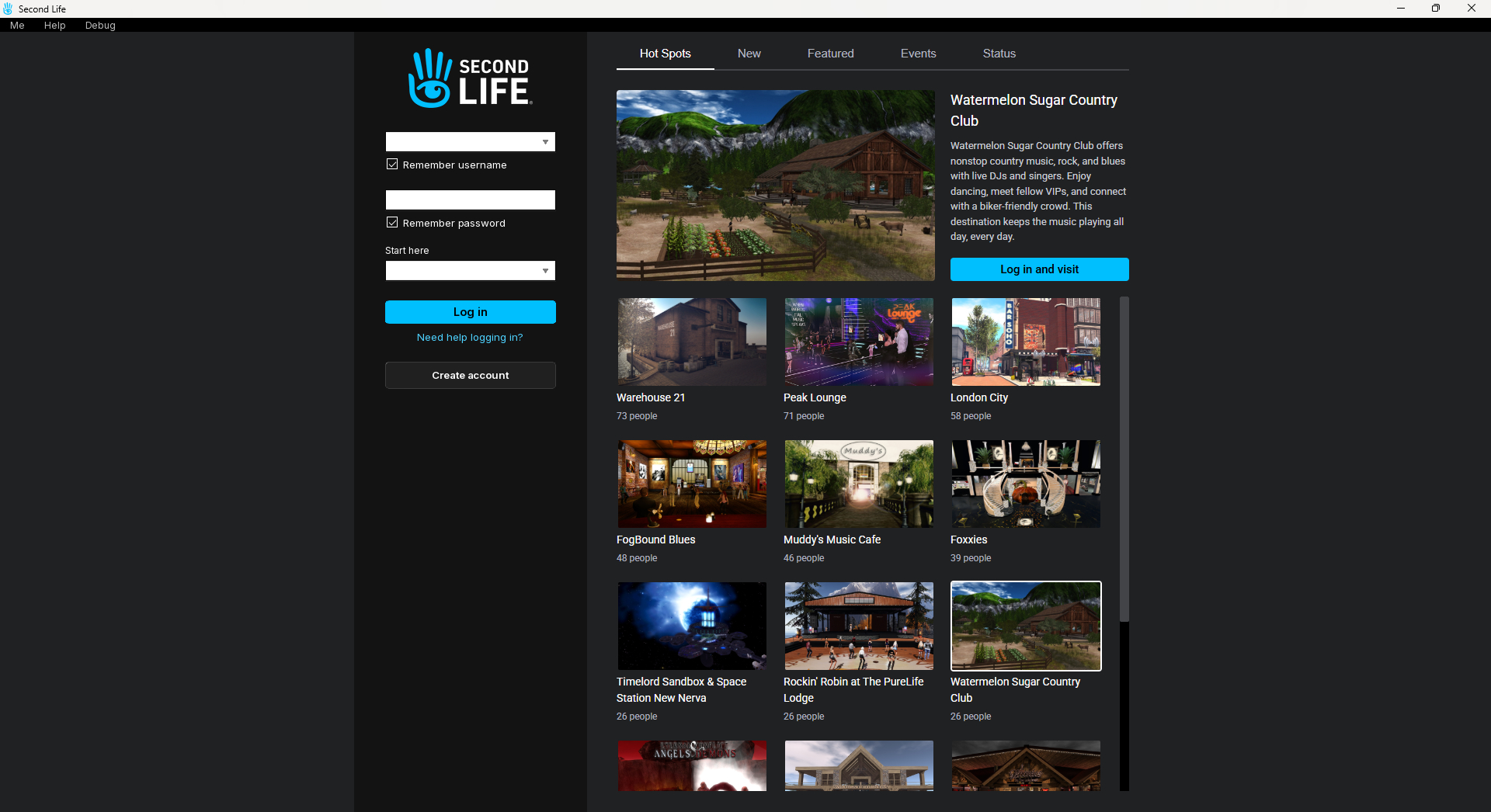
- The refresh of the the official viewer log-in splash screen is now available in the current RC (and soon to be release) version of the viewer.
- It has already been suggested this screen could benefit by the inclusion of the Lab’s own SLBN RSS feeds for blogs, etc, even if only in link format (as with the Firestorm log-in Splash screen).
- Official blog posts are linked-to under the Events (or some reason – space?) tab, but the broader SLBN links are absent.
- Surfacing the official blog and the SLBN links more clearly would benefit both official communications – given many users do not directly address secondlife.com, and help the “community” nature of SL.
- The refresh of the web-base land / region purchasing pages is in its first passes of “button up work”. and is currently on track to surface in the next few months. This is seen as the second part of the Land Portal overhaul which started with the refresh of the Linden Homes pages.
- The Responsive Marketplace Homepage making progress, and will be passing through the design/QA gauntlet soon.
- It is hoped that some of the tools used in this work can be put to use in enhancing / re-working elements of the Marketplace in general (e.g. making it more modular than monolithic) in order to add features more easily and leverage opportunities to help promote creators and stores.
- This work would be subject to senior management agreement.
Internal and Quality of Life Updates
- Web Search has received a range of under-the-hood updates (OpenSearch migration, Debian updates, Python upgrades), with an eye to tackle some first pass search results updates as a result of these updates in the near future.
- A range of under-the-hood but necessary security update.
- Mention of which again brought forth requests for more options to be added to the current MFA process, particularly e-mail support.
- Wrapping up assisting teams without authentication/email upgrades.
New Joiners
- Eliza Linden is a new hire, filling the role of Economy Product Manager, with responsibilities related to the Linden Dollar, the LindeX, and also producing support to the Marketplace transactions, etc. She may also become one of the Lindens attending the Web User Group meetings in the future.
- Crowley Linden has joined LL as a Software Engineer with the Tools & Payments team.
Other Items
- A bug report has been filed about items shown on the front page of a Marketplace Store not showing the correct price after a listing update – although the actual listing does show the correct price.
- Marketplace requests:
- A suggestion was made for merchants to be able to group like items together within their Marketplace stores or to have tabs within their stores so they can display items which might be brought together, etc.
- It was asked if it would be possible in future to have better integration between the MP and in-world stores – such as having both Marketplace listings and store vendors pull products for delivery to customers from the same repository.
- The response to these ideas was somewhat favourable, with it being mentioned that Casper (of CasperTech fame) is now looking at the MP and familiarising himself with it, and these might be things that could be incorporated into the MP alongside of features from the CasperVend system.
- It was requested that the ability to review Demo items (particularly those with limited functionality) due to the negative feedback Demo items can garner for this reason.
- This led to a more extensive discussion on reviews and hope to improve them.
- The second half of the meeting [31:59-1:10:20] involved a user-generated presentation on Marketplace usage, featuring a series of slides. Allowing for the data being a snapshot in time (with changes occurring all the time), some of the highlights include:
- The overall volume of listings has increased throughout the MP’s lifetime, despite periodic delisting exercises for items that have not sold or listings from creators who have not logged in for specified periods (e.g., 2 years or more) and things like the de-listing of Gacha items.
- 2016-2017 saw a large-scale jump in MP listings / activities – largely as a result of the introduction of multiple mesh bodies and the need to cater for them all with clothing and accessories, etc.
- In the last decade, 16,000 MP stores have put out at least one product a year (with some releasing as many as 33 per month), and the longevity of individual products has increased (e.g. whereas merchants may have previously removed slow-/non-selling products in the past, now they are being left as listed on the MP.
- The “average price” for purchased items on the MP is L$350 (obviously with a high degree of variance between low and high cost items such as fatpacks, etc.), with the suggestion that this is a good price for new creators to consider when selling their first individual products.
- Gacha items appear represent a relatively low number of listings within the MP (and have been declining), but they do have a higher volume of sales.
- AI use may have moved from AI generated content (peaking at around 1%of overall MP content being self-reported as AI generated) to the use of AI tools for imaging / branding. This led to a side discussion on AI and AI tools.
- Please refer to the video for specifics for all of the above.
- A request was made for a) the OAuth client for SL web being made available to users on external services, and b) if the SL Discord bot could do the same thing?
- These questions were directed to Kermit Linden, but no specific response was offered during the meeting.
- A complaint that a recent fix to logging-in to the Forums means that those with capitalisation in the middle of their users names now have the letters displaying in lower-case in their names (e.g. “Snuffyab123” instead of “SnuffyAB123”.
- This issue might be related to a similar issue with SL Wiki for users with Edit rights, but this has yet to be confirmed.
Next Meeting
- Wednesday, June 3rd, 2026.


