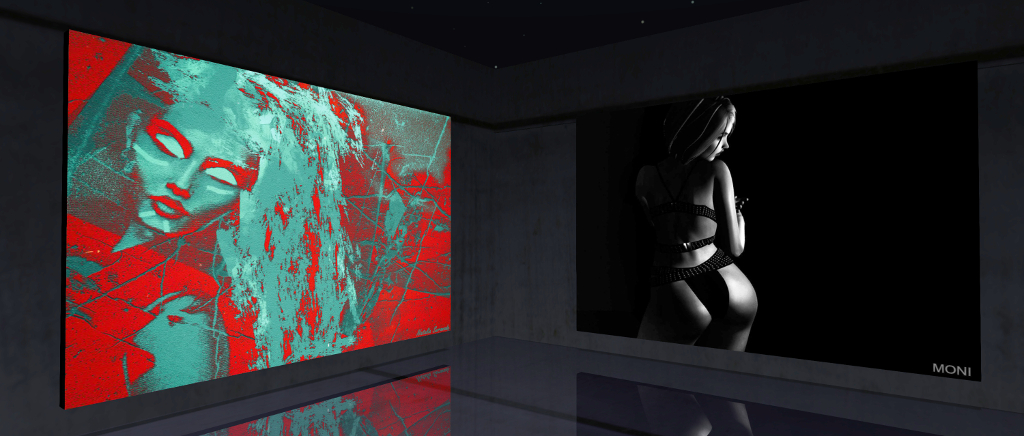
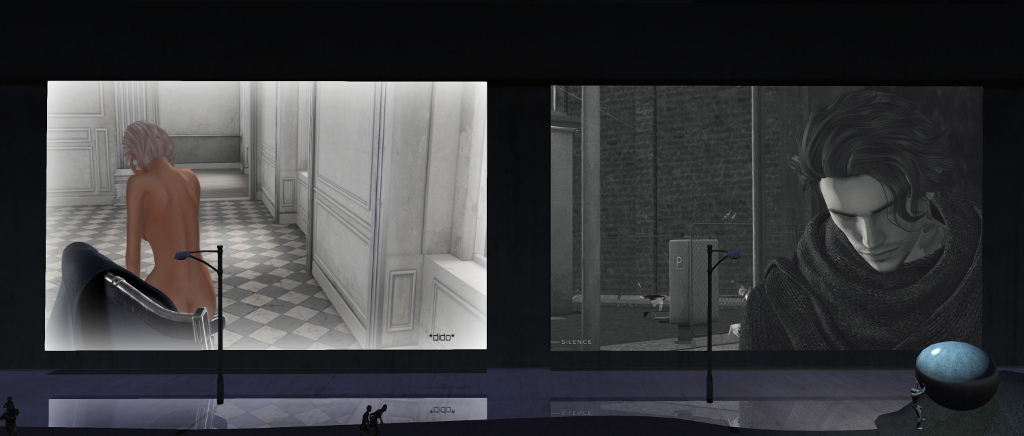
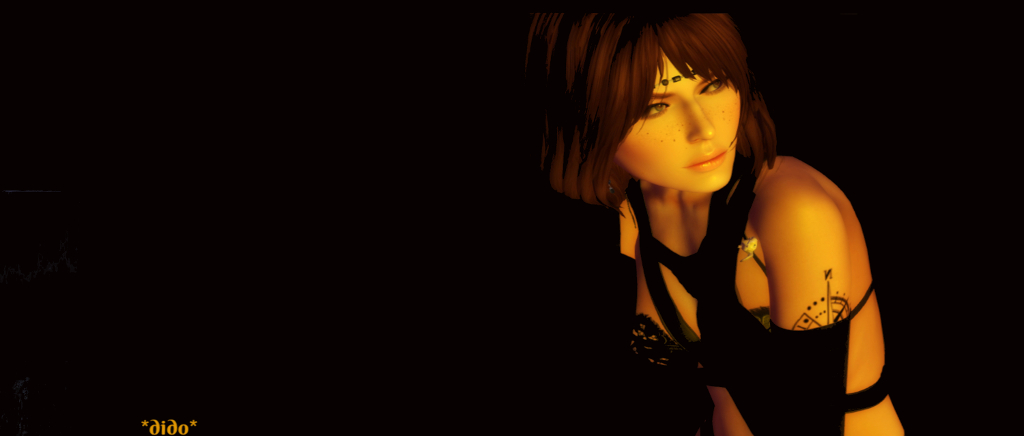
“I’m not promoting it heavily,” Dido Haas informed me, as we met at the end-of-2018 exhibition she is curating at her Nitroglobus Roof Gallery. “I had another exhibition planned, but it didn’t go ahead. So I’ll just place some pictures on Facebook, Flickr and the SL group.”
Which is not to say that the current exhibition is simply a fill-in; rather it stands in part as a retrospective of some of the memorable exhibitions Nitroglobus has hosted through 2018. It also offers the chance to appreciate Dido’s own work, and that of David, aka “Mr. Haas” or silence (jemapelSilence) that speak to their growing relationship.
Dido has a marvellous eye for art; as such Nitroglobus features a series of outstanding exhibitions each year – something that keeps me going back every month or so. As such, selecting artists and pieces for any kind of retrospective is going to be a challenge, but Dido nevertheless presents a considered series of pieces featuring Monique Beebe (who I confess is one of my favourite artists when it comes to narrative avatar studies), from her exhibition Changing Moods. Alongside of it is a piece by Natalia Serenade, as featured in her evocative exhibition, The Colour of Unspoken Words (read here for more).
Cold Frog, who presented Fading in January, can also be found, as can Nevereux, with a piece from Out ofHere, and Cat Boucher, who appeared at the gallery in August with Hypnopompia. Between and around these are images by Dido and David.
The latter are very intimate pieces, some which might be regarded as NSFW, but which are all richly evocative for the story they tell. The pictures by Dido also act as a possible lead-in to the permanent exhibition of her own work, which can be found n the gallery’s second hall, and reached via an interconnecting tunnel. I’ve always found Dido’s work wonderfully expressive and deeply personal, and thoroughly commend a walk through the tunnel to her display space if you have not previously done so during a visit to Nitroglobus.
While unplanned, the selection of art offered here also perhaps serves a further purpose: to whet our appetites for the exhibitions Dido will bring to us in 2019.
Zimminyville, created and maintained by Curfax Zimminy and Flo Zimminy (SweetFloXO), occupies a full region leveraging the full region land capacity bonus. It is one of the most remarkable regions we’ve yet visited, and is very much a place of two very different halves.
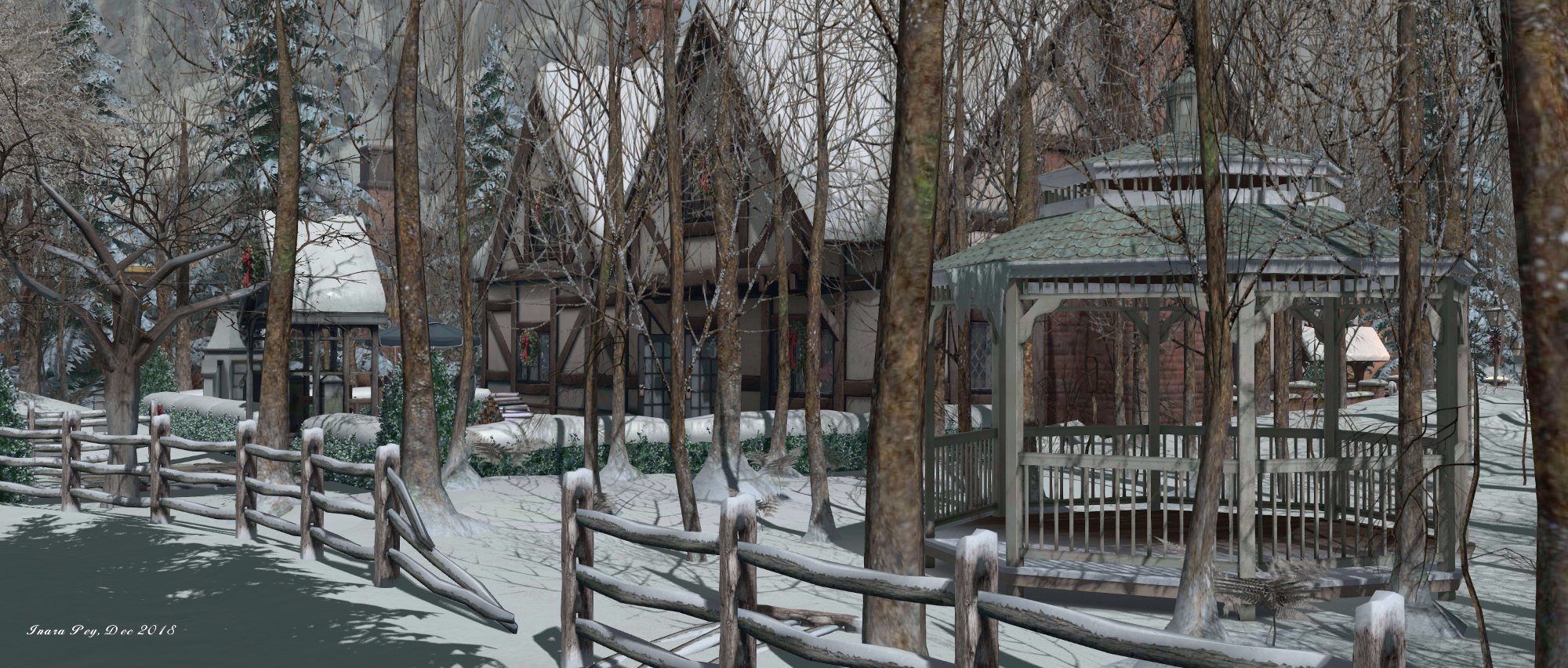
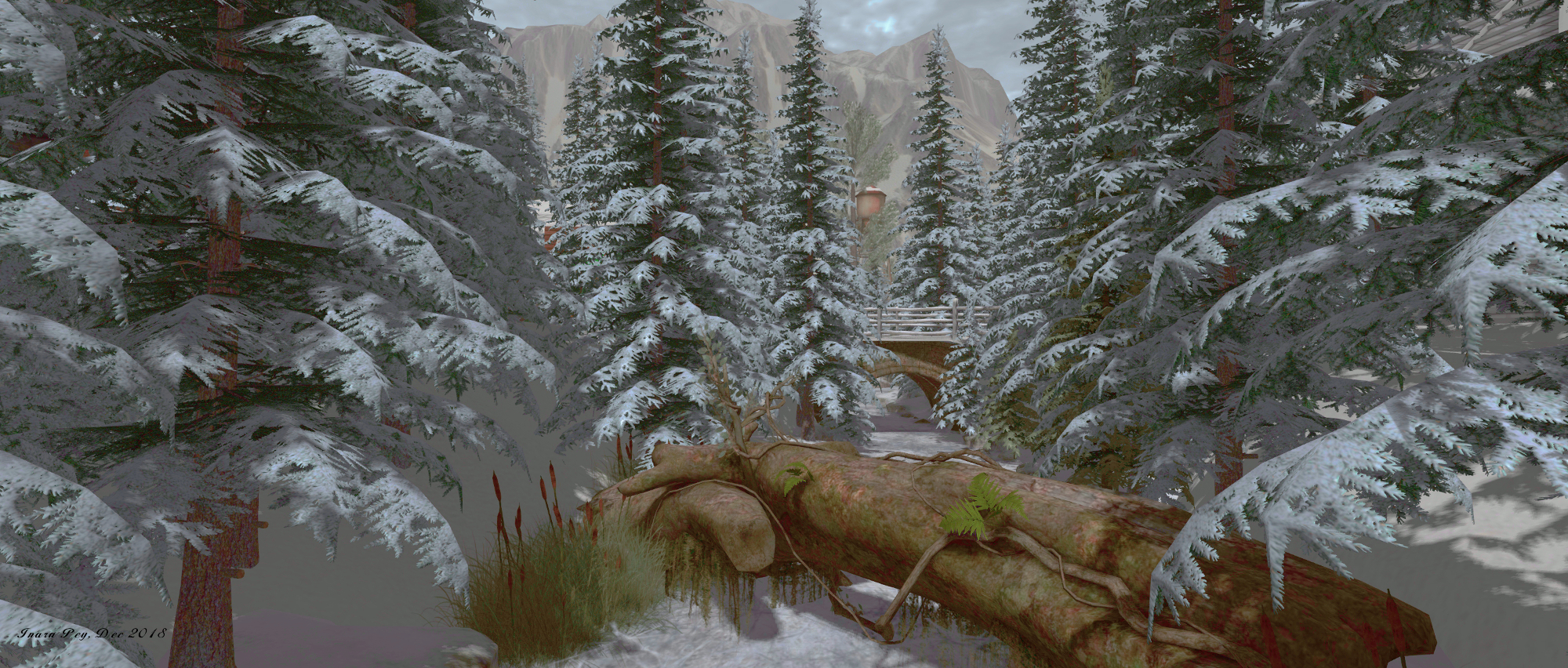
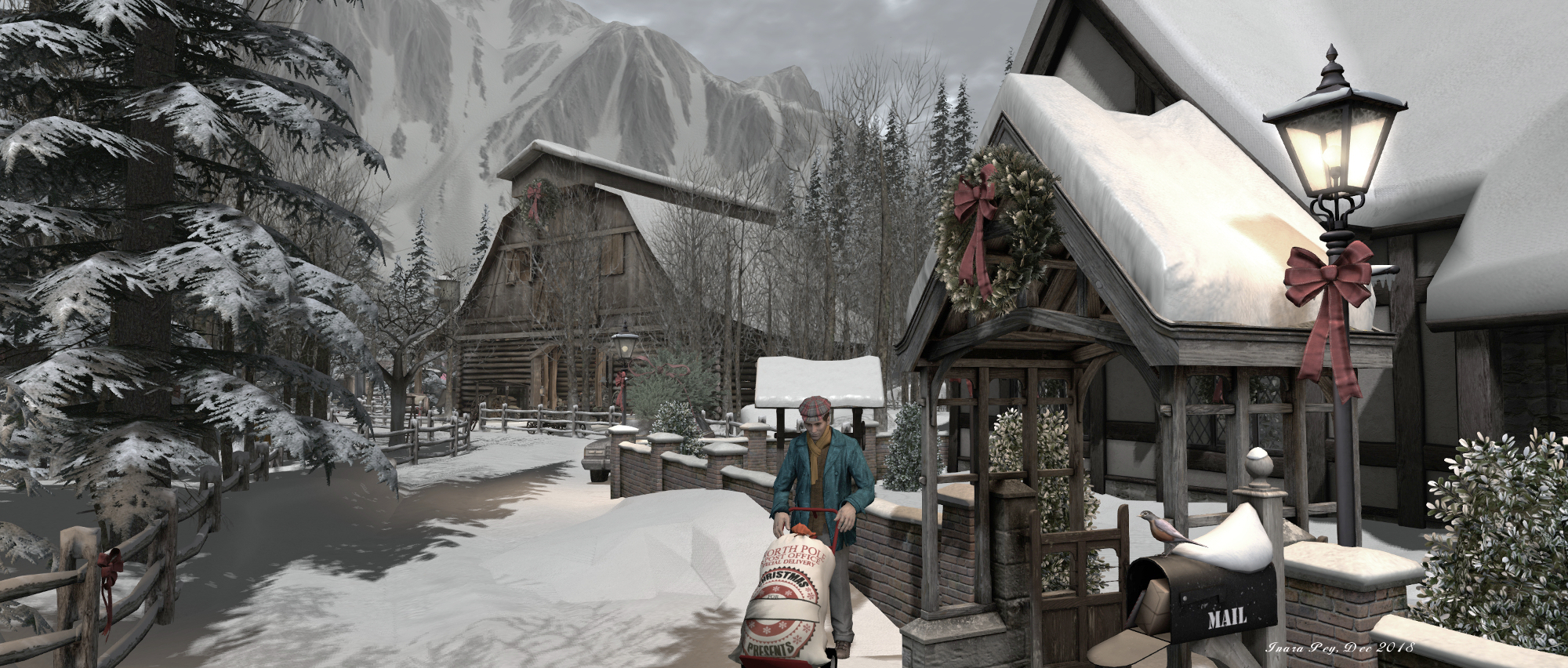
At the ground level is a town which, according to the About Land description, changes with the seasons, lies a small town. Right now it is caught in the midst of winter, snowbound and surrounded by high mountains. The landing point sits towards the centre of town, alongside a large mock-Tudor house that faces a large map showing the town’s layout, although specific points of interest aren’t labelled.
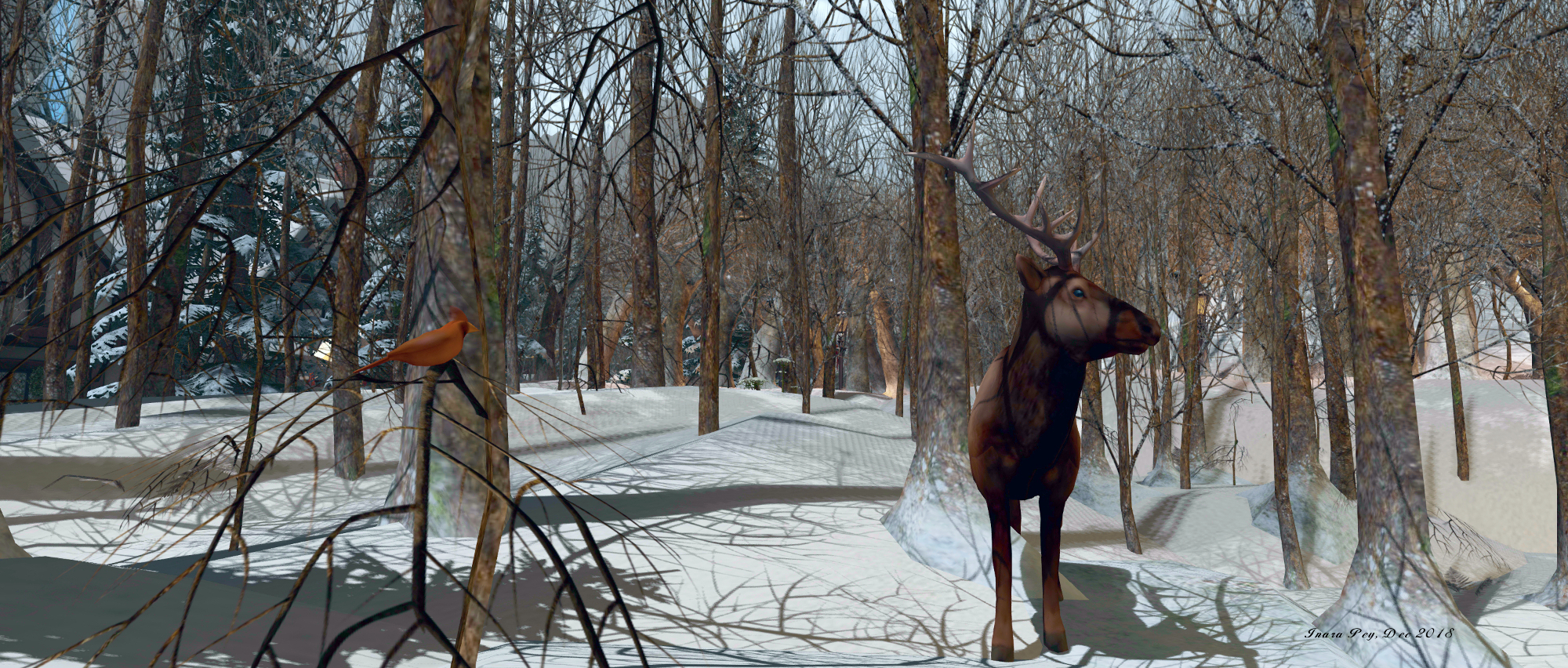
This lack of labelling (beyond the “you are here” pin) actually isn’t a disadvantage; snowy road wind their way through and around the landscape, and following them will lead you on a worthwhile tours of exploration. For the most part, the town has a feeling of being a small, but once industrious place; on the south side can be found large warehouse-like buildings that tower over the rest of the landscape.
However, and while fishing boat, crowded by ice floes, sits alongside a small wharf, it is clear that commerce has moved on for the most part. The brick-built warehouses have been converted for use as residences or bars, while the little harbour has the wreck of a trawler lying within it, preventing the use of a good portion of the wharf.
The water and piers continue along the west side of the town, marked by yet another sunken trawler. Again, while the might once have been a place of fishing commerce, the wharf here is now far more of a tourist attraction, a long, pleaant (if bracing, given the weather!), walk along the waterfront, complete with a launch point for balloon rides over the town. A second balloon can be found to the east, but lies separated from the town by a high spine of rock, home to fir trees and an old forest ranger’s station. A tunnel at the foot of this ridge offers a means from trains to reach the local terminus, complete with the bulk of vintage engine de-railed alongside and attesting the the age of the town.
A screen of trees also separates the terminus from the rest of the town, together with a little stretch of wilderness cut by a stream sealed under a layer of ice and – rather surprisingly – the bulk of an old space freighter, also seemingly converted into a home.
With its houses, winding roads, buildings old and new, Zimminyville has the look and feel of a remote town somewhere in high latitudes, possibly in North America. There is a wonderfully eclectic look and feel to the setting, from the drive-in theatre and its mixture of vehicles, to the juxtaposition of the converted space freighter with the nearby old windmill. However, the most interesting oddity in the setting is the presence of a large glass-and-steel pyramid that points a laser-like beam up into the sky.
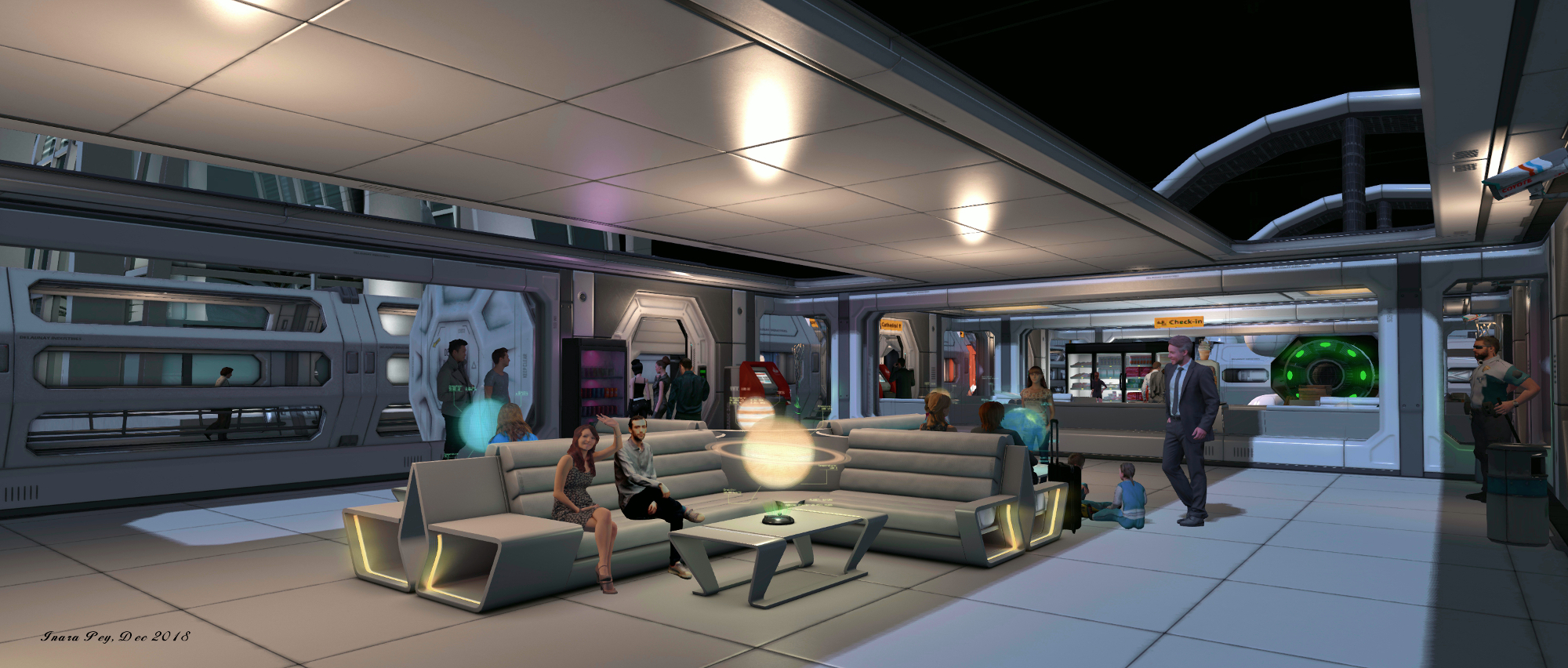
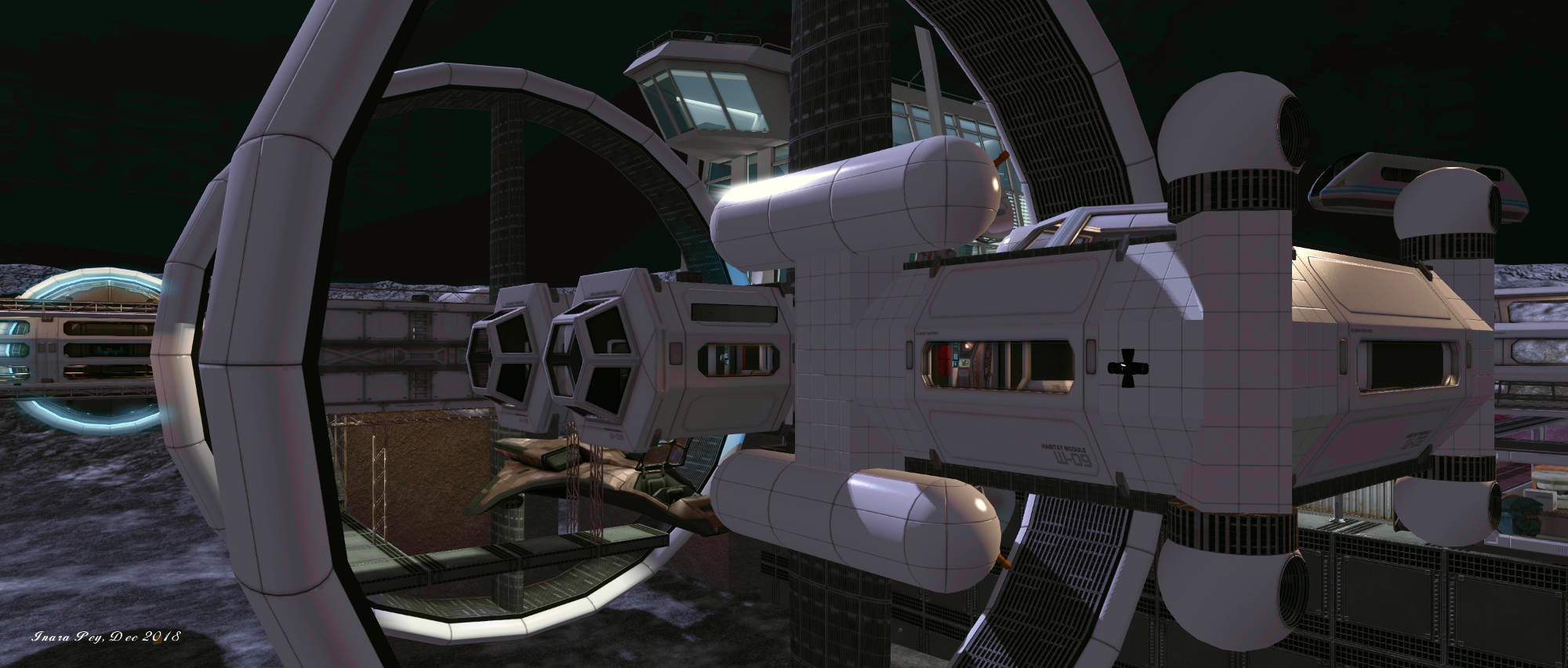
Futuristic in both look and content, this is the gateway to the second half of the region: a large, well-established space port sitting on the surface of the Moon. Four launchpads are presented inside the pyramid, three of them home to individual pods that can carry one passenger at a time up to the Moon. Which you take is entirely up to you, as all three will arrive at different points within the same station, before “return” after you’ve disembarked.
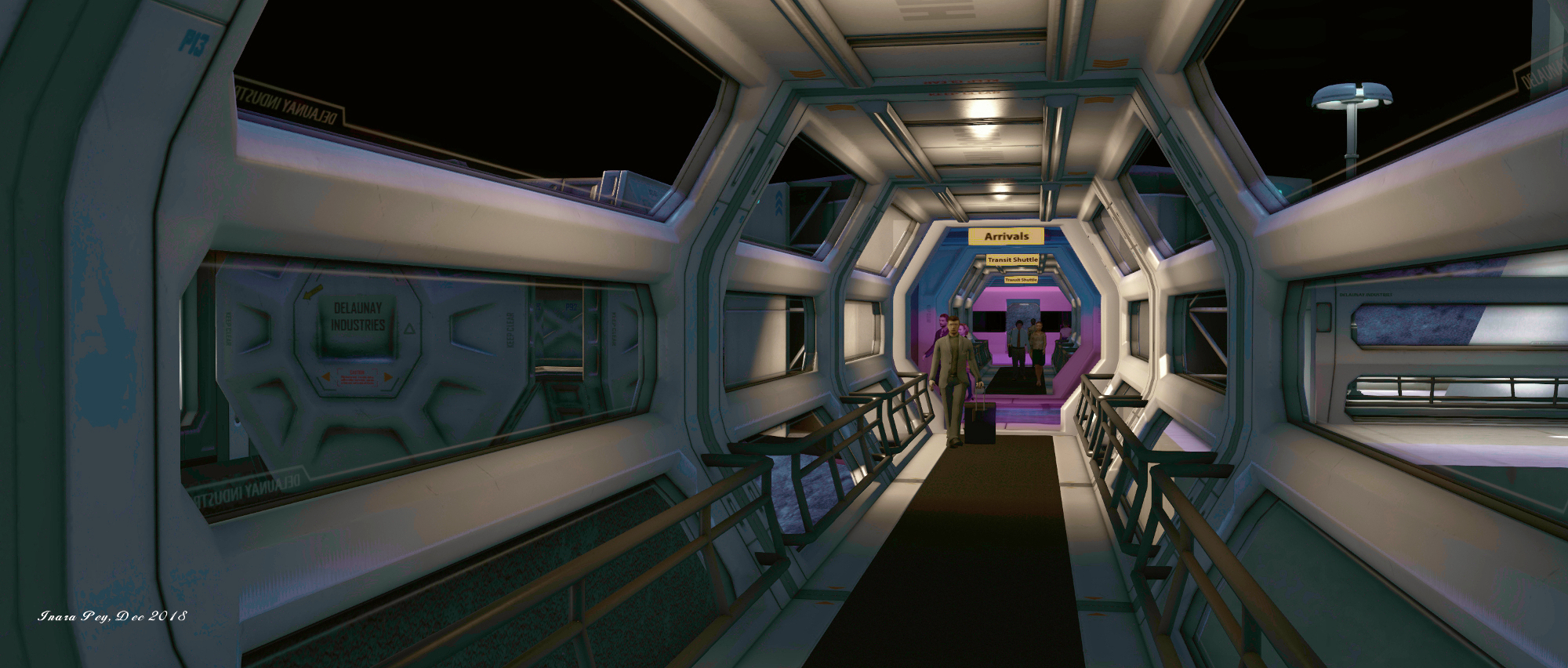
It is to this space port that commerce has clearly moved. In difference to the sleepy setting of the town, the base is a bustling hive of activity. Passengers can be found in the departure lounges doing the things people do before a flight: sitting and waiting, passing the time in conversation, getting food and snacks or anxiously checking-in. Others are to be found hurrying along the enclosed corridors hurrying to / from departure or arrival gates, or waiting for departure aboard their transports, all of them watched over by security guards or flight crew.
A small, two-seat military vessel is also docked in the lower portion of the station, although military uses for the station do not appear to be otherwise much in evidence. Fed Ex, however, do have a large presence, with freighters sit loaded and awaiting departure, ready to carry all measure of goods – and in one case, passengers – elsewhere.
Quite where everyone is going is hard to say, but it would appear the station is very much a gateway to the rest of the solar system. Beyond the passenger hub of the station sits the huge bulk of the Europa Sun, a massive spacer crammed with facilities, including two large hangers. Whether she is still operational or not, is hard to say. She sits on sturdy landing legs, massive engines rotated for lift-off, her flight deck still in place. But the conglomeration of habitation units on her back and research / industrial units under her belly suggests she is perhaps now a permanent part of the base, the hemisphere of her bio dome offering those staying on the base who need it, a reminder of the trees and greenery of Earth.
Facing Europa Sun from across the base is the impressive bulk of a huge structure. It looks a little incongruous in some ways, particularly given appears to the grass and topiary hedgerows found in was should be the airless near-vacuum of space, and alongside a landing pad marked for helicopters (or perhaps the “H” is for “hopper”, as in “Moon hopper”?). What looks to be some kind of control centre sits under this landing pad, but the bulk of the building forms a huge cathedral setting – albeit one with a further pod landing pad vying with the altar for attention. A closer look at the latter will reveal the building’s function: the opportunity to have a real get-away-from-it-all wedding…
A sense of life has been added throughout the station by the inclusion of static characters (I won’t call them NPCs, are they are entirely non-interactive). They are typical of the people you might find in any Earthly airport. All of them bring a certain depth to the setting, as do their compatriots down within the town, even if they are fewer in number.
Zimminyville is, when all is set and done, a quite remarkable location. The town and the lunar base are strikingly different to one another, and each has its own mystery to explore. Time is very much needed to appreciate everything on offer (and to find things like the table games available in both). The attention to detail and the level of care taken in such a complex build is impressive, and there are plenty of opportunities for photography throughout.
Given all that is on offer you might find more than one visit is required to capture all there is to be found, but whether you go once ot twice or any number of times, Zimminyville is not a destination to be missed. Once again, our thanks to Shakespeare for the pointer!
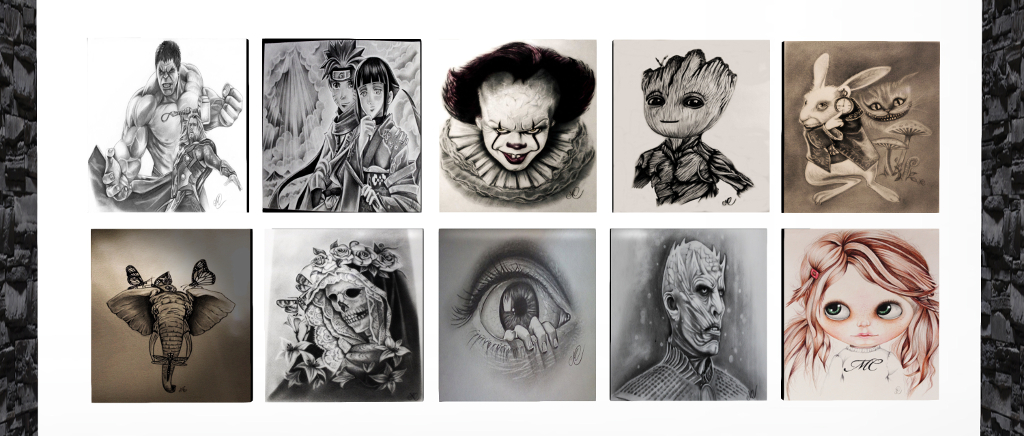
MC Grafite is a relative newcomer to Second Life, having joined the platform just five months ago. However, at 13:00 SLT, on Tuesday 13th December, she is opening her new gallery featuring her work (and only the second time she has publicly exhibited her art!). I took the opportunity to drop in ahead of the opening, while MC was still setting up to gain something of a sneak peek.
Also known as Marisa Camelo, MC is an artist in the physical world focusing on pencil-based drawings. She notes she spends around nine or ten hours a day drawing, her work covering a range of topics, including portraiture, animals and wildlife, costumes, tattoo designs, cars, and more. And if I were to try to define her art in a single word or phrase, it would be: striking.
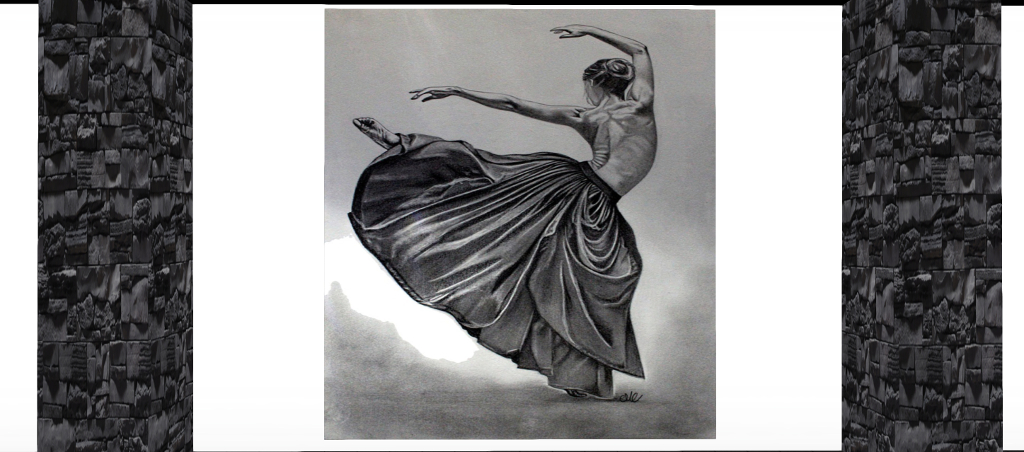
Within a simple, but effective gallery setting of stone pillars and plain white walls, MC presents a broad portfolio of her work, from simple-looking sketches, located outside of the main entrance in an enclosed courtyard, through to a series of exquisite set of white-on-black images of quite exceptional beauty and depth.
Her portraiture is also shown, within pictures of actors, celebrities and film and literature characters mounted on the rear walls of the gallery. I admit that her Baby Groot (Guardians of the Galaxy Volume 2) and her It immediately drew my eyes to them. Both capture the vitality and mischief inherent in the first, and the sheer malevolence of the second quite perfectly. I found Eye, located directly beneath It equally mesmerizing – although this should not be taken to mean there is anything lacking in the remaining portraits; quite the reverse in fact: each has its own unique attraction.
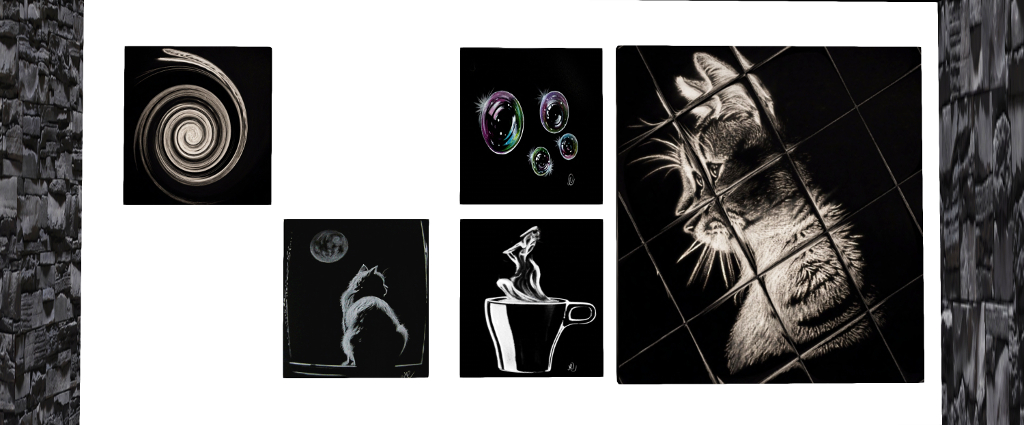
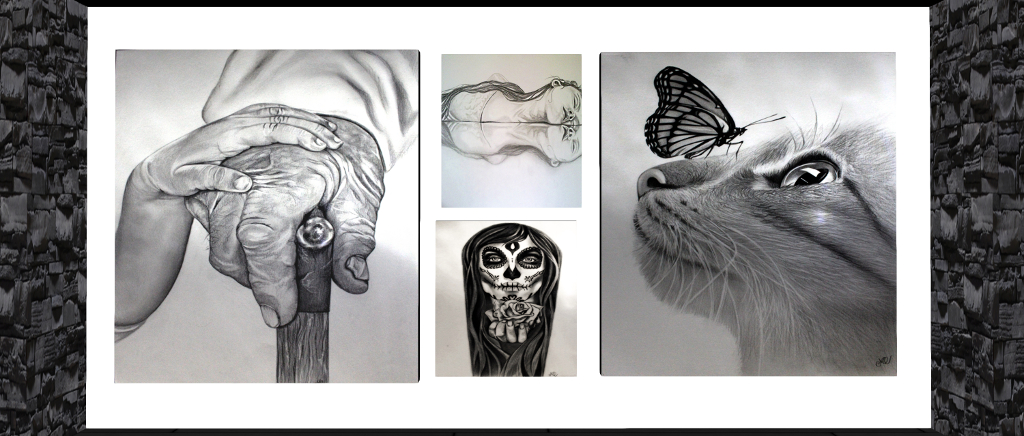
But I must admit to being completely captivated by the etching-like black-on white pieces she presents; there is something about this approach to art that I’ve always found enamouring, and the pieces MC offers are stunning in their presentation and beauty. As a cat lover, Cat Reflex and Cat in the Moonlight simply (both seen in the image at the top of this article) entranced me.
Further pieces are available on the upper mezzanine of the gallery, one or two of which might be considered NSFW. However, as MC was still setting-up on the upper floor when I visited, I only had a quick cam up to it, in order to avoid disturbing her too much.
As well as her own art, MC also offers a commissioned art service. Details of this can be found via the information givers located next to one of the stairways leading up to the Mezzanine level.
The gallery officially opens at 13:00 SLT on Tuesday, December 18th, 2018, as noted. But whether you can make the opening or not, I do recommend the MC Grafite Gallery as well worth a visit.
Occupying a quarter region, Nevgilde Forest is a cosy corner of Second Life co-owned by Neaira Rose Allegiere (Neaira Aszkenaze) and Sarge Red. It offers a very outdoors setting, complete with an element of shabby chic.
Although it contains “forest” in the name, this is not actually a densely wooded setting; outside of the landing point in the north-east corner of the parcel, which is hemmed in by trees and shrubs, the land is mostly open, affording good views out over the sea to the west and south.
The woodland hides not only the landing point, where the local group joiner can be found together with a donations box and information giver, but also a little camp site nestled under an old hut raised on wooden legs to resemble a ramshackle tree house, backed into the surrounding trees and shrubs, some of which have found their way through the loose boards of the walls to invade the interior.
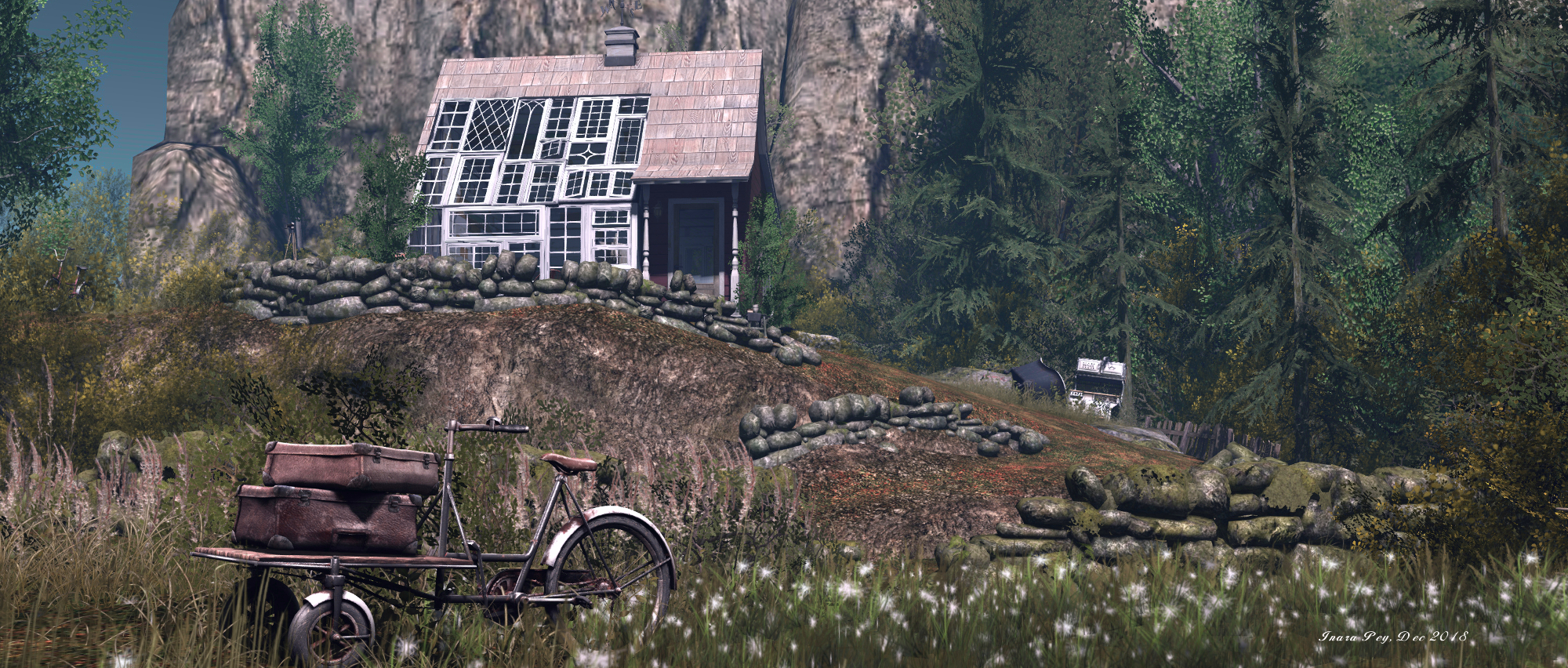
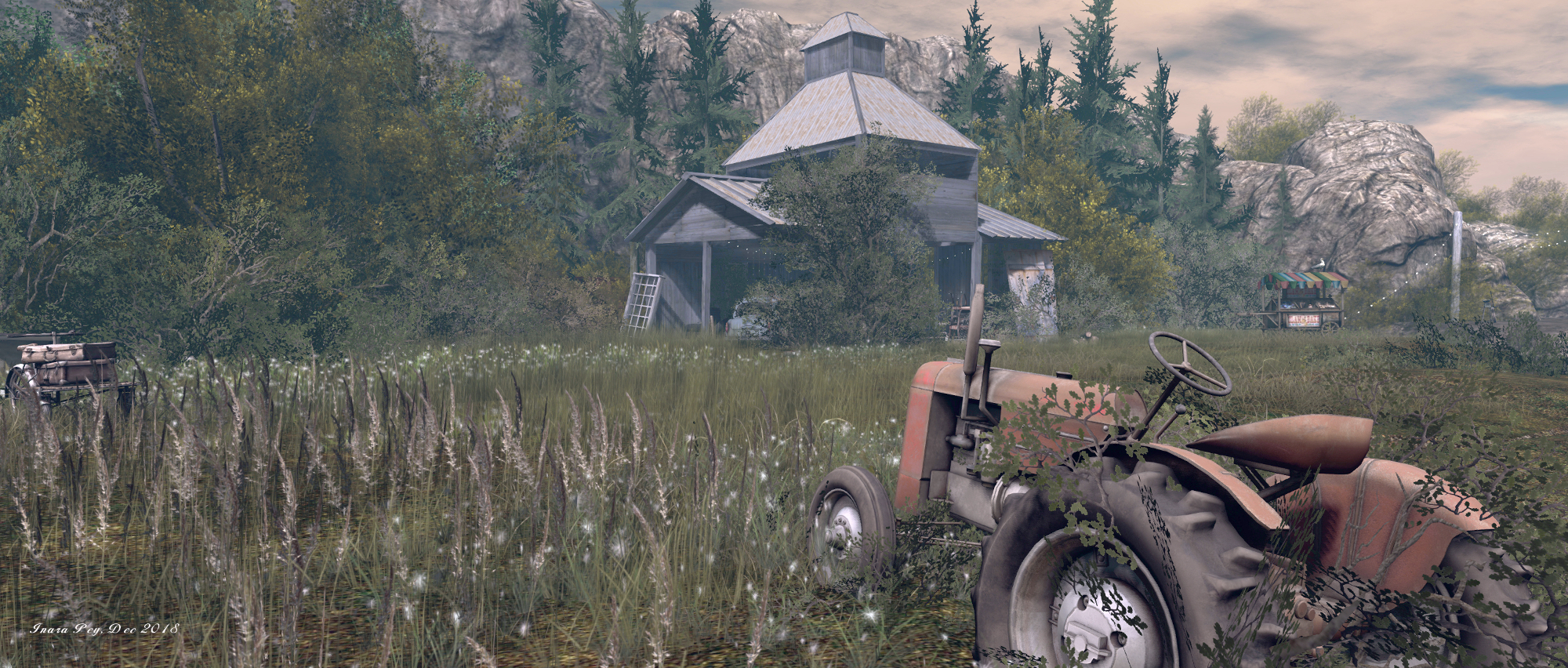
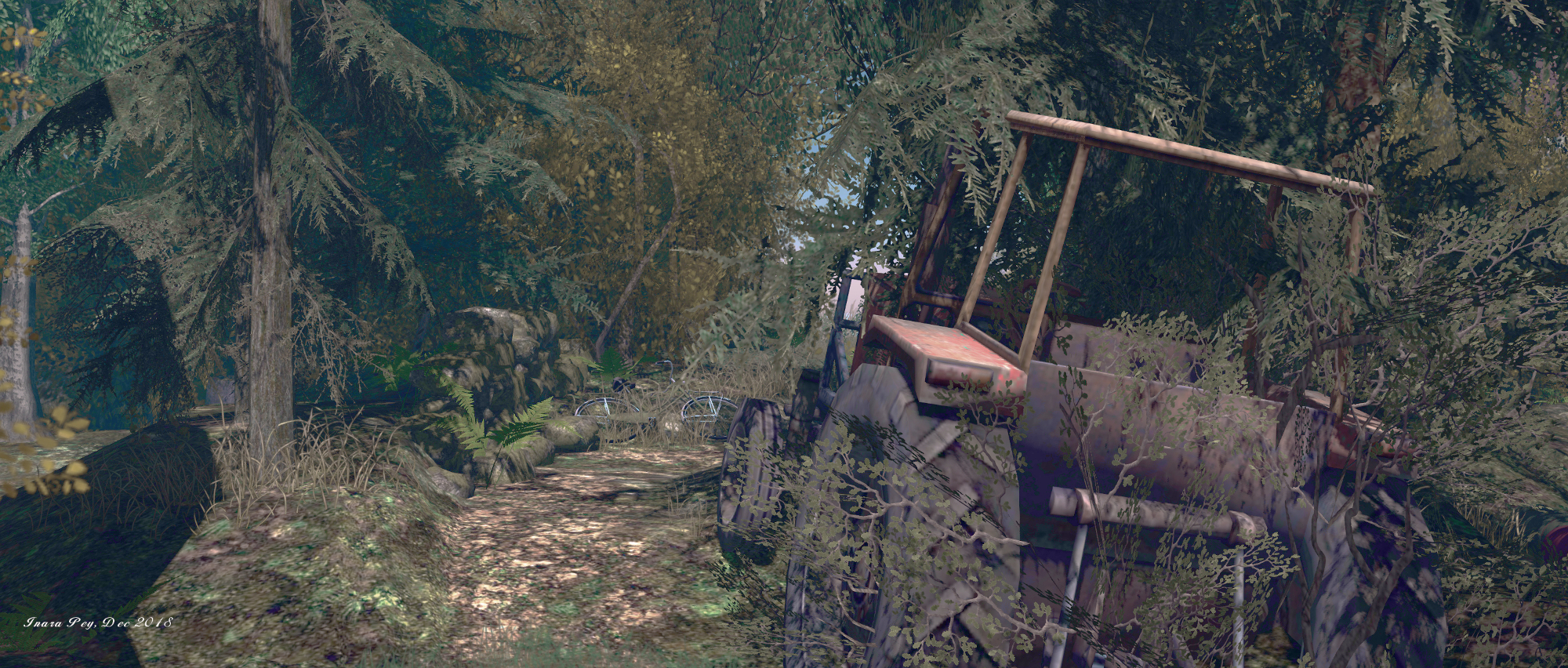
Between the camp site, with its circle on places to sit or sleep ringed around the fire setting, and the landing point sit an old tractor. It points its blunt snout along a track that winds between the trees to the more open landscape. Short in length, the trail exits the trees at the foot of a rocky, moss-and-grass coated hillock on which sits the most curious little cabin.
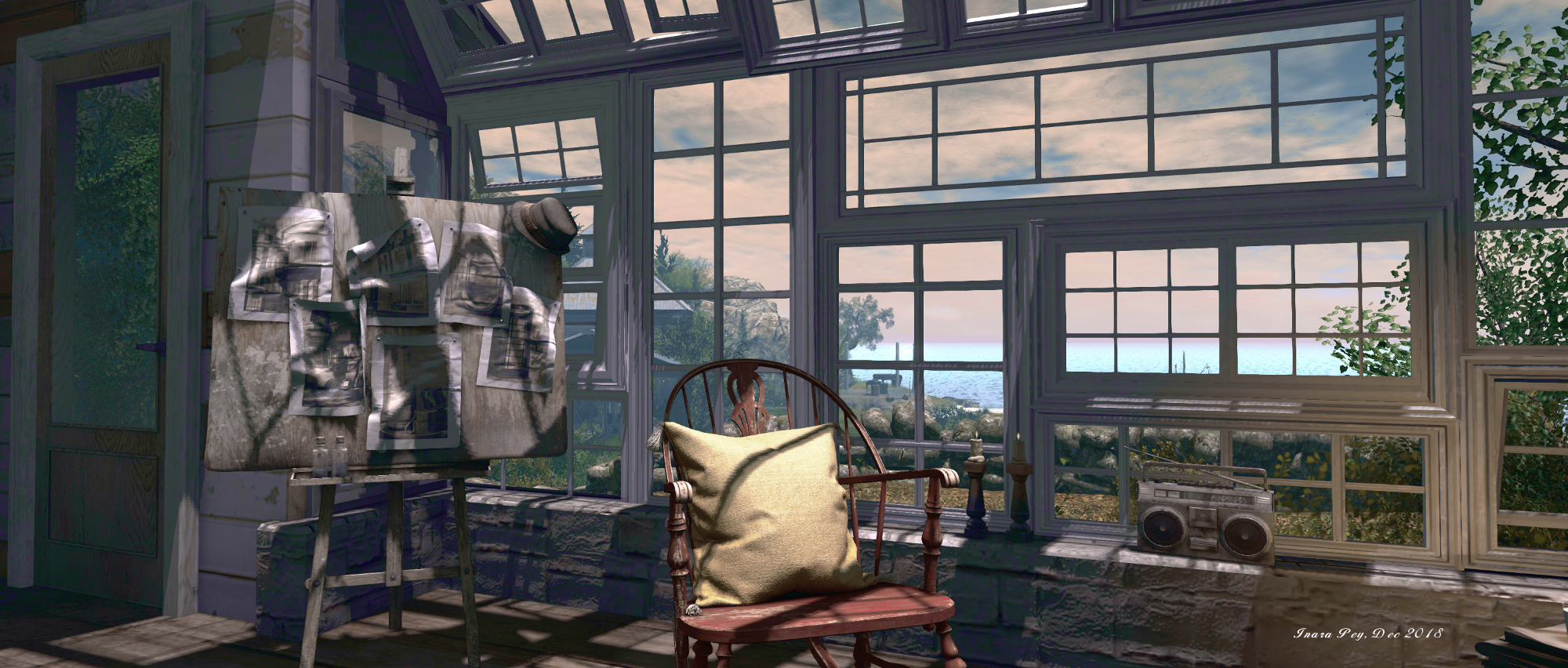
A single room in size and based on Cory Edo’s Garden Bard Abode), this presents a strange façade to the world: one side of it made up of a variety of wooden window frames, all glazed and joined together to form a wall and part of the roof. Single- and double-hung window frames sit with sash and casement, while picture and skylight join them in a mosaic of plan glass and wood; a strangely attractive hodgepodge design that just … works.
The cabin looks from north to south across the open landscape of grass and shrub, separated from it by both elevation and by two dry stone walls that seem to curve protectively around it. A large barn looks back towards the cabin from the eastern tree-line, whilst also keeping watch on the sea. It offers a further cosy setting for sitting and chatting (the cabin itself has wine on offer as well as music and chairs and stools).
Southwards, the parcel ends in a low, flat table of rock and a pocket of sandy beach. The rocky table offers music, both via a DJ’s deck and also via a careworn grand piano, with the beach presenting plenty of room for dancing, with baked clams available close by, together with multiple places to sit and / or cuddle. This area will apparently be the location for local events, due to start in January 2019, and those interested in attending are invited to join the local group to receive updates and news.
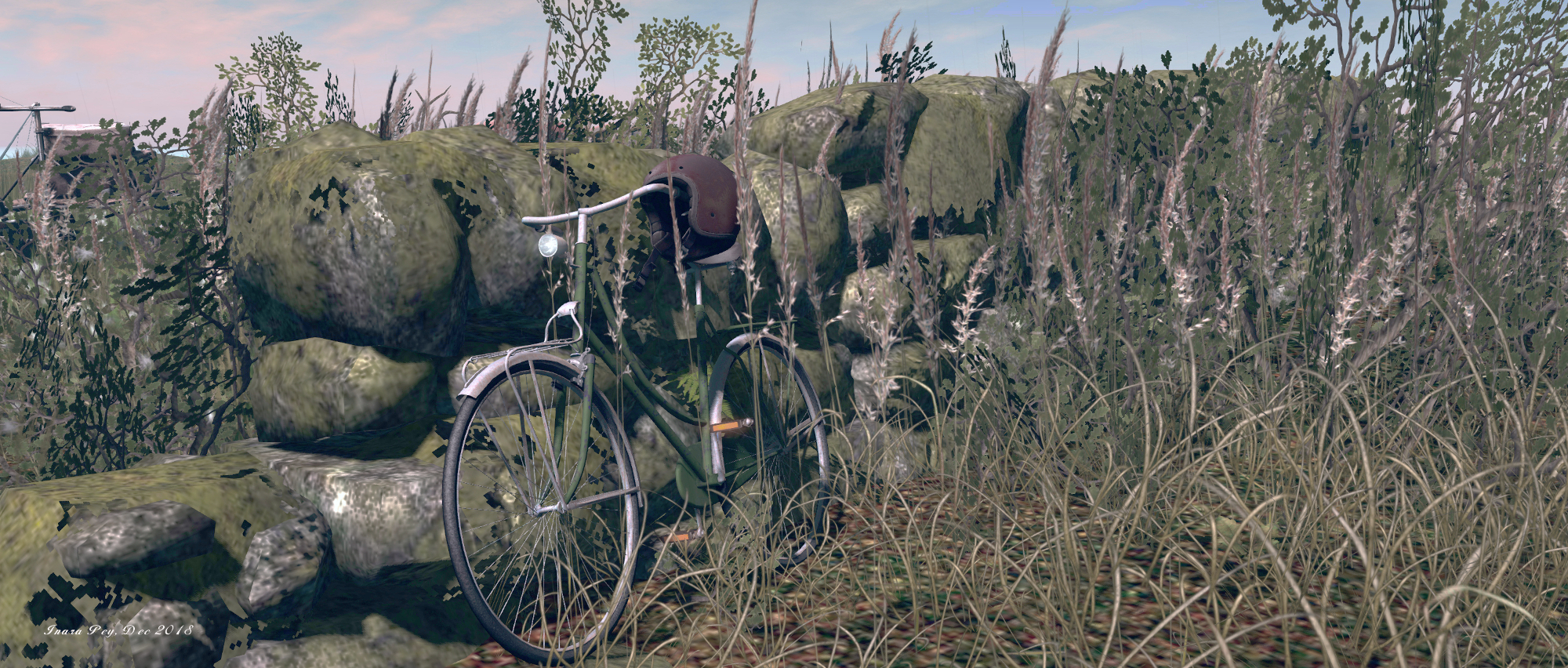
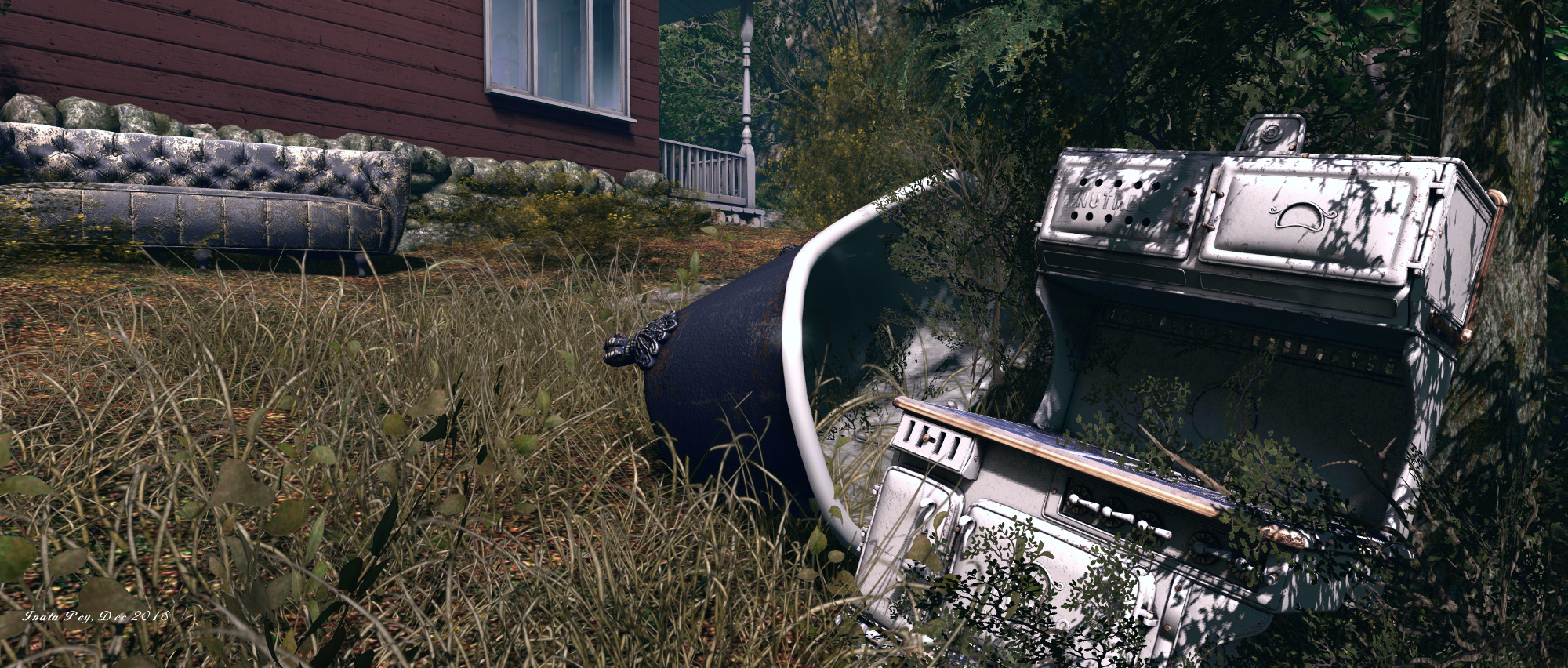
The shabby-chic element to the region comes in all the little “untidy” touches: the bicycles lying or propped around as if abandoned; the overturned cart; the carcass of the old tractor (a second tractor appears to have been almost reversed over a step of rock that might have put an end to its useful career); the bathtub and old cooking range seemingly tossed out of the cabin; and so on. While these might all at first appear to be the abandoned detritus of human habitation, they actually add a certain, well, charm to the setting; their presence adds an air of this place being lived in, rather than simply another little set piece.
This is a place where socialising and spending time is welcome, be it at the camp site, in the cabin (or alongside it) or in the barn or on the sand or grassland. The group description emphasises this, as does the introductory note card available via the giver at the landing point (click to receive; it won’t spam you). Photography is welcome, and picture can be shred via the Flickr group.
All told, a nice little retreat, well put together and photogenic. Just as a final note, while Nevgilde Forest is on an Adult rated region, the owners request that visitors kindly treat it as a Moderate setting. My thanks (as always) to Shakespeare for the pointer!
“Welcome to Wild Edge. A calm and relaxing wilderness for you to enjoy, explore and escape” – thus reads the About Land description for the latest Homestead region design by the (still) delightfully named Funky Banana (FunkyBananas), and to which Shakespeare directed my attention at the weekend.
Wild Edge is another largely rural setting, this one suggestive of a rugged, coastal region, perhaps in high latitudes where ice and snow sided mountains roll down to a cold blue sea. A rocky headland sits caught between the mountains and the sea, sitting just below a fir-tree buffer between it and the snowy slopes, cut by a deep finger of water.
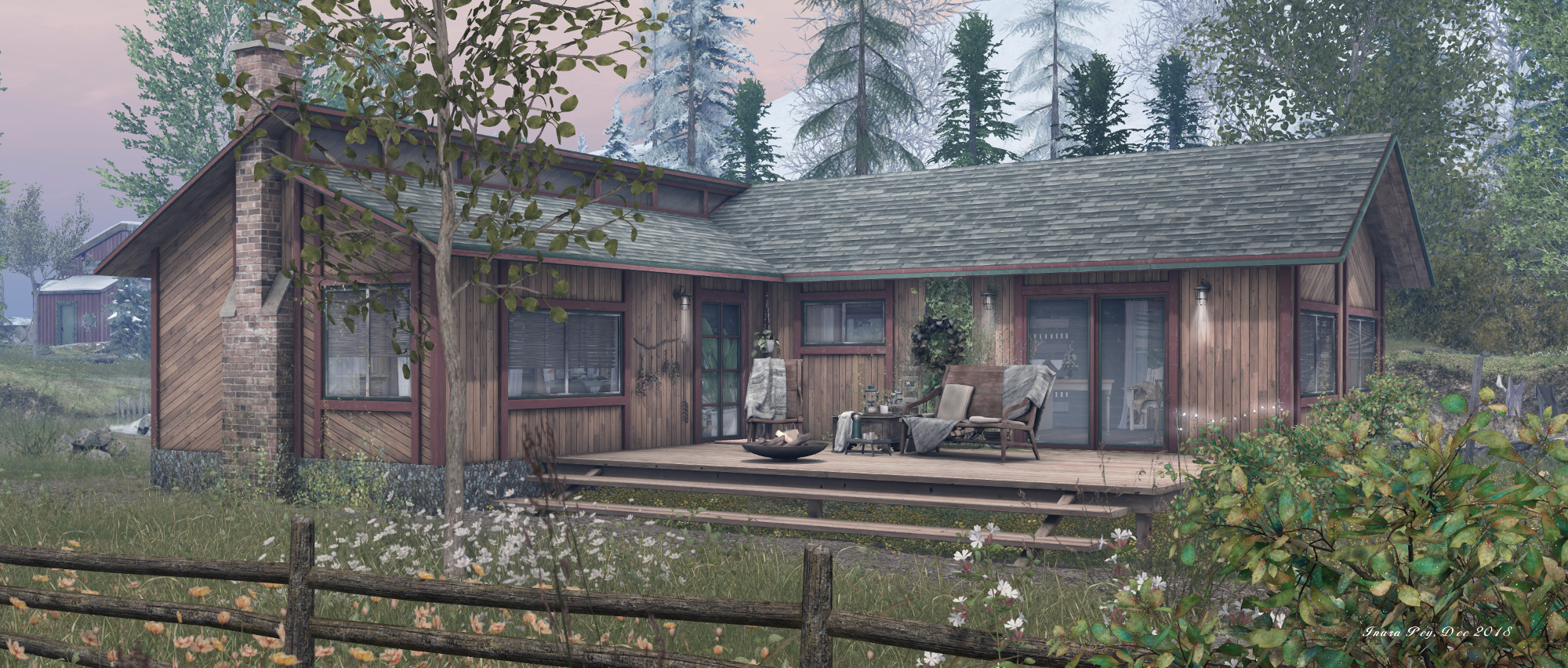
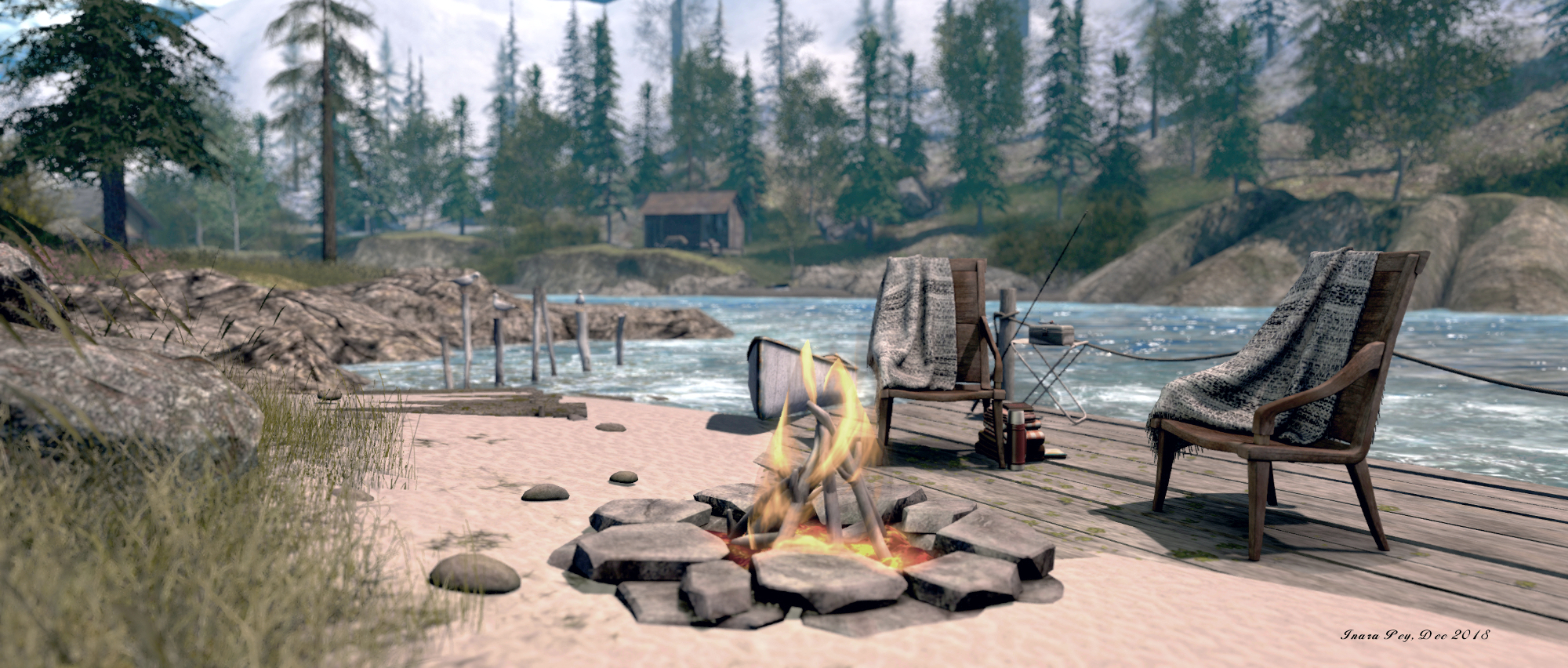
Two cabins sit on this curve of lowland. The first is low-slung and built around a wooden deck, it has a very “male” appearance to it, both outside and in, somewhat suggestive of single occupancy. With the deep bay sitting close by, it might be a fishing lodge / hunting lodge, a suggestion added to by the rods and other equipment set-out on a deck at the water’s edge and, across the water, by the presence of an old hut in which can be found the paraphernalia of the hunter.
However, a closer look around the cabin reveals a dining table is set for a meal for eight, while two Christmas stockings hang from the fireplace mantle. Thus it would seem the cabin is perhaps occupied by the couple, and that they are expecting company.
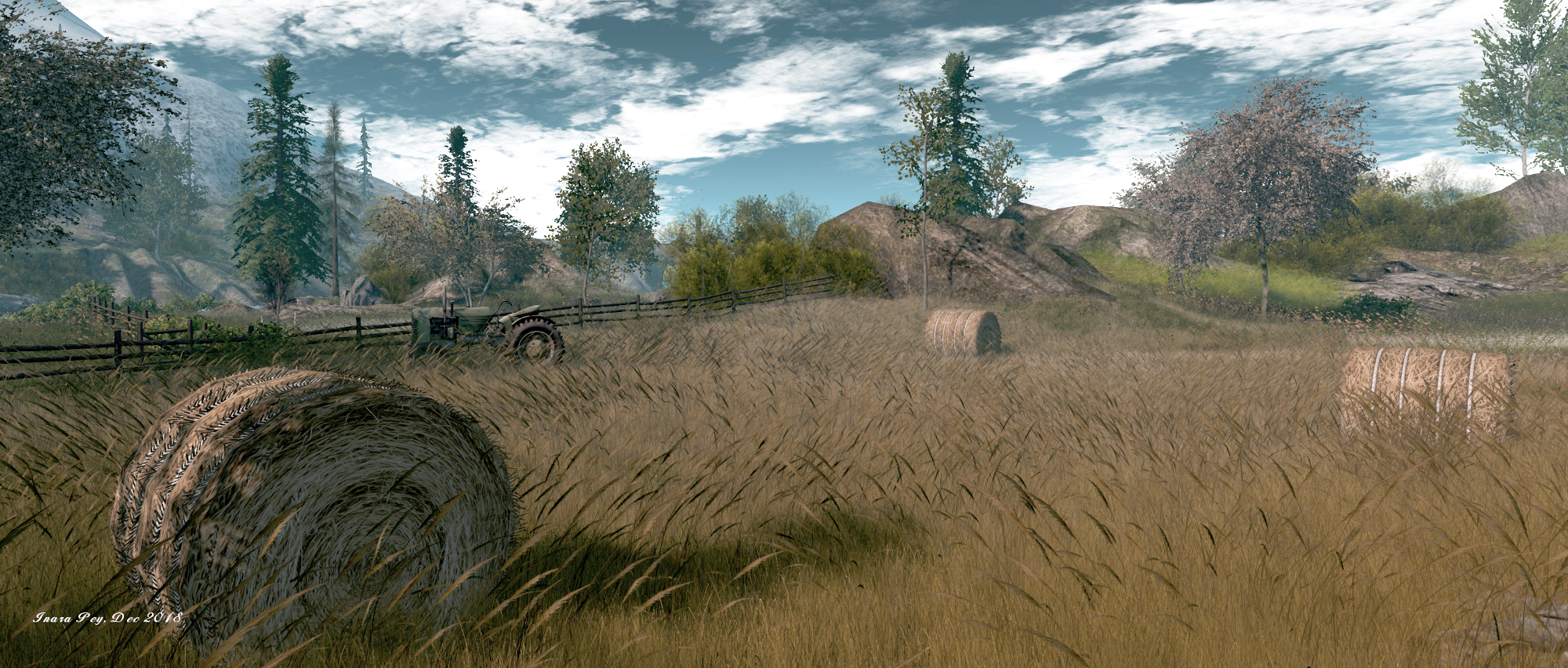
A single track runs west from the cabin, paralleling the channel to the left and a field of wild grass to the right. It leads the way to where an unsurfaced airstrip runs south-to-north. This is perhaps not the easiest strip to get in and out of, given the rocks, hills and tress that threaten to encroach on it. However, it is very much a working airstrip – as can be see by the presence of a small biplane and a mechanic’s shed, although the gasoline truck parked close by probably hasn’t been used in a good while.
Facing the airstrip from across the region is a Christmas tree farm shop, nestled at the foot of the eastward mountain slopes. It seems a little incongruous given the lack of potential customers. Perhaps they come by boat from further up / down the coast.
Three stretches of sand also sit within the region, two of them offering places to sit. One of them is the fishing deck mentioned above, which also has the advantaged of being warmed by an open fire blazing on the sand. I also mentioned that there were two cabins on the region. The second can be found above the northern coast, a ramshackle, single-room affair that seems to be a place of study rather than a place to live, the kitchenette within it notwithstanding.
A Wild, open setting, largely free from snow (outside of the mountains to the east and south), Wild Edge is another eye-catching region by Funky that offers a pleasing alternative to the more snowy themes that abound right now without being entirely divorced from winter. For those who take photos, the Funky Banana Flickr group is available as a means to share them.
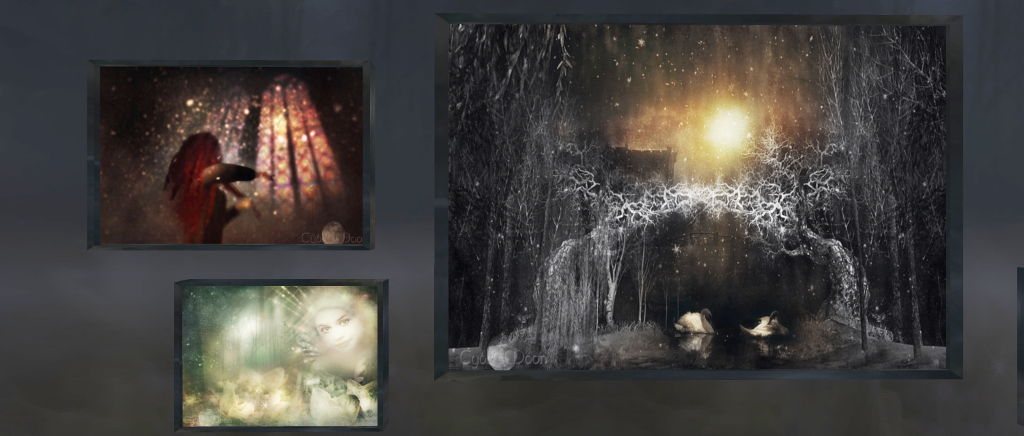
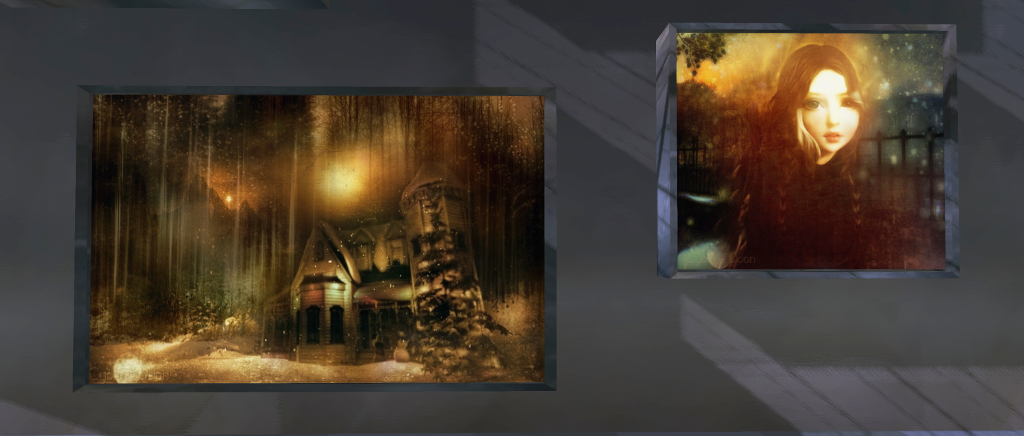
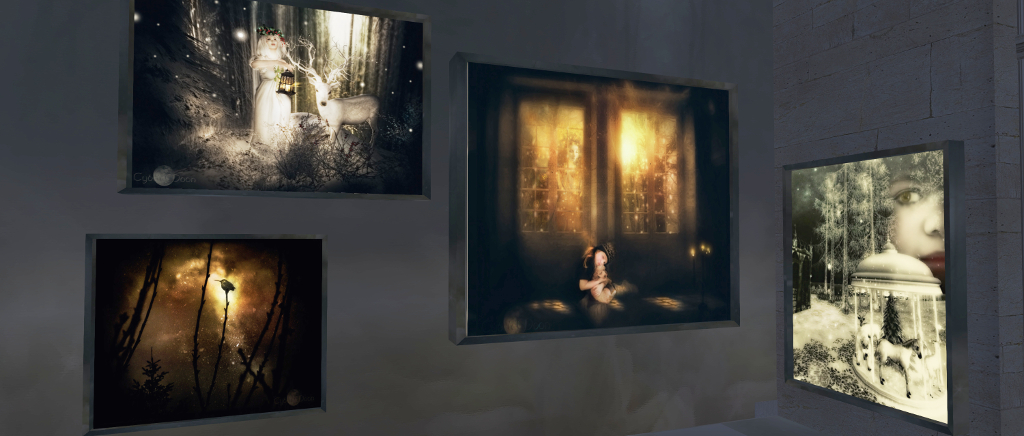
CybeleMoon (Hana Hoobinoo) is without doubt one of the most expressive fantasy artists in Second Life. Her art has a unique beauty that I consider to be unsurpassed in its depth and narrative; pieces that are hauntingly fascinating, encapsulating worlds of wonder and mystery or reflecting wonderment and innocence through portrait and study.
You can witness for yourself just how evocative and engaging her art is by visiting Tales of A Winter Sun, which officially opens at 12:00 noon SLT on Saturday, December 14th, 2018 at the Paris Metro Art Gallery. I was able to visit the exhibition ahead of the opening, and it truly is a delight.
Tales of a Winter Sun is actually something of a three-part exhibition. There is Cybele’s art, 20 images and a central mural type display; then there is a poem by Cybele, reflective of the art and of the season (available by clicking the information board at the lading point), and also a blog post she provides on her website.
There is a time in the hushed solitudes of falling winter, while the dreaming earth stirs softly beneath her frosted blanket, where for a moment, we remember innocence and magic, and the incredible awe of being, where hope is renewed in the lighting of candles and a star leads the way to Bethlehem, Where grievances are put aside as we open our wounded hearts to receive the seeds of rebirth Where my own dreams flow to the sacred music of haunted woodlands and enchanted children. and old tales are retold with feasting and friends where the lost are found and the poor are blessed and where angels walk among us
– CybeleMoon
Reflective of the theme and the season, the 20 images offer us 20 twenty stories – some quite literally so, should you touch them – each beautifully encapsulated in a single moment.
It is this feeling of capturing a moment that is particularly attractive about Cybele’s work. Her pieces are incredibly intricate in form and construction, the balance of light, colour, focus and theme utterly sublime; where looking at her art, I cannot help but see them in terms of an orchestra, different elements and layers, skilfully woven into a whole under the guiding hands of the conductor – or in this case the artist.
Yet, at the same time, there is a marvellous sense that each piece, far from being composed, has been captured in a fleeing moment, as if the mind has taken a snapshot of a dream or the eye a single moment of time played out before us in a world where wonder, innocence and beauty define all we see, and perhaps say and do.
Some might accuse me of waxing lyrical or of using hyperbole in writing like this – but unless you’ve seen Cybele’s work first-hand, it is hard to grasp just how rich, resonant and alive her art really is. As such, I urge you to go and witness Tales of a Winter Sun for yourself – you will not be disappointed.
In the meantime, and as she references it in her own blog post, I’ll leave you with an astonishing rendition of Leonard Cohen’s Hallelujah by Rhema Marvanne, and recorded when she was just eight years old, and which sits as a perfect companion to the art Cybele presents in both the exhibition and her blog post.