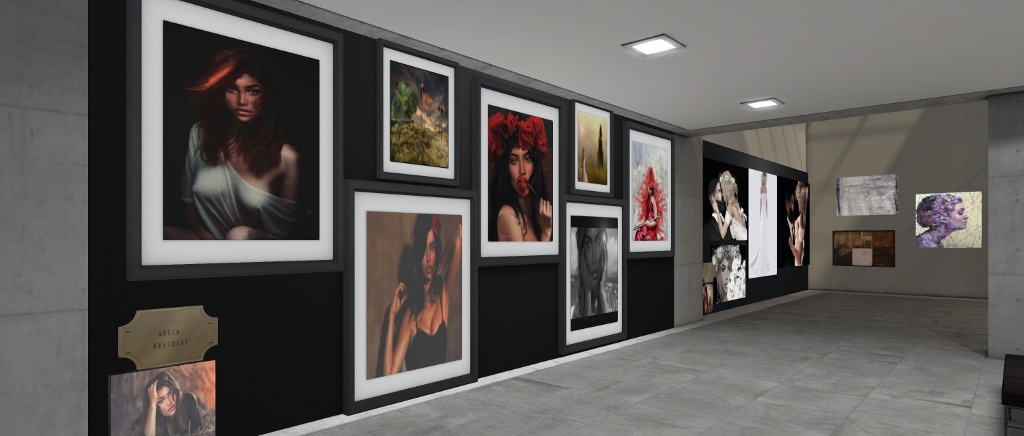
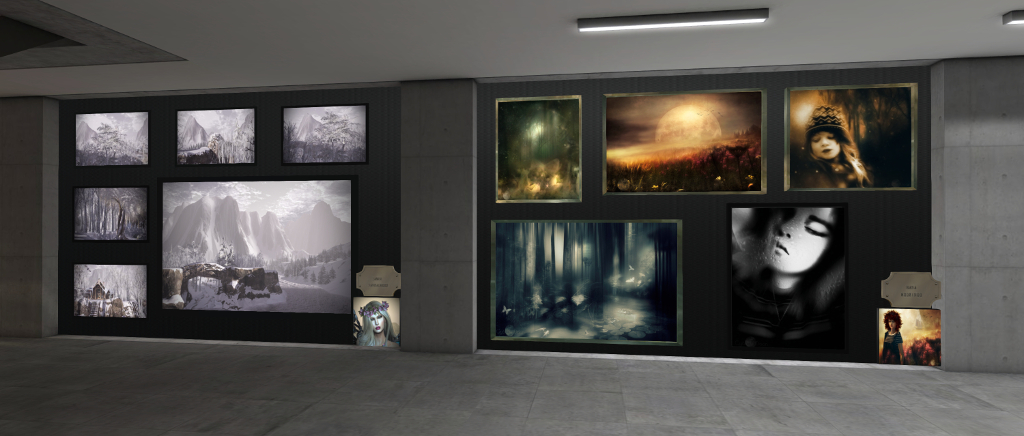
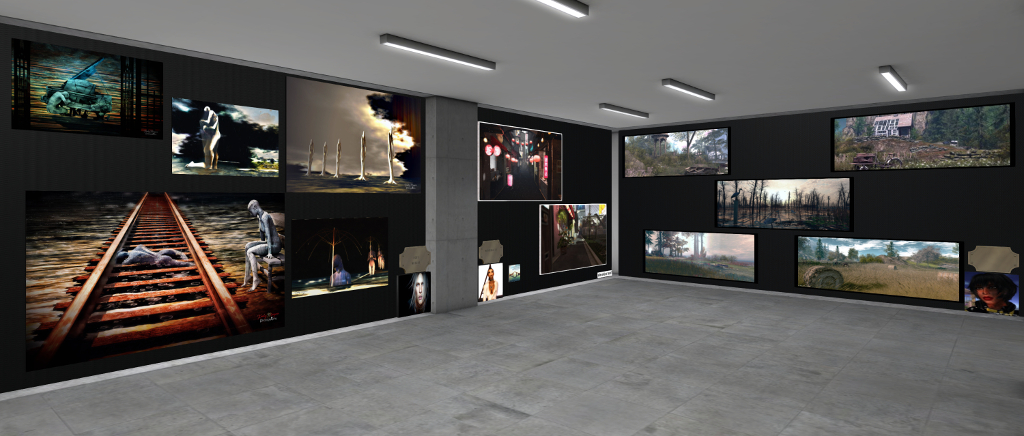
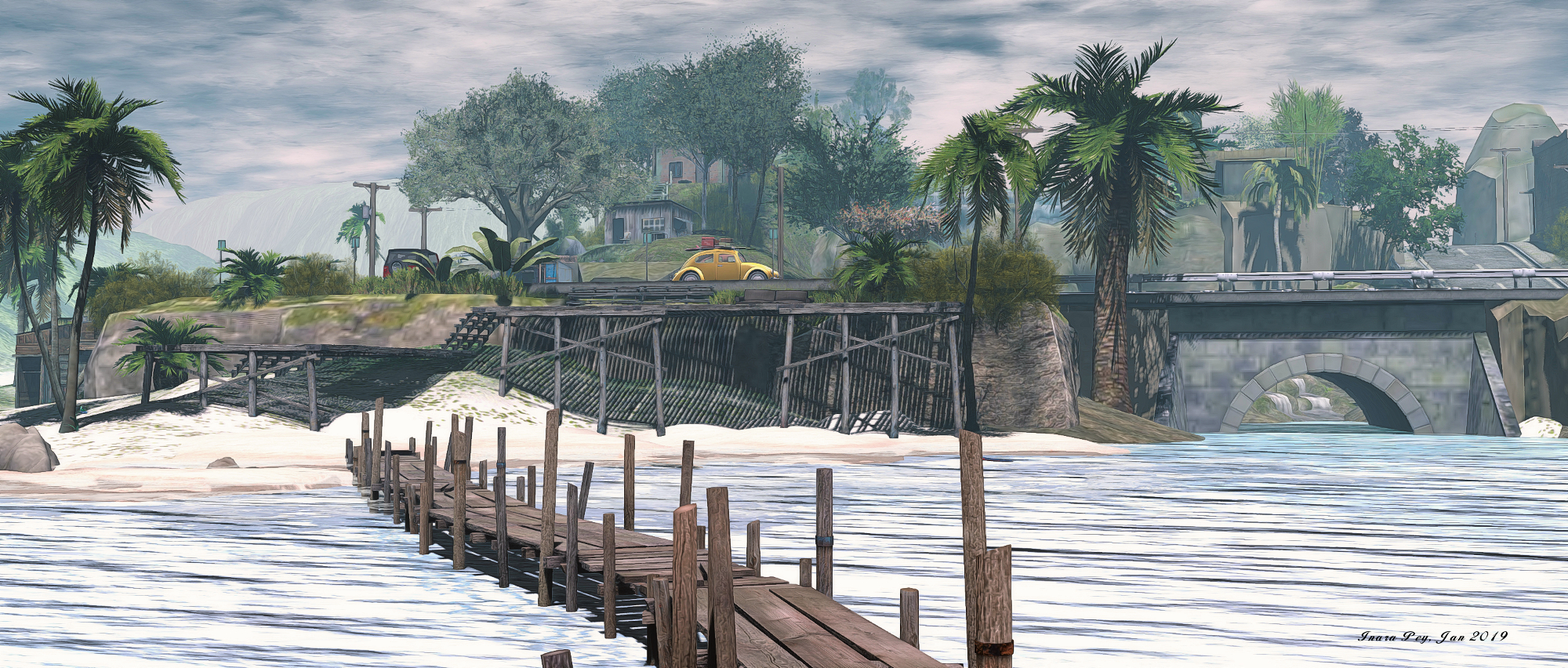
Kultivate magazine and the Windlight Art Gallery are celebrating the re-opening of the latter – now housed in a new gallery building – with their first art exhibition for 2019.
Officially opened on Sunday, January 6th, 2019 at 13:00 SLT (a time I was unfortunately unable to make in-world, despite being one of the artists – my apologies to all), the exhibition features work by 18 artists: Camellia (captainofmysoul), Marcel Mosswood, Maaddi Benazzi (maaddi), Caly (CalystiaMoonshadow), Dream Kolda (DreamMakerXDreamBreaker), Kayly Iali, artandsoul Constantine, Cybelle Moon (Hana Hoobinoo), anyia, Jamee Sandalwood Hiess (Jamee Sandalwood), Tequila Mockingbird (Tequila Krovac), Pieni, Kody Meyers (KodyMeyers), Fuyuko ‘冬子’ Amano (Wintergeist), John Brianna (johannes1977), Karma Daxeline (Karma Weymann), Seraphim Placebo and, as noted, yours truly.
Such a gathering brings together a rich mix of art and images, encompassing both the physical and the virtual. John Brianna, Kayly Iali, Marcel Mosswood and Pieni, for example, offer a mix of their own paintings and drawings, Cybele Moon presents more of her captivating fantasy images, and artandsoul Constantine offers a selection of physical world photographs.
As might be expected, the SL images largely split themselves between avatar studies and landscapes, although Kody Meyers present some quite stunning interpretations of Mistero Kifeng’s sculptures. I also have to admit to being drawn to both the marvellous monochrome winter images by Jamee Sandalwood Hiess and aniya’s self-portraits.
The new Windlight gallery building is a design from the Fanatik range and which is popular among gallery owners. It offers plenty of space, with high ceilings and good lighting, while an upper level offers additional display space, its mezzanine design avoiding any feeling that the space is crowded.
Update: Maoz has closed. SLurls have therefore been removed from this article.
Take a break from the cold and come hang out at Maoz! It’s a little tropical retreat that’s inspired by the idyllic, provincial life in the Philippine Islands. Take pictures, surf, play games with friends or just frolic in the water and the sand.
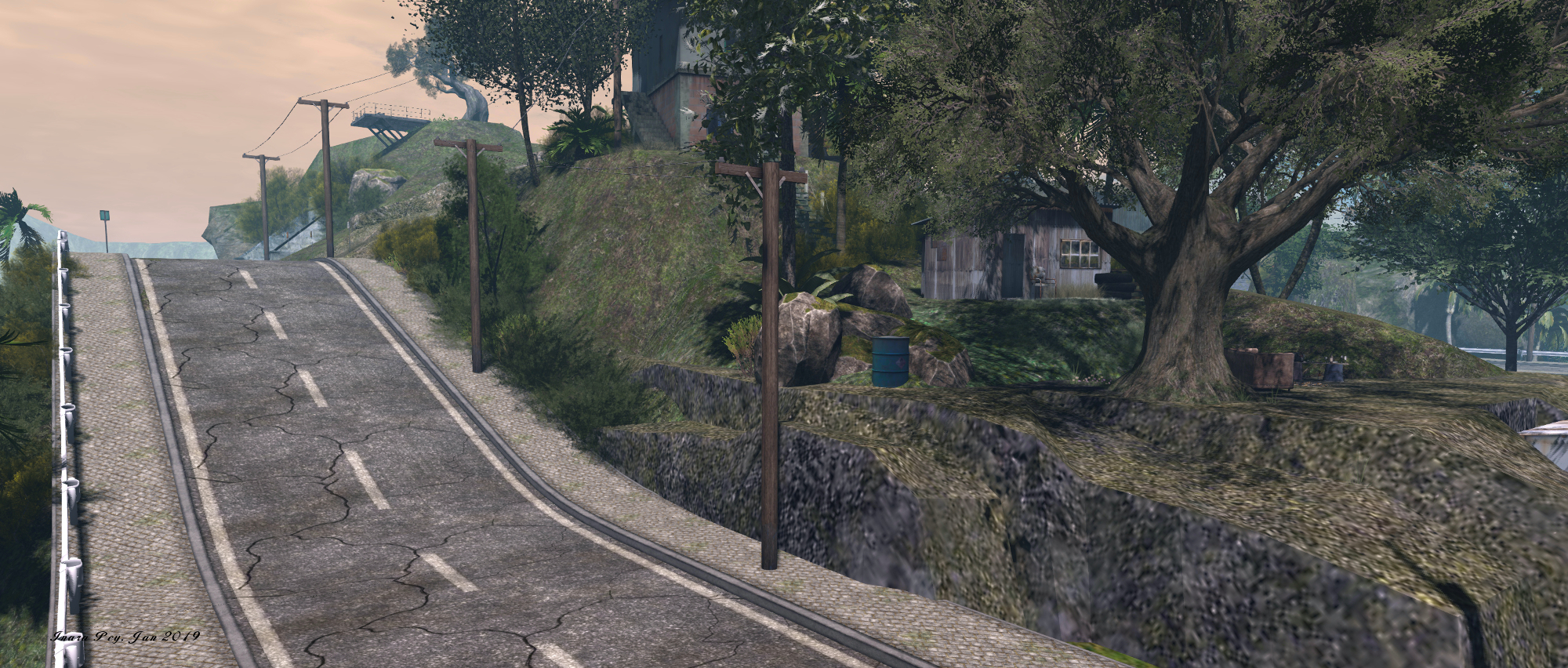
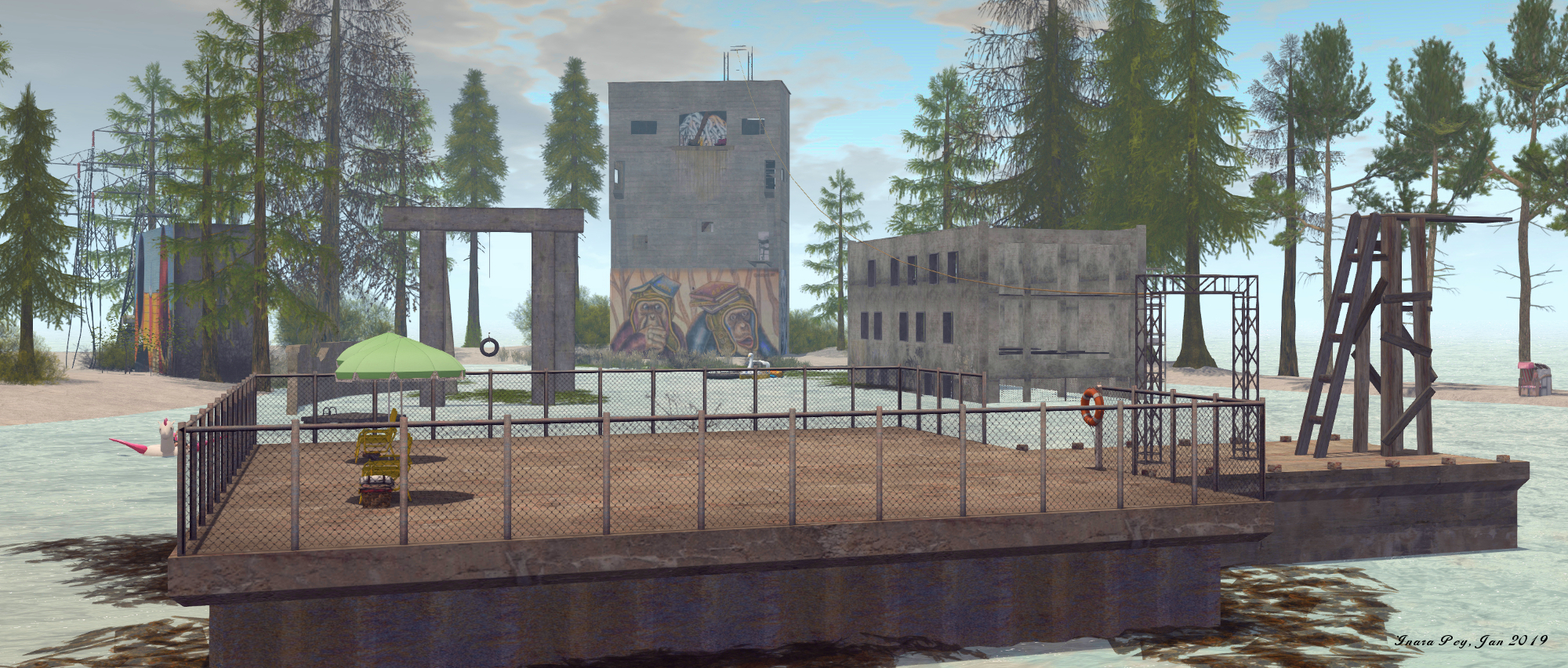
So reads the description for Maoz, a Homestead region I dropped into after seeing Loverdag’s images at the start of the year. Designed by Cate Ansaldo (CATEvogel) and Dylan Vogel (LordDylan Ansaldo), this is simple region with the design intended – as the description indicates – to reflect the provincial Philippine life. Surround by low-lying hills that don’t quite adjoin the region, it has the feeling of a coastal location through which a broad road passes, beaches to one side offering surf and volleyball, overlooked by a parking lot where it is easy to image passing tourists pausing to take photos.
Maoz
Rising in uneven steps from west to east, the setting is marked by water tumbling through a series of falls, small shanty houses scattered between rocks and trees, and the ribbon of the road, which together with the vehicles scattered along it, gave me the impression I was perhaps on a road trip. Roadside huts and shops sit as possible distractions for drivers, promises of food and beer presenting the temptation for a stop along the way.
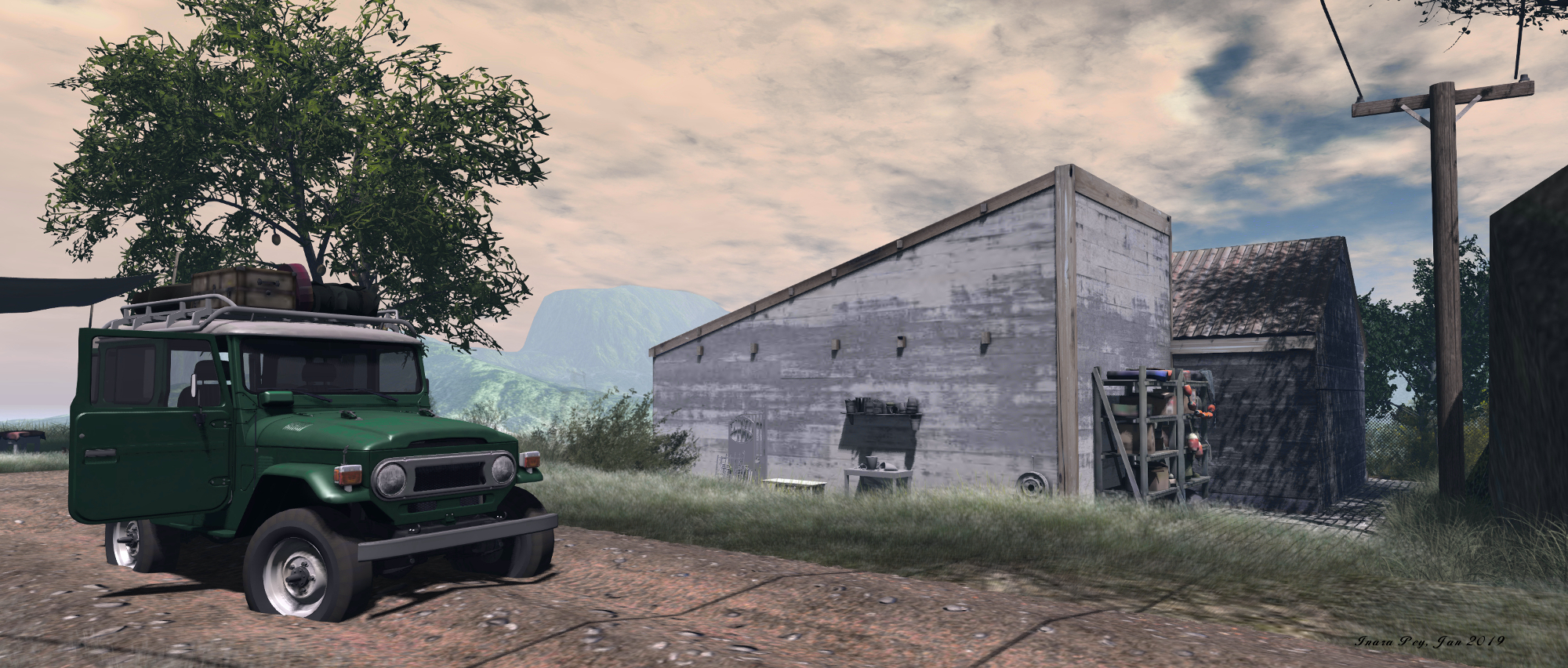
Tucked away on one corner of the region sits a small but homely house, a Toyota Land Cruiser parked alongside, doors open and roof rack laden as if someone is about to take to make a journey or has just returned from a trip to somewhere. Not far away is one of those tempting stops, the bicycle laden with platters of fresh fruit outside apparently enough to persuade one driver to swing across the road and pull up, the No Parking sign under which it has been parked clearly not a deterrent.
Maoz
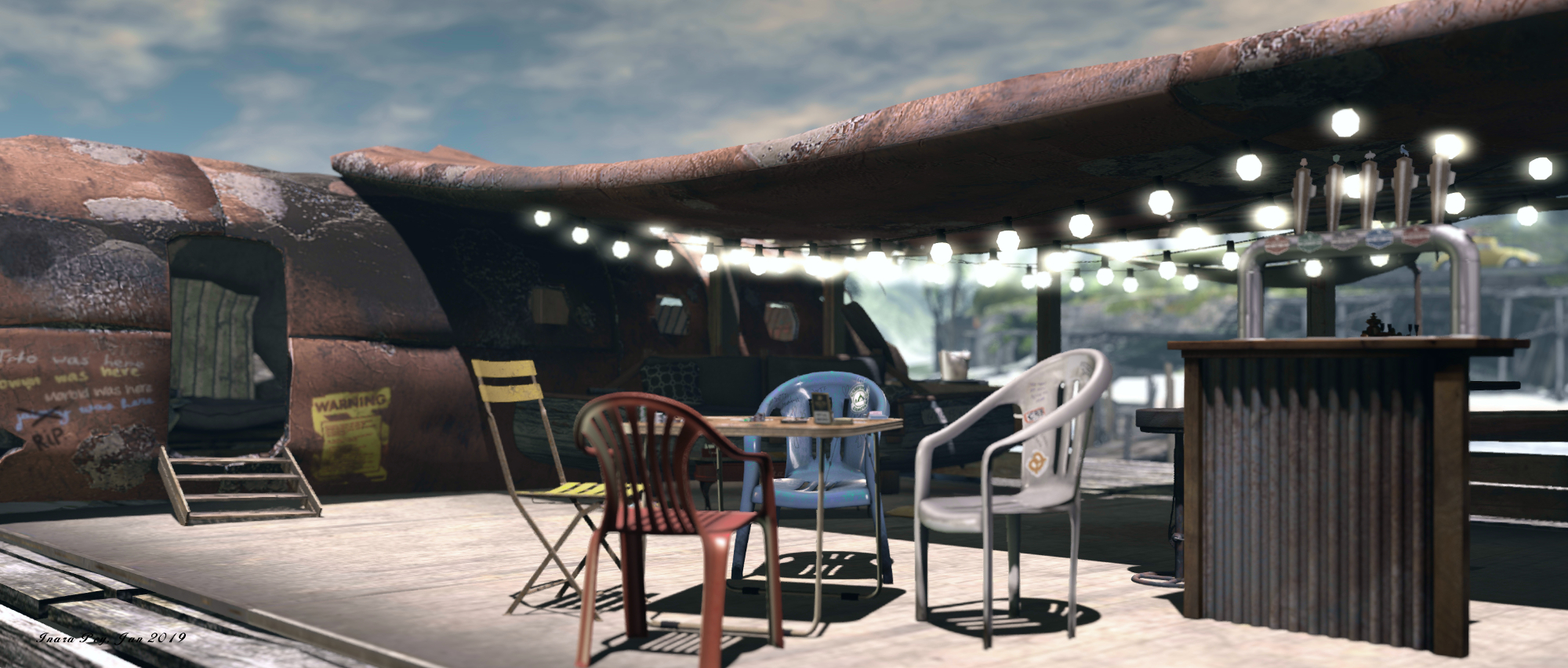
Off the coast to the west, reached by a long board walk clearly placed by the locals to avoid the rolling surf, lies a bar built within the confines of a rocky sandbar rising above the waves. A makeshift place, constructed in part from the fuselage of a wrecked ‘plane, it’s clearly a popular stopping point: the rusting flank of the aircraft is festooned with the autographs of visitors past. Those who don’t fancy the walk out to it can find refreshments and sweets at Linda’s Store on the beach, within easy reach of the volleyball net awaiting players.
Scattered around the region are numerous places to sit, indoors and out – including a caravan perched at the top of a steep track and offering views out to sea, and back over the waterfalls down to the rolling surf, or within (or on) the VW Beetle parked at the landing point. Rezzing is also open to visitors, making this an ideal place for photography. However, as auto return is disabled, please do remember to pick up anything you set out, should you choose to do so. There is also a Flickr pool open for submissions of images taken.
Maoz
As notes, a simple, photogenic layout that offers a place to get away to while waiting for the snowy, winter regions to warm themselves up as thoughts now turn to spring in the northern hemisphere. It is also, apparently, a place given to occasional squalls of rain, so when visiting, you might want to keep a brolly handy!
Lyric Art Gallery – Black and White: Ebcy Clift (l) and Boone Blanco
Opening on Saturday, January 5th, 2019 at the Lyric Art Gallery is Visual Feast: Black and White, an exhibition featuring over 30 artists (and for which I’m kicking myself, as I was invited to participate… and then forgot!). Each of those artists participating was asked to submit and image on the theme of winter landscapes, although some of the art displayed takes a slightly different turn on presentation, with several pieces, while monochrome, focused on avatars.
Exhibitions like this are often an interesting way of getting to see work by artists / photographers with whom you might not be familiar or otherwise get to see – or to re-acquaint oneself with the work of artists not seen in a while. Such is the case for myself, in coming across First Touch by Leonorah Beverly, and artist whose work I only recently encountered for the first time, instantly finding her landscape work instantly captivating. With First Touch, whilst not a landscape, demonstrates her skill in presenting an evocative story within an image.
Lyric Art Gallery: Emma D’Souza (l); Beccha (c) and Leonorah Beverly
Within those pictures that keep more-or-less to the theme of winter landscapes, these is a fascinating mix; from “straight-forward” pieces with fields of snow or trains chugging between snow banks, or houses sheltering under thick blankets of snow, through to more subtle views of winter: snowflakes drifting through an open window (Black and White by Beccha); or wonderfully atmospheric, with a bridge caught under a sullen sky; the clouds portents of cold weather (Bridge Over Troubled Water by Mishe Mactavish).
The avatar studies are equally broad ranging, with several encompassing the winter theme as the setting, others focused purely on the avatar(s) imaged. While it is not surprising avatars get to feature in some of the images – we can be much a part of a winter setting as fir trees, snowmen and frozen ponds -, I admit to being surprised at the number of images that more-or-less eschew the winter theme (or present it only minimally) in favour of presenting a portrait, either completely or to a greater degree. Which is not to say any of them are any the less captivating – I found Pure by Andre Mascot (Snouman) particularly striking, for example.
Lyric Art Gallery: Gwen Enchanted (L); Gustaf (pv544); Fenn MacMoragh (r)
All told a very eclectic, engaging exhibition that offer more of a mix than might be expected from the invitation / greeter description. For those able to attend, the official opening will take place at 11:00 SLT, on Saturday, January 5th, 2019, with music by DJ Fae.
Update: in keeping with Serene and Jade’s usual approach of maintaining a region design for approximately a month after opening, Rummu has closed. SLurls have therefore be removed from this article.
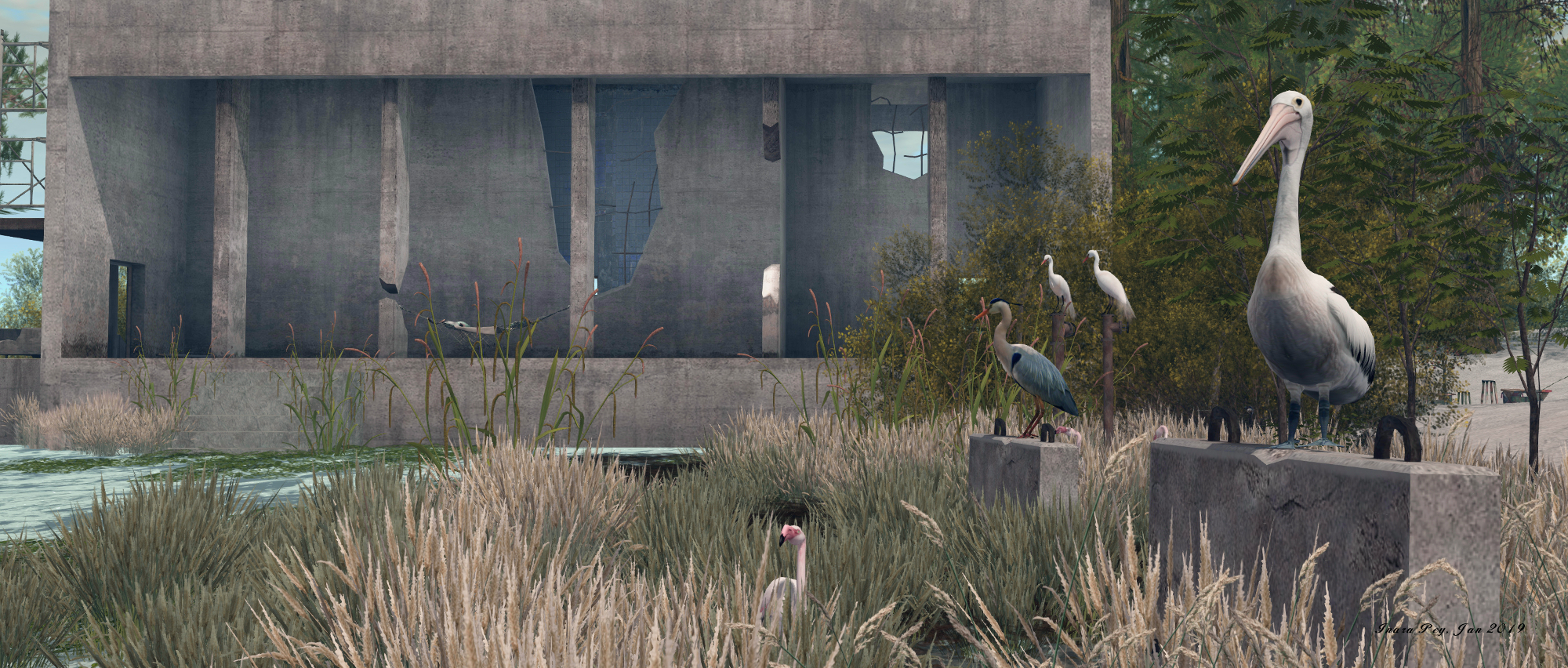
The start of a new year brings with it the opening of a new region design by Serene Footman and Jade Koltai, and once again they present a vision of a place few of us may ever get to see in the physical world. Rightly renowned for their work in reproducing Furillen (read here), Khodovarikha (read here), La Digue du Braek (read here), Isle of May (read here) and Black Bayou Lake (read here), they now present a setting with deep historical and cultural meaning, harkening back to the era of the Soviet Union: the Rummu quarry, located in Estonia.
Called simply Rummu in Second Life, the region completely captures the heart and soul of Rummu quarry and some of its surroundings. beautifully encapsulating them within the confines of a 256 square metre setting.
It was the location of a quarry from the 1930s until the early 1990s. More notoriously, Rummu was the site of a Soviet prison, whose inmates formed the majority of the quarry’s workforce … Rummu quarry was essentially a labour camp in which prisoners were forced to work and to endure brutal treatment from guards who barely spoke their language.
After Rummu prison was closed, the quarry ceased operating. The site was flooded and another remarkable story began. The prison itself now lay hidden beneath a lake that slowly became a well-known Estonian beauty spot, drawing many visitors who wanted to swim and dive in its crystal clear waters. In summer, this place resembles a city beach, packed with bathers.
It is as this modern beauty spot (still used today, despite bathing and swimming in the quarry having been banned) that Jade and Serene have recreated Rummu, and they’ve done so with remarkable detail.
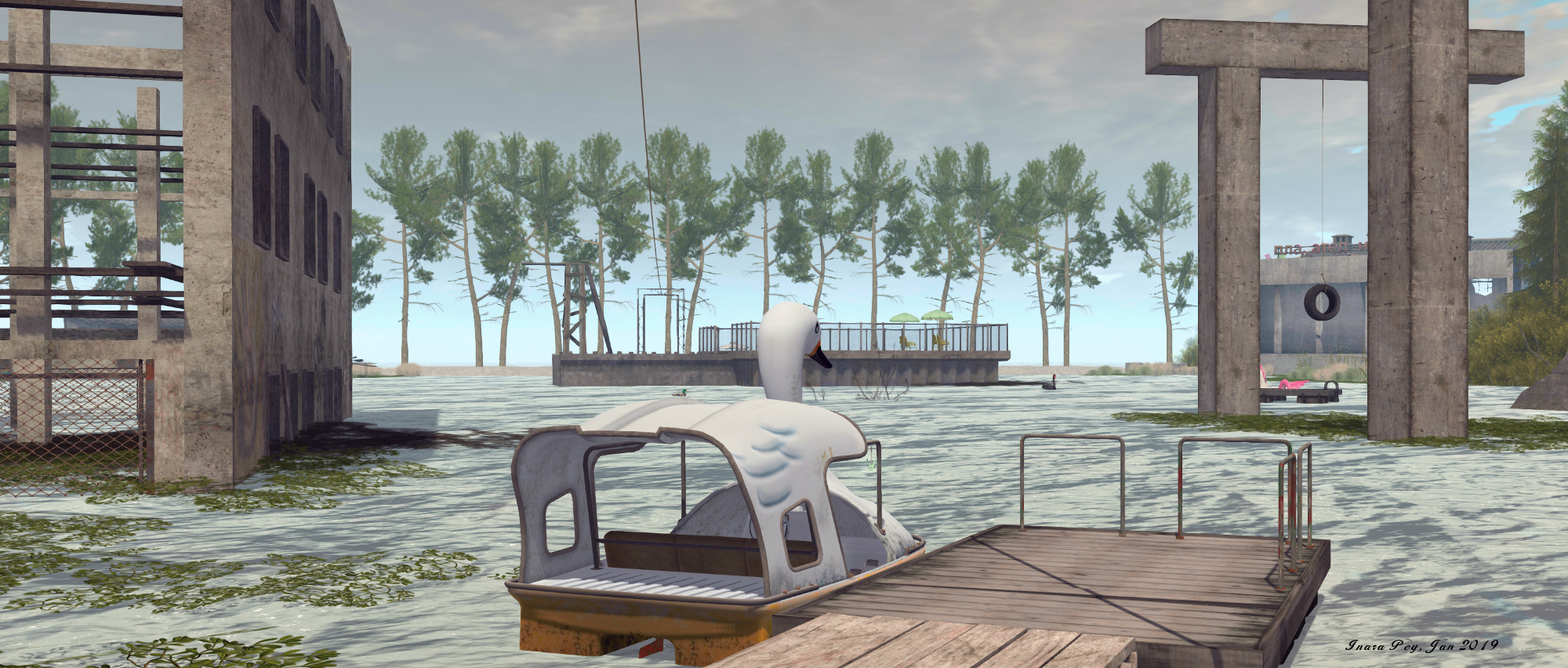
In the physical world, the quarry sits within a heavily wood region and is immediately identified by a massive spoil tip from the quarry excavations, which forms a man-made table mountain rising above what is now the meandering lake. Sitting close to the spoil tip are a number of building shells, some rising directly out of the flood waters filling the quarry, others sitting on the shoreline, all now battered and broken since the quarry’s closure in the 1990s, and the natural flooding of the quarry pit that followed (the prisons themselves – Rummu and Murru prison, which Serene references in his own write-up about the location, – actually continued to operate through until 2012, after being merged into one in 2001, and then with the nearby Harku women’s prison in 2004).
Rummu
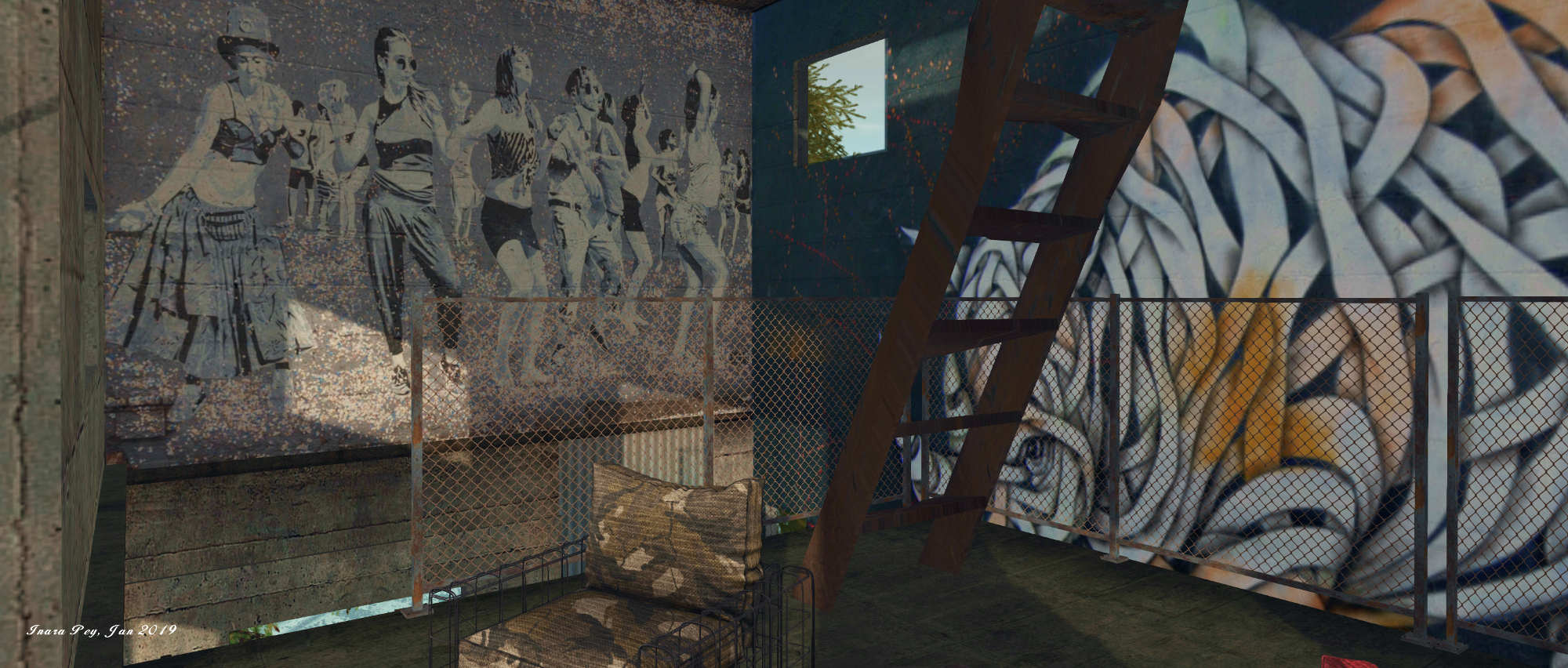
All of this is wonderfully recreated within the Rummu build, right down to the rills and channels created by water that flows down the flanks of the spoil tip as a result of regional rainfall, and the low, sandy-like spaces where Estonians come to enjoy the summer Sun between dips in the deep waters. Also captured within the build is the fact that rather than merely standing as derelict shells or as diving platforms for daring leaps into the waters below, the buildings also became the home of an impromptu outdoor art gallery, their walls home to large fresco-like paintings and graffiti.
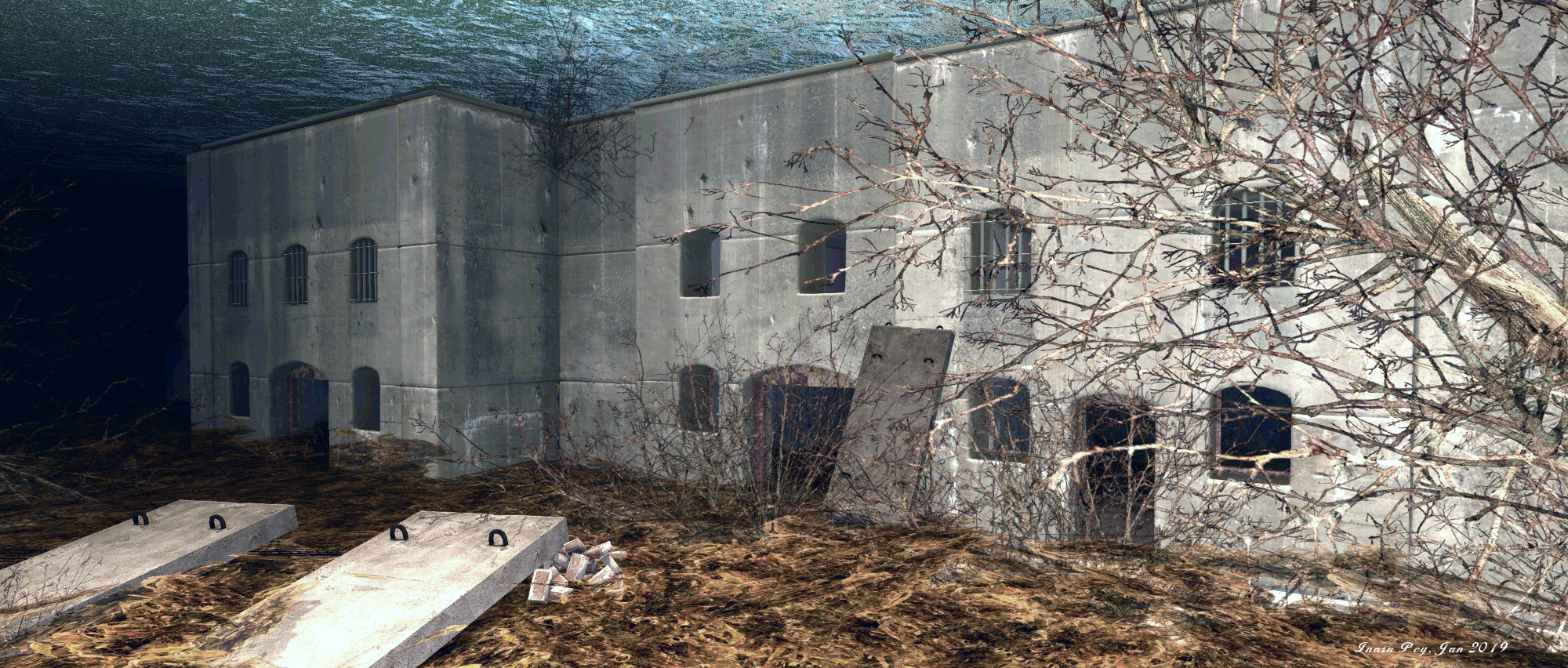
Nor is the build restricted to reproducing what lies above the waters; when the quarry naturally flooded after work within it ceased (the quarry had to be continuously pumped during its operational life in order to prevent it filling up with water), many of the buildings it contained, together with equipment, ended up underwater.
Rummu
These drowned remains give the physical world Rummu prison something of an eerie, ethereal feel, as they can often be seen from above the surface. And it is these submerged buildings and other reminders of the quarry’s past that have also in part been reproduced within Serene’s and Jade’s build. Somewhat hidden from any overhead view when using the default windlight, they lie within a haze that gives a great sense of the real quarry’s depth, looming into view much as they would to divers braving the waters of Estonia’s Rummu.
As Serene notes, almost all the LI for the region is used up; ergo there is no public rezzing available – but there are a lot of places to sit and enjoy the surroundings – including a dive platform that appears to have been drawn from this video of the quarry, and which again adds to the overall setting. There are also a number of interactive elements to be found as well, including two places where you can dive, a zip line slide and a pedal boat rezzer.
Rummu
But why pick on a place that once harbours such human misery? I think Serene explains it perfectly:
We were drawn to the place by its contrasts: between past and present, between what lies above and below the water, between freedom and captivity, between beauty and brutality. We also liked Rummu’s bohemian vibe: there is something carefree and illicit in the way that visitors use it, painting murals on the walls of the buildings one can see, and staging impromptu parties and music events.
To give you a flavour of Rummu as it appears today, and just how carefully Serene and Jade have recreated it, I’ll leave you with a short video of the quarry. Do remember that the setting will not in in-world forever, so a visit is strongly recommended, and photos can be shared on the Rummu Flickr group.
Now open at the Lin C Art Gallery, curated by Lin Carlucci, is an exhibition by ViktorSavior, presenting a three-part mix of his art, and which makes for an interesting visit.
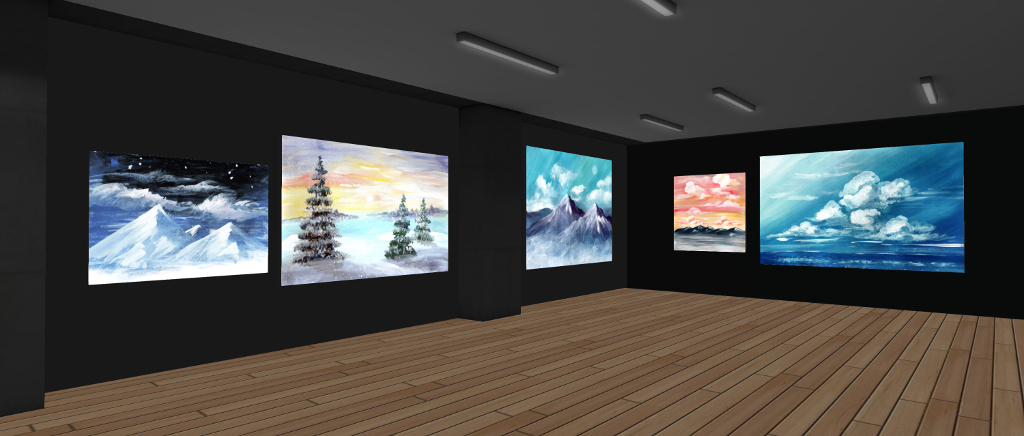
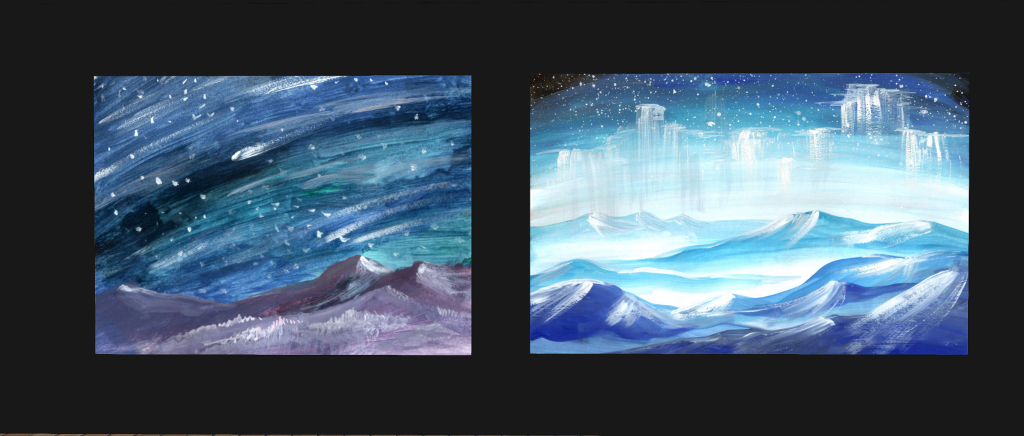
On the ground floor, and directly inside the main doors, Viktor offers 21 of his physical world paintings of the natural world. I’m not sure of the medium used, although they appear to perhaps be watercolours, they offer wide open views of land, sea and the night sky, with a particular emphasis on mountains, and with a lean towards the use of blue.
Each of the paintings might have been inspired by a physical world location, either personally seen or viewed through image or photograph, or which might be entirely drawn from the imagination. Which they are hardly matters, as each piece has its own story to tell. Expressive of a love of the night, the dawn, mountains (something to which I can very much relate, as I have a love of mountains myself and they are one of the few things I can actually draw in a meaningful way!), and nature as a whole.
These are paintings that, if you give them a chance, will draw you into them, placing you on a windswept coast where the wind and unseen rocks pull the sea into rearing, frothing beasts; where a river winding down through woodland draws you to wonder what lies beyond the mountains from which it has come, or where the night sky beckons from the mountain tops, or the Sun warms a winter’s blanket, and clouds tower into the sky in reflection of the majesty of the mountains below.
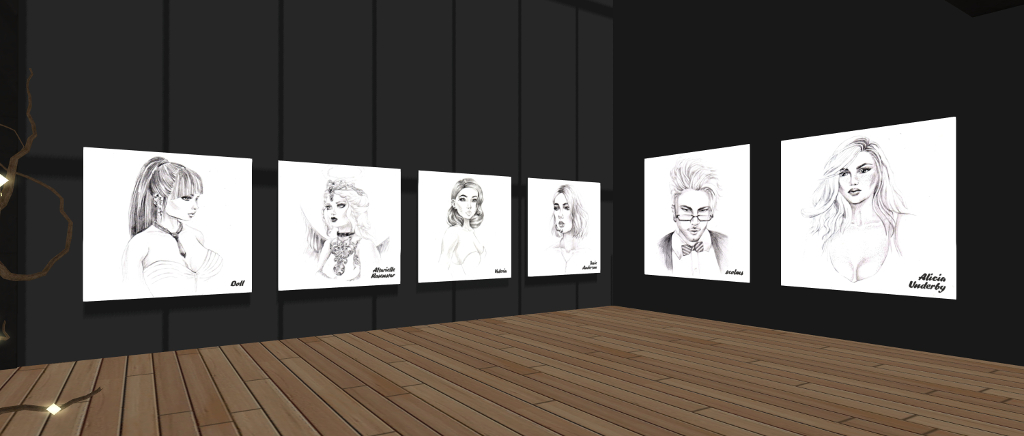
Also on the ground floor of the gallery is a series of 18 avatar portraits offered in monochrome and apparently drawn by hand, rather than rendered from photographs. All but four are of female avatars, and all beautifully and simply capture their subjects in a manner not far short of perfect. There is a level of life and emotion within each study that offers a glimpse of possible thoughts and feelings behind the eyes. In a word, they are vibrant in a way perhaps more normally seen in colour images.
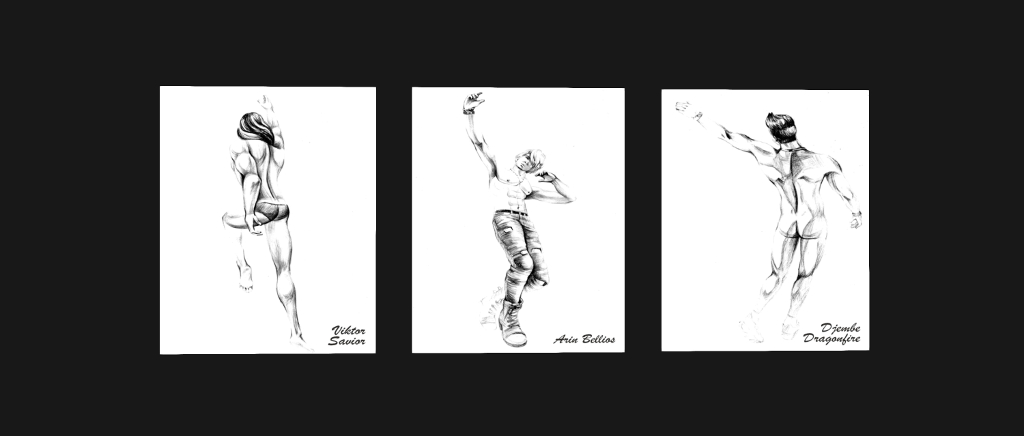
This vibrancy continues on the gallery’s mezzanine level, where a further 18 monochrome images are presented, these all full-body images of the male body in motion, most likely dancing at the time the image from which the drawing originated was captured. There is a wonderful sense of dynamic fluidity in each, a grace that speaks of human, not avatar, movement and actions.
The three aspects of this exhibition offer a mix that is rich in its diversity, giving insight into Viktor’s art as eloquent as any biography. There is much to be admired throughout the exhibition, and the paintings are all available for sale. However, were I to be asked, I would have to admit I found myself particularly drawn to the portrait studies, as I found them to be marvellously alive.
Maison de L’amitie – click any image for full size
Update September 2019: Maison de L’amitie has relocated.
It’s been more than eight months since our last visit to Corina Wonder’s Homestead region, Maison de L’amitie. At that time, the region presented an eye-catching reproduction of Bolivia’s Salar de Uyuni (about which you can read more here). Since then, things have returned to Corina’s more “usual” landscape designs, and for winter 2018 / 2019, it currently offers a suitable setting with which to launch this year’s Exploring Second Life series.
The great joy with Corina’s landscapes is that they present setting that was wonderfully natural and which encourage exploration without making demands on visitors; rather they encourage a gentle stroll, generally with opportunities for sitting and chatting / cuddling. Such is the case with this winter look, which comes with something of a Nordic feel.
Maison de L’amitie
Set between two parallel lines of off-sim snowy mountains, both of which encroach well into the region’s west and east sides, visitors are presented with a rocky splinter of land facing a narrow channel of icy-looking water to the west and open sea to the south. Sitting at the feet of tall rocky fingers that form a jumbled parade of cliffs, a snow-covered road runs south from the landing point and its little frozen pond and nearby open-air seating area, past a cosy-looking stone cabin sheltering under the high cliffs, before vanishing around a distant curve.
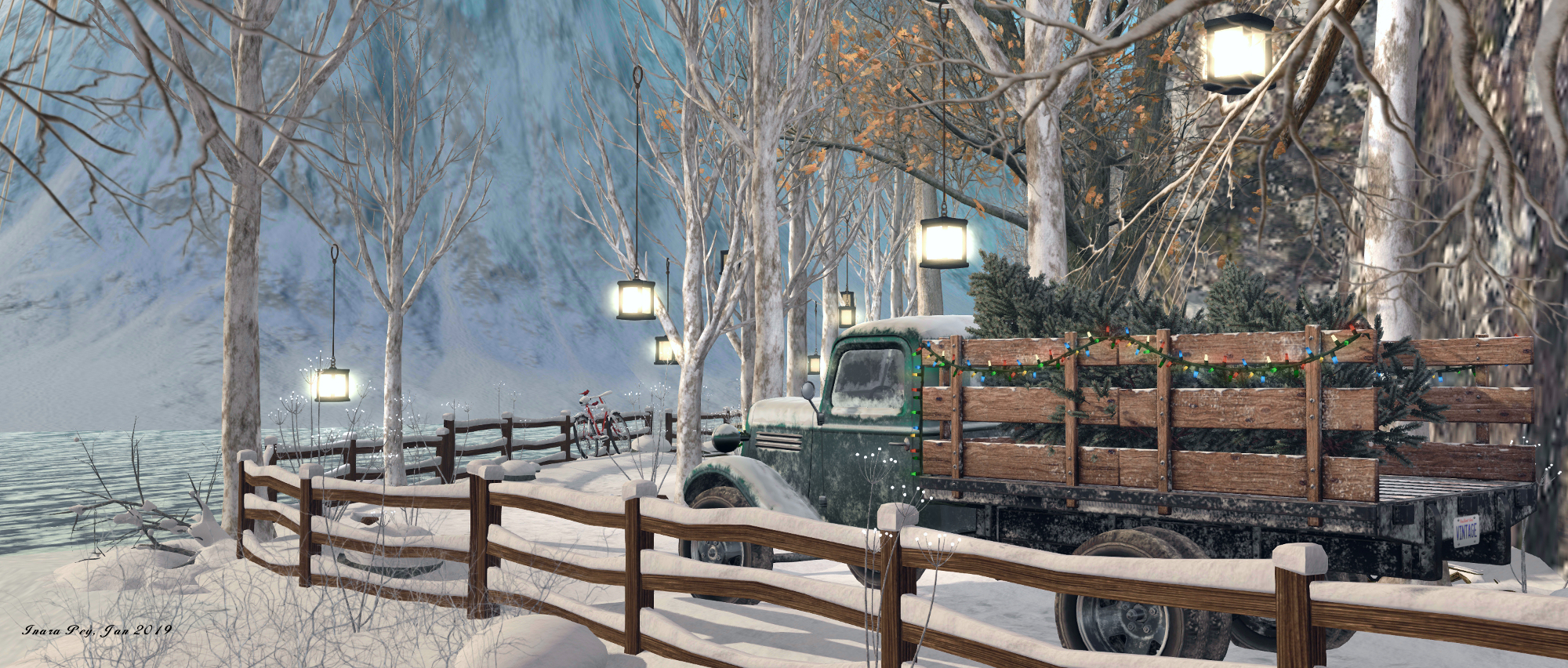
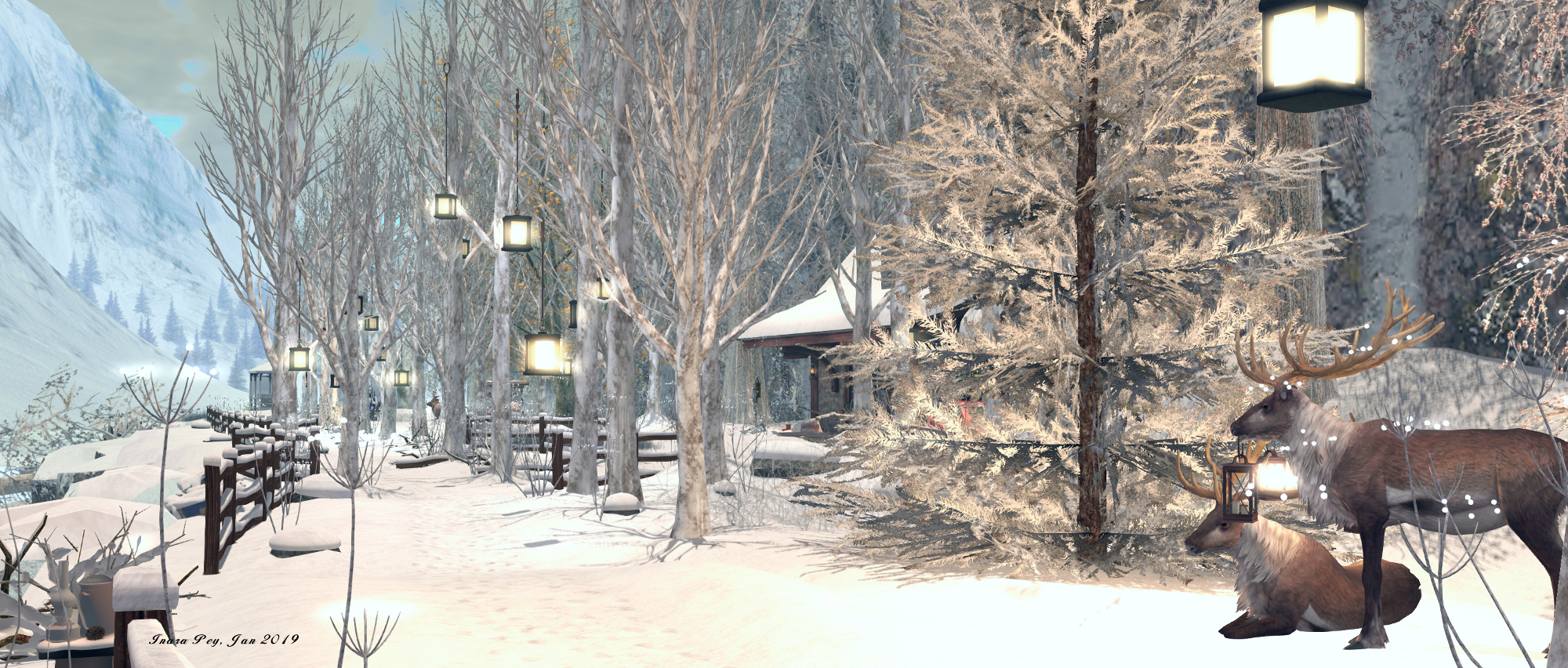
Wooden fencing separates the path from the cold waters, and lanterns hang from silver birch that march down the road, lighting the way as reindeer passively watch all the comings and goings. The cabin offers a warm welcome for those feeling the chill, with Wellington boots arranged on the porch and, more particularly, a fire burning in the outside hearth, wooden chairs ranged before it. A bicycle lies in the snow, partially buried, suggesting recent fall, while inside signs of homeliness can be found with food being prepared and paintings mounted on easels.
Maison de L’amitie
Follow the road south, however, and it will lead you to a view of the local lighthouse. Past a squeeze between the roadside fence and a truck loaded with fir trees, you’ll find why I refer to the region having a Nordic feel. As the path curls around the southern headland, so it leads to a fjord-like channel, sitting between two further walls of cliffs separated by a finger of icy water.
Here the path runs directly over the water, raised above it on concrete bricks, to arrive at a welcoming brick-built house. This is, like the stone cabin, backed against the high cliffs and affords a view of the waterfall feeding the fjord from its closed end. Despite the freezing look of the water, otters are at play, swimming and curiously examining the kayaks moored not far from the foot of the falls.
Maison de L’amitie
Nor is this all. Atop the canyon rocks are places to sit and cuddle – although I confess, we didn’t actually find a physical way up to them. As a landing point is set, an attempt to double-click teleport won’t work, and the only alternative appears to be to select one of the sit points; but we might have missed something.
A simple, wild setting, I’d perhaps have liked to see the east side rocks more naturally blend with the mountains behind them, if only to present a more natural look, but that is just me. For those who wish to rez props for use with photos, a land group is available to join – simply touch the board at the landing point for a link to the group. Photos of the region are welcome at the region’s Flickr group, should you opt to share them.