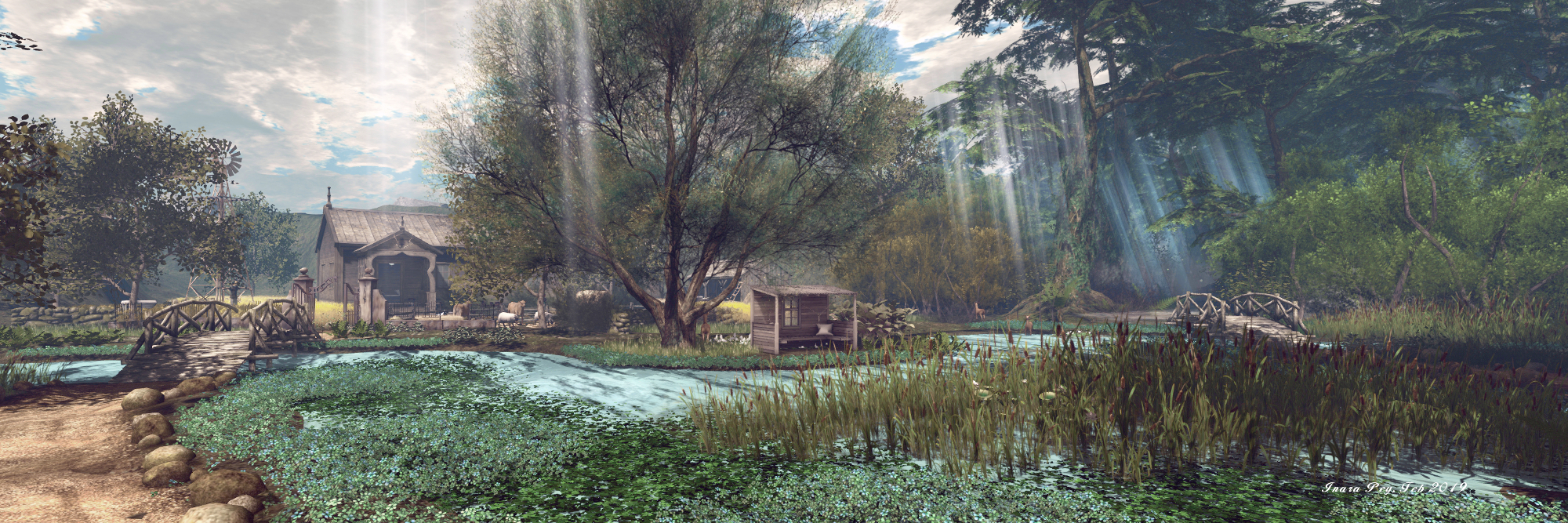
A taste of Andalusia in Second Life

La Frontera; Inara Pey, October 2018, on FlickrLa Frontera – click any image for full size
La Frontera, a homestead region designed by Zaffy Bailey (zaffin) and Pete (PeteSunny), opened its doors to the public recently, offering an opportunity for visitors to spend a little time in a setting inspired by Spain’s autonomous region of Andalusia.

Focusing on a terraced village setting among the steps of high, sandy hills, the region presents a simple, elegant setting visitors are invited to explore and photograph – there is an invitation to upload images to the region’s Flickr group – and to enjoy the general relaxed ambience of the village and the beach below.

La Frontera; Inara Pey, October 2018, on FlickrLa Frontera

The little village is split into two by the steps of the hill, with the landing point set in the terraza of the large part. As befitting the location, the building here are adobe-fronted, with some offering a nod towards Moorish architecture again in keeping with the inspiration for the region, while others are perhaps a little more Tuscan in styling. Bicycles are racked to one side of the fountained square, but to be honest, the cobbled and stone-stepped paths winding between and down from the village’s buildings are better followed on foot.

There are several of these paths, ranging from simple dirt tracks cut into a hill, others ancient stone steps, carefully cut and placed and suggestive that there may once have been something far older than the current houses sitting upon the hill, and still others rough stones loosely planted in the sandy soil. Each offers a route of exploration, either up or down from the terraza, making any exploration a matter of following where your muse leads.

La Frontera; Inara Pey, October 2018, on FlickrLa Frontera

Nor are the paths alone in finding a path down the hillside; a stream, rising up above the village, tumbles by way of falls, channel and sloping path down to where the sea awaits (a second waterfall drops more directly to the sea on the north side of the island). With its rushing, turbulent water crossed here and there by bridge and steps, the fast-placed stream may have, over time, played a role in helping to separate a low-lying sandbank from the rest of the land.

The home of scrub grass, a scattering of trees, wild flowers and tall reeds, the semi-circular sandbar offers a beach where a tan can be gained, and the skin cooled by either a dip is the sea or in the pools to be found on the sun-dried earth of the bank.  It is connected to the rest of the land by two humpbacked bridges that stand almost guard-like, one either flank of what might have once been a walled orangery. This appears to have once been a part of a larger formal garden, although only the flagstones of a terrace and a central water feature now remains.

La Frontera; Inara Pey, October 2018, on FlickrLa Frontera

A wooden board walk also spans the arc of water separating the sand bar from the rest of the land. Follow this and it will take you to the near-hidden secret of the region: and underground music venue. Located inside a high-ceilinged cavern, this offers plenty of space for those wishing to dance. Zaffy tells me the plan is to make this the venue Whether this will be a “formal” venue for dancing / music is unclear to me; during my visit, Zaffy was either engaged in building or AFK, as my enquiry went unanswered.

Throughout the region are plenty of opportunities to sit and appreciate the setting, from the beach, through the gardens up to the village – including up on some of the roof tops and verandahs, all the way to the highest peaks (or higher still in the case of the windmill standing well above the land to the north-east). There is also a subtle sound scape to add aural depth to the region as one wanders the paths and trails.

La Frontera; Inara Pey, October 2018, on FlickrLa Frontera

Offering uncluttered charm, plenty of opportunities for photography and perfectly suited to being seen under a variety of warmer windlight settings, La Frontera is a delight to visit, and a reminder to those of us sitting on the cusp of winter that warmer days and days in the Sun really aren’t that far away.

SLurl Details

With thanks to Shakespeare for the pointer!

Loss and life in Second Life

Nitroglobus Roof Gallery: How Isolde Got Lost

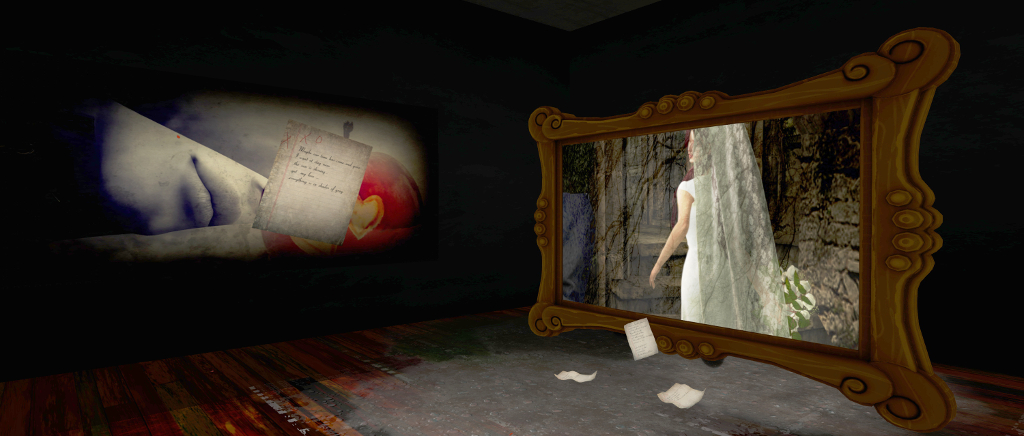
Opening on October 25th, 2018 at Nitroglobus Roof Gallery is How Isolde Got Lost, by Arete of Cyrene (AretevanCyrene). It is a complex piece, a story in 14 part;, a story in images dealing with the complex subject of love, loss and healing.

Narrative in art is not unusual; I’ve often referenced it when writing about exhibitions in these pages. But with this particular exhibition, the story is presented through the chronological order in which the pieces are presented, the start indicated by the sign The Story Begins Here, located on one of the inside walls of the gallery space, then progressing from there in a clockwise direction.

As Arete states in her liner notes, mourning is a deeply personal experience, influenced by a number of factors: our closeness to the lost one; their place within our circle of family and friends and how they react to the loss; religious and social factors, and so on. In her book On Death and DyingElisabeth Kübler-Ross outlined what she saw as the five stages of grief: denial, anger, bargaining, depression and acceptance. A sixth was later added, in the form of shock, preceding the other five. But as Arete also notes from her own experience the stages of loss can be more complex and can extend beyond just six stages.

Nitroglobus Roof Gallery: How Isolde Got Lost

In particular, the images here have not only been specifically created for the exhibition, they chart Arete’s on experience with loss (one of which also touches on Dido’s story, notably in She Found a New Home….). Nevertheless, the story here in one that is going to resonate with anyone who has suffered loss and grief.  Through them, we travel not only through the six acknowledged stages of grief, but also through the situations and actions that can both move us through them – or return us to one of them.

In this, Arete presents a simple, but forgotten fact of mourning: by labelling loss in terms of 6 “stages”, we tend to look at them as a linear progression: a series of steps from shock to acceptance by way of the other stages, all neatly in order. But the reality is, beyond shock, while we may well initially travel through the remaining stages in the order they are offered, we might also travel back to different stages of grieving. This can be as a result of a number of factors; perhaps as a result of finally packing possessions away, or clearing a closet of clothes that will no longer be worn, or simply witnessing something unexpected through the course of everyday life.

Nitroglobus Roof Gallery: How Isolde Got Lost

The healing process can also be found within the images, the return to “everyday” life; the support of family and friends; the taking up of new activities and filling the void as best we can. Given the personal nature of the images, and the nature of loss, singling out individual pieces in the series isn’t easy. However, it is the smaller, personal aspects of the story – such as Boxes – or the need to talk to the one now gone (which can be a vital part of the healing process: acknowledging that while a loved one might be physically gone, we can still keep them with us through memory as an integral part of us), that particularly struck a chord with me.

Love, listen.

To understand death, she so often talked with him to find spiritual acceptance.

Her words send to address unknown:

“Love listen, I must go on…but when I laugh, I feel guilty. When I forget you in a moment, I feel guilty. Please, try to understand, I love you and miss you so much but I have to let go of that guilt. Love listen, walk with me each day and we make that day together. Sleep with me each dark hour and share my dreams till we walk on the same soil.”

– Arete of Cyrene, How Isolde Got Lost

Nitroglobus Roof Gallery: How Isolde Got Lost

There is more here as well; the images are not only unique to this story and exhibition, they are wonderfully constructed in 3D. To see the intricate layering of this, I recommend enabling Advanced Lighting Model and setting graphics to at least High. Also, do make note that the story can also be followed through a website created by Arete, and accessed by clicking the first image in the series for a link.

An exhibition of enormous depth and message, How Isolde Got Lost is a must see. And please note that while individual image are available for sale, all proceeds will go to The Catboat in Amsterdam, the only animal sanctuary that literally floats, sited on a canal. A tip jar for the charity is also available in the gallery.

SLurl Details

The natural beauty of Cold Ash in Second Life

Cold Ash; Inara Pey, October 2018, on FlickrCold Ash – click any image for full size
Leaf (Peyton Darmoset) and Julz (Juliette Rainfall) are among my favourite region designers. Their region designs of Erebos Harbor (read more here), Cloudbreak (read more here) and Ash Falls (read more here) is among the best natural settings to be found in Second Life. So when I received an invitation to pay a visit to their latest creation, I made sure I had the opportunity to spend a fair about of time visiting, and hopped over to take a look.

Cold Ash is the in-world home for the Cold Ash brand of menswear, and the latest iteration of the region has been fabulously designed by Leaf and Julz as both the home of the store and a photogenic place to visit and appreciate.

Cold Ash; Inara Pey, October 2018, on FlickrCold Ash

Visitors arrive, appropriately, at the store itself, located towards the north-east corner of the region. This sits on a large plateau that is typical of the rugged nature of the island and resembles a large, converted warehouse. A railway track runs past the front of the store, separated from it can a broad gravel road that narrows into a winding footpath. Both the path and the railway track form an integral part of the region’s design.

Running from a tunnel on the northern extreme of the island, the tracks to where a metal framed truss bridge spans a watery gulf to reach a southern island. The gravel path gently curves its way down the slope alongside the bridge to also span the water, this time via a low-sided cement bridge, before curling up the slope of the second island, passing under the railway bridge as it does so.

Cold Ash; Inara Pey, October 2018, on FlickrCold Ash

Both track and path lead the way to a lumber yard that takes up the larger part of the second island, the land falling gently on the north side, where the trunks of felled trees lie, already stripped of their branches. Wooden steps run down the slope as well, offering a way down to the single beach running along the coast. This arcs back to another set of steps leading back up to the gravel footpath, offering a small loop around this part of the island.

Which is not to say this is all there is to see on the island. The lumber yard includes a workshop where the logs from cut trees can be cut and worked, prior to being loaded onto rail cars outside. A car workshop sits alongside the lumber shed, looking perhaps a little incongruous given there are no open roads here, but it does actually work within the setting, lending further character to the region.

Cold Ash; Inara Pey, October 2018, on FlickrCold Ash

The main island also offers routes down to the coast. The first is another winding path reached via a crossing over the railway tracks close to the store.

Two more are to be found to the water’s edge, both wooden walkways. The first commences close to the rail bridge and passes under it to reach the eastern coast. The second is hidden from view up-slope from the tracks. However, while it offers a way down to the western waters and provides a view back along the channel between the two island, it also leads to a private residence. Be aware the security orb guarding the house is on a short fuse, so keeping a distance is recommended.

Cold Ash; Inara Pey, October 2018, on FlickrCold Ash

Walk along the eastern coast of the main island, and you’ll find a little hideaway made from a converted railcar doubling as a little warehouse, a wooden porch offering a place to sit.

Carefully married with its sim surround, with a balanced soundscape and a subtle use of wildlife – such as the gulls flying between the two islands – this is another marvellous setting, richly photogenic. With the look of a coastal headland thanks to the way it joins with the surround peaks, Cold Ash is another truly eye-catching design by Leaf and Julz, one that should be visited and appreciated, whether or not you’re looking for apparel; and for the men, it offers the perfect excuse to try out new clothes while enjoying a walk around the islands.

Cold Ash; Inara Pey, October 2018, on FlickrCold Ash

SLurl Details

Blip Mumfuzz at Black Label in Second Life

Blip Mumfuzz: Photographs

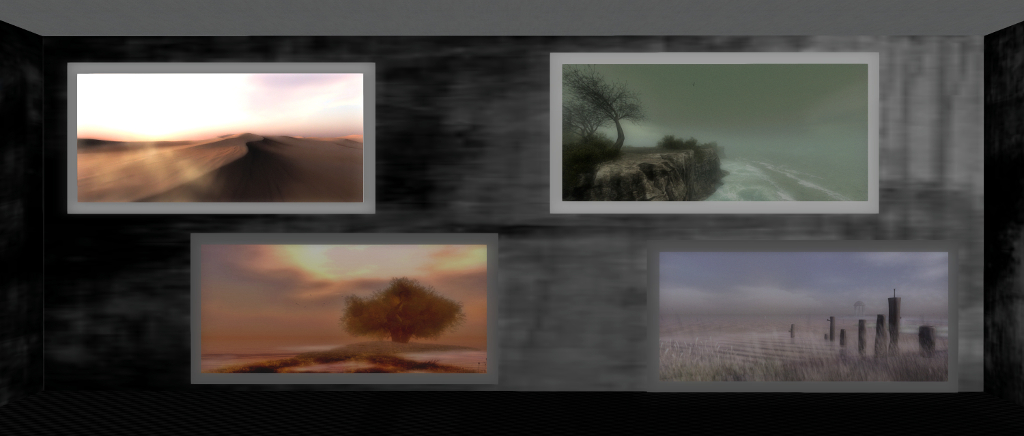
Now open at the Black Label gallery is a new exhibition of art by Blip Mumfuzz.  Located in a sky gallery area reached via teleport from the gallery’s landing point, the exhibition can be found both indoors and out, within a large warehouse-like building in keeping with the gallery’s ground level facilities, on its outside walls and across the street. Also note that one of the “backdrops” to the setting is also one of Blip’s pieces.

Blip’s photography started as a means of recording her travels through Second Life in order to help her revisit them through memory. However, as she states in her liner notes for the exhibition, the focus of Blip’s images gradually shifted from capturing settings to capturing individual scenes or objects. In doing so, she started looking at potential subject from a variety of angles – and even as spaces between them to discover the stories they might offer.

Blip Mumfuzz: Photographs

I found that once I found saw something interesting I’d start moving the camera around. Looking over and under, behind and between. I began looking less at the things themselves…but at the visual and spatial relationships between things.

I am an improviser by nature…in life and in my art. My images are typically the result of an unplanned, spontaneous interaction with my environment. Some of the images in this exhibit, however, are more narrative.

– Blip Mumfuzz discussing her art

Blip Mumfuzz: Photographs

All of this is reflected throughout this exhibition, which Blip has opted to simply call Photographs.  Several are what might be called “conventional” images of places Blip has been: Ashemi Reprise, Keleland, Takeuti Town; while others are beautiful abstraction on locations, such as Kekeland Abstract 9, The Last Forever, BL Abstract and Drapes, to name but three.

It is these latter style of image, coupled with Blip’s vibrant use of colour, that perhaps tend to grab the observer’s attention, drawing the eye into them through the richness of colour and unusual perspective.  These show their location through an unusual perspective or offer a remarkable perception of space through their panoramic presentation, marking them as attention-taking pieces. However, among the bright paintings are a number that are more muted, their softer tones contrasting strongly with the bolder pieces. This gives the exhibition an added layering of effect; it is as if the brighter images are the loud extroverts at a gathering, demanding their presence is witnessed and their story heard. Meanwhile the softer toned images scattered among them come across as the introverts; they try to pass unnoticed, content to allow the other make all the noise – but their story is no less compelling when heard.

Blip Mumfuzz: Photographs

I’m not actually clear on when the exhibition closes; I assume it will be around mid-November, given it opened on October 13th. However, I do recommend taking the time to see it before then.

SLurl Details

Blip Mumfuzz at Black Label Gallery (Eternal Posession, rated; Moderate)

Jules at the new Artful Expressions gallery

Artful Expressions

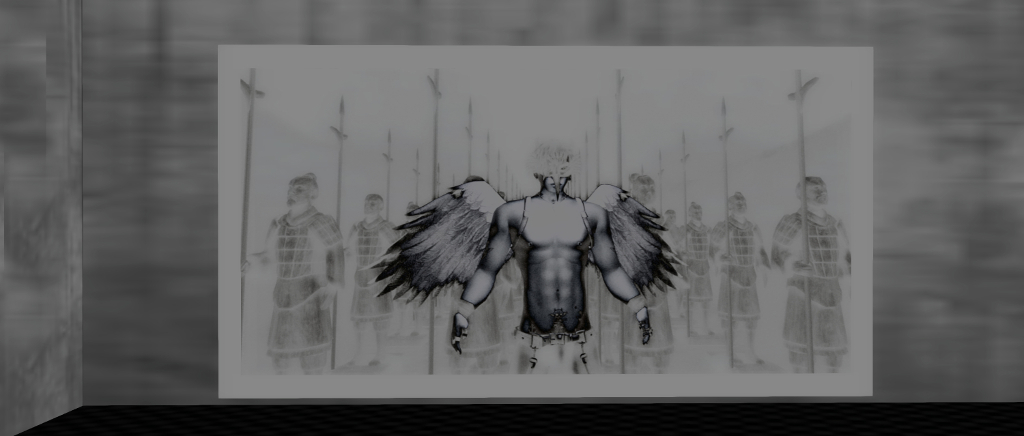
Artful Expressions, the boutique gallery curated by Sorcha Tyles, made its return to Second Life, with a new skyborne location and an exhibition of monochrome photography by Jules (GiulianaNicol).

The new gallery is offered on a rocky platform surrounded by just enough foliage to suggest a garden / woodland setting, giving it a pleasant outlook through the large windows and open front door (the latter guarded by an owl to prevent people walking outside and slipping off the edge of the rock). A little smaller than previous iterations of Artful Expressions, the gallery offers a cosy, warm space for exhibiting art and as a place where art lovers can hang out and make use of the corner coffee bar.

Artful Expressions: Jules

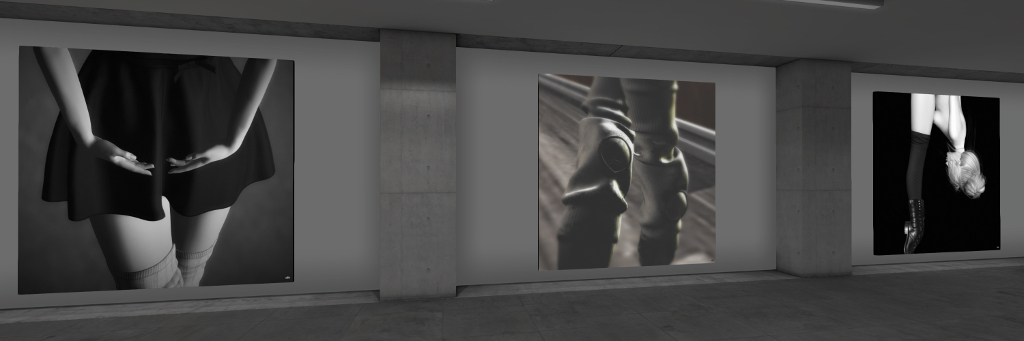
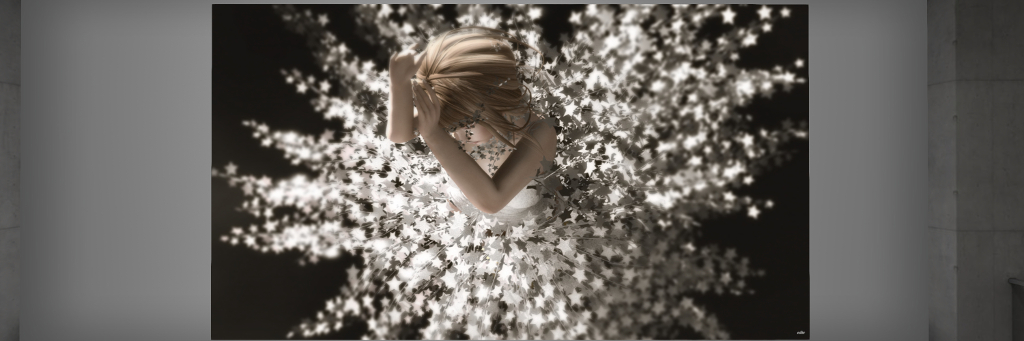
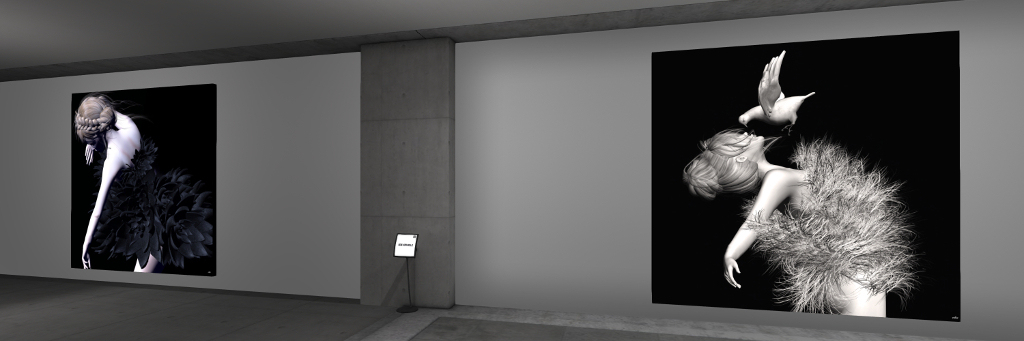
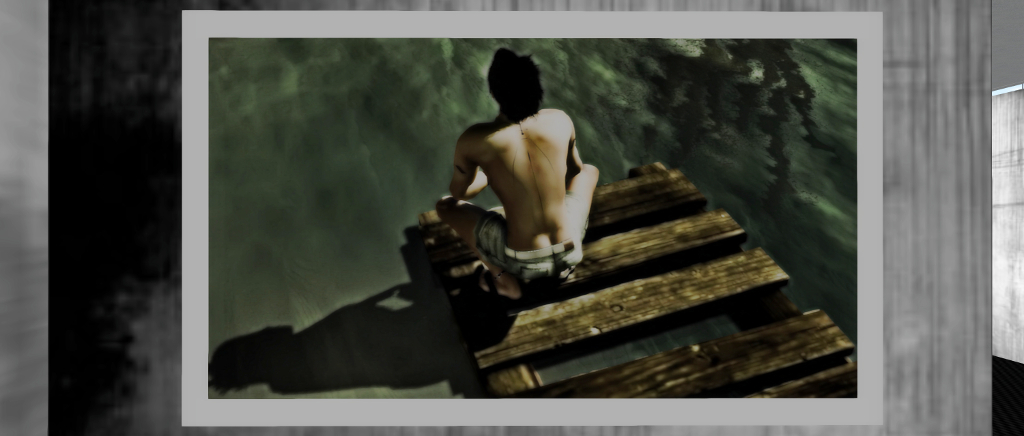
For her exhibition, Jules presents a set of six self-portraits, each of which offers a life study and a broader narrative into which it can be framed. Each is powerful in both presentation and the story to be found within it, perhaps made that much stronger through the use of a monochrome finish.

The narrative for each piece is suggested through both the image and its title – and I do recommend looking at each of these pieces both independently of their titles – that is, before taking a peep via Edit – and after. Doing so can often result each perhaps has two stories within it – one shaped by first seeing it, the second by the title itself; making a visit double the viewing pleasure.

Artful Expressions: Jules

A small, intimate exhibition of some genuinely engaging and imagination-stirring art marks the welcome return of a boutique gallery that has been missed these last few months.  It will remain open through until the end of November 2018.

SLurl Details

Artful Expressions (Niaoupolis, rated: Adult)

The rural delights of The Peak in Second Life

The Peak; Inara Pey, October 2018, on FlickrThe Peak – click any image for full size
Note: The Peak is no more, as such SLurls have been removed from this post.

A photogenic community sim, with a European-countryside theme. A full sim with a selection of areas to explore, interactive games to play, rides. We are very voice friendly. We provide rentals as well. Tags: Music, open mic, karaoke, blog, carnival.

So reads the introduction to The Peak // Community, a new full region offering – as noted – a mix of public spaces and private rentals. Designed by KaidenTray, the region recently opened its doors to the public, and I was alerted to its presence by Shakespeare and Max, who had dropped in a couple of days prior to my own visit.

The Peak; Inara Pey, October 2018, on FlickrThe Peak

There are a couple of remarkable things about this region. The first is the sheer visual appeal it presents, brining together a mix of elements together in what is as very photogenic setting that makes excellent use of the full 30K land capacity available to Full private regions. The second is, that as he notes in his Profile, Kaiden is a member of the Osbourne family in the physical world, and is not shy about the time he spends in Second Life (where he also runs a landscaping business).

While described as a “European countryside theme”, The Peak perhaps most clearly has its roots in rural Britain in terms of overall approach and styling whilst also casting its net far wider than just the UK and Europe. The country church and many of the houses would not look out-of-place among the rural byways of England, whilst the rugged nature of the landscape perhaps carries with it a hint of Scotland; even the wooden chalets out on the southern side of the region suggest the holiday camps from the days before air travel became cheap enough for almost anyone to enjoy.

The Peak; Inara Pey, October 2018, on FlickrThe Peak

But so too does The Peak carry within it hints of the continental life, thanks to a large Tuscan style villa sitting towards the south-east corner, at the end of one of the semi-paved roads. Just below this sits a little coastal village, slightly separated from the rest of the region by cliffs and rocky slopes. With the brightly painted frontage of the buildings, this could easily be a place sitting on the Spanish coast – as the signage over doorways further suggests.

The more North American feel is evident on the north side of the region. Here, and to the east, a carnival sits, separated from the rest of the landscape by a narrow L-shape gorge. This is marked by the gentle rotations of a tall Ferris Wheel and the twisting madness of a roller coaster, while the derelict walls of a massive industrial-style building have been converted into both a bumper car arena and a gallery of street art, some of which carries a social message. It is here, perhaps that some of the region’s entertainment events will be held: parked within the carnival is a flat-bed truck, ready to serve as a stage for activities, while table games  sit close by as an alternative from for entertainment to the park’s rides.

The Peak; Inara Pey, October 2018, on FlickrThe Peak

Meanwhile, to the west, a large sign points the way to the expanse of a trailer park proudly flying the Stars and Stripes, which also incorporates the wooden chalets mentioned earlier.

Quite excellent us is made of elevation throughout the region, with the roads and paths winding up and down slopes, around shoulders of rock, with cobble footpaths twisting their way down to what might otherwise be hidden walks along the edge of the sea, or by way of public courtyard down to the previously mentioned Spanish-themed village. For me, the winding, rise and fall of the principal road through the region again gives The Peak a distinctly English feel, as I’ve travelled along many such single-track lanes in certain parts of England many, many times.

The Peak; Inara Pey, October 2018, on FlickrThe Peak

Being a relatively new region, most of the properties on the region have yet to be rented. Most are easily recognisable by the presence of a green For Rent box outside of them. I assume these boxes will vanish as places are rented, so a good rule of thumb during visits might be to treat the majority of houses, cottages and cabins on the region as rental / rented residences, regardless of whether a rent box is visible or not. For those who fancy being the lord (or laird) of the area, the rental properties extend to a fortified manor house, the church and manse close by adding to the feeling that this part of The Peak may have once formed a landed estate in the region’s past.

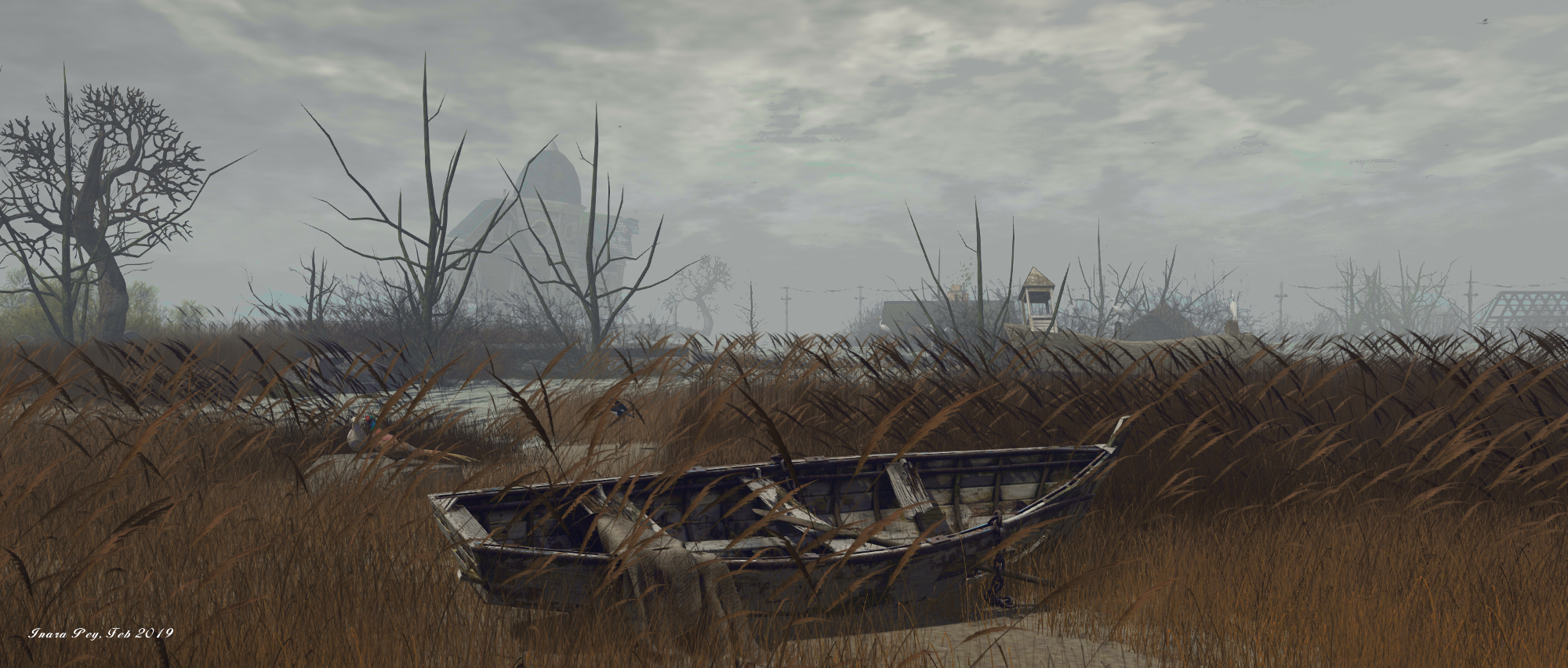
At the time of my visit, some work was still going on within the region, so don’t be surprised if you come across the odd sign indicating this to be the case; there’s also something of a Halloween theme presents as well. But these aside, The Peak is one of the most engaging and considered new regions I’ve visited in Second Life: the wealth of detail, the blending of styles and ideas, the inclusion of a natural and atmospheric sound scape; all of this comes together to present a place well worth visiting, exploring, photographing and simply enjoying. Those who do take photos are invited to share them via The Peak Flickr group.

The Peak; Inara Pey, October 2018, on FlickrThe Peak