Previewing Men in Focus in Second Life

Men In Focus

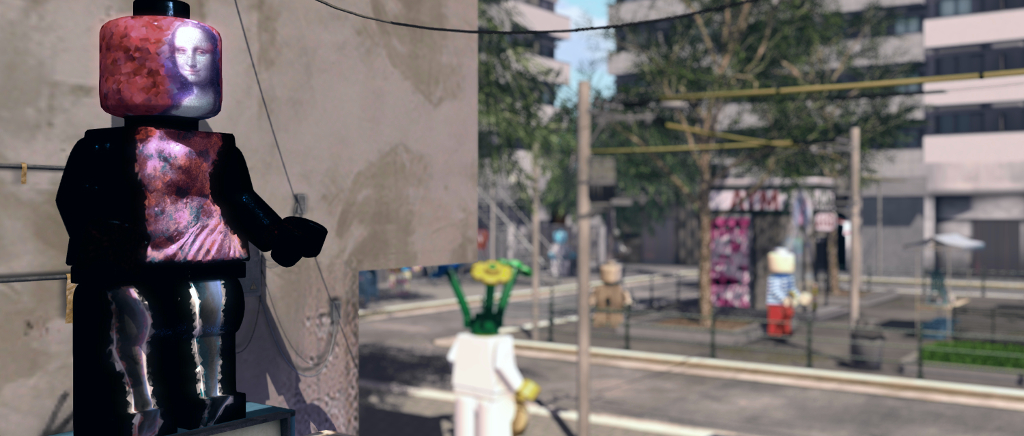
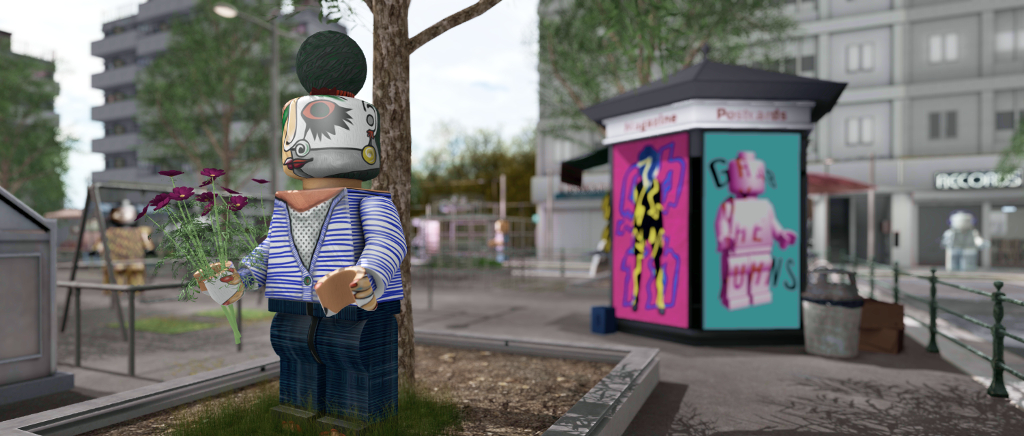
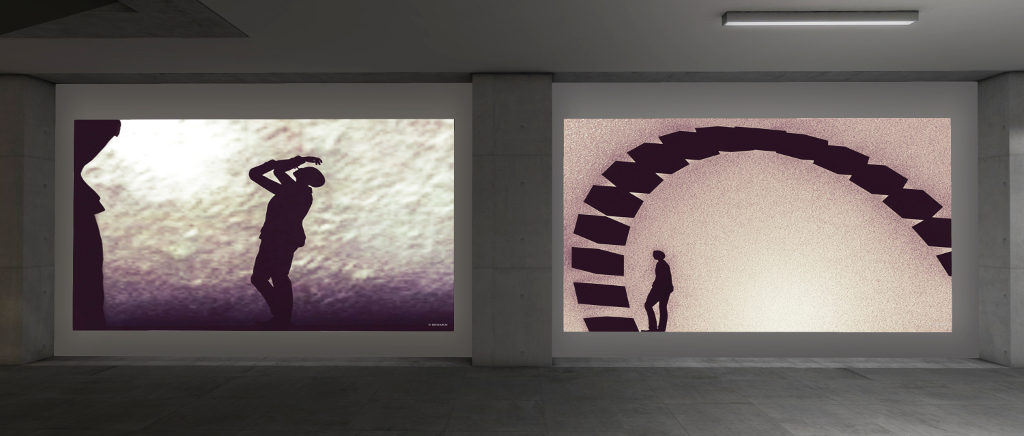
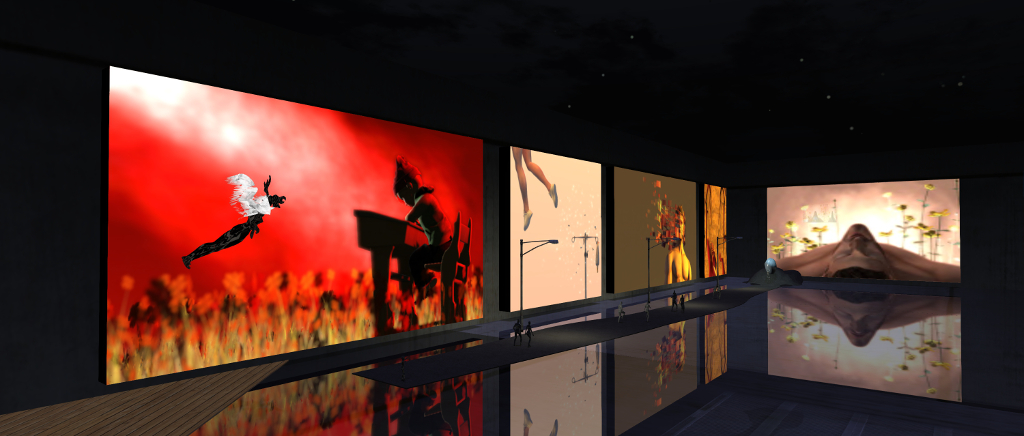
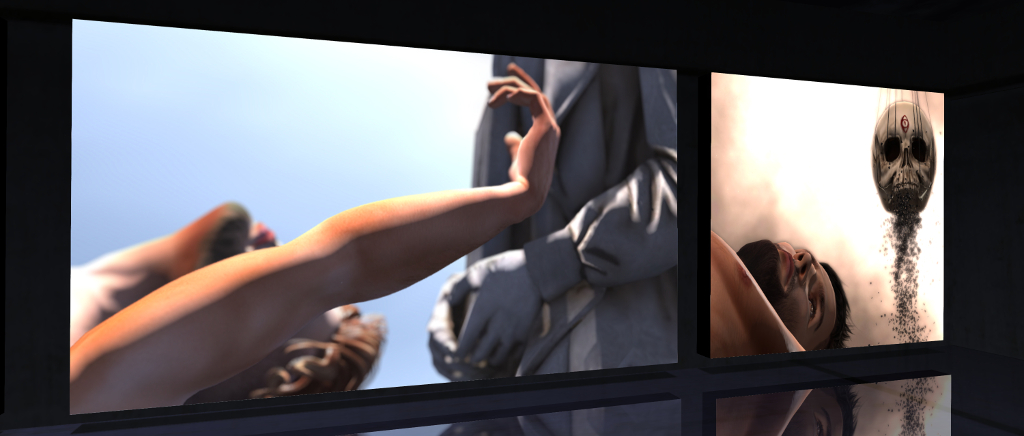
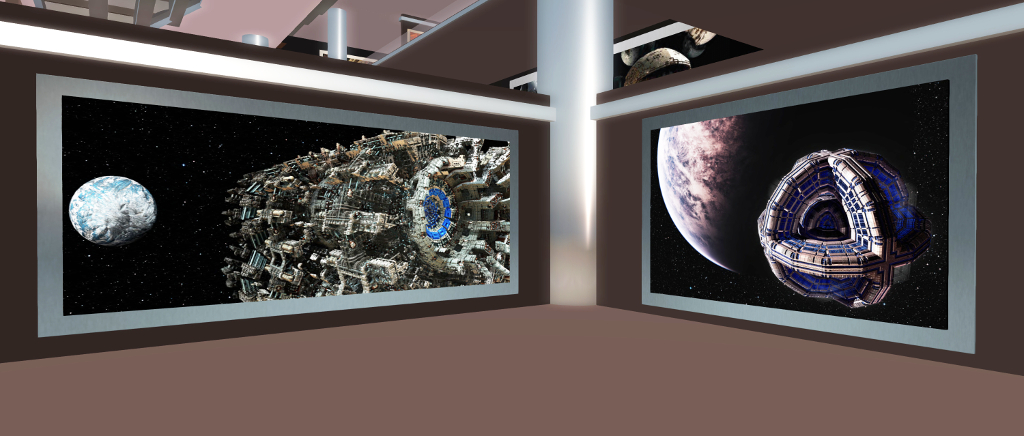
Men in Focus is a new gallery opening on Thursday, November 1st, 2018. Owned and sponsored by Men in Motion, a team of male choreographers and dancers promoting men’s mental and physical health in cooperation with the Movember Foundation. The gallery is curated by JMB Balogh, who invited me to preview the first exhibition at the gallery.

“The gallery features photography and 3D artworks of men at work or play in SL by male artists,” Jo informed me, adding, “There are hundreds of art galleries in Second Life but few, if any, that focus exclusively on the art of men.”

Men In Focus: Slayer Tanaka

The primary aim of the gallery is to showcase 2D art; however for the opening exhibition Jo has brought together both 2D and 3D artists, with works displayed across the multi-level gallery space that offers plenty of room for it to be appreciated. Those participating in this inaugural exhibition comprise:

Men In Focus: Jⓞhan Lionheart (Gemini sculpture) and Slayer Tanaka

The opening of the exhibition, set for 18:00 SLT on Thursday, November 1st, 2018, will be the kick-off event for the 2018 11-day Movember fund-raiser hosted by Men in Motion, and which will culminate in a spectacular dance show highlighting their choreography skills.

The schedule of events for the November fund-raiser comprises (at the time of writing and all time SLT):

  • Thursday, November 1st, 18:00: Men In Focus gallery opening, with music by DJ Ame
  • Friday, November 2nd: 20:00: Ladies Night with M@N
  • Saturday, November 3rd:
    • 09:00-11:00 – DJ Hanku
    • 12:00 noon-13:00 – Men In Motion dancer auction
    • 14:00-16:00 – DJ Chopper
    • 20:00-22:00 – DJ Aryanna Draken
  • Saturday, November 10th, 15:00-16:30 – Men In Motion Show
  • Sunday, November 11th, 13:00-15:00 – closing with DJ Cara.

All funds raised during the event will be donated to the Movember Foundation.

Men In Focus: Alex Avion and Kavika Lowgun

About the Movember Foundation

The Movember Foundation is a multinational charity raising awareness of, and money for, men’s health and welfare, with a focus on cancer, mental health and suicide prevention. Its titular and widely known campaign is Movember, which encourages men to grow moustaches during the month of November. The foundation partners annually with the Distinguished Gentleman’s Ride to also raise money for men’s health.

Founded in 2003, in Melbourne, Australia by Adam Garone, Travis Garone, Luke Slattery, and Justin Coghlan, the organisation attained registered charity status in 2006, and as of 2014, has raised over US $580m in charitable donations used to fund more than 800 programmes focusing on prostate cancer, testicular cancer, poor mental health, men’s health awareness and healthy lifestyles. It is active in 21 countries and has a global workforce of 130 people. In addition, Movember coincides with International Men’s Day (November 19th), which among its aims, shares the goal of promoting the health and well-being of men and boys.

SLurl and URLs

In a KÖMA in Second Life

KÖMA

JadeYu Fhang has a reputation for being one of the most visually evocative artists in Second Life, her installations often plumb the depths of the human consciousness and psyche (examples: Roots and War, Everywhere and Nowhere and OpeRaAxiEty), and this is certainly the case with her latest installation, KÖMA (coma).

Billed as a “limited-time multimedia art installation”, KÖMA is at once intricate, dark, confusing, and  – perhaps ultimately – revealing.

The intricacy of the installation is apparent on arrival, as is the confusion. Panels around the sides of the region, one of them flashing and flickering slowly with individual screen-like patterns, towering high above the visitor and imparting a sense of insignificance. Clouds scurry across a void like sky, a basso rumbling filling the air. Alongside the landing point rises a strange structure, looking to be one part exotic lighting rig, two parts science-fiction drone. Screens at the base offer information on how to view the installation (in short: there’s no route or TP – you walk around the base level and level up to the upper level), while at the top is an armless female torso supporting another computer screen as its head.

KÖMA

Behind this, within the region are a set of surreal scenes. Two giant heads rise from the mirror-smooth base of the installation, a swirling mass of what appears to be rose petals caught in a frozen swirl around them to rise towards the upper platform of the installation. Supported by another of the strange devices, this platform is home to a tableau of female figures, sitting and standing amidst flicking, ghostly projections and with most facing a large screen. What appears to be filaments of lightning flashes from their eyes and arcs around some of their bodies. Below them, peculiar female forms, arms replaced by insect legs and heads by computer monitors, are arrayed while screens on the supporting device flicker with images that might be medical in nature or represent memories, while all around this scene is a further rolling booming of sound and a voice echoing a single word köma.

Central to the installation is a golden female form, apparently frozen in the act of being struck down. She is also surrounded by a pattern of rose petals, caught with filigrees of white lightning-like light, also in stasis, and few of which – perhaps tellingly – either commence or terminate in her head. On the mirror surface around her, patterns of vein-line lines drift endlessly outwards, while a close by a “rain” of flicking gold leaves falls, each one of which reveals itself to be a tiny, flicking screen when examined.

KÖMA

With the exception of the rose petals and the golden “leaves”, the majority of the installation in monochrome in nature, giving it – along with the foretelling deep booms and rumbling – giving the installation its dark edge. It is also a scene reflected in the mirror-like base I mentioned, which around the kneeling figure is disturbed by drifting patterns of red lines looking like veins of blood.

But what do we make of all this? I think the clue is in the title. Comas are a medical condition filled with a certain mystique. We know what the external physical characteristics of a coma are – but what is actually going on within the victim’s head when they are within a comatose state – so often those surviving a coma and regaining their faculties suffer from post-traumatic amnesia (PTA) which affects their recall of memories – including anything their brains may have experienced whilst comatose.

KÖMA

In this light, many elements of the installation fall into place: the figures, the flashing images of figures and faces are perhaps the flicking memories or experiences the brain plays to itself whilst otherwise seemingly unresponsive to external stimuli; the strange devices become medical tech; the rose petals become blood corpuscles, vital in their role in carrying oxygen to the brain to keep it functioning and to life as a whole; the lightening-like filaments perhaps represent the flash of electrical links between synapses, and so on. So to does the figure falling to her knees perhaps represent the victim of a sudden event – a stroke or similar – collapsing, her situation triggering a comatose state as the rest of the strange figures and the echoing rumble and boom suggest the distant intrusion of medical on the comatose mind.

When interpreted in this way, the dark tones of the installation roll back, and we find ourselves immersed in an environment intended to evoke what it might be like to step into another’s coma and witness first-hand what is going on deep within the subconscious, well away from the accepted signs of neural activity and responsiveness.

KÖMA

But that is only my interpretation. You may find KÖMA speaks to you differently. It awaits your discovery.

SLurl Details

  • KÖMA (LEA 22, rated: moderate)

The art of Milly Sharple at Holly Kai Park

Holly Kai Park: Milly Sharple

I have long been an admirer of Milly Sharple’s art, and so I’m absolutely delighted to be welcoming her to Holly Kai Park Gallery for an extensive exhibition of her work starting at 15:00 SLT on Sunday, October 28th, 2018 and running through until Saturday, November 24th, 2018.

Milly is perhaps best known for her fractal art, beautiful pieces she produces using Apophysis, software she prefers to use as it allows the creation of soft, flowing, liquid effects that can allow her work to stand well apart from other, more rigidly geometric fractal art in Second Life. What may not be so well-known is that Milly was perhaps one of the pioneers in bringing fractal art into Second Life – although her initial attempts to do so met with some resistance.

I had no idea there was an art community here. But when I discovered it, I became really excited about it! Naturally, my thoughts turned to showing my own work in Second Life, and I made some enquiries only to be met with negative responses, that such are was not “suitable” for SL and was even told fractal art was not “real” art…

– Milly Sharple, discussing her art and Second Life

Holly Kai Gallery: Milly Sharple

Fortunately Milly who has seen her “not real art” fractals used on book covers, CD cover art and even on the cards issued by an Indonesian bank to their customers, as well as selling privately around the globe – did not take the negative feedback to heart. Instead, she established her own modest gallery on her own land, and within 12 months she had received multiple invitations to exhibition her work across Second Life, such was the positive response people had to seeing her work.

Becoming more deeply immersed in the Second Life art community, Milly sought to support that community by establishing Timamoon Arts, a place where artists – especially those new to art in SL or who were using the platform to express themselves through art – could find a gallery home and like minds. Over four years, through until 2017, Milly grew Timamoon into a successful and popular art communities, hosting a rich diversity of artists and exhibitions.

Holly Kai Gallery: Milly Sharple

While her fractal art is perhaps the most well-known, it is not the only art Milly produces; she also works with mixed media, creating art that is both incredibly intricate and stunningly beautiful. The use of colour, coupled with the almost etching-like finish to many of the pieces brings them to life in a remarkable way. Whether floral representations, animal studies or pieces with a more fantasy edge, or presenting an image such as a portrait through the use of fractals, these pieces are utterly captivating.

Second Life has also allowed Milly to turn her hand to 3D art, producing pieces that are both practical as well as art forms, such as her hand chairs; or which is exquisite artistic statements, as with her Humanitree pieces. We’re pleased to have examples of both included within the exhibition at Holly Kai. Nor does it end there; Milly has also justly won praise for her region landscaping, notably with her winter-themed Let It Snow! designs, which she is hoping to continue in 2018.

Holly Park Gallery: Milly Sharple

Multi-talented, with a photographer’s eye for art and design, Milly presents art that is always visually captivating, and it is both an honour and delight that she accepted our invitation to exhibit at Holly Kai Gallery. To mark the opening, we will be hosting an event at the rooftop area of the Holly Kai Gallery from 15:00 SLT on Sunday, October 28th, 2018, with music provided by Joy Canadeo, and warmly invite friends of Milly, the Park and this blog, as well as all lovers of art, to attend. Formal / semi-formal dress preferred.

SLurl Details

Holly Kai Estates is rated Moderate.

Purple Leonis: Witch at DiXmiX

DiXmiX Gallery: Witch

Opening at 12:00 noon on Saturday, October 27th at DiXmiX Gallery is a special exhibition of art by Purple Leonis ONeill (Nel4481). Entitled Witch, it celebrates the mystery and mysticism of Halloween as a time of witchcraft and dark magic by recalling the story of a woman whose fate is very much tied to black magic and dark arts.

Welcome,

My name is Madeleine and I’m a witch …. well …. I was … here is my story.

Thus we are introduced to the protagonist of the story, a woman who went against her times to seek out the forbidden, to communicate with the dead, and to join with other women of like mind to found a coven.

DiXmiX Gallery: Witch

Though brief, the story colours her life sufficiently for us to track it from that first evening of temptation through until her death at the hands of local villagers. It is a story reflected in the  images arranged into the lower and upper floors of the gallery’s Grey Hall, itself decorated to presented a suitably haunting look.

The images are striking both in their richness of character, and in the manner in which they both illustrate and add subtext to Madeleine’s tale. Some show her awakening through subtle means: a seemingly gentle evening game with a cat (felines – albeit generally black ones – being the usual familiar for witches) or the innocent-looking brush of fingers over a Bible. Others are more direct: caught in a Ouija board induced trace, naked dancing around a night-time fire in the depths of a forest and – ultimately, trapped at the stake as the flames rise.

One night, everything has changed. Village men came to capture me. That night sounded my end….
Beaten, maltreated, tied up by the villagers, I was tied to the pyre of those condemned for witchcraft.

DiXmiX Gallery: Witch

With – again appropriately  – 13 images in total, the exhibition sits as both a display of art and – in a sense – a graphic novel telling Maeleine’s tale. My one small quibble with the story is the date on the tale: 1890, a time long after he period when women would be burned for the perception of their witchcraft.

Music for the opening will be provided by Miss Dee Hannaha, and given the nature of the event  – although it is not openly stated – suitable dress may will be appreciated.

SLurl Details

Loss and life in Second Life

Nitroglobus Roof Gallery: How Isolde Got Lost

Opening on October 25th, 2018 at Nitroglobus Roof Gallery is How Isolde Got Lost, by Arete of Cyrene (AretevanCyrene). It is a complex piece, a story in 14 part;, a story in images dealing with the complex subject of love, loss and healing.

Narrative in art is not unusual; I’ve often referenced it when writing about exhibitions in these pages. But with this particular exhibition, the story is presented through the chronological order in which the pieces are presented, the start indicated by the sign The Story Begins Here, located on one of the inside walls of the gallery space, then progressing from there in a clockwise direction.

As Arete states in her liner notes, mourning is a deeply personal experience, influenced by a number of factors: our closeness to the lost one; their place within our circle of family and friends and how they react to the loss; religious and social factors, and so on. In her book On Death and DyingElisabeth Kübler-Ross outlined what she saw as the five stages of grief: denial, anger, bargaining, depression and acceptance. A sixth was later added, in the form of shock, preceding the other five. But as Arete also notes from her own experience the stages of loss can be more complex and can extend beyond just six stages.

Nitroglobus Roof Gallery: How Isolde Got Lost

In particular, the images here have not only been specifically created for the exhibition, they chart Arete’s on experience with loss (one of which also touches on Dido’s story, notably in She Found a New Home….). Nevertheless, the story here in one that is going to resonate with anyone who has suffered loss and grief.  Through them, we travel not only through the six acknowledged stages of grief, but also through the situations and actions that can both move us through them – or return us to one of them.

In this, Arete presents a simple, but forgotten fact of mourning: by labelling loss in terms of 6 “stages”, we tend to look at them as a linear progression: a series of steps from shock to acceptance by way of the other stages, all neatly in order. But the reality is, beyond shock, while we may well initially travel through the remaining stages in the order they are offered, we might also travel back to different stages of grieving. This can be as a result of a number of factors; perhaps as a result of finally packing possessions away, or clearing a closet of clothes that will no longer be worn, or simply witnessing something unexpected through the course of everyday life.

Nitroglobus Roof Gallery: How Isolde Got Lost

The healing process can also be found within the images, the return to “everyday” life; the support of family and friends; the taking up of new activities and filling the void as best we can. Given the personal nature of the images, and the nature of loss, singling out individual pieces in the series isn’t easy. However, it is the smaller, personal aspects of the story – such as Boxes – or the need to talk to the one now gone (which can be a vital part of the healing process: acknowledging that while a loved one might be physically gone, we can still keep them with us through memory as an integral part of us), that particularly struck a chord with me.

Love, listen.

To understand death, she so often talked with him to find spiritual acceptance.

Her words send to address unknown:

“Love listen, I must go on…but when I laugh, I feel guilty. When I forget you in a moment, I feel guilty. Please, try to understand, I love you and miss you so much but I have to let go of that guilt. Love listen, walk with me each day and we make that day together. Sleep with me each dark hour and share my dreams till we walk on the same soil.”

– Arete of Cyrene, How Isolde Got Lost

Nitroglobus Roof Gallery: How Isolde Got Lost

There is more here as well; the images are not only unique to this story and exhibition, they are wonderfully constructed in 3D. To see the intricate layering of this, I recommend enabling Advanced Lighting Model and setting graphics to at least High. Also, do make note that the story can also be followed through a website created by Arete, and accessed by clicking the first image in the series for a link.

An exhibition of enormous depth and message, How Isolde Got Lost is a must see. And please note that while individual image are available for sale, all proceeds will go to The Catboat in Amsterdam, the only animal sanctuary that literally floats, sited on a canal. A tip jar for the charity is also available in the gallery.

SLurl Details

Blip Mumfuzz at Black Label in Second Life

Blip Mumfuzz: Photographs

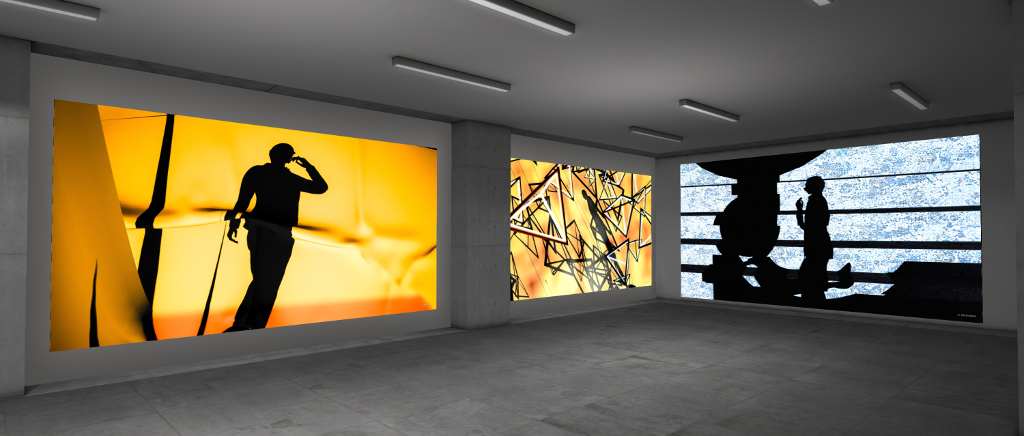
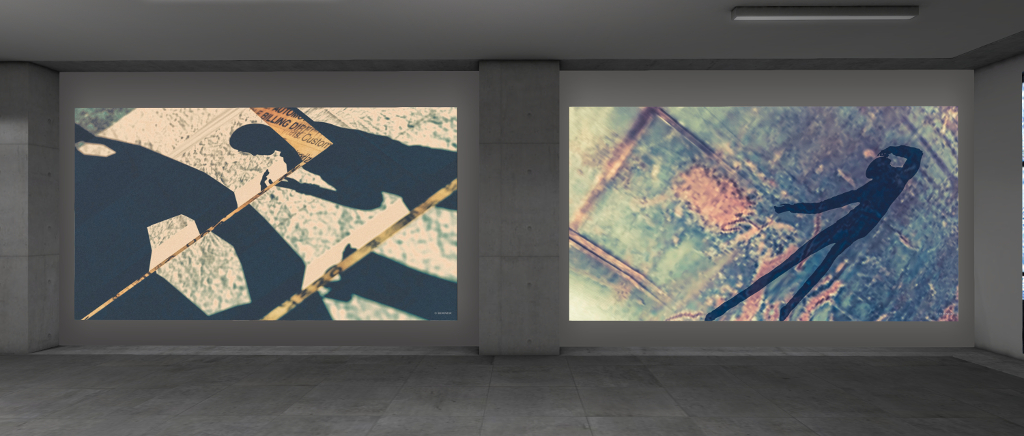
Now open at the Black Label gallery is a new exhibition of art by Blip Mumfuzz.  Located in a sky gallery area reached via teleport from the gallery’s landing point, the exhibition can be found both indoors and out, within a large warehouse-like building in keeping with the gallery’s ground level facilities, on its outside walls and across the street. Also note that one of the “backdrops” to the setting is also one of Blip’s pieces.

Blip’s photography started as a means of recording her travels through Second Life in order to help her revisit them through memory. However, as she states in her liner notes for the exhibition, the focus of Blip’s images gradually shifted from capturing settings to capturing individual scenes or objects. In doing so, she started looking at potential subject from a variety of angles – and even as spaces between them to discover the stories they might offer.

Blip Mumfuzz: Photographs

I found that once I found saw something interesting I’d start moving the camera around. Looking over and under, behind and between. I began looking less at the things themselves…but at the visual and spatial relationships between things.

I am an improviser by nature…in life and in my art. My images are typically the result of an unplanned, spontaneous interaction with my environment. Some of the images in this exhibit, however, are more narrative.

– Blip Mumfuzz discussing her art

Blip Mumfuzz: Photographs

All of this is reflected throughout this exhibition, which Blip has opted to simply call Photographs.  Several are what might be called “conventional” images of places Blip has been: Ashemi Reprise, Keleland, Takeuti Town; while others are beautiful abstraction on locations, such as Kekeland Abstract 9, The Last Forever, BL Abstract and Drapes, to name but three.

It is these latter style of image, coupled with Blip’s vibrant use of colour, that perhaps tend to grab the observer’s attention, drawing the eye into them through the richness of colour and unusual perspective.  These show their location through an unusual perspective or offer a remarkable perception of space through their panoramic presentation, marking them as attention-taking pieces. However, among the bright paintings are a number that are more muted, their softer tones contrasting strongly with the bolder pieces. This gives the exhibition an added layering of effect; it is as if the brighter images are the loud extroverts at a gathering, demanding their presence is witnessed and their story heard. Meanwhile the softer toned images scattered among them come across as the introverts; they try to pass unnoticed, content to allow the other make all the noise – but their story is no less compelling when heard.

Blip Mumfuzz: Photographs

I’m not actually clear on when the exhibition closes; I assume it will be around mid-November, given it opened on October 13th. However, I do recommend taking the time to see it before then.

SLurl Details

Blip Mumfuzz at Black Label Gallery (Eternal Posession, rated; Moderate)