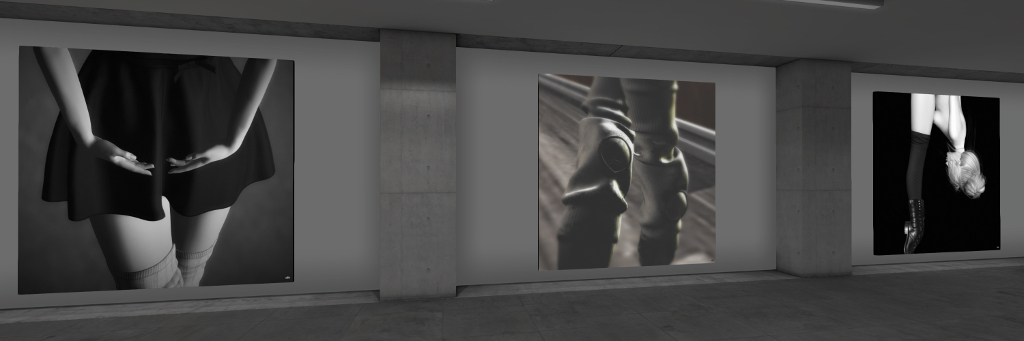
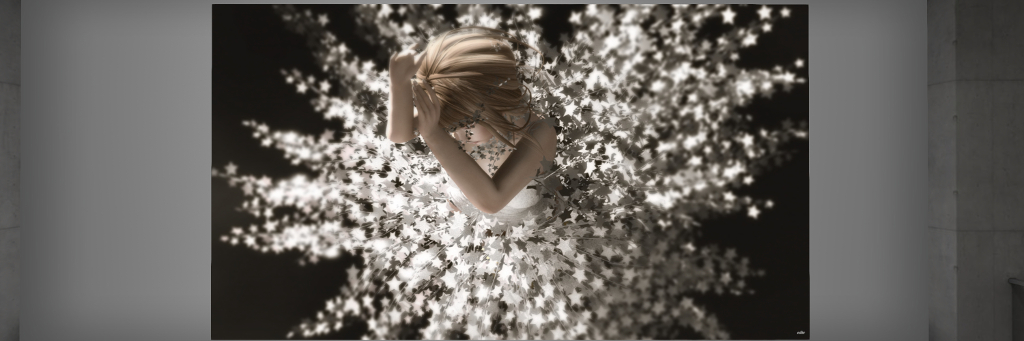
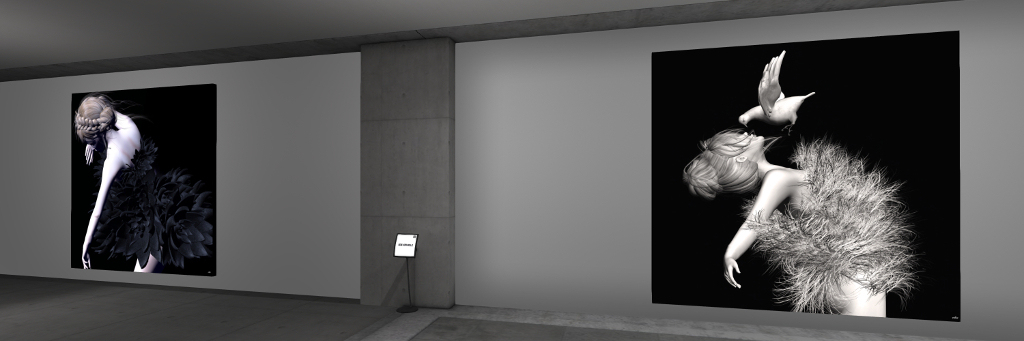
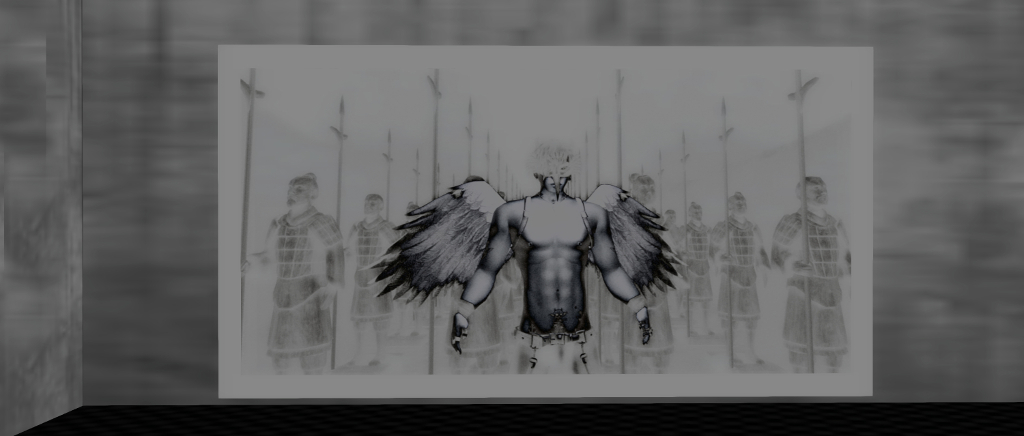
Now open at DiXmiX Gallery, curated by Dixmix Source, is an exhibition of art by Edie Horngold entitled What’s the Pointe? It is located in the gallery’s White Gallery exhibition hall on the mezzanine level, and as might be hinted at in the title, it has something of a ballet theme to it.
On display are 13 images presented in black-and-white or soft tones, each focused on a dancer, either in full or on a specific aspect of her dance. or attire – such as ballerina flats in the case of the latter, or the hands placed in premiere en bas in the case of the former. Some present poses that might not be considered “traditional” ballet poses, but certainly echo the central theme.
The use of black-and-white / soft tones causes the eye to be drawn into each of the images far more effectively that had they been rendered in colour. It also gives them a crisp depth that gives them a degree of life that again, might not be as evident were the images produced in colour.
While it is likely to be accidental rather than by design, the monochrome nature of What’s the Pointe? offers a powerful and engaging contrast with My Anonymous Shadow, the exhibition of work by Dixmix Source on display in the Grey Gallery hall, and which you can read about here).
The latest exhibition at Club LA and Gallery, curated by Fuyuko ‘冬子’ Amano (Wintergeist) opened on Sunday, February 10th, featuring the art of Dodo (DodoAhanu).
Located on the gallery’s ground floor, the exhibit presents 18 of Dodo’s images that span his photography from 2013 through to 2018, offering a mix of landscape, art and avatar studies, making this exhibition an engaging introduction to Dado’s work and evolving style for those of us previously unfamiliar with his work.
Dodo’s landscapes, particularly those presented in a panoramic format, are sweeping in their extent. There is also a quality about some of them that suggests while they were taken within Second Life, they are somehow a window onto the physical world. Meanwhile, his avatar studies include two self portraits, although it is Silent Moment that particularly caught my eye; it has that richness of narrative I so enjoy finding in images.
However, it is in two of the “earliest” pieces in the exhibition (“earliest” in that they date back to 2013 and 2014 respectively) that particularly captivated me: PRAVDA dark couture and The Ballet I. Both are very different to one another and to the other pieces presented. The latter demonstrates a wonder use of projected light and shadow to create an image, while the former is simply marvellous in the use of tone, light, and processing to create the impression of a drawing straight from the artist’s hands.
Storie’s Helendale (GlitterPrincess Destiny) has a reputation for producing thought-provoking installations that often combine narrative and art. Such is the case with Kiss Like a Blow, which opened at the Black Label Exhibitions Centre on Saturday, February 9th, 2019.
Reaching the installation is a two-step process: take the teleport sphere from the gallery’s landing area up to the introductory area, where some essential information on the installation can be found – and should be read. Once done, a second teleport sphere will carry you up to the installation proper.
This project was done in regards to No Violence by 2lei … Only I chose to do my own Story, my way. A strange love story, somewhat – twisted. Is this your story?
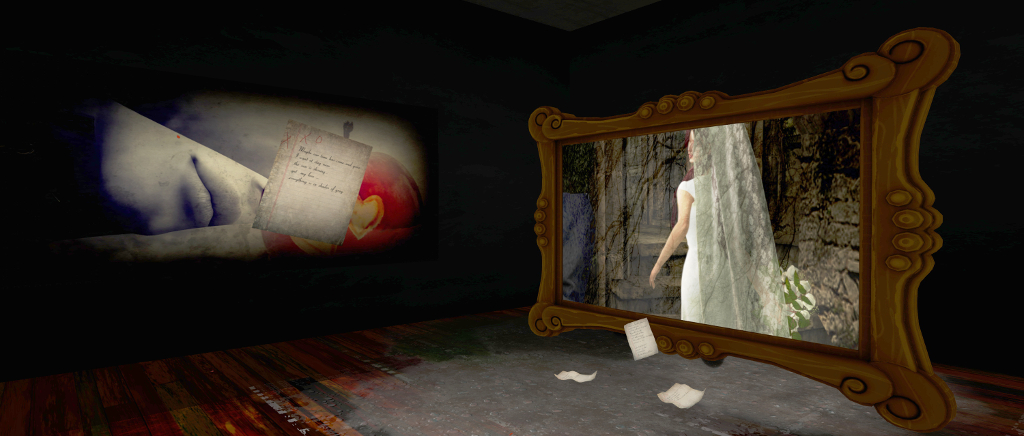
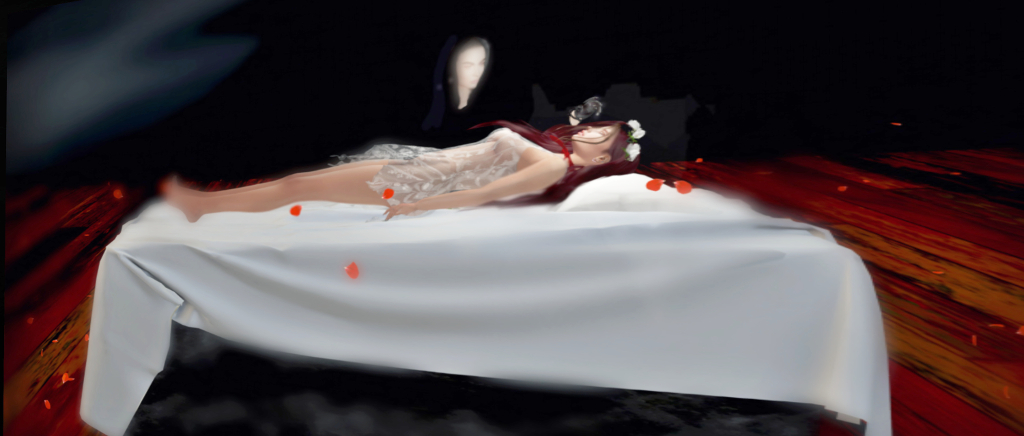
This takes the form of a house sitting within a winter setting – and given the focus of the installation, I would say this winter setting is intentional, as the coldness reflects the core of the story. Within this house are five rooms and six diaries. On the walls of each of the rooms are pictures that tell the story of what should be the happiest day in the lives of two people in love, a story reflected in the diaries.
The latter are to be found throughout the house, at least one per room. Some are hidden in plain sight, others will need to be found. The story they reveal is written from the perspective of the female half of the couple. As Storie’s hints, this is not the usual tale of a couple in love – but it is a story thousands of women will recognise, and one so unfortunately often the subject of news reports.
At 2lei and One Billion Rising (which will once again be taking place in Second Life on Thursday, 14th February 2019), the vast majority of violence against women and girl is of a domestic nature perpetrated by loved one, be they a spouse, a partner, a parent or a relative.
Women caught in these situations are often unable to break out of a cycle of love and violence. It is a harrowing, heartbreaking situation; one in which physical blows are seen by the victim the equivalent of kisses, and manipulation viewed as an expression of love; where the emotional need for love and affection overrules the instinct for self-preservation.
All of this is reflected within Kiss Like A Blow, offered both as a means to bring the plight of so many women into the light – and perhaps a means of holding a mirror to those who might be all too familiar with the story through their own lives, and by doing so, perhaps encourage them take steps to end their own cycle. Hence Storie’s comment: Is this your story?
It’s a dark subject, but one handled with care and concern for the subject by Storie’s. The narrative is presented in blank verse, the images intentionally stepped away from pictures of overt violence – something that makes Kiss Like A Blow a poignant installation.
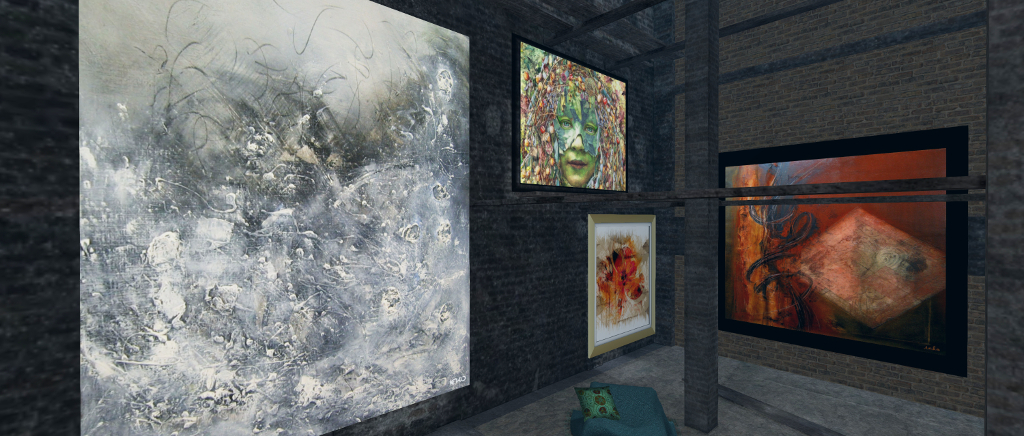
The Art Collector: Ieko Catnap (l and far r), Tigre Milena, and Charles Hera
The Art Collector is the name of Kayly Iali modest gallery of art she has collected in-world over the time she has been engaged in Second Life.
Located on a cosy beach parcel, the gallery has recently been expanded underwater, with an annexe sited beneath the waves and under the sands of the beach itself, leaving only the cabana housing part of the exhibition visible to visitors on arrival. Access to the underwater section of the gallery is gained via a teleporter hidden within a group of three flagstones in the sands of the beach.
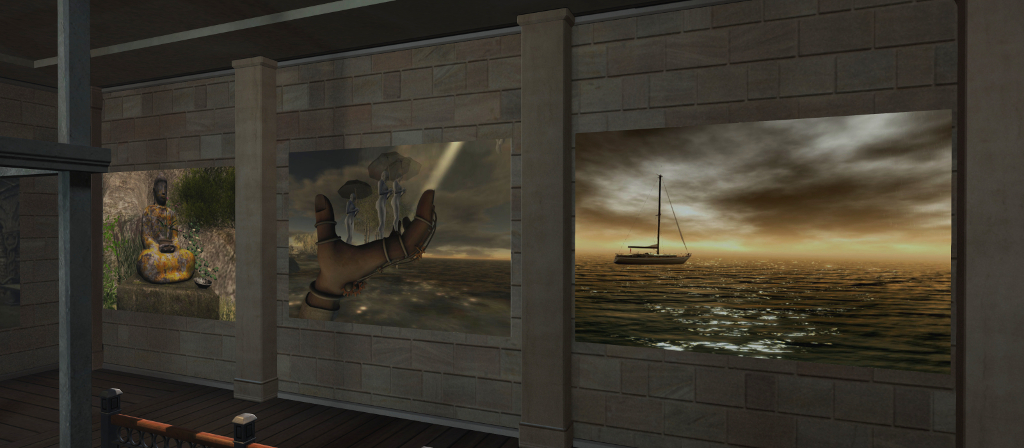
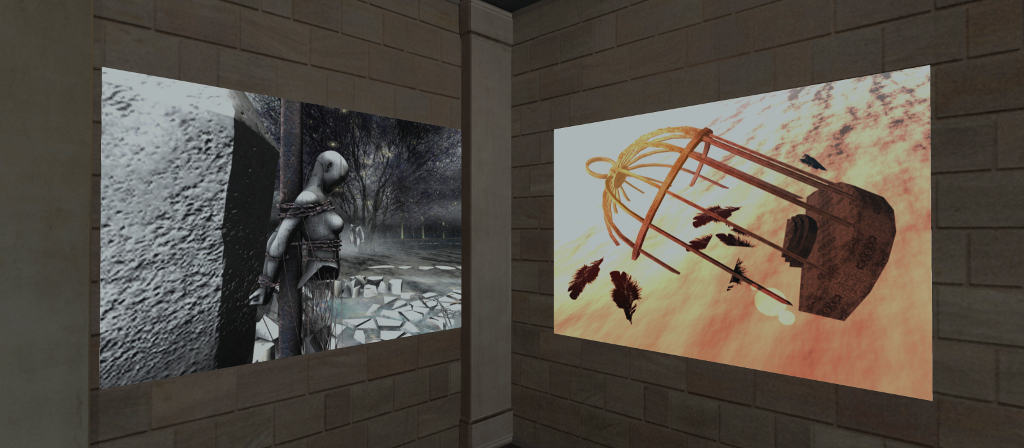
The work on display covers both physical world and SL art by a number of artists active in Second Life, including Silas Merlin, Tigre Milena, Ieko Catnip, Milly Sharple, Asmita Duranjaya, John Brianna, and Kayly herself, to name but a few.
The underwater element of the gallery is split into two parts: a wall courtyard and the ruins of what looks to have been a large industrial building, its walls still standing, but the glass of the windows and the tiles of the roof long gone. Art is displayed on both the walls of the courtyard (which also help point the way to the doorless entrance to the building) and within the building itself. Most of the images here are offered in a large format, allowing for detailed viewing.
From the beach, a second teleport offers a way up to a garden in the sky. There is no art offered there (or there wasn’t at the time of my visit), but it does offer a quite place to relax.
There are two very different exhibitions we recently visited. Each is being held within boutique galleries , and both are very different to one another, involving the of work of two very talented Second Life artists.
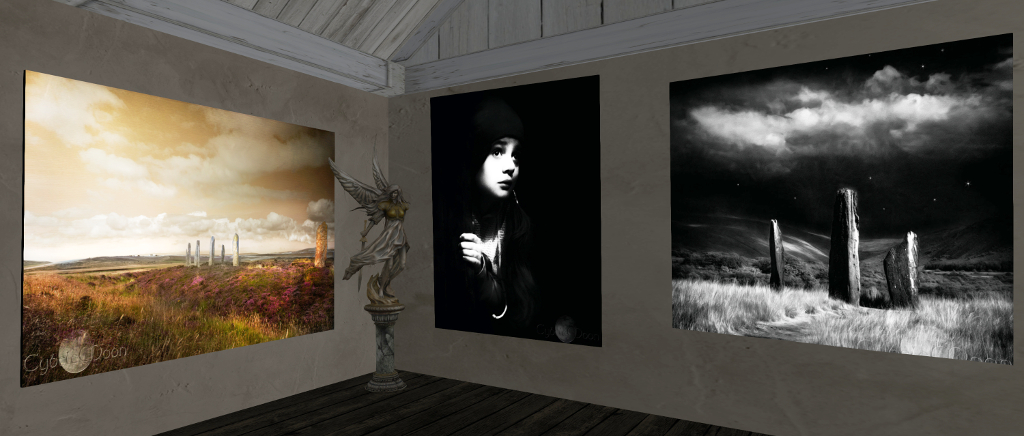
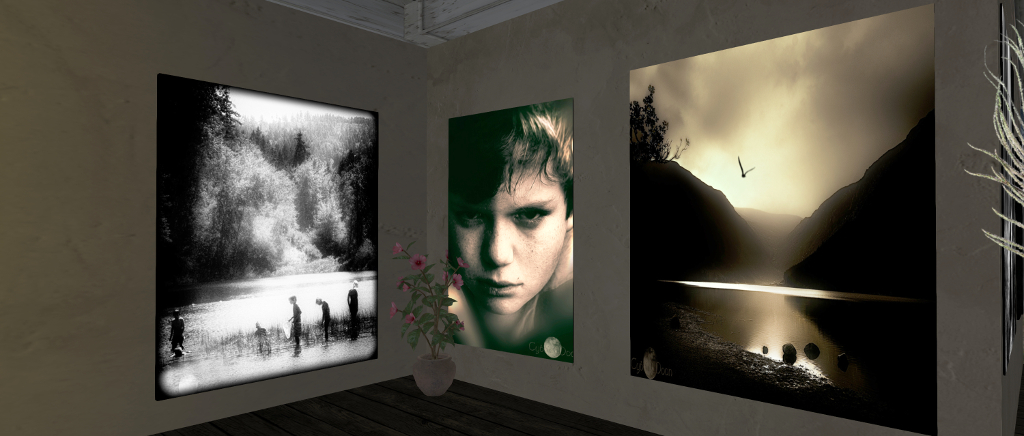
The first is People and Places, portraits by CybeleMoon, which is presented at the Liquid Sky Gallery, curated by Cassandra Ushimawa. It features, as indicated by the title, the remarkable photography of CybeleMoon (Hana Hoobinoo), featuring some fourteen marvellous photographs of people and places.
Those who read this blog regularly will know I’m an unabashed admirer of Cybele’s work; as I’ve previously noted, she is without doubt one of the most expressive fantasy artists in Second Life. However, for this exhibition, she presents a series of photographs all of which appear to have been taken in the physical world (although Remains of the Day might have admittedly originated in Second Life).
Predominantly black-and-white, although some are presented in soft tonal colours, and balanced between portraits and landscapes, these are pictures beautifully presented, each with its own story to tell – one or two quite literally, as touching them will offer a note card with an excerpt of a story. The portraits are utterly captivating in their depth of humanity and life, while the landscapes are marvellously evocative; the sheer wild beauty of the Ring of Brodgar is wonderfully caught in Cybele’s photos (see at the top of this article), for example, while Dublin is perfectly framed with Ha’ penny Bridge.
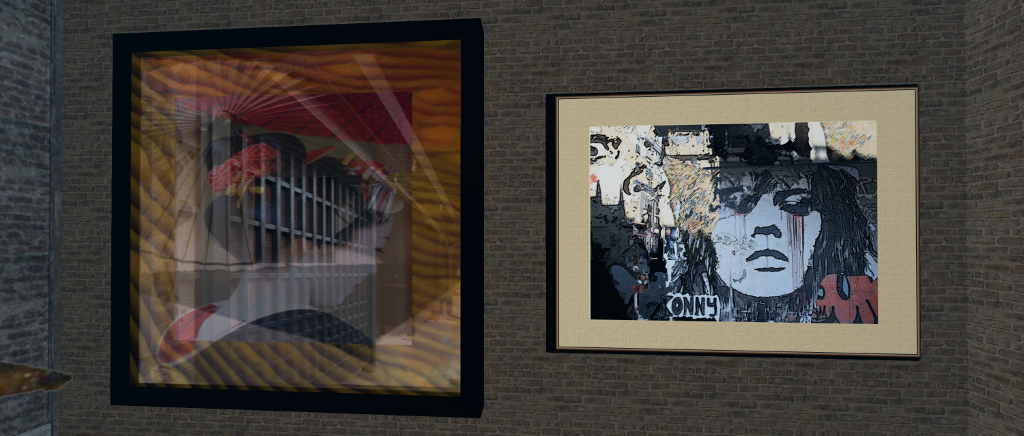
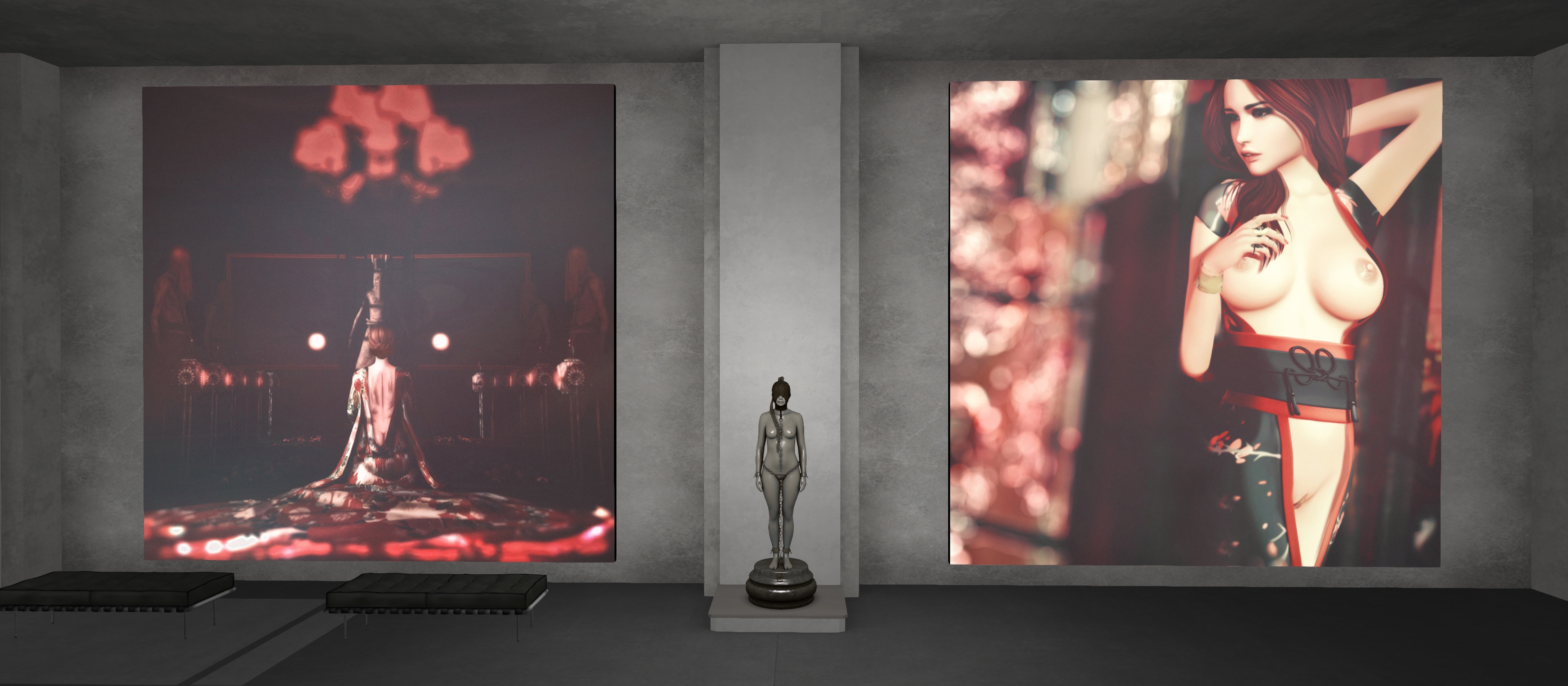
For its inaugural exhibition, Aggregate Gallery, curated and operated by Brinsen Davis, features an adult-oriented display of art by Megan Prumier, which might be considered NSFW.
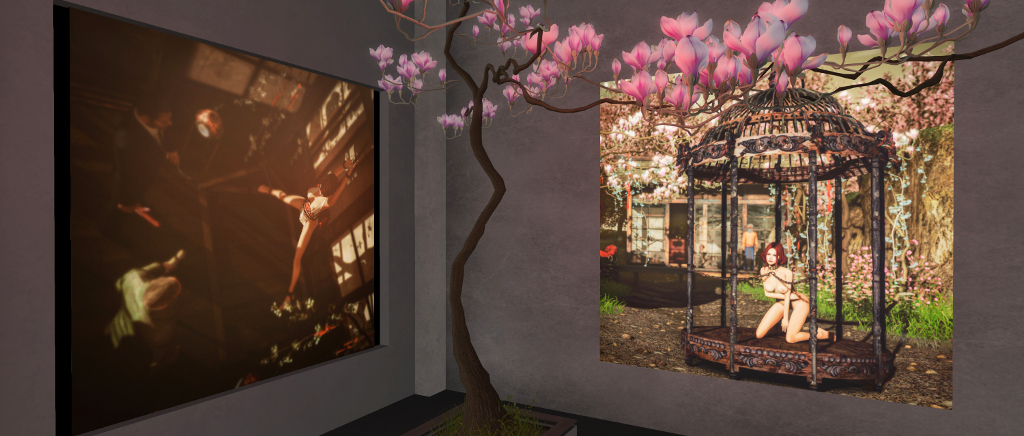
Orient Excess also presents fourteen images, all of them avatar studies, the majority semi-nude and focused on the eroticism of milder Japanese shibari / kinbaku rope bondage. As such, this exhibition might not appeal to everyone – but there is no denying the artistic expressionism available with each of the images presented within it, both in terms of the sensuality of the bound figure (whom I presume is Megan), and the overall framing, focus and tonal quality of each image.
The oriental element of exhibition is also contained within the overall setting presented across the two floors of the gallery. These furnishings reflect the Japanese and D/s / BDSM elements of the exhibition. In fact, they more than reflect: they are a part of it, adding further depth to both the setting and the theme. Shibari / kinbaku is about aesthetics; thus by incorporating Japanese décor elements into the exhibition, Megan is providing a further visual aesthetic to her work.
This makes for a fascinating exhibition, one that will remain open through until the end of February 2019.
Just off Route 9 as it passes over the Silvercreek Bridge in the north-west of Jeogeot, sits a small island shoulder between the mainland and the largest island within the continent’s great bay. Among the buildings snuggled into the island’s small space is Flossify Gallery, owned and curated by Joss Floss (Jossinta).
The gallery is devoted to promoting “the work of SL photographers working in a naturalistic or experimental style,” with exhibitions generally running through each month. On Saturday, February 2nd, the latest of these exhibitions opened, featuring the work of Anke Zamani.
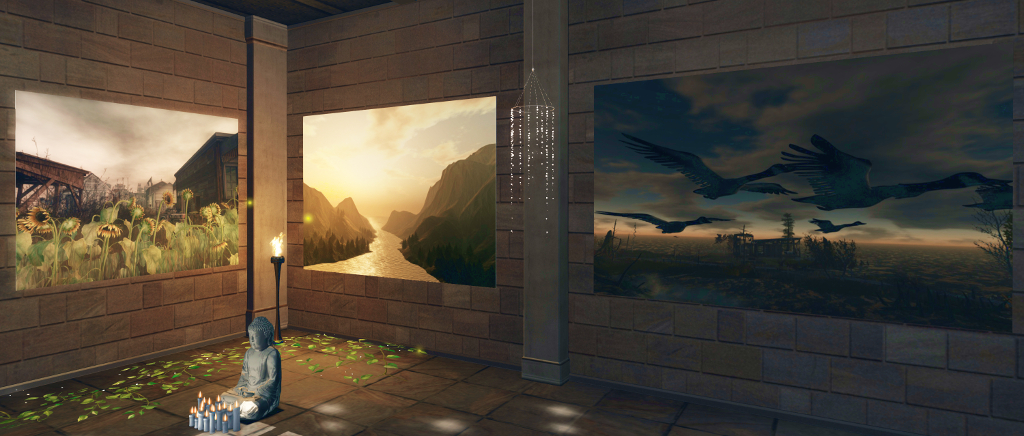
Spread across the three floors of the gallery, Anke presents a series of 27 photographs, predominantly landscapes / nature or studies of art. The majority of the pictures appear to have had little or no post-processing, which in this era of PhotoShop, GIMP et al, makes for a pleasant change, presenting as they do images witnessed as with the eye itself.
This makes for a charming, quite natural exhibition, with each of the pieces offers catching a moment in time to which we can all relate, from sunrises / sunsets through to reflections of time in solitude and / or meditation. Several of the images focus on the work of Mistero Hifeng, and I found these to be particularly captivating; no doubt in part because of my own bias towards Mistero’s work – but it is also very much also due to Anke’s skill in capturing the pieces and their surrounding emotion.
An attractive exhibition that can be visited directly (and you can keep up with news on exhibitions at the gallery by joining the Flossify group through Joss’ profile) or as a part of a trip around the highways and byways of Jwogeot.