Now open through April and into May at Nitroglobus Roof Gallery, curated by Dido Haas, is Nudes, a themed series of images by Paola Mills, which stands as something of an homage to the late German-Australian photographer Helmut Newton.
For those unfamiliar with Newton, who is perhaps best remembered for his work from the 1970s through mid-1990s, I’ll let Brooke McCord provide an introduction:
Nobody has made quite the lasting impression on fashion imagery as Helmut Newton. Hired by French Vogue in the 1950s before being propelled to fame in the 1970s, Newton came to be renowned for his controversial scenarios, hypersexualised imagery and striking compositions. With elements of his work that linked to the themes of surrealism – an art movement dominant during his youth spent growing up in Berlin – Newton’s unadulterated love of beautiful and strong women saw him create images laden with heavy overtones of voyeurism, sadomasochism and fetishism.
In particular, Newton is p[erhaps best known for two classical collections of photography, White Women (1976) and Big Nudes (1981), which together with 1978’s Sleepless Nights, often form a triptych of themes for retrospectives of his unique style of photography.
For Nudes, Paola states she draws inspiration from, and pays something of a tribute to, Big Nudes, although I would perhaps argue that some of the pieces here also reflect (and contrast with) Newton’s White Women as well. As noted, both have come to be regarded as classical works by Newton; White Women due to its mixture of aesthetics, technical perfection and bourgeois decadence laced with dark elegance and eerie abstract s/m trappings to present what was regarded as a pinnacle of erotic photography.
Big Nudes, however, eschewed all of the trappings found within White Women. Instead, for this series of black-and-white photos, produced between 1979 and 1981, Newton took a stylistic change, the elaborate layouts with their tones of decadence discarded in favour of a full-on unambiguously formulated approach that took pride in female nakedness, and its power therein.
This latter aspect is very much in evidence within Paola’s images, which also offer a contrast to Big Nudes with their use of skin tone and backdrop; they thus present almost an inverse mirror to Newton’s originals. And like Newton’s BigNudes, Paola’s images speak to both the vulnerability and strength of the female body. But within some of them as well are echoes of White Women: a delicate and nuanced sensuality which, when combined with camera angle and backdrop – the plainness of the latter notwithstanding – offer echo elements of Newton’s 1976 collection. Not that Paola is intending to titillate through these images, a point she makes in the notes accompanying the exhibition, after she gives credit to Newton for his work:
Much more modestly I wanted to represent the nakedness of an avatar in all its erotic charge. I don’t want to tickle the sexual instincts nor excite the minds, but only convey to my avatars the human sensitivity that guides them in the metaverse.
But just because there is something of a voyeuristic / erotic aspect to some, of the images in Nudes should not be seen in any way as a failure on Paola’s part to achieve her stated goal. Rather, it speaks to the success in presenting the full complexity of human sensitivity – both within the images themselves and our reaction to them.
Nudes officially opens on Sunday, March 31st, 2019 with a party at 12:00 noon SLT, and will run through the month and into May. However, those wishing to see the exhibition ahead of the launch can do so now.
The majority of the following notes are taken from the Content Creation User Group (CCUG) meeting, held on Thursday, March 28th 2019 at 13:00 SLT. These meetings are chaired by Vir Linden, and agenda notes, meeting SLurl, etc, are usually available on the Content Creation User Group wiki page.
Bakes On Mesh
Project Summary
Extending the current avatar baking service to allow wearable textures (skins, tattoos, clothing) to be applied directly to mesh bodies as well as system avatars. This involves viewer and server-side changes, including updating the baking service to support 1024×1024 textures, but does not include normal or specular map support, as these are not part of the existing Bake Service, nor are they recognised as system wearables. Adding materials support may be considered in the future.
As noted in my Simulator User Group update, the Bakes on Mesh viewer has reached release candidate status with version 6.1.1.525409.
Depending on feedback from QA, this could mean Bakes on Mesh is fairly close to promotion to release status.
However, alongside of this work, the Bakes on Mesh reference textures have had to be re-uploaded, and thus have new UUIDs.
This means any test content (such as the test Omega system) using these textures will have to be updated in order to work with the RC viewer.
The new UUIDs have – at the time of writing – yet to be updated on the Bakes on Mesh wiki pages.
There are also LSL constants for the new UUIDs, but LL don’t currently have a simulator update for these yet, so if you try to set LSL to try to set textures to the appropriate channels they won’t currently work as expected.
Environment Enhancement Project
Project Summary
A set of environmental enhancements allowing the environment (sky, sun, moon, clouds, water settings) to be set region or parcel level, with support for up to 7 days per cycle and sky environments set by altitude. It uses a new set of inventory assets (Sky, Water, Day), and includes the ability to use custom Sun, Moon and cloud textures. The assets can be stored in inventory and traded through the Marketplace / exchanged with others, and can additionally be used in experiences.
Due to performance issues, the initial implementation of EEP will not include certain atmospherics such as crepuscular rays (“God rays”).
Work is continuing to resolve some shader issues that see “certain things shading differently”.
It has been noticed that EEP can also impact frame rates, and the Lab is trying to quantify these better.
A further RC build of the viewer is in the wings, but has some issues with it (e.g. issues with handling projected lights) which need to be addressed. However, it is hoped this will surface in week #14 (commencing Monday, April 1st, 2019).
Reminder: the EEP simulator code is now grid-wide. This means certain render feature – such as the stars – appear to be “broken” on non-EEP viewers (e.g. black “stars” can appear in daytime skies as square blotches, and at night white stars appear decidedly square. This is because the sky (including the stars) is rendered differently with EEP, but an attempt is made to convert things like stars back to a windlight setting for rendering by non-EEP viewers, which doesn’t entirely work.
This issue will obviously be fixed when the EEP viewer code is available in all viewers.
Animesh Follow-On
Vir has commenced work on LSL support for Animesh objects. Right now this involves providing a means to get the number of animated attachment slots, the number of open slots.
Other Items
Animation Optimisations
It’s been noted that .bvh animations go through an optimisation process, but .anim animations do not (a past subject of discussion in CCUG meetings). It would make sense for the optimisations to be applied to both, if they are of benefit, or ignored by both if they are not proving beneficial. It’s been suggested that the optimisations result in .bvh animations being a little less fluid than .anims.
Thus far the Lab hasn’t acted on this, as the general feeling has been that most animators favour one of the formats over the other. Those noticing specific differences in performance between the two are asked to file a Jira and attach test versions of both formats so the Lab can do side-by-side comparisons.
Custom Pivot Points
This was another point of past discussion. Initial work has been done to allow custom pivot points within the viewer, but the current blocker is that it requires simulator support, specifically with the physics shapes that have to be generated. With everything else going on at the moment, there is no time frame as to if / when this work might be carried out.
Update: La Virevolte has closed, SLurls have therefore been removed from this article.
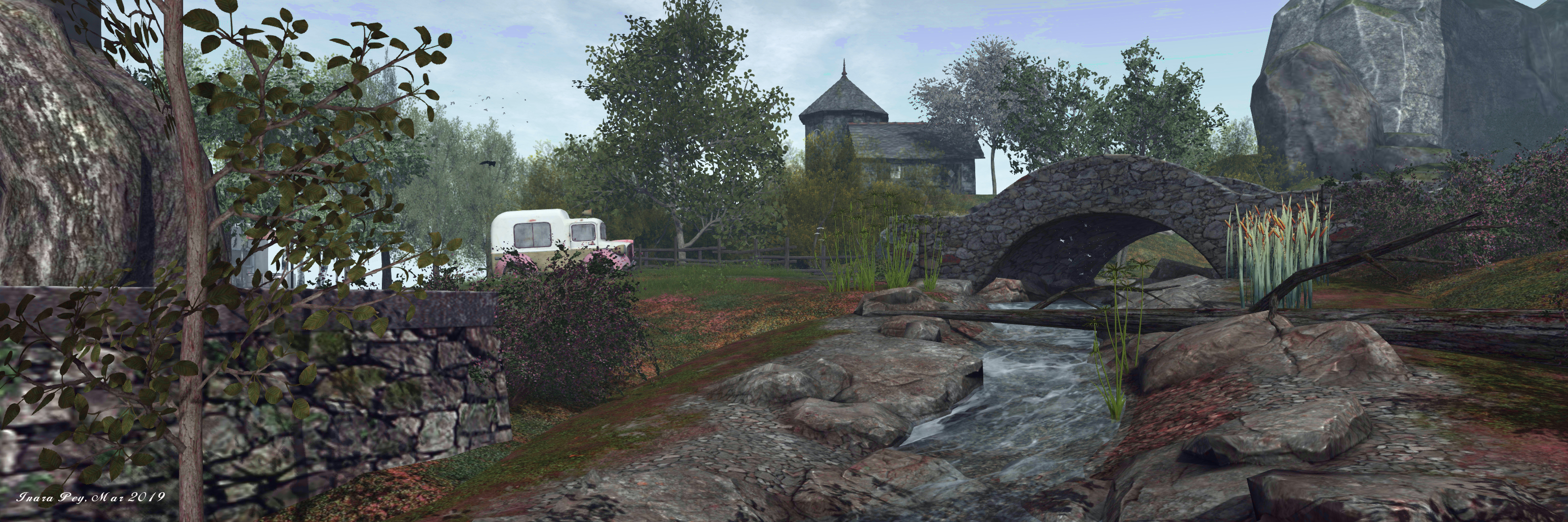
Iska (sablina) and ChimKama have returned La Virevolte (“the Twirl”) to the grid after the Homestead region on which it sits – Lemon Beach – spent time as Ponto Cabana (read here for more on that design), and are currently presenting it in a marvellous springtime rural design that carries hallmarks of central France in its look and feel.
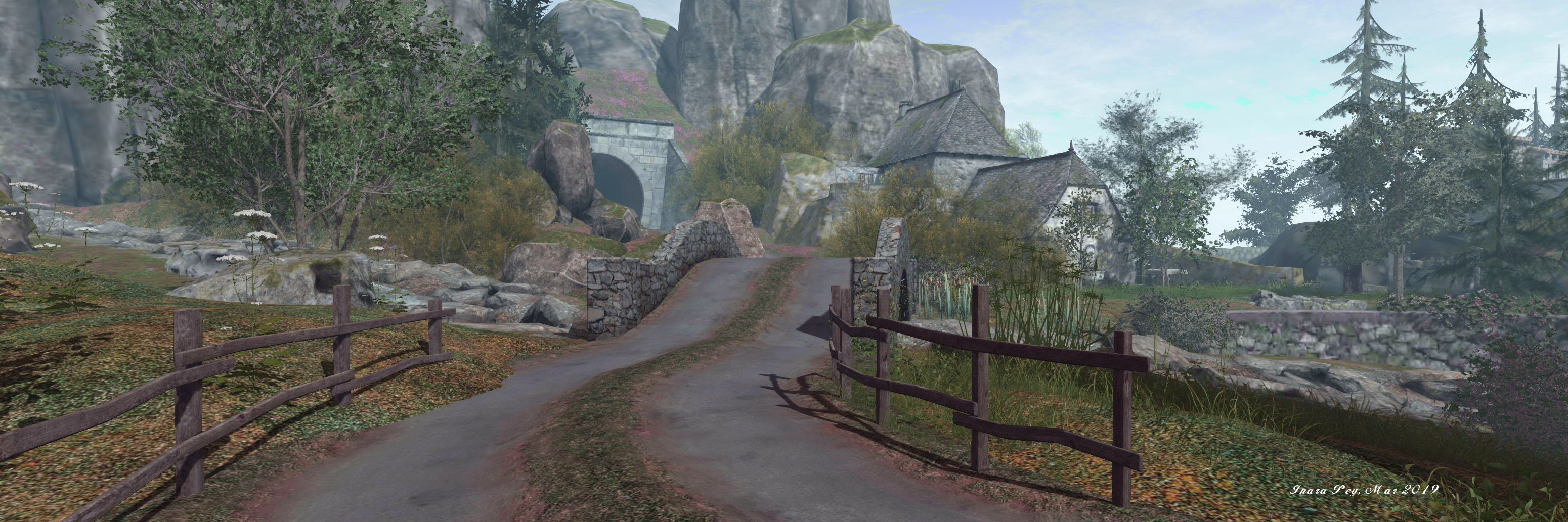
To the east of the region sits a a rugged curtain of cliffs, a stream tumbling down the slope leading away from their feet to pass under a bridge that carries a narrow road away from a tunnel that appears to cut through them. Their presence suggests this is a headland somewhere, the tunnel cutting through their walls forming a link to the land beyond, while the water flanking the three remaining sides of the setting has the feel of being a great lake, the far shores of which are obscured by haze.
La Virevolte
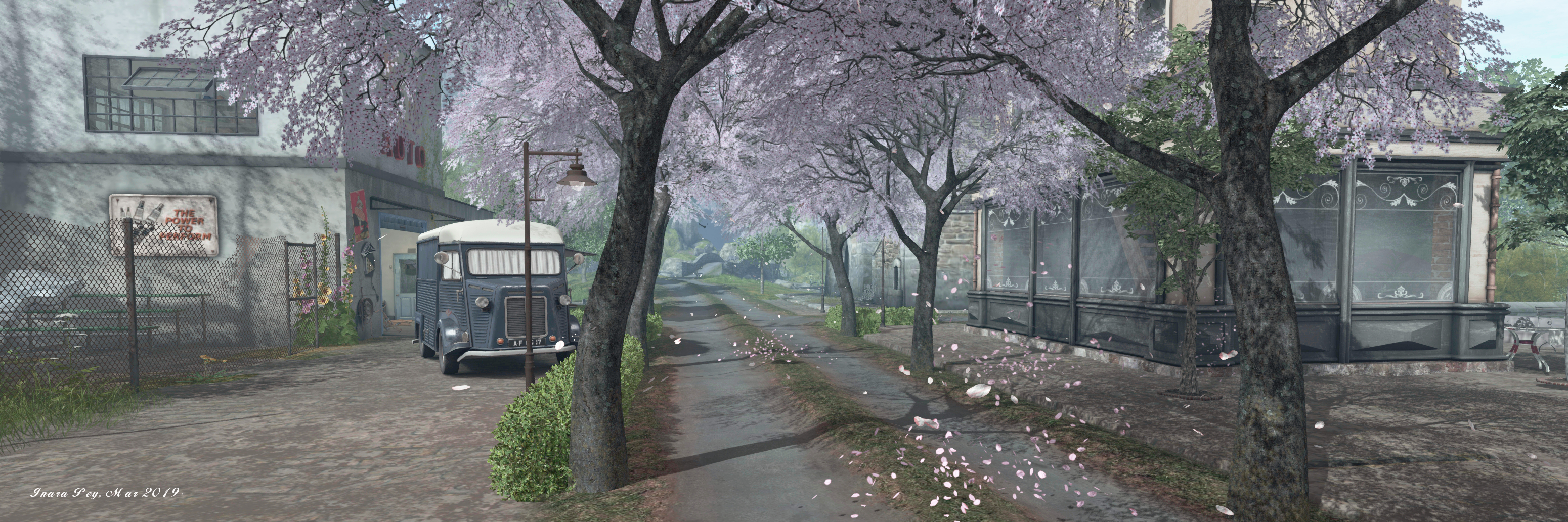
Buildings lie to either side of the road as it runs down from the tunnel. Some of these – most notably the church-like stone-built gatehouse – indicating this place has been inhabited a long time. Other buildings, such as the auto shop – are of far more recent architectural design, and pointing to the longevity of occupation in this part of the land.
The road splits at the old gatehouse, one arm continuing south onto the headland’s finger, passing a small café where tables are set outside on a cobbled terrace and a Pétanque boules game overlooks the calm waters. This arm of the road ends at a small, slightly run-down farm, where dairy cows quietly graze, and which also offers a view out over the water towards the small island on which a painter’s retreat sits.
La Virevolte
The northern arm of the road crosses the little stream at a second bridge to form a relaxed loop around grassy tiers on which sit apple trees in their springtime blossom, and which are topped by a second farmhouse. Lantern-lit paths run along and around these tiers, while the road’s passage around them is marked by stone walls and wooden fencing.
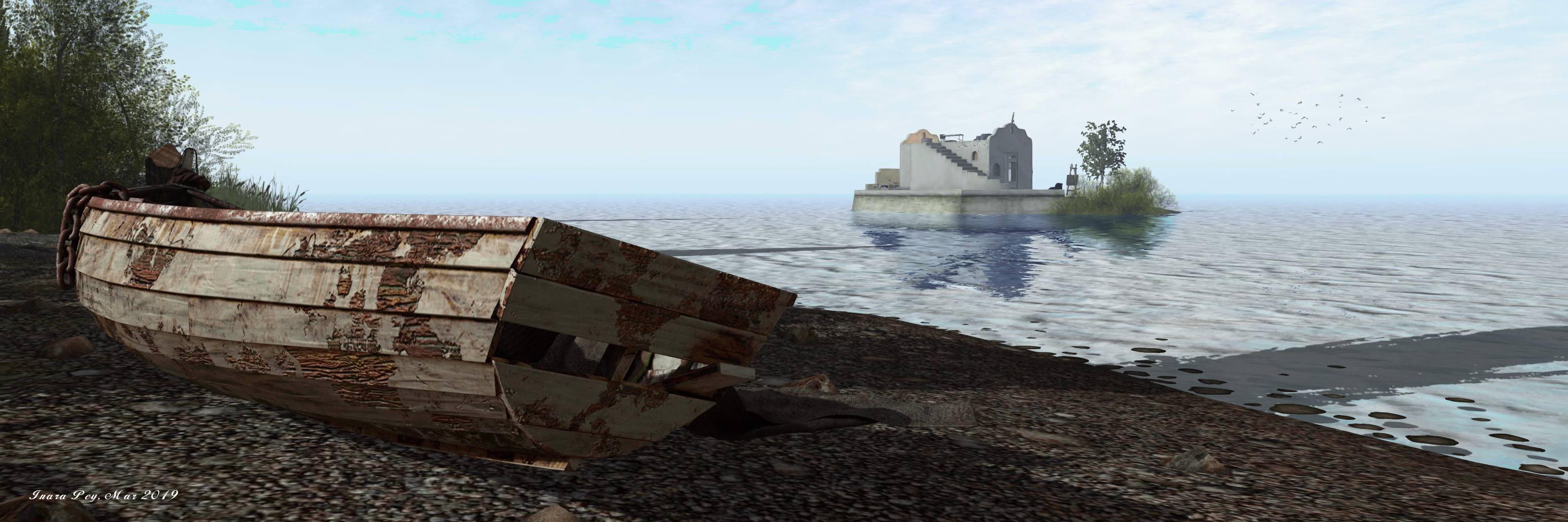
A small shingle beach sits off the south side of this road, marked by the carcass of an old rowing boat that forlornly looks towards the little painter’s island. However, there is no water crossing to the latter – which doesn’t appear to be private – is provided; flying or wading seem to be the only way to reach its adobe walls with their Spanish looks.
La Virevolte
It offers a cosy terrace and flat roof, each with places to sit and pass the time, paintings stacked against walls, a fresh canvas occupying an easel on the roof, perhaps waiting for inspiration to strike the artist who sometimes occupies this little getaway.
Other places to sit can be found scattered throughout the region, and there is a wonderful and quite natural sense of age to this little village – and not just as a result of the presence of the more medieval buildings to be found here. There is the tired-looking farm mentioned above and, not far from it, the yard alongside the auto repair shop, that looks for all the world like an abandoned playground.
La Virevolte
Which should not be taken to mean this is a place of ruin or decay; far from it. The beauty and appeal of La Virevolte is clear; what there is, is a perfect balance between natural beauty of setting and landscape and the careworn feel of places perhaps past their prime; a balance that can often be witnessed when passing through any town, village or hamlet.
Finished with a gentle and natural sound scape and framed under an ideal windlight complete with birds flying and wheeling overhead, this current iteration of La Virevolte makes for an engaging, photogenic springtime visit and is not to be missed.
The Lin C Art Gallery, curated by Lin Carlucci, has opened the doors on its April exhibition, featuring as its chosen artist Yumi (Yumanthi), with an official opening event on Wednesday, March 27th, 2019.
Entitled Yumi’s Art, the exhibition presents around 29 pieces, which might be broadly split into three areas, each of which reflects Yumi’s approach to her work.
I am in SL a lot to visit places for photo-shoots of landscapes, people and situations, and show them in my special View. I love to work with light and shadow and special and different colours I use from the viewer tools and other paint programmes.
I love to present my photos in my galleries and other places and am always glad when people enjoy them. I am learning a lot from great artists in SL and my art is a work in progress.
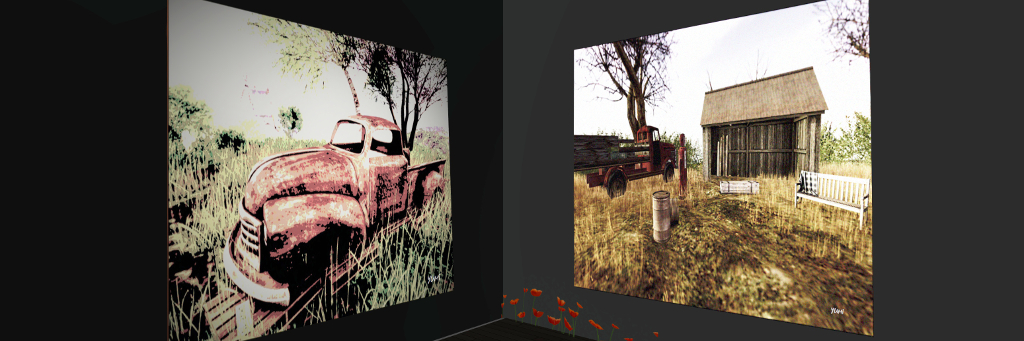
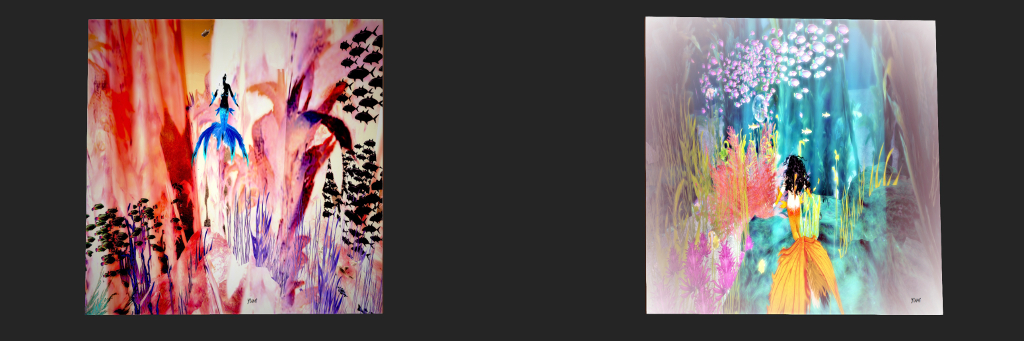
The ground floor exhibition space is largely devoted to Yumi’s images of her Second Life travels, providing interesting and in place unusual views of the places she has visited. Above these, on the mezzanine level, is a selection of avatar studies, some of which might be deemed NSFW, and what I can only describe as a series of experiments in colour, some of which border on the abstract, and three of which, depicting scenes involving a mermaid, I found attractive in their bold use of colour and contrast.
An interesting and eclectic mix of images and styles, Yumi’s Art officially opens with music and dancing at 13:00 SLT on Wednesday, March 27th, and runs through until Thursday, April 26th, 2019.
There was no deployment to the SLS (Main) channel on Tuesday, March 26th, leaving it on server maintenance package 19#19.03.07.525089. Previously deployed to BlueSteel and LeTigre, this update contains:
Internal fixes.
The Environment Enhancement Project code.
On Wednesday, March 27th, the BlueSteel and LeTigre RC channels should be updated with server maintenance package 19#19.03.22.525531, comprising:
Internal Fixes
Removal of UDP Asset message handling – see below
There is no planned deployment to the Magnum RC channel, which should remain on server maintenance package 19#19.03.15.525315, comprising:
The new operating system update.
The Environment Enhancement Project code and all bug fixes for it.
Removal of UDP Asset Message Handling
The BlueSteel and LeTigre RC deployment sees the removal of server-side support for asset (inventory) messaging via UDP. All maintained viewers should be using HTTP for all asset handling – and this has been the case for a good few years for several asset types, with the last few moving to HTTP in 2017; as such these viewers will not be impacted by this deployment.
However, it does mean that anyone using very old viewers still reliant on UDP messaging for assets will not be able to receive any updates on regions on either BlueSteel or LeTigre – this includes the two legacy viewers provided by Linden Lab, the Linux Spur viewer and the Obsolete platform viewer, neither of which contain all of the HTTP asset fetching code.
If you hear someone on a BlueSteel or LeTigre region complaining they are constantly a cloud on those region, suggest to them they check their viewer, and perhaps move to a more recent version.
SL Viewer
Bakes on Mesh reached RC status with the release of version 6.1.1.525409 on Tuesday, March 26th.
For those not familiar with this project, Bakes on Mesh is a new feature to allow system avatar baked textures to be shown on mesh attachments. Currently you need this viewer to use it.
The Love Me Render RC viewer updated to version 6.1.1.525446 on Tuesday, March 26th.
The Estate Access Management RC viewer updated to version 6.2.0.525404 on Monday, March 25th.
The rest of the viewer pipelines remain as follows:
Current Release version 6.1.0.524670, formerly the BugSplat RC viewer February 13, promoted February 28 No Change.
Linux Spur viewer, version 5.0.9.329906, dated November 17, 2017 and promoted to release status 29 November – offered pending a Linux version of the Alex Ivy viewer code.
Obsolete platform viewer, version 3.7.28.300847, May 8, 2015 – provided for users on Windows XP and OS X versions below 10.7.
On Tuesday, March 26th, 2019, the European Parliament voted in favour of the EU’s new European Union Directive on Copyright in the Digital Single Market. As I noted in Copyright, the EU and user-generated content, this has proven a controversial piece of legislation. Although intended to help protect the rights of content providers / creators, aspects of the Directive – notably Articles 3, 11 and 13 – have been seen by opponents as potentially causing damage to the Internet.
Article 11, (colloquially referred to as “the link tax”) which could severely restrict how we can share links, and information found on European on-line sites.
Article 13 (the so-called “meme tax”, although its scope is far greater), which has drawn the heaviest criticism,which could do much to block or restrict the availability of user-generated content.
Article 13 – which is now, somewhat confusingly, Article 17 – has been of particular concern, as it pushes the onus of rights protection aware from rights holders and pro-actively onto the shoulders content sharing platforms, which potentially causes issues, as I noted when writing on the topic at the start of March:
Aimed at the likes of Google (including YouTube), Facebook and the like, Article 13 could fundamentally impact any platform playing host to user-generated content (UGC), including Second Life, Sansar and other virtual worlds.
Under the Article, all such services are expected to pro-actively prevent any content that might violate the Directive from being uploaded. They are to do so through the use of “proportionate content recognition technologies” – that is, automated content filtering, designed to block anything that might by in violation of copyright. However, such systems a) may not be affordable to those required to implement them, and b) don’t actually work as advertised (as is the case with Google’s multi-million-dollar ContentID system, which has been shown to be far from successful).
Drawing the loudest criticism, Articles 11 and 13 (/ 17) have seen the Directive pass through a number of re-writes, and amendments were being put forward right up until February 2019. The final Parliamentary vote was subject to intense debate, but saw the Directive pass with 348 votes in favour, 274 against. A proposal to allow MEPs to debate and vote on individual amendments was rejected by just five votes*.
So now the vote has been taken, what does this mean?
Well, contrary to the more alarmist reactions, the Internet is not about to totally implode before the weekend arrives; nor are we going to see sudden changes to policies relating to content upload within Second Life. But the risk to EU based content creators, bloggers, vloggers, streamers, etc., is still very much there, and shouldn’t be sidelined; it’s just that there are some more steps the Directive must go through.
Julia Rada, former rapporteur of the EU’s Parliament’s review of the 2001 Copyright Directive referring to the new EU Copyright Directive as “a disaster for the Internet and a generation”
The first of these will come on April 9th, when the Directive is put to the European Council for adoption. Until recently, this looked like a foregone conclusion. However, despite being one of two countries responsible for the final wording of Article 13 (/ 17) in particular, it seems Germany is having something of a change of heart, with their Minister of Justice publicly opposing the idea of upload filters:
We think #Uploadfilter is the wrong Way to go about it. Dear Union, if You want to maintain a Spark of Credibility, You support our Motion in the European Parliament. How we can prevent Upload Filters.
– German Minister of Justice Katarina Barley on Article 13 via Twitter, March 23rd
This means Germany might still retract its support, particularly giving the depth of public opposition to Article 13 (/ 17) that has been voiced. While this seems unlikely (see the video above), it is still important because five other member states – the Netherlands, Luxembourg, Poland, Italy, and Finland – have voiced public opposition to the Directive the vote. So should Germany, a key nation behind the legislation and of the EU, change its mind between now and April 9th, it would prevent a Council majority being reached. This would likely result in further negotiations n the Directive being required after the EU elections due to be held on May 26th, 2019 – elections which could see those determined to see the Directive passed over and above the many concerns raised, voted out of office.
And even if the Council pass the Directive, it will still take time to come into effect. EU nations (and probably the UK, despite Brexit), are theoretically allowed two years to transpose EU Directives into legislation; more often than not, it takes longer than this to be achieved. In the case of Article 13 (/ 17), the process could well be exacerbated by the fact – and as I again noted in my March 5th article – it contains many holes which need to be dealt with. This in itself could result in a chaotic situation – something that activists in Germany and Poland, as well as concerned organisations such as the Electronic Frontier Foundation are already taking up ahead of the April 9th EU Council meeting.
Despite potentially benefiting from the Directive and Article 13 (/ 17) Google, whose parent Alphabet has spent $100 million pursuing the development of content recognition filters, has joined with other major players within EDiMA, including Amazon, Apple, Facebook, Twitter, Snap and Microsoft, in speaking out against the vote, noting the Copyright Directive stands at odds with other European legislation:
EDiMA, representing digital businesses and online platforms in Europe, regrets the lack of clarity and practicality of two key articles of the Directive.
Specifically, Article 11 of the Directive have been found to be ambiguous and will lead to the greater likelihood of litigation. Whilst Article 13 continues to be technically unworkable because it imposes a monitoring obligation on platforms, in conflict with the e-Commerce Directive which states that there should be none.
The Computer & Communications Industry Association in Europe has similarly spoken out against the passage of the Directive, referring to it as a “missed opportunity” and commenting:
We regret the adoption by the EU Parliament of the #copyright directive. We fear that upload filters and the press publishers’ right will harm on-line innovation and restrict on-line freedoms.
Some hope that gentler language added to Article 13 (/ 17) after the September 2018 vote, and which talks of platforms putting the means in place for rights holders to more ready point to infringements in order to have them removed, might present a means to prevent the more dreaded impact of the Directive. But this is very far from certain.
As such, while a significant battle against the EU Copyright Directive has been lost, it is not unreasonable to say the war is now over – but it is going to be significantly harder to win for opponents of Articles 11 and 13 (/ 17) as the fight moves to a more national level in order to persuade governments and the Council of the Directive’s flaws.
* Ciaran Laval, via Twitter, informed me this was actually the result of an error: a group of Swedish MEPs apparently intended to vote in favour of allowing the debate on individual Articles, but pressed the wrong electronic buttons. Unfortunately, the vote stands as recorded, but the error has been noted.




 Inara Pey: Living in a Modemworld