Eterea is a homestead region designed by Coqueta Georgia that again offers visitors a sense of tranquillity and release, coupled with a certain sense of magic and a gorgeous sprinkling of artistic expression.
A Homestead region, Eterea may initially present itself to new arrivals as just another island garden; but looks can be deceiving, particularly first looks. The landing point sits on a north facing cliff, looking out over a shallow bay, the shoulder of the island rising behind it, steps offering a way up through arched trees to where a dodecagon greenhouse awaits.
Eterea, August 2020
Glass-sided and domed, and with a grand columned entrance, this greenhouse is delightfully furnished. Tall bookcases stand sentinel on two sides, wheeled steps placed for the convenience of those wishing to browse, two cosy arrangements of easy chairs, sofas and low tables at their feet. A gramophone and an old bakeite telephone give a sense of age to the setting, while a harp, grand piano and harpsichord vie for the attention of the musically inclined.
Bric-a-brac throughout gives this setting a decidedly cosy feeling, and its not hard to imagine it as a centre of conversation and companionship with a slight Bohemian edge, the drapes slung from the high dome helping to cool it during the day, and the light of the high chandeliers and other lamps spilling out through the wall walls in invitation to others to come join with the music and conversation by night.
Eterea, August, 2020
The greenhouse offers the first clues to the artistic nature of the region as well as it sense of magic. A finely-crafted boat floats over the grand piano, suspended beneath a pair of translucent balloons, whilst paintings lie stacked in corners or behind bookcases and some of the chandeliers also float serenely beneath the glass dome without any physical connection. It is here that some of the motifs found throughout the rest of the region may first be evidenced: the religious in the form of a swing with angel’s wings, together with a reproduction of the Netherlandish (Antwerp Mannerist) triptych The Last Supper (circa 1515-1520); the fantastical (the aforementioned floating boat), and the artistic.
Outside, this grand pavilion is surrounded by a garden of wild flowers and shrubs, whilst shaded patios offer more places to sit (including playable table-top games), while the island drops away from this high vantage point to curve west and north to its far headland. A long dogleg of stone steps runs down to the rest of the island, and from the top of the steps, it is possible to spot another of the island’s mystical elements as a great blue whale (somewhat popular among region designers) swims through the air, slowly circling an upland area just shy of that far headland, a smaller garden on its back.
Eterea, August 2020
The path running along the spine of the island leads the way past several areas where explorers can sit and appreciate the setting, together with multiple opportunities for photography within the little vignettes that have been carefully, but naturally set out along and just off the route. One of these, an octagonal greenhouse, sits as both a cosy retreat – cats allowing! – and a place from which to observe the local owls. Onward, the path passes under the circling Whale (mouse over it and sit if you wish to join the ride), passing above a small beach cupped in the island’s arms as it does so. before descending to where an old and damaged wooden pier extends out into the shallow waters that cover the bulk of the region.
It is on and over this water that the magical and artistic elements of Coqueta’s design flow together, fusing into a captivating scene. Small islands are spotted over the water, three little more that rocky plinths for statues, one as ribbon-like sandbank, and the largest the home to a fresh-water pool. Further out, aged board walks raise and fall above the waves, suggesting a path to be followed, a twin line of telegraph poles pointing the way to them.
Eterea, August 2020
Here, caught in rising sea mist is a fabulous mix of floating boats under balloons – larger versions of the one in the greenhouse -, chairs backed by angel wings floating flower lanterns and coloured umbrellas. Three spiral stairways of stone rise to coloured doors. ladders and strings of chairs alongside them offering opportunities for poses. Beyond the green door a wooden board walk spirals stairway-like up to the heavens, crowned by a chair that again sprouts angelic wings and has a halo floating above it.
Words don’t do justice to this northern element of Eterea, offering as it does such an expressive mix, it needs to be seen to be appreciated, whilst the region as a whole is marvellously presented and rich in detail, with multiple opportunities for photography.
Etamae opened her first 3D art installation on August 15th, 2020, with Little Boxes at the Hannington Endowment for the Arts (HEA).
Little Boxes. A simple little song or a political satire about the creation of suburbia and associated conformist middle class attitudes and a reminder to us all how easy it is to lose one’s individuality to ‘fit in’.
– Etamae’s introduction to Little Boxes
Little Boxes was written in 1962 by Malvina Reynolds, an American folk/blues singer-songwriter and political activist and initially became a hit for Pete Seeger in 1963. It was written in response to Reynolds witnessing the birth of suburbia in California through the development of tract housing like that seen in Daly City, San Francisco.
It’s a song that can easily be listened to as a little bit of fun or as a genuine satirical warning against the loss of genuine individuality in the face of the marching drive of middle-class idealism, where everyone attends the same schools and universities, seeks the same class of careers, lives among peers with the same backgrounds and careers and wanting the same precisely the same education / career path for their children.
Hannington Endowment for the Arts: Little Boxes
All of this is perfectly reflected in Eta’s installation, presenting as it does five gaily-coloured little house boxes visitors are invited to enter, each one reflecting within it as specific element of the song’s lyrics (with more on the walls outside) that can be read or – with a click on them – listened to. This makes it something of a simple, light-hearted visit, or a piece to give us pause to reflect on the whole question of individually vs. conformity, which has become perhaps even more prevalent in the decades since the song was first recorded – and in far more than just middle-class suburbia.
Whether you opt to look at Eta’s little Boxes as a tongue-in-cheek installation, or an underscoring of Reyonold’s song, it’s worth hopping over to HEA and taking a look at it and the other installations on offer there. In the meantime here’s the song.
Organised by Elite Equestrian, and running from Sunday, August 16th through Sunday, August 23rd, 2020, is Splash! a special week-long event for merfolk and their friends.
Taking place under the sea, Splash offers music, dance performances, sporting events, stories, raffles, and shopping.
We have a full week of fun events and activities, including noted DJs, spoken word and dance performances, sporting events, shopping, and more!
The full line-up of events comprises (all times SLT):
Sunday, August 16th
14:00: DJ Elrik Merlin, of Radio Riel, opening with a watery interlude of dance and music.
18:00-19:00: DJ Ktadhn Vesuvino and Caledonia Skytower steer a unique course for a journey of music and poetry, featuring the Sea in all her alluring, fierce glory.
Monday, August 17th
10:00: Undersea Kelpy jumping contest with ribbons, trophies and Elite Equestrian gift cards for the top six places.
Tuesday, August 18th
12:00 noon; Keply jousting lessons with Duchess Atrasalus of Tamriel Isles, Knight of Dragon’s Lair, member of the Medieval Games Alliance. Wednesday, August 19th, 7 pm SLT
Wednesday, August 19th
19:00: Undersea Kelpy jumping contest with ribbons, trophies and Elite Equestrian gift cards for the top six places.
Splash, Sunday August 16th to August 23rd, 2020
Thursday, August 20th
12 noon: formal jousting contest.
Friday, August 21st
12:00 noon: DJ Ktahdn provides sea-themed music from various sources. Instrumental and vocal, sailors and swimmers, and maybe even a poem or two. Our course will be adjusted on the fly, as we dance.
18:00: tales of Enchantment from the Sea: Reader Willow Moonfire will read two traditional Celtic legends from Scotland and Ireland, The Soul Cages, and The Seal Catcher and The Selkies.
Saturday, August 22nd
16:00: Idle Rogue’s Guerilla Burlesque appearing life at Splash! with an underwater dance production featuring performances by Aubreya Joszepe, Dax Dover, Gloriana Maertens, Harlequin Lock, Meegan Danitz, and Melina Aurotharius.
17:00-19:00: DJ Caledonia Skytower with a danceable mix of watery tunes.
Sunday, August 23rd
Seanchai Library presents an hour of tales spun in the watery depths: mer people, and creatures of myth and legend.
Splash, Sunday August 16th to August 23rd, 2020
In addition, visitors will be able to ride the Kelpy-Go-Round and receive a merfolk gift (with a new every day), try the Kelpy jumping course for themselves (outside of the contest times) or try their hand at the jousting lists, participate in the raffles meet with other merfolk – or for those not familiar with SL’s mer communities – get to know merfolk.
And in case you’re wondering – a Keply for the the event, is a sea horse (but with legs!). There are boards places around the event space that will rez a Keply for visitors to ride – just accept the event experience and follow the instructions. The jumping course is available through a teleport portal to one side of the event space.
The organisers would like to emphasise that while the event is taking place in an adult region, full nudity should be avoided, although topless outfits are permitted.
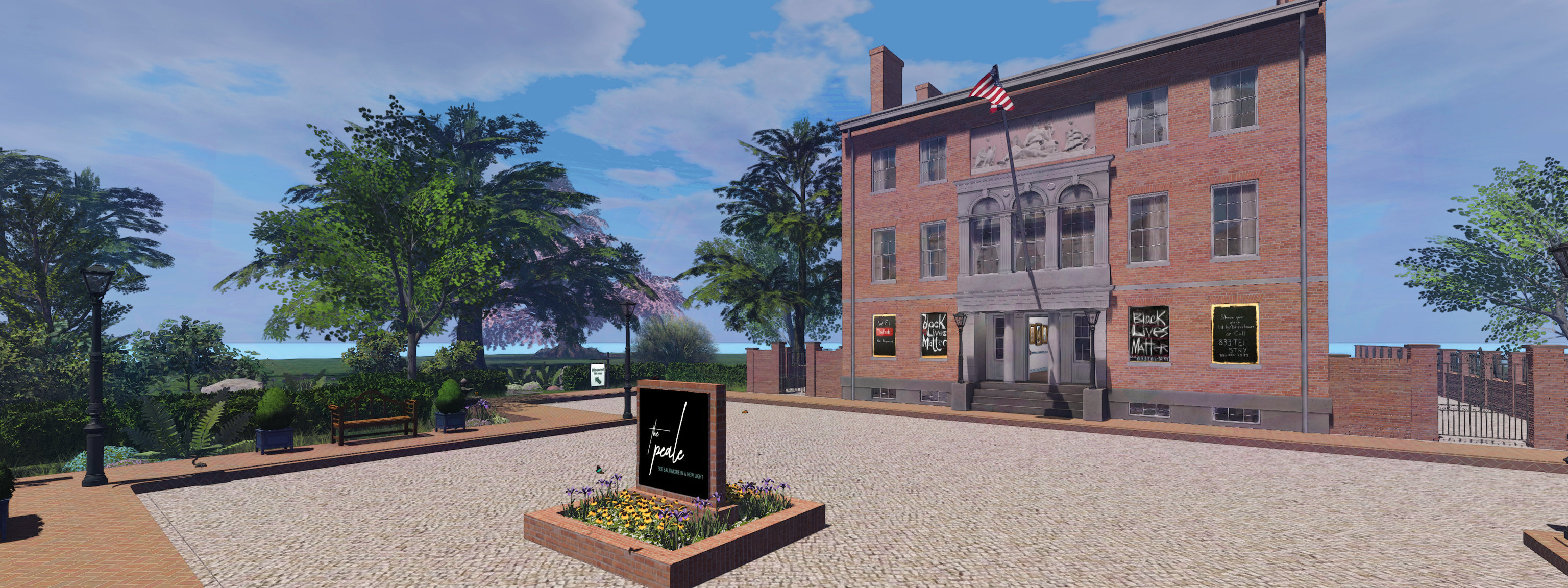
Saturday, August 15th 2020 marks the start of a new public experience in Second Life when the Virtual Peale formally opens its doors to visitors from both within and beyond the platform.
Virtual Peale is a collaborative project involving The Peale Centre for Baltimore History and Architecture and Linden Lab, and with the support of Virtual Ability Inc. It encompasses an in-world reproduction of the historic Peale Centre building, which will be used to host a range of virtual exhibitions and events that both mark the original building’s foremost roles as both a museum, and its modern day role as a cultural heritage centre for the City of Baltimore.
Some of the images of the Peale building over the decades, located in the Virtual Peale entrance hall
As one of the most historic buildings in Baltimore, the Peale Centre building is a US National Historic Landmark, appearing in the US National Register of Historic Places. It first opened its doors to the public on August 15th, 1814 as the first purpose-built museum building in the United States. It was designed by Robert Cary Long, Baltimore’s first native-born (and self-trained) architect, and commissioned by Rembrandt Peale, whose father, the artist, inventor, naturalist and politician Charles Willson Peale (1741–1827), had co-founded the Pennsylvania Academy of the Fine Arts and Philadelphia Museum in 1805.
The Peale building functioned as a museum from 1814 through to 1829, becoming famous for its exhibitions of natural history, militaria and selections of art by some of history’s most renowned painters from around the world, together with works by members of the extended Peale family, most of whom – including Rembrandt Peale – were accomplished artists in their own right. In 1816 the museum made history by becoming the first gas-lit building in Baltimore, Rembrandt following the example of his brother Rubens, Rubens, who had installed similar lighting in the family’s Philadelphia Museum. Doing so allowed Rembrandt to gain the backing needed to establish the Gas Light Company of Baltimore, the first commercial gas light company in America, and this in turn resulted in Baltimore becoming the first US city to be illuminated by gas street lights.
One of the ground floor rooms of Virtual Peale with (l) a drawing of Rembrandt and Rubens Peale demonstrating gas-powered lighting, and (r) The Artist in His Museum, a self-portrait by C.W. Peale painted in 1822, the original now hanging in the Pennsylvania Academy of the Fine Arts
In 1829/30, the museum relocated, and the Peale Building became Baltimore’s City Hall through until 1877. In 1878 it became the location of the first public high school for African Americans in the city, prior to passing into commercial use from 1879 through until 1929. Following an extensive rebuilding programme, in 1930 the building returned to its roots as Municipal Museum of the City of Baltimore, although it was referred to simply as “The Peale Museum”. It continued in this role through until 1997, gaining considerable recognition over the years for its collection of Peale portraits, its annual art and photography events and for several exhibitions combining the history and architecture of Baltimore, such as the nationally acclaimed Rowhouse: a Baltimore Style of Living, a celebration of Baltimore’s distinctive row houses.
Today, the building forms the nucleus of The Peale Centre for Baltimore History and Architecture, and is in the midst of renovations to restore it to its former glory. Once completed, this work will allow it to function as a historic heritage centre / place of learning through the 21st century, including enabling local cultural communities to share their authentic stories of the city both through live performance and on-line.
Another of the ground floor exhibition spaces within Virtual Peale. Note that many of the items throughout the museum are interactive – left-click them for information to be displayed in local chat
To mark the 206th anniversary of the building first opening to the public, the Virtual Peale will similarly be opening its doors within Second Life on what has become known as Founder’s Day for the building. Through it, visitors from across Second Life and beyond will be able to learn about it and the Peale family and participate in special virtual exhibitions.
Developed from a 3D model of the Peale Museum building originally created by the Imaging Research Centre at the University of Maryland, Baltimore County (UMBC) for the university’s Visualising Early Baltimore project, the Virtual Peale reproduces the original’s historic frontage and includes a virtual take on the Peale gardens. Inside, the building presents aspects of the physical Peale Centre’s interior, with exhibition spaces that help tell the building’s story and the work of the Peale family as artists, curators, inventors, and naturalists. The one departure from the original floor plans is the long entrance hall leading to the main lobby area, which is used to present photographs of the original Peale building throughout its history.
The Virtual Peale Garden
For the first exhibition, Virtual Peale presents Redefine/ABLE: Challenging Accessibility, marking the 30th anniversary of The Americans with Disabilities Act of 1990.
Originally developed by students from the University of Maryland (UMD), to be presented as a cross-platform, multi-site exhibit utilising both the UMD’s College Park campus and the Carroll Mansion Museum in Baltimore, thanks to the SARS-CoV-2 pandemic, Redefine/ABLE has been re-imagined as an immersive Second Life experience. It is designed to address diversity, inclusion and ableism, and seeks to engage audiences about the successes and challenges of persons with disabilities in Maryland and beyond.
Developed with a grant from Maryland Humanities, and with the support of the National Endowment for the Humanities and the Maryland Historic Trust, and with the active support and advice of Virtual Ability, Inc., Redefine/ABLE can be found in the Virtual Peale’s second floor Picture Gallery – actually a teleport that leads to a separate platform than is automatically activated on climbing the stairs and “entering” the exhibition space.
The Redefine/ABLE exhibition in Virtual Peale, featuring interactive panels
By using the space in this way, with teleports connecting exhibits with the main building, it will be possible to expand Virtual Peale’s internal layout to offer additional gallery spaces. Some of these will reflect and expand on exhibitions that can also be found in the physical world, whilst others will be inspired by the Peale’s programming and partners, allowing the Peale in Second Life to become a creative hybrid of physical and imaginary museum spaces.
It has been thrilling to develop this new experience of the country’s oldest museum building in Second Life. Thanks to the amazing work of Linden Lab and Virtual Ability, Inc., we are now able to welcome a huge new community to the Peale, and share its rich history as well as the authentic stories and creativity of Baltimore with the largest and oldest virtual world on the Internet.
– Dr. Nancy Proctor, Executive Director of the Peale Centre
In addition to providing input and advice on hosting the Redefine/ABLE exhibition, Virtual Ability has also played a key role in developing Virtual Peale: most of the interior detailing has been put together by Eme Capalini of Virtual Ability, and she also spent time developing a “Mastodon Hunt” to help celebrate the ties the museum and C.W. Peale have to the unearthing of the first mastodon skeleton to be found in the United States that went on to become the focal point of the museum’s opening exhibition and the subject of C.W. Peale’s 1086 painting, Exhuming the First American Mastodon (a reproduction of which can also be found inside the Virtual Peale building). Further, Virtual Ability are assisting The Peale Centre in helping members of the public sign-up and join Second Life for this opening event.
The Redefine/ABLE exhibition in Virtual Peale
Also included in the Virtual Peale build is the StoryTelling Studio. As noted above, a major part of The Peale Centre for Baltimore History and Architecture is to keep alive authentic stories about the City of Baltimore through live performance and on-line events, and the Storytelling Studio is a part of this, together with a partnership the centre has with Libraries without Borders. It is also something the Peale Centre wants to extend into Second Life.
So, if you are a resident of Baltimore and / or have a story connected to Baltimore and its history you’d like to share, the Peale Centre would like to hear from you. contact them by dropping your details and story via note card into the mail box inside Virtual Peale, or if you prefer, you can use the Peale Centre’s Add A Story page, or reach out of project members through the Peale’s in-world group or e-mail them at info-at-thepealecenter.org.
You can learn more about Virtual Peale and the work of the Peale Centre via the Lab Gab video below.
Virtual Peale Opening Event
As a part of the opening, Virtual Peale will host three events on Saturday, August 15th, 2020 (all times SLT):
08:00: a tour of Virtual Peale, hosted by David London, the Peale’s Chief Experience Officer.
09:00: a panel discussion, Accessibility and Inclusion in Physical and Virtual Spaces, featuring George Ciscle, Curator-in-Residence Emeritus at Maryland Institute College of Art; Alice Kreuger, founder of Virtual Ability, Inc.; Monica Rhodes, Director of Resource Management, the National Park Foundation; and Dr. Jeremy Wells, Associate Professor in the Historic Preservation program in the School of Architecture, Planning and Preservation at the University of Maryland.
10:30 (approx): a further tour of the Virtual Peale and open Q&A session with representatives from The Peale Centre and Virtual Ability.
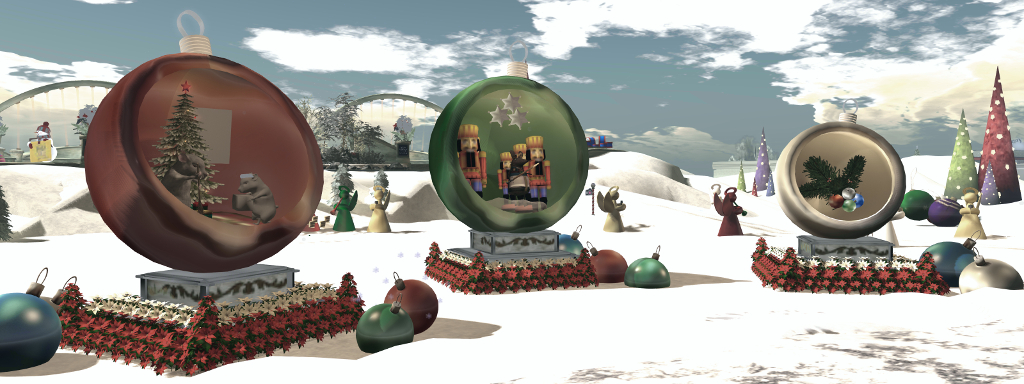
The 2020 SL Christmas Expo in support of the American Cancer Society, will take place between Friday, December 4th and Sunday, December 13th, 2020, inclusive. The theme for this year is that of Christmas Memories, with the organisers noting:
Christmas trees towering over your head while the Lionel train makes is journey around the base. Brightly wrapped gifts spread under the lowest boughs, as the aroma of sugar cookies and gingerbread drift in from the kitchen. Carols playing on the Victrola while the family gathers together to celebrate the holidays. Christmas Memories of all shapes and sizes spring to mind each year as the holidays approach.
– Nuala Maracas, RFL of SL Christmas Expo co-ordinator
This year, the organisers plan to have:
150+ merchants.
Breedables and one-of-a-kind auctions.
nearly non-stop musical performances / entertainment via the Holly jolly Café.
Gachas and hunts.
Christmas trees, ice skating, and a snowman building contest.
The 3rd annual Lights of Hope contest, featuring the best builders and teams of Lindens and Moles in a holiday home decorating competition.
The closing Live Auction with one of a kind items from Linden Lab and SL’s top creators and the annual Holidays of Hope Ball.
Updated region crossing code on the main grid should improve travelling by vehicle across the main grid
As I’ve noted in recent Simulator User Group updates, the Blake Sea regions were cloned to Aditi (the beta gird) in late July, to give users the opportunity to test regions running on AWS services (“the cloud”). Among the more significant tests carried out (for many users) was for physical region crossings via vehicle.
Initially, things did not go well; it was almost impossible to complete more than two or three region crossings without encountering insurmountable problems – and some users (myself among them) couldn’t even get through a single crossing whilst driving a vehicle. Thanks to the data gathered, the Lab made some updates to the Aditi / Blake Sea region crossing code, and Simon Linden set-up the Blake Sea Challenge so that further data on region crossings could be obtained (see: 2020 Simulator User Group week #31 summary & the Blake Sea Cloud challenge).
Preparing for a high-speed run with my Foilstream with foils lowered…
All of this work resulted in a set of updates to the region crossing code for the Aditi regions, and on Tuesday, August 11th and Wednesday August 12th, these updates were included in the simulator deployments made to Agni (the main grid)¹.
So how are things now working?
Well, first and foremost, it is early days and less than 24 hours since the RC deployment. However, people are already reporting appreciable region crossing improvements with the updated code. While far from a comprehensive test, I took a number of my boats and aircraft out for a a series of runs across a total of 55 region crossings (east to west from Second Norway to Nautilus and around part of Blake Sea, then back again) to see how things faired. The vehicles I tested were:
Bandit 50/3 sailing cruiser.
Piaggio KV23H Foilstream (version 3.2c).
Spijkers MD900 Explorer
TBM Kronos (version 6).
…. And multiple regions later, still going at speed without loss of control, and able to orbit camera for photos 🙂
I selected these four as a mix of both medium and high performance craft. Both the Bandit 50/3 and the MD900 made the round trip without real incident. Crossings for both resulted in zero vehicle slewing, with the Bandit (always good on region crossings with 2 avatars on-board) being pretty much perfect throughout, and the MD900 making each crossing with control recovery in about a second, and only very slight camera issues.
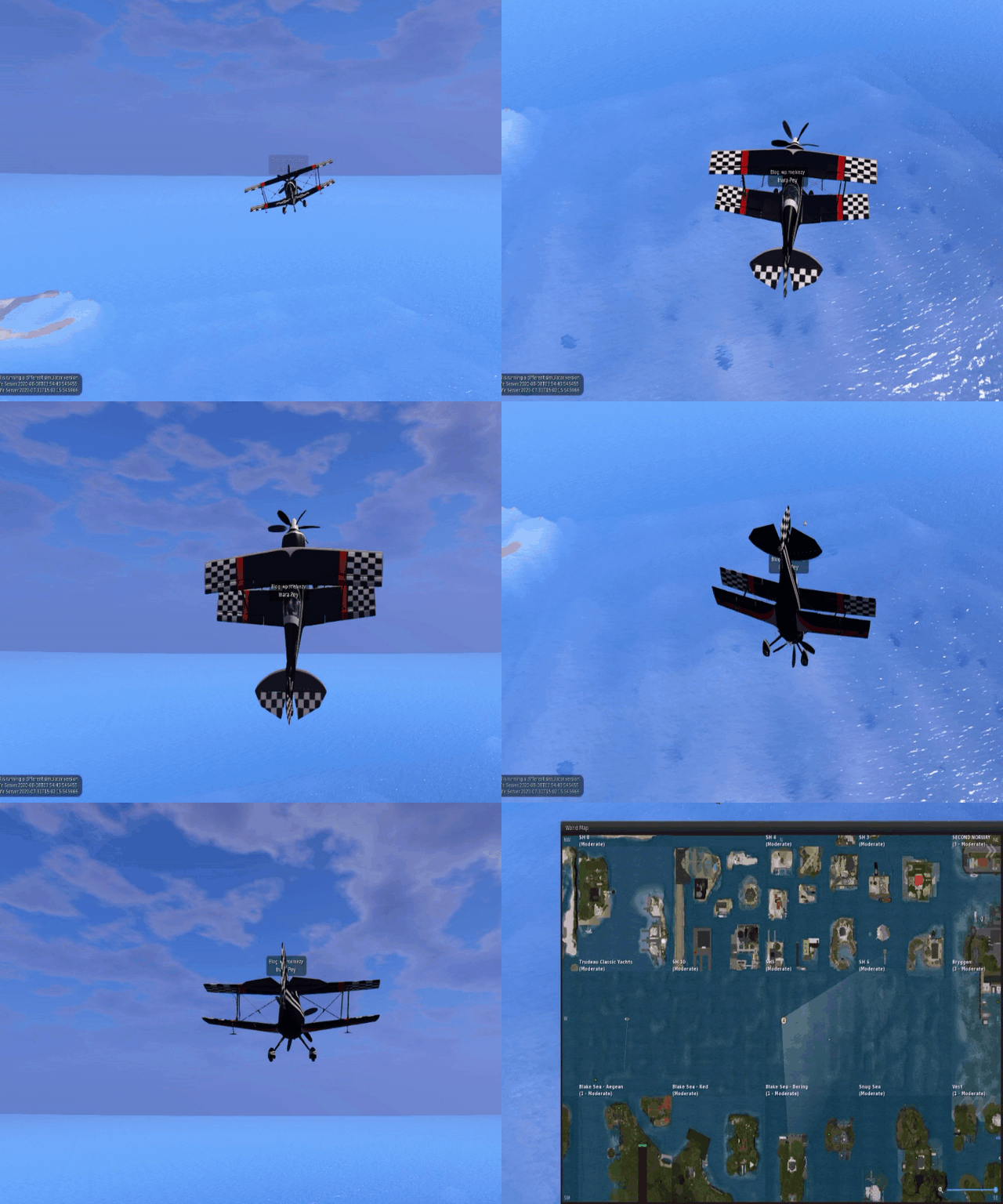
The Foilstream was going to be a tougher proposition because of its sheer speed: when running with hydrofoils deployed and full throttle, it can cross a region in 7 seconds, so multiple back-to-back crossings inevitably lead to issues at some point, while even at lower speeds the boat was subject to loss of control on crossings lasting seconds and frequently subject to the camera slewing and becoming locked in the side of the boat. The Kronos is not particularly fast compared to other aircraft, but it is exceptionally manoeuvrable and aerobatic, so complex manoeuvres that cross regions have in the past led to issues of control loss and camera slewing.
Things still can go uncomfortably wrong – if you push too hard, as I did with repeated loops through a region crossing at speed
With both of these vehicles, region crossings were considerably improved, other than when carrying things to extremes.
The Foilstream managed so 25 region crossings at full speed with no real loss of control before I found myself on the sea floor sans boat (compared to about a dozen previously before running into problems – loss of vehicle, camera slewing), while the only issue with he Kronos came with intentional aerobatics back and forth over a region crossing. In this latter case, I will say that when it did go wrong, it did so quite spectacularly, with total loss of control and the ‘plane tumbling with no recovery at all, with the map showing it trying to continue forward.
Beyond my basic tests, others have been carrying out tests. One of these is colleague Luca lucagrabacr, who recorded her own tests using a range of craft and vehicles. Wo can catch her results in the video below.
Again, while it is early days, fresh after a restart of the entire grid, etc., so gremlins may still climb out of the woodwork, but on the whole, region crossings by vehicle should generally be a lot smoother and easier. Of course, the code doesn’t mean all region crossings are solved – if you push things really hard, things can still go wrong (as with me and repeated Kronos loops back and forth between regions at high speed.
For clarity: this is a code update to the simulators within the Lab’s co-lo data centre, it does not mean Agni regions are now running in the cloud.







 Inara Pey: Living in a Modemworld