Lab Chat is the name of the new series aimed at providing Second Life users with the opportunity to have their questions put to Lab management and personnel.
The first such event, which was recorded and made available as a three-part video, took place on Thursday, November 19th, with guest Ebbe Altberg, CEO of Linden Lab. I have a full transcript of that event available, complete with audio of both the questions asked and Ebbe’s replies.
Ebbe Altberg, in his alter ego of Ebbe Linden, will again be facing questions on Linden Lab, Second Life and “Project Sansar” as put forward by SL users
Once again, the guest under the spotlight will be the Lab’s CEO, Ebbe Altberg.
As with the first event, people are being invited to submit questions via a Lab Chat forum thread they’d like to see asked during the show for consideration. The deadline for such questions is Friday, January 15th
Questions to be asked will be selected by members of the Lab Chat production team (of which I’m listed, although my role is focused on producing written transcripts of recordings, rather than being hands-on with the actual production). Those submitting selected questions will be invited to attend the recording of the session, and put their question directly to Ebbe in voice if they wish; otherwise questions will be asked the Lab Chat hosts, Saffia Widdershins and Jo Yardley.
As per the first Lab Chat, I will (hopefully) be recording the event, and will certainly be providing a full transcript a few days after it has taken place.
Tom Boellstorff and his digital alter ego, Tom Bukowski (image: Steve Zylius / UCI)
There are probably few Second Life residents who keep an eye on blogs and the more well researched media reports on Second Life who are unaware of Fran Seranade’s story. Now 88 years old, Fran is a keen Second Life resident, who spends time in-world with her daughter and son, enjoying much of what the platform can offer: dancing, Tai Chi, swimming, horseback riding, walking, exploring. All far removed from the physical world, where she suffers from Parkinson’s Disease, which deeply affects her ability to do many of the things we take for granted: such as simply getting out of a chair and walking to the next room.
Fran Swenson (Fran Seranade in Second Life), seen with her avatar and friends in Second Life
It is now also the story used to introduce an article appearing in UCI News, the on-line newsletter of the University of California, Irvine, which explores the work of Tom Boellstorff, a professor of anthropology at the university.
InA (virtual) world without Parkinson’s, Heather Ashbach talks to Tom about his ongoing work with Fran and other Parkinson’s Disease sufferers using Second Life, which is now part of a US $276,900 National Science Foundation study that began in July 2015, and will run through until June 2018, examining how on-line environments affect social interaction and self-understanding as well as physical-world experiences of disability.
Tom’s work has also been more broadly covered through The Drax Files World Makers episode #31, which I covered here
Tom’s work as an anthropologist studying our digital interactions with ourselves and others has already given rise to two books, Coming of Age in Second Life: An Anthropologist Explores the Virtually Human,and Ethnography and Virtual Worlds: A Handbook of Method. With this study, he hopes to build on the knowledge he’s acquired over the last several yeas of study, and also learn which aspects of on-line social interaction are linked to specific disabilities and how differing platforms and devices are utilised.
“Billions of people now participate in on-line environments – social networking sites like Facebook, games, virtual worlds,” he notes in the article. “Since some early human first picked up a stick to use as a cane, persons with disabilities have been at the forefront of technology innovation, so it’s natural that they would be doing creative things in virtual worlds too.”
His examination of Parkinson’s and the effect Second Life has had on those suffering from it is not limited to Fran; the article specifically touches on the lives of Solas NaGealai, who founded the original Team Fox presence in Second Life (and whose story I covered in August 2014), and architect DB Bailey, and they are two among many Tom has talked to within Second Life.
Second Life has provided Solas NaGealai to continue her love of fashion and design, and provided her with the means to directly support MJFF through Team Fox SL.
Solas was diagnosed with a particular form of Parkinson’s Disease known as Young Onset Parkinson’s Disease (YOPD) – the same form of the disease which struck Michael J. Fox.
When first diagnosed, Solas was a full-time fashion designer. However, as the illness progressed, she was forced to leave that career behind. Fortunately, her discovery of Second Life allowed her a way to re-engage in her passion for design, and she founded her own fashion label at Blue Moon Enterprise.
Prior to his diagnosis, DB Bailey was a noted architect who, among other projects, collaborated on the design of Los Angeles’ Walt Disney Concert Hall. Since the disease has forced him to step back from that career, he’s been able to use Second Life as his creative outlet as an architect and artist.
Tom’s work, which has involved in-world and face-to-face interviews and studies, has also touched upon the possible physical benefits some of those with disabilities report as a result of their use of Second Life. In Fran’s case, for example, she his indicated an improvement in her sense of balance and co-ordination as a result of using the platform. This is something Tom has suggested might be down to what is called “mirror neurons“, with Fran’s brain responding positively to the visual stimulus she receives as a result of her in-world activities. However, examining such potential benefits does not form a part of the current study, primarily because Tom is not a medical doctor; but he is of the opinion that they are worth future examination.
The psychological and sociological benefits of using platforms like Second Life in matters of healthcare are clear, and have been the subject of many studies. With the promise of more immersive VR experiences and opportunities now on the horizon, a better understanding of how different platforms and mediums assist those with disabilities enjoy a richer, fuller life is liable to be of enormous benefit, and also offers an opportunity for broader public discussion on matters of disability and the use of technology.
As Tom himself notes in closing the interview with Heather Ashbach, “disability is a fascinating category of human experience because anyone can enter it at any moment – we’re all just a car accident away. And even if we avoid it, if we live long enough, age will present us with obstacles that limit our ability to function as we currently do. Studying how people adapt through the use of technology helps advance the public conversation on disability and digital technology.”
Altogether, an excellent read, and one thoroughly recommended.
The UK Blog Awards, sponsored by Odeon Cinemas, Debenhams department stores, and Hills Balfour PR agency, was founded in 2014 “to recognise true viral style and creative excellence across a variety of 16 UK industries, as well as awarding 2 sub-categories: Best Storyteller and Most Innovative award.”
“For what may seem like a lifetime, company employees and private individuals have been found Blogging about opinions, facts and sharing good practice with viewers of the worldwide web since the early 1990s,” the organisers note. “So, here at UKBA we thought it was about time that individual Bloggers and companies received recognition for all your well-earned innovative opinions and content!”
Nominations for the 2015 UK Blog Awards were held over November / December 2015, and one of the blogs nominated for a possible award has been Second Life’s own Windlight Magazine, for which I’m privileged to be a Contributing Writer.
Since its inception in July 2015, Windlight has become perhaps the premier arts magazine in Second Life, featuring a team of highly talented writers (and I’m not simply saying that because I do contribute!), and an outstanding editor / founder in the form of John (Johannes1977 Resident).
During the months following its inaugural issue, Windlight Magazine has provided superb coverage of the arts in Second Life, and has gradually encompassed broader elements of the platform – travel, fashion, etc.
At the same time, the Magazine has sought to promote the arts through the Windlight Fellowships, has supported notable charity activities, and has most recently stepped in to sponsor the UWA art gallery.
During this same period, the Windlight blog has become a go-to resource by which people can discover the arts in Second Life, learn how to improve their SL photography, find advice on art, photography and writing, read reviews of places to visit in-world, and more. As such, it is a worthy nominee for a UK Blog Award.
But it needs your help.
Public voting on blogs nominated for the 2015 Awards commenced on Monday, January 4th and will run through until the end of February. The top 10 most popular blog from the various categories in the nominations will then be shortlisted for judging by an adjudicating panel of experts, with the winners being announced at a special awards evening which will in London ion Friday, April 29th, 2016 (full details TBA).
To help ensure Windlight Magazine might be one of those finalists, please click on the image immediately above right, and place your vote.
Doing so might not only help Windlight Magazine reach the finals and possibly receive and award, but it will also help promote Second Life and Second Life arts to the rest of the world.
Update #3, January 9th, 2016: The testimonials on the landing pages have now been updated with genuine comments and images from Second Life users.
Update #2: I’ve further been informed that the testimonials are intended to the express the sentiments of SL users and are based upon feedback. expressed by SL users. Similarly, the images are in fact stock Internet images. A footnote to the effect that “The consumers above are not actual consumers of the advertised product.” has now been added to each of the landing pages.
Update #1: I’ve been informed by various third parties that the testimonials on the landing pages may not in fact be genuine. I’ve therefore revised this post until I hear further on this matter.
On Monday, December 28th, Friestorm announced the arrival of their Gateway landing pages, and asked Firestom users for their assistance in helping to spread the word about Second Life.
The Landing pages are an integral part of the Firestorm Gateway, which itself forms a part of the upcoming trail Gateways Programme I previewed back in September, and which hopefully will be officially announced as up and running by the Lab in the near future.
In all, six landing pages have been produced, each one of which is intended to showcase a specific aspect of using Second Life, and encourage those new to Second Life to sign-up and log in to the platform. To help with this, Firestorm is asking SL users to share those pages they feel their non-SL friends and contacts would find to be of the most interest and thus sign-up. The six pages have the following topic descriptions:
While one might quibble over the subject titles (role-play and exploring might seem to exhibit a high degree of cross-over, for example), the pages themselves offer a crisp, clean approach to present Second Life, including endorsements from (and photos of) actual SL users.
Each of the pages includes a series of sign-up buttons which carry those interested to the initial phase of sign-up: creating an account – providing a user name, etc.
The sign-up form using the Lab’s API
It’s probably worth pointing out here, and before the conspiracy theorists reach for their tin-foil hats, that this sign-up process uses an API supplied by Linden Lab. This means that, just like all third-party TPVs, none of the gateways in the programme – Firestorm or anyone else – is storing or accessing the sign-up information a new user provides. The information is strictly between the user and the Lab. The only part of the sign-up information which can be accessed is the e-mail address: and that only for as long as it takes for an automated welcoming e-mail to be sent.
Providing the fields are correctly filled-out – error messages will be displayed at the foot of the input fields, although you may have to use the vertical slider to bring them into view thanks to the API – clicking Get Started will move you on to the next page, intended to step the user through downloading, installing and launching the viewer.
The Firestorm instructions page
To me, this page presents some issues which perhaps need to be dealt with if it is to be as effective as might be hoped – I’ll come back to this a little later.
One thing established SL users are bound to note is that nowhere is there any opportunity for the new user to select an avatar.
This isn’t an oversight on the part of the Firestorm team – it is a result of having to use the “old” user sign-up API, which doesn’t have any hooks into the Avatar Picker seen on the Lab’s own sign-up pages. Thus, the first opportunity new users get to picker the gender of their avatar is after they have logged-in – and even then, they only initially get either the male or female default Character Test avatars which (a long while ago) replaced the infamous “Ruth”.
As the gateway has to use the “old” SL registration API, users do not get to select the gender of their avatar until after they log-in (left), and are then defaulted to either the female or male Character Test avatar (click to enlarge, if required)
Obviously, this is far from ideal. First impressions count, and many people seeing their avatar for the first time and comparing it to the glossy images on the landing pages could end up feeling a tad bit aggrieved or disappointed and might even simply log off.
This issue has already been raised with the Lab, so hopefully, something can be done about it, either by providing the updated API with the avatar picker to those involved in the gateway programme, or by the Lab finding the means to present new users coming into SL via these gateways with at least one of the new “Classic” avatars instead of the Character Test versions.
Once they have selected their gender and have seen their avatar appear, the new user will find they’re starting at the start of the Firestorm’s orientation island, where they can start learning to use the viewer, before progressing on to finding out more about Second life in general through the various activities and events operating within the Firestorm gateway regions.
Given that new users are confronted with the Character Test avatars on first logging in (and allowing for the fact this will hopefully be changing), I did find myself wondering if a short lesson couldn’t be provided showing the new user how to access the Avatar Picker and quickly create an alternative look, just to reassure them that avatars in SL really don’t all look like they first see themselves.
Once new users have progressed through the Firestorm landing / sign-up pages and have installed the viewer and logged-in with it, they’ll be delivered to the orientation island in the Firestorm gateway regions
I caught a Tweet on December 22nd (my apologies to the sender, I forgot to bookmark it and so can’t state form whom it came It was Rocky Constantine, as he correctly reminds me in the comments) which pointed those reading it to an article on the PSFK website with the enticing title, A Look Into a More Social Virtual Reality With the Makers of Second Life, by Ido Lechner. It makes for an interesting read.
The banner image is that of Second Life – and for once, it’s actually post circa 2010, and is quite reasonable in looks, and gets kudos points for being there, rather than the more usual 2007/8 images which tend to get used. Although that said, an image of the old v1 UI, circa 2007/8, plonked in the middle of the article doesn’t do SL any favours.
After a slightly blusterful introduction lauding Virtual Reality for already being a major disruptive force in our lives (and then admitting it has yet to go mainstream), the article settles down to discuss – and the title suggests – the more social aspects of VR in a chat with Lab’s own Ebbe Altberg and Director of Global Communication, Peter Gray.
This is a terse, and to-the-point piece, managing to both cover familiar ground (LL’s “head start” in running SL for 12+ years, the ability for users to generate content – and income – with the service, etc), and to give more insight into what “Project Sansar” may offer in terms of accessibility, and some of the reasoning behind the Lab moving in that direction. In particular, and where accessibility is concerned, Lechner notes:
PC games have traditionally had a heightened learning curve for older audiences who have a hard time navigating worlds with mouse and keyboard, but Project Sansar looks to be an all-inclusive medium thanks to a more instinctual set of controls. Gesture-based movements, advanced expressive avatars (the kind that’s rigged to your real life expressions), voice chat, haptic feedback and other progressive modes of interaction will all be welcome additions to the game.
That the Lab is looking at the plethora of new hardware that being developed around the first wave of VR headsets isn’t exactly news – Ebbe Altberg has pointed to this very fact a number of times of late. However, it does again point to the fact that while very distinct and separate entities, “Sansar” and Philip Rosedale’s High Fidelity are in some ways travelling the same road in terms of aspirations with their ability to adopt emerging technology. But there is something else in this statement which draws my attention.
When it comes to all these new and wonderful ways of interacting with the digital, people are very quick to blame the keyboard and mouse. In 2014, for example, Philip Rosedale when addressing the VWBPE conference that year, directly pointed to the poor old keyboard and mouse as being one of “the” technological barriers to entry into virtual environments.
Yet the fact is, the keyboard and mouse have beenour primary means of interaction with computer systems for so long that using them is sort-of “intuitive”; we can all grasp their use pretty easily. Who is to say all these wonderful now methodologies for interaction won’t also bring their own issues with them, thus presenting those “older audiences” Lechner mentions with precisely the same kind of “heightened learning curve” as is perceived to be the case when it comes to using the keyboard and mouse within certain environments?
Professor Jeremy Bailenson – a strong influence on the Lab’s thinking (image: Stanford University)
Another common thread between High Fidelity and “Project Sansar” (which again should not be taken to mean the two are in any way linked) comes in the persona of Jeremy Bailenson of the Virtual Human Interaction Lab at Stanford.
Bailenson serves as an advisor to High Fidelity, alongside of Tony Parisi and Ken Perlin in particular, and as I’ve previously covered in these pages and Peter Gray states to Lechner, Bailenson’s work is greatly influencing the Lab’s approach to Sansar, which is no bad thing.
Certainly, Bailenson has offered some incisive views on the potential and pitfalls in VR, and his views and outlook are very relevant when considering the social / psychological impact of VR. Hence the Lab would seem to be availing itself of the right spheres of influence as it develops “Sansar”.
The focus on the social aspect of Second Life (and potentially of “Project Sansar”) is an interesting new direction to take when comparing this with earlier media discussions the Lab has had. In those, the focus has tended more towards emphasising the potential for “Sansar” among a defined set use cases with those vertical markets where VR can be seen has having great potential: education, training, design, healthcare, architecture, etc (again, it is no accident that the first public demonstration of “Sansar” came during San Francisco’s month-long Architecture and the City Festival in September 2015). Although all of these do get a mention at the end of the piece.
Certainly, there can be no doubting the social power that Second Life has, and both Altberg and Gray are entirely correct in pointing towards the added depth the environment has given developing relationships. So really, there is no reason to doubt that, as / if / when “Sansar” can be accessed by more-and-more people, the same cannot be repeated there.
Nevertheless, I confess to remaining sceptical of “Sansar” really ever reaching the kind of audience numbers the Lab has tended to boldly predict. Second Life has had a hard time reaching beyond a certain level in terms of user traction. Like it or not, the central reason for that isn’t really to do with the difficulty in entering SL or the UI, or “understanding” what SL is “about” once people are inside it (although all have a role to play, for sure).
It simply comes down to people not seeing Second Life as having relevance in their daily lives. Given that VR is supposed to bring us a whole new world of immersive opportunities, distractions, capabilities and so forth, all designed to keep us informed, entertained, involved and immersed – who is to say “Sansar” and environments like it also won’t face a similar uphill batter when it comes to people seeing them as relevant to their already involved physical and virtual lives?
Which doesn’t mean the I don’t think “Sansar” will “fail” or isn’t worth the effort. The Lab does need to move with the times, and there is certainly no reason that while Sansar may remain niche is a similar manner to SL having always been niche, there is no reason why it cannot settle into a much larger niche. Or, as seems more likely to be the case, take up residence in multiple niches and ride along comfortably within them.
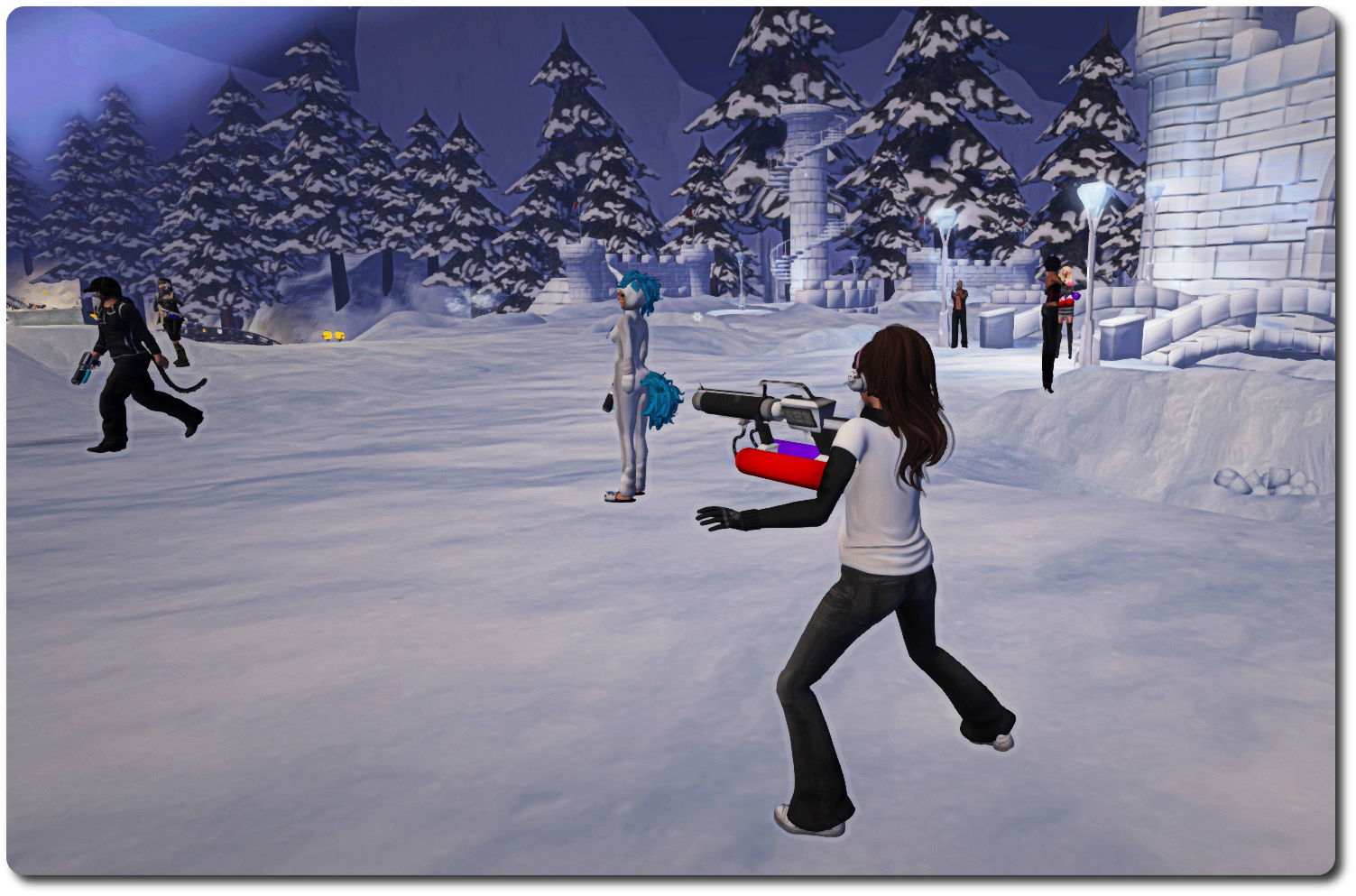
Winter Wonderland 2015-2016 features a much bigger snowball fight area
In blogging about the re-opening of the Lab’s Winter Wonderland on Thursday, December 17th, I asked:
The big question is, however – will there be a residents vs Linden Lab snowball fight this year?
Well, the answer wasn’t long in coming, as a blog post from Xiola on Friday, December 18th, announced that there will indeed be a snowball fight to mark Christmas 2015 in Second Life, as she wrote:
Come one – come all to the Snowball Arena for a friendly ice battle of epic proportions! We’re bringing back the Official Snowball Showdown – where you’re free to pelt your fellow Second Life Residents and Lindens with a bevy of sparkling snowballs!
If you missed last year’s battle – now’s your chance to get some snow slinging fun in an icy free-for-all at Winter Wonderland. Join us on Monday, December 21st between 10 AM SLT and noon SLT.
If you’re looking for the latest in snow-slinging arsenal, be sure to grab your free snow launching weaponry from the vendors around the arena. Premium members can unlock even more powerful artillery.
Mark your calendars, assemble your dream team of friends, and meet us in the snow!
The 2015 snowball fight – which marked a return of the event after a lengthy absence – was a pretty robust and fun affair. This year, with a greatly expanded arena space and the odd monster thrown into the mix, promises to be far more of an occasion.
The February 2015 snowball fight at Winter Wonderland: Strawberry Singh swings into action, demonstrating her skill with a snowball rifle in a one-handed, from-the-hip snap shot at a moving target! (Flickr)
So, reconnoitre the playing arena, if you are Premium, grab your upgrade badge from a Premium kiosk, and get ready to lock’n’load on Monday, December 21st, from 10:00 SLT.
 Lab Chat is the name of the new series aimed at providing Second Life users with the opportunity to have their questions put to Lab management and personnel.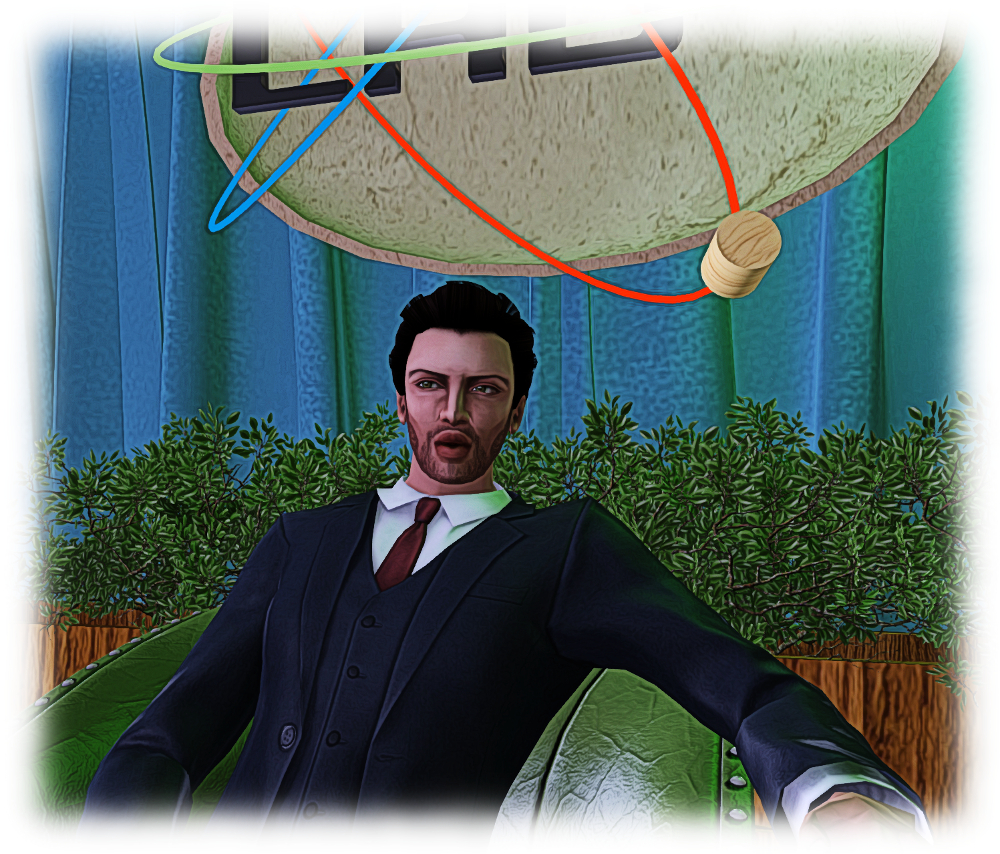








 Inara Pey: Living in a Modemworld