As I’ve noted a few times in these pages, Bellisseria, the Linden Home continent, provides space not only for people to live and form communities, but also to express themselves and the creativity present in-world and through people’s talents. One of the key ways this is done is though residents in the continent given their homes over for the display of art – their own, the pieces they’ve purchased and / or the works of others they invite to exhibit.
One of the Bellisseria galleries I’ve only recently become aware of – and my thanks to curator Fenella Allen for IMing me – is that of Limoncello Art Gallery.
While perhaps new to Bellisseria (given the continent itself is just over a year old!), this is a gallery with a long history. Originally founded by LastDitch Writer, the gallery existed in a 120-metre long airship hovering over the Mainland region of Nanga, and was home to his personal collection of art, both 2D and 3D.
Limoncello Art Gallery
The space available at Bellisseria is obviously a lot smaller that a 120 metre airship, but Lord Junibalya, who now looks after the collection, has provided a skybox for the art that forms a 2-storey gallery with a fair amount of room for pieces to be displayed – and there is a lot to see!
There is a lean towards art from the physical world – paintings, drawings, portraits, abstracts – but Second Life avatar studies are also well represented, while the upper level floor space lends itself to 3D pieces by Toysoldier Thor and Mistero Hifeng. Other artists represented in the collection whose names are likely to be recognised include Gitu Aura, Dido Haas, Carelyna, JMB Balogh, In Inaka, Audie Whimsy, Wyald Wooley and Asmita Duranjaya, to name a handful.
Limoncello Art Gallery
Given thes pieces are from a private collection, none are directly offered for sale. However it might be possible to purchase a copy of some pieces by contacting the artist directly (but please keep in mind that not all of the artists represented in the gallery may still be active in-world).
An impressive collection offering a lot to appreciate, the compact size of the parcel notwithstanding, Limoncello Art Gallery is well worth the visit for any patron of the arts in Second Life. My thanks again to Fenella for contacting me about it.
Earlier this month, I wrote about Professor Tom Boellstorff, and his move to teaching his course from the state-of-the-art Anteater Learning Pavilion at the University of California, Irvine (UCI) and into Second Life, as a result of the university’s desire to move classes on-line due to the SARS-CoV-2 pandemic (see: Tom Boellstorff: teaching digital culture in Second Life).
As noted in that article, Tom has been teaching a course entitled Digital Cultures (Anthropology 128C), utilising facilities he constructed at Anteater Island, where the students could study collectively and in working groups and also relax and socialise if they so wished.
Around 35 students participated in the course, and as a part of their work, they split into six research groups each one of which selected a specific aspect of digital culture they wished to study. Two of the groups focused on dating apps, one group studied ranking in League of Legends; one group studied the use of TikTok for education; one group studied fashion influencers on Instagram; and one group studied social interactions through virtual spaces an video games, using Animal Crossing as a reference point.
On Tuesday, June 9th, 2020, the six groups were at Anteater island, where they presented the results of their work. I was one of several Second Life users invited to attend the session (as well as it being generally open to all), and I hopped over in advance of the presentation to take a quiet look at the work and chat with Tom and the students.
Professor Tom Boellstorff (Tom Bukowski in SL) on the right, with student HannahUrban
Needless to say, it was an incredibly challenging quarter for everyone. Learning Second Life was a challenge for them (we also used Zoom), but of course the big thing was all of the difficulties due to the pandemic, from friends and family losing jobs, to working from their homes or apartments, to the isolation and dislocation. Then on top of that is now the George Floyd protests, in which many of the students have been taking a creative and active role.
So they are exhausted beyond belief, but also have done amazing work. We were originally going to have a room on campus where the groups could show off their research to anyone who wanted to come see. That can’t happen, so we’re doing it in Second Life instead!
– Tom Boellstorff (Tom Bukowski in Second Life) commenting on the course
and the move to using virtual / on-line tool sets
Student Michael Shaneman from “Group 5” studying socialisation via virtual spaces and video games, setting up his group’s presentation area.
The students I chatted all indicated they found the experience of using Second Life (none were already familiar with it) to be positive, if at times a little frustrating. Part of the latter was due to the need to look outside of the platform for some collaborative tools such as Google Docs, and part of it was down to UCI mandating the use of Zoom, which encouraged some students to step back from using SL, despite Zoom’s own lack of capabilities, such as break-out rooms.
The presentations themselves were conducted by the students in voice, using web media through a main board, with some of the groups also providing additional infographic boards in their presentation areas. Within each group, students took turns in introducing their project before walking through their methodologies – including direct interview with subject matter specialists, Q&A sessions with users and observational methodologies and then moving on to discuss their findings.
Some of the latter proved interesting. Those studying influencers, for example, noted that while followers tended to be aware they were being manipulated into potentially making a purchase, they nevertheless tended to more actively engage with an influencer and one another to form more of a community when the influencer would be more authentic in their views, outlook and appearance- and this has in turn started to alter how sponsors and brands respond to / use influencers.
Presenting findings in-world
Similarly, the group studying TikTok highlighted the fact that while it is a recent application intended for entertainment, it has taken root among “informal” educators – those wishing to pass on information / offer a means to impart information – due to its exceptional ease of use and its brevity of video length, the latter of which encourages a precise focus on a subject / message, whilst making the information easy to digest on the part of watchers. They also noted that the platform’s unique approach to interaction and feedback had also served to increase its popularity.
For me, the study looking at virtual spaces and video games as a means of social interaction was the most fascinating. Framed in terms of the pandemic, it really underlines the extent to which perceptions are being changed in terms of how video games with social aspects and virtual spaces can offer beneficial ways for direct, positive interaction between friends and between family members forced apart by the needs of physical distancing, helping to potentially open a new era of communication / interaction.
What was particularly impressive about this entire process is just how well it appears to have worked. From initial need to move to on-line teaching, through the creation of Anteater Island without overly disrupting the students work, through to enabling the study groups to function and bring together a set of engaging and informative presentations, the entire process itself is perhaps a case study in the making – and as I’ve noted, Tom has plans for just that, and I hope to be able to bring word on it in due course.
In the meantime, Anteater Island will remain open for visitors for the next several months, and the students have been invited to add more material if they wish. For those so interested in education in SL, it’s a worthwhile visit, as is following the links below.
My thanks to Tom for keeping me informed on things, and my congratulations to all the students involved in these studies.
The following notes were taken at the Simulator User Group meeting held on Tuesday, June 9th.
Simulator Deployments
At the time of writing there were no formal simulator release notes, however:
There was no deployment to the main SLS channel on Tuesday, June 9th.
On Wednesday, June 10th, the same RC deployment will be rolled to all of the simulator RC channels. This comprises:
A minor script constant fix (CLICK_ACTION_ZOOM and CLICK_ACTION_DISABLED were missing).
The chat range changes for channel 0.
Voice Carry Project
Voices Carry is the name given to the extended chat range project. Once available, it will allow region / estate owners / managers to set the open chat range on a region (see BUG-228333). When considering it, the following points should be kept in mind:
It only applies to local chat channel 0, and so it should not impact scripted objects using other chat channels.
The distance set within a region will determine which, if any, of any adjoining regions can her local chat with that region.
For example, if you are in a region with chat distance set to 50m and you’re more than 50m from any boundary with an adjoining region, then your chat will not be relayed beyond the region.
The distance chat is set to within a region will determine how far any chat from an adjoining region will be relayed within it.
For example: if a region has a chat range of 20m, and chat is relayed from a neighbouring region with a range of 100m, that chat will only be relayed 20m within the current region.
No matter how great the chat range is set within an region, it will never be relayed further than those immediately adjoining it.
For example: if a Mainland region has a chat range set to 1000m, chat from it will only be relayed to the (maximum of) 8 regions adjoining it.
SL Viewer
There have been no updates to the official viewers to mark the start of the week, leaving the current viewers as follows:
Current Release viewer version 6.4.3.542964,, dated May 29th, promoted June 2nd, formerly the FMOD Studio RC viewer – NEW.
Release channel cohorts:
Tools Update RC viewer, version 6.4.4.543148, June 5 – this viewer is built using VS 2017 / a recent version of Xcode, and Boost.Fiber. It contains no user-facing changes.
Love Me Render RC viewer, version 6.4.4.543142, June 3.
CEF RC viewer, version 6.4.3.542757, issued May 27.
Project viewers:
Mesh uploader project viewer, version 6.4.3.542535, June 3.
Copy / Paste viewer, version 6.3.5.533365, December 9, 2019.
Project Muscadine (Animesh follow-on) project viewer, version 6.4.0.532999, November 22, 2019.
Legacy Profiles viewer, version 6.3.2.530836, September 17, 2019. Covers the re-integration of Viewer Profiles.
360 Snapshot project viewer, version 6.2.4.529111, July 16, 2019.
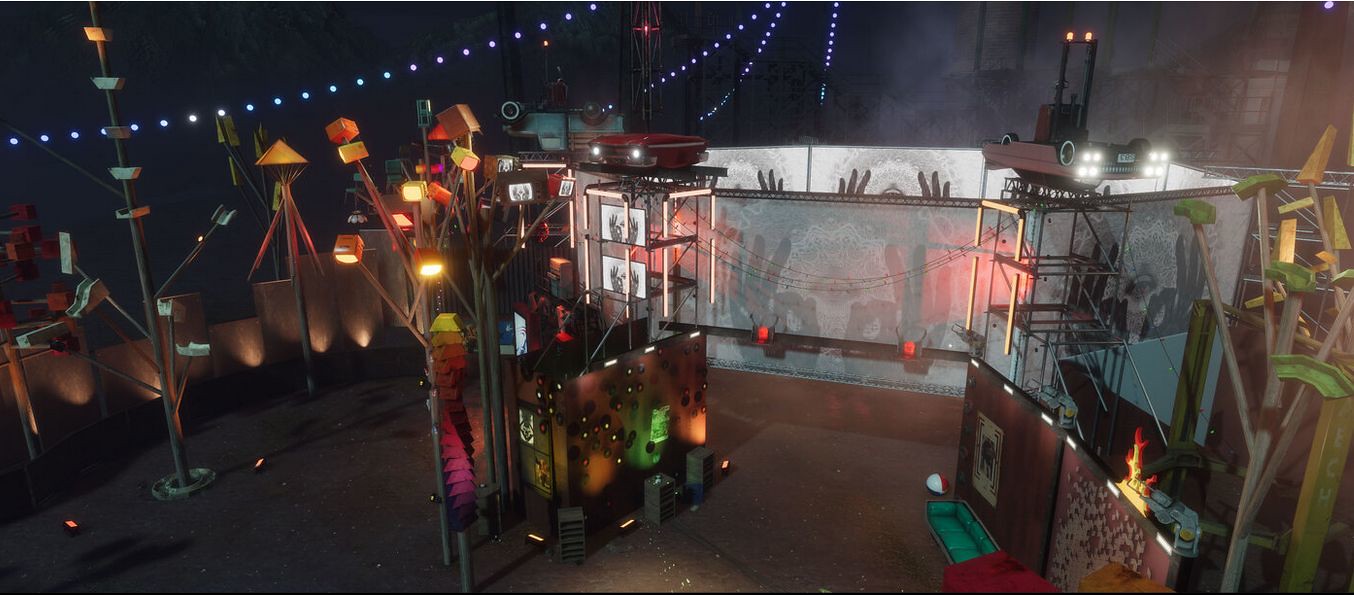
The Glastonbury Shangri-La Gas Tower in Sansar. Courtesy of Lost Horizon
Those who attend the annual Glastonbury Festival in England are likely aware that the SARS-CoV 2 pandemic has caused this year’s event to be cancelled in the physical world. Nevertheless, one part of it will be going ahead within the virtual realm – and the venue for it will be Sansar.
The team behind Glastonbury’s night-time activities – called Glastonbury Shangri-La – have teamed up with Wookey Technologies and VRJAM to stage a two-day virtual festival on Friday, July 3rd and Saturday, July 4th. The virtual event, called Lost Horizon, will take place across four purpose-built stages in Sansar. More than 50 music acts including DJs Peggy Gou, Fatboy Slim, Carl Cox and Pete Tong will play during the daily 12-hour sessions. In addition, the festival will also feature more than 200 visual art pieces, curated by the ShangrilART group on the theme of human connection.
As well as being available directly through Sansar as a ticketed event – those wishing to attend can get their free ticket via the Sansar website – Lost Horizon will also be streamed via You Tube, Twitch, Beatport and other platforms, will be viewable on a mobile app (to be made available from June 26th, 2020), and sets will be broadcast via radio.
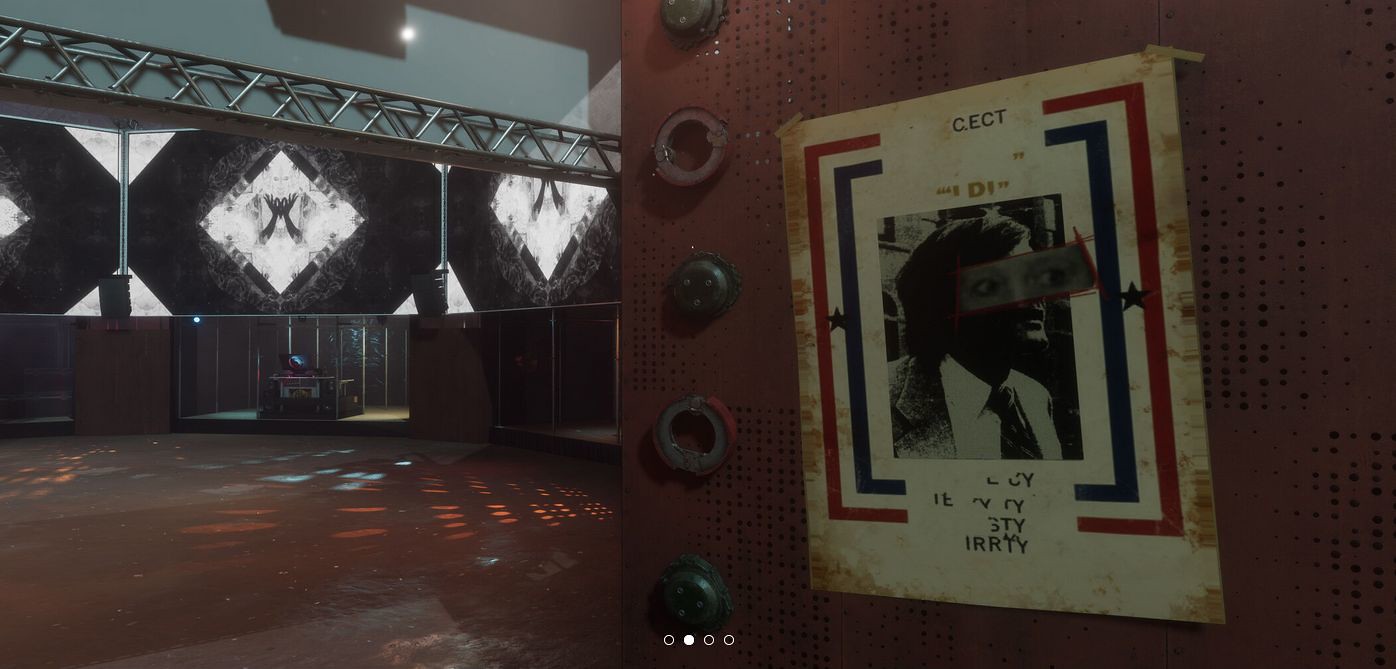
Another view of the Gas Tower stage in Sansar, courtesy of Lost Horizon
The stages for the virtual event include Glastonbury Shangri-La’s famous Gas Tower, the focal point for event activities in the physical world. It will feature the likes of Fatboy Slim, and tech-house Ibiza favourites Jamie Jones and Seth Troxler. Alongside of it, the Freedom stage will feature Frank Turner, Alabama 3 and Coldcut. You can see the full line-up of acts on the Lost Horizon website, while the ShiTV stage will include films, documentaries, theatre, live art, comedy, animation and talks.
Glastonbury Shangri-La first took place in 2008. Over the years it has grown and evolved, offering those attending Glastonbury a rich mix of music and art in “after hours” sessions that take place overnight when the “main” sets have all finished.
With its roots deep in contemporary music, art and activism, Shangri-La has established itself as a legendary field in UK festival culture, engaging a truly dynamic community of artists, builders, and revolutionary creators and known for showcasing the latest “off main stage” acts.
– Lost Horizon, Glastonbury Shangri-La
Glastonbury Shangi-La Shitv stage in Sansar, courtesy of Lost Horizon
Glastonbury Shangri-La Creative director Kaye Dunnings conceived the idea for Lost Horizon shortly after the decision was made to cancel the physical world Glastonbury Festival in March 2020. Whilst the event is virtual, Dunnings hopes the same sense of activism that permeates the physical world event will filter through into the virtual as well.
While tickets to the event are free, attendees will be encouraged to donate to The Big Issue, the world’s most widely circulated street newspaper, raising money to offer homeless people / those at risk of homelessness, the opportunity to earn a legitimate income and helping them to reintegrate into mainstream society, and to Amnesty International.
Activism being so important to us, we wanted people to come and rave and interact and party and have a really great time. But we are also really passionate about being conscious, while you are doing that, of the world around you and how you can get involved in things. We want people to take action now more than ever. We want people to get involved in stuff outside the festival, so they come and have a great time but actually do something meaningful afterwards. We want to inspire people to actually take it that step further themselves.
– Kaye Dunnings, Glastonbury Shangri-La Creative Director
Dunning also recognises that as well as offering the opportunity to present Glastonbury Shangri-La during the pandemic, Lost Horizon could be the start of a new means reaching a global audience – much as how Linden Lab hoped, and the Wookey team continues to hope.
With Shangri-La presents: Lost Horizon, we’re delivering the music festival of the future: deeply immersive, fully on-line, accessible to anyone and anywhere with a PC or phone at their disposal. Shangri-La presents: Lost Horizon exists at the vanguard of something truly incredible, and we couldn’t be more excited to turn this page. The future of live events is virtual and we’re incredibly excited to be bringing it to fruition.
– Kaye Dunnings, Glastonbury Shangri-La Creative Director
Whether that is the case, remains to be seen. In the meantime all those interested in Lost Horizon can find more details below.
Auld Lang Syne, June 2020 – click any image for full size
The highlands and islands of Scotland are proving a popular inspiration for Second Life region designers – and rightly so; there is a deep beauty to their rolling hills and high peaks that invites the imagination and leaves the heart filled with a yearning to explore. As such, we’ve visited a number of Scottish themed locations over the last few years, but this is the first time I’ve been able to write about Elo (WeeWangle Wumpkins) Scottish inspired settings.
The latest iteration of her work – Auld Lang Syne – opened recently, and it offers a mix of the rugged abruptness of the Scottish highlands mixed with a strong sense of age within the buildings to be found scattered around it, together with a healthy dose of mystery with a fitting dash of humour.
Auld Lang Syne, June 2020
Admittedly, getting around on foot isn’t easy in places: the island rises sharply from the surrounding sea, and many of the slopes look like they would need a lot of scrambling to get up and down – just as many of the glacier-cut slopes of Scotland’s north may require the assistance of hands when clambering up them and a certain caution in getting down least one feet end up running away beneath one.
This steepness of setting may not at first be obvious from the landing point, which sits on the island’s highest rise within an ancient but intact fortification (Pupito Helstein’s popular Runestone Castle) – just an easy walk away is a group of standing stones inspired by the Neolithic Callanish Stones, located on the west coast of Lewis in the Outer Hebrides. However, descend the slope from the fortification to the ruins of a medieval chapels and its surrounding graveyard, and you’ll immediately get a feel for the region’s natural ruggedness.
Auld Lang Syne, June 2020
Which is not to say it is all hard work is getting around; here and there are paths that make for easier descent to the coastal areas, one of which is just in the lee of the hilly shoulder on which the stand stones sit. It leads to an extensive coastal beach that faces south and offers and gentle sandy walk east and then north, passing hints of the more recent history of the place: the wreck of a fishing boat, the remains of a broken aeroplane engine – presumably all that remains of a past crash -, an aged anchor and the carcass of an old boat.
To the east, the path along the beach is almost blocked by the waters flowing out from a deep gorge. Fortunately, fallen trunks have been joined to offer a way over the water, a heron standing on their backs like as if awaiting payment of a toll in order to allow visitors to proceed. Beyond the bridge, more tales of past life can be found, together with some of the island’s current inhabitants, a number of whom appear to have partaken of a wee dip in the sea and are now following another of the trails back up to their hillside home.
Auld Lang Syne, June 2020
One of two towers that rise above the island’s rolling hills watches over these “locals”. Broken and holed, it appears to be a disused water tower, rather than part of any castle or fortress, although a owl is now acting as a look-out, keeping watch from the broken drum of its upper reaches. The view back across the island from this tower reveals the landing point on its high hill, whilst below and to one side, the ruins of what might have been an old manor house can be seen, nestled in secret on a north facing shelf of rock overlooking the beach, sheltered from the rest of the island by a rocky upthrust.
Around to the west, and sheltering below the castle’s hill, is another old ruin, similar in nature to that in the north, and now home to a wonderful garden that positively invites visitors to stay within it. The old structure and garden are in turn watched over by the island’s second tower, also the worse for wear as it sits on a rectangular promontory in the island’s south-west corner.
Auld Lang Syne, June 2020
In between these “main” points of interest are others awaiting discovery that add further depth to the setting and increase the sense of realism to the island. As such, taking the time to wander on foot – particularly in circumnavigating the coast whilst keeping an eye on the slopes above – is recommended. However, for those so inclined, the castle hall forming the landing point has a teleport board that can be used to hop to those main points of interest. The second hall of the castle, meanwhile offers a little galley of photos taken around the region, whilst its flat roof provides a view over the island and places to sit.
All in all, a delightful setting, with plenty of detail and with touches that encourage a smile.
Speedlight, the browser based / Android Second Life client, gained a further series of updates at the end of May and the beginning of June, together with an important announcement about the client’s future direction.
Key within the updates were the following:
The Android app now supports sending error feedback to the Speedlight team to help with bug fixing.
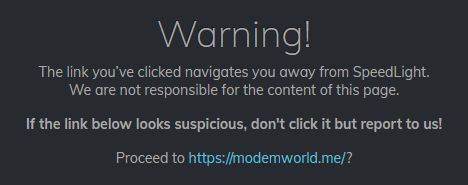
Web links are now displayed in IMs, local and group chats, together with a warning that following them will take a user away from the Speedlight site.
Links contain in IMs, chat and group chat are now clickable. Those that connect to external web pages will display a warning when clicked.
Further performance improvements.
Full-function 3D capabilities are now available to basic and well as Gold subscribers. So, Basic account holders can now move their avatar around.
The feedback capability means that the Speedlight developers are currently focused in bug fixing, although the team also note they are working on group management capabilities – viewing groups, sending notices and moderating group chat, and state these capabilities will be release soon™.
iOS Version Coming
While Speedlight is entirely operating system agnostic in its browser version, allowing it to be used on Windows, OS X, Linux, Android and iOS through a suitable browser, the team has already released a dedicated Android version, as I noted in Speedlight: using the Android app, back in February 2020.
On May 27th, 2020, the Speedlight team have started working on a dedicated iOS version of the client as well, with an expectation that it will follow the same development path as the Android app, and – if all goes according to plan – should initially be made available in around 2-3 weeks.
Observations
The two key points of the recent announcements are likely to be the 3D avatar capabilities now being available to all Speedlight users, Basic or Gold, and the iOS app development, and the upcoming iOS app version.
The former could help make Speedlight a more attractive alternative to users who would like a “light” / mobile client (remembering that with Android, the device must be running version 7.0 or higher, whether using the dedicated app or running Speedlight through an Android browser), but who were not keen on paying a fee to be able to do so.
This does, however, also beg the question as to what the Speedlight team plan to do in order to maintain the attraction of Gold subscription. Currently, there is the mass IM capability, but his is liable to have limited appeal for most SL users, some one can only assume other features will be made available on a Gold subscription basis, although obviously, time will tell on this.
Given that Speedlight is already on the road to developing world rendering with interactive capabilities, the news that they are working on an iOS app version of the client may also be welcomed by users, particularly given that many feel such a capability is is “essential” to a mobile client, and Linden Lab has indicated that it will be some time before their in-development iOS / Android client will have such a functionality.





 Inara Pey: Living in a Modemworld