Space Sunday: Tenacity, Betelgeuse and a short round-up

The first Dream Chaser Cargo, set to fly in 2021, now has a name – Tenacity. Credit: SNC Inc

Dream Chaser Cargo is an uncrewed version of Sierra Nevada Corporation’s (SNC) Dream Chaser space plane, and it is drawing closer to commencing operations ferrying supplies and experiments to and from the International Space Station (ISS), with operations due to start in mid-to-late 2021.

The world’s only non-capsule private orbital spacecraft, Dream Chaser Cargo is designed to be launched atop a United Launch Alliance Atlas V booster, and land like a conventional aircraft. Once operational, it will be capable of lifting some 900 kg of material within its cargo space, and a further 4,500 kg in a detachable and disposable module called Shooting Star that attaches to the rear of the space plane and includes a docking system for linking to the ISS, as well as supplying electrical power to the Dream Chaser.

SNC’s uncrewed Dream Chaser Cargo, the Shooting Star module bearing the external cargo “box” for unpressurised loads. Credit: SNC Inc

Shooting Star can carry cargo both inside it, and in an external unpressurised unit. In addition, it can be used to hold some 3,500 kg of waste from the ISS, the module being jettisoned to burn-up in Earth’s atmosphere prior to Dream Chaser Cargo (which can also carry experiments back to Earth) making an atmospheric re-entry towards the end of a mission.

Now the first Dream Chaser vehicle has its wings and a name: Tenacity. The wings were delivered to SNC’s fabrication facility in spring 2020, and with work now cautiously resuming, the wings  – sans­ their outer skins – will be mounted on the vehicle’s air frame. During flight, the wings are folded against the fuselage so they can be contained within the payload fairings that protect the vehicle and its module during launch. After the fairings are jettisoned, the wings swing into their “flight” position so they can give Dream Chaser Cargo aerodynamic lift once back in Earth’s atmosphere.

Capable of fully automated flight, Dream Chaser Cargo has a significant advantage over the other ISS resupply vehicles capable of returning material to Earth – Dragon and Progress – in that it uses relatively “safe” fuels. This means ground crews can access the vehicle without having to wait for extensive safety checks to be completed, allowing delicate or time-sensitive cargo to be removed from the vehicle more quickly.

Betelgeuse’s Dimming: Explained But Still Mysterious

The orange giant Betelgeuse caused excitement in late 2019 / early 2020 when it went through a period of unprecedented dimming, even for a star as variable as it can at times be, its apparent magnitude (brightness as seen from Earth) reducing by a factor of 2.5 (or roughly 25-30%).

Side-by-side comparison of Betelgeuse’s dimming, as seen by the SPHERE instrument on ESO’s Very Large Telescope. Credit: ESO/M. Montargès et al.

At the time, the dimming sparked speculation the star may have gone supernova, and we might be about to see the light of that event – it having taken some 700 years to reach us. Most astronomers doubted this was the case, and were confident the star would return to its more natural brightness, as indeed it did 2020 (see: Space Sunday: an exoplanet, a star and an asteroid).

Now, examinations of observations made by the Hubble Space Telescope (HST) in late 2019 suggest the star’s dimming was most likely caused by the ejection and cooling of dense hot gases. What’s more, additional observations suggest Betelgeuse may be going through another dimming period out-of sync with its usual cycles.

Between October and November 2019, HST observed dense, heated material moving outward through Betelgeuse’s extended atmosphere at 320,000 km/h, and it was following these observations that the more dramatic dimming of the star was seen from Earth, notably around the star’s southern hemisphere. It’s now believed that jet stream of hot gas reached a point millions of kilometres from the star and rapidly cooled to form a cloud of dust between the star and Earth-based observers, giving rise to the star’s apparent dimming.

An artistic rendering of the outflow of plasma from Betelgeuse cooling into a cloud of dust that contributed to the star’s dimming. Credit: NASA, ESA, and E. Wheatley (STScI)

However, study of the HST data revealed something surprising: the stream of ejected gas did not originate at the star’s rotational poles, as current stellar models would suggest. Rather, the Hubble data indicates that Betelgeuse can drive off material from any part of its surface. The data also revealed that during the event, the star lost a considerable amount of mass – around twice the “normal” amount it loses in a given period, just from its southern hemisphere. This in itself makes what happened to Betelgeuse unique: nothing like it has been previously seen in 150 years of observations.

Whether or not this means we’re seeing a new stage in Betelgeuse’s life cycle is unclear, but the mystery doesn’t end there. This is because data gathered by NASA’s Sun-orbiting Solar TErrestrial RElations (STEREO) satellite appear to suggest the star is again dimming, and outside of its more cycles. Until now, Betelgeuse has had two cycles of dimming and brightening. The first runs for around 25 years, the other runs through 425 days. Both coincided during the 2019/2020 dimming, contributing it. Thus for the star to be dimming now puts it well inside the 425 day cycle. Exactly what all this means isn’t exactly clear, but it has sparked considerable interest and observers will continue to monitor it through the rest of the year.

Quick Round-up

The last week saw the 2020 Perseids meteor shower reached its peak as the Earth passes through debris left by the comet Swift-Tuttle. As is usual, the event resulted in many outstanding photos, including the one below.

August 11th/12th: a Perseid meteor streaks toward the bright planet Jupiter (to the right of the windmill) and its dimmer companion Saturn (to the left) in the countryside near Las Vegas. Credit: Tyler Leavitt

SpaceX

The next flight of the SpaceX Crew Dragon vehicle has been announced. Crew-1, the first “operational” flight will now targeted for October 23rd, 2020, when it well carry NASA astronauts Shannon Walker, Victor Oliver and Mike Hopkins, together with JAXA astronaut Soichi Noguchi as the nucleus of the Expedition 64 crew.

Originally scheduled for a late September / early October launch, the mission has been pushed back to allow additional time for the Russian Soyuz MS-17 mission to launch and rendezvous with the ISS.

The astronauts who will fly the NASA / SpaceX Crew-1 mission on or after October 23rd: NASA astronauts Shannon Walker, mission specialist; Victor Oliver, pilot; and Mike Hopkins, Crew Dragon commander; and JAXA astronaut Soichi Noguchi
After its 150m “hop”, Starship prototype SN5 has been rolled back for inspection and re-fit – possibly with the lengthened landing legs I mentioned in me previous space Sunday update. In the meantime, it appears that the next vehicle to make a test flight will be Starship prototype SN6. A further prototype, dubbed SN7.1, and comprising just a single fuel tank that uses new alloy end caps, is being prepared for a deliberate over-pressurisation test. This test vehicle has been dubbed SN7.1 in recognition of the SN7 tank section that was also tested to destruction earlier in the year.

However, most attention has turned towards prototype SN8, as it has been confirmed this will be the first of the prototype to be fitted with the upper section, nose cone and aerodynamic “wing” surfaces, and so will likely be used for the 20-km flight tests.

The Starship SN8 prototype elements: within the mid-bay building, the upper section and nose cone; arrowed the forward aerodynamic canards. Credit: RGV Aerial

NASA

Whilst still 7 months from Mars, NASA’s Ingenuity helicopter drone, a part of the Mars 2020 mission and stowed under the Perseverance rover, had its batteries charged up to 35% capacity on August 7th, one week after launch. The 8 hour trickle-charge operation marked the first time the helicopter’s batteries have been charged in the space environment, allowing the vehicle to be powered-up.

The action was taken so that mission managers could check-out the drone’s electrical systems following launch and allow it to report on its overall status. The battery level will be maintained at the 35% charge level throughout the cruise phase, with routine re-charges, in order to allow the helicopter’s electronics to be warmed by a regular flow of electrical power.

Transiting Exoplanet Survey Satellite (TESS) – due to hunt for exoplanets potentially orbiting hundreds of thousands of stars around us. Credit: NASA’s Goddard Space Flight Center/CI Lab

On July 4, NASA’s Transiting Exoplanet Survey Satellite (TESS) finished its primary mission, imaging about 75% of the starry sky as part of a two-year-long survey. In capturing this giant mosaic, TESS has found 66 new exoplanets, or worlds beyond our solar system, as well as nearly 2,100 candidates astronomers are working to confirm.

During the first year of operations, TESS observed the southern sky, while in the second year, it turned its attention to the northern skies.  Allowing the way, the mission team has been able to introduce numerous improvements. Among other things, these now allow the satellite to capture a high-resolution image of the stars around us once every 10 minutes, three times faster than at the start of the mission, while it can now measure the comparative brightness of thousands of stares every 20 seconds, rather than every two minutes. These latter captures will more readily reveal changes in brightness that might be the result of a star “wobbling” in its spin due to the presence of planetary bodies (although TESS’s primary means of locating possible exoplanets is via the transit method) or the results of outbursts like coronal mass ejections (CMEs).

With the completion of its primary mission, TESS is into an extended mission, the first phase of which will run through until September 2020.

Virgin Galactic’s Supersonic Ambitions

As if flying tourists into space wasn’t enough, Virgin Galactic has announced it has entered into an agreement with Rolls Royce to build a new supersonic airliner aimed at the “premium” flight market.

The new aircraft – as yet unnamed – will, the company claim, fly some 50% faster than the Anglo-French Concorde, with a cruising speed of Mach 3 – allowing a crossing of the Atlantic in around 2 hours. If realised, the aircraft will cruise at an altitude of 18 km (60,000 ft) and will be capable of carrying up to 19 passengers.

An artist’s impression of the Virgin Galactic Mach 3 airliner. Credit: Virgin Galactic / Rolls Royce

Yes, that’s right. 19. The aircraft is intended to capture a modest percentage of the premium (business and first class) air travel market, with Virgin Galactic CEO Sir Richard Branson stating the company only need to capture 5% of that market to turn a profit. Currently, the aircraft has completed a “mission concept” review study involving Virgin Galactic, Rolls Royce (building of the engines that powered Concorde), aviation experts and NASA.

No details on when the aircraft might fly have been given, with the craft’s overall shape, size, dimensions, etc., yet to move out of conceptual drawings.

Eta’s little boxes in Second Life

Hannington Endowment for the Arts: Little Boxes

Etamae opened her first 3D art installation on August 15th, 2020, with Little Boxes at the Hannington Endowment for the Arts (HEA).

Little Boxes. A simple little song or a political satire about the creation of suburbia and associated conformist middle class attitudes and a reminder to us all how easy it is to lose one’s individuality to ‘fit in’.

– Etamae’s introduction to Little Boxes

Little Boxes was written in 1962 by Malvina Reynolds, an American folk/blues singer-songwriter and political activist and initially became a hit for Pete Seeger in 1963. It was written in response to Reynolds witnessing the birth of suburbia in California through the development of tract housing like that seen in Daly City, San Francisco.

It’s a song that can easily be listened to as a little bit of fun or as a genuine satirical warning against the loss of genuine individuality in the face of the marching drive of middle-class idealism, where everyone attends the same schools and universities, seeks the same class of careers, lives among peers with the same backgrounds and careers and wanting the same precisely the same education / career path for their children.

Hannington Endowment for the Arts: Little Boxes

All of this is perfectly reflected in Eta’s installation, presenting as it does five gaily-coloured little house boxes visitors are invited to enter, each one reflecting within it as specific element of the song’s lyrics (with more on the walls outside) that can be read or – with a click on them – listened to. This makes it something of a simple, light-hearted visit, or a piece to give us pause to reflect on the whole question of individually vs. conformity, which has become perhaps even more prevalent in the decades since the song was first recorded – and in far more than just middle-class suburbia.

Whether you opt to look at Eta’s little Boxes as a tongue-in-cheek installation, or an underscoring of Reyonold’s song, it’s worth hopping over to HEA and taking a look at it and the other installations on offer there. In the meantime here’s the song.

SLurl Details


Splash! a celebration of merlife in Second Life

Splash, Sunday August 16th to August 23rd, 2020

Organised by Elite Equestrian, and running from Sunday, August 16th through Sunday, August 23rd, 2020, is Splash! a special week-long event for merfolk and their friends.

Taking place under the sea, Splash offers music, dance performances, sporting events, stories, raffles, and shopping.

We have a full week of fun events and activities, including noted DJs, spoken word and dance performances, sporting events, shopping, and more!

The full line-up of events comprises (all times SLT):

Sunday, August 16th

  • 14:00: DJ Elrik Merlin, of Radio Riel, opening with a watery interlude of dance and music.
  • 18:00-19:00: DJ Ktadhn Vesuvino and Caledonia Skytower steer a unique course for a journey of music and poetry, featuring the Sea in all her alluring, fierce glory.

Monday, August 17th

  • 10:00: Undersea Kelpy jumping contest with ribbons, trophies and Elite Equestrian  gift cards for the top six places.

Tuesday, August 18th

  • 12:00 noon; Keply jousting lessons with Duchess Atrasalus of Tamriel Isles, Knight of Dragon’s Lair, member of the Medieval Games Alliance. Wednesday, August 19th, 7 pm SLT

Wednesday, August 19th

  • 19:00: Undersea Kelpy jumping contest with ribbons, trophies and Elite Equestrian  gift cards for the top six places.
Splash, Sunday August 16th to August 23rd, 2020

Thursday, August 20th

  • 12 noon: formal jousting contest.

Friday, August 21st

  • 12:00 noon: DJ Ktahdn provides sea-themed music from various sources. Instrumental and vocal, sailors and swimmers, and maybe even a poem or two. Our course will be adjusted on the fly, as we dance.
  • 18:00: tales of Enchantment from the Sea: Reader Willow Moonfire will read two traditional Celtic legends from Scotland and Ireland, The Soul Cages, and The Seal Catcher and The Selkies.

Saturday, August 22nd

  • 16:00: Idle Rogue’s Guerilla Burlesque appearing life at Splash! with an underwater dance production featuring performances by Aubreya Joszepe, Dax Dover, Gloriana Maertens, Harlequin Lock, Meegan Danitz, and Melina Aurotharius.
  • 17:00-19:00: DJ Caledonia Skytower with a danceable mix of watery tunes.

Sunday, August 23rd

  • Seanchai Library presents an hour of tales spun in the watery depths: mer people, and creatures of myth and legend.
Splash, Sunday August 16th to August 23rd, 2020

In addition, visitors will be able to ride the Kelpy-Go-Round and receive a merfolk gift (with a new every day), try the Kelpy jumping course for themselves (outside of the contest times) or try their hand at the jousting lists, participate in the raffles meet with other merfolk – or for those not familiar with SL’s mer communities – get to know merfolk.

And in case you’re wondering – a Keply for the the event, is a sea horse (but with legs!). There are boards places around the event space that will rez a Keply for visitors to ride – just accept the event experience and follow the instructions. The jumping course is available through a teleport portal to one side of the event space.

The organisers would like to emphasise that while the event is taking place in an adult region, full nudity should be avoided, although topless outfits are permitted.

SLurl Details

  • Splash! (Island of Joy, rated Adult)

Baltimore’s Peale Centre in Second Life

Virtual Peale, Second Life

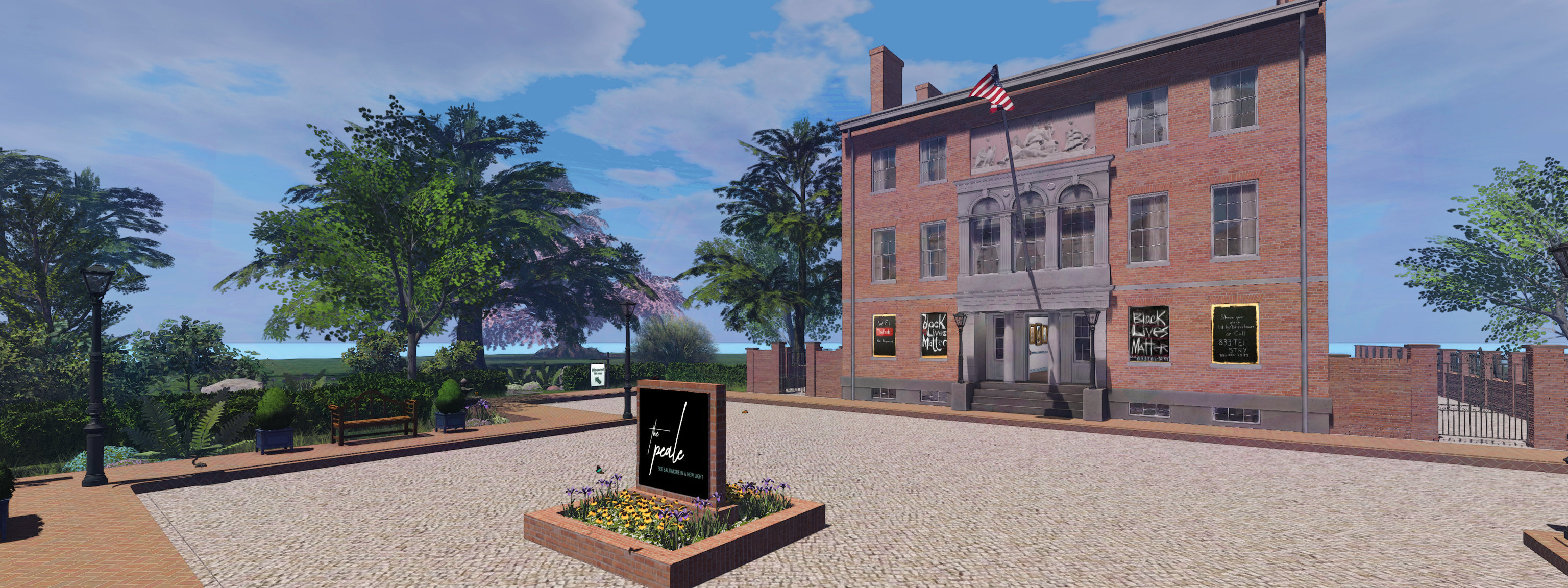
Saturday, August 15th 2020 marks the start of a new public experience in Second Life when the Virtual Peale formally opens its doors to visitors from both within and beyond the platform.

Virtual Peale is a collaborative project involving The Peale Centre for Baltimore History and Architecture and Linden Lab, and with the support of Virtual Ability Inc. It encompasses an in-world reproduction of the historic Peale Centre building, which will be used to host a range of virtual exhibitions and events that both mark the original building’s foremost roles as both a museum, and its modern day role as a cultural heritage centre for the City of Baltimore.

Some of the images of the Peale building over the decades, located in the Virtual Peale entrance hall

As one of the most historic buildings in Baltimore, the Peale Centre building is a US National Historic Landmark, appearing in the US National Register of Historic Places. It first opened its doors to the public on August 15th, 1814 as the first purpose-built museum building in the United States. It was designed by Robert Cary Long, Baltimore’s first native-born (and self-trained) architect, and  commissioned by Rembrandt Peale, whose father, the artist, inventor, naturalist and politician Charles Willson Peale (1741–1827), had co-founded the Pennsylvania Academy of the Fine Arts and Philadelphia Museum in 1805.

The Peale building functioned as a museum from 1814 through to 1829, becoming famous for its exhibitions of natural history, militaria and selections of art by some of history’s most renowned painters from around the world, together with works by members of the extended Peale family, most of whom – including Rembrandt Peale – were accomplished artists in their own right. In 1816 the museum made history by becoming the first gas-lit building in Baltimore, Rembrandt following the example of his brother Rubens, Rubens, who had installed similar lighting in the family’s Philadelphia Museum. Doing so allowed Rembrandt to gain the backing needed to establish the Gas Light Company of Baltimore, the first commercial gas light company in America, and this in turn resulted in Baltimore becoming the first US city to be illuminated by gas street lights.

One of the ground floor rooms of Virtual Peale with (l) a drawing of Rembrandt and Rubens Peale demonstrating gas-powered lighting, and (r) The Artist in His Museum, a self-portrait by C.W. Peale painted in 1822, the original now hanging in the Pennsylvania Academy of the Fine Arts

In 1829/30, the museum relocated, and the Peale Building became Baltimore’s City Hall through until 1877. In 1878 it became the location of the first public high school for African Americans in the city, prior to passing into commercial use from 1879 through until 1929. Following an extensive rebuilding programme, in 1930 the building returned to its roots as Municipal Museum of the City of Baltimore, although it was referred to simply as “The Peale Museum”. It continued in this role through until 1997, gaining considerable recognition over the years for its collection of Peale portraits, its annual art and photography events and for several exhibitions combining the history and architecture of Baltimore, such as the nationally acclaimed Rowhouse: a Baltimore Style of Living, a celebration of Baltimore’s distinctive row houses.

Today, the building forms the nucleus of The Peale Centre for Baltimore History and Architecture, and is in the midst of renovations to restore it to its former glory. Once completed, this work will allow it to function as a historic heritage centre / place of learning through the 21st century, including enabling local cultural communities to share their authentic stories of the city both through live performance and on-line.

Another of the ground floor exhibition spaces within Virtual Peale. Note that many of the items throughout the museum are interactive – left-click them for information to be displayed in local chat

To mark the 206th anniversary of the building first opening to the public, the Virtual Peale will similarly be opening its doors within Second Life on what has become known as Founder’s Day for the building. Through it, visitors from across Second Life and beyond will be able to learn about it and the Peale family and participate in special virtual exhibitions.

Developed from a 3D model of the Peale Museum building originally created by the Imaging Research Centre at the University of Maryland, Baltimore County (UMBC) for the university’s Visualising Early Baltimore project, the Virtual Peale reproduces the original’s historic frontage and includes a virtual take on the Peale gardens. Inside, the building presents aspects of the physical Peale Centre’s interior, with exhibition spaces that help tell the building’s story and the work of the Peale family as artists, curators, inventors, and naturalists. The one departure from the original floor plans is the long entrance hall leading to the main lobby area, which is used to present photographs of the original Peale building throughout its history.

The Virtual Peale Garden

For the first exhibition, Virtual Peale presents Redefine/ABLE: Challenging Accessibility, marking the 30th anniversary of The Americans with Disabilities Act of 1990.

Originally developed by students from the University of Maryland (UMD), to be presented as a cross-platform, multi-site exhibit utilising both the UMD’s College Park campus and the Carroll Mansion Museum in Baltimore, thanks to the SARS-CoV-2 pandemic, Redefine/ABLE has been re-imagined as an immersive Second Life experience. It is designed to address diversity, inclusion and ableism, and seeks to engage audiences about the successes and challenges of persons with disabilities in Maryland and beyond.

Developed with a grant from Maryland Humanities, and with the support of the National Endowment for the Humanities and the Maryland Historic Trust, and with the active support and advice of Virtual Ability, Inc., Redefine/ABLE can be found in the Virtual Peale’s second floor Picture Gallery – actually a teleport that leads to a separate platform than is automatically activated on climbing the stairs and “entering” the exhibition space.

The Redefine/ABLE exhibition in Virtual Peale, featuring interactive panels

By using the space in this way, with teleports connecting exhibits with the main building, it will be possible to expand Virtual Peale’s internal layout to offer additional gallery spaces. Some of these will reflect and expand on exhibitions that can also be found in the physical world, whilst others will be inspired by the Peale’s programming and partners, allowing the Peale in Second Life to become a creative hybrid of physical and imaginary museum spaces.

It has been thrilling to develop this new experience of the country’s oldest museum building in Second Life. Thanks to the amazing work of Linden Lab and Virtual Ability, Inc., we are now able to welcome a huge new community to the Peale, and share its rich history as well as the authentic stories and creativity of Baltimore with the largest and oldest virtual world on the Internet.

– Dr. Nancy Proctor, Executive Director of the Peale Centre

In addition to providing input and advice on hosting the Redefine/ABLE exhibition, Virtual Ability has also played a key role in developing Virtual Peale: most of the interior detailing has been put together by Eme Capalini of Virtual Ability, and she also spent time developing a “Mastodon Hunt” to help celebrate the ties the museum and C.W. Peale have to the unearthing of the first mastodon skeleton to be found in the United States that went on to become the focal point of the museum’s opening exhibition and the subject of C.W. Peale’s 1086 painting, Exhuming the First American Mastodon (a reproduction of which can also be found inside the Virtual Peale building).  Further, Virtual Ability are assisting The Peale Centre in helping members of the public sign-up and join Second Life for this opening event.

The Redefine/ABLE exhibition in Virtual Peale

Also included in the Virtual Peale build is the StoryTelling Studio. As noted above, a major part of The Peale Centre for Baltimore History and Architecture is to keep alive authentic stories about the City of Baltimore through live performance and on-line events, and the Storytelling Studio is a part of this, together with a partnership the centre has with Libraries without Borders. It is also something the Peale Centre wants to extend into Second Life.

So, if you are a resident of Baltimore and / or have a story connected to Baltimore and its history you’d like to share, the Peale Centre would like to hear from you. contact them by dropping your details and story via note card into the mail box inside Virtual Peale, or if you prefer, you can use the Peale Centre’s Add A Story page, or reach out of project members through the Peale’s in-world group or e-mail them at info-at-thepealecenter.org.

You can learn more about Virtual Peale and the work of the Peale Centre via the Lab Gab video below.

Virtual Peale Opening Event

As a part of the opening, Virtual Peale will host three events on Saturday, August 15th, 2020 (all times SLT):

  • 08:00: a tour of Virtual Peale, hosted by David London, the Peale’s Chief Experience Officer.
  • 09:00: a panel discussion, Accessibility and Inclusion in Physical and Virtual Spaces, featuring George Ciscle, Curator-in-Residence Emeritus at Maryland Institute College of Art; Alice Kreuger, founder of Virtual Ability, Inc.; Monica Rhodes, Director of Resource Management, the National Park Foundation; and Dr. Jeremy Wells, Associate Professor in the Historic Preservation program in the School of Architecture, Planning and Preservation at the University of Maryland.
  • 10:30 (approx): a further tour of the Virtual Peale and open Q&A session with representatives from The Peale Centre and Virtual Ability.

The opening will also be live streamed on You Tube.

SLurl and Links

Note the SLurl below will only be available when Virtual Peale opens on Saturday, August 15th, 2020.

2020 SL Christmas Expo: of memories and merchants

via Christmas Expo

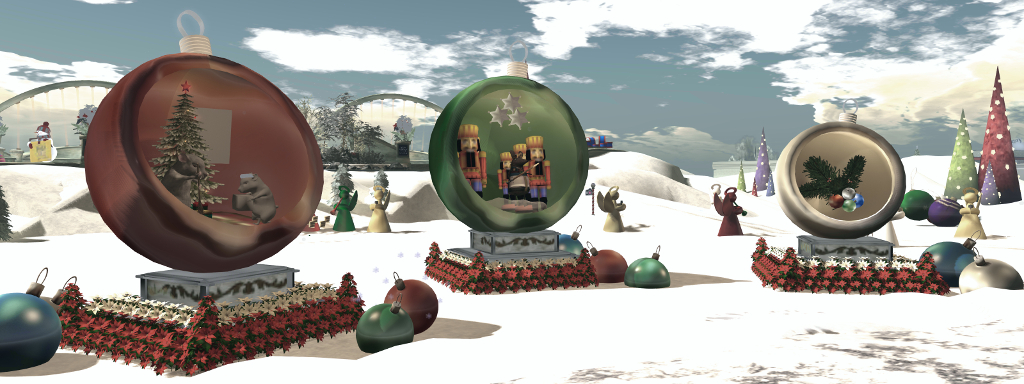
The 2020 SL Christmas Expo in support of the American Cancer Society, will take place between Friday, December 4th and Sunday, December 13th, 2020, inclusive. The theme for this year is that of Christmas Memories, with the organisers noting:

Christmas trees towering over your head while the Lionel train makes is journey around the base. Brightly wrapped gifts spread under the lowest boughs, as the aroma of sugar cookies and gingerbread drift in from the kitchen. Carols playing on the Victrola while the family gathers together to celebrate the holidays.  Christmas Memories of all shapes and sizes spring to mind each year as the holidays approach.

– Nuala Maracas, RFL of SL Christmas Expo co-ordinator

This year, the organisers plan to have:

  • 150+ merchants.
  • Breedables and one-of-a-kind auctions.
  • nearly non-stop musical performances / entertainment via the Holly jolly Café.
  • Gachas and hunts.
  • Christmas trees, ice skating, and a snowman building contest.
  • The 3rd annual Lights of Hope contest, featuring the best builders and teams of Lindens and Moles in a holiday home decorating competition.
  • The closing Live Auction with one of a kind items from Linden Lab and SL’s top creators and the annual Holidays of Hope Ball.
  • The Holidays of Hope Ball.
2019 Christmas Expo

Merchant and Auction Registrations

Second Life Region crossings update

Updated region crossing code on the main grid should improve travelling by vehicle across the main grid

As I’ve noted in recent Simulator User Group updates, the Blake Sea regions were cloned to Aditi (the beta gird) in late July, to give users the opportunity to test regions running on AWS services (“the cloud”). Among the more significant tests carried out (for many users) was for physical region crossings via vehicle.

Initially, things did not go well; it was almost impossible to complete more than two or three region crossings without encountering insurmountable problems – and some users (myself among them) couldn’t even get through a single crossing whilst driving a vehicle. Thanks to the data gathered, the Lab made some updates to the Aditi / Blake Sea region crossing code, and Simon Linden set-up the Blake Sea Challenge so that further data on region crossings could be obtained (see: 2020 Simulator User Group week #31 summary & the Blake Sea Cloud challenge).

Preparing for a high-speed run with my Foilstream with foils lowered…

All of this work resulted in a set of updates to the region crossing code for the Aditi regions, and on Tuesday, August 11th and Wednesday August 12th, these updates were included in the simulator deployments made to Agni (the main grid)¹.

So how are things now working?

Well, first and foremost, it is early days and less than 24 hours since the RC deployment. However, people are already reporting appreciable region crossing improvements with the updated code. While far from a comprehensive test, I took a number of my boats and aircraft out for a a series of runs across a total of 55 region crossings (east to west from Second Norway to Nautilus and around part of Blake Sea, then back again) to see how things faired. The vehicles I tested were:

  • Bandit 50/3 sailing cruiser.
  • Piaggio KV23H Foilstream (version 3.2c).
  • Spijkers MD900 Explorer
  • TBM Kronos (version 6).
…. And multiple regions later, still going at speed without loss of control, and able to orbit camera for photos 🙂

I selected these four as a mix of both medium and high performance craft. Both the Bandit 50/3 and the MD900 made the round trip without real incident. Crossings for both resulted in zero vehicle slewing, with the Bandit (always good on region crossings with 2 avatars on-board) being pretty much perfect throughout, and the MD900 making each crossing with control recovery in about a second, and only very slight camera issues.

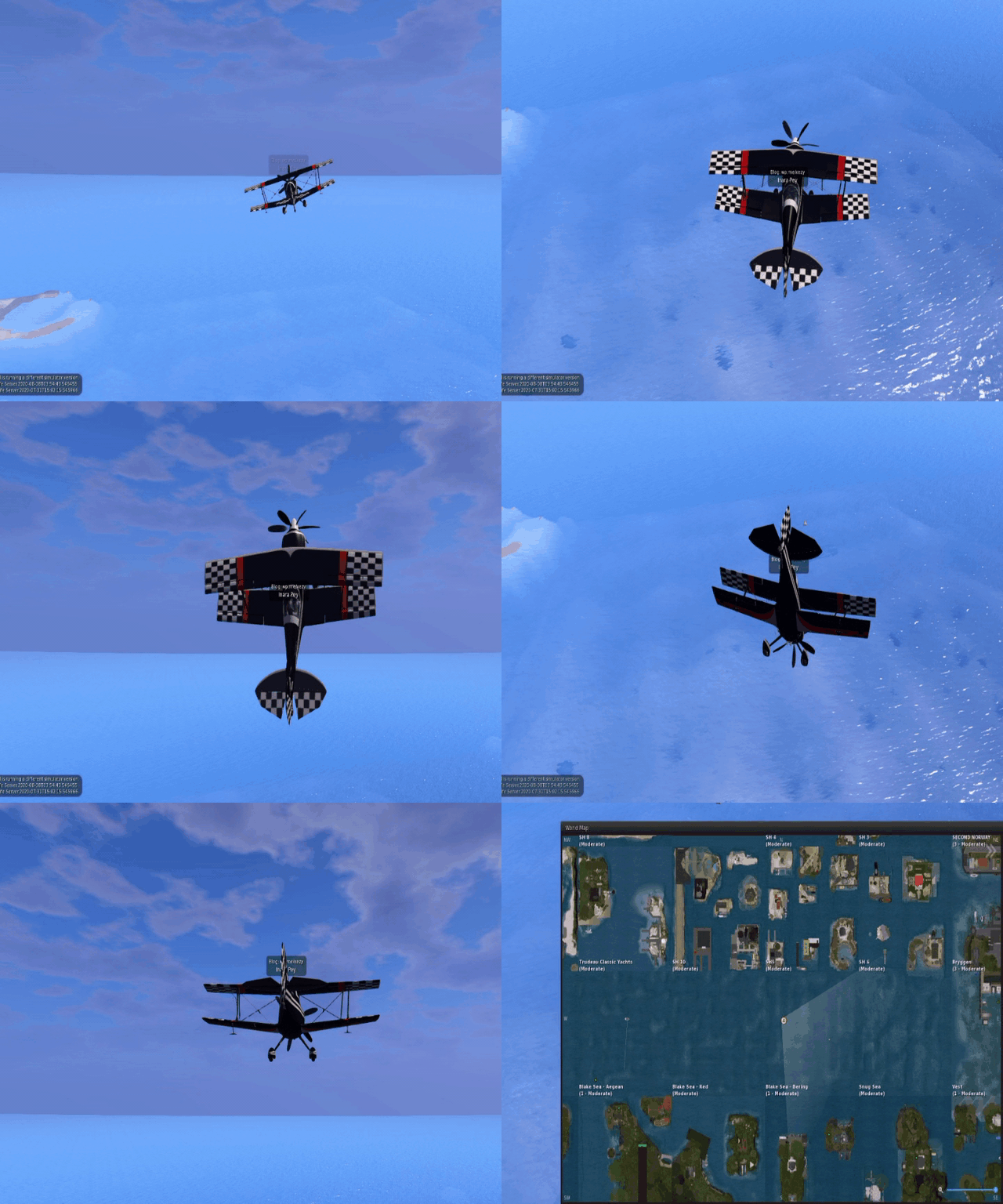
The Foilstream was going to be a tougher proposition because of its sheer speed: when running with hydrofoils deployed and full throttle, it can cross a region in 7 seconds, so multiple back-to-back crossings inevitably lead to issues at some point, while even at lower speeds the boat was subject to loss of control on crossings lasting seconds and frequently subject to the camera slewing and becoming locked in the side of the boat. The Kronos is not particularly fast compared to other aircraft, but it is exceptionally manoeuvrable and aerobatic, so complex manoeuvres that cross regions have in the past led to issues of control loss and camera slewing.

Things still can go uncomfortably wrong – if you push too hard, as I did with repeated loops through a region crossing at speed

With both of these vehicles, region crossings were considerably improved, other than when carrying things to extremes.

The Foilstream managed so 25 region crossings at full speed with no real loss of control before I found myself on the sea floor sans boat (compared to about a dozen previously before running into problems  – loss of vehicle, camera slewing), while the only issue with he Kronos came with intentional aerobatics back and forth over a region crossing. In this latter case, I will say that when it did go wrong, it did so quite spectacularly, with total loss of control  and the ‘plane tumbling with no recovery at all, with the map showing it trying to continue forward.

Beyond my basic tests, others have been carrying out tests. One of these is colleague Luca lucagrabacr, who recorded her own tests using a range of craft and vehicles. Wo can catch her results in the video below.

Again, while it is early days, fresh after a restart of the entire grid, etc., so gremlins may still climb out of the woodwork, but on the whole, region crossings by vehicle should generally be a lot smoother and easier. Of course, the code doesn’t mean all region crossings are solved – if you push things really hard, things can still go wrong (as with me and repeated Kronos loops back and forth between regions at high speed.

  1. For clarity: this is a code update to the simulators within the Lab’s co-lo data centre, it does not mean Agni regions are now running in the cloud.