It’s time to highlight another week of storytelling in Voice by the staff and volunteers at the Seanchai Library. As always, all times SLT, and events are held at the Library’s home in Nowhereville, unless otherwise indicated. Note that the schedule below may be subject to change during the week, please refer to the Seanchai Library website for the latest information through the week.
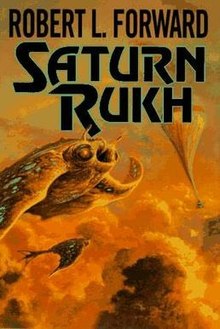
Monday, May 10th: 19:00 Saturn Rukh
In an unspecified time in the future, a team of astronauts is sent to Saturn on what could be a one-way mission. Financed by a multi-national consortium, their mission is to establish a factory in to upper reaches of the planet’s atmosphere where it can “mine” Saturn’s abundant helium to produce “meta” (nitro-stabilised metastable helium), a powerful propellant.
If they are successful, each of the astronauts stands to earn a billion dollars on their return to Earth. The catch? They only have sufficient fuel to reach Saturn – they must use the factory to produce the fuel needed to make their return to Earth.
However, things go awry when the mission enters the Saturnian atmosphere – and crash-lands on the back of an enormous creature that “swims” through the atmosphere. Another of the creatures – which appear to be semi-intelligent and which the astronaut dub “Rukh” – swallows some of the mission’s equipment, leaving the team with no choice but to attempt to establish communications with the creatures and attempt to recover their equipment.
Join Gyro Muggins as he reads the last full-length novel by physicist and author Robert L. Forward.
When Lily and her family move in with her sick Halmoni (grandmother), a magical tiger straight out of her halmoni’s Korean folktales arrives, prompting Lily to unravel a secret family history.
Long, long ago, Halmoni stole something from the tigers and now the tigers want it back. So the tiger visiting has arrvied with an offer for Lily: return what Halmoni stole in exchange for the return of her health Halmoni’s health.
It is a tempting offer; but deals with magical tigers are not always what they appear to be. So Lily must, with the help of her sister and her friend Ricky, find her voice and her courage, and face whatever trickery the tiger may conjure.
Caledonia Skytower reads the 2021 2021 Newbery Medal winning story by Tae Keller.
Thursday, May 13th 19:00: Antues, Part 2
Shandon Loring tells the story of the monster and anti-hero from Bernard Evslin’s compendium of lore. (Also in Kitely).
Special Announcement
Tea-Time at Seanchai returns on Sunday, May 16th at 13:30 SLT, featuring American Fairy Tales, a collection of twelve fantasy stories by L. Frank Baum, published in 1901 by the George M. Hill Company.
Logos representative only and should not be seen as an endorsement / preference / recommendation
Updates from the week ending Sunday, May 9th
This summary is generally published every Monday, and is a list of SL viewer / client releases (official and TPV) made during the previous week. When reading it, please note:
It is based on my Current Viewer Releases Page, a list of all Second Life viewers and clients that are in popular use (and of which I am aware), and which are recognised as adhering to the TPV Policy. This page includes comprehensive links to download pages, blog notes, release notes, etc., as well as links to any / all reviews of specific viewers / clients made within this blog.
By its nature, this summary presented here will always be in arrears, please refer to the Current Viewer Release Page for more up-to-date information.
Note that for purposes of length, TPV test viewers, preview / beta viewers / nightly builds are generally not recorded in these summaries.
Official LL Viewers
Release viewer: Eau de Vie Maintenance viewer, version 6.4.18.558266, dated April 23, promoted April 29 – no change.
My reproduction of the linden Tortuga house at Isla Caitinara
It is pretty well known to readers of this blog that I particularly like a couple of things: kitbashing house designs for personal use, and mucking about with ideas for use with the Linden Home designs I’ve used. In particular, this has led to frequent changes of house style on our home island, and a recent piece on how the Linden Home Tortuga style of Stilt Home lends itself to a far amount of modding (see Modding a Linden Stilt Home).
All of which recently led me to a cheeky idea: could I recreate the LDPW’s Tortuga design in we could on our Second Norway home island. And the answer is pretty much, yes, helped in no small part by the Moles themselves.
My “Tortuga-inspired” house at Isla Caitinara and the original (inset)
In order to recreate a Tortuga style house I had to initially construct a template marking out the overall floor size of the house, the window & door positions, and to set a height for the ceiling. Once this was done, it was a simple matter of cutting the prims and gluing them together (I’m not a Blender user, so a mesh build is currently beyond me).
An advantage of building a personal variant of the Tortuga is that it allowed me to make some additional changes. Those who read my piece on modding the original Tortuga will remember I split the larger of the two through rooms to create a smaller living area with a vestibule to the front of the house.
This slideshow requires JavaScript.
Building my own variant meant I could include this directly into it. Texturing was made a lot easier thanks to the texture packs Linden Lab supply with Linden Homes, with a selection of textures from this pack, plus a couple of my own, and I had things pretty much set.
In addition, I could adjust the layout to suit my needs – such as by reducing the archway of the large through room, when using the smaller half as a bedroom – again, the use of a handy rezzing system means I can switch elements of the layout with ease to suit moods.
My take on the Tortuga from the garden
There are a few things working in prims didn’t allow me to reproduce – the detailing of the roof sidings, the curved coving in the rooms, etc., but overall I’m pleased with the outcome. At 137 LI (utilising Convex Hull physics), it is lighter on the land than the original (221) – although admittedly, I’ve yet to add some of the materials featured on the original.
Of course, all this is a bit of a cheek – given the original design does belong to the LDPW (my apologies in particular to Magic Mole, who appears to be responsible for the Tortuga design). In my defence, I can only sat that it’s a design I like, and the version I’ve created is purely for personal use. Certainly, with a couple of minor tweaks to Isla Caitinara, and the house fitted in quite well, even if I do say so myself – and I hope the pictures here demonstrate.
So, that’s the latest house to come to Isla Caitinara; a little different to my usual, but one that could be sticking around for a while – although I have said that before.
A camera close to the landing zone captures Starship SN15 with two good Raptor motor burns bringing it into a safe landing on May 5th. Credit: SpaceX
SpaceX has achieved its first successful landing of a Starship prototype after Starship SN15 was launched on May 5th, 2021.
The vehicle was the fifth full-scale prototype of the vehicle SpaceX intends to use on missions to Mars – and so much more – with the previous four, prototypes SN8, SN9, SN10 and SN11 all having suffered failures of various descriptions: SN8 came in too “hot” blowing up as it hit the landing pad; SN9 encountered motor issues that lead to being unable to remain upright so it also crashed into the landing pad; SN10 actually made a touch-down, but issues with one of its motors meant it blew up shortly afterwards; and SN11 exploded prior to landing after encountering issues when re-starting its Raptor motors.
Just before launch, Starship SN15 on the launch stand, venting excess vapours. The structure to the left is a test rig that is being used to simulate the dynamic stresses the forward section of an unladen Starship will face during atmospheric entry. Credit: SpaceX
SN15, however, is a substantially different vehicle to those. As the first of the “next generation” prototypes, it includes multiple updates and improvements throughout – including flying with the very latest iteration of the Raptor motors. Proof of this came in the run-up to the flight, when SN15 completing all its pre-flight tests without a significant issue – unlike the earlier models.
The vehicle lifted-off at 23:24 UTC, rapidly vanishing into low-altitude cloud as it climbed to the expected altitude of 10 kilometres, where it flipped into a horizontal skydiving descent. Just over 6 minutes after lift-off, the roar of the three Raptor engines re-starting reverberated through the clouds before the vehicle re-appeared in a tail-fist descent on two of the three engines to complete a successful landing.
Starship SN15 on the landing pad, post-flight. The fire around the engine skirt is visible, and the fire suppression system can be seen dousing the area in water. Credit: SpaceX
Following landing, a small fire was visible at the base of the vehicle – the result of excess methane venting, and an issue SpaceX will need to address. However, it was clear that SN15 was safely down on the ground and “safing” procedures could commence.
Despite the atmospheric conditions, the team at NASAspaceflight.com team (this is not an official NASA group) had a number of video cameras placed around the SpaceX facilities at Boca Chica, Texas, and following the flight, they edited the footage from those cameras together to show the lift-off and landing sequences from different angles, some with the audio delay created by the distance of the camera from the launch stand edited out.
Some of these clips bring home the raw power of the Raptor engines – seconds after ignition, the shockwave of sound from the three engines on the Starship starts the camera vibrating – a small demonstration of what is to come when a Super Heavy / Starship combination lifts-off with no fewer than 28 of these engines firing simultaneously.
Following the flight, some pundits were forecasting SN15 could be set to make a second flight, possibly in short order – an idea fuelled be Elon Musk. This seems unlikely, as SpaceX will doubtless want to carefully examine the vehicle to learn all that they can from it prior to attempting to fly it a second time – if, indeed, they do.
All six of SN15’s landing legs suffered severe damage, as shown in this image, possibly the result of lateral loads placed on the vehicle on landing. Credit: SpaceX
As it is, the the landing legs – and possibly the base of the vehicle as well – suffered considerable damage during the “nominal” landing, as the image to the right shows.
Thought to be the result of lateral loading – the vehicle may have skidded sideways on touch-down – the damage is further evidence that SpaceX needs to seriously re-think how landing legs are mounted and deployed.
This is something the company his indicated it would be doing – and images of the proposed Starship Human Landing System (HLS) points to the direction in which they may move – although Musk has also floated the idea of eventually discarding any landing legs, and “catching” returning Starships via a launch tower, a-la his idea for Super Heavy – an idea that will presumably only apply to those Starships intended to operate no further than Earth orbit.
The next vehicle in the fleet that is likely to fly will be SN16, The legs on SN15 are the same as those on the earlier SN8-SN11 vehicles, and they are slated to be replaced by a more robust system, and the degree of damage they suffered either as a result of a heavier touch-down or a possible lateral load being placed on the legs as a result of the vehicle “sliding” as it touched down. Either way, this damage along means that SN15 is unlikely to re-fly soon (although that doesn’t mean it won’t re-fly at some point).
As it stands, SN16 is now fully stacked and ready for transfer to a launch stand in order to have its Raptor engines fitted in preparation for a flight – this transfer could take place as soon as the coming week.
It is unclear how many more Starship launches will occur in the short-term: SpaceX is attempting to carry out an orbital launch of a Super Heavy Booster and an unladen Starship in July. Given the state of preparations – the company has yet to produce a fully flight-ready Super Heavy (Booster Number 1 has been scrapped, and work appears to have ceased on BN2 and BN2.1, leaving only BN3 under assembly at the moment), plus the orbital launch facilities are still under construction. Thus, unless attention and resources are significantly further shifted to booster development and testing, that July date seems to be highly ambitious.
Ingenuity Says ‘Farewell’ to “Wright Brothers Field”
On Friday, May 7th, 2021, the Mars helicopter drone Ingenuity completed its 5th of five pre-planned test flights. In doing so, the little 1.8 Kg helicopter both set a new record and commenced a new phase in its mission.
During this flight, Ingenuity initially rose to the “usual” altitude of 5 metres, then said “farewell” to its operational based of “Wright Brother’s Field”, and headed south for a distance of 129 metres before coming to a hover. It this ascended further – climbing to 10 metres to take high-resolution of the area around itself, before descending to a landing in a flight lasting a total of 108 seconds.
The new landing site was selected on the strength of images gathered during the 4th flight for Ingenuity. It lies fairly close to the path the Mars 2020 Perseverance rover will follow as it now commences its science operations in earnest. The initial plans for the rover do not require it to make long-haul drives, but rather investigate the area to the south of the mission’s landing site, and this will allow the Ingenuity team to carry out further flights that can both further test their vehicle and allow them to potentially assist the rover team by scouting possible places of interest for the rover to explore.
Overall, Ingenuity is in fair better shape than had been expected at this point in its flight regime: the solar collectors are working optimally, the battery system is providing more than enough energy to both power the little vehicle and to keep it warm during the harsh Martian nights.
The plan forward is to fly Ingenuity in a manner that does not reduce the pace of Perseverance science operations. We may get a couple more flights in over the next few weeks, and then the agency will evaluate how we’re doing. We have already been able to gather all the flight performance data that we originally came here to collect. Now, this new operations demo gives us an opportunity to further expand our knowledge of flying machines on other planets.
– Bob Balaram, Ingenuity Chief Engineer, NASA/JPL
Prior to the 5th flight, NASA issued an audio recording captured by Perseverance of Ingenuity’s 4th flight – something the mission teams had been hoping to do.
The recording is a fascinating demonstration of the difference in how sound travels on Mars compared to Earth. Given the speed the rotors on Ingenuity spin (2400 rpm), one might expect the helicopter to generate the same high-pitched whine common to radio control helicopters on Earth. However, as the recording reveals, the less-dense atmosphere of Mars reduces the motor sounds from Ingenuity to a low-pitched hum. When listening, also note the doppler shift created by the drone’s motion away from, and back towards, the rover.
Come with me on an ocean of blue, Where the Sun always shines and there’s nothing to do. Where the water is warm and there’s nothing to do, Will you come, will you come, with me?
OK, so Roger Whittaker wrote those words in reference to the beaches of his beloved Kenya, but they hold true for many a tropical paradise in the world, including Caye Caulker, the 8 kilometre long limestone coral island off the coast of Belize.
Those who have had the good fortune to visit Belize will know that it can be a place to escape the world and its worries, offering the visitor every luxury and opportunity for unique experiences (ever dreamed of renting a waterside cabana where each morning, the dolphins arrive and call for you to come and swim with them?).
The Sim Quarterly: Krak Bak Caye, May 2021
For those who haven’t had the opportunity to travel to Belize or its islands – particularly tiny Caye Caulker – then from now through until later July, then can visit it in spirit, thanks to the latest installation to arrive at Electric Monday’s Sim Quarterly. This is because the region has been gloriously transformed into the island of Krak Bak Kaye, inspired by Caye Caulker, to offer the chance of glorious escape.
Come with me finding tropical fish That dance on the sea, whenever you wish. At the end of your line is your supper-time dish, Will you come, will you come, with me?
The Sim Quarterly: Krak Bak Caye, May 2021
On arrival at the landing point above the region, visitors will be offered a tourist brochure in the form of a HUD, and have the choice of taking two “flights” down to the island via floatplane Just click the signs next to each aircraft to be teleported to the beach or to the little Main Street that captures the essence of the older parts of Caye Caulker Village (admittedly, as the island has gained popularity, so has the number of hotels grown around the settlement, which has expanded well beyond what it once was).
From either point of arrival, visitors can roam freely and enjoy any of the opportunities the island offers: wind surfing, boating, fishing, swimming, diving Via the deep lagoon that sits off-shore – so be sure to pack your swimsuit when paying a visit!
The Sim Quarterly: Krak Bak Caye, May 2021
You can watch the weary world turning on its own. Let somebody else pick up that silly telephone. You can stretch yourself and laugh in the morning Sun. You can smile, you can take a boat and sail for a while. You can smile!
Gentle on the eye and the computer and rich in authenticity, Krak Bak Kaye is a perfect getaway – so why not book your ticket today?
The Sim Quarterly: Krak Bak Caye, May 2021
Lyrics to Come with Me by Roger Whittaker, from the album Roger Whittaker in Kenya (1982).
Content-wise, this was a short meeting, many of the usual attendees being absent, perhaps caught out by CCUG meetings over the last few months only taking place every other week, and this one following directly after Week #17’s meeting.
SL Viewer
There have been no further updates to the current crop of official SL viewers since the release of the Project UI viewer (see: Lab issues Project UI viewer aimed at new users), leaving the pipelines for the week as follows:
Release viewer: Eau de Vie Maintenance viewer, version 6.4.18.558266, dated April 23rd, promoted April 29th.
Release channel cohorts:
Project UI viewer, version 6.4.18.558718, issued May 3rd.
Love Me Render (LMR) 5 viewer, version 6.4.18.558365, dated April 22nd.
Maintenance 2 RC viewer – Fernet, version 6.4.18.558441, dated April 21st.
Project viewers:
Legacy Profiles viewer, version 6.4.11.550519, dated October 26th.
Copy / Paste viewer, version 6.3.5.533365, dated December 9th, 2019.
Project Muscadine (Animesh follow-on) project viewer, version 6.4.0.532999, dated November 22nd, 2019.
360 Snapshot project viewer, version 6.2.4.529111, dated July 16th, 2019.
General Viewer Notes
The current RC viewers – LMR 5 and Maintenance 2 – are currently awaiting new versions following their merges with the current release viewer code base. There has been a delay in testing due to members of the the lab’s viewer QA team being on vacation.
LMR 5 is now considered “complete”, so following the code merge, should be in a strong position to be promoted as the next de facto release viewer.
LMR 6, the next rendering focused viewer is still in development. So far a dozen bugs are being addressed to be a part of this viewer, and more are being added to the list. As such, it’s liable to be a while before this viewer appears as an RC.
It is hoped the Apple notifications fix viewer and the updated Voice viewer that helps with expected Voice drop-outs both available in the very near future.
Documentation and Resources
The core of this meeting focused on a a discussion about where “accurate” avatar skeletons can be obtained, as the current resources appear out-of-date (e.g. the Fitted Mesh resource page indicates the skeletons in the supplied link are pre-Bento), whilst the Bento page indicates one skeleton may be “broken”.
Whilst there are alternate reliable sources for skeleton information (e.g. via Machinimatrix), these are not always resources newer users may be comfortable using as they “are not Linden Lab” – even though the people responsible for them worked closely with other users and the Lab on projects such as Bento and helped define the Bento skeleton.
This highlights a particular issue in not having up-to-date “official” resources on matters such as content creation – which may in turn be a contributing factor in the development of poorly-made / poorly-optimised SL content. Two problems here are that:
LL does not have the resources to manage and maintain the entire SL wiki (and in fact there had been murmurs in the past about consideration being given to deprecating the wiki in favour of other sources, although this is currently not the case).
Due to issues of “bot griefing”, access to editing the SL wiki had to be restricted several years ago “pending” improved tools to prevent such events – but this has yet to happen. Therefore, it is much harder for users to help maintain the wiki, as tended to be the case in the past.
In Brief
Account / inventory syncing between Agni (the Main grid) and Aditi (the Beta grid) remains broken. No ETA on when this may be resolved, other than “watch the status page“.
 In an unspecified time in the future, a team of astronauts is sent to Saturn on what could be a one-way mission. Financed by a multi-national consortium, their mission is to establish a factory in to upper reaches of the planet’s atmosphere where it can “mine” Saturn’s abundant helium to produce “meta” (nitro-stabilised metastable helium), a powerful propellant.
 When Lily and her family move in with her sick Halmoni (grandmother), a magical tiger straight out of her halmoni’s Korean folktales arrives, prompting Lily to unravel a secret family history.


 Inara Pey: Living in a Modemworld