A touch of Venetian H.R. Giger in Second Life

Giger Dead Venice, October 2022 – click any image for full size

I’ve missed out on a couple of recent builds by Hera (Zee9) – her builds have a habit of coming and going with some rapidity -, so when she dropped me the landmark to her October / Halloween 2022 build, I tried to hop over as soon as time permitted in the hope a write-up would reach the pages of my blog in time for others to enjoy this latest outing.

Giger Dead Venice brings together one of Hera’s poplar builds wrapped into a science-fiction / horror theme that is perfect for the season. The build in question is Venesha, Hera’s take on Venice, and which has often been a setting suggestive of dark arts, vampires, and the undead. The S-F / horror theme is that of H.R. Giger, as witnessed through the original Alien film and some of his broader work.

Giger Dead Venice, October 2022

Reached by taking a gondola teleport from the region’s landing point, this is a again a build that is unique Hera – with the majority of the mesh elements used within it created by her and utilising over 200 new textures she also created for the build. This version of Venesha also brings with it an enlarged port area, reflecting a recent version of Venesha reworked as the port of Kar from the Gor novels – one of the builds that did not see much light of day before being removed.

In terms of the Giger re-dress, this is exceptionally well done, with a richness of references to his and his work on the Alien movie to be found throughout. In this, Giger Dead Venice – to me – surpasses Drune Giger City, her H.R.G. inspired re-working of her Drune city (see: Hera’s Drune Giger City in Second Life).

Giger Dead Venice, October 2022

I say this because of the rich layering of motifs and in drawing out some of the more sexual aspects found in some of Giger’s work and combining them with suggestions of fetish and BDSM – at this point, I should note that aspects of this iteration of Venesha (or Venice if you prefer) might be considered somewhat NSFW.

The sexual elements are perhaps most obvious in some of the genitalia-like entrances to buildings and the phallic, umm, extensions around the base of the remodelled cathedral. However, these are not simply gratuitous, they are fully in keeping with much of Giger’s art, which often included a combinations of sexual / horror elements (just take his original drawings for the head and tail of his Xenomorph, as a basic example).

Giger Dead Venice, October 2022

Within the cathedral are more direct references to the Alien films – face hugger eggs, sculptures of baby Xenomorphs bursting from the chests of imprisoned humans, and etchings depicting the alien and a humanoid similar to the one known as the Pilot / Space Jockey.

The cathedral is not the only interior to the buildings here. For example, to the north, the church-like building has now been replaced by a temple with a mystical star map at its heart, whilst to the south and east, within what had at one time been home to a library, sits a lounge bar that more directly combines the Giger influences with elements seen within some of Hera’s previous lounge and bar designs and BDSM and sci-fi motifs. As for the others, such as the café and bistro-style settings, I’ll leave them to you to find.

Giger Dead Venice, October 2022

Other touches suitable for the Halloween season might also be found by the keen-eyed, offering a clever mix of the classical with that of H.P. Lovecraft, and what might be seen as a subtle commentary on the modern-day horror of right-wing “Christian” politics which puts love of the gun above love of human life.

Caught under a lurid sky that paints the setting with an otherworldly green tinge – the build really should be seen under the default EEP setting – Giger Dead Venice has much with which to commend itself to visitors and photographers. With its waterside walks, alleys, sculptures, mists and symbolism, it is one of the more imaginative “Halloween”-type settings I’ve seen this year – and definitely the most imaginative builds Hera has offered.

Giger Dead Venice, October 2022

Hera notes that there is no strict dress code for the setting, “But latex, rubber, leather, and metal just about covers it, or not depending on your preference 🙂 .”

SLurl Details

2022 Puppetry project week #43 summary

Puppetry demonstration via Linden Lab – see below.  Demos video with the LL comment “We have some basic things working with a webcam and Second Life but there’s more to do before it’s as animated as we want.”

The following notes have been taken from chat logs and audio recording of the Thursday, October 27th Puppetry Project meetings held at the Castelet Puppetry Theatre on Aditi. These meetings are generally held on alternate weeks to the Content Creation User Group (CCUG), on same day / time (Thursdays at 13:00 SLT).

Notes in these summaries are not intended to be a full transcript of every meeting, but to highlight project progress / major topics of discussion.

Project Summary

  • Previously referred to as “avatar expressiveness”, Puppetry is intended to provide a means by which avatars can mimic physical world actions by their owners (e.g. head, hand, arm movements) through tools such as a webcam and using technologies like inverse kinematics (IK) and the  LLSD Event API Plug-in (LEAP) system.
    • Note that facial expressions and finger movements are not currently enabled.
    • Most movement is in the 2D plain (e.g., hand movements from side-to-side but not forward / back), due to limitations with things like depth of field tracking through a webcam, which has yet to be addressed.
  • The back-end support for the capability is only available on Aditi (the Beta grid) and within the following regions: Bunraku, Marionette, and Castelet.
  • Puppetry requires the use of a dedicated viewer, the Project Puppetry viewer, available through the official Second Life Alternate Viewers page.
  • No other special needs beyond the project viewer are required to “see” Puppetry animations. However, to use the capability to animate your own avatar and broadcast the results, requires additional work – refer to the links below.
  • There is now a Puppetry Discord channel – those wishing to join it should contact members of LL’s puppetry team, e.g. Aura Linden, Simon Linden, Rider Linden, Leviathan Linden (not a full list of names at this time – my apologies to those involved whom I have missed).

Bugs, Feature Requests and Code Submissions

  • For those experimenting with Puppetry, Jiras (bug reports / fixes or feature requests) should be filed with “[Puppetry]” at the start of the Jira title.
  • There is also a public facing Kanban board with public issues – those experiencing issues can also contact Wulf Linden.
  • Those wishing to submit code (plug-ins or other) or who wish to offer a specific feature that might be used with Puppetry should:

Further Information

Meeting Notes

Protocol Overhaul

At the previous meeting, Leviathan Linden noted the project team is going to overhaul the Puppetry/LEAP protocol. Since then:

OpenXR Support

Leviathan Linden asked for feedback on what the requested “OpenXR support” mean to those requesting it – e.g.: Is it to run an OpenXR app and have a VR experience in SL,  or is it to run an OpenXR app as a plug-in to provide measurement input to Puppetry?

The general response was a mix of both:

  • To generally provide the means for “proper” hardware support for motion capture such that puppetry isn’t just a “best guess” response via a webcam
  • To allow for more accurate interactions between avatars and objects; eventually moving to provide full support for VR headsets and controllers (requiring the ability to intact with scripted devices, operating levers, controls, etc., which could be correctly interpreted and acted upon by said scripts).

Currently, LL are more willing to consider OpenXR support as a part of the Puppetry work whilst regarding it as a potential step towards wider VR support in SL in the future.

Avatar Constraints / Interactions

The above question led to a broader discussion on avatar-to-avatar and avatar-to-object interactions starting with the avatar constraints / collision system.

  • As they are right now, avatar constraints and collisions within SL have been adequate for the platform, but lacking (collisions, for example have no concept of the avatars arms / legs, limiting interactions with them and other objects).
  • OPEN-368 “[Puppetry] [LEAP]: Location Constraints” is a feature request outlining the benefits of overhauling the SL avatar constraints system to allow better interactions with objects, etc. This is currently open to those wishing to add further comments and feedback.
  • The question was raised as to how “fast” / reliable the required communications (including all the required bone interactions) could be made in order to ensure adequate / accurate response times with actions (e.g..so when shaking hands, he hands of each avatar arrive at the same point at the seem time to be seen as  shaking in both viewers).
  • Also discussed was determining how “reactions” might best be defined – could it be as “simple” a pre-set animation?
  • One issue with this – interactions, OPEN-368, etc., – is that direct hooks from Puppetry to LSL had been seen as outside the scope of the project, simply because puppetry and the LEAP API are entirely viewer-side, and LSL simulator-side.  However, the discussion opened a debate on whether some means for this interaction should be provided, with two options being put forward:
    • Broadening the LEAP protocol, essentially using it to make the viewer scriptable with plug-ins that run on their own threads.
    • Providing a specific LSL function that would enable LSL to be able to communicate / interact with the LEAP protocol / JSON (as is the case with the RLV / RLVa APIs used by some third-party viewers).
    • Both of these approaches were seen as potentially “doable”, if beyond the intended scope of the puppetry project.
  • A further issue  with interactions and bone tracking (which would be required for accurate avatar-based interactions) as that bone tracking via LSL is as best limited to non-existent; this raised the subject of possibly using attachment points as a proxy.
    • An additional problem here is whether or not is possible to track the location of the attachment points in 3D space relative to any animation the avatar is playing (e.g. if an animation causes the avatar to raise their arm, is it possible to check the position of the wrist point)? This is currently something of an unknown, as it would either:
      • Require the simulator to inject a lot of additional calculations for joint and attach positions;
      • Or require a  new (optional) protocol where the viewer would just supply its in-world positions at some frame rate – which would require some calculation overhead on the part of the viewer;
      • Or – given work is in-hand to add the in world camera position relative the viewer, and also the avatar’s world orientation and look at target – provide a straight dump of the animation mixdown together with the skeleton data, enabling the processing to be carried out in a module rather than the viewer.
  • As a result of these discussions, time has been requested to investigate the various options (which will likely include a determination of what, if anything is to be included in the current project in terms of these additional capabilities).

Date of Next Meeting

  • Thursday, November 10th, 2022, 13:00 SLT.

Innovations in portraiture in Second Life

Innovations in Portraiture: Cayla (YumiYukimura)

Innovations in Portraiture is the name of a new gallery in Second Life which celebrated its formal opening on October 15th, 2022.

The gallery is the joint work of Cayla (YumiYukimura) and Addie (adeleberry408), and is intended to act as a showcase for their respective art. Despite featuring the word “portraiture” within the title, the gallery covers a far broader spectrum of art than portraiture itself.

Innovations in Portraiture: Addie (adeleberry408)

Addie is a relative newcomer to the Second Life art world, her work focusing on Second Life landscapes. Within the gallery she offers Scenes of a Virtual World, a collection of 18 images captured from around Second Life which share a raw beauty that is more than likely recognised by anyone who has become caught in the world of potentials offered by Second Life photography.

These are images very much “as-seen” by the the camera’s eye, reliant on only EEP settings and the artist’s viewpoint, and sans post-processing. Hence my use of the term “raw”; it’s not in any way negatively, but rather to emphasise the honesty contained within these images that – in an age where everything captured in-world is so often post-processed and enhanced – is genuinely refreshing, open and attractive.

Innovations in Portraiture: Cayla (YumiYukimura)

In the physical world, Cayla is photographer and graphics artist. In particular, she specialises in what might be referred to as hybrid art – marking her current spread of work at the gallery the second encounter I’ve had with the format in recent weeks (see also: A gallery of dreams in Second Life), although Cayla’s work offers a new dimension to the format.

Her art starts with AI images prompted by a descriptive and sensory vocabulary. While multiple images may be produced, Cayla selects one for further processing through Adobe Photoshop to produce either a standalone image, or a possible backdrop for use with her avatar portraiture. This combination of AI generated image and avatar photography adds an additional layer to Cayla’s hybrid work.

Innovations in Portraiture: Cayla (YumiYukimura)

Within the ground level of the gallery, Cayla presents a remarkable selection of highly sensuous flower paintings, generated through AI which are, to say the least, utterly stunning. They are bracketed by a series of character portraits on the ground floor of the gallery, and a richly engaging series built around the theme of elves – a subject always close to my heart.

Two very different artists linked by a common love of art and expression, Addie and Cayla offer a lot to see and appreciate (I do recommend Cayla’s essay on AI art as well, available through an easel in the gallery), and a look forward to future visits and seeing more of their work.

Innovations in Portraiture: Cayla (YumiYukimura)

SLurl Details

A touch of artistic self-promotion in Second Life

Exhibition poster

I’m taking time out from regular art reviews to engage in an irregular bit of self-promotion. Opening at the Kondor Art Garden, a part of the the Kondor Art Centre, on Thursday, October 27th, 2022, is an exhibition of art entitled Masters of Landscape Photography.

The exhibition features the work of two individuals, Vanessa Jane – an accomplished Second Life photographer-artist – and moi, and is itself one is a series of exhibitions utilising the title and featuring pairs of artists to take place at the Art Garden.

I’m frankly – and genuinely – flattered to be asked to exhibit alongside Vanessa, who is is an artist in the physical world (and holds and arts degree), and is thus able to bring the eye, training and sensibilities of her physical world artistry to Second Life. This is clearly and fully demonstrated in  the selection of pieces she presents within the Kondor Art Garden, all of which demonstrate she is fully deserving of the title afforded the exhibition. Through her work, she has been one of a number of talented individuals who has – albeit indirectly – helped me to improve my abilities with the SL camera, although I still have a lot to learn.

Kondor Art Garden: Vanessa Jane

The exhibition of our work opens at noon SLT today, Thursday October 27th, 2022, with music provided by the talented DJ Tulsa Sapphire, who will be spinning a mix from the 80s, together with taking requests from those who attend the opening. I very much hope that in reading this, you’ll opt to hop along and join us for the party, or that you’ll find the time in the course of the next month to pay the exhibit a visit.

My sincere thanks to Hermes Kondor, owner and curator of the Kondor Art Centre for both extending an invitation to exhibit at the Garden, and for encouraging me to do so.

Kondor Art Centre: c’est moi!

SLurl Details

Powering Up For CHARGE in Second Life

Power up for Charge, October 2022 – click any image for full size
Occupying a Full private region, Power Up for Charge is the Full region home of the official Second Life presence for the CHARGE Syndrome Foundation, a US 501(c)(3) tax-exempt organisation, established with the goals of promoting global awareness of, and research into the causes of, CHARGE Syndrome (see below for more); directly supporting and helping those afflicted by the syndrome and their families, including developing outreach and support to assist them and building both social and medical networks and partnerships to benefit those affected by the syndrome.

Designed by Tzeitel Enchantment, founder of power Up For Charge in SL, the the Foundation’s representative in-world, together with Tintin (AbOrigin) and artist Suzen Juel, this is a region established to help spread awareness of CHARGE Syndrome in-world and to offer Second Life residents the opportunity to support the work of the CHARGE Syndrome Foundation through donations (either L$ via the in-world tip jars or by following links to the Foundation’s donations web page).

Power up for Charge, October 2022

The design of the region apparently changes every three months, and at the time of my visit it lay dressed at Outpost Camp Charge, described as an eclectic planet from which visitors might explore the outer reaches of the SL universe. In this the setting – which has little in the way of what might be regarded as “traditional” terraforming or landscaping, but which nonetheless retains an engaging look and feel – carries something of a strong Star Wars vibe, although other sci-fi franchises and films also enter into the mix.

The Stars Wars elements come in several forms, from the general architecture, with many of the buildings looking like they may have been transplanted here from places such as Mos Eisley, through the droids and ground transports waiting to the found, to the TIE Fighter roller coaster located at one end of the region as one of its several rides. Many of the buildings are places you can enter, offering bars, music venues, droid repair shops, hangers, and so on, all ready for exploration.

Power up for Charge, October 2022

Mixed in with this are two redressed Starfleet Runabouts, ED-209 from Robocop, a forlorn Iron Giant, alien cafés (one of which, minus its automaton server, would look right at home if it were to pop-up in Blade Runner) and a floating lounge, and lots of art in the form of sculptures, all overseen by a giant floating brain and a whale swimming serenely through the sky.

Within all this are a couple of places that look as if they might host music events within the region – although if so, I couldn’t find any info on upcoming events; a labyrinth, a portion of the Liberty Bridge in Budapest (and which looks like it would be well at home as a part of the Batman set); experience-driven teleport disks to help people get around and – for those who find their way to it, a skyborne amusement park.

Power up for Charge, October 2022

Such is the eclectic nature of the setting, offering a blow-by-blow description here is wasted: this is a setting that should be fully explored on foot and via the automatic skiffs that circulate through the region. What I will say is tat the fund-raising element to the setting is very subtle and unpressured (no kiosks leaping out at you at every turn). Equally subtle are the info boards found through the setting and which provide information on CHARGE in nice, bite-sized chunks that avoid giving any sense of information indigestion.

Needless to say, all of this is high photogenic as well as educational, making for an engaging – and worthwhile – visit.  When visiting, do note that a chat extender is in operation.

Power up for Charge, October 2022

About CHARGE Syndrome

CHARGE syndrome was first described in 1979 in relation to newborn children suffering a non-random pattern of the congenital anomalies that occurs together more frequently than one would expect on the basis of chance, with the acronym being used to define the conditions: Coloboma (a hole in one of the structures of the eye), A congenital Heart defect (CHD), Choanal Atresia (a blockage of the back of the nasal passage), Retardation of growth and/or development, Genital and/or urinary abnormalities, and Ear abnormalities and deafness.

As very few newborn children exhibit 100% of these features, CHRAGE is no longer used in the diagnosis of babies suffering from the syndrome, by the name has remained in use. The syndrome occurs only in 0.1–1.2 per 10,000 live births. About two thirds of cases are due to a CHD7 mutation. It is one of the leading causes of congenital deaf-blindness in the United States.

Read more here.

Power up for Charge, October 2022

About the CHARGE Syndrome Foundation

The CHARGE Syndrome Foundation was founded in 1982 in the United States, where it grew out of the Deaf-Blind Project in the Division of Genetics, University of Missouri. Since then, it has grown into one of the leading centres of expertise for research into and treatment of the syndrome and in ensuring children suffering from it receive all of the correct medical care they may require, and is active in 25 countries world-wide, with over 90% of the funds raised being channelled into directly benefiting individuals and families.

Read ore here.

Power up for Charge, October 2022

SLurl and Links

2022 SUG meetings week #43 summary

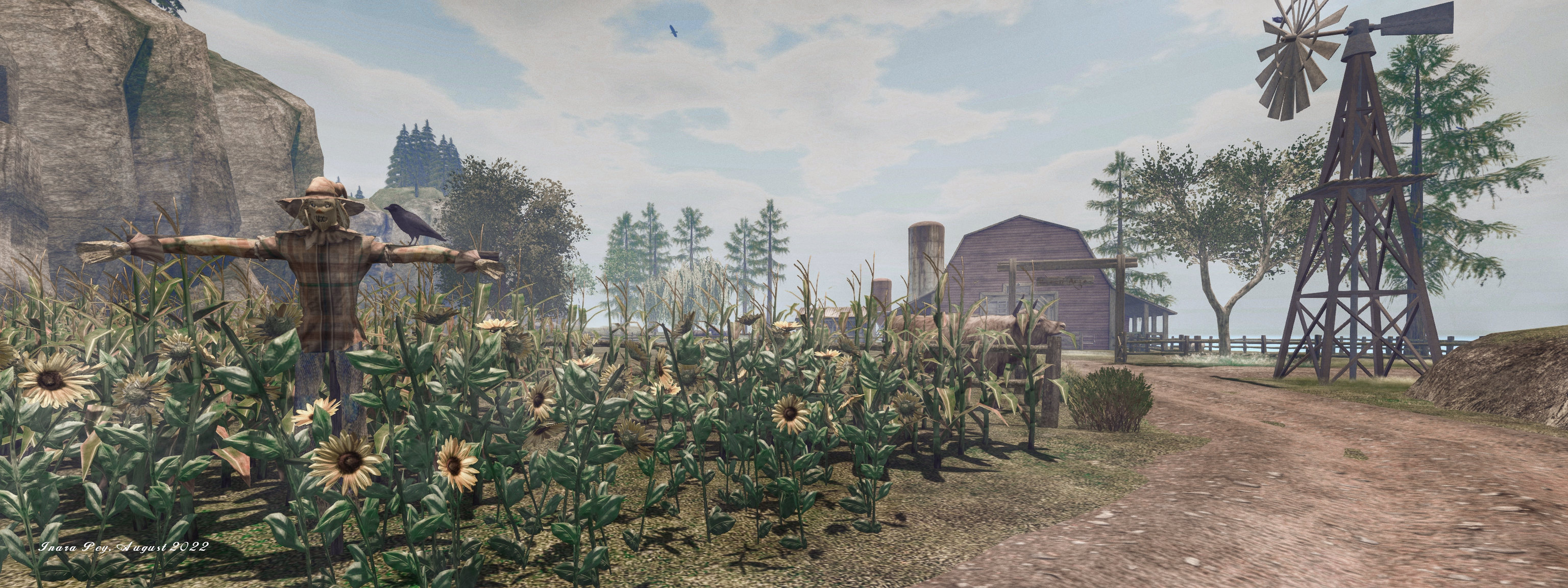
Green Acres, August 2022 – blog post

The following notes were taken from the Tuesday, October 25th, 2022 Simulator User Group (SUG) meeting. They form a summary of the items discussed and is not intended to be a full transcript. A video of the entire meeting is embedded at the end of the article for those wishing to review the meeting in full – my thanks to Pantera for recording it.

Server Deployments

Please see the forum deployment thread for the latest updates.

  • On Tuesday, October 25th, the Main SLS and Events channels were restarted without any simulator update being deployed.
  • On Wednesday, October 26th, the simhosts on the RC channels were to be updated with the new Linkset Data capability.
    • This feature works similarly to Experience Key-Value store, but the data lives with the object that sends and receives the data. Only scripts in the same linkset will be able to read the data written with this feature.
      • Further information can be found in the SL Wiki.
      • The capability can also be discussed in the SL forums.
    • However, a late-breaking issue revealed by the Lab’s QA team means that the deployment mat not take place until week #44 (commencing, Monday, October 31st).
    • If delayed, this potentially allows a further week for additional updates to the capability.
    • I will have a special Guest Article by Neobokrug Elytis explaining this new capability and its significance after the deployment has been made.

Available Official Viewers

On Tuesday, October 25th, Linden Lab release the Maintenance N RC viewer, version 6.6.6.575990. This is an urgent fix for transparency “alpha” blending issues. In cases of many layers of textures that included transparencies, this would cause some of the lower layers to not render at all.

The remaining official viewer pipelines stay as follows:

  • Release viewer: version 6.6.5.575749 – formerly the Maintenance M RC viewer –  promoted October 20.
  • Release channel cohorts :
    • Maintenance P (Preferences, Position and Paste) RC viewer version 6.6.5.575055 September 19.
  • Project viewers:
    • Puppetry project viewer, version 6.6.3.575529,  issued on October 12.
    • Performance Floater / Auto-FPS project viewer, version 6.6.5.575378, October 4.
    • Love Me Render (LMR) 6 graphics improvements project viewer 6.6.2.573263, July 21.

Script Compilers

  • Rider Linden raised the question about removing the LSO bytecode compiler (non-Mono), or forcing all compilers to use Mono.
  • This would not prevent compiled LSO scripts from running using the LSO VM, it would just prevent further scripts being compiled outside of the IL → Mono compiler.
  • The main reason for considering this approach would make it much easier for LL to expand LSL without having to drag the old version along.
  • Currently, this is an idea the Lab is considering – not something being actively pursued; but based n the feedback from the meeting, it may become an active project – if so, the Lab will make clear what is being done in advance through the forums and seek broader feedback from creators / scripters., and proving the LSO runtime remains in place, as noted above.

In Brief

  • BUG-232792 “llLinksetData batch notifications” has been raised and is awaiting formal review by the Lab at the time of writing. This would only be implemented once the upcoming LSD capability has been deployed.
  • There was a general question on the DMCA process, which actually falls outside the scope of the SUG meeting.
    • A  problem here is that with the suspension of the Governance User Group meetings, there is no public forum where issues relating to content theft / the DMCA process can be directly discussed with members of the Governance Team.
  • BUG-232037 “Avatar Online / Offline Status Not Correctly Updating” – LL believe that have a “handle” on the where the issue is originating, but there has been no time to take a deep dive into the actual cause as yet