Space Sunday: China’s ambitions, telescopes and SLS

Sunrise as seen from the Tianhe core module of China’s Tinagong space station ahead of the arrival of Shenzhou-12. Credit: China National Space Administration / China State Media

Shenzhou-12, China’s first crewed mission to orbit in almost 5 years, lifted-off from the Jiuquan Satellite Launch Centre in northwest China at 01:22 UTC on the morning of Thursday, June 17th, heading towards the Tianhe core module of the country’s new space station.

Carried aloft by a Long March 2F booster, the mission comprises three taikonauts Nie Haisheng (mission commander) and Liu Boming, both of whom have previously flown in space, and rookie  Tang Hongbo. Together, they will spend three months at the space station, putting it through a series of commissioning tests and operations.

The Long March 2F carrying Shenzhou-12 mission lifts-off from the Jiuquan Satellite Launch Centre, June 17th (UTC), 2021. Credit: China Stat Media

Following launch, the Shenzhou vehicle performed a rapid chase-and-catch with the Tianhe module, docking with it some 6 hours 32 minutes later. In doing so, it became the second vehicle to dock with the module, the first being the Tianzhou-2 resupply vehicle which delivered essential supplies and equipment to the fledgling space station at the end of May 2021.

Overall, Shenzhou-12 is the the third of eleven flights China has planned between now and the end of 2022 in order to complete the Tinagong station, the first having been the Tinahe module itself. These launches will include two science modules and additional Shenzhou crew and Tianzhou resupply missions.

The Shenzhou-12 crew aboard Tianhe. Form left to right: Tang Hongbo, mission commander  Nie Haisheng and Liu Boming. Credit: China State Media

The flight of Shenzhou-12 also marked the first time China has used the chase-and-catch approach to orbital rendezvous. It is a technique both Russia and the United States have started to employ in order to more quickly deliver cosmonauts and astronauts to the International Space Station; for China, it meant reducing a typical two-day rendezvous time seen with the earlier Tiangong orbital laboratories to just the 6+ hours seen in this flight.

Prior to launch, the crew were treated to a parade and celebration by members of the People’s Liberation Army and their families (there is no real civil / military distinction in China’s human spaceflight operations), whilst their arrival and boarding the Tinahe marked the first time since May 2000 that two orbiting space stations have been simultaneously inhabited – back then it was the ISS and Russia’s soon-to-be-decommissioned Mir. Now it is the ISS and the nascent Tiangong station.

Ahead of the launch and during an international conference on space development, China joined with Russia in formally announcing the International Lunar Research Station (ILRS), intended to serve as ” a comprehensive scientific experiment base built on the lunar surface and on [sic] the lunar orbit”, inviting international partners to join them.

ILRS is seen as something of a competitor to the American-led Artemis programme, and during the presentation  representatives of Russia’s Roscosmos and the China National Space Administration (CNSA) indicated that ILRS will (like Artemis) combine a Moon-orbiting space station with a surface base in the lunar south polar region.

First announced in March 2021, after Russia rejected US overtures to be a part of Artemis, the ILRS looks set to undergo a rapid cycle of development. China and Russia anticipate working together between 2021 and 2025 to select the preferred location for the lunar base, with actual deployment and construction to commence in 2026 and continue through until 2036. During the construction phase, the two countries plan to place a station into cislunar space which will act as a waystation between their orbital facilities in Earth orbit and the lunar base (China will use their Tiangong station at the “earth end” for flights to / from the Moon, and Russia will use its recently-announced new space station, which it intends to have operational by 2030).

An artist’s impression of the Russia-China ILRS, showing the main pressurised facilities in the foreground, solar power facilities to the right and communications arrays in the background. Credit: Roscosmos / CNSA

According to both countries, the focus of ILRS will be to “carry out multi-disciplinary and multi-objective scientific research activities including exploration and utilisation, and lunar-based observation.” They further indicated that the European Space Agency (ESA), Thailand, the United Arab Emirates and Saudi Arabia have all declared an interest in joining the project.

And if that weren’t enough, China has also announced it intends to develop the means to establish a long-term / permanent human presence on Mars.

Speaking at the same event at which the ILRS was officially confirmed, Wang Xiaojing, president of the China Academy of Launch Vehicle Technology (CALT), unveiled an ambitious programme that would see China extend is robotic exploration of Mars before moving to more extended automated missions using chemical rockets to deliver ISRU (in-situ resource utilisation) missions for the production of air, water and fuel through locally-available resources. From there, Wan indicated the country would start delivering payload missions to Mars aimed at supporting a human presence.

For actual crewed missions, Wan said China would use nuclear-powered “ferries” operating between Earth and Mars, dramatically reducing flight times. Built in Earth orbit, these would eventually become “cyclers”, with two or possibly three craft looping between the two planets, with crews and their equipment launching from Earth to join one for the trip to Mars, and then at the end of their mission hitching a ride home on another of the ferries as it swings around Mars.

No time frames for when all this might happen were given, and China has a huge mountain to climb in terms of technology development – ISRU system, life support systems, operating human missions in deep space (and with suitable solar / cosmic radiation protection). It also has to develop the planned nuclear thermal engines the “ferries” would use and gain experience in operating them and ensuring they don’t add radiation exposure risks to crews . All of this, coupled with the ILRS plans, likely means China will not be in a position to undertake any kind of human mission to Mars before the 2040s, even if Wan’s presentation turns into a programme.

Continue reading “Space Sunday: China’s ambitions, telescopes and SLS”
Modesty Blaise, Behemoth adventures, summers, aliens and soccer

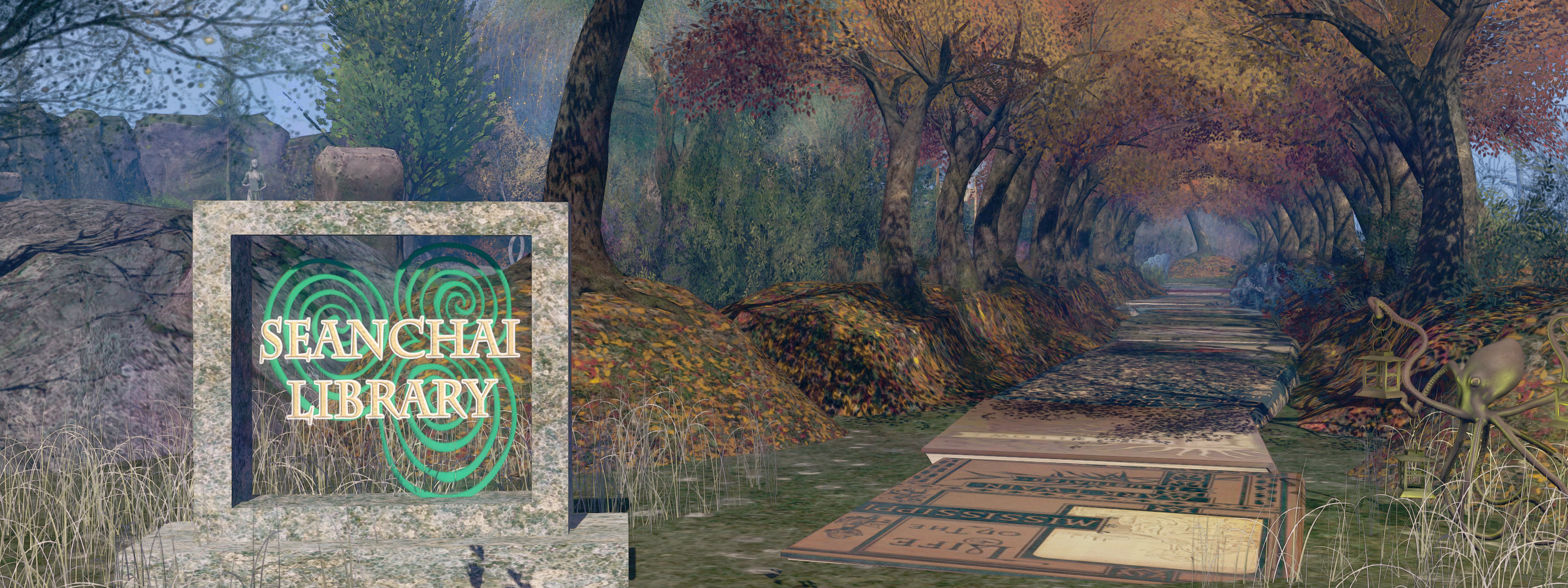
Seanchai Library

It’s time to highlight another week of storytelling in Voice by the staff and volunteers at the Seanchai Library. As always, all times SLT, and events are held at the Library’s home in Nowhereville, unless otherwise indicated. Note that the schedule below may be subject to change during the week, please refer to the Seanchai Library website for the latest information through the week.

Sunday, June 20th, 13:30: Tea-Time with Modesty Blaise

The Modesty Blaise comic strip made its debut in the London Evening Standard in May 1963, and drew to a close with the Evening Standard in 2001 – although several newspapers which went onto also run the series re-ran it from 2001 through 2018.

Modesty Blaise by Enrique Badía Romero

The strip was created and written by Peter O’Donnell and largely inked by illustrators Jim Holdaway (1963-1970) and Spanish artist Enrique Badía Romero (1970-1978; 1986-end). It follows the adventures of the titular character (and based on a young girl O’Donnell actually met) who  escapes from a displaced person (DP) camp in Greece as the end of World War 2.

Initially becoming the unofficial ward of another refugee, Lob (who calls her “Modesty” and provides her with an education), by 1953 she is leading the criminal enterprise known as The Network. During this time, she meets Willie Garvin, a man who becomes her most trusted ally and friend (but not her lover), and the two work closely together throughout the rest of the strip

After marrying and divorcing (gaining British nationality in the process), and having made her money through The Network, Modesty decides to return to England, with Willie accompanying her. Here, and for the core of the strip, Modesty goes to work for the British Secret Service as a kind of “independent contractor” working of H.M. Government – and she brings Willie in to assist her. During this time they also become embroiled in several adventures of their own.

Now Modesty Blaise comes to Seanchai Library’s Fireside Room with Corwyn Allen, Gloriana Maertens, Elrik Merlin, Kayden Oconnell, and Caledonia Skytower reading The Giggle Wrecker from Pieces of Modesty.

Monday, June 21st 19:00: Behemoth

In 1914, the world is divided into Darwinists and Clankers. The Darwinists have evolved genetics to make animals more useful to humans. The Clankers have built their society on machinery technology.

When the Leviathan, a living whale flying ship, arrives in Constantinople, a city where Clanker culture and Darwinst principles intersect in the most intriguing ways, Dr Barlow and Deryn Sharp deliver their precious cargo to the Sultan as part of a peace-keeping mission, only for things to suddenly take a left turn. Now the only way to save themselves in this hostile, politically-charged city is for Dr Barlow to offer up the thing that matters most: Leviathan itself.

Meanwhile, Prince Aleksandar Ferdinand, the would-be heir to the Austro-Hungarian throne following the murder of his father, escapes from his prison camp and once more goes on the run with his men and the Loris, while Count Volger stays behind to fend-off the pursuit, forcing Alek to take on new responsibilities.

Thus, fate once again sees to it that both Deryn and Aleks must re-evaluate their precarious situations in the world…

Join Gyro Muggins as he returns to Scott Westerfield’s alternate history of Earth.

Tuesday, June 22nd

12:00 Noon: Russell Eponym, Live in the Glen

Music, poetry, and stories.

19:00: What Abigail Did That Summer

It is the summer of 2013 and Abigail Kamara has been left to her own devices. This might, by those who know her, be considered a mistake.

While her cousin, police constable and apprentice wizard Peter Grant, is off in the sticks chasing unicorns Abigail is dealing with her own mystery: teenagers around Hampstead Heath have been going missing but before the police can get fully engaged the teens return home – unharmed but vague about where they’ve been.

Aided only by her new friend Simon, her knowledge that magic is real and a posse of talking foxes that think they’re spies, Abigail must venture into the wilds of Hampstead to discover who is luring the teenagers and more importantly – why?

Join Corwyn Allen as he reads Ben Aaronovitch’s latest novel.

Wednesday, June 23rd, 19:00: Carl Hiaasen’s Skink

A native Floridian, Carl Hiaasen is an American journalist who focuses on political issues (notably corruption, environmental issues and other wrong-doings) within his home state. Starting his career in the 1970s , he became renowned for being exceptionally outspoken – even against his own employers.

Carl Hiaasen. Credit: Joe Rimkus Jr.

During the 1980s, he started writing fiction in his spare time, achieving initial success with three co-authored novels published between 1981 and 1984, as well as writing several non-fiction titles.

In 1987, his second novel, Double Whammy introduced the “trailer park star tenant” and private eye, C.J. Decker, which Hiaasen fondly refers to as “the first (and possibly only) novel ever written about sex, murder and corruption on the professional bass-fishing tour.” Among the cast of characters mixed into Double Whammy is one Clinton Tyree, the one-time governor of Florida, who abandoned his office and now lives as a outdoorsman (and partaker of roadkill cuisine) in the Everglades and the Florida Keys, using the pseudonym Skink.

Skink went on to become a recurring character in a further seven of Hiaasen’s novels to date, with all the books in which he features being gathered together under the general title of SKINK, with several of them being been among the 20+ works of fiction and non-fiction by Hiaasen to appear on the New York Times best-seller list.

Join Kayden Oconnell as he continues a journey with Hiaasen’s characters.

Thursday, June 24th , 19:00: Little Fuzzy

Ktadhn Vesuvino reads the book by H. Beam Piper that spawned a series by him and other science fiction authors about a small, furry species dubbed Fuzzies.

Little Fuzzy charts the discovery of small furry species on the planet Zarathustra and the attempts by humans to determine whether or not they are sentient. If they are, then their planet will be declared a protect aboriginal  world. However, The Company has desires to control the planet and its resources.

Friday, June 25th, 14:30: Terry Pratchett’s Unseen Academicals

Football in Ankh-Morpork is not as we might know it. Rather than being comprised of rules and played within a recognisable ground, it is far more akin to the somewhat violent mob football of medieval Europe.

Not that this is a concern for the elderly, mostly indolent and (some might be tempted to think) somewhat inept old wizards making up the faculty staff at the city’s school of wizardry, the Unseen University. Until, that is, their very handsome annual endowment becomes subject to their playing the game themselves.

Thus, Archchancellor Mustrum Ridcully sets out a two-pronged strategy: to ensure the city’s version of football is restructured with proper (and favourable?) rules, and to put team preparations at the university in the hands of the talented candle dribbler, Mr. Nutt and his assistant, Trevor Likely, the son of the city’s most famous (if deceased – did I mention the game can be violent?) player, who are in turn supported by Glenda Sugarbean, who runs the university’s night kitchen and her assistant Juliet Stollop.

Except Mr. Nutt soon discovers he has problems of his own to deal with, and Trevor has promised his Mum he’ll never get involved in the game.  Meanwhile, Glenda has the daily responsibility of baking the Discworld’s best pies, and Juliet is about to find herself whisked towards the heights of fame as a fashion model, thus potentially leaving the team a little short on practical advice…

Join Caledonia Skytower as she presents the 37th novel in the Discworld series, and possibly one of its greatest satirical undetakings encompassing football, academia, traditions, the fashion industry, politics, love, fandom, and which mixes in more serious themes of identity, crab mentality and self-worth.

A return to downtown Drune in Second Life

Drune Sleazy Street, June 2021

About a week ago, I bumped into Hera (zee9), creator of the ever-popular Drune series of region designs  and during the course of our conversation, she mentioned that while the last (at that time) iteration of the city – Drune Diesel (see: Drune’s diesel-deco delight in Second Life) – had now gone, she was nevertheless working on a smaller-scale redux of the more dystopian versions of the city.

The result is Drune Sleazy Street, and at the weekend, Hera extended an invitation to visit and explore.

Drune Sleazy Street, June 2021

As the name might suggest, the new build only replicates the main street of the dystopian Drune. Given the design is sitting within a Homestead, it’s a little hard to reproduce all of the city; but what Hera has produced is nonetheless engaging and rich in detail, both echoing the older Drune builds and offering some touches of its own.

Drune Sleazy Street, June 2021

Awash with the neon that always gives Drune a pulse of life, the street is home to the passage of hover vehicles along the main carriageways, the adult-themed emporiums and the eateries, all overseen by hovering bots, quietly parked police spinners, and elevated walkways.

Among the buildings that line the street are two clubs, one with the familiar Alien-esque theme, the other offering a more grunge feel (and called appropriately enough, Biohazard). Also awaiting discovery is opulent delight of the Shanghai Dragon. While for those who seek it, an elevator will lift them up to the Exotic lounge.

Drune Sleazy Street, June 2021

But rather than being written about, Drune Sleazy Street – like the various iterations of the full-scale Drune – is a place that should be seen and savoured while it lasts and which will appeal to anyone with a love of sci-fi (the Blade Runner references are clear in the design, and really don’t need mentioning alongside those of the Alien franchise). As such, I’ll just leave images here as encouragement (I hope!) for you to hop over and take a look for yourself.

My thanks to Hera for the invitation to visit!

Drune Sleazy Street, June 2021

SLurl Details

Interpretations of genres at Blue Orange in Second Life

Blue Orange Art Project 5: Stabitha and Talullah Winterwolf

I was stunned to discover it’s been over 2½ years since my last visit to Ini Inaka’s Blue Orange music and arts venue.  True, for part of that time, the space seemed to be quiescent, but the gap has meant I may have come close to missing the 5th of the Blue Orange Art Projects, given it opened at the start of the 2021.

These Art Projects bring together an ensemble of 2D and 3D artists and creators from across Second Life, who are invited to display their work as something of a contiguous, semi-thematically linked series of displays and installations to be found throughout the seemingly random jumble of display spaces – a layout which encourages careful exploration in order to discover all of the art.

Blue Orange Art Project 5: Eupalinos Ugajin (left) and Olympe 

For the 5th Art Project, Blue Orange brings together Amanda (aht1981), Andromeda (pehi61), Chibbchichi, Tx (ThierryTillier), Eupalinos Ugajin, Gitu Aura, Grady Echegaray, Kleines Sternchen, Mistero Hifeng, Olympe (Olympes Rhode), Stabitha (What88 Zond), Talullah Winterwolf, Tx (ThierryTillier), Venus Adored and  Xirana (Xirana Oximoxi). Together they present a mix of 3D elements (perhaps only 1 per 3D artist) and 2D art displays that have been put together around the theme of four core art movements: Dadaism, Surrealism, Avant-garde and Expressionism (with a lean towards German Expressionism of cinema in the Weimar Republic, 1918-1933).

Each of the artists has been left free to adopt whichever of these movements they find personally appealing, with some touching upon more than one, and others folding-in additional artistic statements. for example, Xirana’s Children in War, and Andromeda’s compositions (some of them interactive – by sure to touch the stars of the constellations) on the subject of astronomy / stargazing.

Blue Orange Art Project 5: Gitu Aura

The latter may not initially appear to fit in any of the four movements. But when you consider the marvels of the cosmos around us, and how they can present a juxtaposition of realities (our own finite span of years compared to the seeming endless enduring of the universe around us); the manner in which some of us illogically assign the happenstance alignment of distance celestial bodies as seen from Earth with some kind of mystical power that affects our lives, and yet we can create images of painting of them which match our ability to photograph them, then the alignment between astronomical images and surrealism starts to become clearer, particularly when you add the fact the way they evoke emotional experience rather keeping us focused on the physical reality of everyday life, and the link gains further strengthened.

Elsewhere, Olympe marvellously captures aspects of Avant-garde together with elements of surrealism through her fractal paintings that are richly captivating in form and colour. In the space below, Tx celebrates the irrationality and photomontage of Dadaism in the company of Amanda, who leans more towards Expressionism – as does  Grady Echegaray in the neighbouring room, whilst also borrowing from the art of collage (also to be found within Cubism).

Blue Orange Art Project 5: Xirana

This is a exhibition that should be explored carefully and without rush; there are multiple ways through the various exhibit spaces, not all of which may at first appear obvious (look for the arrows and the signs). Venus Adored, for example, has an immersive 3D experience that touches on all four movement, but can be missed by the unwary if the sign and  arrow inviting people to walk through a wall are not spotted.

Venus’ exhibit is also one that requires both Advanced Lighting Model (ALM) and shadows to be enabled in order to appreciate it fully; elsewhere it is probably best to have ALM enabled (Preferences → Graphics → Advanced Lighting Model checked), but it is not necessary to have shadows enabled throughout.

Blue Orange Art project 5: Mistero Hifeng (foreground) and Talullah Winterwolf

Richly mixed,  Blue Orange Art Project 5 makes for an engaging visit.

SLurl Details

SL18B: A look at the Linden Homes Fantasy Theme preview

The Linden Homes Fantasy Theme preview at SL18B

Note: the images here do not show the intended EEP environment for the fantasy theme. They have been taken purely to show the house designs themselves. I will have images reflective of the Fantasy homes and their new sub-continent utilising the correct environment lighting when the Fantasy theme becomes available. 

As a part of the opening of SL18B, Patch Linden announced the next Premium Membership Linden Homes theme will be Fantasy, and a preview area opened within the celebration regions, giving people a chance to see the new theme ahead of its release later this year.

Fantasy has been a common request for a new Linden Homes theme, and the new theme is to address this call. In keeping with the majority of the “new” Linden Homes themes, the houses occupy 1024 square metre parcels, and the theme appears to comprise four styles, as described below – but please note it has been indicated that:

  • The interior layouts may change between the preview and the release.
  • This theme is to include “special features” not previously seen in Linden Homes – but these will not be revealed until Patch’s Lab Gab session on Tuesday, June 22nd (unless he spills the beans at the Leadership session on Monday, June 21st!).
Amberbrooke

The four styles are:

  • Amberbrooke: a large, open-plan central room with stairs to the upper level and front and rear access, flanked by two additional rooms. Upstairs are three rooms, with the central room featuring a balcony overlooking the rear of the property.
  • Mistbrooke: a large, single-level house with central entrance hall flanked by two rooms on either side, the two rearmost of which each provide access to a small terrace / patio sitting between the wings of the house.
  • Rosebrooke: central entrance hall, flanked by a large room to the right with access to the rear of the property, and a smaller room to the left. Stairs from the hall provide access to a landing with a room to either side, each with skylights.
  • Stonebrooke: a turreted entranceway provides access to a large main room with access to the rear of the property and further access to an inner hall / room that in turn leads to three further rooms.

While it is purely speculative on my part, I wonder if these homes might also follow in the footsteps of the Chalet theme, with each style offered both with complete interiors and in a more open style variants for people to create rooms of their own.

Mistbrooke
As it is, and again given the interiors are not finalised, the Mistbrooke would appear a little cumbersome in layout – the only way to get to the rearmost rooms in the house (and indeed, access the rear terrace / patio) is to traipse through the rooms they adjoin.  Some might not find this especially enamouring, depending on the uses to which they put the intervening room. Given the hallway overlooks said terrace / patio, I’m surprised the window it contains is not actually a doorway.

In terms of overall design, the Fantasy Homes could be described as “the Cotswolds meets Lord of the Rings”. True, these are are not faced in stone (at least for the preview), but on the whole their general appearance (ignoring the skylight motif and fretwork over entranceways) wouldn’t seem too out of place if dropped into a Wiltshire village.

Rosebrooke

It is the fretwork that pretty much carries the “fantasy” theme (along with the “Linden typical” approach the the general landscaping (twisted and gnarled trees, crystals thrusting out the the ground together with giant mushrooms). This fretwork and the skylight window motif do give the houses a lean towards “elven / Lord of the Rings”, but to me on this first look – and granted I know nothing about the “special features”, so may well have to eat my words later – the overall designs feel as if they are tinkering with the fantasy theme, rather than embracing it.

Truth be told, wandering / camming the region left me asking, “where are the rounded doorways? Why not something with a little more of a fantasy edge to it such as homes with open-sided entranceways and halls leading to rooms that are somewhat more enclosed?” and so on. However, and in  fairness, I can also recall the original Linden Homes fantasy theme came under heavy fire back in 2009 for being too other-worldly (/Lord of the Rings-ish) and thus seen as having “limited appeal”, so a more staid approach might be for the better.

Stonebrooke

As it is, much of the initial reaction on the forums has been positive, and it is fair to say that in not going “all out” on the fantasy theme, these homes could find favour among both fantasy lovers and those who are not so heavily fantasy oriented, but want a home that is just that little bit different without being completely “outlandish” to their way of thinking.

Either way, the preview region will be open for viewing throughout SL18B, and I’ll doubtless have more on this theme down the road.

2021 CCUG meeting week #24 summary

Nelipot, March 2021 – blog post

The following notes were taken from my audio recording and chat log of the Content Creation User Group (CCUG) meeting held on Thursday, June 17th, 2021. These meetings are chaired by Vir Linden, with dates available via the SL Public Calendar and the venue for the CCUG is the Hippotropolis camp fire.

SL Viewer

There have been no updates for the viewer since Monday, June 14th, leaving the official viewer pipelines as follows:

  • Release viewer: LMR 5 viewer, version 6.4.19.560171, dated May 27th, promoted June 7th – NEW.
  • Release channel cohorts:
    • Project UI RC viewer, version 6.4.20.560520 dated June 14th.
    • Maintenance 2 RC viewer – Fernet, version 6.4.19.559726, dated May 19th.
  • Project viewers:
    • Legacy Profiles viewer, version 6.4.11.550519, dated October 26th, 2020.
    • Copy / Paste viewer, version 6.3.5.533365, dated December 9th, 2019.
    • Project Muscadine (Animesh follow-on) project viewer, version 6.4.0.532999, dated November 22nd, 2019.
    • 360 Snapshot project viewer, version 6.2.4.529111, dated July 16th, 2019.

General Viewer Notes

  • The Project UI RC viewer will be the next to be promoted to de facto release status, and this will be in the “next week or two”.
  • The Mac notifications viewer has still yet to surface as a either a project or RC viewer.
  • The revised simplified cache viewer RC is returning to LL’s QA team, and if it passes through testing, should be appearing as a new RC, but this may not be for another couple of weeks.
  • A further CEF (Chrome Embedded Framwork) viewer for web content – media streaming, etc., – is also in the works, that should support more streaming / media codecs and fix a number of streaming-related issues.

ARCTan

Summary: An attempt to re-evaluate avatar rendering costs and the cost of in-world scene rendering, with the current focus on avatar rendering cost / impact, with the in-world scene rendering / LI to be tackled at some point in the future.

  • Work is continuing on the new performance floater. This pulls together information from various menus / debugs to display useable information on avatars / attachments that are heavy in rendering cost, and what can be done.
    • This work is currently separate to the work on revising that actual formulas used for calculating avatar complexity
    • It had been indicated the UI work could appear in the viewer before the avatar ARCTan calculations are updated to more accurately reflect the cost of rendering avatars.
    • However, there is a concern that if this is the case, the new floater will simply be ignored when made available, and will continue to be be ignored after the calculations have been revised.
    • It has therefore been suggested it would be better to revise the calculations first, and then release the viewer with the new information floater and explanations as to why it should be taken note of. LL have indicated they may consider doing this.
  • There is an on-going debate as to how useful information / self-regulating exercises like ARCTan are, compared to the enforcement of hard limits.
    • Self-regulating exercises (users making use of the information provided by their viewer) tend to be ignored (e.g. the Jelly Dolls complexity slide is generally left ramped up to the highest), thus defeating the purpose of such exercises.
    • However, enforcement of hard limits runs the risk of causing a high level of upset (and possible quitting) of a good portion of the user base when they find they can no longer overload their avatars with high-vertices/high texture load/heavily scripted attachments.
    • To  avoid the latter, it has been suggested the viewer should be able to automatically reduce avatar rendering to progressively lower LOD settings based on the load they place on the local system, rather than purely by distance from the camera.
  • It’s also bee suggested that for meshes in general, Second Life should have a robust auto-LODing system at upload.

In Brief

  • A long-standing issue for content creators producing mesh linksets for upload to SL, is that while they could give each element in the linkset a unique name for easier re-assembly post-upload, following upload, only the first element of the linkset would retain its name – the rest would be converted to “Object”, making re-linking an onerous task.
  • BUG-202864 “Change Mesh Uploader to preserve Scene File object names when a full linkset is uploaded” was raised in 2018 as a request for this to be addressed, and a viewer-side change to support this was implemented thereafter.
  • However, as per the week #22 CCUG, the server-side update also required to support this was not made, and the matter slipped off of LL’s radar.
  • Following that meeting, Vir Linden referred the matter to Rider Linden on the simulator team, and he has reported that:
    • The required server-side support will be going to RC, hopefully in week #25 (commencing Monday, June 21st).
    • In the interim, those wishing to test the capability can do so via the Preflight group of regions over the weekend.