Secrets, tribes, starships and seas in Second Life

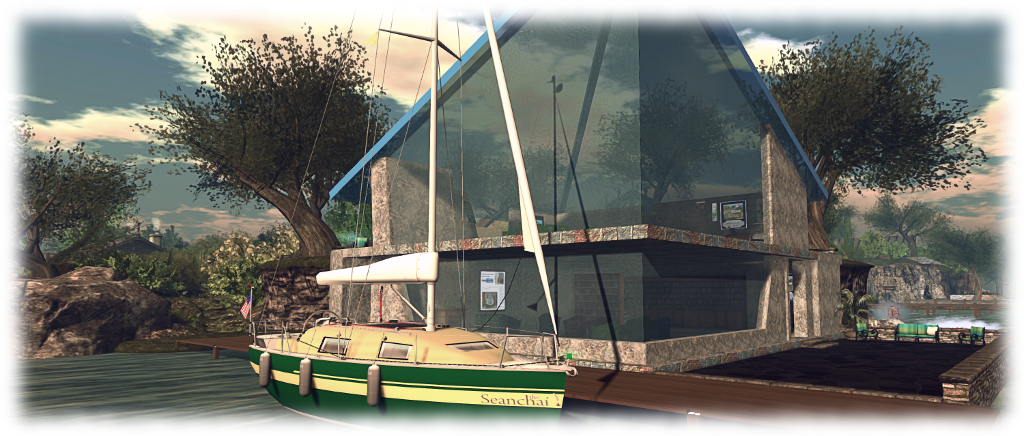
Seanchai Library

It’s time to highlight another week of storytelling in Voice by the staff and volunteers at the Seanchai Library. As always, all times SLT, and events are held at the Library’s home unless otherwise indicated. Note that the schedule below may be subject to change during the week, please refer to the Seanchai Library website for the latest information through the week.

Sunday, January 12 18:30: The Secret Garden

Caledonia Skytower reads this classic of children’s literature  by Frances Hodgson Burnett, first published in 1911, at the Golden Horseshoe in Magicland Park.

Orphaned after losing her parents in a cholera epidemic, young Mary Lennox returns to England from India, entering the care of her uncle Archibald Craven, whom she has never met.

Up until this point, Mary’s childhood had not been happy; her parents were selfish and self-seeking, regarding her as a burden over which they were not obliged to hold much responsibility. Not overly healthy herself, she is as a result  a temperamental, stubborn and unmistakably rude child – and her arrival at Misselthwaite Manor and the relative gloom of Yorkshire’s weather does little to improve her mein.

Her disposition also isn’t helped by her uncle, who is strict and uncompromising, leading to Mary despising him. But her uncle’s story is itself filled with tragedy, particularly the loss of his wife. As she learns more about her uncle’s past, so Mary learns about a walled garden Mrs. Craven once kept, separated from the rest of the grounds and which, since her passing has been kept locked by Mary’s uncle, the door leading to it kept locked, the key to it buried somewhere. 

Finding the missing key and the now hidden door, Mary enters the garden, and her passage into it starts her on a journey of friendship and discovery, one that leads her to the thing she never really knew: family.

Monday, January 13th 19:00: The Integral Trees
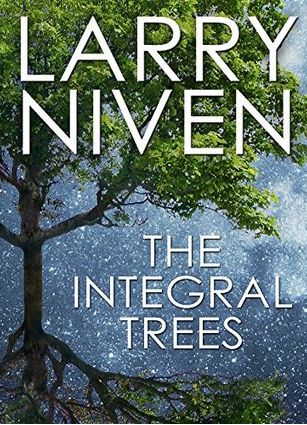
Dispatched on a mission of exploration, the Earth ship Discipline, operated by the the all-powerful State, encountered a strange phenomenon: a torus-like ring of gas and dust surrounding a neutron star. Within the torus, the crew discover a thriving ecosystem of plant and animal lifeforms that have evolved to living continually in a state of free-fall.

Despite being overseen by the ship’s AI system, Sharls Davis Kendy, from which they received advice and information, the crew abandoned the Discipline in favour of living among the plants and trees of the torus, which they call the Smoke Ring.

Now, 500 years later, the descends of the original crew have formed a tribal society focused around some of the trees of the system. Adapted to free-fall life, their societal structures are sharply divided, with “wars” common among them, as well as stronger tribes raiding or enslaving weaker tribes, whilst in all of them, artefacts from the original mission are sought-after and venerated. 

In the midst of a round of aggression between various tribal factions, one group find themselves aboard an original craft from the Discipline and caught in space beyond the Smoke Ring, where the Discipline and Kendy are still waiting – and Kendy is willing to provide assistance.

Join Gyro Muggins for more.

Tuesday, January 14th 19:00 Cutting Corners

Ktadhn Vesuvino reads a short story by Sharon lee and Steve Miller, set in their Liaden Universe®.

Therny Chirs, cargo master and  – certification allowing – a Third Class pilot – does not have a particularly happy lot. Signed aboard the cargo hauler Fringe Runner, operated by the skinflint Captain Jad, Chirs finds himself becoming a jack of all trades – cargo master, engineer and general fixer, with or without certification, on a ship that is so far past recognised periods of refit / overhaul, its name might well be “cutting corners” – an act generally frowned upon when it comes to operating in the cold and impersonal realm of space.

However, the current issue on the Fringe Runner isn’t one to be solved easily. It really requires a certified engineer – or at least time spent shunting stuff around from outside, which itself would require a dock pilot. Neither option is liable to by something Jad will pay for. Fortunately, Chirs has his Third Class pilot’s rating; only it’s dated, and the local Guild require he take a re-certification test. But is it really just a test, or is something else going on?

Wednesday, January 15th, 19:00:The Starless Sea

Caledonia Skytower reads selections from Erin Morgenstern’s novel.

Deep beneath the surface of the Earth and upon the shores of the Starless Sea, lies a network of tunnels and rooms filled with stories and tales. The ways into this secret place are many, but hidden, and perhaps set for just one individual to find. They exist where least expected: on the floors of forests, behind doors inside private homes or around alleyway corners or within mountain caves – almost anywhere in which they cannot be anticipated.

Zachary Ezra Rawlins is searching for his door, though he does not know it. He follows a silent siren song, an inexplicable knowledge that he is meant for another place.

When he discovers a mysterious book in the stacks of his campus library he begins to read, entranced by tales of lovelorn prisoners, lost cities, and nameless acolytes. Suddenly a turn of the page brings Zachary to a story from his own childhood impossibly written in this book that is older than he is…

Thursday, January 16th

19:00 Vivian

Shandon Loring reads Midori Snyder’s short story. Also in Kitely – grid.kitely.com:8002:SEANCHAI).

21:00 Seanchai Late Night

Contemporary science fiction and fantasy with Finn Zeddmore.

2020 TPVD meetings week #2 summary

Frogmore, November 2019 – blog post

The following notes are taken from the TPV Developer meeting held on January 10th, 2020. A video of the meeting is embedded below, my thanks to Pantera for recording and providing it. As always:

  • Time stamps are given with links that will open the video at the appropriate point in a separate browser tab for reference.
  • Core points of the meeting are listed below. Other subjects of lesser import may have been discussed, please refer to the video.

SL Viewer News

[0:44-2:27]

On Thursday, January 9th, 2020, the following RC viewers updated as follows:

The rest of the viewer release pipelines remain unchanged:

  • Current Release version 6.3.5.533275, formerly the Wassail RC viewer, dated December 4, promoted December 12 – No change.
  • Release channel cohorts:
    • Xanté Maintenance RC viewer, version 6.3.6.533748, December 19.
  • Project viewers:
    • Copy / Paste viewer, version 6.3.5.533365, December 9.
    • Project Muscadine (Animesh follow-on) project viewer, version 6.4.0.532999, November 22.
    • Legacy Profiles viewer, version 6.3.2.530836, September 17. Covers the re-integration of Viewer Profiles.
    • 360 Snapshot project viewer, version 6.2.4.529111, July 16.

General Viewer Notes

  • Both the Xanté Maintenance RC and the Legacy Profiles Viewer have updates that are “close” to appearing in the current viewers list, with Xanté possibly being close to promotion as the de facto viewer as well.
  • As per my week #2 CCUG summary, EEP is still pending the fixing of around a dozen graphics-related issues.
  • The Camera Presets Viewer, designed to allow users to set and save their own preferred camera presets in their viewer without having to use debug settings, is now closing on being “feature complete” and ready for release either as a Project or RC viewer.
    • This capability is being developed as a viewer code contribution by Jonathan Yap (who was responsible for developing the Graphics Presets options).
    • More information on the work can be found in STORM-2145.

Mercurial to Github Migration

[2:29-3:45]

Bitbucket, used to manage viewer repositories) will be sunsetting support for Mercurial in early 2020. Because of this, Linden Lab has been migrating their viewer repositories from Mercurial to Git on Bitbucket.

  • Most of the Lab’s viewer development is now processed via Git.
  • There is some work remaining on converting all of the third-party package repositories, and this is being done as part of the Visual Studio 2017 / Xcode upgrade, rather than being part of the Git migration per se, as these are relatively stable and not seen as a major problem in terms of migrating them.
  • A document outlining the steps in migration has been provided specifically for TPVs to allow them to keep in sync with how LL main the viewer code and its branches. See: Viewer Repository Migration (Google Docs).
    • This is not the only way for TPVs to manage their own repositories, but it is the one that LL recommend for those wishing to reflect how LL manages things.

Visual Studio / Xcode Build Process Update

[4:58-7:30]

The VS 2017 / Xcode upgrade has been caught with a couple of issues:

  • The Boost library used to implement coroutines in the build process would not build using VS 2017 & required conversion to Boost Fibre, which it turn had a number of impacts that also needed to be resolved.
  • Currently, the project is caught on a GIT-related issue, with validating the integration scripts used in the build process, and which is still being worked on.

It’s hoped that the additional work involved in moving the build process to support VS 2017 should make a future move to using VS 2019 easier.

Deprecating Windows 7 Support

[3:48-4:28]

  • Windows 7 officially reaches its end of life on January 14th, 2020. After this date, patches and security updates, etc., will no longer be provided, and the company is unlikely to provide any support.
  • Linden Lab has officially blogged on the subject, which I also blogged about as well.

In Brief

  • [7:55-8:30] There has been no work on the Linux front for official viewer over that last few months, and while still on the road map, is seen as a fairly low priority item, sitting well behind the Git migration, build tools updates, general viewer development and – particularly – the work in transitioning Second life to the AWS cloud.
  • [9:32-10:55] Week #2 restarts. While not generally a part of TPVD meetings, the issues with the Tuesday, January 7th server restarts was mentioned, with Grumpity noting:

It was a rocky day on Tuesday. It came out of our desire to do things in a less disruptive manner and … once again, the road to downtime was once again paved with good intentions, because that way proved to be in no way less disruptive than if we had done things the regular way.

Essentially, the issue was with some restart code that hadn’t been used in a while, and which LL had thought had been fully tested, but when put to use proved to have issues.

  • [15:33-20:23] A reminder was given that – particularly after a viewer crash –  it is better to wait for a short period, rather than immediately trying to re-log (particularly if the warning about logging back in is displayed). This is because each failed attempt refreshes your avatar presence, interfering with the post-crash clean-up (the “you are currently being logged out” part of the message).
    • Note: this part of the meeting included an extensive chat discussion on auto-relogging, as can be present in mobile and other clients, such as Lumiya and Radegast that continues through until the end of the meeting. Please refer to the video for more on this.


Art Made in Second Life: FionaFei’s fabulous shuǐmò

Fiona’s Reflection, as featured in Art Made in Second Life

FionaFei is a relative newcomer to Second Life and its art world, but she is someone who has made an enormous impression on those who have witnessed her art. I’ve personally had the delight in discovering it, and in writing about it on two occasions (see: Captivated by FionaFei’s art in Second Life (May 2019) and FionaFei’s shuǐmò Reflection in Second Life from November 2019).

As such, it was a joy to see that Fiona and her work are the subject of the first video (embedded below) in the Second Life series Art Made in Second Life (itself a further branching of the Made In Second Life video collection).

FionaFei (via Art Made in Second Life)

Fiona specialises in reproducing shuǐmò ink wash painting as 3D sculptures and setting within her appropriately-named Shui Mo gallery space in Second Life.

Also called shuǐmòhuà (suiboku-ga in Japanese) shuǐmò, uses different concentrations of black ink to create an image. Found throughout East Asia, it first emerged in Tang dynasty China (618–907), before spreading to Japan (14th century), Korea and to India. Beside the use of black ink in place of colours, it is also marked by the emphasis of the brushwork being on the perceived spirit or essence of the subject, rather than directly imitating its appearance.

Through her installations, Fiona marvellously brings the entire essence of shuǐmò to virtual life. In doing so, she allows the spirit of this ancient art form directly inhabit us, by making our avatars part of her work by virtue of our presence within it, whether we participate through direct interaction (as with the umbrellas in the “foyer” area that sits between the pieces referenced in the video (Reflection and Rising) or through our entry into, and exploration of, Reflection itself.

Within pieces like Reflection and Umbrella Landscape, and before them Wo Men Dakai (about which I wrote in Captivated by FionaFei’s art in Second Life), Fiona offers a combined celebration of this ancient form of art, a means of reflecting on her heritage, and an opportunity to present her own philosophy on life, as she notes both through the video and in her own writings.

As a Chinese American who immigrated from China at a young age, I created the Shui Mo series as a way of connecting with my ancestry and celebrate centuries of art from old masters who painted using traditional Chinese ink brush style….

…I see life and my journey as a painting. It can be forever an evolving piece … At any given time, you think you’ve reached the end of it, but you can always add to it, layer it, and change it. In a sense, each brush stroke is like a footprint.

– Fiona discussing her art and her world view

Three of Fiona’s traditional Chinese scroll painting – which are actually 3D sculptures, the centre on animated

What is particularly attractive about this short video (running to just under 2 minutes) is the manner in which it reflects the emphasis of shuǐmò. Rather than dwelling at length upon Fiona’s art, or presenting an in-depth look at her life and how she came to Second Life, it provides broader – dare I say  – brush strokes of both. Thus, and like shuǐmò, it captures the spirit of her work and presence hear, rather than more directly presenting the appearance of both, leaving us with the opportunity to discover more by visiting Shui Mo and Fiona’s Flickr gallery.

For my part, I cannot emphasise the sheet beauty and alluring appeal and depth to Fiona’s work, and urge anyone who has yet to witness it to both watch the video and take the time to visit her gallery in-world and fully immerse themselves in her art and vision.

Additional Links

2020 Content Creation User Group week #2 summary

Elvion, November 2019 – blog post

The following notes are taken from my audio recording of the Content Creation User Group (CCUG) meeting held on Thursday, January 9th 2020 at 13:00 SLT. These meetings are chaired by Vir Linden, and agenda notes, meeting SLurl, etc, are available on the Content Creation User Group wiki page.

Environment Enhancement Project

Project Summary

A set of environmental enhancements (e.g. the sky, sun, moon, clouds, and water settings) to be set region or parcel level, with support for up to 7 days per cycle and sky environments set by altitude. It uses a new set of inventory assets (Sky, Water, Day), and includes the ability to use custom Sun, Moon and cloud textures. The assets can be stored in inventory and traded through the Marketplace / exchanged with others, and can additionally be used in experiences.

Due to performance issues, the initial implementation of EEP will now likely not include certain atmospherics such as crepuscular rays (“God rays”).

Resources

Current Status

  • The EEP RC viewer updated to version 6.4.0.534193 on Thursday, January 9th.
  • Bug fixing continues, notably around alpha rendering issues.
  • It is believed there are about a dozen remaining issues to be dealt with before EEP may be ready for formal release.

Pathfinding

First introduced in 2012 (and developed over the following year), Pathfinding was intended to provide a means for more interactive non-player characters (NPCs) in Second Life. Unfortunately, the implementation of the system proved to be so cumbersome (and leaving aside some of the incorrect perceptions about Pathfinding on the part of land holders), the it has never really seen that much use in Second Life.

With the arrival of Animesh, there has been renewed interest in using Pathfinding in conjunction with Animesh characters, but again, the current implementation is proving a bottleneck (e.g. highlighting / indicating “walkable” areas in the viewer; whether the navmesh is actually visible; the effort required to Pathfinding, etc.).

  • A forum thread highlights the issue, and it has been suggested that if a Jira can be raised highlighting the specific problems, it might be something the Lab could take a look at to try to improve some of the visualisation issues within the viewer (Navmesh visibility, etc.).
  • However, a broader pass at improving / overhauling Pathfinding is not on the Lab’s current road map for SL.

Pathfinding Resources

In Brief

IP rights, UV Maps and “working copies”: there has been recent discussion on the forums, through various user groups (notably Governance, which I’ve been unable to attend for the last couple of months due to RL) concerning IP rights and things like mesh VW maps, compatibility, weight painting etc. The questions have arisen of late due to a mesh appearing on the Marketplace that achieves compatibility with all the other meshes of the same nature by providing amazingly close replicas of them.

Currently, the primary course of response to concerns over potential infringement – imperfect is it may appear to be where this issue may be more esoteric in nature, given that the meshes in question all tend to use things like UV maps derived from originals supplied by Linden Lab – is for a creator with concerns over infringement to file an DMCA complaint with LL.

BOM take-up: Bakes On Mesh take-up is seen as being a little slow. Some mesh body / head makers have yet to fully adopt BOM flagging on their products for example (so while Maitreya support BOM on their current body via a HUD, the body still has some 800 individual mesh elements that the viewer needs to handle, compared to the (roughly) less-than-fifty used by the Slink Redux (BOM) body). Also, there are continued concerns about BOM’s ease-of-use when compared with the use of HUD-based applier systems. While the latter can be more resource-intensive, the form is seen as requiring better scripted tools and / or better inventory visualisation mechanisms (even better base alpha support) in order to be more attractive to users.

Next CCUG meeting: Thursday, January 23rd.


2020 SL Home and Garden Expo applications

via slhomeandgardenexpo.com

The 2020 Home and Garden Expo (HGE) in support of Relay for Life of Second Life and the American Cancer Society, will take place this year from Saturday, February 15th through until Tuesday, March 3rd, 2020, inclusive, and applications are still open for those who wish to participate.

The organisers are specifically looking for the following groups of participants:

  • Creators of home and garden items of all kinds; from houses and landscaping to furniture, décor and knick-knacks.
  • Breedable creators and markets.
  • Builder resources aimed at the home and garden market.
  • SL rental estates.
  • SL Media covering the home and garden and/or art scene in SL.
  • Visual artists.
  • Fashion / wearable creators (limited participation, see below).

Creators, etc., interested in participating in the event should follow the links below:

Expo exhibitors are required to have two Relay For Life of Second Life 100% donation items at the Expo. These items must be new and exclusive to the Expo for the duration of the event. Gachas are permitted at the Expo, with proceeds evenly split between the Creator and RFL of SL.

Fashion and the Wearable Arts Awards

2020 will mark the first time Second Life fashion will be included in the Expo. To be eligible to apply as a clothing vendor, creators must also agree to participate in the Expo’s first ever Wearable Art Awards. Further details for fashion creators can be found as follows:

Further general information can be found at the Home and Garden Expo website.


Second Life: end of support for Windows 7 announced

On Tuesday, January 14th, 2020, Microsoft is ending support for Windows 7. This means that while the operating system will continue to function beyond that date, Microsoft will no longer provide:

  • Technical support for any issues.
  • Software updates.
  • Security updates or fixes.

As as result of this, and as initially announced at the 2019 TPVD meetings week #50 summary, Linden Lab plan to cease their own support for Windows 7 from that date. This has now bee confirmed in an official blog post, which reads in part:

Accordingly, Linden Lab is updating our system requirements to remove Windows 7 from the versions we support. This does not mean that Second Life will stop working on Windows 7 immediately; existing viewers, and possibly some new viewers, should run as well as they did before. However, we will not be testing any viewers on Windows 7, so it is likely that compatibility problems will develop and increase over time. In addition, we will not attempt to fix any problems which occur only on unsupported operating systems (if a bug is reported against an unsupported system, we usually try to reproduce it on one that is supported; if we can’t, we don’t investigate further or attempt to fix it).

Those will have not upgraded to Windows 10 but have a valid copy of Windows 7 may still be able to upgrade using the Microsoft Windows 10 update site (note that free updates to Windows 10 were supposed to have been discontinued be Microsoft at the end of December 2017, but some are reporting it is still working via the Create Windows 10 Installation Media option).

Again, note that that’s Lab’s decision does not mean users on Windows 7 will find themselves blocked from accessing Second Life on or after January 14th, 2020, but will continue to be able to use the platform as before. However, and as noted in the official blog post, such users:

  • Will not receive assistance from LL support should they encounter problems.
  • Will not have bugs they report investigated or fixed unless said bugs can be reproduced using Windows 8 or Windows 10.
  • May find that, over time, viewer updates may not function as expected on Windows 7, simply because updates and new features will no longer be tested against Windows 7.

Given the potential exposure to malicious activities, both Microsoft and Linden Lab point to the need for users to only utilise supported versions of Windows on their computers, and keep up-to-date will all official patches and releases.
