Space Sunday: commercial crew test flights & exoplanets

An artist’s impression of the SpaceX Crew Dragon IFA test as the SuperDraco pushes the Crew Dragon away from a malfunctioning launch vehicle. Crew: NASA / Mack Crawford

Sunday, January 19th, 2020 saw SpaceX complete a major test that should help bring their Crew Dragon vehicle much closer to the point where it can commence carrying crews to / from the the International Space Station (ISS).

The test, referred to as a in-flight abort (IFA) test saw an uncrewed Crew Dragon vehicle launched from Launch Pad 39A at Kennedy Space Centre atop a Falcon 9 rocket in what was primarily a test of the vehicle’s launch abort system, is designed to push the capsule and its crew clear of a malfunctioning launch vehicle. However, the flight also served as an opportunity to test a further update to the vehicle’s descent parachute system (marking the first time this particular type of parachute had been used on a flight) and for SpaceX to further refine its crew recovery procedures for meeting returning Crew Dragon vehicles.

All the early indicators from the test are that everything ran as expected. Following lift-off and ascent, and at 84 seconds into the flight and an altitude of around 19 km, the first stage engine cut-off triggered the simulated malfunction, causing the abort system to release the clamps attaching the Crew Dragon to the dummy upper stage of the Falcon 9, the SuperDraco engines simultaneously firing, each one generating some 16,000 lbs of thrust. These immediately powered the Crew Dragon clear of the booster, travelling at a speed of over Mach 2, just as they would when trying to get a crew away from a malfunctioning rocket during an operational launch.

The moment of lift-off: the thrice-used Falcon 9 booster with a dummy upper stage topped by the Crew Dragon test vehicle, rises from Pad 39A. Credit: NASA

With the capsule detached, the Falcon 9 continued its own ballistic flight upwards, but the open end of dummy upper stage effectively functioned like a large, open-mouthed air brake, putting huge stresses on the vehicle. These caused the booster to break up, the remaining fuel on-board igniting in an explosion the test team had been expecting.

The SuperDraco motors fired for just 10 seconds. However, this was more than enough to put the craft on its own ballistic trajectory, allowing it to reach a peak altitude of around 40 km three minutes into the flight. Shortly ahead of reaching that point, the service module – referred to as the trunk, and designed to provide power and life support to the vehicle –  was jettisoned. Then as the capsule reached the zenith of its flight, the smaller Draco manoeuvring motors fired, stabilising it as it started its descent back towards Earth, enabling the drogue parachutes to deploy.

This pair of small parachutes allowed the vehicle to properly orient itself and act as a trigger for the release of the four main parachutes – as the drogues are jettisoned, they pulled clear a hatch covering the main parachute bay, just below the docking port that forms the nose of the Crew Dragon, allowing them to deploy, slowing the craft and bringing it down to a safe splashdown.

2:24 into the flight and the service module trunk is jettisoned from the Crew Dragon. Credit: SpaceX / NASA

For crew recovery operations, SpaceX make use of two specially-equipped ships, GO Searcher and Go Navigator. Originally leased by the company from Guice Offshore (hence the GO in the name) for use in the recovery of Falcon Payload fairings, Go Searcher was extensively refitted in 2018 to manage recovery operations for Crew Dragon, gaining a new radar system for tracking incoming Crew Dragon vehicles, a new crew recovery area and medical facility for post-flight check-ups of returning crew, and an upper deck helipad for emergency medivac. Go Navigator completed a similar refit in 2019.

Ahead of the test flight, GO Searcher departed SpaceX’s facilities at Port Canaveral, and took up a loitering position on the edge of the expected splashdown zone some 30 km off the coast of Florida. Following splashdown, teams aboard rigid-hulled inflatable boats (RHIBs) raced to the capsule to start the work of safing the craft and securing it ready for recovery. During normal flight recovery work, the recovery vessel and its crew will additionally have the services of Air Force Detachment-3 to call on, an emergency team of divers and personnel trained for astronaut recovery operations. For this flight, once the capsule has been recovered the the GO Searcher’s stern deck, it will be returned to SpaceX’s facilities along with the recovered parachutes for study.

While the initial response ot the flight has been positive, post-flight review is expected to take several weeks, and NASA has pointed out that there are still a number of additional tests that need to be completed ahead of crewed flights.

The GO Searcher, of of the crew recovery ships now operated by SpaceX, undergoing sea trails following her 2018 sea trials. the ship was used to to recover the IFA Crew Dragon capsule. Credit: NASA

There are some additional system-level tests of the spacecraft’s upgraded parachutes still needed to be completed, as well as other reviews of the spacecraft. [But] stepping through that [abort test] together and making sure that we’ve dotted all the i’s and crossed the t’s before our crew demonstration flight is very, very, important We’ve got work to do, but, honestly, getting this test behind us is a huge milestone.

– NASA Commercial Crew Programme manager, Kathy Lueders

As such, no date has been confirmed for the first crewed flight – officially called Demo-2, and which will see a 2-man crew fly a Crew Dragon to the ISS, where it will remains for approximately two weeks before they return to Earth. However, should the post-flight IFA test analysis prove positive, speculation is the Demo-2 flight could be staged as early as March, with “operational” flights starting later in 2020. In the meantime, the test flight can be followed in the video below, which has a start time set to just before the Falcon 9 ignites its main engine.

Continue reading “Space Sunday: commercial crew test flights & exoplanets”
A circus, a space station, tribes and secret doors

Seanchai Library

It’s time to highlight another week of storytelling in Voice by the staff and volunteers at the Seanchai Library. As always, all times SLT, and events are held at the Library’s home unless otherwise indicated. Note that the schedule below may be subject to change during the week, please refer to the Seanchai Library website for the latest information through the week.

Sunday, January 19 13:30: Tea-Time at the Night Circus

Caledonia Skytower reads selections from Erin Morgenstern’s 2011 tale about a circus that suddenly arrives without warning. One day a field is empty, the next the circus, with big top and paraphernalia is just there. Called Le Cirque des Rêves, it is only open at night and offers visitors a unique experience full of breathtaking amazements.

But behind the scenes, lies a fierce competition – a duel between two young magicians, Celia and Marco, who have been trained since childhood expressly for this purpose by their mercurial instructors.

Unbeknownst to them, this is a game in which only one can be left standing, and the circus is but the stage for a remarkable battle of imagination and will. But Celia and Marco tumble head-first into love – a deep, magical love that makes the lights flicker and the room grow warm whenever they so much as brush hands.

True love or not, the game must play out, and the fates of everyone involved, from the cast of extraordinary circus per­formers to the patrons of the circus, hang in the balance, one as precarious as the swings used by the acrobats who entertain without a net.

Monday, January 20th 19:00: The Integral Trees

Dispatched on a mission of exploration, the Earth ship Discipline, operated by the the all-powerful State, encountered a strange phenomenon: a torus-like ring of gas and dust surrounding a neutron star. Within the torus, the crew discover a thriving ecosystem of plant and animal lifeforms that have evolved to living continually in a state of free-fall.

Despite being overseen by the ship’s AI system, Sharls Davis Kendy, from which they received advice and information, the crew abandoned the Discipline in favour of living among the plants and trees of the torus, which they call the Smoke Ring.

Now, 500 years later, the descends of the original crew have formed a tribal society focused around some of the trees of the system. Adapted to free-fall life, their societal structures are sharply divided, with “wars” common among them, as well as stronger tribes raiding or enslaving weaker tribes, whilst in all of them, artefacts from the original mission are sought-after and venerated. 

In the midst of a round of aggression between various tribal factions, one group find themselves aboard an original craft from the Discipline and caught in space beyond the Smoke Ring, where the Discipline and Kendy are still waiting – and Kendy is willing to provide assistance.

Join Gyro Muggins for more.

Tuesday, January 21st 19:00 The Space at Tinsori Light

Ktadhn Vesuvino reads a short story by Sharon lee and Steve Miller, set in their Liaden Universe®.

Former Scout Jen Sin yos’Phelium, recalled by Korval to serve the Clan, is ordered to discretely deliver a packet to Clan Sinan on Delium. It sounded easy enough, other than the fact that Clan Sinan was having trouble with their allies – a situation that puts Jen on edge and determined not to see the delivery leave him getting separated from his ability to remain alive.

Unfortunately, things do not go well, and Jens is forced to make an emergency star jump, his ship under threat. He finds himself arriving near the deserted Tinsori Light station. With his ship damaged and rescue dependent on his survival, Jens must board the station. In doing so, he discovers Old Tech, a reminder of the Legacy Systems left over from previous wars. Nor is that all, as he discovers the station might be haunted…

Wednesday, January 22nd, 19:00:The Starless Sea

Caledonia Skytower reads selections from Erin Morgenstern’s novel.

Deep beneath the surface of the Earth and upon the shores of the Starless Sea, lies a network of tunnels and rooms filled with stories and tales. The ways into this secret place are many, but hidden, and perhaps set for just one individual to find. They exist where least expected: on the floors of forests, behind doors inside private homes or around alleyway corners or within mountain caves – almost anywhere in which they cannot be anticipated.

Zachary Ezra Rawlins is searching for his door, though he does not know it. He follows a silent siren song, an inexplicable knowledge that he is meant for another place.

When he discovers a mysterious book in the stacks of his campus library he begins to read, entranced by tales of lovelorn prisoners, lost cities, and nameless acolytes. Suddenly a turn of the page brings Zachary to a story from his own childhood impossibly written in this book that is older than he is…

Thursday, January 23rd 19:00 The Furies Part 1

Myths and Legends with Shandon Loring. Also in Kitely – grid.kitely.com:8002:SEANCHAI).

Bringing a little (Studio Skye) Zen to your SL garden

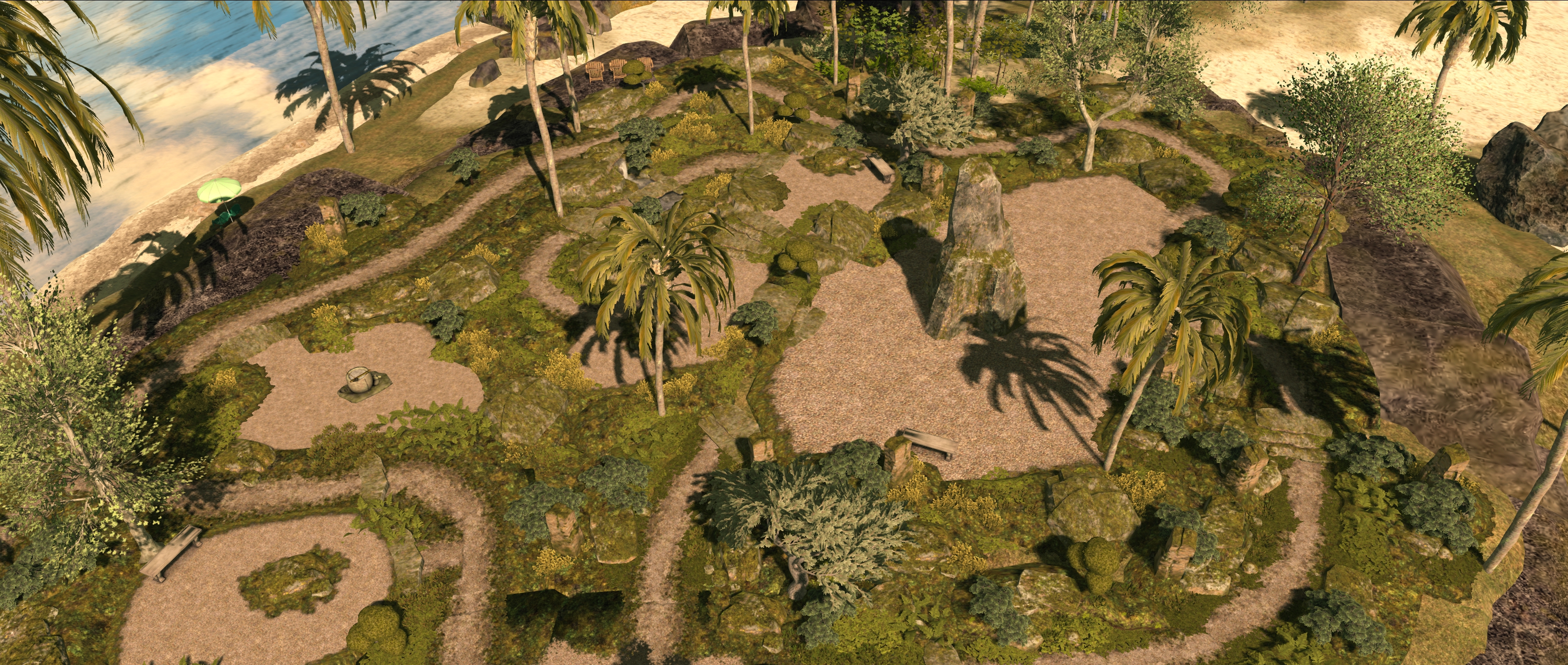
The zen garden at Isla Pey

While visiting JimGarand’s Grauland in January 2020 (see: Grauland’s touch of Japanese Zen in Second Life), I was struck by the zen garden included within the region design. An examination of the core elements in the design revealed them to be from the Zen Garden Building Set by Alex Bader, sold under his Studio Skye brand.

Alex has a reputation for producing excellent landscape building kits – and I’ve used several in constructing places like Holy Kai, although there are admittedly some that while mouth-watering in terms of my desire to put them to good use, such as his stream building sets, I simply haven’t (thus far) had the space in which to do them real justice. However, the Zen Garden kit was one that I immediately had a familiar “me want!” itch about, so that after a couple of days of pondering how it might work within Isla Pey, I snagged a copy from the Marketplace. And I have to say, it is simply superb.

The zen garden at Isla Pey  viewed from the house balcony

At L$899, the kit includes some 24 individual elements: rocks, gravel surfaces, gravel path sections, plants, shrubs, ground cover, ground pieces, stone steps, edging pieces (combinations of rocks and plants), and so on. All of this offers a comprehensive means to build a garden network of paths, plants and open spaces, which can both be used to provide places to sit or include additional features as well as being easily integrated into a broader landscape.

In addition, for those who might be daunted at the thought of trying to glue everything together themselves, Alex provides two “pre-built” and rezzer based examples of gardens: one 32m on a side (96 LI when rezzed) and the other 26x18m (46 LI). Also, a couple of textures are also provided for the purposes of blending any additional items – fillers and the like – that might be required to ensure a good pairing of garden to surrounding landscape elements.

The zen garden display at Studio Skye

Given they are “ready to go”, so to speak, the two example gardens are a good place to start with a design. As they are supplied in rezzers, also that’s required is a couple of clicks with the rezzers, and they can be put together in moments and the rezzer then used to position them as required. Just click the Finish option once placed, remove the rez box and then modify or extend the garden or blend it with a broader landscape using both the additional components in the kit and whatever else you have that you feel might work with it.

I opted to take this approach myself, using the 32mx32m garden as my starting point. To this I added some of the base, path and edge pieces to provide a basic design (one which currently uses the garden’s featured rock monolith seen in the photos here, although I’m debating swapping that out and creating a “formal” element common to zen gardens: an area of sand raked to resemble ripples on water). To this I added our selection of sculptures by Ciottolina Xue and Silas Merlin, plus trees by AzaleaBluebell originally offered as a Fantasy Faire hunt gift, together with a selection of shrubs to provide more of a garden feel.

The more extensive zen garden at Grauland

There are some additional nice touches with the set, together with a couple of “does” and “don’ts”. For example, the water elements include a volume control for adjusting / changing the sound being generated by their little falls. The edges of the individual paths are nicely “feathered” so that path sections can be more easily placed together and blended. Also, the kit is compatible with the Studio Skye 4-Seasons bolt on – although this is where the “don’t” comes into play. If you do plan to use season changing bolt-on, don’t link elements of the garden together, as doing so will adversely affect how textures get applied when changing the seasons.

Also, do take care should you vertically resize elements (e.g. so the base better connects with whatever is under it): many of the pieces have horizontal faces painted as edge cover, and resizing can leave these “floating” above the rocks / pathway section on which they are supposed to be growing, or no longer aligning with edges they are supposed to be draped over.

The zen garden at Isla Pey with the house behind

But, as noted at the top of this piece, this is a minor niggle. For those looking for a different look to their garden – one that can be unique to them whilst leveraging other plants and garden items they have, the Studio Skye Zen Garden Building Kit makes for a excellent purchase.

Links

Note: the statuary, trees, large bushes and benches seen in the images here do not form a part of the Zen Garden Building Kit, but have been purchased separately.

Paying It Forward: Fortuna Hills Gallery in Second Life

Fortuna Hills Art Gallery

We received an invitation from Chic Aeon to visit her new Fortuna Hills Art Gallery, which is not your usual gallery, offering as a does an interesting take on the concept of supporting others.

Currently featuring some 42 pieces of art – Second Life landscapes, close-up studies, pieces processed to present faux art finishes, etc., – the gallery’s display is a rich selection of art by Chic hat she is offering free to anyone who would like to add to their collections  / have some at for their SL home.

Fortuna Hills Art Gallery

As a long-time Second Life resident and creator (as well as being active on platforms such as OpenSim and Sansar, Chic explains making the art free as follows:

I have just opened a gallery of free art. There are currently forty works of various styles … hopefully, a range of 2D items with something for everyone.

I plan to add to the gallery regularly and soon have over a hundred works for people to choose from. This is part of a “Pay It Forward” movement that I started years ago in Opensim. I am revisiting the theme and hope others do as well.

– Chic Aeon of the Fortuna Art Gallery

Fortuna Hills Art Gallery

All of the pieces are provided with a resizer script, and the mix of art presented is rich, although I found myself particularly drawn to the SL landscape photographs and her monochrome close-up shots of items, which make for a particularly eye-catching collection of pieces.

Those interested in doing something similar to Chic and paying forward to help others, should best contact her should they need advice (I believe she also has a logo she can offer people).

SLurl Details

Grauland’s touch of Japanese Zen in Second Life

Grauland, January 2020 – click any image for full size

Grauland has been a place we’ve regularly returned to since first discovering it in March 2019 (see Art as a landscape in Second Life). A Homestead region held by JimGarand and home (in the sky) to his M-1 Art Poses, the region has in the past been the home to builds that offer something of a blending of landscape and art to offer very individual statements (see also A return to Grauland in Second Life).

For the start of 2020, the region appears to break with this tradition when first seen, appearing to lean towards a more “traditional” landscape design with less of an emphasis on art than has previously been the case. However, first looks can be deceptive.

Grauland, January 2020

The region sits as a group of four islands, split west and east and north and south. The south-eastern, and smallest, island looks as if it had once been a headland extending away from the largest island in the group, but which has become isolated as a result of time and tide wearing at its rocky finger, eventually bringing a part of it down. What is left is a dramatic promontory that forms a stunning piece of Nature’s own art.

Facing it from the west across a shallow channel is the second of the region’s two large islands, home to the default landing point (although this is not enforced). It sits with a grove of palm trees that climbs a gentle slope to the south, to another subtle statement of art; one with a hint of the orient: a zen garden. Sitting on a circular table of rock itself ringed by sand and manicured grass, it offers a place of peace and contemplation that blends nature and design to make an artistic statement of its own.

Grauland, January 2020

North of this sits a piece of landscaping that has been something of a constant with each Grauland design: Cube Republic’s marvellous Basalt columns. They sit on the coast of two of the islands, with a narrow channel between whilst extending out to sea like Ireland’s Giant’s Causeway. A bridge sits just behind them spanning the channel to link the south and north islands, with the latter also connected to the largest of the islands in the group via a rope bridge.

The region hosts two structures within it. One offers a hint of Japanese design as it forms a bathhouse / massage hut. The second is a more traditional style of a walled Japanese house, complete with a bamboo grove within the gardens and a small summer house. The bamboo continues beyond the wall of the garden, marching alongside a path that leads away from the house to run to where the former headland points the way south over the sea.

Grauland, January 2020

Throughout the region are multiple places to sit – on the beaches, in and around the buildings, in the gardens, offering plenty of opportunities to appreciate the landscape. there’s also a gentle sound scape to accompany the design that adds to its depth. However, the most intriguing element present in the region is to be found on the eastern beach just down from the landing point.

It is here that a group of four jet skis can be found. Open to anyone to use, these promise the opportunity to ride them beyond the boundaries of a standalone region up to a distance of 700m. This appears to be a viewer-side effect with scripted intervention on the server to present the visual appearance of travelling beyond the region boundaries to the rider and other avatars in the region whilst the rider remains anchored at the point they “crossed” the boundary. However, I’ll leave it to better minds than mine to comment on the technical aspects of such a system and its ins and outs.

Grauland, January 2020

As picturesque as previous iterations of the region, this build – subtitled Okinawa Islands –  offers a soothing landscape worthy of exploration, and as ever, makes the region worthy of a visit, whether for the first time or as a returning visitor.

SLurl Details

Linden Homes: recent expansions, future thoughts

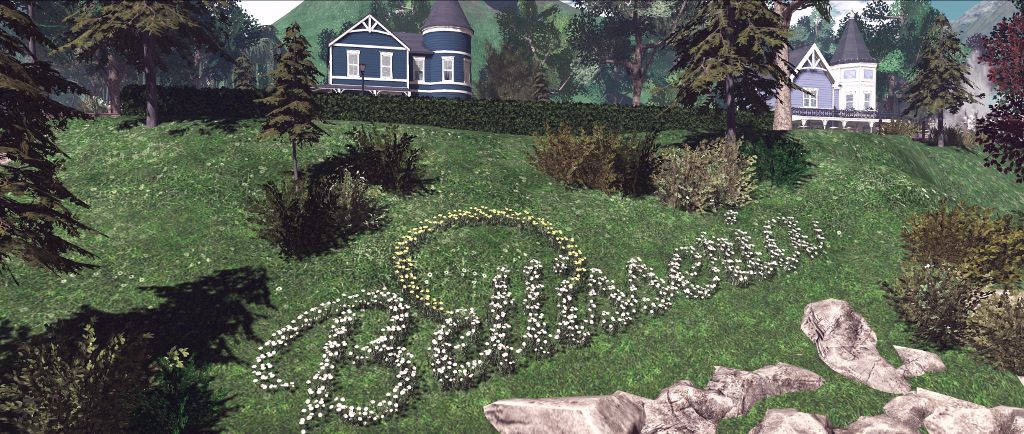
Welcome to Bellisseria

Since their introduction in April 2019, Linden Lab have released more than 10,000 new Linden Homes across Bellisseria, including the southern extension to the continent and southwards towards the Mainland continent of Jeogeot. They represent an extensive mix of themes: “traditional” homes, houseboats, campers & trailers and Victorian, all of which have proven very popular – as evidenced by the speed with which releases have tended to be snapped up.

The more recent updates have seen the southern section of Bellisseria that arrived with the release of the Victorian type of home directly connected with the northern, and additional off-shore expansions that place Linden Homes in the waters off the north-west coast of Jeogeot. The latter do so by offering what might be seen as the first “cookie cutter” element of the new Linden Homes, duplicating as it does the original houseboat expansion, together with a couple of the sand bar layouts from elsewhere around the continent.

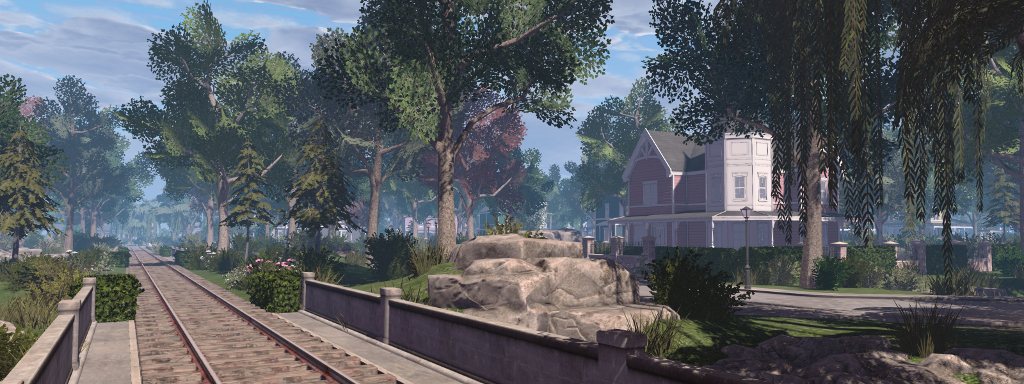
Victorian Houses and the railway in the southern extension to Bellisseria

These extensions fulfil Patch’s promise that the new continent for Linden Homes would directly connect Jeogeot with Sansara to the north, providing water access (including the coastal waters of Bellisseria) between the two, and which goes well beyond the narrow corridor of water originally linking Jeogeot to Bellisseria.

In addition, the extensions close to Jeogeot also encompass one of the earliest Mole builds – Pyri Peaks. It was designed to offer anearly attempt at an interactive adventure involving a storyline, a fun fair and a network of underground tunnels and chambers. It is a setting I wrote about in 2013  with Pyri Peaks: the mystery of the lost Moles (2013), and whilst it is perhaps a little long in the tooth by today’s building / design standards, it is good to see it folded-in to the new Linden Homes in a move that might encourage interest in this part of SL history.

Pyri Peaks: home of the Pyri Fun Fair and now within sight / reach of Linden Homes

Whilst there are still houses within Bellisseria yet to be released, just where any future new locations for the homes might go raises an interesting point to ponder. One doesn’t have to look too far west of Bellisseria to note the number of private regions lying in that direction, together with the likes of the recently-arrived SS Galaxy, the QA versions of the Shop’n’Hop regions as well as the actual shopping event regions.

While these latter regions might be relocated to provide a little more western room to expansion, it would seem the the eastern side offers a far better opportunity, although this runs the risk of sliding into the open space to the east of Jeogeot, which might eventually lead to that continent looking crowded-in and limit expansion somewhat. So, might the Linden seek to offer a new continent elsewhere at some point in 2020? If so, will it see further home types?

Campers and Trailers in the Linden Homes regions extension just off the coast of Jeogeot

Offering new styles of Linden Home certainly helps maintain interest – but it comes with a potential risk: new houses could encourage those with Linden Homes to vacate and rotate from type to type, making it difficult  / frustrating for others who have yet to claim a home and who want to get one of the newer styles (something that has already been the case).

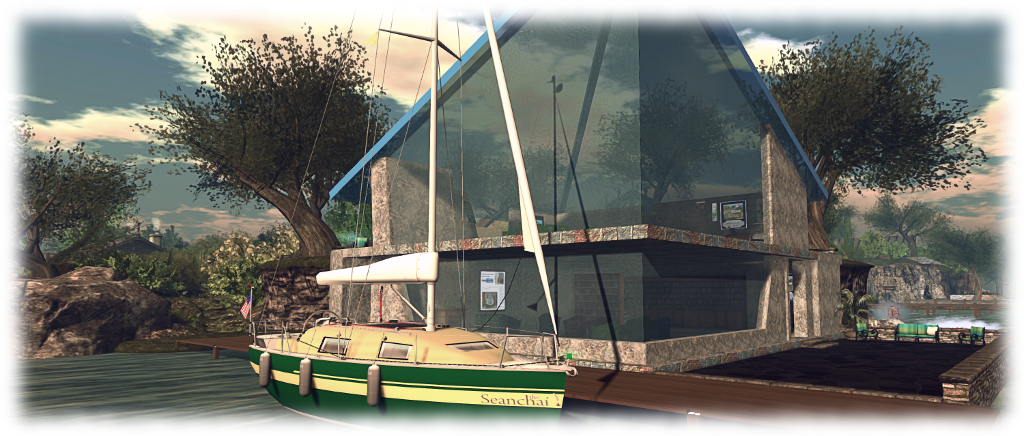
That said, were I to be asked, and given the potential for a more “offshore” style development alongside Bellisseria, I’d love to see something along the lines of houses built along a network of canals, with each house having a modest boat house or mooring space within the parcel and suitable for a small boat or two. Admittedly, it would require careful design to provide a mix of houses, waterways and footpaths (rather than roads) to connect everything together (and likely require a fair number of bridges), but such a design could generate interest and provide something more unique in terms of layout and options.

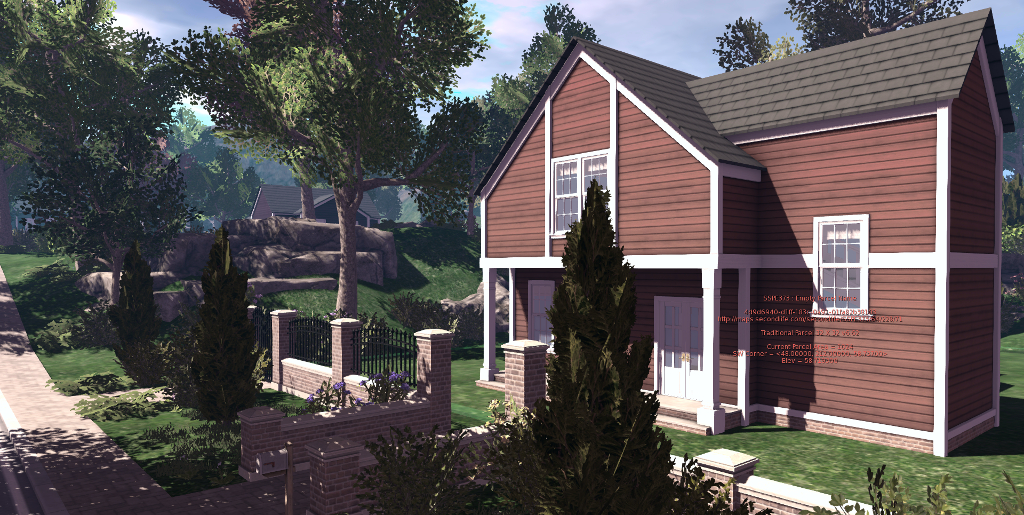
There are still regions in Bellisseria awaiting release to user, such as this area of Traditional Homes, sitting in the hills overlooking the southern extension to the continent

I’m pretty sure others have ideas for what they’d like to see, if there are to be further Linden Home types – feel free to comment with ideas! I’m also sure the Lab has plans of their own in terms of house types, if more are to be offered. In the meantime, as noted, there are still numerous regions in Bellisseria and the southern extension still to be finished, and the LDPW are once again back at work to get them finished and available as part of the weekly release cycles.