A return to Cooper Creek Wilderness

Cooper Creek Wilderness; Inara Pey, July 2019, on FlickrCooper Creek Wilderness, July 2019 – click and image for full size

In passing suggestions for regions to visit, Miro Collas recently reminded me that it has been almost four years to the day since I last wrote about Cooper Creek Wilderness and the public regions of Sailor’s Cove Rain Forest (see A walk in the wilderness in Second Life). We’ve been back numerous times, both by boat and by air, and have noted various changes to the regions – notably the rise of Mount Cooper, the massive mountain that dominates the southern end of the estate, which I’ve yet to write about. So Miro’s reminder served as a reason for us to hop back for a visit that could include Mount Cooper and give a reason for me to write an updated post.

Now, to be clear, there are a lot of places to explore within the Rain Forest, and they can be reached via direct teleport or by flying / boating. For this article, and to match the flavour of my original piece, I’m setting out a possible tour using the latter – aircraft and boat -, but SLurls are also provided for those preferring the more direct means of travel.

Cooper Creek Wilderness; Inara Pey, July 2019, on FlickrCooper Creek Wilderness – Frasier Island Airstrip, July 2019

For those flying in, the Rain Forest Airfield (formerly the Sailors Cove South (SCS) airfield) is the initial destination to head for. In 2015, this was a fairly small affair, with the runway running east-west. It’s since been expanded, with a north-south runway (although approach and take-off should be from / to the north, given the bulk of Mount Cooper looming so close. With revised helipads, a seaplane ramp and a fair amount of parking, the new airstrip offers more space – but is still only suitable for light aircraft.

From here, explorers can switch to kayak – there is a rezzer to the east of the airfield, just beyond the Get The Freight Out terminal. The rezzer pier sits close to a channel that cuts northwards through Frasier Island and Cerrado to Cooper Creek Wilderness, or offers a route south to Mount Cooper (which, if you prefer, can also be reached by ferry).

Cooper Creek Wilderness; Inara Pey, July 2019, on FlickrCooper Creek Wilderness, July 2019

Should you head north along the water channel, keep in mind that both Frasier Island and Cerrado have private residences on the west banks of the main north-south channel cutting through them. There is also a large private residence on the north side of Cerrado as well, sitting just across the water from the Fishers Island Yacht Club, which is open to the public.

As well as being navigable via kayak, both Cerrado and Cooper Creek Wilderness each have a series of raised board walks and winding wooden paths running through the trees, over the water and climbing up the higher reaches of land. These offer plenty of opportunities for exploration on foot (there are other numerous kayak rezzing points, should you wish to resume your explorations on the water).

Cooper Creek Wilderness; Inara Pey, July 2019, on FlickrCooper Creek Wilderness -The Alchemis, July 2019

There are numerous places to be found whilst exploring the walks and waters of the rain forest – from the obvious places such as the Yacht Club (another kayak rezzing point sitting just across the east side channel), or The Alchemis coffee bar or the Butterfly House, and so on. The best place to find out more about the sights is from the sign at the Cooper Creek Wilderness landing point. When touched, this will offer you a note card detailing many of the attractions, all the way down to Mount Cooper.

If you do head south to Mount Cooper, I recommend avoiding the marina-style mooring sitting on the far side of the channel from Frasier Island, and instead turn south-east to make for the smaller pier sitting by a sandy shelf on the far side of the great gorge cut into the side of Mount Cooper. From here, you can follow the trails up the side of the mountain on foot or via horseback (terrain allowing, if you are using a rezzed horse – wearable horses are fair better, if you have one) and enjoy the open air.
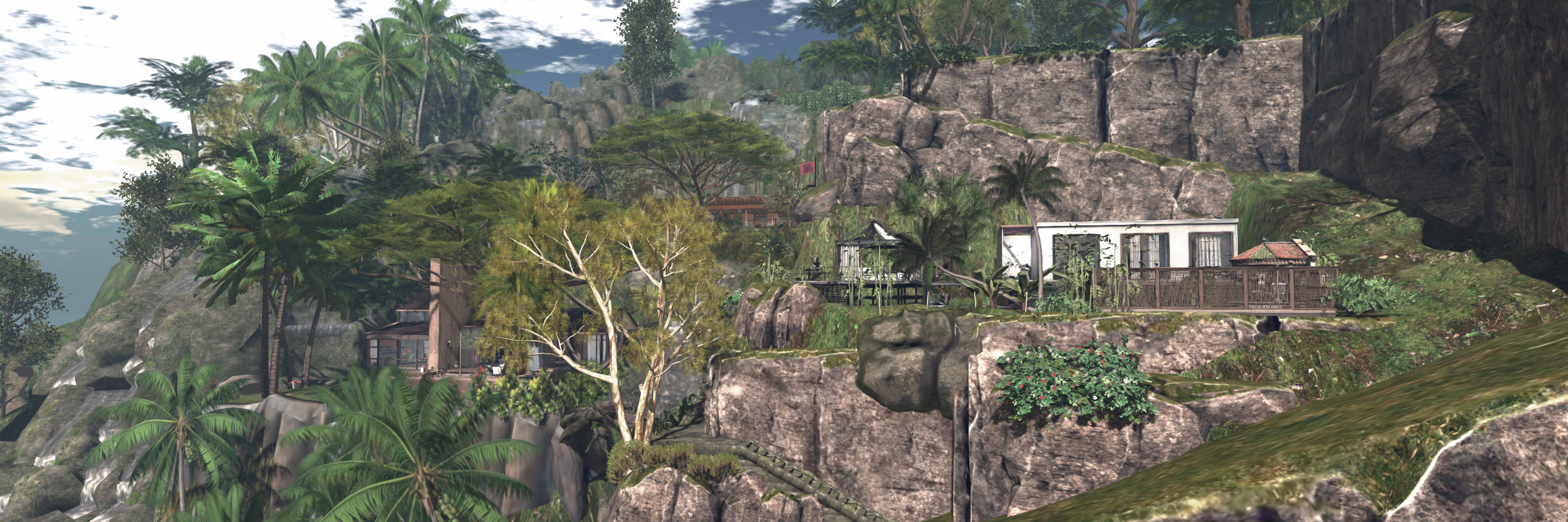
Cooper Creek Wilderness; Inara Pey, July 2019, on FlickrCooper Creek Wilderness – Mount Cooper, July 2019

A point to note with Mount Cooper – as with other parts of the rain forest regions as noted above – is that as well as being a public park, it is also home to a number of private residences – the first of which can be encountered when following the trail up from the horse rezzer. So while exploring, do keep people’s privacy in mind.

The paths up the mountain are a mix of grassy trail, rock-based path or stony trail (the latter of which can cause rezzed horses some problems). The also offer multiple routes of exploration, so I strongly recommend you give Mount Cooper plenty of time for a visit, as there is far more to see than may at first appear to be the case.

Cooper Creek Wilderness; Inara Pey, July 2019, on FlickrCooper Creek Wilderness – Mount Cooper, July 2019

In particular, keep an eye out for the numerous entrances to the network of tunnels and caverns running through the heart of the mountain. These offer surprises of their own, including the opportunity to take a wet bungee jump (which can also be reached via a rocky path  up from the marina). And when you’ve done with that, a swim through the underwater tunnel might reveal more.

All of the above really just scratches the surface of the Cooper Creek Wilderness and Mount Cooper. As destinations, both deserve a decent amount of time to explore – possibly over more than one visit. Both present their own points of interest, with zip line rides, walks, places to sit, and so on, and each obviously offers its own opportunities for photography.
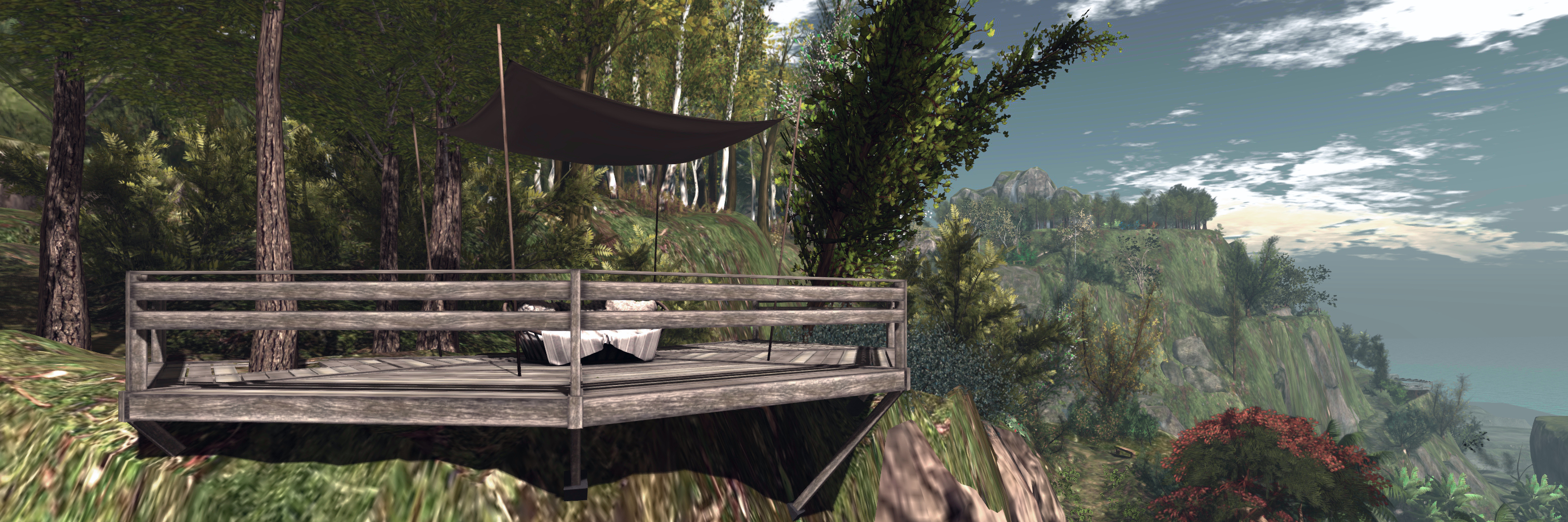
Cooper Creek Wilderness; Inara Pey, July 2019, on FlickrCooper Creek Wilderness – Mount Cooper, July 2019

SLurl Details


Art with a Monocle Man in Second Life

Monocle Gallery

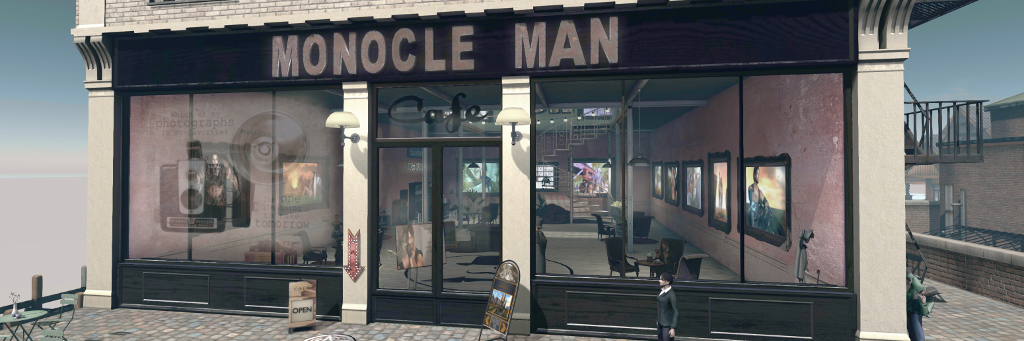
Monocle Man is a new gallery endeavour by Lynx Iuga, along with SL partner Kit Boyd, that is available for artists seeking a free, short-term space in which to exhibit their art.

We would love to inform you about a new concept at Monocle Man. We have two lovely exposition places that we would love to share with you. Showing your wonderful work to others and share it or even sell it. Have your own free gallery for a short time (20 days)! Ask Lynx or Kit for more information.

– from the Monocle Man introductory note card

Monocle Gallery: DustinPedroia

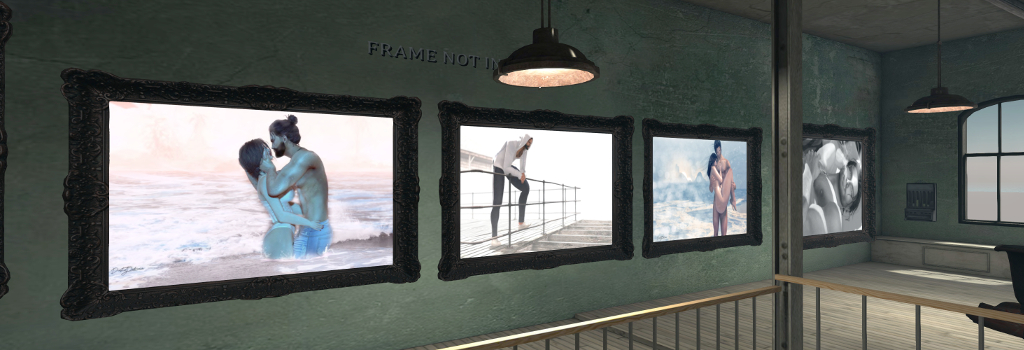
Occupying two floors – a main ground floor and a mezzanine upper level – with the décor suggestive of a café or private club, the ground-level gallery offers a fair amount of wall space for art exhibitions in an environment that makes for a comfortable visit. Outside is a teleport lead up to the additional gallery spaces and other attractions.

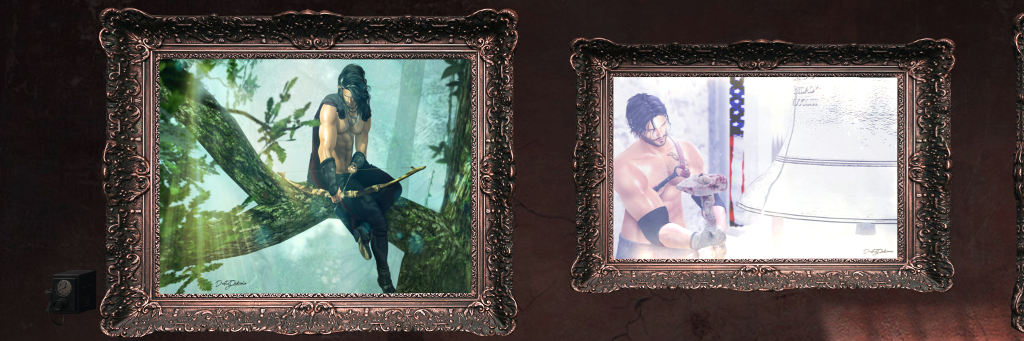
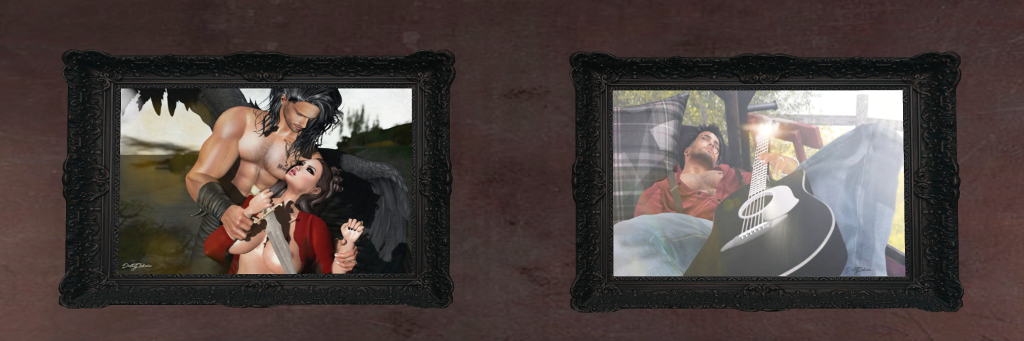
Currently on exhibition is DustinPedroia, a Second Life photographer focusing on avatar studies. He presents some two dozen pieces covering a range of themes, from fairly direct portraiture through fantasy to studies of love and companionship.

This range of themes makes this exhibition and eclectic, engaging viewing, one that is enhanced by Dusty’s use of different styles in finishing his images, employing soft focus in some, a degree of colour saturation in another, tonal colouring in others, a split balance of monochrome and colour, and so on. These variations in style ensure that each piece offered appears fresh and new to the eye.

Monocle Gallery: DustinPedroia

As is well known to anyone reading these pages, I’m particularly drawn to artists who can tell a story with their images – and Dusty most certainly falls into this category. Take A Primise [sic] Within or Let Freedom Ring, sitting side-by-side at the back of the ground floor of the gallery. The former embraces a moment from a much broader tale just waiting for the imagination to unfold, the latter contains both a story and an evocative statement for the current political climate in the United States (and other western nations).

Elsewhere, the message / story is perhaps more subtle / evocative / personal, but it is there nevertheless. Just look at the likes of Take On Me and You Make Me Smile as just two examples of this.

Monocle Gallery: DustinPedroia

Having opened on July 6th, Dusty’s work will be on display for another 18 days – and definitely should not be missed. And as noted, artists wishing to available themselves of the gallery should contact either Lynx or Kit in-world.

SLurl Details

2019 viewer release summaries week #27

Logos representative only and should not be seen as an endorsement / preference / recommendation

Updates for the week ending Sunday, July 7th

This summary is generally published every Monday, and is a list of SL viewer / client releases (official and TPV) made during the previous week. When reading it, please note:

  • It is based on my Current Viewer Releases Page, a list of all Second Life viewers and clients that are in popular use (and of which I am aware), and which are recognised as adhering to the TPV Policy. This page includes comprehensive links to download pages, blog notes, release notes, etc., as well as links to any / all reviews of specific viewers / clients made within this blog.
  • By its nature, this summary presented here will always be in arrears, please refer to the Current Viewer Release Page for more up-to-date information.
  • Note that for purposes of length, TPV test viewers, preview / beta viewers / nightly builds are generally not recorded in these summaries.

Official LL Viewers

  • Current Release version 6.2.3.527758, formerly the Rainbow RC viewer dated June 5, promoted June 18 – No change.
  • Release channel cohorts:
    • No updates.
  • Project viewers:
    • No updates.

LL Viewer Resources

Third-party Viewers

V5/V6-style

V1-style

  • Cool VL viewer Stable branch updated 1.26.22.53 to version and the Experimental branch updated to version 1.26.23.6, both on July 6th (release notes).

Mobile / Other Clients

Additional TPV Resources

Related Links

Space Sunday: rockets, exoplanets and alien oceans

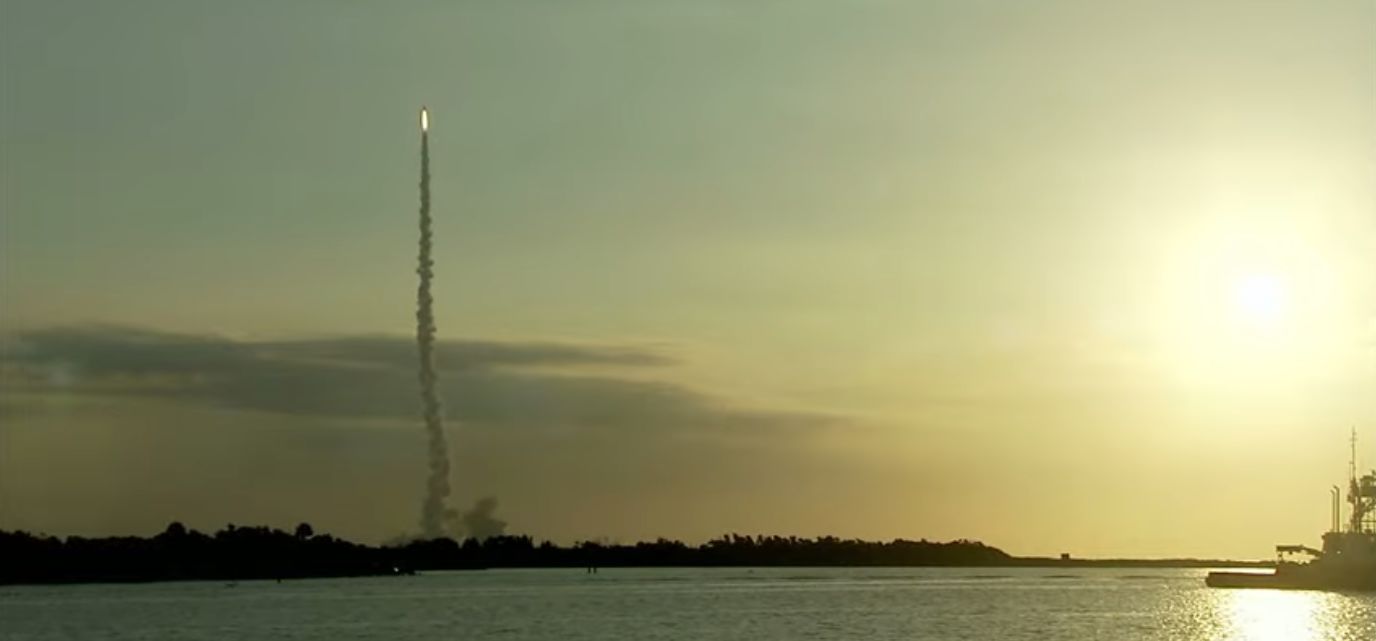
rion AA2, July 2nd 2019The Orion test article lifts-off from Space Launch Complex 46 at Cape Canaveral Air Force Station at the start of Ascent Abort-2, July 2nd 2019. Credit: NASA

NASA’s Orion Multi-Purpose Crew Vehicle passed a significant test on its way to its first crewed launch (due in 2022) on July 2nd, 2019, as it completed a flight test of the capsule’s launch abort system (LAS).

The LAS is a system designed to pull a crewed capsule clear of a malfunctioning rocket during an ascent to orbit, hopefully saving their lives in the process. As such, it is a significant system that must be tested and cleared for use before crewed flights can commence with a new launch vehicle.

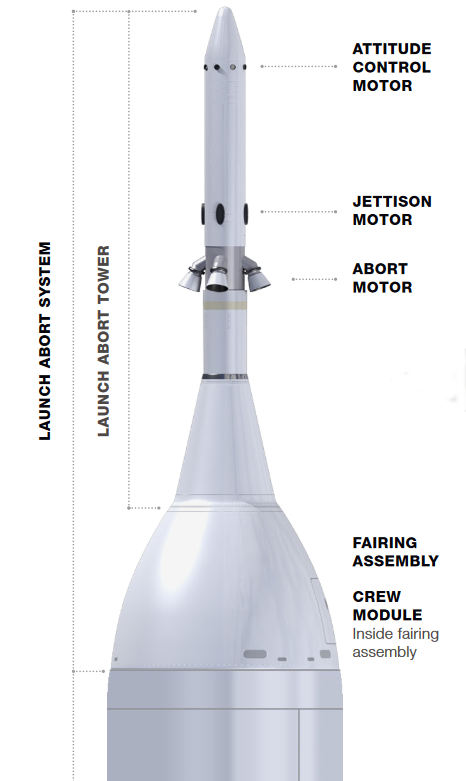
For the Space Launch System (SLS), NASA is following its traditional approach, with the LAS designed to “pull” a crew capsule clear of launch vehicle. It does this by placing a special fairing over the capsule that has a tower extending from its top, fitted with three motors. This has always been the traditional approach to US LAS systems – by contrast, Russian LAS systems generally sit below the capsule and are design to “push” it away from a malfunctioning rocket.

The Orion / SLS launch abort system (LAS). Credit: NASA

The July 2nd test – called the Ascent Abort-2 (AA-2) mission – was a critical test flight, designed to test the LAS at the point in an ascent to orbit when the Orion / SLS combination will be subjected to the highest aerodynamic stresses – the so-called period of “Max-Q” – that occurs during a rapid ascent into space.

To achieve this, NASA mounted an Orion structural test article – basically an Orion capsule sans its flight systems – contained within a LAS fairing onto the motor stage of an MX Peacekeeper ICBM, and launched it into the Florida skies in a early morning ascent designed to last some 55 seconds.

In that time, the rocket was expected to reach an altitude of 9.5 kilometres (31,000 ft) and a speed of Mach 1.3, at which point the abort sequence would trigger.

As it turned out, the MX rocket motor ran “hot”, accelerating a little faster than anticipated, so reaching its assigned separation altitude 5 seconds early. Nevertheless, the abort sequence initiated correctly, and the powerful abort motors on the LAS fired, generating 181,400 kg of thrust, hauling the Orion free of the ascent motor unit.

Once a clear separation from the still ascending motor stage had been achieved, the attitude control motors at the very top of the LAS fired, flipping it and Orion over. The middle jettison motor then fired, separating the LAS from the Orion.

During an actual abort sequence, the Orion would then re-orient itself so it would be falling heat shield first, allowing its parachutes to be deployed in preparation for a splashdown. However, for the AA-2 flight, the test article did not carry a parachute system. Instead, and like the LAS, the capsule was allowed to fall back into the Atlantic, hitting it at an estimated 480 km/h (300 mph) and breaking up. Just before it did so, however, it ejected 12 bright orange data recorders not unlike those so-called “black boxes” used by aircraft. These contained critical data recorded during the 3 minute 11 second flight, and which will be assessed post-mission to confirm everything did go an planned.

That was a spectacular test we all witnessed this morning. It was really special for the programme; a really big step forward to us. It was a really great day all around – weather and the vehicle. One of the most important parts of the test was to see how the attitude control motor performed. The internal motor pressure was rock solid, straight line and it had excellent control characteristics. Everything we’ve seen so far looks great.

– Mark Kirasich, NASA’s Orion Programme Manager

Orion AA2, July 2nd 2019The Orion test article climbs into the early morning sky over Cape Canaveral Air Force Station at the start of Ascent Abort-2, July 2nd 2019. Credit: NASA

The US has never has to use the LAS on an actual mission. However, there is no guarantee this will always be the case, and circumstances where a LAS must be used are not unkown – as the Soyuz M-10 mission in October 2018 demonstrated (see Space Sunday: of Soyuz aborts and telescopes). Therefore, passing this test was critical if  Orion and SLS are to achieve the flight goals required for NASA’s programme – Project Artemis – to return humans to the surface of the Moon.

Half-Planet, Half-Star

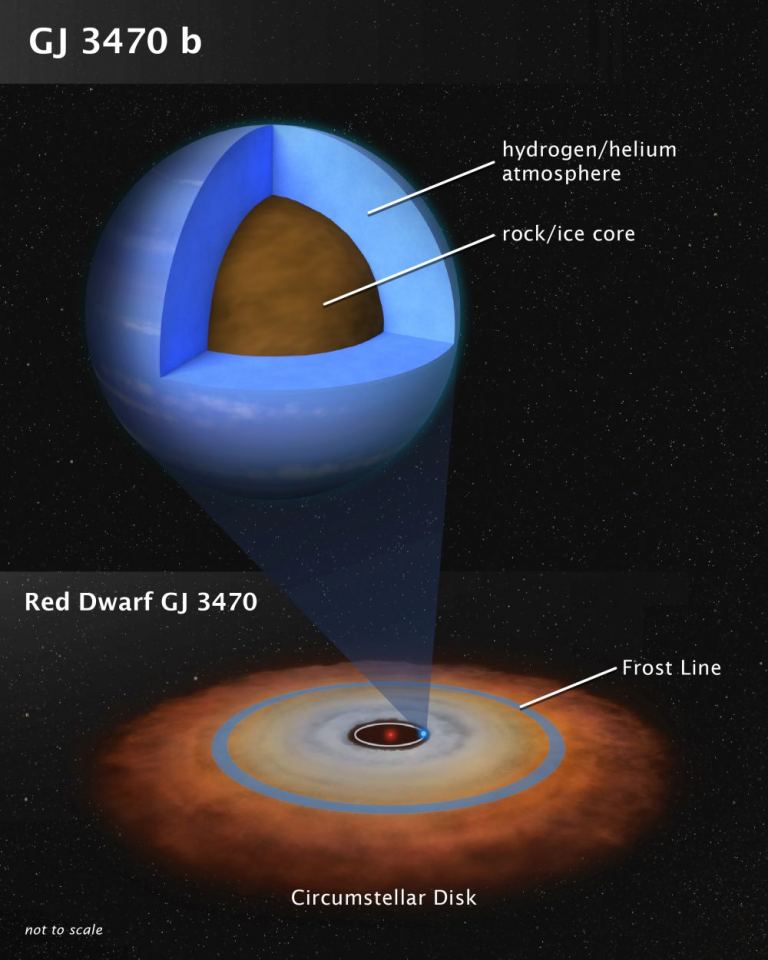
Discovered in 2012, GJ3470b is a “mini-Neptune” planet orbiting a red dwarf star called Gliese 3470, 100 light years from our Sun. Occupying an orbit some 6 million km (3.7 million mi – roughly one-tenth of the distance between the Sun and Mercury) from its parent, the planet has a mass of around 12.6 Earths.

None of this is particularly unusual; as I’ve noted in past Space Sunday articles, M-type stars are the most common type of star in the galaxy, and mini-Neptune type planets account for around 80% of the exoplanets discovered to date. Nevertheless, recent studies have revealed GJ3470b to be a very unique world.

GJ3470b, its atmospheric composition, and its relative location to its parent star. Credit: NASA, ESA, and L. Hustak (STScI)

The presence of an atmosphere around the planet was detected fairly soon after its discovery and prompted astronomers to take a prolonged look at it. To do this, they combined the Hubble and Spitzer space telescopes to examine the planet’s atmosphere for a total of 20 transits in front of its parent star.

These observations, using the light of the star passing through the planet’s atmosphere during the transits, allowed the astronomers to gather data on the composition of GJ3470b’s atmosphere. What was discovered came as a huge surprise.

It has been expected that the observations would reveal an atmosphere somewhat similar to Neptune’s, but such was the depth to which they could measure, it quickly became clear that GJ3470b has an almost pristine atmosphere of hydrogen and helium surrounding a large solid core.

The presence of hydrogen and helium may not sound too unusual – after all, the four gas giants of our solar system have atmospheres largely made up of those two gases. However, they also have amounts of other, heavier elements – methane, nitrogen, oxygen, ammonia, acetylene, ethane, propane, phosphine, etc., – none of which showed up in any of the spectral analyses performed by Hubble and Spitzer. This makes GJ3470b’s  atmosphere closer in nature to that of the Sun or a star than it does to a planet, leading to it being dubbed “half-planet / half-star” in some quarters, and making it the most unique exoplanet yet discovered.

Continue reading “Space Sunday: rockets, exoplanets and alien oceans”

A little more Jeeves and ice for summer in Second Life

Seanchai Library

It’s time to highlight another week of storytelling in Voice by the staff and volunteers at the Seanchai Library. As always, all times SLT, and events are held at the Library’s home at Holly Kai Park, unless otherwise indicated.

Sunday, July 7th

13:00: Tea Time with Jeeves

Just for summer, Seanchai Library takes a dive into the world of Reginald Jeeves, a well-educated, intelligent valets of indeterminate age who is employed by the amiable young man-about-town, Bertie Wooster, whom Jeeves routinely has to benignly rescue from the consequences of his idiocy.

Created by author, humorist, and lyricist (working with Guy Bolton and Jerome Kern) Pelham Grenville Wodehouse (October 1881 – February 1975), Jeeves and Wooster are perhaps his most iconic characters, although they didn’t arrive until he was into his “second” period as a writer, which commenced in 1915 (the first having ended in 1908), when they had their first outing in the short story Extricating Young Gussie, published by the Saturday Evening Post in September 1915. However, it was arguably not until Leave It to Jeeves, published in 1916, that the pair were recognisably “themselves”.

The Jeeves series came at a time when Wodehouse also enjoy Broadway success through his partnership with Bolton and Kern (1915-1919). However with the popularity of his stories increasing in both the US and back in the UK, Wodehouse started to focus more on his stories and novels. This allowed the Jeeves series to eventually grow to 35 short stories and 11 novels, the majority of which are first-person narrated from the perspective of Bertie Wooster.

As the popularity of the series grew, so too did it start to be translated to film, radio and, later, to television. In the latter regard, the comedy team of Hugh Laurie (Wooster) and Stephen Fry (Jeeves) in Jeeves and Wooster, is perhaps the quintessential representation of the pair. Airing from 1990 through 1993 in the UK, the series set all the stories in a period spanning the 1920-1930s, with each 50-minute episode taking its title from a Jeeves story, but often combining two or more of the tales into its plot. It is not unfair to say the series introduced Wodehouse, Jeeves and Wooster to a new generation of fans.

For their outing in Jeeves’ world, Seanchai Library delve into My Man Jeeves. Published in 1919, it draws together four early outings for the series, all originally published in the Saturday Evening Post, with Jeeves and the Unbidden Guest, first published in December 1916, the subject for this session.

Join Da5id Abbot, Kayden Oconnell, and Caledonia Skytower as they read this delightful series at Ceiliuradh Glen.

18:00: James and the Giant Peach

Caledonia Skytower continues Roald Dahl’s classic at the Magicland Golden Horseshoe.

Monday, July 8th 19:00: The Ice is Coming

Gyro Muggins reads Patricia Wrightson’s 1977 novel.

Frost is seen in summer and ice patches form in spite of the hot Australian sun. To the Happy Folk, living on the continent’s green edges the frost is a reason to laugh and joke. For the Inlanders (Wrightson’s fantasy view of the Australian Aboriginals), however, the frost was once seen as a warning that an ancient foe, the ice-bearded Ninya, were on the rise – and so it might be that they are again.

The first to recognise the rise of the old threat is young Wirrun of the People. He leaves his job and sets out to meet the Ninya, taking with him as a sidekick, the petulant Mimi, and for protection, the Power bestowed by the first of the creatures in their path.

To assist in his quest, Wirrun sends for the men from Mount Conner to sing the Ninya down and keep them in their caves. But he must also beat the Ninya to the Eldest Nargun, source of fire, and use it to hold the Ninya until the men from Mount Conner arrive. And so his adventure begins.

Tuesday, July 9th 19:00: The Penderwicks in Spring

Springtime is finally arriving on Gardam Street, and there are surprises in store for each member of the family. Some surprises are just wonderful, like neighbour Nick Geiger coming home from war. And some are ridiculous, like Batty’s new dog-walking business. Batty is saving up her dog-walking money for an extra-special surprise for her family, which she plans to present on her upcoming birthday. But when some unwelcome surprises make themselves known, the best-laid plans fall apart.

Filled with all the heart, hilarity, and charm that has come to define this beloved clan, The Penderwicks in Spring is about fun and family and friends (and dogs), and what happens when you bring what’s hidden into the bright light of the spring sun.

With Caledonia Skytower.

Wednesday, July 10th: TBA

Check the Seanchai website for updates..

Thursday, July 11th

19:00: Monsters and Myths

Shandon Loring resumes a tour through Bernard Evslin’s examination of monsters and myths with The Sphinx – Part 1. Also Also in Kitely – teleport from the main Seanchai World grid.kitely.com:8002:SEANCHAI.

21:00: Seanchai Late Night

Contemporary Sci-Fi-Fantasy with Finn Zeddmore.


An Autumn Trace in Second Life

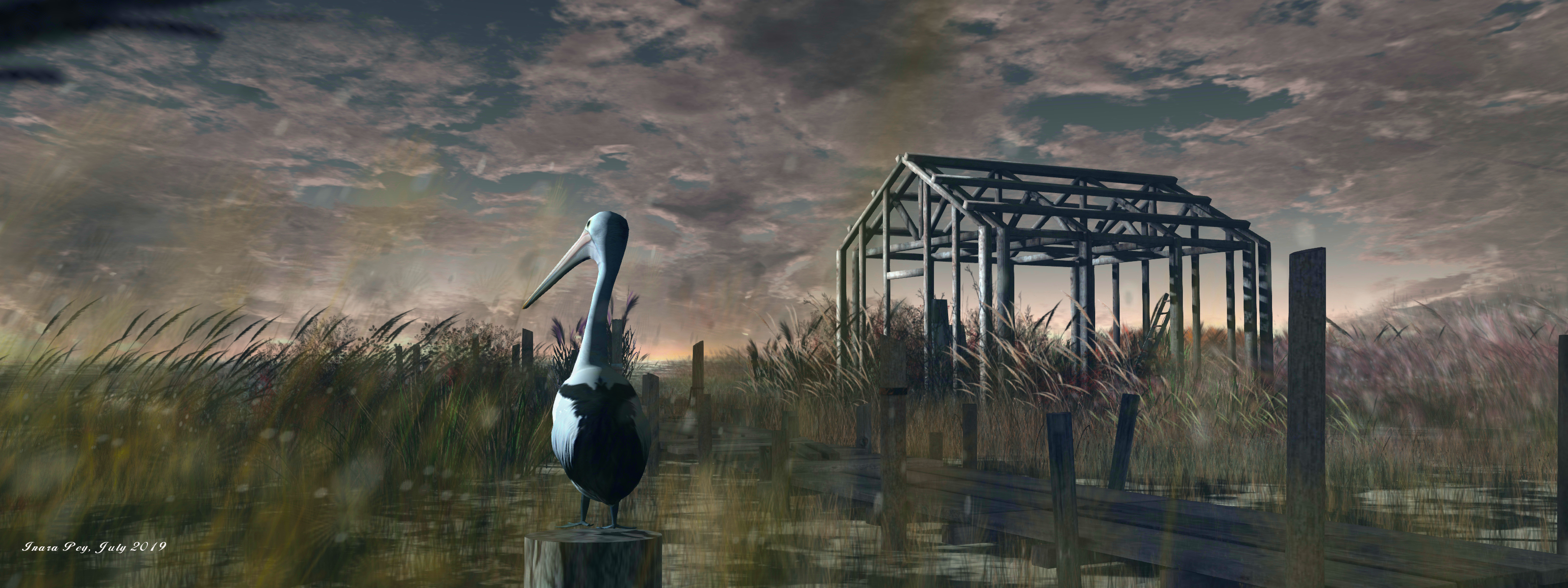
Autumn Trace; Inara Pey, July 2019, on FlickrAutumn Trace, July 2019 – click and image for full size

Elvira Kytori has a reputation for producing visually engaging and photogenic regions, and her designs are places we’ve always enjoyed visiting. So it was with pleasure that we made a return to Autumn Trace (formally Fall Trace), having last dropped in to write about it back at the end of 2016 (see Resting in Fall Trace in Second Life).

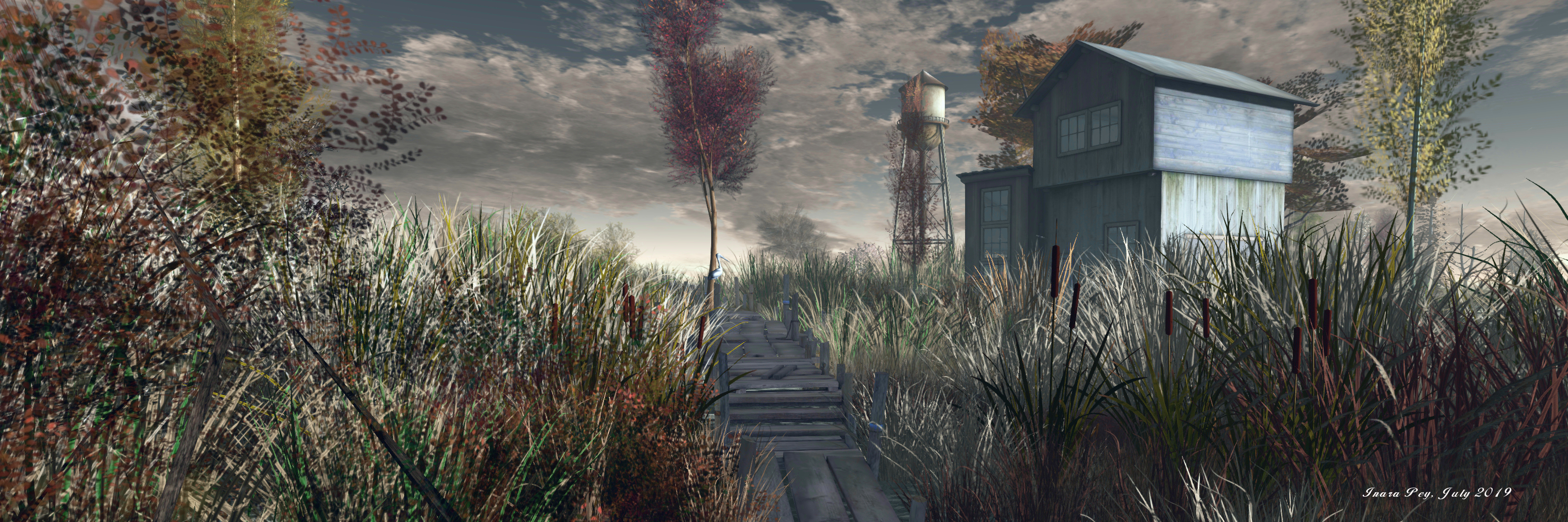
To be honest, the intervening time has not seen much (if anything) in the way of change in the physical design of the region. Still sitting under a cloud scudded autumn sky with the sun low on the horizon, this is a region that, once rendered, imbues a feeling of tranquillity well in keeping with the its official name. The low sun casts a soft glow across the region and lights the far horizon as if ringing Autumn Trace in a warm embrace.

Autumn Trace; Inara Pey, July 2019, on FlickrAutumn Trace, July 2019 – click and image for full size

Completely low-lying, this is very much a water region, the fact that it is presented as a marshland rather than the (perhaps) more usual swamplands seen in Second Life adding a further level of attraction in making a visit. It is also, as a part of the White Dunes Estate, a partially residential region; the houseboat and other houses in the region are available for rent (or may be rented), so some care is required to avoid trespassing onto private property.

The landing point sits towards the middle of the region, within a small shack. From here a board walk leads out over the water and reeds, forming an open U that runs south and east before turning north to end at a small motorboat presenting a place for visitors to sit and enjoy the view. Along the way, the path passes a couple of the rentals, and also other public rest places – including a little raft out on the water, while a shorter branch of the board walk offers access to where a rowing boat also awaits people wishing to enjoy a place to sit and cuddle.

Autumn Trace; Inara Pey, July 2019, on FlickrAutumn Trace, July 2019 – click and image for full size

Eastwards, and overlooked by a watchtower that can be reached via another wooden path, the region is open and wild; south and west is an arc of private rentals, the shallow channel of water between them and the inner part of the region forming a natural buffer against trespass. However, it is not the rentals that hold the attention here; it is the wildfowl and birds.

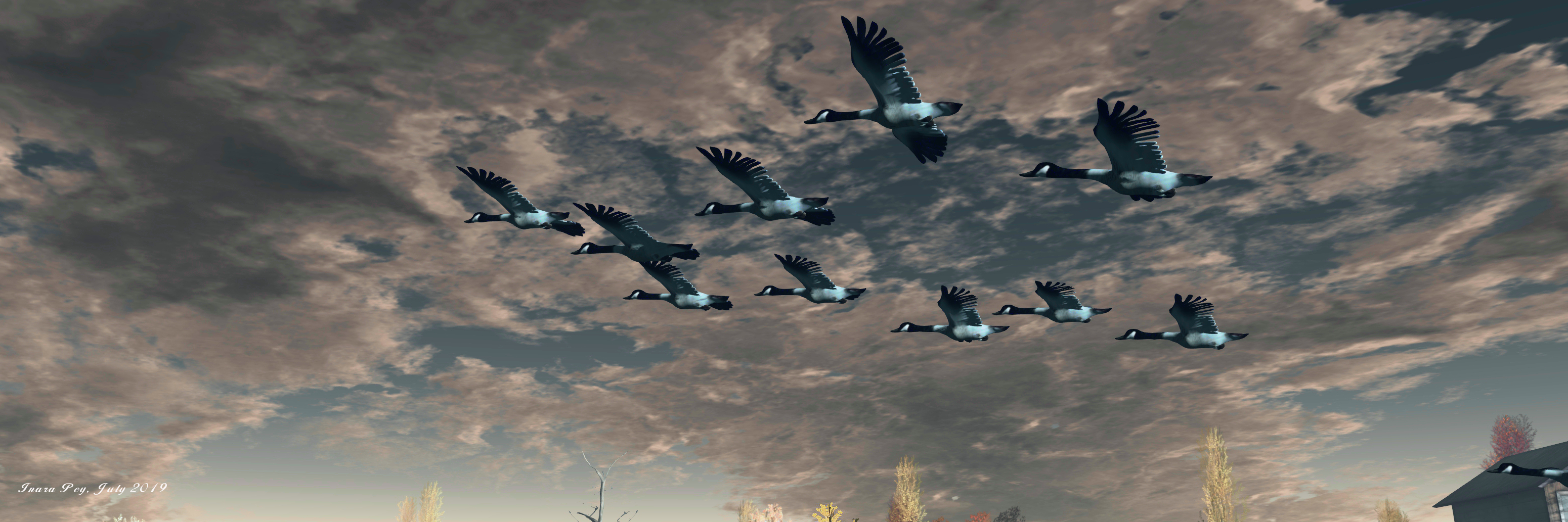
Across the region one can spot pelicans, herons, geese, cormorants, and egrets, while overhead crows and an eagle circle and small birds can be spotted throughout.  Also to be found are deer and beaver and possibly one or two critters we missed. All of these add additional depth to photography within the region, offering plenty of opportunities to capture the local “characters”.

Autumn Trace; Inara Pey, July 2019, on FlickrAutumn Trace, July 2019 – click and image for full size

All of this means that Autumn Trace remains an ideal destination for a relaxing visit, one which – as the heat of summer takes its toll across many parts of the northern hemisphere, perhaps offers a sense of cooler climes and a break from feeling as if you’re slowly broiling in the heat.

With thanks to Miro Colas for the reminder to pay Autumn Trace another blogging visit.

Autumn Trace; Inara Pey, July 2019, on FlickrAutumn Trace, July 2019 – click and image for full size

SLurl Details