On Tuesday, December 12th, the Main (SLS) channel was updated with the server maintenance package previously deployed to all three RC channels. 17#17.12.01.511131 comprises “internal improvements”, which should not result in visible changes for users.
No deployment is anticipated for the the RC channels on Wednesday, December 13th, leaving them on server package 17#17.12.01.51131. A potential deployment to the BlueSteel RC was cancelled, “I found a nasty little bug nest late last night,” Mazidox Linden reported at the Simulator User Group meeting, “Had to halt the move to RC.”
SL Viewer
Two viewers were updated by Linden Lab on Monday, December 11th, 2017:
The Alex Ivy 64-bit RC viewer updated to version 5.1.0.511248.
The Animesh project viewer updated to version 5.0.10.330058.
The Alex Ivy RC viewer release notes contain the following information, worth reproducing here:
Windows: there are now separate 32-bit and 64-bit builds for Windows.
If you use an HD 2000 or 3000 series video card on Windows 10, choose 32 bit
Otherwise, choose the one that matches your copy of Windows
If your computer can run 64bit, and most can, you will get better performance and fewer crashes running a 64 bit Windows and Viewer. If you chose the wrong one, the viewer will upgrade you again the first time you run it to the correct one (if you think it made the wrong choice, please file a bug in jira). This build further refines the determination of what is “the best” platform for your system.
Mac: the Mac build does not support 32-bit Macs (this is permanent, and not really a change since it’s been some time since LL supported OS X versions that would still run on a 32-bit system).
This build shows two icons on the Dock when running. The first one is a new launcher/monitor process (SL_Launcher) that checks for updates; the second is the viewer itself, but both are labelled “Second Life Viewer”. If you are going to pin the icon on the Dock, pin the first one or you’ll get a warning each time you launch. We hope/plan to get this sorted out so that only one shows.
Video media (QuickTime) usually does not play (the media handling is now the same as the Windows viewer).
The volume of web based media (e.g. YouTube) doesn’t change based on your distance from the source.
Linux: there is no Linux viewer yet. We hope to begin work on addressing this with the community after the release of the Mac and Windows versions.
The release notes for the Animesh project viewer include a summary of the key changes from the previous version of the viewer:
Animesh objects should now display correctly as impostors, using the same rules that avatars do currently.
Fix for a crash triggered by unchecking the animated mesh check box for an Animesh attachment.
Fix for Animesh attachment getting removed after teleport.
Fix for some of the cases where animesh graphics state could get corrupted.
Various clean-ups and optimisations.
The rest of the SL viewer pipeline remains as per the end of week #49:
Current Release version 5.0.9.329906, dated November 17, promoted November 29th – formerly the “Martini” Maintenance RC
Release channel cohorts:
Wolfpack RC viewer arrived, version 5.0.10.330001, released on November 30.
Voice RC viewer, version 5.0.8.328552, October 20 (still dated Sept 1 on the wiki page).
Project viewers:
Project Render Viewer version 5.1.0.510978, December 4 (dated November 30).
Now open at CKB Art Gallery curated by Ceakay (CK) Ballyhoo is The Haze. It is the latest installation in a series of living stories featuring art and focused on the adventures of a principal character, whose journey we are invited to follow in words, images and settings. For The Haze, CK returns to her own character of Ellie, who featured in A Watercolour Wander (read here for more) and The Forest Beyond (read here for more) in a collaborative story developed with 2D and 3D artist Silas Merlin.
“It was an offer I couldn’t refuse,” CK says of the installation. “An offer from Silas to use his new builds and sketches to form a story. Using Silas’s new digital sketches and the ruins and creatures he has created, a world started to form, darker than anything we’ve either done before, the story turned into a nightmare: Ellie’s nightmare.”
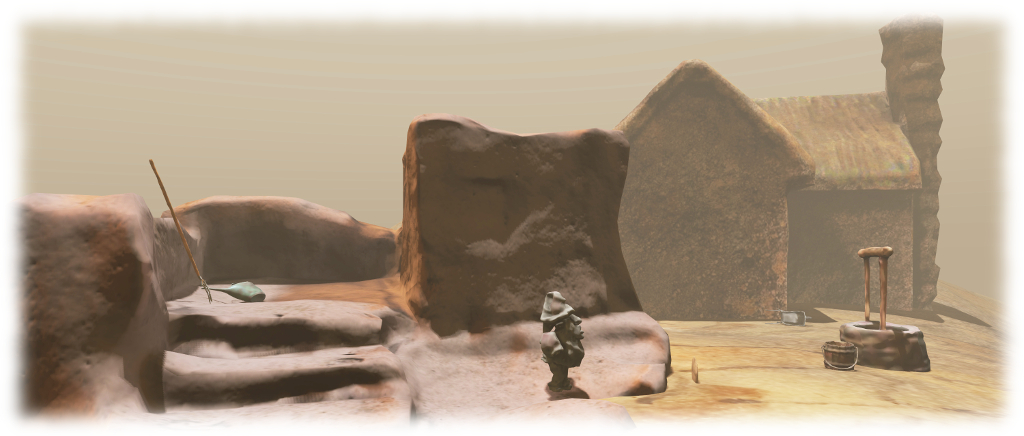
The result is a full region installation far removed from the green and pleasant lands of the first two instalments of Ellie’s dreamworld adventures. Instead, visitors find themselves in a desert-like, ghostly landscape, heavy with a dusty haze (I recommend exploring using the default windlight). Instructions on following the story can be found at the landing point – and should be read. In short, look for the little illuminated STORY stones set on the ground along the way, each one presents a chapter in the unfolding nightmare.
Another difference between this and Ellie’s previous adventures is that not only are the chapters presented in note card form when the stones are clicked, but approach a stone will trigger it being read to you – just have local sounds enabled (*not* the audio stream) to hear the readings. These readings can actually overlap one another, depending on how many are playing when you visit, and where you are in relation to the different stones. This might annoy some; for me, they actually added extra ambience: whispering ghostly voices, overlapping but each telling a story – if you listen carefully and focus on just one of the voices.
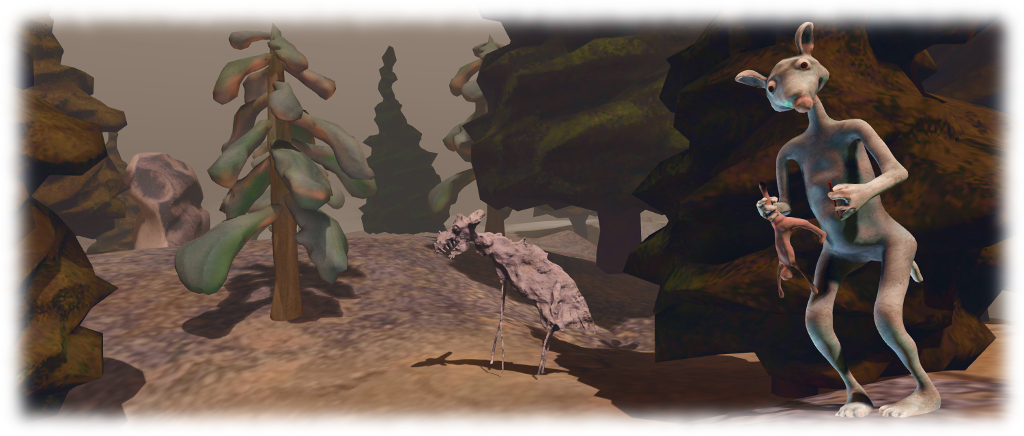
The setting, with its deserting buildings, twisted trees, creatures and ruins, presents an eerie landscape, barren despite the trees – which appear a sickly yellow-green, rather than the usual robust green of fir-trees. It’s a haunting place in which scenes loom up at you. They can seem disjointed, sudden – and very nightmare-like for doing so. Amidst all the rocks and fir-trees, seemingly dead trees also sit, their branches denuded of leaves, left to form easels on which groups of Silas’ drawings sit. These also have little STORY stones alongside of them which, when touched, will deliver background notes on a scene to you in note card form, adding further depth the the story.
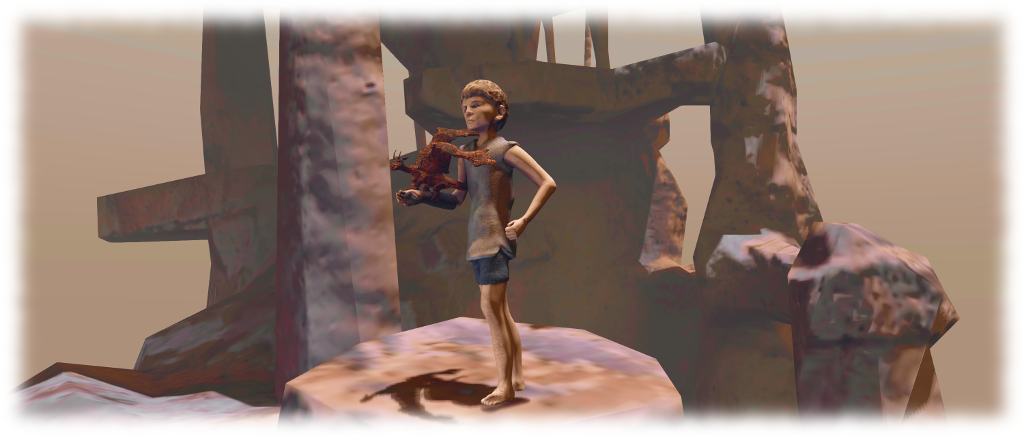
Silas’ art is as captivating as ever – and there is a lot to see from buildings to gnomes to creatures to rocks (someone them resembling creatures) to people awaiting discovery. The 2D art forming the background stories is cleverly presented and offers an illustrative style reminiscent of a storybook – so thoroughly in keeping with the setting. He and CK have created an immersive tale, one which invites exploration – and be sure to keep an eye out for the Boogeyman and also the dragon rezzer – the latter will allow you to fly up to the higher reaches of the setting, unreachable by foot, and essential to the story.
Also when visiting, don’t miss the UP teleport at the landing point – it will take you to a sky gallery where you can find CK’s own art, more from Silas as well as from other artists, all taken from CK’s personal collection.
Update:Holiday trace is now closed, and Secret Charm is under now ownership.
Over the years, a visit to The Trace family of regions – The Trace, The Trace Too, Summer Trace, Fall Trace, Winter Trace – has always been a pleasure. I’ve written about these regions, which were started by Kylie (Kylie Jaxxon), then became a partnership between her and Elvira Kytori, on numerous occasions in this blog. So, it was with delight that I received news from Shakespeare that there is another in the series – Holiday Trace – now open for visits, and made a point to hop over and explore with Caitlyn as soon as we could.
Given the time of year in the northern hemisphere, Holiday Trace is a wintry setting. Snow lies heavy on the ground and falls gently from a windless sky. Exposed water here is heavy with ice thick enough to skate on, and the sounds of the countryside are subdued.
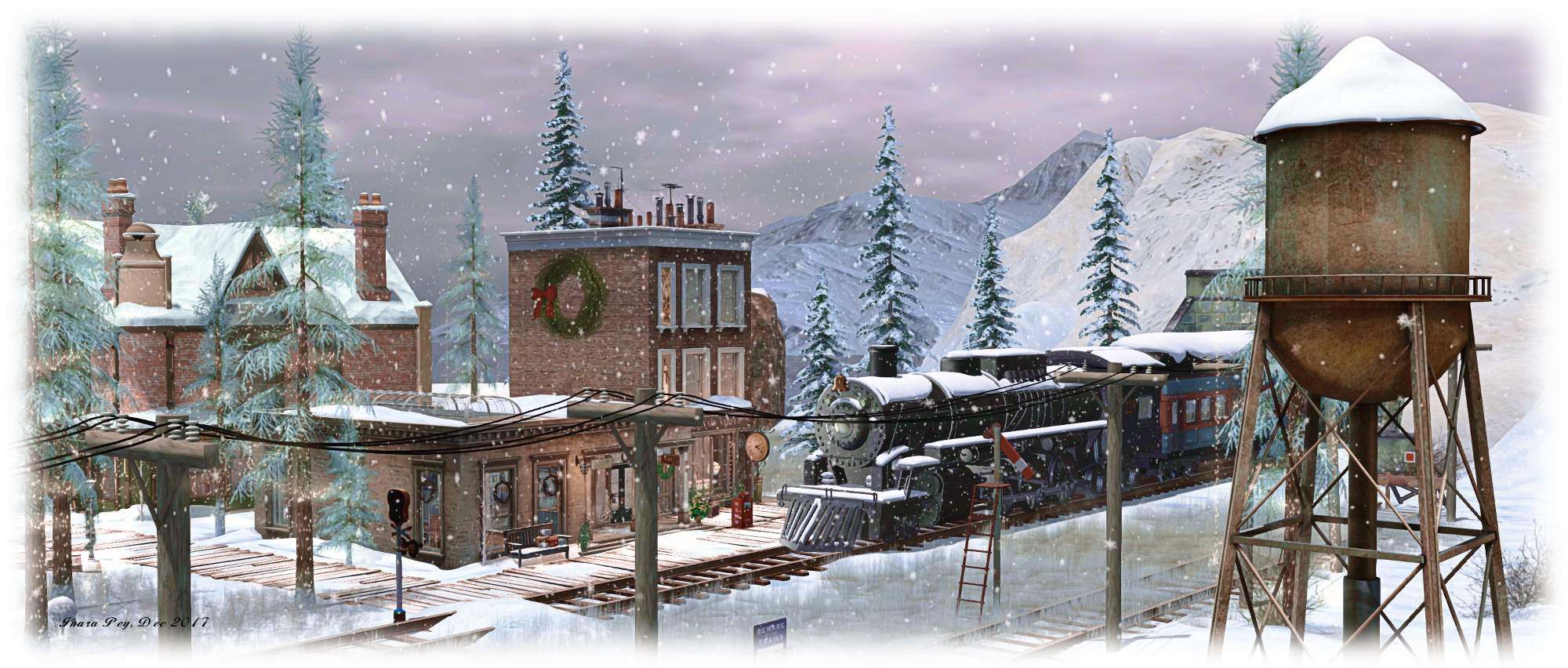
In the south-east corner of the region sits a little country train station, sitting quietly with a tavern, each waiting passengers or customers. The great black bulk of a DRD Arctic Express steam train stands at rest before the station, having emerged from a dark tunnel, the great lamp on the front of its huge boiler still lit.
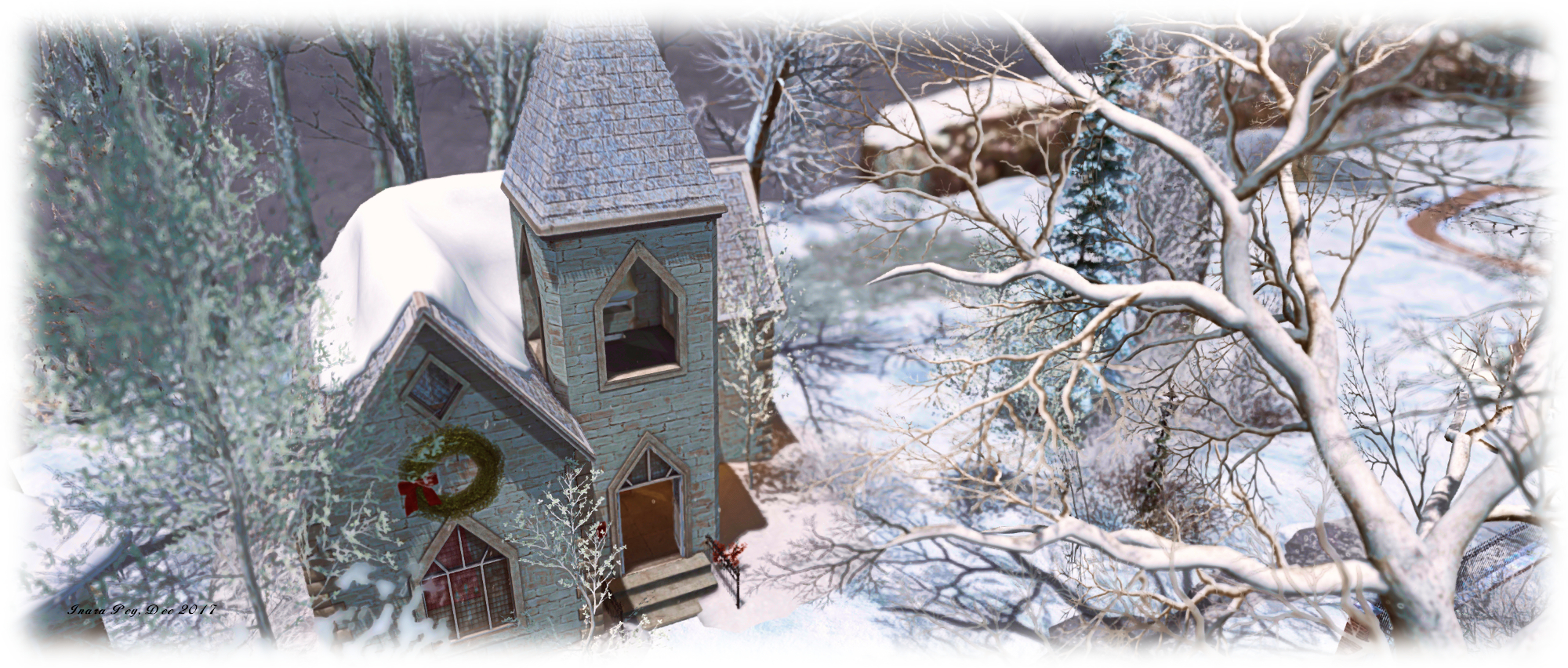
Across the region to the west and over the snow blanketing the land, sit the house and barns of Christmas Tree Farm, which may beckon visitors to set out across country to visit them. Northwards from the station however, along a brickwork footpath one might find the way to the local chapel. The path may have been salted at some point, as the snow is having a hard time settling on it. Also, it doesn’t offer a direct route to the chapel.
Instead, the path splits a short walk from the station and tavern, branching east and west to encircle a frozen pond where children skate. Nor does the path resume on the far side of the pond; visitors must walk through the snow and over an icy path (or is it another frozen body of water on which the snow has settled?
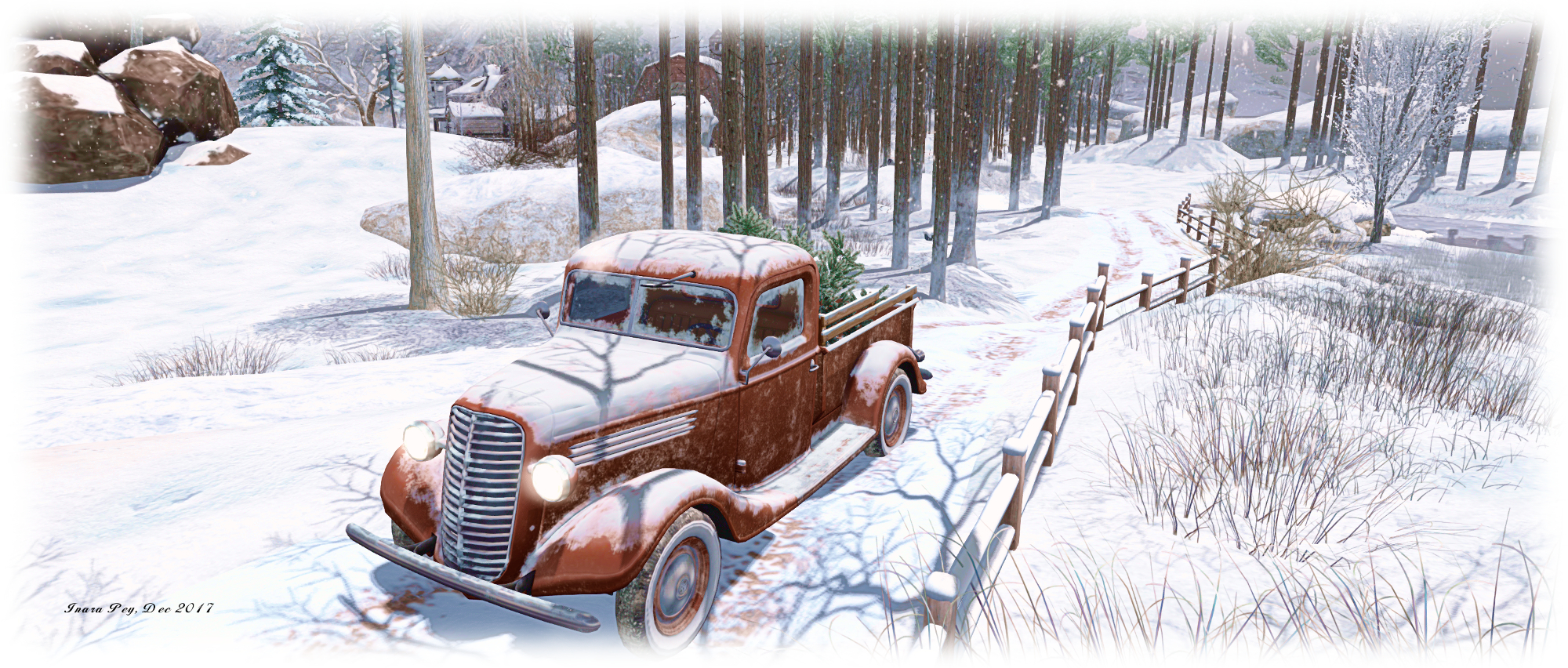
This route runs alongside a walled and fenced garden in which a fountain – drained, one might guess, for winter – before visitors arrive at the little chapel. Tall beech trees, barks frosted, branches bare, stand around the chapel as if protecting it. Between their stout trunks a rutted track winds westwards to where a covered bridge spans a narrow stream which feeds into a larger finger of water cutting into the land. A rowing boat is trapped in the frozen stream and a horse and sleigh might shortly vie for use of the track with a red pick-up truck that is coming up behind them.
Laden with a fir-tree, the truck might be making its way to the chapel from Christmas Tree Farm, sitting a short distance from the western end of the track, where a Surrey-style carriage sits in the snow, also bearing a fir-tree and watched over by a fox and reindeer as Canada geese fly risk an low pass through a gab in the trees overhead.
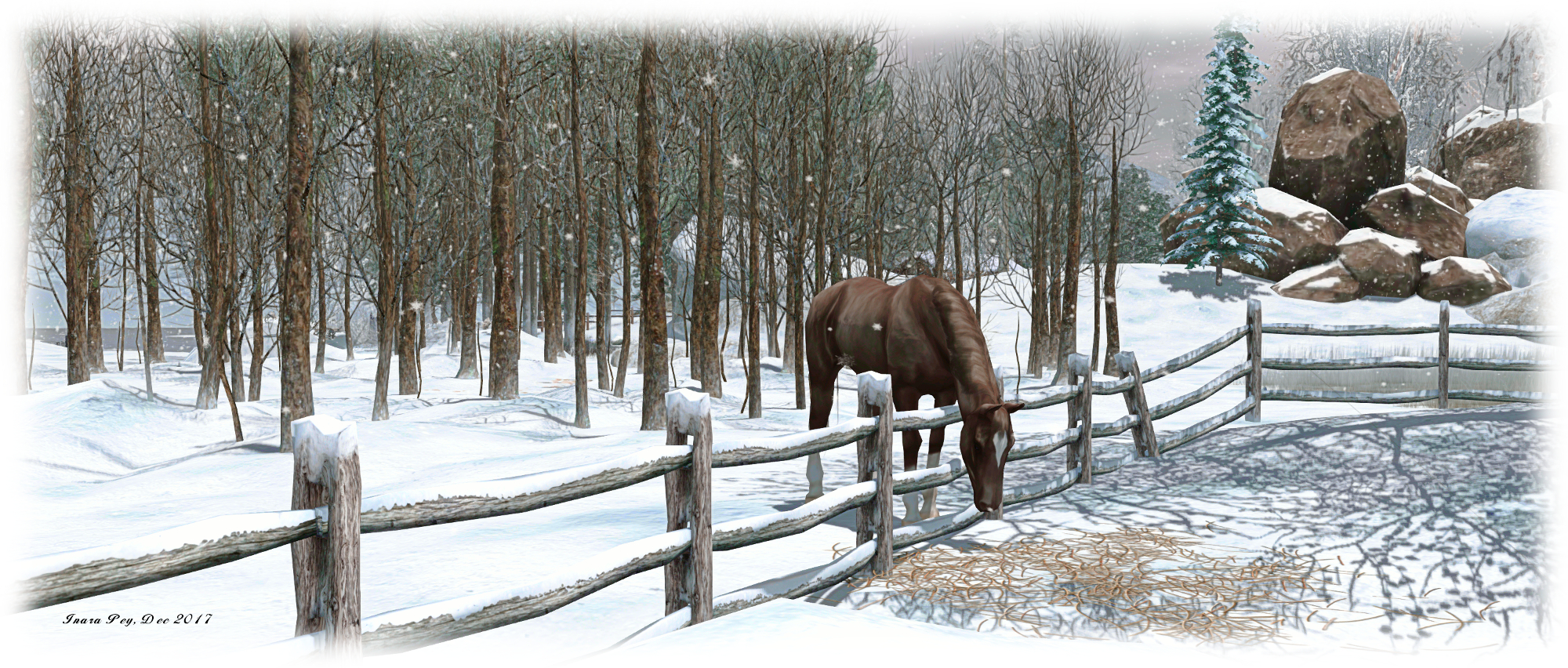
With trees a-plenty, rocky cairns and step-like slabs covered in snow, whilst offering a home to foxes, deer, reindeer, dogs, and birds, Holiday Trace is a delightful winter setting. It’s a place where wanderers can wander, couples can cuddle (try the sleighs and the old cable car!), individuals can sit and ponder, and photographers capture the scenery and memories.
DiXmiX Gallery – Cecilia Nansen Mode: Within the Voice of Björk
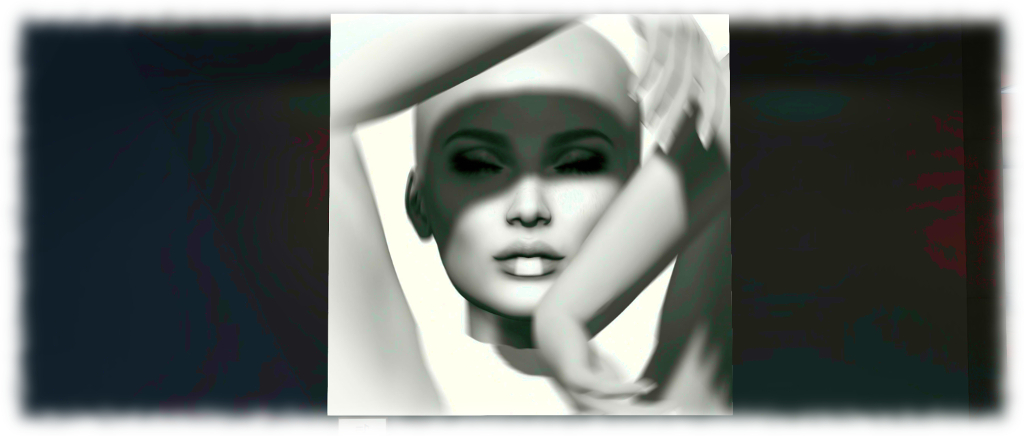
Currently on display within the Black Gallery hall at DixMix Gallery, curated by Dixmix Source, is a selection of images by Cecilia Nansen Mode – whom I confess is one of my favourite exponents of the art of avatar studies. Entitled Within the Voice of Björk, the selection features some fifteen images inspired by the lyrics of thirteen songs by Icelandic singer Björk.
“Within the voice of Björk, I hear the roars of a beast of the North … the beast of a woman,” Cecilia says in introducing the exhibit. “Within the voice of Björk, I hear the voice of the little girl … Within the voice of Björk, I hear the finest and most delicate tones … Within the voice of Björk, I hear passion, anger love, hope and fear. The deepest frustration and the highest happiness. The acceptance of depression, the orgasmic explosions of joy.
“I hear a woman; I hear all women; I hear myself.”
DiXmiX Gallery – Cecilia Nansen Mode: Within the Voice of Björk
It’s a powerful set of statements, encompassing so much, including reflections on the rugged, unpredictable nature of Iceland itself – a country I know well myself. Its seemingly solid, stoic outward appearance: firm and unyielding in the face of the harshness of the North Atlantic hides a turbulent core, hot and unpredictable, prone to busting through that stoic shell – the very metaphor of the moods and passions to which Cecilia alludes.
The images for Within the Voice of Björk are equally as powerful. Set against plain white or black backdrops, using monochrome, soft tints or the minimum of colour, each image has a simple, elegant – dare I say calm framing, within which is set the most evocative, captivating interpretations of mood and feeling, beautifully expressed through the female form.
DiXmiX Gallery – Cecilia Nansen Mode: Within the Voice of Björk
Beneath each image is a button which, when touched, will display the title of the song which inspired the picture, together with a selected portion of the lyrics. These provide depth and context to each image, allowing us to delve deeper into each in turn – although in all honesty, each image is so exquisitely executed and presented, it speaks loudly and clearly even before one turns to the lyrics.
These are also marvellous examples of the technical art of photography: the considered use of lighting, backdrop, soft focus, depth of field, angle, use of colour, framing. All are used to perfection, the various combinations within each piece doing much to capture and hold one’s attention, drawing one into the moods and feeling expressed within each – the wildness, the passion, love, hope, frustration and joy to which Cecilia refers in her introduction to the exhibition.
DiXmiX Gallery – Cecilia Nansen Mode: Within the Voice of Björk
Most of the images correspond to a single song; however there are two images devoted to Big Time Sensuality and a triplet of images inspired by All is Full of Love, and I have to confess, this triplet is for me the centre piece for Within the Voice of Björk. While every piece in the exhibit is worthy of appreciation and praise, I found the emotive phrasing of these three images, and the inspired use of android figures to convey those emotions utterly stunning.
This is a truly magnificent collection, and one to be savoured.
K2-18, a red dwarf star with its two “super-Earth”planets: K2-18c and, foreground, K2-18b, orbiting in the star’s habitable zone. Credit: Alex Boersma
K2-18 is a red dwarf star system located about 111 light-years from Earth in the constellation Leo. It has been of interest to astronomers because it is home to an exoplanet – K2-18b, also referred to as EPIC 201912552 b, discovered in 2015 by the Kepler Space Observatory.
At the time of its discovery, K2-18b was placed within its parent star’s habitable zone, and was believed to be receiving around the same about of radiation as Earth does from the Sun. However, at the time of its discovery, it was unclear if the planet was a rocky super-Earth or a mini-Neptune gas planet. Because of this, an international team of scientists have been studying the planet using the High Accuracy Radial Velocity Planet Searcher (HARPS) instrument at the European Southern Observatory.
They had been intending to more accurately characterise K2-18b’s mass, the first step in determining it’s atmospheric properties and bulk composition. And they actually succeeded, determining that K2-18b has a mass of about 8.0 ± 1.9 Earth masses and a bulk density of 3.3 ± 1.2 g/cm³. This is consistent with a terrestrial (aka. rocky) planet with a significant gaseous envelope and a water mass fraction that is equal to or less than 50%. This makes K2-18b is either a super-Earth with a gases atmosphere, or it is a “water world” with a surface layer of thick ice.
However, the team also found something that had not been expected: a second planet orbiting K2-18.
Now referenced as K2-18c, this planet is much closer to its parent star than K2-18b, orbiting its parent once every nine terrestrial days. The team responsible for the discovery believe the planet is 7.5 ± 1.3 Earth masses, making it a “warm super-Earth”. It is far too close to its parent star to be within the habitable zone, making it an unlikely candidate to support life. It was most likely “missed” by Kepler both because of its proximity to the star, and because its orbit does not lie in the same plane.
The discovery of K2-18c was actually made in October 2017. But because it had been missed by Kepler, those detecting it were initially cautious with their findings and sought to further verify them before announcing the find. As the study’s lead, Ryan Cloutier of the University of Toronto said:
When we first threw the data on the table we were trying to figure out what it was. You have to ensure the signal isn’t just noise, and you need to do careful analysis to verify it, but seeing that initial signal was a good indication there was another planet… It wasn’t a eureka moment because we still had to go through a check list of things to do in order to verify the data. Once all the boxes were checked it sunk in that, wow, this actually is a planet.
However, now it has been discovered, it will be the subject of further investigation – as will K2-18b.
In fact, given the findings of the study, K2-18b is now considered as having a reasonable chance that it might have conditions suitable for life. Thus, it is now likely to be a candidate for study by the James Webb Space Telescope (JWST) when it starts operations in 2019. JWST will be able to probe the planet’s atmosphere and determine how extensive it is, its composition, and what lies beneath it – be is a planet of an ice-covered ocean or a dry, rocky world – or something between the two.
In addition, the K2-18 system further underlines M-class red dwarf stars as the home of multi-planet systems, while the relatively proximity of K2-18b make it a prime target to further our understanding of the atmospheres around Earth-type exoplanets.
Icy Worlds Might Offer More Chances for Life and Rocky Planets
That K2-18b might be an icy water world fits with the findings of a new study form the Harvard Smithsonian Centee for Astrophysics, which suggests such planets might be far more prevalent in the galaxy than rocky Earth-type planets.
When we discuss exoplanets, there is a tendency to focus on those within the so-called habitable zone around a star, because this is the most likely region where conditions – based on our own solar system – where life is to arise.
However, as the new study notes, there are actually two other planets within the Sun’s habitable zone where conditions are such that life either never got started or didn’t last that long (Venus) and another where life, if it got started, would have encountered environmental conditions which may have limited it or again, destroyed it. However, there are at least five worlds outside of the Sun’s habitable zone – Europa, Ganymede, Enceladus, Dione and Titan – which all have the potential to support life. Thus, the so-called “habitable zone” around a star need not necessarily be the only place where conditions for life to arise might exist.
Icy worlds with sub-surface oceans may be more common than rocky world in the galaxy – and offer more chances for life to arise. Credit: unknown
Using the solar system as a basis for modelling, the researchers widened their consideration of habitability to include worlds that could have subsurface biospheres. Such environments go beyond icy moons such as Europa and Enceladus and could include many other types deep subterranean environments.
They then went about assessing the likelihood that such bodies are habitable, what advantages and challenges life will have to deal with in these environments, and the likelihood of such worlds existing beyond our Solar System (compared to potentially habitable terrestrial planets).
There are several advantages to “water world” when it comes to harbouring life. They tended to be internally heated (keeping the ocean liquid), may suffer of tectonic activity (as is now thought to be the case with Europa), which could pump living-forming energy and minerals into their oceans, while their icy crusts could offer shielding from harsher UV radiation and cosmic rays (energetic particles). The latter could be a major consideration considering the propensity for re dwarf stars to form planetary systems, and the fact they tend to be quite violently active.
Overall, the researchers determined that a wide range of worlds with ice shells of moderate thickness may exist in a wide range of habitats throughout the cosmos. Based on how statistically likely such worlds are, they concluded that “water worlds” like Europa, Enceladus, and others like them are about 1000 times more common than rocky planets that exist within the habitable zones of their parent stars.
Cross-section of Saturn’s moon Enceladus, showing how hydrothermal vents in the seabed could give rise to hotspots with sufficient heat and mineral release to support life – as well as heat the ocean under the ice and generate the plumes images by the Cassini mission. Credit: NASA/JPL / SwRI
However, while such worlds might be more common, there are negative aspects to the findings. Ice covered ocean worlds would lack sunlight as a source of energy, limiting the available energy supply to localised sources – ocean bottom fumeroles, etc., which in turn limit the size of available biospheres where life might survive – and tectonics could lead to these energy sources shifting or even dying. Also, nutrients needed to support life would likely be available in lower concentrations. That these worlds are ice-covered also makes identify whether the do in fact support life nest to impossible.
Thus, the finding could indicate that basic life might be far more prevalent in the galaxy – but also potentially much harder to detect.
The Hollywood Art Museum (HWAM) opened in Sansar on Saturday, December 9th, 2017. A joint endeavour between Sansar Studios and renowned director, designer, writer, producer, and practical effects professional, Greg Aronowitz. Mr. Aronowitz – whose credits such as Jurassic Park: Lost World, X-Files, Saving Private Ryan, Contact, Terminator 2, and Dark Crystal: Age of Resistance – is an avid collector who has amassed an incredible collection of Hollywood production art, from storyboards to costume sketches, concept drawings, models, and more.
Greg Aronowitz
The aim is to provide an environment where digital reproductions of items from Mr. Aronowitz’s collection – spanning a period from Citizen Kane to Transformers: The last Knight offer visitors a unique and intimate view of the creative processes involved in some of the world’s most beloved films. Through this, HWAM hopes to encourage artists in the digital medium to find fresh inspiration in the traditional arts of Hollywood’s past, through the preservation and education of art used in entertainment.
For this inaugural exhibition is featuring a special exhibition of production pieces from the Star Wars franchise films – which comes ahead of the US opening of the latest film in the series Star Wars: The Last Jedi.
Unfortunately, while I had a ticket for the event – the timing: 03:00 onwards on the morning of Sunday, December 10th, UK time, meant I was unable to attend. So instead, I hopped in as soon as time allowed.
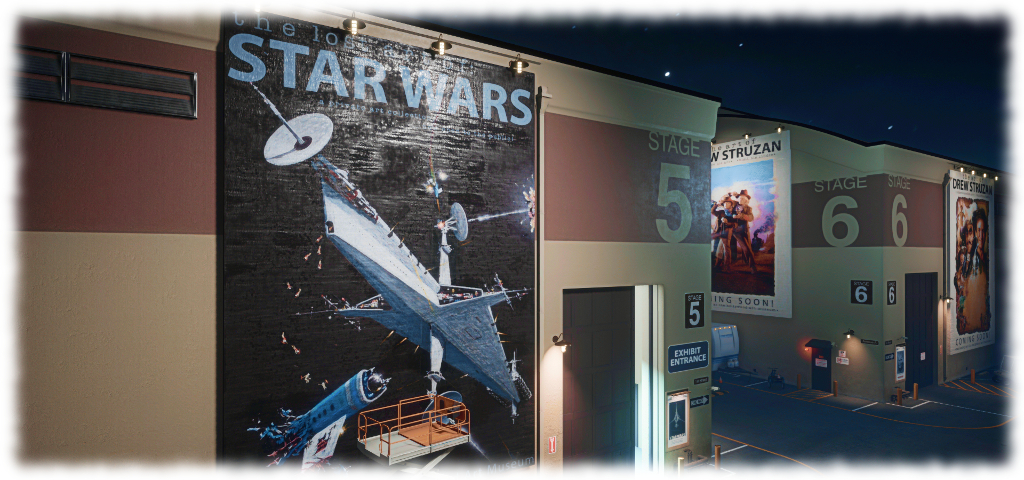
Anyone who has been able to visit Paramount Studios, just off of Melrose Avenue in los Angeles might find the spawn point for the experience to be somewhat familiar. Directly behind it is an arched gateway, echoing the iconic entrance to Paramount, with some of the buildings also echoing some of the architectural styling of building within Paramount’s grounds.
Facing the spawn point are two massive soundstages (which also carry a similarity to those of the Warner Brothers studios). These provide the first clue on how exhibitions at HWAM are to be handled: the entrance to each is in fact a teleport point to an exhibition. Right now, only Stage 5 is accessible, a huge poster on the wall announcing it as the Star Wars exhibition. However, Stage 6, just across the way will provide access to an exhibition of Drew Struzan’s magnificent art.
Step through the door to stage 5, however, and you enter the Star Wars soundstage. This offers a mock-up of an interior, complete with plain outer wooden walls, scaffold supports and a pair a green screens. A ramp runs up into the set, resembling the boarding ramp of a space vessel, the green screens either side suggesting CGI of the underside of the ship would be added post-production.
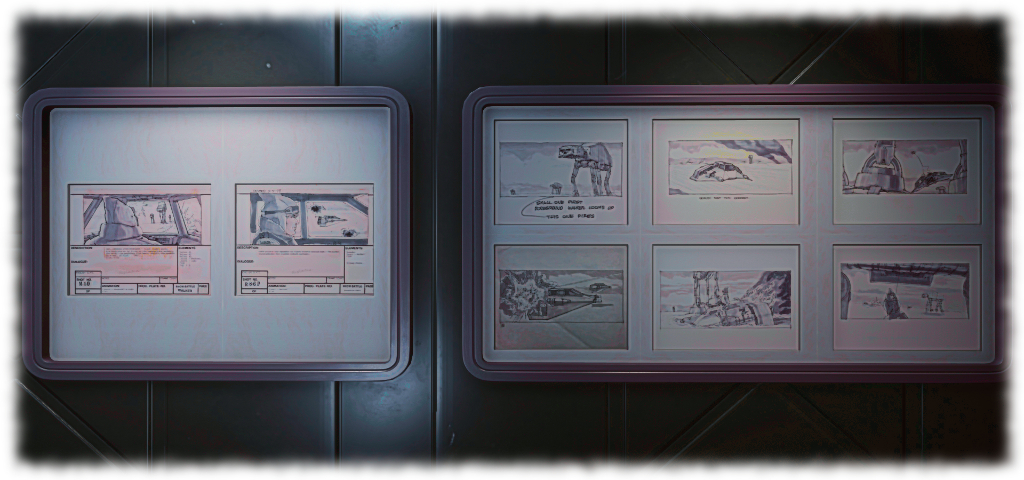
Aboard the ship visitors pass through a series of spaces featuring artwork, production sketches and reproductions of props from the film; there are even reproductions of casts used to make merchandise and models of that merchandise.
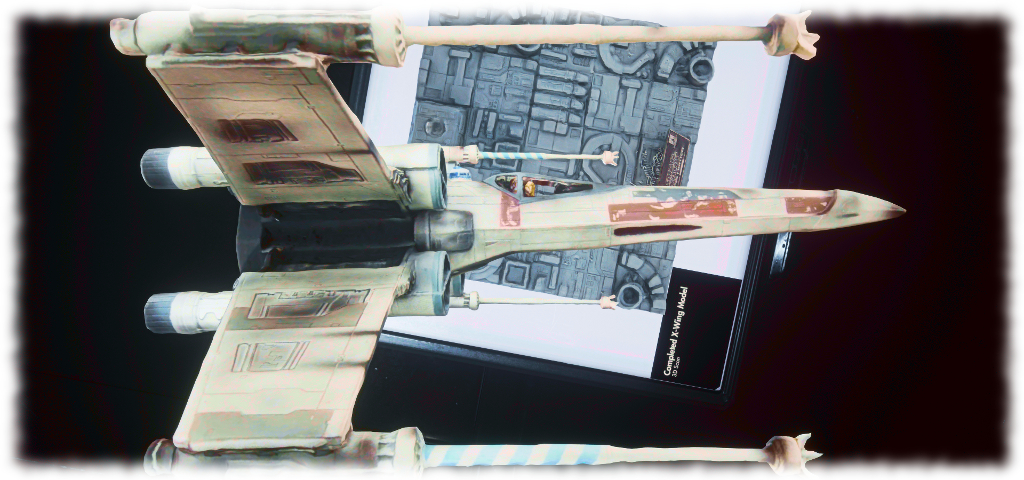
The spaces are organised into themes. The Beginning: Spaceships guides visitors through the design of various Star Wars craft, with a notable focus on the veritable X-Wing fighter (above). Races and their modes of dress, etc., comes next, before a broader look at the worlds of Stars are examined and then, finally, a peek into the world of merchandise.
The work of many of the behind-the-scenes bigger hitters for production design are featured in the exhibition, including Joe Johnston, the late, great Ralph McQuarrie, Phil Tippett, and Colin Cantwell – the man most closely associated with the X-Wing and the Death Star designs.
Wall panels also provide text information, and collision volumes before wall and free-standing displays will trigger audio explanations of images and models (VR users can press the audio buttons alongside display sections). This means that HWAM works for both VR and Desktop users, providing information equally to both – kudos to the Sansar Studios team for this!
There is, however, a slight bug: some of the models can be picked up and dropped – this is particularly prevalent in Desktop mode, where an accidental left-click can see you wearing an X-Wing or Admiral “It’s a trap!” Ackbar’s head. This can result in some of the models being scattered on the floor, and is an a general issue in Sansar which will hopefully be addressed to prevent “non-movable” objects getting accidentally moved.
Fortunately, each time the experience spins-down when no-one is using it, things get replaced on the next spin-up (the reset buttons on the various stands do not appear to work). Note, as well, that the Exit door to one side of the last exhibition space will drop you back into the Star Wars spawn point, on the sound stage.
This is a superb exhibition, and it is clear that a huge amount of thought has been put into it. The artwork has been beautifully reproduced and the models are exquisite – particularly those for the merchandise spin-off section (above), some of which are small when compared to an avatar, but still wonderfully produced – just take a look at the Cantina Bar scene or the model and cast for Ben Kenobi.
With the Drew Struzan exhibit “coming soon” to sound stage 6, I’m looking forward to repeat visits to the Hollywood Art Museum and seeing what other gems Greg Aronowitz and the Sansar Studios team offer us! And if you do like Star Wars, keep an eye on the Sansar blog and the Atlas Events calendar (when visible) for more activities in the week commencing Monday, December 11th, 2017.
Sansar: Hollywood Art Museum – the Cantina Bar model reproduction, with me alongside to give an indication of scale
 Groenland Kangamiut – blog post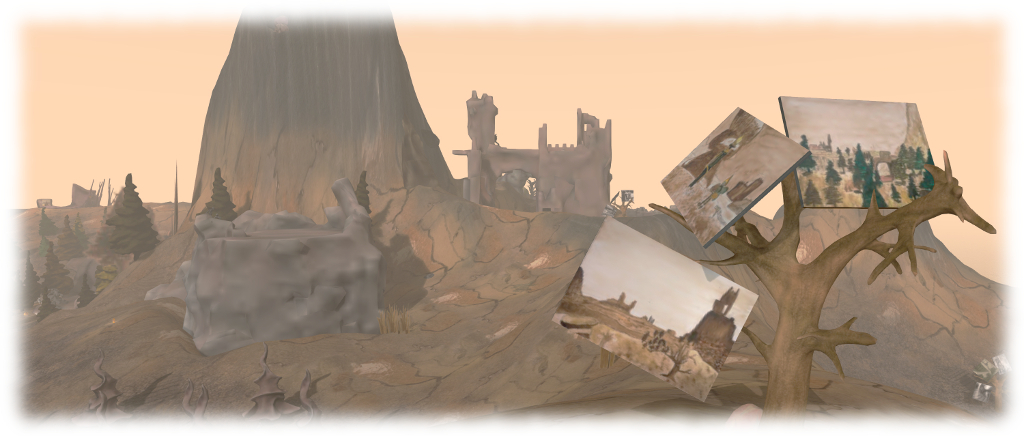







 Inara Pey: Living in a Modemworld