A salient warning about “social VR”?

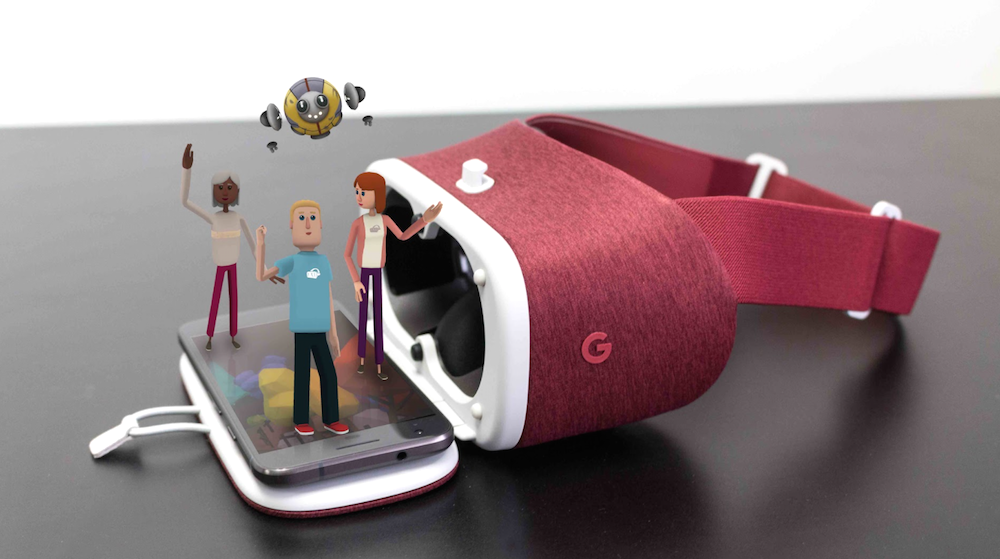
Will social VR of the kind currently being developed really be what a mass market is looking for? (image via Upload VR)

Balaji Krishnan appears to be a man on a mission: to offer a wake-up call to those engaged in the nascent world of “social VR” that the kind of future they’re chasing might not exist. He’s most notably pursuing this mission in op-ed pieces. In March he put his case Upload VR under the succinct title: In Why Social VR Probably Won’t Work the Way Social VR Developers Think, (subsequently reprinted on May 1st by PSFK.com). In April he followed it up with a more targeted piece for VentureBeat: Sorry, Zuck: AR & VR won’t replace TVs or phones.

In the first article Krishnan – the founder and CEO of Dabkick, which credits itself as developing the first “true Social VR experience“, states his case pretty clearly through the title of the Upload VR article: that social VR may not work the way most “social VR” developers – he notes Valve, High Fidelity, AltSpace VR, Linden Lab and Facebook in particular – expect.

Balaji Krishnan

This is not to say he thinks these will fail; rather than they won’t achieve the kind of mass-market prevalence we’ve seen with the likes of smartphones – the technology VR is often touted against as having the same disruptive potential.

Now, to be fair, I don’t agree with all of his points. In particular, the slow growth in the volumes of shipped headsets to date is not indicative that they won’t grow faster in the future; particularly as the technology finds its footing and the price-point computational power required for high-end systems comes down and overall quality and ergonomics of headsets improves with future generational developments. But – and here’s where I do agree with Krishnan: the hardware and the price-point aren’t the key to getting VR to appeal to a mass market.

Rather, the key to getting VR viral in the manner of smartphones is presenting it as having a convenient relevance to people – whether as a source of entertainment or social engagement or business or gaming or whatever – that’s important. And that’s actually a tough nut to crack.

The pervasiveness of smartphones is in part down to their sheer convenience and in part down to the organic way in which their capabilities have naturally grown to encompass applications and uses outside of voice communication. In trying to find the “killer app” for VR, it feels as if it is being forced down various paths in which it is unlikely to succeed in the same way as the smartphone (image via the BBC)

Take smartphones for example – as Krishnan does.That they have become a central pillar of many people’s social activities, spawning an entire ecosystem of applications and opportunities for sharing and creative experience wasn’t planned or engineered from the outset. It came about because someone realised that just as MP3 players could offer music on the go, then so could a ‘phone. And if you stuck a camera on a ‘phone, people might like to take pictures with it. It was an organic process – one which never lost sight of the ‘phone original intent: a convenient means of communicating, and built on that convenience over time until the smartphone became an indispensable part of our daily lives.
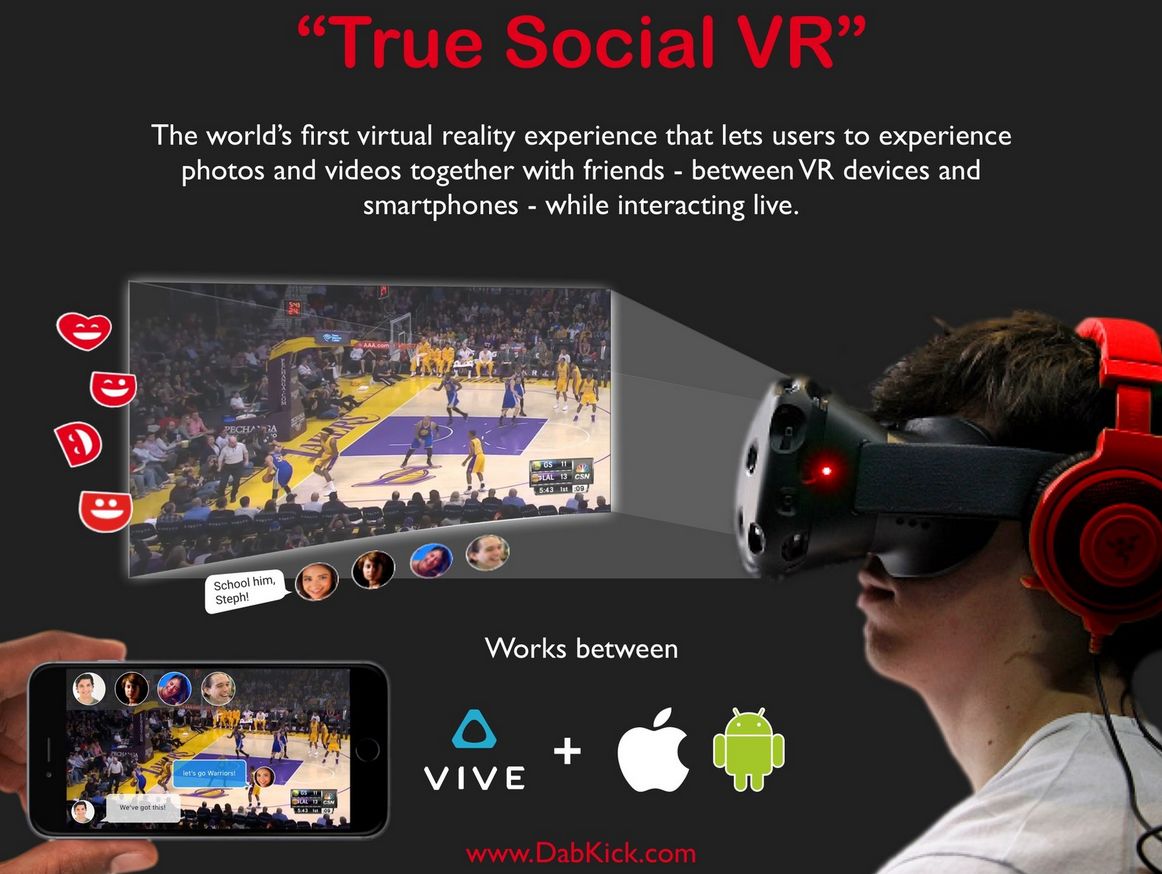
DabKick’s “social VR experience”

However you look at it, VR isn’t anywhere close to the ubiquitous nature of something like a smartphone – nor, really, can it be.  So trying to present or engineering a future where it can be is perhaps shooting wide of the mark. And really, the idea of “social VR” is another way of trying to engineer a future for VR which might not really stand up to the litmus test of what a “mass market” actually wants.

As it is, we’ve had around a decade of organic development and growth of a “digital social ecosystem”; one that offers many, many ways of engagement which are flexible enough to meet our needs wherever we are, and whatever we’re doing.  Krishnan argues that if “social VR” is to succeed, it must feed into this ecosystem, nurture it, support it and add value to it; seeking to simply “revolutionise” it isn’t enough. It must be intuitive enough to be used quickly, easily and conveniently wherever someone is and whatever they might otherwise be doing. if not, then it’s unlikely to spark people’s imaginations enough to buy into it as massively as is hoped.

So where does that leave something like Sansar? On the one hand, and as I’ve oft stated, it is pretty clear that there are markets where VR can have a significant impact. As such, if Linden Lab can hit all the desired nails on the head, then the platform could enjoy considerable success within those markets. On the other, the idea that it could become a broad-based “social” environment, outside of very specific use-cases, perhaps doesn’t stand up so well, for the reasons outlined above. Simply put; people can already undertake wide-ranging social activities through digital means, individually and collectively; simply dangling “VR” in front of them may not necessarily persuade them they need to change how they’re doing so.

SL14B reminder: applications close May 8th, 2017

SL14B

As I’ve previously reported, participation applications are currently open for the SL14B Community Celebration to mark the 13th anniversary of Second Life entering it public beta. Celebrations this year will run from Sunday, June 19th through to Sunday, June 26th inclusive. But they won’t be for very much longer.

If you are planning to apply, but have not yet done so, please note that exhibitor and volunteer applications close on Wednesday, May 10th 2017; performer and auditorium applications close on Sunday, May 17th.

The theme for this year is Carnavalesque, with the organising team noting:

While much of the interest around virtual reality has shifted to singular experiences, largely fuelled by the pursuit of headset-focused content, we want to remind you of the joy of hundreds of people from all over coming together in one place in celebration, and form a carnivale-like atmosphere that you simply cannot achieve alone. Let’s challenge all the perceptions, break all the moulds, and show everyone that we know how to celebrate.

The lights are green if you still want to apply to be a part of SL14B. But they’ll be turning red on Monday, May 8th, when applications close. So if you are thinking of applying – don’t get caught by the deadline!

So, all exhibitors, performers, presenters and volunteers wishing to be a part of this year’s celebrations, don’t get caught by the red stop light of the applications deadline, follow the links below and get signed-up!

If you have already applied to be a part of SL14B, please give the organising team a little breathing space once applications close. Everyone is aware that people are really anxious to hear if their application has been accepted, but understand, it will take a little time – generally a week or so – to run through everything and send out all the acceptance notices.

I’m delighted to say I’ll be playing a small role in the run-up to the festivities, having been offered the opportunity this year to take the official “sneak peek” photographs which will be appearing on the SL14B website over the coming weeks. This has already given me the chance to have a look around some of the infrastructure builds which are coming together, and I can honestly say that there is some really creative thought going into things and the builds are already stunning to see. I’ll looking forward to offering little tasters through the official blog as the dates draw nearer.

And speaking of dates here’s another little reminder of how things should go:

  • Wednesday, May 24th – Friday May 26th: exhibitors informed via e-mail
  • Friday, May 26th: regions open to exhibitors for building (from 12:00 noon SLT)
  • Saturday, June 10th: all performers notified
  • Thursday, June 15th to Friday, June 16th: regions closed to exhibitors for walk-through
  • Friday, June 16th and Saturday, June 17th: regions open to exhibitors for adjustments
  • Saturday, June 17th: Press Day
  • Sunday, June 18th, noon SLT: Opening Day
  • Friday June 23rd: The Birthday
  • Friday, June 23rd – Sunday, June 25th: SL14B Music Fest with Linden Lab
  • Sunday, June 25th: last day of celebration performances and activities
  • Monday, June 26th to Sunday, July 2nd: regions open for viewing, no performances
  • Monday, July 3rd to Wednesday, July 5th: Breakdown
  • Thursday, July 6th: Sims go off-line.

UWA’s Transformations in Second Life

Image courtesy of UWA

In February, I relayed news on what is to be the final mixed-media art exhibition at the University of Western Australia’s (UWA) presence in Second Life,  which is currently scheduled to be scaled back from the end of July 2017.

Held in the tradition of the UWA’s Grand Challenges albeit it on a non-juried basis and as an exhibition rather than a contest with prizes, Transformations ceased accepting entries at the end of April 2017, and all of the submissions received prior to the closing date are now on display at the UWA’s skyborne gallery space.

Transformations: Noke Yuitza – Transcendence Despite Falling Rain

“Our final show is about beginnings, endings, transitions, change,” UWA’s art curator FreeWee Ling said in the original announcement for the exhibition. “The theme is deliberately vague in order to allow for the broadest possible interpretation. It is intended to highlight the technologies of SL as a medium for creative expression. We especially want work that reflects on the past in SL and/or imagines the future of virtual art.”

In all, just under 30 artists from across Second Life responded to the call, producing both 2D and 3D art pieces, and short machinima pieces encompassing the theme, with some offering artists submitting works in more than one medium. As always with a UWA event, the finished pieces are extraordinary in the richness of creativity shown, and the manner in which that acknowledged broad theme has been interpreted.

Transformations: Thoth Jantzen – Transfabulous

3D art makes up the larger part of the exhibition, occupying most of the floorspace. 2D art can be found within a horseshoe display area on one side of the exhibition hall relative to the landing point, and the machinima entries in the opposite direction, against the wall separating Transformations from a display of works from past UWA challenges and exhibitions.

All of the pieces are provided with an artist’s name plate which, which touched, may furnish you with information on the artists and on the piece itself. In a small departure from previous exhibitions, the machinima is provided for in-world playback – touch the associated screen to start a video. Those who prefer, or have a viewer that doesn’t support CEF can still touch the artist’s name tag and receive a link to video on YouTube or Vimeo, where they can watch it.

Transformations: ErikoLeo – A Virtual Wander In Two Dimensions And A Half

Given the breadth of work on display in Transformations, offering a review of individual pieces is not easy – but I did find myself draw to a number of pieces, such as Grow, a stunning time-lapse video by Glaz Decuir in which we witness Silas Merlin taking s raw idea and transforming it into a finished 3D piece – and it is a truly fascinating study. Then there is Noke Yuitza’s Transcendence Despite Falling Rain, depicting the transformation and transcendence which grow from a failed relationship, beautifully and evocatively presented.

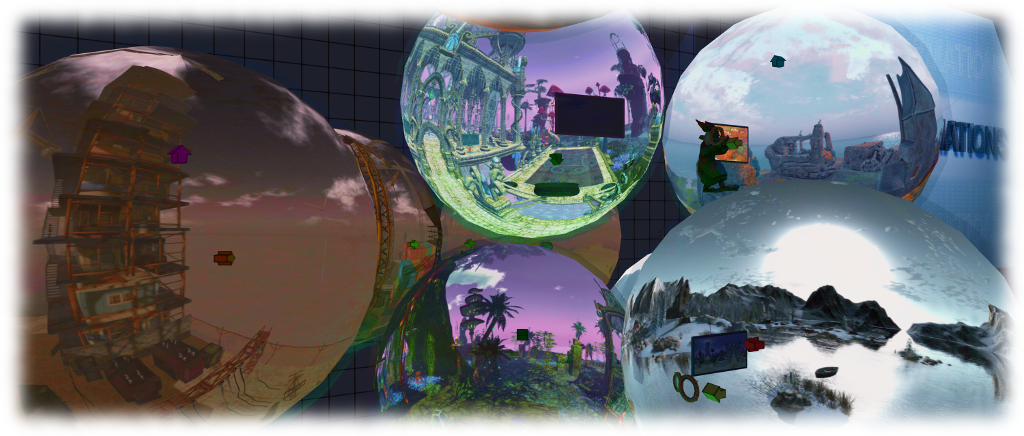
Alongside of Noke’s work is  ErikoLeo’s marvellous A Virtual Wander In Two Dimensions And A Half, which uses 2D panoramic images within a 3D model to offer transformative views of Second Life past and present – complete with and interactive element that puts you in to the scenes (take the anywhere door, then touch the arrows and go to mouselook in each sphere). Thoth Jantzen provides a dimensional defying Transubfabulous – be sure to teleport up from the part of the installation in the main gallery.

SLurl Details

Given the number of entries, this is an exhibition which requires time to appreciate – and you can find a full list of the artists involved on the UWA in SL blog across three posts starting here. One thing I would recommend when visiting – set your viewer to midnight; it removes much of the distraction of surrounding spaces and skyboxes.

SL project updates 18/1: server, viewer

Asian Fusion: Oyster Bayblog post

Server Deployments

As always, please refer to the server deployment thread for the latest information  / updates.

SL Viewer

There have been no updates to the current viewer pipelines to start the week, leaving them as follows:

  • Current Release version: 5.0.4.325124, dated April 3rd – formerly the Maintenance RC viewer overview
  • Project AssetHttp RC viewer version 5.0.5.325825, dated April 27th – This viewer moves fetching of several types of assets to HTTP / CDN – overview
  • Project viewers:
    • Project Alex Ivy (LXIV), 64-bit project viewer version 5.1.0.504536, dated April 25th
    • 360-degree snapshot viewer version 4.1.3.321712, dated November 23rd, 2016 – ability to take 360-degree panoramic images
  • Obsolete platform viewer version 3.7.28.300847. dated May 8th, 2015 – provided for users on Windows XP and OS X versions below 10.7.

Region Crossings

There have been reports of worsening in vehicular region crossings recently (by coincidence, Caitlyn and I ran into so particularly unpleasant crossings over the most recent weekend). Simon Linden agreed to have a poke at server logs, time permitting, to see if there is any other change in crossing stats. He also mused on the potential impact of mesh bodies and attachments on such crossings, which constitute a considerable amount of additional data (including saving and restoring the state of scripts associated with them.

It was also pointed out that worn mesh attachments bring with them an (unneeded?) physics shape calculation, potentially adding to the load. This prompted a further discussion on whether any attachments should have a physics shape data used or calculated until such time as it is physically rezzed in-world.

As a first point of call, Simon repeated that as time permits, he’ll look into what goes into the region crossing calculations, and have a closer look at attachments physics calculations in general to she what is going on.

What Is the Lab Working On?

Things seem pretty quiet at the moment, but the Lab is working on a lot right now, although much of it is transparent to users, as Oz linden indicated at the Simulator User Group meeting on Tuesday, May 2nd:

At the moment, we happen to have a number of projects in flight that are either not good to discuss (security changes), or system upgrades that really shouldn’t be visibly different…. that’s unfortunate, but we’re getting started on (or getting ready to start on) some that will be much more interesting.

The recent changes to land access and control, together with the upcoming changes to allow region / estate staff to better managed Public Access regions are examples of more visible changes affecting users – or will be, once the viewer has been updated to handle the latter; and there a further changes to the likes of region-level ban lists coming down the pipe which will also bring visible changes to the viewer and provide better controls / support for land owners.

Fantasy Faire: towards a westering Sun

Dawn’s Promise, Fantasy Faire 2017 (until May 4th, 2017)

The official events of Fantasy Faire are all but over. The Djs have played, the artists have performed, stories have been written and told. Memories have been born, friendships renewed or made. As it is with every year, Fantasy Faire 2017 will leave its mark on all who attended it, whether for their first time, their fifth or as someone who has been a part of the magic since its inception.

But while the formal events have now ended, it is not yet time to say farewell to the Fairelands themselves; they will remain with us yet a while – until the end of Thursday, May 4th, in fact. So if you’ve not yet had the time to visit this year’s realms, now is the time to do so.

Fairelands Junction, Fantasy Faire 2017 (until May 4th, 2017)

Every year, Fantasy Faire, perhaps more than any other large-scale event in Second Life, brings forth a set of utterly unique regions. Each of them is as individual and different from the next as chalk is to cheese; yet all of them are bound together in a way than makes them a unified whole. Together they become not just a grouping of regions, they become facets of a place, a world; realms as united as they are different. Exploring them, it is hard not to feel like a traveller or adventurer travelling a route through a mystical place, on a quest which offers something new at every turn.

That’s why each year I try to bring just a flavour of these realms to the pages of this blog, and why I always mark the closing of each year’s Faire with a plea to all of you who have not enjoyed the Fairelands to take a last opportunity to do so. Whether you are a fan of fantasy or not, you are almost certain to find something among them that captures your attention, or calls to you in some way.

Kakushi Pasu, Fantasy Faire 2017 (until May 4th, 2017)

This year I found two regions speaking to me particularly clearly: Dawn’s Promise and The Spirit Pool. Admittedly, both regions have been designed by people whose work I greatly admire – but this is not why either of them became one of my two “Songs” of the Fairelands: both are simply exquisite in design and execution – and the they are far from alone. While it may be a little unfair to point to one or two more regions when all have a particular appeal, I’m nevertheless going to do just that in the hopes of encouraging visits.

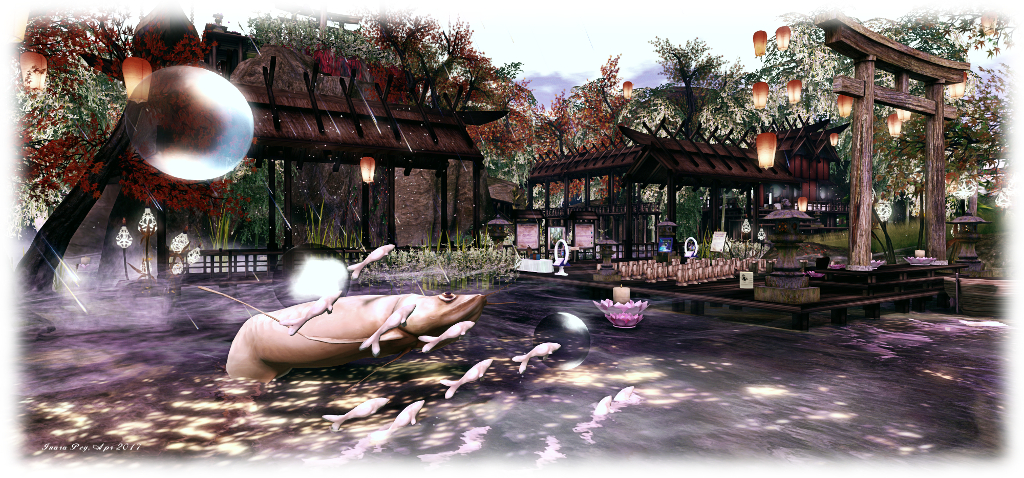
Kakushi Pasu, the home of the LitFest and the DJ parties during the Faire is first on my list. I so wanted to write a song story for this region, but never managed to get the words to come together. Designed by Lokii Violet, Kakushi Pasu presents a beautifully executed oriental theme. This is more than enough to attract me; but there is something else about the region which held sway over me: a sense of tranquillity. Despite all the comings and goings of the LitFest, the DJ parties, the role-playing activities, Kakushi Pasu speaks to the heart of peace and rest – and now the core activities have drawn to a close, now is the time to discover this for yourself.

Anansi, Fantasy Faire 2017 (until May 4th, 2017)

To the south and west of Kakushi Pasu, and reached via Egregore lies Anansi. Perhaps one of the most different environments of recent Fantasy Faires, this is a place which brings together so much: fantasy, steampunk, mystery – and menace. Designed by Beq Janus and Polysail, Anansi brings a touch of Ray Bradbury to the Fairelands through the circus-like look and feel to the region, which carries subtle echoes of Something Wicked This Way Comes. It is a place where each of the stores, sitting upon its mechanical legs or held up by great metal dragonflies suspended from the crane arms extending from stores higher up in the landscape, offer the challenge  / threat of treat – or perhaps an insect-like stinging trick.

Further south, nestled between Dwarven Chaddul Ro and Halfling haven of the The Hill (both highly appropriate to this year’s Faire, given the Tolkien celebrations which took place this year), sits Ravens Perch. the fabulously atmospheric region designed by Kaelis Ember and lrriven. This is another place of which I should have penned a Song to add to my little series. A marvellous wrapping of Gothic and mystery, there are tales galore to be found here along the rose-choked streets, between the church-like buildings and around the Lady of the Rose. There is also a beautiful place of reflection to be found as well, a place of special remembrance which speaks to all of us who have lost friends or family to cancer.

Raven’s Perch, Fantasy Faire 2017 (until May 4th 2017)

These then, are the three regions, along with Dawn’s Promise (see The song of Dawn’s Promise) and The Spirit Pool (see The song of the Spirit Pool) which called to me in particular  – and for numerous reasons. But again, they are only five of fourteen fabulous regions. So, if you have not had the opportunity to explore them all and listen to their voices, now is the time to do so, before they each pass into the West and beyond our ken.

Fantasy Faire 2017 SLurls (valid until the end of May 4th, 2017)


The Year 3299 in Second Life

Art on Roofs: 3299

3299 is a new exhibition by artist and creator Terrygold, which formally opens at 14:00 SLT on Monday, May 1st. However, Terry kindly invited me to have a sneak preview.

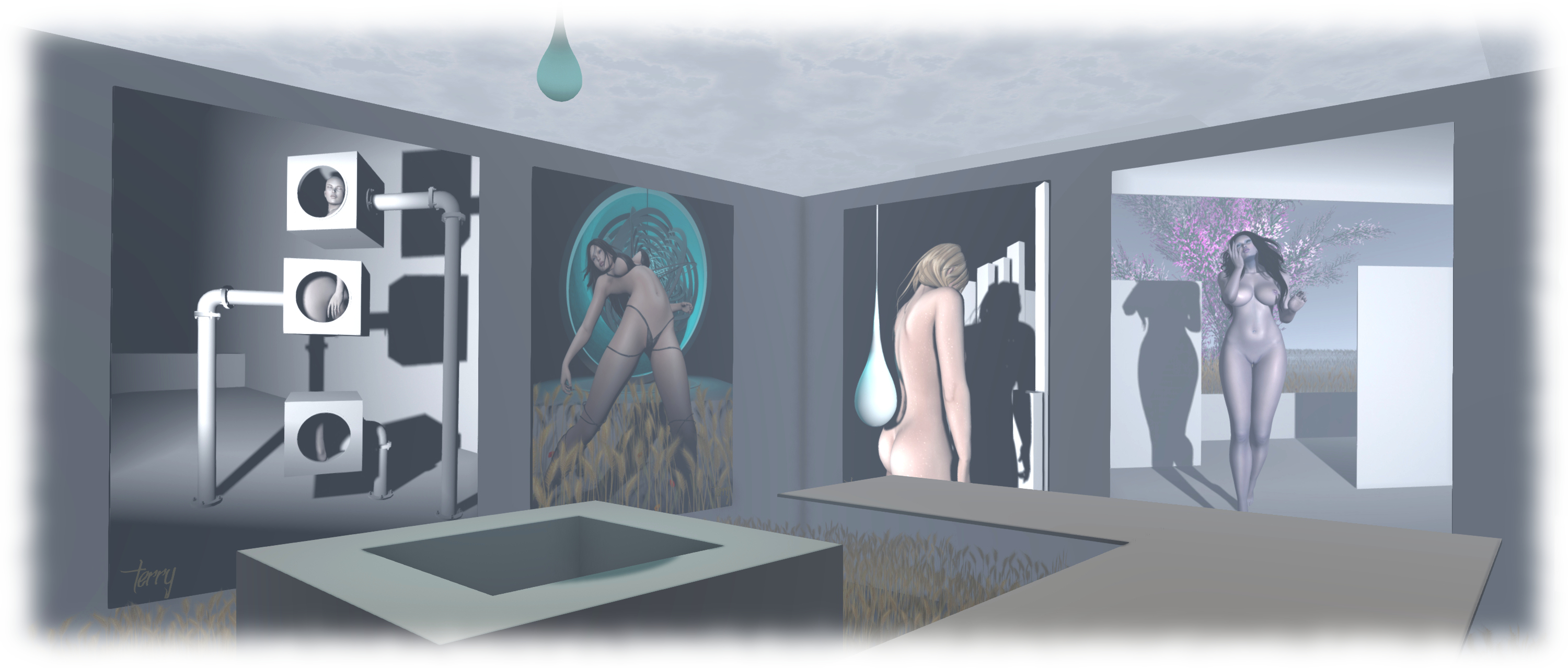
“It is my vision of the future,” Terry informed me. “A city were resources are all used up, and the water is recycled.” The result is an atmospheric sitting – windlight instructions are provided at the landing point, and if you can, you should both set them and enable Advanced Lighting Model on your viewer; shadows are also recommended.

Art on Roofs: 3299

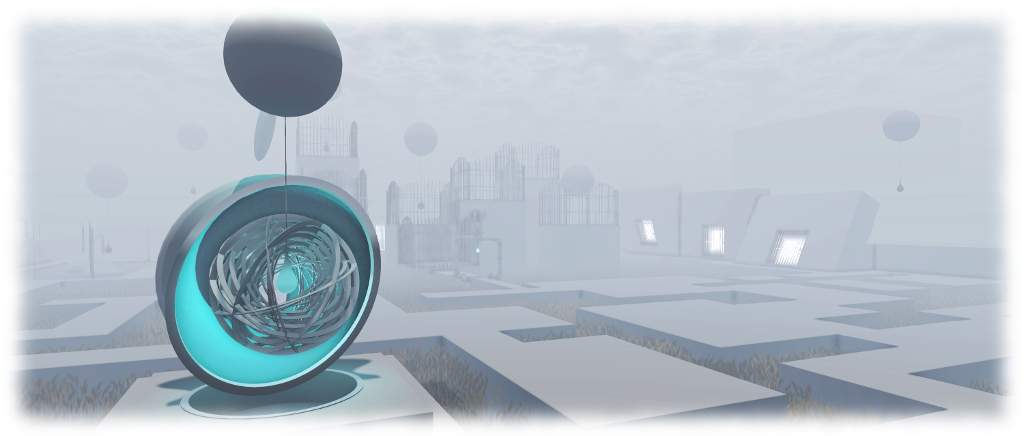
From the landing point a fog-enshrouded landscape extends into the distance under a clouded sky. “Pollution,” Terry says of the fogging effect. The landscape comprises plain white blocks stretching over a dry grass land. Walk on the blocks – which might be perceived as city blocks – and they form paths running through the grass. Step down into the grass, and it becomes the path through a low-walled maze formed by the white blocks. Which you take is up to you.

Scattered throughout this space 3D pieces by Terry. Some have a practical application in the setting by transporting the recycled water around. Others are more obviously founded in artistic expression. Every so often tall towers rise up, crowned by fences. “A final defence to protect the last trees,” Terry told me. Alas, the attempt failed. None of the blocks contains a tree; only grass now grows within them, despite the water balloons feeding some of them.

Art on Roofs: 3299

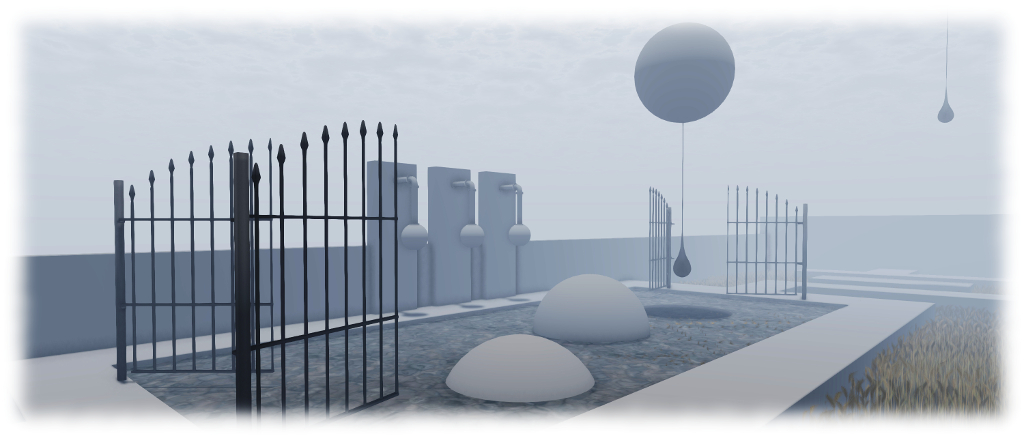
In fact, only one tree remains. It sits guarded by a triple set of gates at the entrance to a structure at the far end of the landscape. Tall and gaunt, it stands alone, devoid of flower and seemingly fragile. Behind it, cast upon the white blocks is its shadow, which bursts with colour in the dim light, looking for all the world like it is in bloom – a poignant reminder of what once was and has forever been lost.

Within this structure, lining the walls, is Terry’s 2D art. Some of the pieces might be considered NSFW, but all feature Terry’s landmark style and each has something of a story to tell about the environment – this vision of the future – in which it has been set.

Art on Roofs: 3299

Featuring a mix of 2D and 3D art, all of which is intriguing and captivating, with a gentle commentary of ecological and environmental concerns, 3299 offers an exhibition which both catches the eye and  – albeit in a subtle manner – engages the brain.

SLurl Details