SL project updates 16 29/2: viewer, Bento update 20 with audio

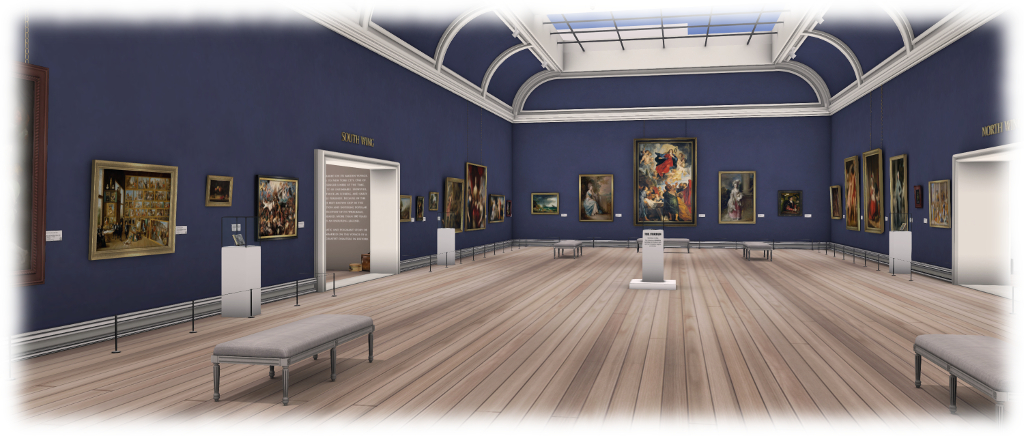
The Vordun: European Masters
The Vordun: a new Experience in presenting art in Second Life – blog post

Server Deployment – Recap

  • On Tuesday, July 19th the server maintenance package previously deployed to all three RC was rolled-out to the Main (SLS) channel,described as “minor internal changes”. One of these sees worn scripts capped at a count of 2500. Attempts to add attachments which take an avatar over this limit should result in the attachments failing to wear
  • There  no deployment and no scheduled restart for the RC channels on Wednesday, July 20th, so the entire grid is running  on the same simulator release

SL Viewer

The Maintenance RC viewer updated to version 4.0.7.317689 on July 21st, which includes the following additional fixes:

  • MAINT-6216 avatars are sometimes invisible
  • MAINT-6448 PERMISSION_DEBIT notification should default to Deny (my emphasis)
  • MAINT-6534 [MAINT-RC] Resetting scripts via the build menu no longer works on many scripted objects unless making the scripts visible in the contents tab of the objects first
  • STORM-2133 VOICE-36 prevents proper shut-down of connector.
The old debit notification (left) gave equal emphasis to accepting / denying the request to access account balances. The update to the Maintenance RC viewer new focus attention on denying a request for account access as the default option.

Project Bento

The following notes and audio were taken from the weekly Bento User Group meeting, held on Thursday, July 21st at 13:00 SLT at the the Hippotropolis Campfire Circle . For details on the meeting agenda, please refer to the Bento User Group wiki page.

Note that this meeting was an “informal” meeting as project development lead Vir Linden is on vacation, as is Dan Linden, another of the devs who has been working on Bento. On-hand for the meeting were Troy, Coyot and Kyle Linden. These notes are not intended to offer a full transcript of the meeting, but rather covers the key topics of the discussion. Extraneous sounds in the audio are the result of someone leaving their microphone open during the meeting.

Internal Bento Presentation at the Lab

There’s an “SL summit” taking place in week #30 (commencing Monday, July 25th) within the Lab, at which Bento will again be presented. Troy Linden will be doing this, using screen shots and information on the recent work, and updating LL staff on the project’s process and on the ongoing collaboration between the Lab and Bento content creators.

Final Skeleton and Issues / Testing

With the release of the latest project viewer (version 5.0.0.317597 at the time of writing), the Lab hopes the Bento skeleton is now finalised. However, there are still a range of issues which are still being seen, some of which may be related to the most recent updates to the skeleton and sliders, others of which relate to earlier versions of the skeleton. There is also a further level of confusion due the AvaStar having to make a series of changes to their tool set, and these also being in a state of flux (version 2.0.13 (Alpha 4) was, at the time of writing the most up-to-date version, which should handle the new updates, although the .BVH animations handling may still be awaiting update). All of this means that most creators have yet to really experiment and test the latest updates.

Troy’s suggestion is that as 5.0.0.317597 does contain the must recent version of the skeleton and sliders, that creators work with models built with this skeleton, and report issues directly against it, to help ensure the Lab is correctly catching everything.

Avatar Reset / Reset Skeleton Option

In theory, removing an avatar mesh using custom joint offsets should reset the underlying avatar. However, this isn’t always the case.

For example, if the animations running on the mesh contain translations, and the last frame of those animations doesn’t move the bones back into their starting position, then an automatic reset of the avatar won’t occur. It is also possible that the update message may not be received by other viewers (e.g. due to Interest List limitations). These problems (which actually pre-date Bento) is why the Reset Skeleton option was added to the Bento viewer.

This prompted a discussion on the impact of sliders / bone rotations / translations and the order in which shapes / joint positions / animations are applied to an avatar, which in testing appear to be at odds with the order of application provided by Vir. Understanding what exactly is going on is again made a little harder, as it is believed there are still some disconnects between updates to the SL skeleton rig and updates made to Avastar.

Medue Simoni, Teager and Mel Vanbeeck discuss sliders, bone rotations / translations, and their impact on an avatar

Medhue Teager and Mel discuss the order in which joint offsets, shape offsets and sliders are applied to an avatar, in reference to Vir’s forum post on the matter

Expect further discussion on this following additional testing.

Brief Summary of  Additional Observations

Avatar Height: his has been the topic of conversation for the last few meetings. In particular see my Bento update #19 for details of the current issues arising from the most recent changes in how an avatar’s position relative to the ground is calculated / re-calculated by the viewer.

Vir has suggested that, as a part of investigations, people try to avoid changing the position of any of the bones used in the position calculation via an animation, and instead change the rotation of the bone(s) to achieve the desired result. Initial feedback voice at this meeting (via chat) is that this many not be an ideal solution.

Speech Gestures: A long-standing aspect of Second Life is that speech gestures (along with gesture in general) are not automatically attached / detached with an avatar. This makes sense in that it allows people to choose the gestures they wish to run with an avatar.

However, with Bento, it is possible that dedicated gestures are required (e.g. wing folding gestures, speech gestures that are specific to an avatar form, etc.). As the gestures are not auto-attached / detached this leaves the potential for users experiencing apparent “issues” (e.g. their avatar seems to behave oddly as something like a speech gesture fail to play, or there is a conflict with gestures as the user has multiple gestures trying to do the same thing running simultaneously, etc.).  It’s not clear what (if anything) might be done to address this.

Why Bento is Taking so “Long”

There have been some complaints in forum threads and non-Bento user group meetings about the length of time Bento is taking to mature. However, as Troy re-iterated in the meeting, a lot of this is both down to the fact that Bento needs to serve a very wide range of use-cases, not all of which are necessarily compatible with one another (e.g. supporting both human and non-human avatars).

Additionally, and in order to be as broadly useful as possible, the project requires an iterative development process between both the Lab and the expertise of in-world content creators in order to ensure Bento is as useful a product as possible when officially launched. This iterative process inevitably means the project will take time to fully mature.

Troy and Coyot Linden discuss the overall approach to Bento
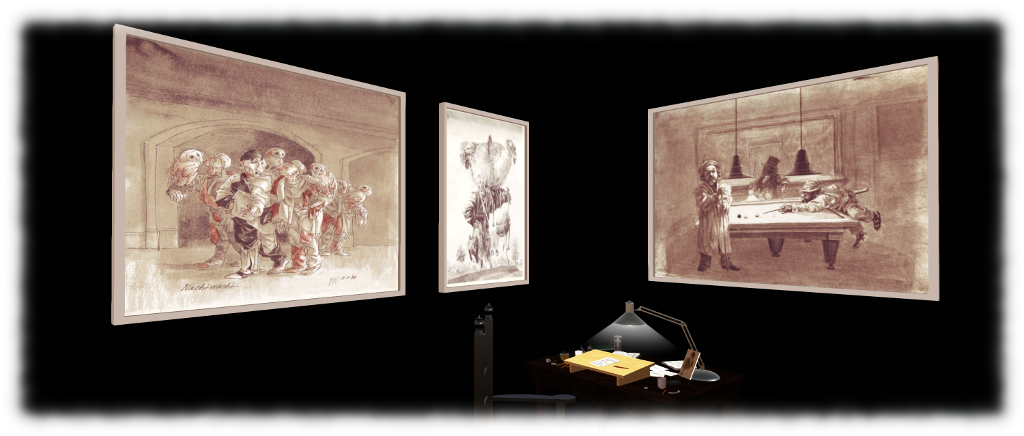
The magnificent artistry of Peter Vos in Second Life

Peter Vos in Second Life
Peter Vos in Second Life – click any image for full size

Update, August 6th: Karkassus dropped me a note to inform me that his exhibit of his father’s work has now relocated. The SLurls in this article have therefore been revised to match.

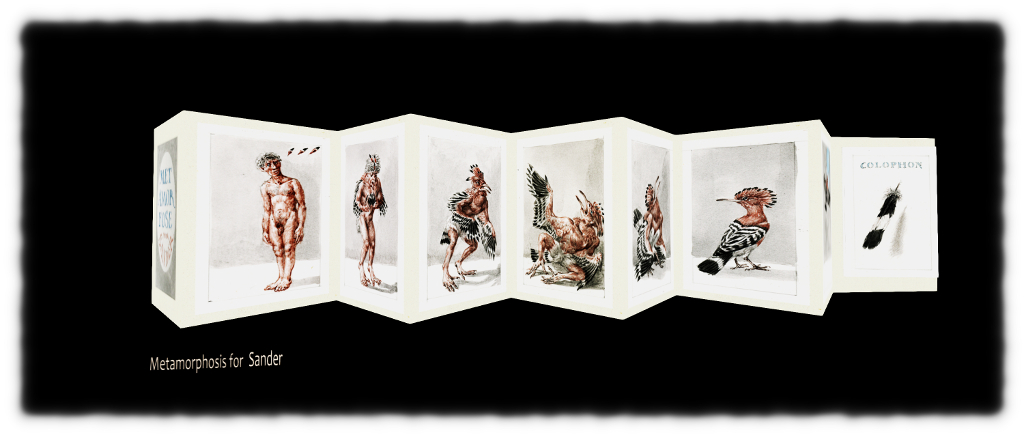
Artist and friend Silas Merlin kindly pointed me towards a recently opened exhibition at the Small World Art gallery’s sky complex. Peter Vos in Second Life celebrates the work of Dutch illustrator, humorist, caricaturist and artist, Peter Vos – and it is an absolute must see.

Born in 1935 in Utrect, Peter Vos – full name Petrus Antonius Carolus Augustinus Vos – was the son of Cornelius J Vos, a well-known journalist of his time. He attended the Amsterdam Academy of Fine Arts when compulsory attendance was very much the order of the day: 9am through noon, then 1pm through 4pm and then 7pm through 9pm – something which may have contributed to Vos’ own work ethic in adult life.

Peter Vos in Second Life

Central to his work is a wonderful mix of styles and approaches – and also a deep and loving intimacy with his subjects and audience. In his twenties, he produced Portrait of Papa for his ailing father, followed by a book of pastiches lovingly depicting his father in a series of guises. Later, when he had a young son of his own, he would demonstrate this love for his family again, writing loving letters and postcards to the young boy, relating marvellous journeys around and beyond the Earth, opening his son’s own imagination.

All of this  – the rich diversity of styles, the ability to move from keen observer to drawer of the fantastic, and his intimate expressions of love – is displayed throughout Peter Vos in Second Life. It is a most remarkable tribute to a most remarkable artist; one made all the more moving and intimate when one considers it has been curated by his son, known in-world as Karkassus Jigsaw.

Peter Vos in Second Life

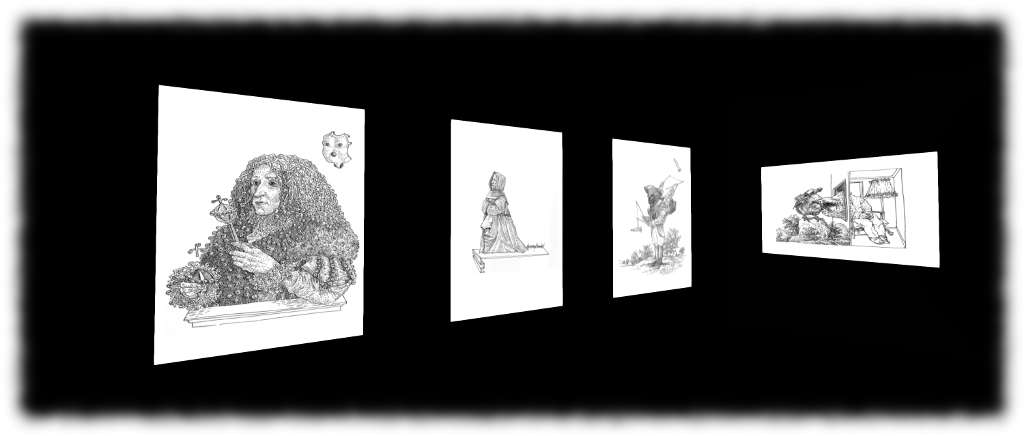
Set against a perfect black backdrop, the artwork has been reproduced in-world with breathtaking clarity which brings Vos’ attention to detail, whether as an illustrator, humorist, artist or father, fully to the fore. These are all exquisite pieces which instantly capture and hold our eye – and our imagination. Commentary is strong within many of them, as is a wicked sense of humour, together with some poignant observation.

In an exhibition as remarkable as this, it is difficult to draw attention to any particular aspect, as they are all deserving of our time and attention. However, there are two parts within Peter Vos in Second Life which should perhaps be given additional mention. The first is on the ground floor of the hall, where Karkassus presents reproductions of the miniatures his father started painting in 1966. And by miniatures, I mean entire paintings and portraits the size of a rijksdaaldar – just 33 mm (1.3 in) across; so small some of the detailing meant working with just a single hair on a brush.

Peter Vos in Second Life

These are truly wonderful pieces (see the example above), carefully reproduced for in-world display so that when you click on one of them, your camera will zoom and centre itself on the image (press ESC if it doesn’t), and remain there until you click Stand. These are displayed alongside Peter Vos’ stamp designs and some of his postcards to his son, which offer a further personal dimension to this exhibition.

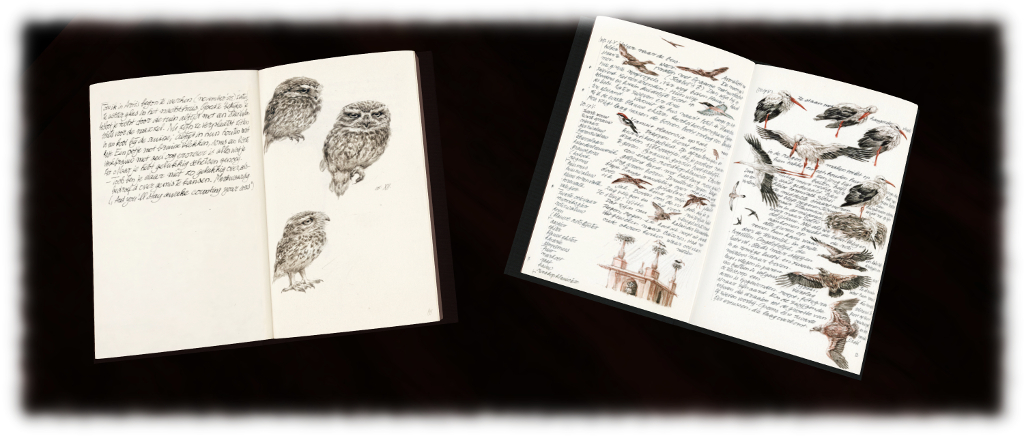
On the upper floor of the exhibit, nestled between the images on display is another personal tribute to the artist. Lit by a single lamp sits his desk, chair pushed back. The paraphernalia of Vos’ work are scattered around: books reflecting his interest in mythology sit on the floor, while pencils, pens, ink, coffee, a pouch of tobacco and more, vie for space beneath the cone of light cast by the lamp. And amidst all this, again marvellously reproduced and scaled for avatars, are the artist’s notebooks, displaying his meticulous studies of birds. Looking at them, it is hard not to believe he has simply stepped away from his work for a minute or two, and if we wait quietly enough, he’ll return, and allow us to watch him as he continues sketching a sparrow.

Peter Vos in Second Life
Peter Vos in Second Life – pages from the artist’s notebooks

Sadly, Peter Vos passed away at the start of 2010. However, this exhibition, which mixes elements from earlier celebrations of his work, stands as a fitting tribute to his art and his life; a man gifted with a wonderful talent he chose to share with us. It is perhaps one of the most engaging exhibitions to be found in Second Life, and one fully deserving in gaining a continued audience.

Many thanks to Karkassus for once again sharing his father’s work with us.

Related Links

Community Gateways in Second Life: Helping Haven

Helping Haven Gateway
Helping Haven Gateway (click any image for full size)

The new Community Gateway programme was unofficially announced in September 2015. At the time, Pete and Patch Linden provided me with an overview of the programme, which involves a number of new user oriented groups and established communities across Second Life. More recently, I put out a call to those engaged in the programme to contact me about their work, with a view to presenting an unfolding series on the programme, starting with a look at those who responded to the call. For the first of these pieces I sat down with Aullere Ocello, owner of Helping Haven Gateway (HHG).

Those who have been around Second Life for a good few years and who had the good fortune to pass through Help People Island prior to its closure in 2011, might have an odd sense of deja-vu; if they drop into Helping Haven Gateway for the first time. There’s nothing accidental about this: the core team behind HHG are all Help People Island veterans, as Aullere explained to me.

Haven Haven Gateway provides a wide range of facilities and environments across, over and under the region for news to experience and enjoy - such as the forest walk, which provides a natural introduction to exploring regions in SL and interacting with in-world objects
Helping Haven Gateway provides a wide range of facilities and environments across, over and under the region for news to experience and enjoy – such as the forest walk, which provides a natural introduction to exploring regions in SL and interacting with in-world objects

“Notfragile [Aullere’s SL partner] and I ran HPI for the 4 years it was in SL. When it was forced to close, Notfragile, Lily, Charles and myself wanted to carry on. So we created Helping Haven, and for 6 years we were on a 1/4 sim, completely non-profit. A lot of the staff who came with us also started helping all over SL, which was amazing. And we boogied on through it, and made Helping Haven a well-known name by what we provide.”

The group were among the first of the existing community gateways to become involved in the new trail programme, back in around May 2015. “Brace Coral [Caledon Oxbridge University / New Citizens Inc] mentioned it to me, and then Patch invited myself and Lily Swindlehurst to a Gateway meeting,” Aullere said. “It was the beginning of a whole revisit to the programme. That went on for a couple of months, then things started falling into place. It’s taken a long time to reach this point!”

Even before Patch contacted them, the team had been looking at how they might once again expand their work to again encompass a full region and offer the broad range of support services they’d been able to give via HPI; so Patch’s approach was serendipitous. “It gave us the push we needed to take action,” Aullere said. “And when it came to building the region, I loved the HPI approach so much, and we knew it worked, so I modelled HHG on it while incorporating the lessons learned in running Helping Haven for four years on top of our HPI experience.”

Helping Haven Gateway's map to their ground-level facilities
Helping Haven Gateway’s map to their ground-level facilities (credit: Helping Haven Gateway)

The region itself is spilt into four areas (as shown above, looking across the region from the west side) at ground level, each area presenting multiple opportunities for learning, having fun and engaging with other users. The Gateway Entrance is the first point of contact with Helping Heaven for newly registered users, offering an initial introduction to learning the basics – walking, text chat, camera movement, media – presented in a familiar walk-through approach. From here, new arrivals are encouraged down into the plaza area.

One of the core ideas for the new Community Gateway Programme is the ability for those presenting a gateway to be able to bring new users directly into Second Life via their own web presence. While Helping Haven do indeed have their own website, delays on the Lab’s side in getting the new user registrations API fully up-and-running means that it isn’t currently being leveraged by HHG. So, how do they attract new registrants?

Helping Haven Gateway: the new user gateway provides newly-registered users with the esseentials of using the viewer as they progress through a garden to the rest of the region
Helping Haven Gateway: the new user gateway provides newly registered users with the essentials of using the viewer as they progress through a garden to the rest of the region

“The Lab direct incoming new users to the Gateways,” Aullere informed me. “So we get people from the main Orientation areas, plus they’ve put a number of the gateways in the Social Island portals. Also, some of our helpers go to the Social Islands as well to help direct new users to us.”

I wondered how this approach was faring. “It fluctuates daily. We keep a close eye on traffic; certain times of the day, we’re downright packed!” Aullere said, before indicating the gentle flow of people into and out of the region and adding, “At others it is like this, calmer!”

Helping Haven Gateway: some of the ground-level activity areas
Helping Haven Gateway: some of the ground-level activity areas, complete with lesson boards

Once new users reach the plaza, they are free to wander. Volunteers are on hand to provide assistance, and while there is a main Tutorial Walk on the north side, which continues the lessons from the Gateway Entrance, so too are many of the tutorial boards repeated across the plaza and the rest of the region. This might appear to be a little redundant, but it actually serves a two-fold purpose.

Continue reading “Community Gateways in Second Life: Helping Haven”

A return to Hestium in Second Life

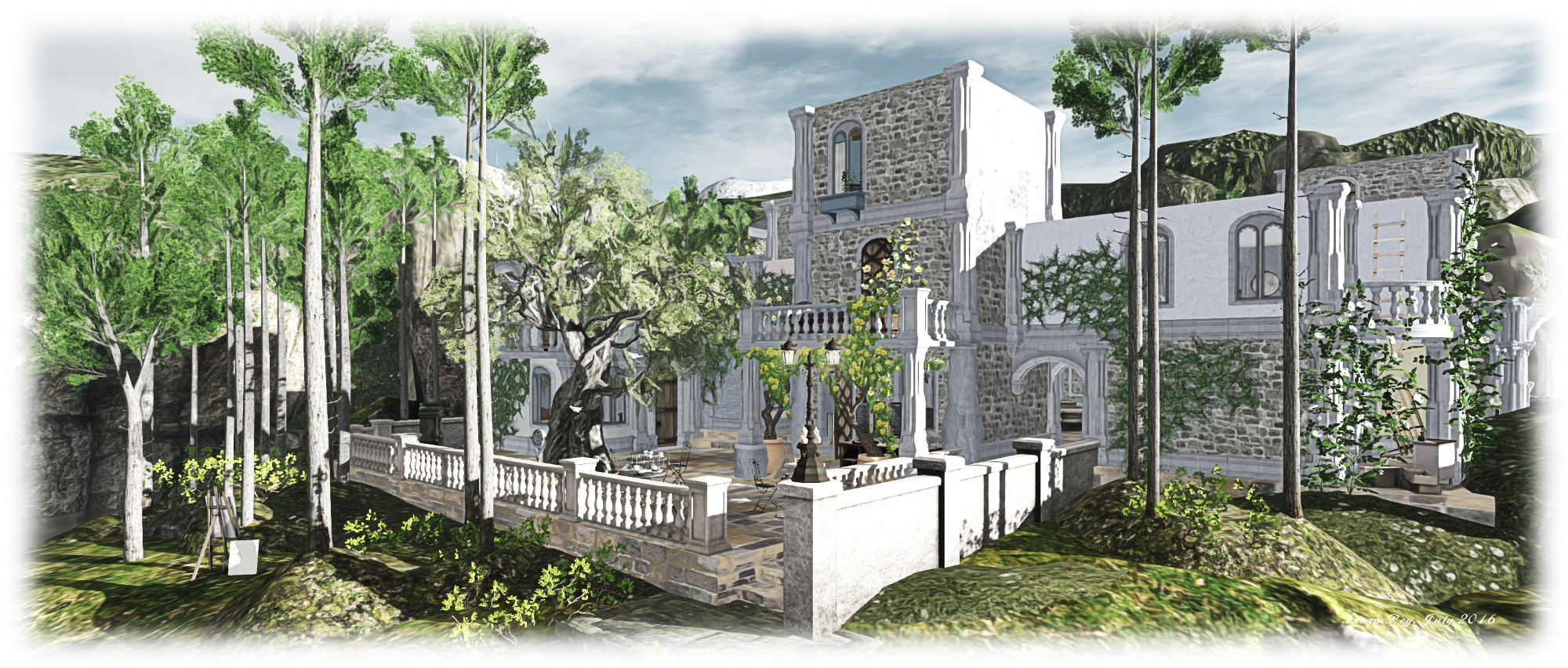
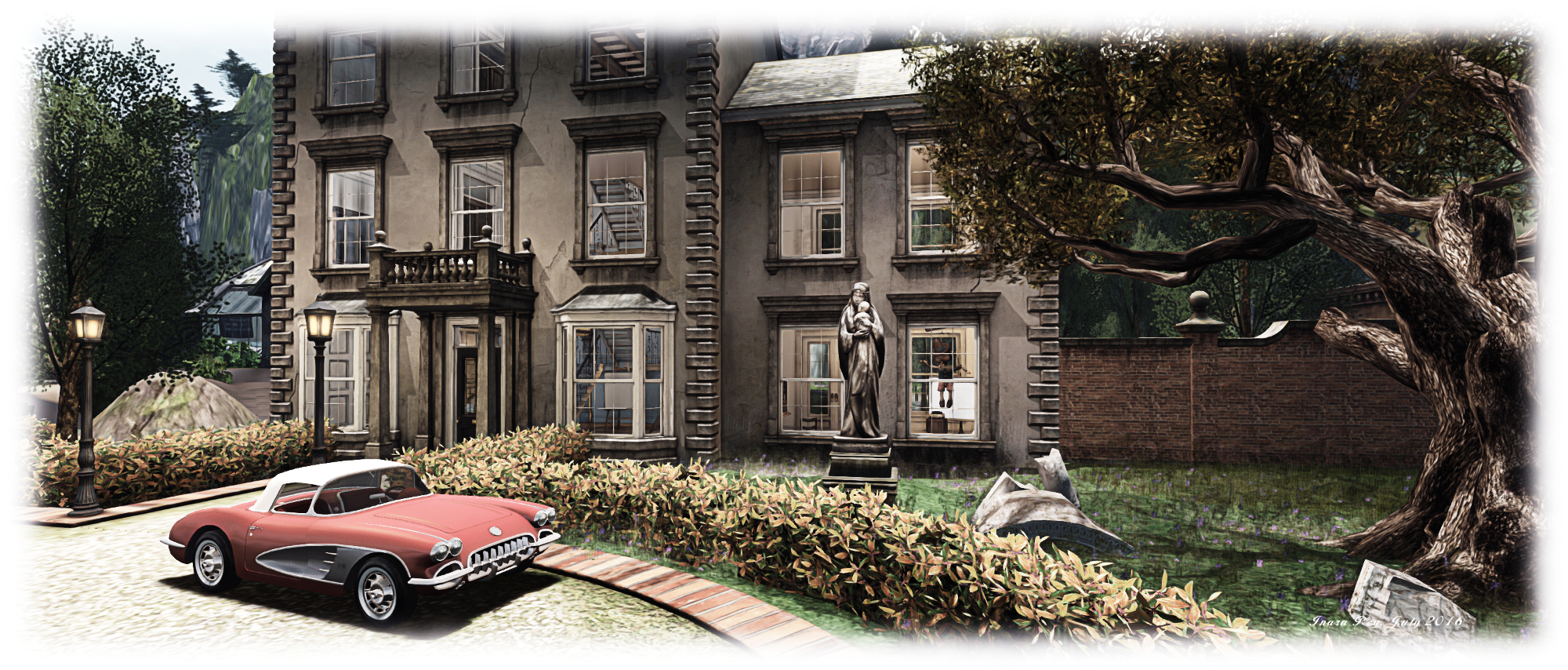
Hestium; Inara Pey, July 2016, on Flickr Hestium – click any image for full size

I first wrote about Hestium, the home of our friends Boudicca Amat and Anthony Westburn, back in October 2015.  The land forms both their private home and a public venue for exploration and storytelling – among her many talents, Boudicca is a landscape designer, a visual artist and a Voice artist.

More recently the land has been closed while Boudicca redesigned it, so I was delighted when she forwarded an invitation to Caitlyn and I to pay a visit as she and Anthony re-opened for public visits.

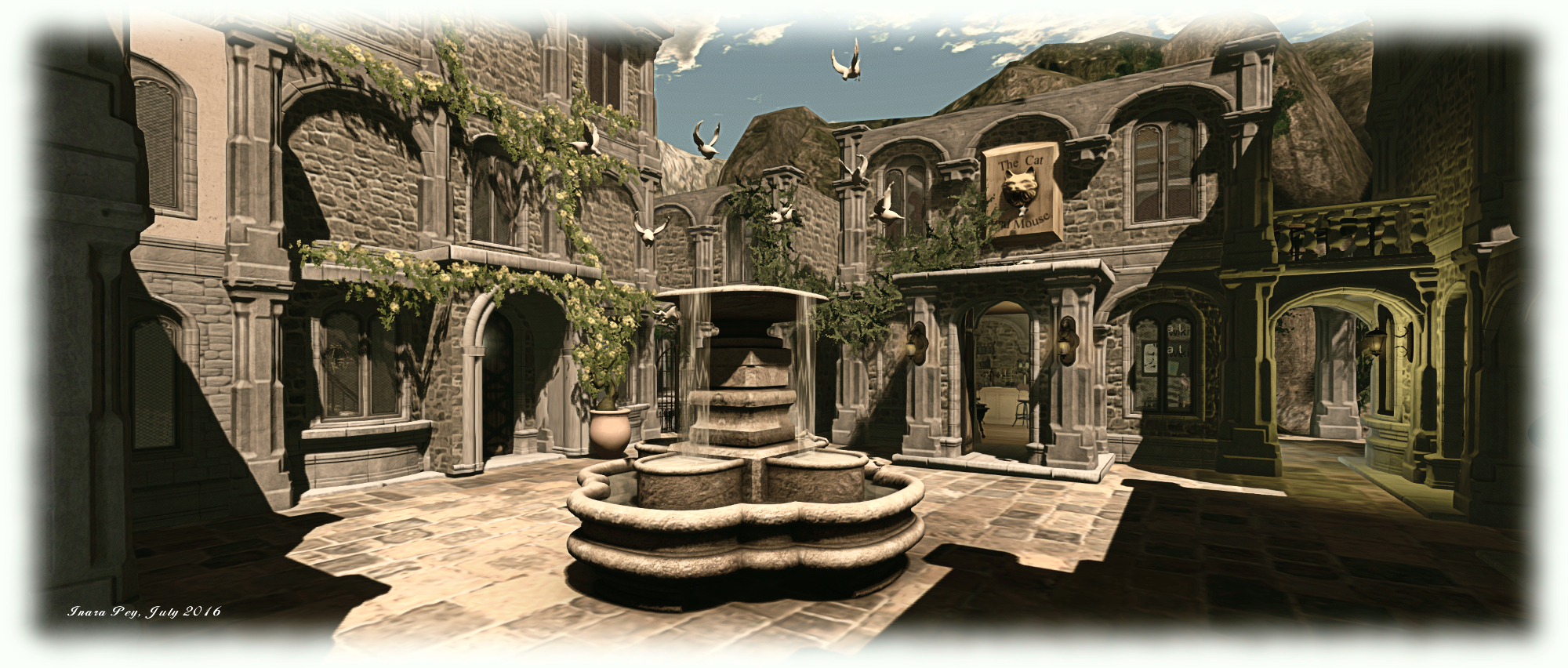
Hestium; Inara Pey, July 2016, on Flickr Hestium

For those familiar with Hestium of old, the new design contains much that is familiar whilst offering much that is new. The result is a pleasing mix of feelings: on the one hand, there is a sense of returning to a familiar, loved location, whilst on the other the sense of exploring somewhere new is reborn, allowing us to share the joy of discovery with making their very first trip to Hestium.

A visit starts at the landing point in the north-east corner over the land. Here, just beyond the greeting hanging gently in the air, a set of stone stairs (another things Boudicca and I share is a love of Alex Bader’s landscape kits!), which winds up the cliff to a small collection of buildings designed by Boudicca herself, arranged around a small, fountained square, with a terrace overlooking the beach and water below.

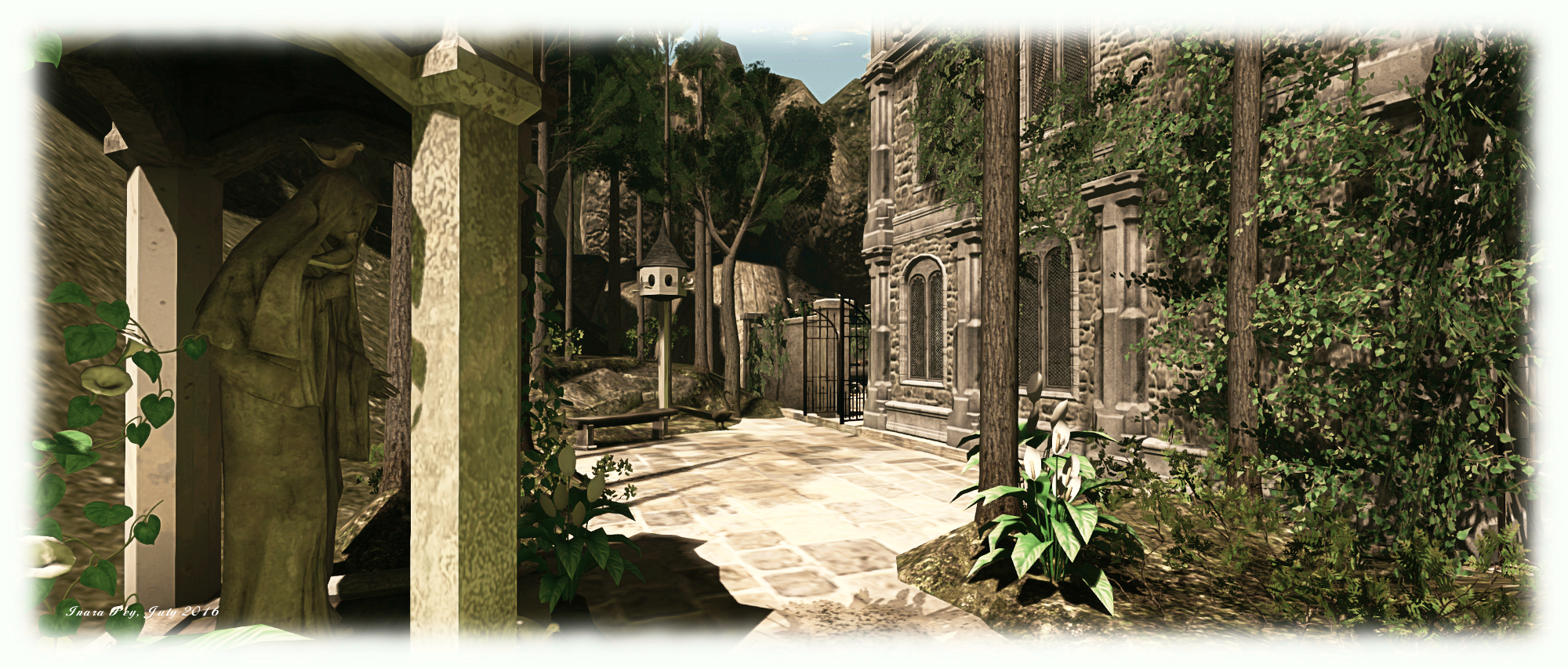
Hestium; Inara Pey, July 2016, on Flickr Hestium

It is here that Hestium’s stories begin. All of the apartments around this little piazza are furnished and apparently occupied. But by whom? And what are their stories? Why have they come here and settled? That is for you to decide: just open your mind, wander the apartments look through windows, peek around corners, down arched alleyways and behind homes and let your imagination take flight.

And if your love of stories runs deeper, and you wish to listen to a good book or tale, then be sure to drop into the Cat and Mouse, the pub in the square. It is here that Boudicca reads in Voice every Tuesday and Thursday between 15:15 and 16:00 SLT.

Hestium; Inara Pey, July 2016, on Flickr Hestium

Make your way through or around the buildings, and you’ll reach the cliffs on the north side of the land, where you can travel over rocky span and under rocky arch to where the rest of Hestium awaits.

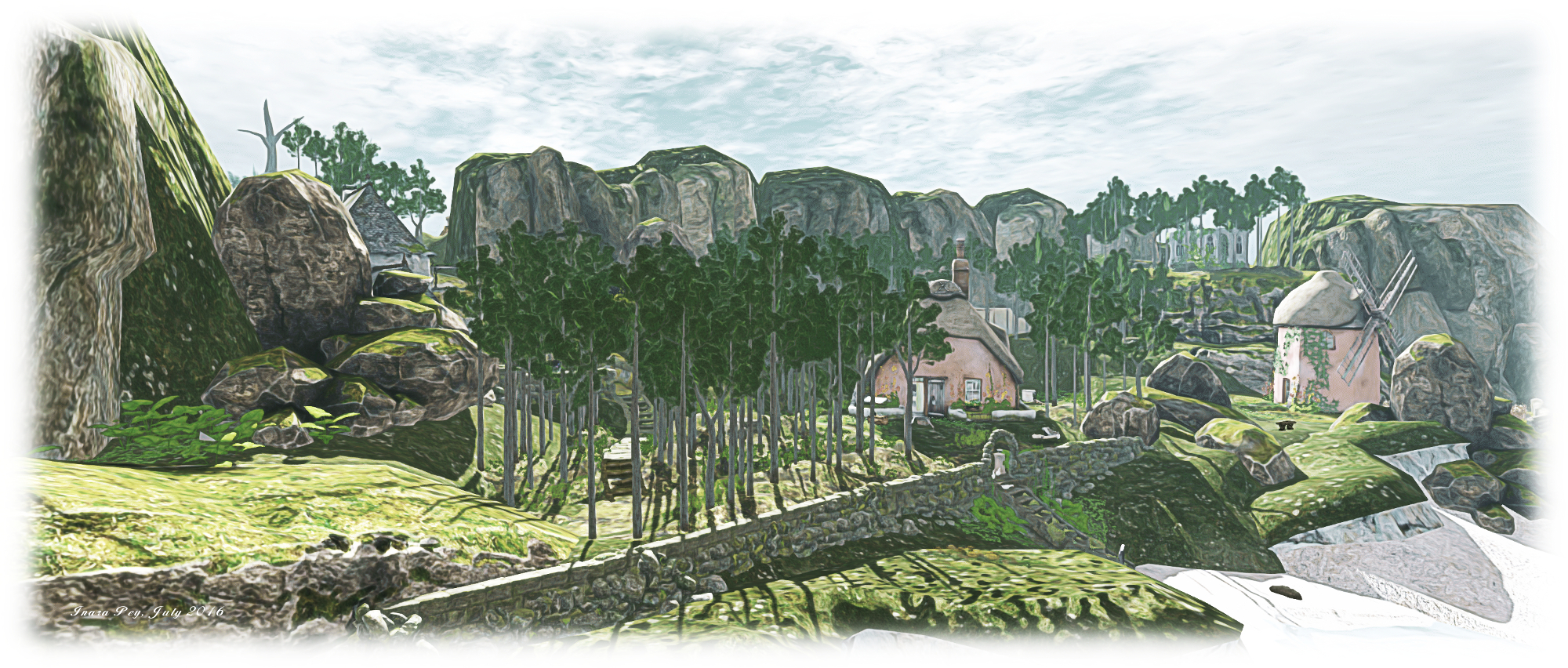
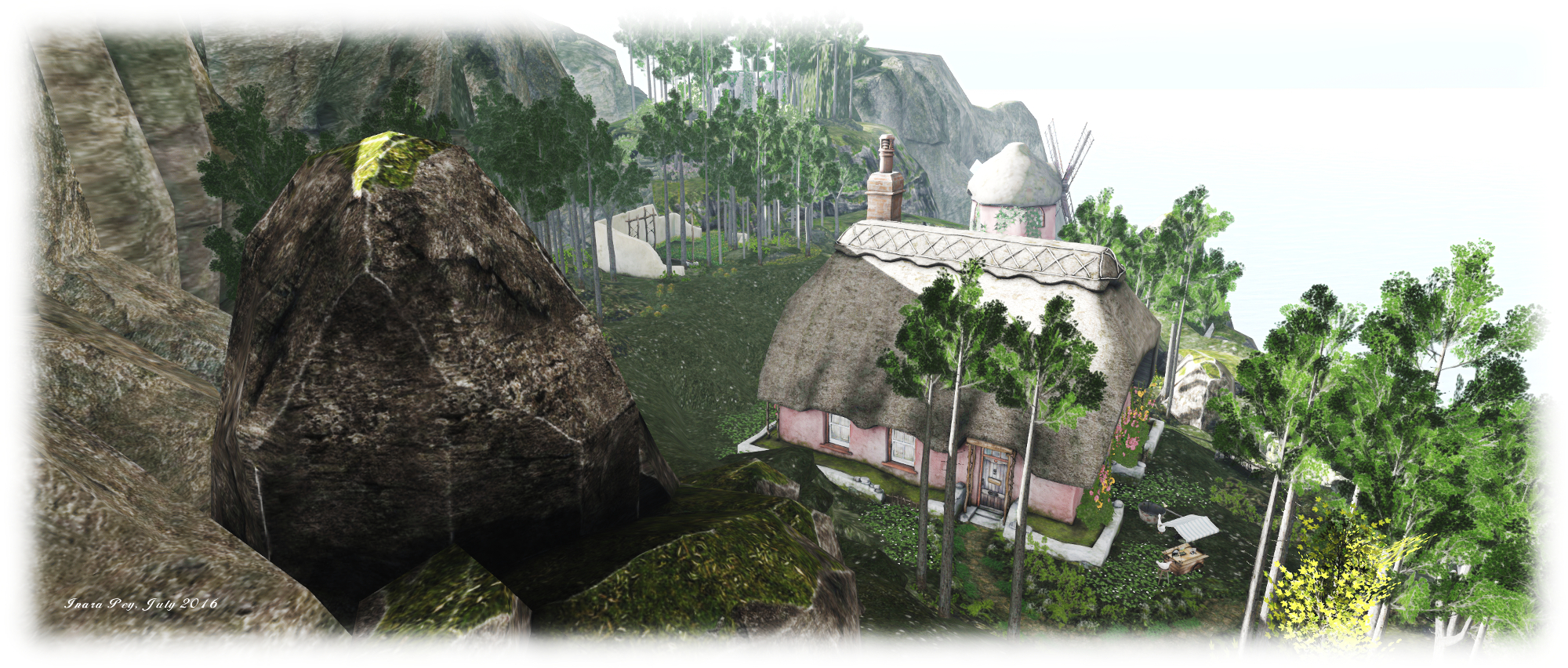
Here a path runs along – for those who remember Hestium from its last incarnation – a familiar sandy coast, behind and above which sits Boudicca’s and Anthony’s home (please do respect their privacy)  to a little pink cottage charmingly nestled between tall trees, and offering unspoilt views out over the sea. The path ends at the cottage, but walk around it, and you’ll find another leading to the pink windmill nearby, while not too far away sits the ruin of a small house and, up on the rocks and shaded from view, a crypt.

Hestium; Inara Pey, July 2016, on Flickr Hestium

Hestium has always been a marvellous place to visit, and with this new iteration, that tradition continues. Throughout the land there are numerous places to sit and pass the time – the terrace above the landing point, seats and benches scattered across vantage points and nestled on balconies. There are also many small touches to delight the eye – both Caitlyn and I came close to attempting squirrel-napping after seeing a little chap repeatedly raid a bird feeder during our explorations!

Congrats to Boudicca on the design and to her and Anthony on the re-opening.

SLurl Details

Hestium: where stories begin (Region rated: Adult; Hestium is requested PG)

Immaterial in Second Life: entries gather


Immaterial (via UWA)

At the end of June, I wrote about the start of the University of Western Australia’s new art challenge, IMMATERIAL, which is currently open to 2D, 3D and machinima artists through until July 31st.

While not a competition in the manner of the UWA’s Grand Challenges (there are no cash prizes or judging panel), IMMATERIAL offers those who enter the opportunity to have their entry displayed at the UWA’s Gallery, and featured in a companion exhibition catalogue, which will be published on-line as part of the UWA Studies in Virtual Arts (UWA SiVA) journal series.

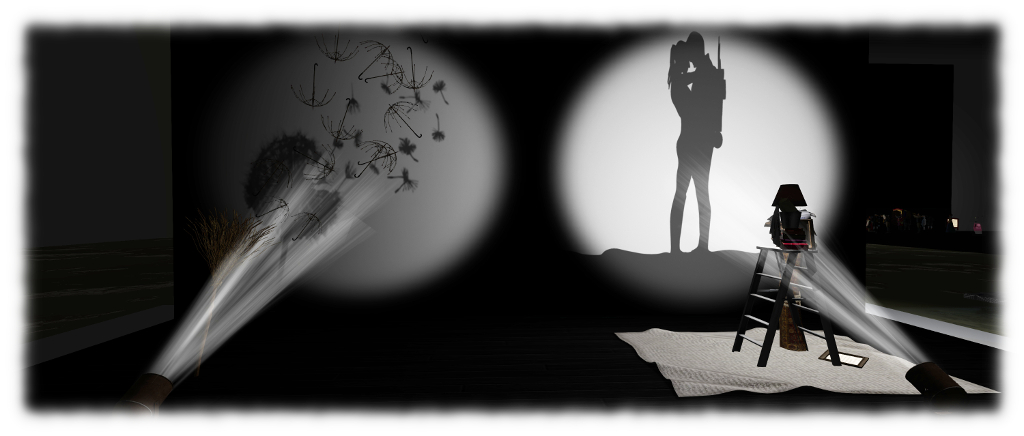
Krystali Rabeni: "If Wishes Were Kisses"
Krystali Rabeni: “If Wishes Were Kisses” – “Shadows are such straightforward things: cast a light on an opaque object, and a shadow of it is thus born,” Krystali says of the piece. “Yet shadows can be manipulated to resemble entirely different shapes…” And so a poignant message is born …

IMMATERIAL asks entrants to consider the concepts  light, shadows, textures, motion, and ideas, and to: Highlight the technologies of SL as a medium for creative expression. We especially want work that uses advanced techniques, in addition to objects per se.

As such, entrants are encouraged to work with mesh, materials, projected light and shadows, particles, pathfinding, avatar and object motion/animation and advanced scripting/interaction.

Since the announcement, entries have been arriving steadily, as they do, UWA’s curator, FreeWee Ling, has been putting them on display.

Yoon (Toyono): "The Dark Queen"
Yoon (Toyono): “The Dark Queen” – using projected light and a black background, Yoon creates a powerfully evocative image

As usual for such a UWA, the breadth of entries is quite breathtaking, and many of them deeply evocative, already marking this as an exhibition very much worthwhile visiting. I’ve selected just a small handful here as a sample to encourage you to do so, and repeat visits are recommended as the exhibition grows.

If you would like to submit a piece for IMMATERIAL, note that the deadline for submissions is 23:59 on July 31st 2016 at 11:59 PM SLT. You can find the full set of entry requirements on the UWA blog.

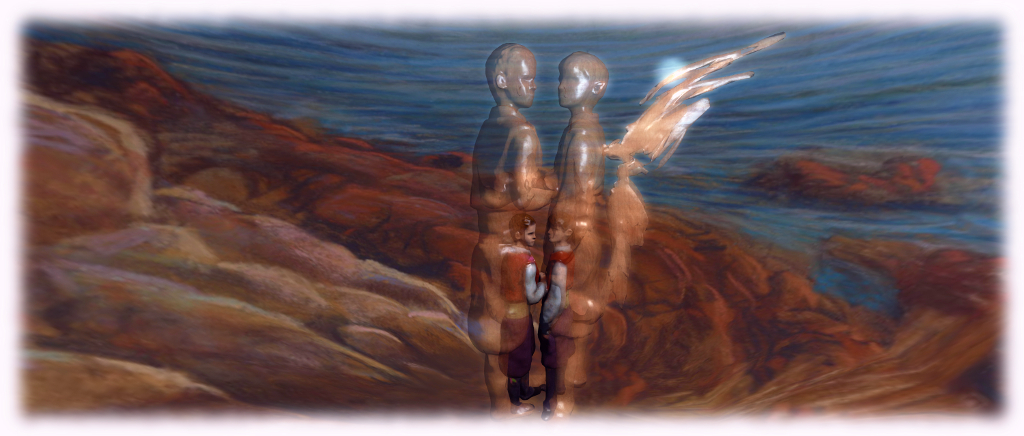
Silas Merlin: "Guardian Angels"
Silas Merlin: “Guardian Angels” – Silas says he was just having a little fun with this piece. The result is nevertheless stunningly beautiful

Related Links

SL project updates 16 29/1: server / viewer

Hermoupolis Village; Inara Pey, July 2016, on Flickr Hermoupolis Villageblog post

Server Deployments

On Tuesday, July 19th the server maintenance package previously deployed to all three RC was rolled-out to the Main (SLS) channel,described as “minor internal changes”. One of these sees worn scripts capped at a count of 2500. Attempts to add attachments which take an avatar over this limit should result in the attachments failing to wear.

Immediately following this deployment, there were some reports of local caps failures following region restarts. However, most of these now appear to have been corrected.

There  no deployment and no scheduled restart for the RC channels planned for Wednesday, July 20th, so the entire grid should remain on the same simulator release through until Wednesday, July 27th, when a new RC deployment is due.

Viewer Updates

There have been no further viewer updates since my last SL project update, leaving the list as:

  • Current Release version: 4.0.6.315555 (dated May 23rd), promoted July 5th – formerly the Inventory Message RC viewer download page, release notes
  • RC viewer:
    • Maintenance RC viewer, version 4.0.7.317394, dated  on July 8th – fixes and updates.
  • Project viewers:
    • Project Bento (avatar skeleton extensions), version 5.0.0.317597, dated July 14th – incorporation of final skeleton and slider updates from the test viewer  (download and release notes)
    • Visual Outfit Browser viewer, version 4.0.6.316422, dated July 1st – ability to preview images of outfits in the Appearance floater
    • Project VLC Media Plugin Viewer, version 4.0.6.316258, dated June 15th – replaces the QuickTime media plugin for the Windows viewer with one based on LibVLC
  • Obsolete platform viewer, version 3.7.28.300847 dated May 8th, 2015 – provided for users on Windows XP and OS X versions below 10.7.