Small World Art: lend a helping hand

Small World Art Gallery - sky galleries
Small World Art Gallery – sky galleries

Update, August 2016: Regrettably, and as a result of illness, Small World Arts Gallery has closed.

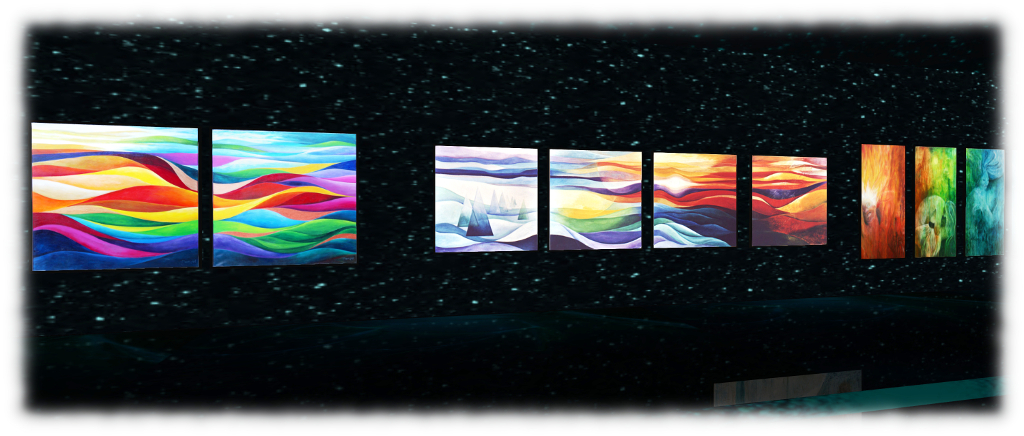
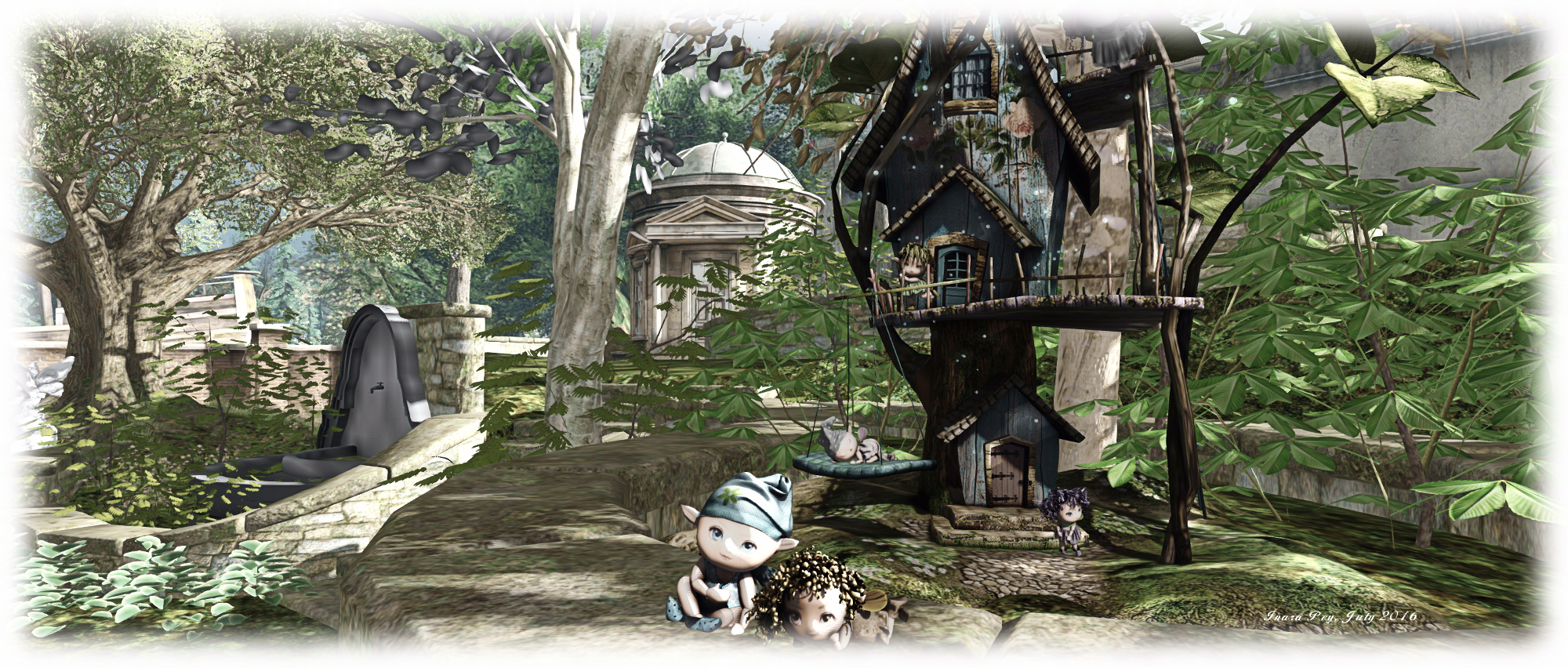
In May I wrote about the Small World Art gallery in Second Life. Operated by Mikey Jefford (mikeythai), Small World Art (SWA) is a region-wide complex featuring two large gallery complexes on both the ground level of the region and also overhead (where there are a number of satellite galleries.

The main galleries are host to displays by many Second Life photographers and artists, including (but not limited to) Silas Merlin, Mistero Hifeng, Giovanna Cerise, Toy Soldier Thor, Nino Vichan, Gem Preiz, ieko Catnap,  Kayly Iali, StarZ (StarZ33 McCullough), Gita Aura, Barret Darkfold, Harter Fall, Artée (Artistide Despres), Fafner Hofmann, Maghda – the list goes on.

Small World Art Gallery - Silas Merlin
Small World Art Gallery – Silas Merlin

Such is the extent of the art on display in and around the galleries, that more than one visit is needed to take everything in. However, Mikey Jefford was recently taken ill in the physical world, and is currently unable to log-in to SL to cover the cost of the region tier, thus putting the galleries at risk.

In order to avoid this and ensure that tier continues to be paid, the gallery’s designer, Addi Tachikawa (Adrienne Falconer) and Mikey in-world partner, Mrs candy  Jefford (candy68) have put out donation kiosks around the gallery. These record both total donated, and the amounts paid out in tier in respect of keeping the region open.

Small World Art Gallery featured artist Elin Egoyan

SWA has a lot to offer anyone with an interest in art, and represents a significant commitment to art is Second Life. I therefore have no hesitation in once again in recommending a visit, and urge all those who do to consider donating towards its continued existence. Even if you are donation box averse, remember a percentage of to price of all art sold in the galleries also goes towards maintaining the region – so even buying copies of the art your particularly like during a visit can help.

Should you like to help with keeping the region open in any other way, please IM Candy or Addie in-world.

SLurl Details

The SWA region (Sardegna) is rated Adult.

Space Sunday: looking back, looking forward, looking inside

A composite image: The Apollo 11 Saturn V on LC 39A during a countdown demonstration test on July 11th, 1969, and the Apollo 11 crew (l to r): Commander Neil Armstrong; CSM Pilot Michael Collins and LEM Pilot Edwin "Buzz" Aldrin
A composite image: The Apollo 11 Saturn V on LC 39A during a countdown demonstration test on July 11th, 1969, and the Apollo 11 crew (l to r): Commander Neil Armstrong; CSM Pilot Michael Collins and LEM Pilot Edwin “Buzz” Aldrin. Credit: NASA (both)

July 20th marked two anniversaries, the first manned landing on the Moon (July 20th, 1969) by Apollo 11, and the first American automated soft-landing on Mars with Viking Lander 1 (July 20th, 1976). As such, I’m starting this Space Sunday with a short look at both events.

Apollo Lunar Module (LEM) Eagle arrived on the surface of the Moon at 20:18:04 UTC on July 20th, 1969 after being launched atop a Saturn V rocket along with Neil Armstrong, Michael Collins and Edwin “Buzz” Aldrin from the Kennedy Space Centre Launch Complex 39A at 13:32:00 UTC on July 16th, 1969. It was the culmination of John F. Kennedy’s vision to re-assert America’s industrial and technological leadership in the world.

This composite of images from NASA's Lunar Reconnaissance Orbiter (LRO) mission from 2014 highlight elements of the Apollo 11 landing site on the Moon - notably the lower section of the LEM and some of the science equipment
This composite of images from NASA’s Lunar Reconnaissance Orbiter (LRO) mission, released in 2014 highlight elements of the Apollo 11 landing site on the Moon – notably the descent section of the LEM and some of the science equipment – watch the video

The land was dramatic in every sense of the word. On separation from the Command Module, the LEM immediately experienced issues communicating directly with Earth, then there were the infamous 1202 master alarm which triggered the LEM’s landing computer to re-boot itself, followed by a 1201 alarm. Then there was the discovery that, fair from being smooth and flat, the main landing site was boulder strewn, forcing Armstrong to fly the LEM to the limits of its available descent fuel in order to find a suitable landing area.

Armstrong finally set foot on the Moon on July 21st at 02:56:15 UTC, after he and Aldrin (the LEM Pilot)  had been given the opportunity to rest. Aldrin followed Armstrong down the ladder 20 minutes later, and together they spent about 2.5 hours on the surface, collecting 21.5 kg (47.5 lbs) of lunar material for return to Earth. Their total time on the Moon was short – just under 22 hours – but Aldrin and Armstrong between them, seen in fuzzy black-and-white television footage and (later) crisp photos, forever changed humanity’s perception of the Moon and its place in the cosmos.

To Mark the 47th anniversary of the landing, which also saw Collins remain in orbit piloting the Command and Service Module (CSM), The National Air and Space Museum in Washington, DC has produced a 3D tour (with other goodies) of the Apollo Command Module Columbia, as seen from the pilot’s (Collin’s) seat. This can be run in most browsers and offers a first-hand tour of the vehicle.

For those who prefer a visual record, NASA issued a restored film of the entire Apollo 11 EVA on YouTube in 2014. Or you can re-live the entire mission in just 100 seconds, courtesy of Spacecraft Films, which I’ve embedded below.

Apollo 11 was the first of six missions to the Moon (Apollo 13 being famously aborted after a critical failure within the Service Module whilst en route to the Moon), which concluded on December 19th, 1972, when Apollo 17 splashed down in the South Pacific Ocean, the only Apollo mission to fly a fully qualified geologist to the Moon (Harrison Schmitt).

In the 44 years since the end of the Apollo lunar project, human spaceflight has been confined to low-Earth orbit and will not move beyond it until the 2020s (with the uncrewed Exploration Mission 1 serving as the preliminary flight for that move in 2018). As such, it is all too easy to dwell on the political motivations which led to the programme, rather than on the phenomenal achievement Apollo actually was. Today’s plans for moving beyond LEO once more, and for sending Humans to Mars, may seem long overdue but they nevertheless build on the foundations laid down by Apollo.

The first "clean" image of the surface of Mars returned by Viking 1 on July 20th, 1976
The first “clean” image of the surface of Mars returned by Viking 1 on July 20th, 1976. Credit: NASA / public domain

Viking Lander 1 arrived on the surface of Mars seven years to the date after Apollo 11 arrived on the Moon – although that hadn’t been the original intent. 1976 saw the United States celebrating its bicentennial, and it had originally been intended that the Lander would touch-down on the Red Planet on July 4th of that year.

However, after arriving in orbit on June 19th, 1976, the Viking orbiter craft used its imagining systems to survey the proposed landing site, which had been “scouted” from orbit  by the Mariner 9 mission  – the first vehicle to orbit Mars – in 1971 / 72. Unfortunately, the Viking orbiter’s much more capable cameras revealed the primary landing site to be far rougher than had been believed, leading to a decision not to land there, but to survey the back-up sites prior to committing to a landing on July 20th, and thus to instead celebrate Apollo 11’s triumph instead of America’s Independence Day.

Given the state of play of planetary exploration at the time, Viking was a massively impressive mission: two orbiter vehicles launched back-to-back, carrying two lander vehicles in turn carrying an impressive set of 5 experiments intended to seek signs of life on Mars. At the time, no-one actually knew the density of the Martian upper atmosphere or the load-bearing strength of the Martian surface or what they might actually find on the surface. There were genuine fears that the latter might be all dust, and the lander could simply dig itself a hole when firing its retro-rockets at the final point of landing and then fall into it, or if it did arrive safely, whether it might sink into the Martian dust; hence why the first image to be returned by the lander following touchdown prominently featured one of its own landing pads (above).

Continue reading “Space Sunday: looking back, looking forward, looking inside”

A Watercolour Wander in Second Life

A Watercolour Wander

Physical world / Second Life artist Ceakay Ballyhoo has a new region-wide exhibition currently open in Second Life. A Watercolour Wander, which will run through until the end of the year, brings together art and storytelling guaranteed to awaken our inner child and bring back memories of childhood imaginings set free whenever a blank sheet of paper and palette of watercolours were place before us, or the unwritten page and sharpened pencil placed in our hands.

“The idea started to form some months ago when I started to paint watercolours,” CK (as she is known to friends) states. “I’d been playing with making my own textures through watercolour paint and watercolour pencils a while before that … The idea of walking into a painting has always been a very attracting and intriguing one. Ever since reading Stephen King’s Rose Madder and later watching Robin Williams in What Dreams May Come, the wish to do something with that concept has been on my mind.”

A Watercolour Wander

And thus, A Watercolour Wander is just that – a walk through a landscape rendered as a watercolour. But not just any watercolour; this one forms a part of a story, the text of which is provided as part of the introductory notes offered to new arrivals, and which should be read as an accompaniment to any exploration (you can also read the story on CK’s blog). In it, a little girl, tired from the exertions of the day is slowly drifting to sleep when she realises her bedroom has vanished, to be replaced with a newly painted watercolour landscape, a path on the ground running from her bedside and into the trees, inviting her on an Adventure.

Staring from the from the little girl’s bed, we are invited to follow that path, scenes from her adventure presented to us in both 2D paintings and unfolding across the landscape before us: Mr. Nut, the squirrel, Pinkie Papillon, the gurgling river. Each painting marks a step in a story which – as is the nature of a good children’s story – has by turn its lighter and darker moments before all turns out well in the end.

A Watercolour Wander

The story is engaging, and very much as part of the overall experience – but it is the paintings and landscape that capture the attention. Beautifully rendered, the colours slightly washed and the outlines of trees and rocks and buildings perhaps outlined a little heavily, they perfectly embrace the idea that they have been painted by the little girl of the story to illustrate her dreamworld adventure; the reflections of a personal story imagined by a young mind.

The images from the story are all available at the end of the walk, together with a painting of a mermaid. CK has also created a Flickr group for those wishing to post their own wanders through her watercolours.

SLurl Details

Secret plans, alien missions, childhood memories and toyland tribulations

It’s time to kick-off a week of story-telling in voice, brought to our virtual lives by the staff and volunteers at the Seanchai Library. As always, all times SLT, and events are held at the Library’s Second Life home at Bradley University, unless otherwise indicated.

Sunday, July 24th 13:30: Tea Time at Baker Street

Tea-time at Baker Street returns for the summer, featuring a new location – 221B Baker Street at the University of Washington in Second Life, and a return to His Last Bow.

A 1917 anthology of previously published Sherlock Holmes stories by Sir Arthur Conan Doyle, the volume originally comprised seven stories published by The Strand Magazine between 1908 and 1917. However, later editions of the book saw an eighth story included, The Adventure of the Cardboard Box, originally published in 1892. This week sees Holmes and Watson engaged upon The Adventure of the Bruce-Partington Plans.

Despite his frequent appearances in various television series depicting the life and times of Sherlock Holmes, Mycroft Holmes only appears, or is mentioned, in just four of Conan Dyole’s tales, this being one of them – actually the one which marked his final appearance in the original canon.

The adventure starts when Mycroft visits Holmes about missing submarine plans and a dead man. The latter is Arthur Cadogan West, formerly a young clerk in a government office at the Woolwich Royal Arsenal, who was found dead next to the London Underground tracks near Aldgate tube station, his head apparently crushed by a passing train. The plans for the Bruce-Partington submarine were found on his body – with three pages missing. Mycroft’s concern is that they’ve been taken by enemies of the Crown.

Not only is there the mystery of the missing pages for the submarine plans, there is much about Arthur Cadogan West’s death which does not add-up; why, for example, was he carrying top-secret plans about his person while apparently due to visit the theatre with his fiancée? Why is there no Underground ticket about his body? Did he manage to travel the service without a ticket, or did someone take it? If the latter, why?

Holmes responds to his brother’s request for help on behalf of the British government – noting to Watson along the way that Mycroft actually is the British government – and thus the adventure begins …

Monday July 25th To the Vanishing Point

vanishing pointGyro Muggins continues his Monday Night treat of sci-fi with Alan Dean Foster’s To the Vanishing Point.

When Frank Sonderberg insists his family make their annual vacation a road trip, his wife and kids are less than impressed. When he pulls over to the side of the road to pick up a beautiful young hitch-hiker apparently stranded in the desert, his wife definitely isn’t impressed.

But no sooner has the young woman, calling herself Mouse, boarded their motor-home than reality changes – and not necessarily for the better. Mouse, it turns out, is an alien on a mission and in picking her up, the family is inextricably joined with her in that mission. The universe, with all its many realities, is coming apart because the Spinner, the creator of those realities, has a headache. Mouse has the cure, but in order to give it, she must reach the Vanishing Point – and she needs the Sonderbergs to get her there.

Tuesday July 26th, 19:00: Blueberry Summers: Growing Up at the Lake

Kayden Oconnell reads from Curtiss Anderson’s classic coming of age memoirs.

BlueberryBorn in 1928 in Minneapolis, Curtiss Anderson grew up in an extended family of Norwegian-Americans, among whom the highlight of the year was time spent among the lakes of northern Minnesota.

For young Curtiss, growing up in the 1930s and 1940s, these were especially idyllic years. Time spent in the farmhouse among this extended family presented an opportunity for him to escape the strained and troubled relationship he had with his parents and enjoy the company of others, aunts and uncles, the loving care offered by family friends Leigh and Clara, the companionship of the family dogs – and the chances to experience young love of his own.

Through the tales he relates of these summers, so Anderson also explores the notes and letters he wrote as a boy, carefully produced on a hand-me-down typewriter. Missives and notes which, although he never realised it at the time, were in fact his first forays into what would blossom in his adult life into a distinguished career as a writer, editor and publisher.

Wednesday July 27th 19:00: Ollie’s Odyssey

OllieCaledonia Skytower concludes William Joyce’s children’s tale about Oswald (or Ollie, or Oz), a stuffed rabbit and favourite of young Billy. Oz goes everywhere with Billy, until one day, he is accidentally left under a table during a wedding, and is kidnapped by the wicked Zozo.

An unwanted amusement park prize, Zozo hates all toys that are favourites; so much so that he doesn’t just want them lost – he wants them forgotten by everyone – and he has gathered other embittered toys to his cause.

Now Oz must work to not only rescue himself and get back to Billy, he must ensure all the other “lost” toys reach safety.

Thursday, July 28th

19:00: Christmas in July

With Shandon Loring – also in Seanchai Kitely.

21:00: Seanchai late Night

With Finn Zeddmore.


Please check with the Seanchai Library SL’s blog for updates and for additions or changes to the week’s schedule.

The featured charity for July-August is WildAid: seeking to end the illegal wildlife trade in our lifetimes by reducing demand through public awareness campaigns and providing comprehensive marine protection.

Additional Links
Of time in Elysium City in Second Life

Elysium City of Templemore; Inara Pey, July 2016, on Flickr Elysium City of Templemore – click any image for full size

Whilst perusing the latest Destination Guide Highlights, I was pleasantly surprised to see a new entry for the Elysium City of Templemore. by Luis Lockjaw. In the past, I’d visited the old Hesperia of Templemore, but never managed to blog about it; the closest I’d come was a piece on isle of Mousai, Templemore’s former sister region, also designed by Luis. So the new DG entry spurred me into jumping over and correcting things.

A new design this may be, but the magic of the “old” Templemore is retained. Folded within the within the arms of tall mountains, and reached only by the single channel of water cutting between them, there is a sense that Elysium City lies hidden from the rest of the world. It is a place which invites exploration and which suggests stories lying just around the next corner or behind each door – a place which awakens the imagination and draws the visitor into its tales and whimsy.

Elysium City of Templemore; Inara Pey, July 2016, on Flickr Elysium City of Templemore

From the landing point in the west, bordered by a narrow band of beach curving away to the north and south, you walk across sandy grass to the city gates, standing slightly ajar and silently beckoning.  A short walk away, across sandy grass, the city gates beckon, drawing you to them, and the cobble streets beyond. Step through them and you enter a new realm, a place where time both passes with a steady heartbeat whilst everything also seemingly caught within a single moment.

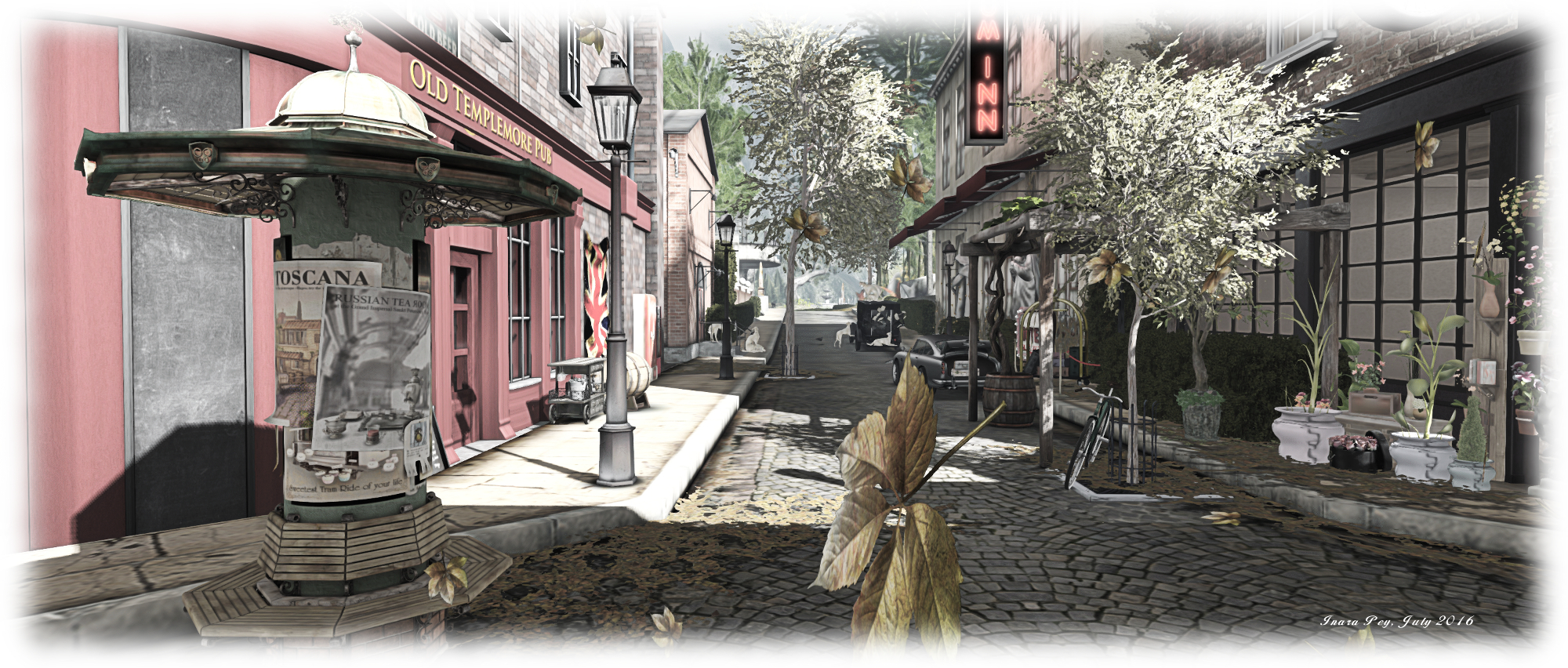
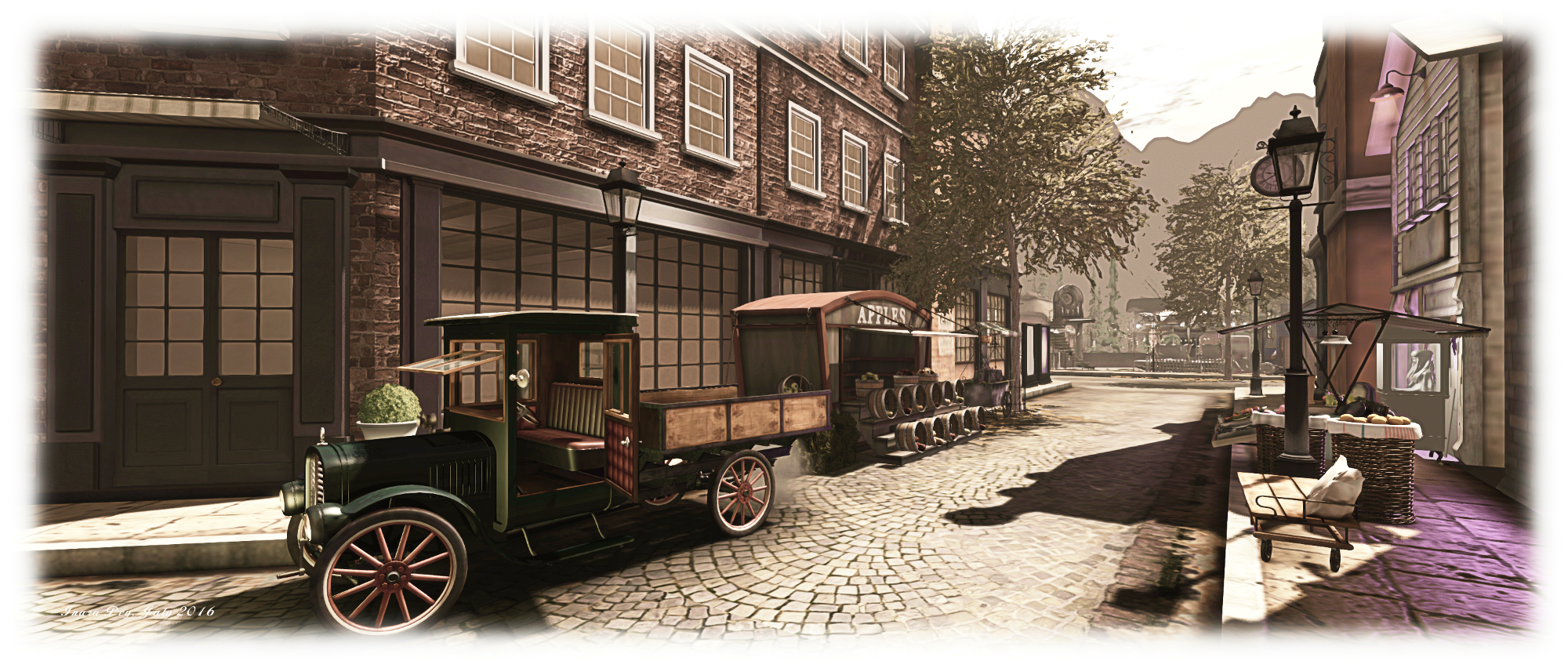
The cobbled streets, mostly bordered by tall brick buildings of a bygone era, appear at first glance to have been lifted from the heart of an English metropolis -but look again. Among them sit Tuscan villas and French street café booths, while a distinctive American wood-framed house sits within an eerie green light, drawing you towards its hidden mystery.

Elysium City of Templemore; Inara Pey, July 2016, on Flickr Elysium City of Templemore

To the north and south sit a tall factory and the Elysium Theatre, their respective bulks standing sentinel-like on either shoulder of the city.  Along the streets, clocks hang from walls marking the passage of time, yet pages from a book and leaves freed from their life on boughs, hang motionless in the air, whilst statues watch all who pass before them.

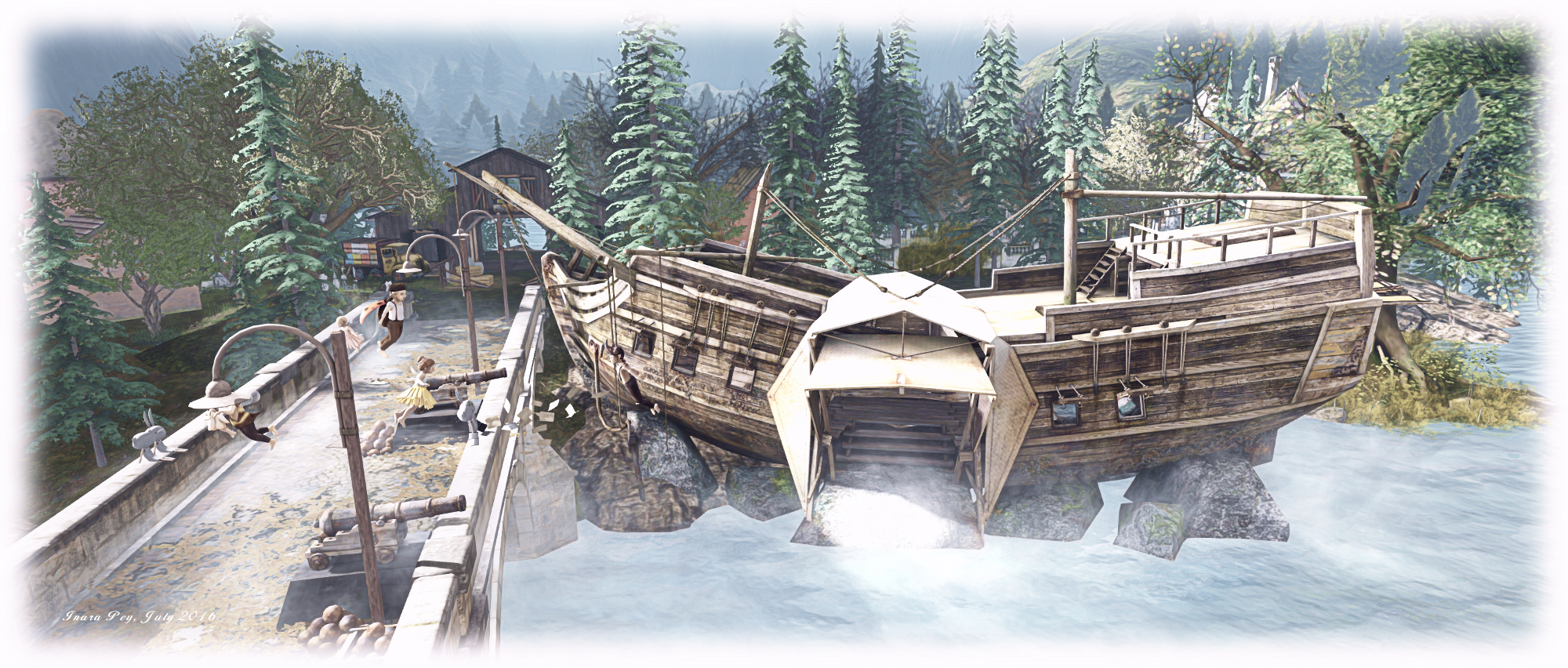
Eastward, across the city, lies a river spanned by a single bridge, its arches shrouded in mist, the wreck of a once proud brig, now broken against the rocks. Winged fairies, like brightly coloured lost Boys and Wendys, hover over bridge and water, and while the ticking of a clock cannot be heard, it’s not hard to look down at the misted waters and imagine the tick of one echoing faintly from under an arched span of the bridge…

Elysium City of Templemore; Inara Pey, July 2016, on Flickr Elysium City of Templemore – click any image for full size

Beyond the river, the city gives way to a rustic setting, wherein sits a little farm, a loose wooden board walk pointing the way to another mansion-house rising above the trees. This area is a place of whimsy and smiles, as can be seen as soon as you reach the end of the bridge.

As noted at the top of this article, music is still at the heart of Templemore, and the landing point gives news on upcoming events (at the time of writing, the next concert was due to be held on Sunday, July 24th from 13;00 SLT).

Elysium City of Templemore; Inara Pey, July 2016, on Flickr Elysium City of Templemore – click any image for full size

Elysium of City of Templemore is a joy to visit. While there are welcome echoes of Hesperia for those who remember it, the City offers a richly layered sense of immersion which is entirely its own. The mix of urban and rustic settings is perfect, and needless to say, photo opportunities abound, both under the atmospheric default windlight and in those of your own choosing.

If you’re so minded, your photos are welcome in region’s Flickr groupShould you enjoy your visit, please consider a donation towards the region’s future upkeep.

SLurl Details

Giovanna’s Soul of Colours: a Magic Flute in Second Life

Soul of Colours: Variations in the Magic Flute
Soul of Colours: Variations in The Magic Flute

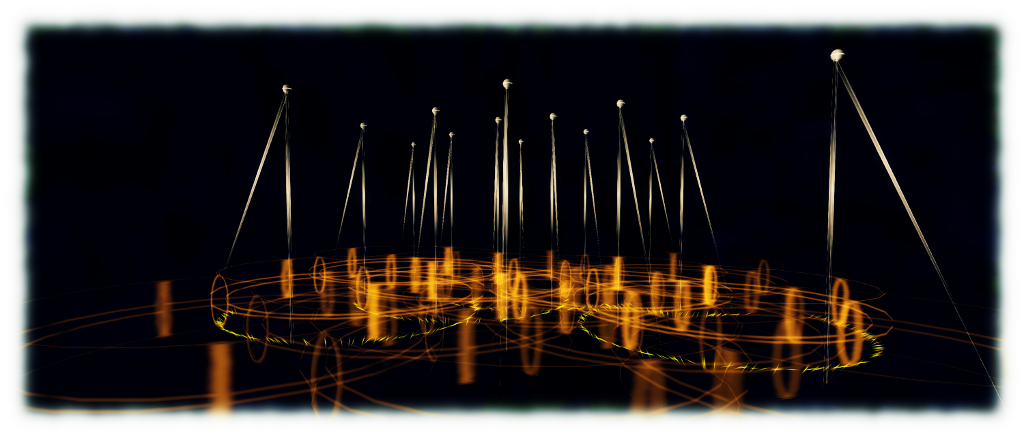
Now open at LEA 21 is the first part of Giovanna Cerise’s Soul of Colours, an installation which will unfold over the coming months. For this initial instalment, open through until the end of August, Giovanna presents Variations in The Magic Flute, based on the 2-act opera Die Zauberflöte (The Magic Flute, K620) by Wolfgang Amadeus Mozart, an opera which has, in my opinion at least, one of the most rousing and engaging overtures ever written.

This is an installation which first appeared in-world some four years ago, and which takes the visitor on an interactive, allegorical journey of light, colour and sound through key elements of the opera, complete with extracts of the music from some of the key events in the unfolding story.

Soul of Colours: Variations in the Magic Flute
Soul of Colours: Variations in The Magic Flute

Premiered just two months before Mozart died prematurely, on September 30th, 1791, The Magic Flute is, at its heart, a love story, focusing on handsome Prince, Tamino and Pamina, daughter of the Queen of the Night, and involving an additional tale of desire and love between Papageno and Papagena, as well as the aforementioned Queen of the Night and her handmaidens and the enlightened Sarastro and his retinue.

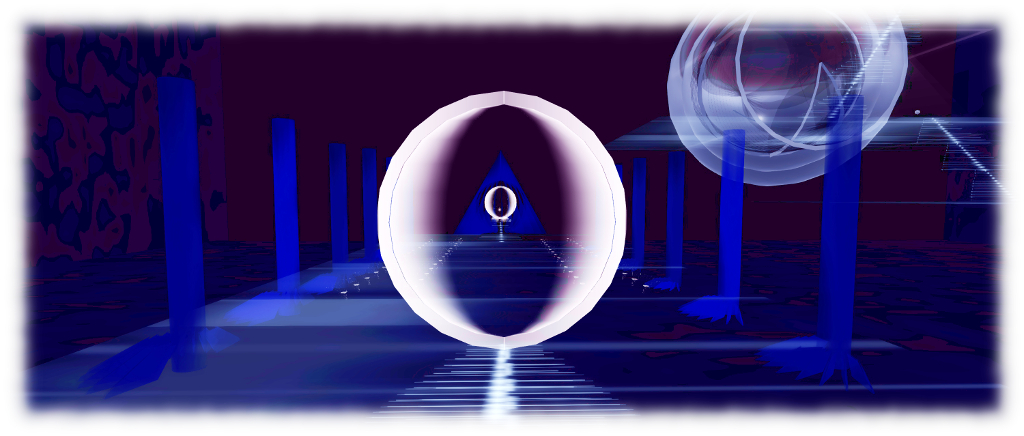
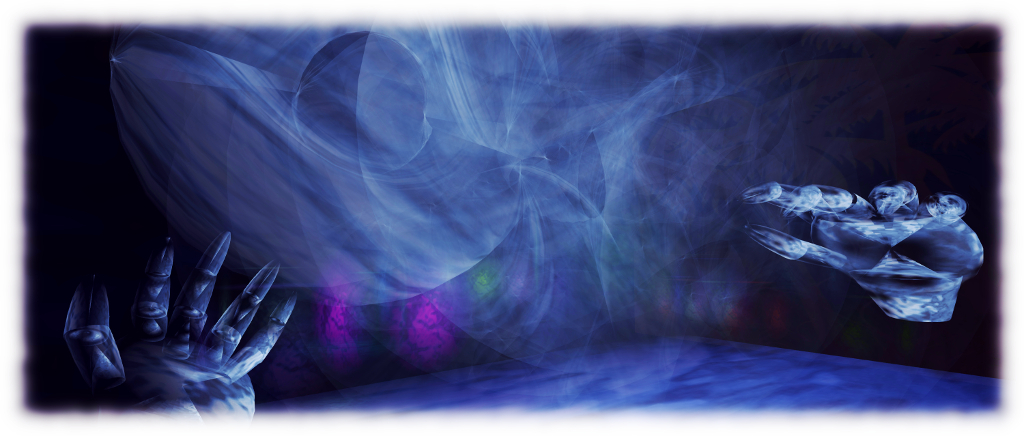
Within Variations in The Magic Flute, Giovanna invites visitors to engage on a journey through key scenes and events from the opera: the grove with its serpent, where Tamino is rescued by The Queen of the Night’s three ladies in the opening scene; an expression of the Queen’s anger from Act 2, Scene 3, Der Hölle Rache kocht in meinem Herzen (“Hell’s vengeance boils in my heart”); allegorical representations of Sarastro’s garden, pyramids and the Temple of the Ordeal / Temple of the Sun (which it is depends on your interpretation of the opera as you come to it).

Soul of Colours: Variations in the Magic Flute
Soul of Colours: Variations in The Magic Flute

Passage through these scenes and locations is a matter of ascension  – something which is itself an allegorical reflection of the opera’s story, following Tamino’s  rise from the Queen’s deception into the enlightenment of Sarastro’s benevolence and also the rising triumph he and Pamina share in overcoming their individual trials and tribulations to finally be united in their love.

Passage between the levels / scenes are via crystal staircases (also triangular in shape, reflecting the pyramids of Sarastro’s domain), although you can fly if you wish. I’d personally recommend the former, as the latter does run the risk of missing things.

Soul of Colours: Variations in the Magic Flute
Soul of Colours: Variations in The Magic Flute

The interactive elements come in the form of music spheres which will play excerpts from the opera,together with locations where you can sit, and animations which will place you within some of the scenes. You can, for example, be tossed around by the vengeance which rocks the Queen’s dark heart.

I have no idea of the direction Soul of Colours will take from the start of September. I will, however, say that as I missed Variations in The Magic Flute when it was first displayed, I’m delighted to be able to visit it this time around; Giovanna and I appear to share something of the same taste for musical inspiration. With this piece, she has captured the essence of the story through a marvellous symbolism, while the use of light perfectly captures the heart of the music.

SLurl Details