There has recently been another round of phishing attempts to get second Life Users to try to provide their account credentials.
As a result of these attempts, on Friday March 11th 2016, Linden lab issued a reminder to users on the subject of account security in the form of a blog post.
In keeping with the request from the Lab to share the information, I’m reproducing the blog post in full below:
As with any online service, Second Life Residents may from time to time be targeted with phishing attempts, which try to trick users into providing personal information and account credentials.
These attempts may include messages – including in-world IMs and emails trying to appear as if they were sent from Linden Lab – that prompt you to click on a link and/or provide personal information.
To help keep yourself safe from these tricks, remember:
If you receive a suspicious IM, file an abuse report against the sender even if the sender looks like your friend. After stealing an account, a fraudster often tries to trick the victim’s friends.
If you feel your account has been compromised, contact Second Life Billing through the Support Portal right away. (Better yet, call us at the number provided on the Support Portal)
Keep your anti virus software up-to-date and scan for viruses regularly.
You can change your account password; do so frequently to keep your account secure. If you suspect you’ve already clicked a phishing link, change your password immediately.
If you have multiple accounts, use a different password for each account.
Never reuse your Second Life password for your email account or any other website.
Your password should be easy for you to remember, but hard for others to guess.
If you think you entered your credit card information into a fake email or website, contact your bank immediately!
Help your fellow Second Life Residents keep their accounts secure by sharing this post with them. Bookmark it, and the next time you see phishing attempts in group chat, share this post to help educate others. You can help put phishers out of business.
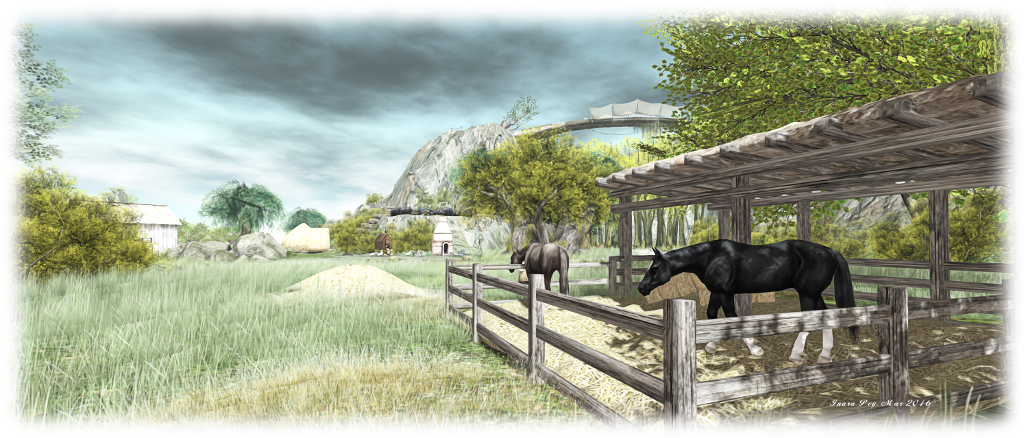
“Because it all started with a Mill and a sink. Welcome to our house, decorated by us. Hope you like it as much as we do!” So reads the description for The Mill, the homestead region designed by Maxie Daviau and Shakespeare (Skinnynilla). And to be sure, there is absolutely nothing not to like about this picturesque location, positively packed with sights and photo opportunities, as well as offering numerous places to simply sit and relax.
The landing point delivers visitors close to the centre of the region, on its eastern, lowland side. The fork in the dirt track where you arrive is an open invitation to start exploring, forward toward the rugged uplands of the west side of the region, eastwards and south towards a wooden windmill, or north towards the lighthouse sitting on a shoulder of the hills.
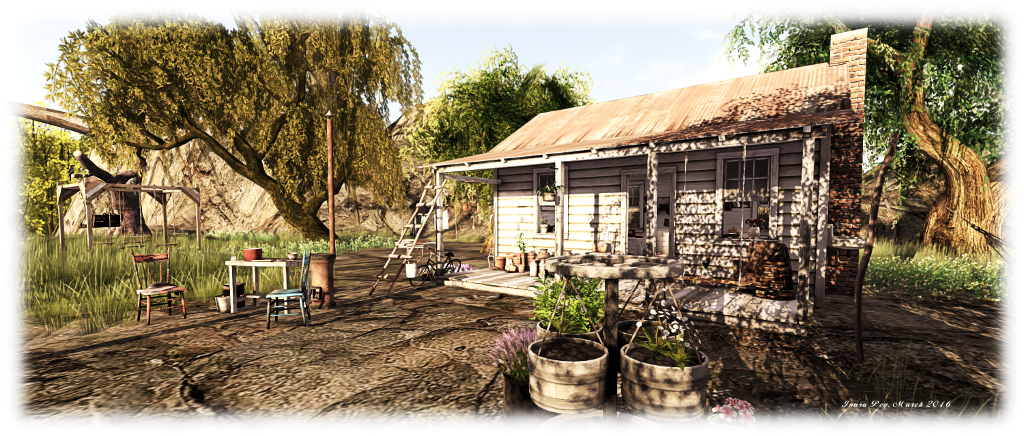
Caitlyn and I opted to follow the track north, towards the rocky hills, a set of stone steps leading us upwards. As we climbed, and amidst the singing of the birds and distant caw of gulls, came music of a different kind carried on the breeze. This comes from a little radio sitting within a little shack, slightly tired in appearance, wood bleached and weathered, tin roof rusting.
Tired it may look, but the shack is clearly home to someone. Flowers are tended in buckets outside, a hammock sways in the breeze and washing hangs on the lines to dry. A garden hose and sprinkler curled around an old tree stump raised on one side of the shack suggests whoever lives here enjoys a slightly bohemian touch to their life, and happily so, given the books and general bric-a-brac scattered around.
Behind the shack, a path leads on upwards to the tops of the rugged hills, the way marked by a rope path. Here sits old ruins, split by a deep box gorge. To one side sits the remnants of a small castle or fortified house, now occupied by trees, bent as with age by long exposure to the wind, their stooped forms suggesting they are ancient guardians of this place. Across the gorge, and reached by the stone span of a bridge, sits a ruined chapel and nearby tower, another path from them leading back down to the lowlands for those who wish to explore in that direction.
To the north of the homely little shack, the path will take visitors up over the rocky hills or down stone steps and past a walled garden and greenhouse and, via more steps, to the lone figure of the whitewashed lighthouse. With the warm and comfortable lounge and bedroom inside, this would seem to be the rest of the home started at the shack, the cosy little garden forming a homely link between the two.
A beach beckons from below the lighthouse, and can be most quickly be reached via a zip slide which passes over a small inlet. Stone and board paths then led you onward, over water or across sand, towards the old wooden mill, sails slowly turning as it faces the revolving eye of the lighthouse across the land.
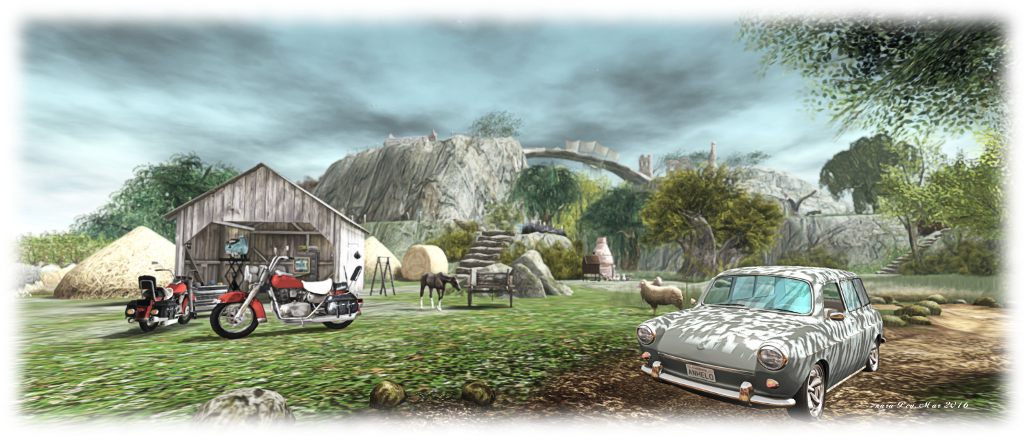
Fabulously and naturally landscaped while avoiding a reliance on mesh to achieve its look, The Mill is an incredibly eye-catching environment. There is far more to see then I’ve described here, including lots of special little touches (such as the Triumph TR3 sitting nonchalantly at the entrance to the gorge, the tea and toast in the shack, the little union flags all pointing to a certain Englishness here…). And when you have finished exploring and photographing, there are plenty of opportunities to sit and relax and snuggle; something Caitlyn and I did after all our wanderings, passing the evening chatting together and simply enjoying the sights and sounds of the island.
The following notes are primarily taken from the TPV Developer (TPVD) meeting held on Friday, March 11th, 2016. A video of the meeting is embedded at the end of this report, my thanks as always to North for supplying it, and time stamps in the text relate to this recording.
RC Viewers
[00:00] All three RC viewers currently in the release channel have been updated as follows:
The HTTP / Vivox RC updated on Wednesday, March 9th to version 4.0.2.312094
The Maintenance RC viewer updated on Thursday, March 10th to version 4.0.2.312269
The quick Graphics RC viewer updated on Friday, March 11th to version 4.0.2.312297
All three of these viewers are now showing lower crash rates than the current release viewer, so one is mostly to be promoted at the new de facto release viewer early in week #11 (week commencing Monday, March 14th). [00:50] However, this is unlikely to be the Quick Graphics RC viewer, as there is at least one remaining bug which is in line for fixing prior to the viewer being promoted.
Project Viewers
[01:40] Work is progressing on updating the Oculus Rift project viewer, but problems have been encountered with the latest Oculus SDKs which are proving to be non-trivial to correct. The Lab hasn’t given up, but it does mean any update to this viewer is liable to be a little later rather than sooner.
[02:30] Working is also continuing with the final definition of the Bento skeleton, as well as investigations into hooking the skeleton into some of the shape sliders. This work is liable to see a further release of the viewer with the further skeleton updates before it hopefully moves fully into a bug fixes phase (which could be extensive).
64-bit Viewer Update
[13:21] The lab is making good progress on the Windows and Mac 64-bit versions of their viewer. This has been thanks in part to the work completed in updating the viewer build tool chain during 2014/5. As a result, it is possible that 64-bit project viewers might be appearing in the next few weeks, allowing for an update to the Havok libraries.
TLS Update
[02:58] Beehu Linden requested all TPVs ensure they are able to support TLS 1.2. The Lab is now actively engaged in removing support for all earlier version of TLS (which includes all versions of SSL).
As previously noted, this work is being carried out in respect of compliance requirements. It means that once complete, anyone who is using a viewer that does not have the requisite TLS 1.2 code updates (already in the 4.0+ versions of the official viewer and all viewers utilising the code base from the Lab’s 4.0 viewers) will notbe able to do any interactions with cashier or anything that involves money and Second Life.
The next release of Firestorm, tentatively scheduled for around the mid-week of week #11 will have TLS 1.2 support.
Other News
New Registration API
[06:10] As I’ve recently reported, and Ebbe Linden indicated in his VWBPE address, there has been a delay in the roll-out of the new trial community Gateway programme due to issues with the new user registration API (one of them being a user signing-up through it cannot pick their avatar, they are given either the default male or female Character Test avatar).
These issues are being addressed, and an updated registration API is due to be released later in March or early in April. However, this version will not have the new feature set indicated by Ebbe in the VWBPE address, but will work “better” than the current API.
The new features as indicated by Ebbe are still expected to be released, but will come after this initial update, and currently do not have a firm ETA, although it is not anticipated there will be an extended delay between the initial update and an update with the new feature set.
Grid Status RSS Feed
[07:13] The Lab is updating the Grid Status page RSS feed. This involves a new feed format, and a test URL has been available (http://beta.status.secondlifegrid.net/feed) has been available for those who may poll the RSS feed for updates (e.g. to display grid status updates on viewer log-in splash screens or on a web page, etc) to be able to test they can receive and display the new feed. This work as part of a switch the Lab is making to a new hosting provider for a number of their web services (e.g. the knowledge base).
There is no confirmed ETA as to when the cut-over will occur; the Lab is waiting on feedback from the hosting provider, but the hope is the switch will be made around mid-April, possibly earlier. When it does happen, there will be no need to change any URLs, because the Lab will point their DNS to the new location.
FMOD Studio
[19:30] The Lab has traditionally utilised FMOD (up until its demise) and more latterly FMOD Ex within the sound system for the viewer. However, as a part of the 64-bi viewer build, they may dip into using the full FMOD studio.
Ebbe Atlberg, through his alter ego of Ebbe Linden, addresses the VWBPE conference
On Wednesday, March 9th 2016, Linden Lab CEO Ebbe Altberg appeared at the 2016 Virtual Worlds Best Practice in Education conference, where he gave a brief overview of matters pertaining to Second Life and Project Sansar over the course of the year since the last VWBPE conference, and to answer questions about either platform asked by the audience.
The following is a transcript of his session at VWBPE 2016, complete with audio extracts. Note that note all items are given in the order they are discussed in the video of the session. For ease of reference, I’ve split comments and questions between those specific to Second Life and those focused on Project Sansar. Also, where more than one question was asked on a specific topic, I’ve grouped the questions / responses together under a single topic.
The Summary
Click on the links below to go to the relevant section.
Thank you so much. Great to be here again; it’s an awesome event, I hope you’ve all have had great sessions and more sessions to come. I will just spend a little bit of time and just talk about what I am and what we here at Linden Lab are really excited about, and what we’re working on a little bit. Then as usual, very happy to spend most of the time actually talking to you with regards to your questions that you may have.
So, first of all, wow! What an incredible year it’s been. The virtual reality market that we’re sort-of been waiting for is actually in the process of happening. We’re now seeing incredible investments from a very large number of companies, whether it’s hardware, software, platforms tools, that I’m sure many of you are very excited to get your hands on very soon.
We in the Lab have been playing a lot with the latest hardware that’s going to hit the consumer market soon, over the next few months, and doing a lot of work to integrate those into project Sansar, but there’s also work to get some integration of that into Second Life.
So we feel very fortunate to be having all this incredible experience, together with you all, of running Second Life. Having the opportunity to see what works and what doesn’t work, what works really well and what is not working at all, and what it takes to run a platform like Second Life. What makes creators successful, what makes businesses successful, because our primary goal here is to make creators of experiences as successful as they can possibly be, and share their success.
Second Life has made a lot of good strides over the last year since we last met. Performance is continually improving, and we have some more performance improvements in the pipeline to come out soon. Quality is improving, stability is improving, and we’ve also managed to roll out some nice improvements. New avatars, and you have the new, better web control or media on prim, that’s now a really modern browser technology, which hopefully will be really helpful for educators.
New Registration API
We also have a lot of interesting things coming in the pipeline. [An] improved registration API, so that it will be easier for institutions to bring on their customers or clients or students in a more pre-configured way: choosing what avatars they can select from, getting them set-up in the proper groups, and taking them through a whole custom on-board experience.
We’ve also done a huge amount of work in what seems boring but is very, very, important to us, and even though you might not realise it, very important to you all as well, which is around compliance, and making sure that all the things we do fiscally within the Second Life virtual economy, and what it takes for people to redeem to fiat currency, US dollars or whichever currency you prefer around the world. We’re doing a huge amount of work to improve all the tools and fraud controls, etc., to make sure we’re running a clean, tight ship where there’s no money laundering or anything of that sort.
We’ve gotten far enough that we’ll be able to soon improve the time it takes for people to redeem money, so we can do that in hopefully just a day or two for most people. We’ve blogged about that, so you might already know about that.
So, I feel really good about the Second Life team. Just a few weeks ago we had the whole team together in Seattle. We keep switching spots; sometimes we do it in Boston and this time we did it near the offices in Seattle. And it’s a very tight group, they are very passionate about Second Life, with Oz heading-up on the engineering side, and just a great, tight crew who really just want the absolute best for Second Life and for you all. So I feel very good with what that team has been able to do over the last year, and what they’ll be able to do in the coming years.
Some cool things coming in addition to the registration API. We have a way for, institutions that have had interruptions of viewer updates when it wasn’t something they were completely prepared for can now sign-up to be on an EDU channel, where we can better manage viewer updates.
We’re working on an update to get the current Oculus viewer working with Second Life, and we’re also working on this Quick Graphics viewer (version 4.0.2.311103 a the time of writing), so that you can manage when people show up in your regions with way too much clothing or too heavy of an avatar and still get good frame rates within your regions if there are avatars that are too heavy.1 Those will all roll out over the next weeks and months.
I first wrote about the Lab’s new Community Gateway trial programme back in September 2015. At the time, it seemed as if the programme was reasonably close to being launched, potentially with up to 20 groups involved, one of them being the Firestorm team, who subsequently soft launched their gateway at the end of October 2015.
However, other than this, there hasn’t been a lot on the programme. So what is going on? Well, there have been one or two problems which are still being ironed out.
One of them is the user registration API by which new users establish their Second Life accounts,and which was initially supplied to groups enrolling in the new gateway trial programme doesn’t have any hooks into the current sign-up process used for Second Life. This means that users signing-up through it will not be able to pick one of the starter avatars offered by the registration process, but instead will initially arrive in-world using the male or female default Character Test avatars which (a long while ago now) replaced the infamous “Ruth” avatar.
And issue with deploying the Community Gateway trial programme has been that the user registration API doesn’t have any hooks into the avatar selection process as a part of user sign-up, so those coming through it initially have to use the default Character Test avatars
Obviously, this is far from ideal. First impressions count, and many people seeing their avatar for the first time and comparing it to the glossy images on the landing pages could end up feeling a tad bit aggrieved or disappointed and might even simply log off. This being the case, the Lab has been working on an updated API which will both address the avatar issue and apparently offer some other options as well. This was revealed by Ebbe Altberg during his session at the 2016 Virtual Worlds Best Practice in Education conference, on Wednesday, March 9th:
We also have a lot of interesting things coming in the pipeline. An improved registration API, so that it will be easier for institutions to bring on their customers or clients or students in a more pre-configured way: choosing what avatars they can select from, getting them set-up in the proper groups, and taking them through a whole custom on-board experience.
Another issue has been has been a matter of compliance and ensuring the correct safeguards are in place with regards who can collect what data – an important consideration when users will be signing-up to Second Life via gateways hosted on non-Lab servers. On this, Ebbe informed the VWBPE audience:
The Community Gateway programme is very much proceeding. I don’t have like a final ship date for it; it goes very much hand-in-hand with the registration API work we have to do. We had to spend some more time on that than we originally thought, again for compliance; because who can collect what information in what context is something we had to solve for.
However, he indicated that things are now very much on track and a launch of the programme could be “just around the corner”. In addition, he also indicated that in order to help attract very specific audiences / market verticals to second Life – such as educators and education institutions and groups – the Lab is considering establishing its own gateways as well:
But once we get some community gateways going, we might even do some community gateways ourselves that are more vertically specific and make it more obvious to educators how to get on the platform, how to discover educationally relevant content, etc. That’s something we would like to do for a number of different verticals. It just remains to be seen which of those gateways we might operate versus which ones are better managed by in-world groups or teams or companies.
This aspect of dedicated gateways could be particularly pertinent to encouraging more specialised verticals into Second Life. If nothing else, having the gateways run directly by Linden Lab instils a level for trust which might be harder to establish between client and gateway where the latter is being run by a small group (albeit very dedicated) Second Life users who may not necessarily have any legal or other affiliation with the client or the platform. For another, the Lab can probably market such gateways to their prospective audience a lot more energetically then might otherwise be the case, simply because they have the budget to do so.
So. The Community Gateway programme is still on its way, and it will be interesting to see which communities are directly involved, and how Linden Lab go about offering their own vertically specific gateways.
A curious blog post appeared on the official blogs on Wednesday, March 9th, 2016.
Entitled [Tips and Tricks from the Community] Video: Lighting Tutorial from Brookston Holiday, it appears in the Tips and Tricks section of the blogs. As the name suggests, it features a video tutorial by Brookston Holiday (aka ProMaterials) in which he provides an introduction to using the viewer’s in-build tools and options for producing lighting effects, including projectors (which I’ve covered myself). If you’re unfamiliar with using the tools, it’s a handy introduction.
I call this a “curious” post not because of the content – as the author of the post notes, SL users are generally the best placed when it comes to demonstrating capabilities in the viewer and techniques for achieving a desired result. Rather, I find the post curious because it is the first time anything has been posted to Tips and Tricks in almost four years – the last item having appeared back in June 2012; and even that came with just over a year’s gap between it and the preceding post.
So are we seeing a revival of the Tips and Tricks section of the blog in the form of a new regular / semi-regular series, or just a one-off post? Right now, your guess is as good as mine. That being the case, I’ll leave you with Brookston’s tutorial.
 There has recently been another round of phishing attempts to get second Life Users to try to provide their account credentials.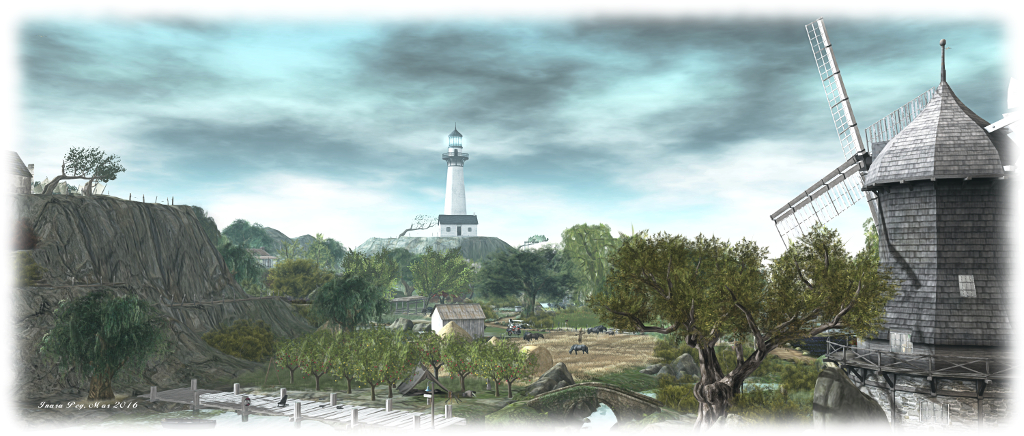


 Inara Pey: Living in a Modemworld