The pastel world of Silas Merlin in Second Life

The Portraits of Silas Merlin - Gallery 24
The Portraits of Silas Merlin – Gallery 24

Now open at Gallery 24, curated by Kayly Ilali, is a beautiful exhibition entitled The Portraits of Silas Merlin. And it is, in a word, magnificent.

Silas is better known in the physical world as Jean-François Le Saint, a Maître Pastelliste of the Société des Pastellistes de France. In Portraits he presents a number of his pastel studies from the physical world, all beautifully reproduced for in-world exhibition in a manner which loses none of their context or the power of his chosen medium.

The Portraits of Silas Merlin - Gallery 24
The Portraits of Silas Merlin – Gallery 24

Spread through the two floors of the gallery is a virtual treasure trove of his work, offering a unique and involving insight into Silas’ world as an artist who uses modern and traditional means to produce a portrait, mixing photography – while he does enjoy live sittings, he much prefers capturing his subjects on camera, often taking hundreds of photographs whilst visiting  traditional or medieval festivals in Brittany –  with the great tradition of pastel art.

Through the images, with their layered, textured richness, it is possible to appreciate just why pastels have been a favoured form of portrait art since the Renaissance period. The pale colour tones which are available or can be mixed result in incredibly life-like images which can often transcend the use of paints, capturing the very essence of the subjects in a study.

The Portraits of Silas Merlin - Gallery 24
The Portraits of Silas Merlin – Gallery 24

You might wonder why an artist established in real life might want to bring their work into Second Life, where the ToS is seen as being hostile. In talking to Kayly Iali about his work, Silas offers a more relaxed view on the benefits of exhibiting in-world:

Second Life is warm and cozy, I want to be here. Importing my real life work into Second Life and rezzing it on a virtual wall gives me a new perspective on it. By contrast sticking it on a website or posting on social networks does not add anything or give me new insight to my paintings.

SM-5
Natalya Gousseva: The Portraits of Silas Merlin – Gallery 24

Artwork comes into being in the virtual world, (especially when you don’t use the full bright lighting feature in Second Life), it is affected by the day cycle, local lights that can be coloured, projectors [that] cast shadows…

On a more practical level, Second Life offers him the opportunity to learn about using new mediums. He’s particularly interested in  sculpture, and adapting some of his work into 3D pieces.

The platform also present Silas with the ability to socialise more easily with visitors to his in-world studio, something he notes isn’t easily achieved in the physical world, where he is often lost in the flow of his work.

There are many facets to this exhibition which are both fascinating and enticing – the presentation of physical world art; the insight into Silas’ work and talent, the glimpse we get into the lives of his subjects. Speaking entirely personally, all of these aspects for me come together in one particular piece Silas has chosen to display: his portrait of Russian actress Natalya Gousseva, as she appeared as a 12-year-old in the mid-eighties Soviet television mini-series, Guest from the Future.

There is something fabulously intimate and compelling about the portrait, while beneath it, a bright panel offers us a glimpse into its creation: a link to a time-lapse video of the piece being drawn. Taken together, portrait and film offer a wonderful insight into Silas’ world, and I again offer him my thanks for allowing me to embed the video here, hopefully as a further enticement for people to visit the exhibition.

As well as the pastel studies, Portraits includes a number of photographs featuring young subjects Silas sketched during live sittings, presenting a further means of witnessing his work. And for those who might wonder how their avatar might look rendered in pastel art, a trip to the rooftop terrace will reveal a number of avatar portraits, work he still does today on a commissioned basis.

All told, The Portraits of Silas Merlin is a compelling exhibition, one all lovers of art should make time to see. For those who, like me, become enamoured of his work, Silas has a gallery in New Babbage and a second on Escapades Island – do visit them as well.

SLurl Details

Lab: share a Valentine’s vision and help promote SL

With Valentine’s Day roughly a month away, the Lab is inviting residents to share what that special day means to them by means of a photograph – and gain the opportunity to be a part of the Lab’s advertising campaigns for Second Life.

The post reads in part:

Valentine’s Day is just on the horizon and will be here before you can get through a handful of heart candies! We’re looking for some great Second Life pictures from the community to feature in upcoming email and banner campaigns – with credit to the photographer – of course!

In a snapshot, let us know what Valentine’s Day means to you in Second Life.

Share your story in a picture and on our Official Flickr Page with the tag “SLVday2016” so that we can see all of your amazing works. You may submit as many as you like between now and January 29, 2016.

We’ll showcase the chosen image(s) in an email to Residents, as well as in some banner campaigns. We’ll let the chosen image creators know via Flickr and ask for an avatar name for the credits.

The submission guidelines are fairly straightforward:

  • Images must be at least 2048×1207 in size
  • Avatars must be shown in-world,and suitably lit so they can be seen
  • All images must be free of additional text or logos, and must be appropriate for all audiences.
  • Images that tell a story are going to make an impression.

As noted in the Lab’s blog post text, the closing date for submissions is Friday, January 29th, 2016.


Discovering The Keys in Second Life

The Keys; Inara Pey, January 2016, on Flickr The Keys (Flickr)

With Christmas and the New Year behind us, the thoughts of many caught in the grip of winter inevitably turn to warmer locations, sunshine and, perhaps beaches. But with summer still several months away, we might need something else to sate our desire for warmer climes.

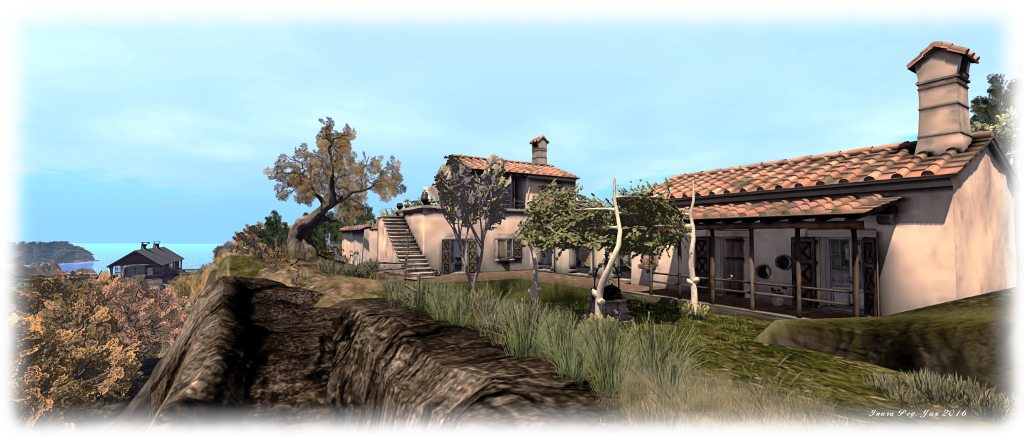
The Keys might well be a way for those of us in Second Life to do so, offering as it does an expansive landscape offering cliffs, gorges, sandy beaches, rolling meadows, secluded glades, all mixed with tree-lined walks, woodlands, coastal paths, and scattered houses beneath a summer blue sky. Such is the genius of the design, it’s at times hard to reconcile it with being confined to a single region.

The Keys; Inara Pey, January 2016, on Flickr The Keys (Flickr)

Featured in the Destination Guide Highlights for Friday, January 8th, 2016, The Keys, while Adult rated, has been created with one thing in mind: photography. But whether you’re into SL photography, or simply enjoy exploring stunning regions, this is a place which should not be missed off any itinerary.

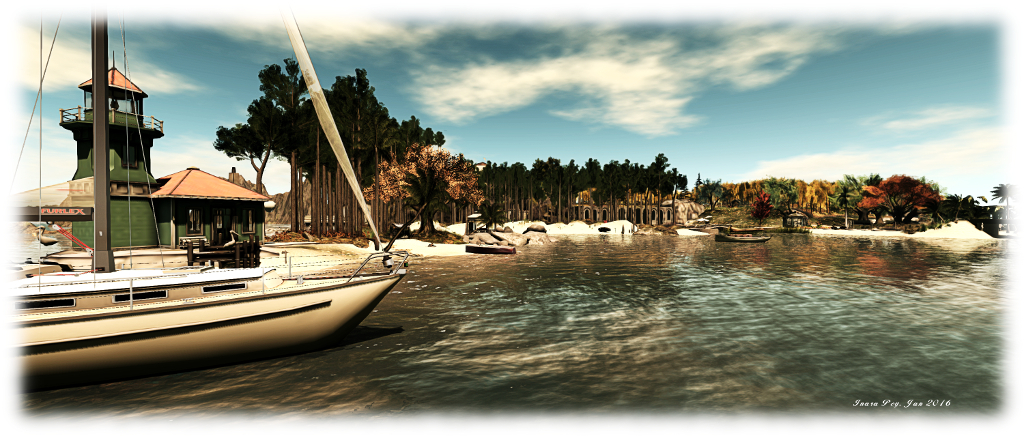
The landmark provided in the Destination guide appears a little off, dropping you neatly into the pool of a Romanesque structure on the west side of the region, so I’m offering a slightly different one here which will hopefully drop you onto the terrace alongside the pool. Just to the north of this structure, beyond a ribbon of tall trees, sits the beach, looking out over a bay which separates The Keys from the more coastal suburban area of neighbouring Anarchist Bay to the west, which can be visited by crossing the bridge linking the two over the water. If you wander the beach, do take care no to disturb the mice as they enjoy their vacation!

The Keys; Inara Pey, January 2016, on Flickr The Keys (Flickr)

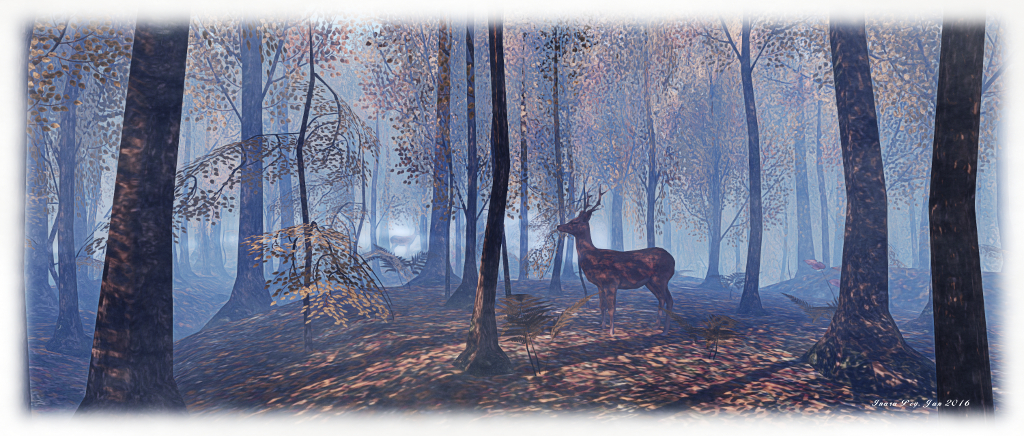
To the south of the landing point, the ground slopes gently up to an expense of trees seemingly caught in autumn’s golden crown, a place where mist drifts between the tree trunks, deer graze peacefully and the wanderer might come across sculptures and a secluded gipsy cabin nestled close to high cliffs overlooking the ocean, together with some of the off-region islands which further add to the visual appeal of The Keys – just don’t try walking out to the terrace on the lone finger of rock!

Eastward from the trees, the gently rolling ground is open to the sky and the grass grows tall, mixing with wild flowers. Horses graze here, while those seeking places to sit  while or simply to rest can find them among the merry-go-round, pavilion and shaded seating areas scattered along the edge of a broad gorge which cuts into the south-east corner of the land, the canopy of golden trees continuing on the far side, reached via a broad wooden rope bridge, or by following the edge of the gorge inland and then back out again.  Even then, the region is not finished with you – beyond the tongue of the gorge, a further bridge spans the void between the land and a small, rugged island on top of which sits a stylish house.

The Keys; Inara Pey, January 2016, on Flickr The Keys (Flickr)

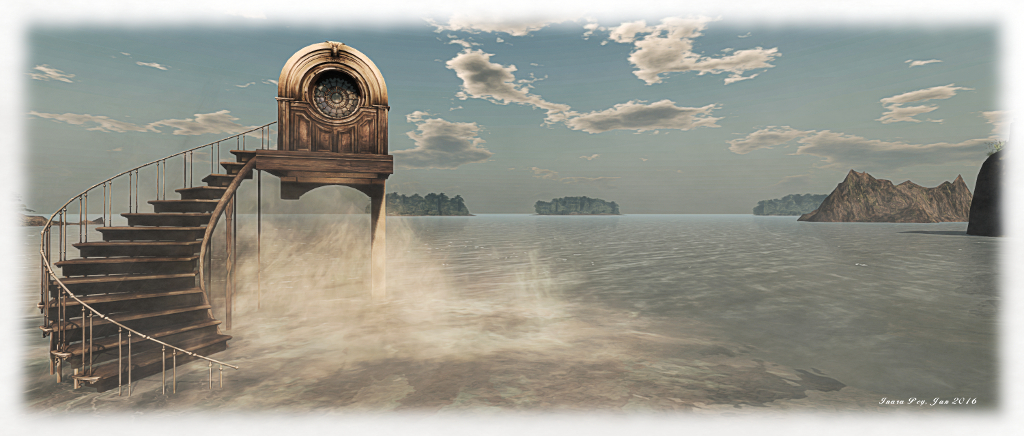
And this is the beauty and power of  the region; just when you think you much have reached the end, there’s more to be discovered, making exploration here a genuine pleasure. There are fishing cabins, the coastal areas, secret ways beneath the ground, and one or two little surprises along the way. It’s also a place of whimsy, as can easily be seen in things like the island floating over the north-east corner of the island, stoutly anchored to the hill below, or the steps curling up from the sea to reach a door to… where…?

The Keys is a place which measures up to its description perfectly, making it an eye-catching visit, with plenty of opportunities for both photography and for simply sitting down and enjoying the visual and aural ambience of the place, and letting the world just take care of itself for a change. Don’t miss the Flickr group, either.

SLurl Details

SL project updates 16 2/1: server deployments

Server Deployments

As always, check the server deployment thread for any updates.

There was no deployment to the Main (SLS) channel on Tuesday, January 12th. On Wednesday, January 13th, all three RC channels should receive the same sever maintenance package comprising:

  • Feature Request: llGetObjectDetails() constant OBJECT_TOTAL_INVENTORY_COUNT – when targeting an object, OBJECT_TOTAL_INVENTORY_COUNT will return the total of all inventory types in each link of the linkset. See BUG-10575 for further details
  • Feature Request: llGetObjectDetails() constant OBJECT_PRIM_COUNT – provides a means to get a worn attachment’s prim count (rather than just returning 0).  See BUG-10646 for further details.
  • Simulator crash fixes.

SL Viewer

So far, no promotions or updates to the current batch of RC and project viewers, leaving the list as it stood in week #1:

  • Current Release version: 4.0.0.309247, December 17, 2015 – formerly the Chromium Embedded Framework RC viewer download page, release notes
  • RC viewers:
    • Project Azumarill (HTTP updates) RC viewer, version 4.0.1.309333, dated January 5th
    • Quick Graphics (Avatar complexity & graphics presets) RC viewer, version 4.0.1.309320, dated January 5th
    • Maintenance (30+ fixes and improvements) RC viewer, version 4.0.1.309460, dated January 5th
    • Vivox (Voice fixes and improvements) RC viewer, version 3.8.7.307744, dated November 17, 2015
  • Project viewers:
    • Project Bento (avatar skeleton extensions) version 5.0.0.309171, dated December 16, 2015
    • Oculus Rift project viewer, version 3.7.18.295296, dated October 13th, 2015
  • Obsolete platform viewer (SL access for Win XP  / Mac OS X10.6 users), version 3.7.28.300847 dated May 8, 2015.

During the last TPV Developer meeting of 2015, it had been indicated that the Vivox RC viewer and the HTTP RC viewer were being merged into a single offering. If this is still the case, we can likely expect the updated RC viewer to be appearing soon.

Weekend Issues

For those who may have missed it, April Linden from the Lab’s Operation’s team (who are responsible for trying to keep the grid available 24/7), provided a blog post on the issues Second Life experienced over the weekend of January 9th / 10th 2016, which I also covered in a separate blog post.

Lab explains Second Life’s weekend woes

We’re all used to Second Life misbehaving itself at the weekend, but it with rezzing or rendering or region crossings and so on. However, Saturday, January 9th, and Sunday January 10th proved to be a lot rougher than most weekend in recent memory, with Sunday in particular affecting a lot of SL users.

When situations like this arise, it’s easy to shake a verbal fist at “the Lab” and bemoan the situation whilst forgetting we’re not the only one being impacted. Issues and outages bring disruption to the Lab as well, and often aren’t as easy to resolve as we might think. Hence why it is always good to hear back from the Lab when things do go topsy-turvy – and such is the case with the weekend of the 9th / 10th January.

Posting to the Tools and Technology blog on Monday, January 11th, April Linden, a member of the Operations Team (although she calls herself a “gridbun” on account of her purple bunny avatar), offered a concise explanation as to what happened from the perspective of someone at the sharp end of things.

April starts her account with a description of the first issue to hit the platform:

Shortly after midnight Pacific time on January 9th (Saturday) we had the master node of one of the central databases crash. The central database that happened to go down was one the most  used databases in Second Life. Without it Residents are unable to log in, or do, well, a lot of important things.

While the Lab is prepared for such issues, it does take time to deal with them (in this case around 90 minutes), with services having to be shut-down and then restarted in a controlled manner so as not to overwhelm the affected database. Hence why, when things like this do happen, we often see notices on the Grid Status Page warning us then log-ins may be suspended and /  or to avoid carrying out certain activities.

Sadly, this wasn’t the end of matters; on Sunday an issue with one of the Lab’s providers had a major impact on in-world asset loading (while April doesn’t specifically point at which provider, I’m assuming from her description it may have been one of the CDN providers). While the Lab is versed in working with their providers to analyse the root cause of problems and rectify them, this particular issue appears to have had a knock-on effect in a quite unexpected way, impacting the avatar baking service.

This is the mechanism by which avatar appearances are managed and shared (and is also known as Sever-Side Appearance and / or Server-Side Baking). Designed to overcome limitations with using the viewer / simulator to handle the process, it was cautiously deployed in 2013 after very extensive testing, and it has largely operated pretty reliably since its introduction. As such, the fact that it was so negatively impacted at the weekend appears to have caught the Lab off-guard, with April noting:

One of the things I like about my job is that Second Life is a totally unique and fun environment! (The infrastructure of a virtual world is amazing to me!) This is both good and bad. It’s good because we’re often challenged to come up with a solution to a problem that’s new and unique, but the flip side of this is that sometimes things can break in unexpected ways because we’re doing things that no one else does.

Taking this to be the case, it doubtless took the Lab a while to figure-out how best to deal with the situation, which likely also contributed to the time taken for things to be rectified to the point where people weren’t being so massively impacted. Hopefully, what did occur at the weekend will help the Lab better assess circumstances where such problems – unique as they may be – occur, and determine courses of action to mitigate them in the future.

In the meantime, April’s post, like Landon Linden’s update on the extended issues of May 2014, help remind us of just what a hugely complex beast of systems and services Second Life is, and that how even after 13 years of operations, it can still go wrong in ways that not only frustrate users, but also take the Lab by surprise, despite their best efforts. Kudos to April for presenting the explanation and for apologising for the situation. I hope she, together with all involved, have had time to catch-up on your sleep!

Related Links

At what price VR?

Oculus CR-1 with microphone, Oculus Remote and Xbox wireless controller
Oculus CR-1 package (image: Oculus VR)

On Wednesday, January 6th, and as I reported, Oculus VR announced the price of the first generation Oculus Rift VR headset as being US $599 (€699 in Europe and £499 in the UK) + shipping at applicable taxes, with the unit available for pre-order.

The price has caused some consternation around the globe, even though Palmer Luckey had, since September 2015, been indicating the headset would be more than the assumed price of US $350, as my colleague Ben Lang over at The Road to VR quoted Luckey saying at the time.

As it is, the Oculus Rift is apparently heavily subsidised by Facebook; had it not been so, then the price might have been north of the US $1,000 mark . Further, and like it or not, the HTC / Valve Vive is likely to have a price point somewhat more than the Rift – although it will include hand controllers and room sensors, which the Rift does not. In addition, the latest version of the Vive sports a “chaperone system”: a front-mounted camera which allows the user to overlay their VR environment with images of the room around them, making for easier physical movement when using the headset.

Elsewhere, there has been speculation about the possible price of Sony’s PlayStation VR (PSVR), particularly after Forbes reported Amazon Canada had it listed at CAN $1,125 (roughly US $800). The listing price was later removed, with Sony stating it was an error and that the final price of the PSVR has yet to be determined – but it has left people wondering.

And while the Oculus Rift price may seem steep, it might be worth pointing out that the Vuzix iWear, an OSVR-based headset initially aimed at the immersive film experience, but capable of supporting VR games and applications, is currently available for pre-order at US $499, and comes with a specification somewhat below that of the Rift.

Sony PSVR - Amazon Canada quoted a price of US $800, quickly countered by Sony - but some speculate it might be accurate
Sony PSVR – Amazon Canada quoted a price of US $800, quickly countered by Sony – but some speculate it might be accurate or at least close to the truth (image: Sony Computer Entertainment)

So does this mean the US $599 price tag for the Oculus Rift is justified? Given that the first pre-order batch apparently sold-out within minutes, one might be tempted to say “yes”. However, the initial rush could be deceptive; while there are undoubtedly a lot of early adopters out there willing to pay a premium for the hardware, they aren’t likely to be in the majority.

And here is where consumer-focused VR could end-up being hoist by its own petard, and in a number of ways, some of which are pointed to by Chris Kohler, writing at Wired.

The first is that VR as a term is already being badly abused.Much is made of 360-degree video (already a thing through Google Cardboard systems), but it really isn’t VR as many would accept it.

The second is there is already a rising tide of headsets offering “VR experiences”. Most of these are (again) Cardboard-based and utilised a mobile ‘phone. The problem here is that inevitably, the quality of the experience isn’t all it could be. What’s more, it often hooks back into the idea that VR is pretty much stuff like 360-degree video.

Samsung's Gear VR sits at the top of the mobile VR pyramid, and could be said to be indicative of where Oculus VR would like to go: a self-contained, lightweight system which doesn't necessarily tether the user to their computer
Samsung’s Gear VR sits at the top of the mobile VR pyramid, and could be said to be indicative of where Oculus VR would like to go: a self-contained, lightweight system which doesn’t necessarily tether the user to their computer (image: Samsung)

The issue here is that despite these factors, these low-end headsets and units such as Samsung’s Gear VR, are presenting VR as something that’s easily affordable (given most people are liable to have a suitable ‘phone to use with them). The experience may not be terribly clever when compared to the Rift or the Vive – but it is there, and it is coupled with a possible perception that VR is about 360 film / sports experiences.

Thus, unless the Rift and the Vive et al can convince the greater populace they offer a truly unique, high-end, head-and shoulders-above-the-rest type of VR experience that instantly compels people to shell out the readies for them, there is a risk that they could be seen a “just another headset”, and passed by in favour of the cheaper albeit less capable headsets, at least until the price point is seen to come down – and that could put something of a pin in the side of the VR bubble, if only in the short-term.