Wareable examines Project Sansar

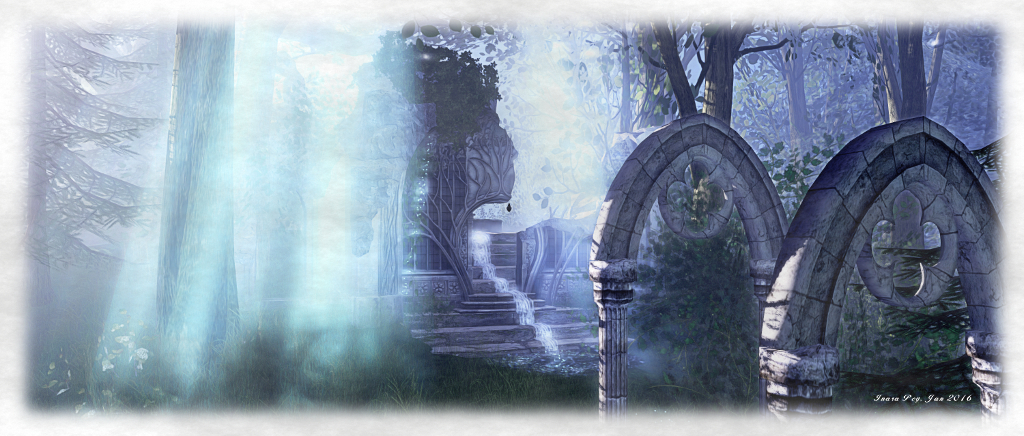
"Project Sansar" promotional image via linden Lab
Project Sansar promotional image via Linden Lab

In Virtual worlds reborn: Can Second Life’s second life democratise VR? Sophie Charara, features editor at Wareable, examines Project Sansar, using in part Ebbe’s comments from an on-stage discussion they had, together with Ken Bretschneider of The Void during the December 2015 Web Summit. I’ve embedded the video of that discussion at the end of this article.

While the piece in Wearable doesn’t offer much that’s new to those who have been following the Lab’s conversations to the press and SL users about their hopes for the new platform, the article does offer some interesting insights to what the Lab is doing and some of their thinking behind Sansar.

Sophie Charara
Sophie Charara

Starting out with what we already know – the Lab is pitching the platform as “WordPress for VR”: an environment where people can come in and create virtual environments without the need to be a software engineer, coder, etc. – the article covers a lot of ground, with comparisons to Second Life, references to other pioneers in VR (Chris Milk, Nonny de la Pena and Jeremy Bailenson) and a further look at hoped-for time frames with “Sansar”.

The Lab has, on numerous occasions, indicated that initially, Sansar is being targeted at some very specific verticals where immersive VR has practical application. Education, healthcare, simulation, business, design and architecture have all be very specifically mentioned in this regard. So a point of interest for me was reading the specific example cited by Ebbe as to how Sansar is already been used, albeit on a test basis, by an architect:

An architect named Diego, who works for a big firm that is completing a major medical centre project, built the entire building in Sansar as an experiment.

“When he experienced it in virtual reality for the first time, he walked into the lobby and said ‘Damn, it’s too big,'” said Altberg. “It took him one second to realise that something was off and he’d been working on this project for a long time. That had value instantly.”

In this instance, the power of virtual realisation is clear, and having a platform which allows companies and individuals easily leverage this kind of visualisation, connect with other and have them shared in such visualisations / experiences / models is clear. In the example above, it is only a short step from Diego witnessing the flaws in his design (and being able to correct them as a result) to him being able to invite his clients into the model, so they can witness first-hand what his company’s vision for the project is. It also potentially allows his company to retain the model as a part of a virtual portfolio of projects they can showcase to future clients.

That the Lab had identified architecture as a suitable environment where Sansar could offer significant value for clients can also be ssen in the fact that the first public demonstration of the new platform took place San Francisco’s month-long Architecture and the City Festival in September 2015.
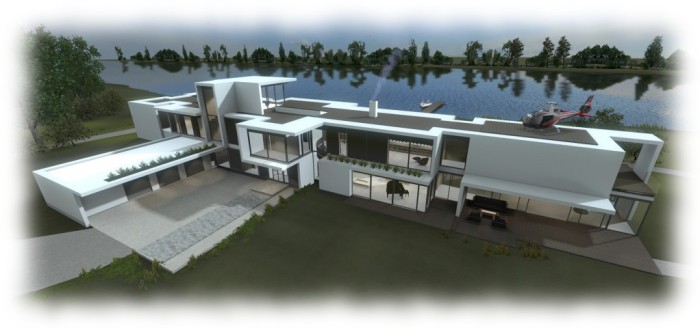
VR capabilities have a huge potential for various vertical markets, such as architecture and design, and these are markets the Lab have indicated they are targeting (image archvertical.com)
In 2014, Jon Brouchoud demonstrated the potential of architectural visualisation using the Oculus Rift and Unity 3D (image archvertical.com)

Hence why “Sansar” could, potentially, be a very powerful platform with the sectors the Lab has identified, particularly if it really does allow clients the freedom to create environments which can be standalone or interconnected, and / or which can be accessed directly through a closed Intranet, or open to all via direct web portal, according to individual needs.

Picture, for example, a university using Sansar to build a virtual teaching environment, access through its own Intranet and using it’s exiting log-in and authentication process so students and staff can seamlessly move into and out of the virtual space. They could then open a public portal to elements of that space, and / or link-up with other education institutions, enabling students to share in their virtual learning spaces, building-up their own “world” of connected experiences.
Second Life has proven itself and the value of virtual environments in education. "Project Sansar" could present opportunities to significantly build on the foundations laid by SL
Second Life has proven itself and the value of virtual environments in education. “Project Sansar” could present opportunities to significantly build on the foundations laid by SL

Not that Sansar is purely about these niche environments. The potential social power of virtual spaces and virtual opportunities has long been established by Second Life, and the article does make it clear that as things progress, the Lab does see Sansar as potentially being able to replicate a lot of what Second Life can already do and offering it to an audience as a much more accessible medium.

This obviously is something of a worry for those of us deeply rooted in Second Life – much has already been made of the potential for the “cannibalisation effect” Sansar might have on the current Second Life user base. It’s actually a valid concern, and something we should perhaps be prepared for at some point down the road, if Sansar proves to be a success and starts to pull SL users away from this platform. But frankly, it’s not something which should be held up as a reason for the Lab not to press ahead with Project Sansar.

Continue reading “Wareable examines Project Sansar”

Lab Chat: January 21st, 2016: 10:30 SLT

Lab Chat LogoDon’t forget that recording for the second instalment of Lab Chat takes place on Thursday, January 21st, at 10:30 (am) SLT , at the LEA Threatre in Second Life.

The guest will once again be Linden Lab CEO Ebbe Altberg,through his alter ego, Ebbe Linden. He’ll be answering questions selected from the 80+ submitted to the Lab Chat forum. The selected questions include the following topics:

  • Project Bento
  • Notifying users in-world about technical issues occurring with Second Life
  • SL credit processing
  • How is “Sansar” to be regarded – a place to live, or a place to visit?
  • Sansar avatars
  • Sansar in-world and out-world building tools.

In addition, and time allowing, there may be questions on things as diverse as land, art, sailing and aviation in Sansar, permissions systems and (inevitably!) Oculus Rift.

Ebbe Linden takes questions from jo Yardley and Saffia Widdershins during the first Lab Chat discussion in November 2015

So, make sure you get a seat during the live recording. You can access the LEA Theatre via any of the following SLurls:

If you can’t make the recording, videos of the show will be available in due course, and I’ll have a transcript of the Q&A both here and on the Lab Chat website iASAP after the show.

Congratulations to Bryn Oh on Arts Council grant

Bryn Oh by Tara Cetti

Second life artist Bryn Oh recently announced she has received a grant from the Ontario Arts Council.

Bryn, whose work is known and appreciated by many in Second Life, is one of 17 recipients in the latest round of grants awarded by the Council, and this marks the third such time her work in the virtual medium has received funding via a Canadian government grant.

The funds will in part be used to re-assemble and film The Singularity of Kumiko, and to create a first life exhibit using the Oculus Rift and Stem system. In addition, Bryn also notes the grant will additionally be put towards various other projects and activities, including marketing, voice acting, music, and travel.

From the thrust of Bryn’s post, it seems she is hoping the film project will help further her work in seeing immersive virtual arts gain wider appreciation, understanding and acceptance within the arts community as a whole. In making her announcement she notes:

I have spent a long time working in this area now and have witnessed the resistance of some curators to see outside their comfort zone.   Many curators have spent a life learning how to evaluate and understand painting, sculpture, film etc and to be honest, I think some of the resistance is from being intimidated by the prospect of having to learn something completely new and difficult for them.

The truth is that to understand an immersive artwork then one must become immersed, so the simplicity of pictures and text don’t apply to the Immersivist artwork and a curator just can’t hope to evaluate our artform by looking at pictures or even watching machinima.  They have to experience it and it’s not easy to do so.

Using a VR HMD with 360-filming would certainly help those unfamiliar with immersive, virtual art better understand the creative potential without the added complication of them having to need to understand the use of avatars, the viewer, and so forth.

The opening scene of The Singularity of Kumiko

The Singularity of Kumiko, which I reviewed here, originally opened in February 2014, and takes the form of a an immersive narrative which takes the visitor on a journey of discovery, focus on the exchanges between Kumiko and Iktomi (the latter communicating by means of letters placed inside bottles the visitor must find, while Kumiko uses a mixture of bottled missives and the spoken word.).

The journey the visitor must take, as with the flow of conversation between Kumiko and Iktomi is not always linear, further drawing the visitor into the piece and making them a part of the unfolding story. If you didn’t managed to visit it the first time around, I hope Bryn will leave it standing for visitors to enjoy for a while after she has completed filming.

In the meantime,her current work at Immersiva, The Gathering (which you can read about here), will remain open, Bryn says, for another month, after which it will be packed away to make room for The Singularity of Kumiko. so if you’ve not yet witnessed The Gathering, now is the time to do so!

Many (and belated) congratulations to Bryn on receiving the award!

Related Links

HTC: Vive pre-orders open Feb 29; company split denied

The HTC Vive Pre (image: HTC)

Following the end of the 2016 Consumer Electronics Show (CES) earlier in January, HTC announced that their Vive VR system will be available for pre-order from February 29th, with shipping to commence in April.

The Vive demonstrated at CES was the “2nd generation” Vive Pre, which boasted significant improvements over the first development unit in terms of headset sized, general ergonomics, fit, comfort and capabilities. In particular the unit boasts a front-mounted pass through camera, (which HTC has sometimes referred to as the “chaperone system”), and a correction tool to present a clearer view of the VR environment on the headset screens.

The Vive Pre features a central, front mounted pass through camera system (image: HTC)

The pass through camera allows the user to see an overlay of the room around them projected into their virtual view. This fades in if they approach a physical object (e.g. a wall or desk, etc.), or can be manually triggered via the hand controllers. While some have critiqued it as “breaking” the VR experience, others have seen it as a useful means for a Vive user to re-orient themselves within their physical space.

Mura correction” (“mura” being a Japanese term meaning “unevenness” or “lack of uniformity”) removes the inconsistent brightness levels between one pixel and the next on earlier Vive headsets, giving rise to what HTC called a “linen like quality” to VR scenes. The result is a far more uniform and cleaner image, as shown in the exaggerated image below, courtesy of Road to VR.

"Mura correction" improves the VR image seen on the Vive's headset lenses, as illutrated by this exaggerated representation, courtesy of Road to VR - click to enlarge
“Mura correction” improves the VR image seen on the Vive’s headset lenses, as illustrated by this exaggerated representation, courtesy of Road to VR – click to enlarge

The pre-order price for the Vive has yet to be confirmed, but it is anticipated it will be somewhat more that the Oculus Rift. Even allowing for the  fact the price will include hand controllers and room sensors, this leaves HTC with a potentially awkward situation.

While the US $599 (+ tax and shipping) for the Rift took many by surprise, the take-up among early adopters has been positive; so much so that orders are now being backdated to July 2016. That’s good for Oculus VR – but it also means HTC could find the market for early adopters considerably smaller given so many have pre-ordered the Rift; and if the Vive does come in at a significantly higher price, they could find those who have held by from placing an order with Oculus VR to see what HTC do offer, swinging back towards it in favour of the Vive. Nor do the problems necessarily end there.

As I recently noted, tethered VR systems could face an uphill battle in trying to reach a more general market among the populace at large when compared to the cheaper, more accessible opportunities available through mobile VR.

Nvidia plan a "GeForce GTX VR Ready" logo for computer systems capable of meeting tethered VR requirements, and will be offering Nvidia has set out specific minimum requirements that must be met in order for consumer PCs to be able to cope with virtual reality graphics
Nvidia will offer a “GeForce GTX VR Ready” label for consumer PCs capable of meeting tethered VR requirements, and is working on a new range of GPUs specifically to meet the needs of VR (image: Nvidia)

While the latter may limited in capability and scope in comparison to tethered rigs, they are far more affordable and accessible, dampening any interest people have in paying for the tethered rig and the necessary hardware on which to run it. Particularly given that Nvidia estimate less than 1% of computers in household use will be capable of running tethered VR systems. Thus, HTC could find themselves right out in the cold if the Vive is significantly more expensive that the Rift among the wider public who might have a system capable of supporting VR headsets and are willing to give it a go as units hit retail outlets.

HTC was also the subject of intense, if brief, speculation on Sunday, January 18th and Monday, January 19th 2016. It started when the Chinese language Commercial Times, Taiwan’s largest financial newspaper ran a story claiming HTC’s Chairwoman, Cher Wang, was considering spinning-off the fledgling VR business into a separate company.

HTC Chairwoman Cher Wang: enthusiastic about VR, but not planning to split it into a separate entity.

The report was picked-up through other news outlets, and gained widespread reporting in the VR media, and saw HTC’s share price rise by 5.23%. However, on Monday, January 19th, the company issued a statement to investors, labelling the media claims as incorrect, and stating the company has no plans to split the VR business into a separate entity.

SL project updates 16 3/1: Server updates and Bento examples

Telrunya - Forest of Dreams; Inara Pey, January 2016, on Flickr Telrunya – Forest of Dreams (Flickr) – blog post

Server Deployments

As always, check the server deployment thread for any updates.

On Tuesday, January 19th, the Main (SLS) channel received the server update package previously deployed to the three RC channel. This comprises:

  • Feature Request: llGetObjectDetails() constant OBJECT_TOTAL_INVENTORY_COUNT – when targeting an object, OBJECT_TOTAL_INVENTORY_COUNT will return the total of all inventory types in each link of the linkset. See BUG-10575 for further details
  • Feature Request: llGetObjectDetails() constant OBJECT_PRIM_COUNT – provides a means to get a worn attachment’s prim count (rather than just returning 0).  See BUG-10646 for further details.
  • Simulator crash fixes.

On Wednesday, January 20th, the three RC channels should be updated with a new server maintenance package. However, at the time of writing, it looked questionable if the deployment would go ahead. On  Tuesday, January 19th, Simon Linden informed the Simulator User Group meeting attendees that there was a problem on the latest deployment image for update which caused it to refuse to start, and was under investigation.

If the deployment does go ahead, it will comprise a simulator crash fix and a further feature request: llGetObjectDetails() functionality to get the parent_id of any task in the region (OBJECT_REZZER_KEY). This returns the parent_id of any task in the region:

  • If the object came from an object rezzer it returns the ID of the parent object
  • If it was rezzed by an avatar, it returns the agent ID of the avatar.

It will only return details for those objects rezzed in-world after the code has been implemented. Objects already in-world prior to deployment will be ignored (NULL_KEY is returned).

Project Bento

no major news here, other than initial filming for The Drax Files World Makers special on Bento took place on Tuesday, January 19th, 2016. There will be a further round of filming on Wednesday, January 20th. If you are an animator  / content creator who has something you’d like to demonstrate and possibly have filmed for the episode, please contact Draxtor Despres in-world ASAP.

In the meantime, a short piece I stitched together at the filming session, showing an avatar rigged to use the Bento finger extensions compared to a avatar without the rigging; a centaur and a part of bat wings (both by Aki Shichiroji)  utilising the Bento bones.

Finger animation in the video by Abramelin Wolfe. Elephant in the splash image by Medhue Simoni.

Stepping through the Gates of Memories in Second Life

Gates of Memories; Inara Pey, January 2016, on Flickr Gates of Memories (Flickr) – click any image for full size

Gates of Memories is a place where we are reminded that we don’t remember days,
we remember moments. Wandering through the region, designed by photographer shelly70, it is easy to understand why she feels this is the case: the region is filled with moments in time, each of which creates an impression waiting to be captured by eye and camera to become a memory to which we can return again and again.

Caught in the depths of winter, the snowbound region presents a rural setting where the rolling ground is blanketed in white and trees denuded of their leaves stretch frosted, gnarled fingers and arms towards a cloud heavy sky from which more snow swirls and falls.

Gates of Memories; Inara Pey, January 2016, on Flickr Gates of Memories (Flickr)

Close to the landing point and just through a gated arch, sits a quaint cottage, garden hidden beneath the snow, tall lamp-posts lighting the way to the front door. Paper lanterns. the air inside heated by tiny fires burning in cradles slung below them, turn and dance in the falling snow, their colour contrasting strongly with the otherwise near monochrome setting. A second cottage sits across the region, smoke also curling from its chimney, hinting at warmth inside, the footpath to the front door swept clear of snow in welcome to visitors.

While the surrounding landscape may seem sparse under the lowering sky, there is actually a lot here to be discovered. The open spaces mean that things can be carefully placed so that they can naturally stand apart from one another, allowing the visitor to come upon them in a way that presents each in turn as a moment in time.

Gates of Memories; Inara Pey, January 2016, on Flickr Gates of Memories (Flickr) – click and image for full size

Art is very much central to these moments, particularly the work of Mistero Hifeng (a factor bound to attract me, as I simply adore his work), with pieces large and small to be found right across the region, sometimes standing alone whilst elsewhere forming the focal point for a particular setting – as with the couple standing in the centre of a little skating rink, the ice around them scored and crossed by the passage of skates.

But Mistero’s work isn’t alone in being celebrated here; those exploring the region will also come across figures by Rebeca Bashly (another artist I admire) and Angelica Leiner, as well as quirky characters by Krikket Bkackheart and Raya Jonson, whilst elsewhere a touch of fantasy can be found as unicorns play in the misty snow.

As well as offering moments in time to visitors, Gates of Memories  is itself a moment in time; one beautifully conceived and presented – and certainly one not to be missed.

Gates of Memories; Inara Pey, January 2016, on Flickr Gates of Memories (Flickr) – click and image for full size

SLurl Details